

Family
Holiday Must-Haves: Make holiday shopping a cinch
There’s nothing quite like the joy of watching a loved one’s face light up when opening a gift you selected with care, but holiday shopping can be a chore.

Last Updated on November 28, 2025 by Daily News Staff
(Family Features) There’s nothing quite like the joy of watching a loved one’s face light up when opening a gift you selected with care, but holiday shopping can be a chore.
If you’re a shopper at heart, it may be a challenge you enjoy, but if the idea of holiday shopping brings out the Grinch in you, consider these ideas for gifts to delight those you love this holiday season.
Look for more ideas to make this holiday season magical at eLivingtoday.com.
Power Up Your Holidays with Protein
Whether you’re out shopping or traveling for the holiday, savor the season without compromising health goals by treating yourself to a Premier Protein Winter Mint Chocolate High Protein Shake. Featuring cozy chocolate and refreshing mint flavors, this seasonal favorite is back, but for a limited time only. Flavorful and packed with the nutrition you need, each shake includes 30 grams of protein, 160 calories and 1 gram of sugar. Whether you drink this shake on its own or use it as an ingredient, you can ring in the season with a healthy amount of vitamins C and E, important antioxidants to support a healthy immune system as part of a healthy diet and lifestyle. Learn more at PremierProtein.com.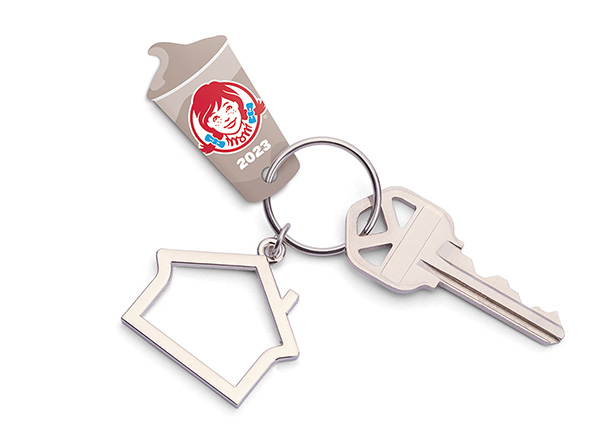
Holiday Sweets for a Good Cause
Few things go together like the holiday season and sweet treats. By gifting family and friends Wendy’s Frosty Key Tags, which are good for a free Jr. Frosty with every purchase, you can give back all year long because proceeds from every tag sold helps the Dave Thomas Foundation for Adoption find loving, adoptive homes for children in foster care. Available for purchase every November and December, tags are good for one full year and can be purchased in-restaurant, at the drive-thru, via a kiosk, through the app or at Wendys.com.
Step Up Gifting with Fashion-Forward Footwear
Every fashionista knows there’s no such thing as too many shoes, and that includes ankle boots and booties that never go out of style. These low-slung styles can be dressed up or down, depending on the look you’re wearing. Among this season’s hottest designs are faux animal prints, such as cheetah or snakeskin, that add some playful color and texture to complete an ensemble. If you’re not sure about the color or style, a classic black or brown bootie with well-padded soles and a moderate heel is a versatile choice with universal appeal.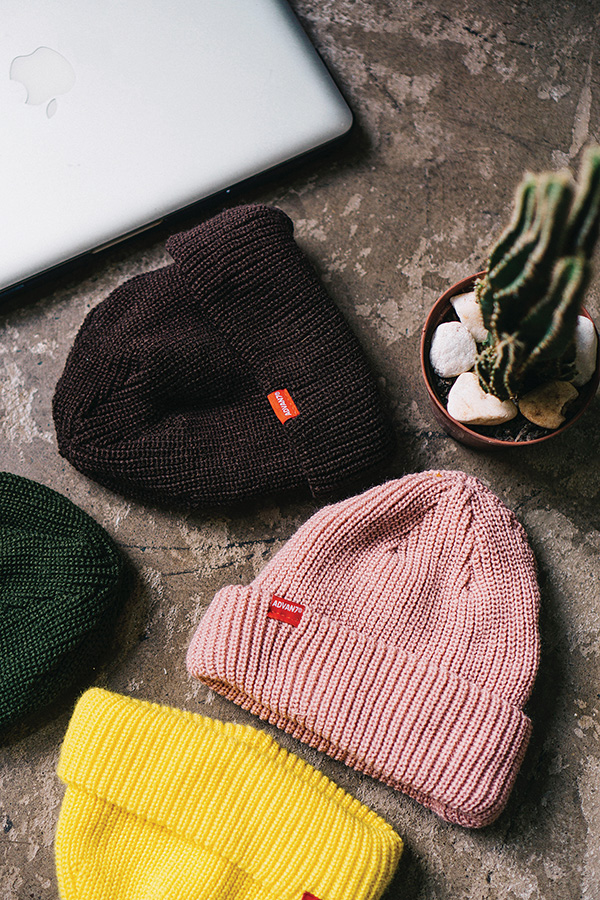
Brrr-ing Gifts of Warmth and Good Cheer
Give loved ones an easy way to brighten a cold, dreary day with a cute and cozy matching hat and glove set. It’s a thoughtful and practical gift that brings a smile to recipients’ faces each time they don those warm layers to face a blustery day. What’s more, with all the options for personalization, it’s an affordable way to show you care. When choosing the perfect duo, keep your loved ones’ tastes and preferences in mind. You can find hats and gloves to match virtually any interest, whether it’s a favorite color, sports team or pop culture reference.
Holiday Shopping Hot List
Turns out, Santa may be onto something. Making your list and checking it twice can help you save money (and your sanity) during the holiday season.
- Set a budget and stick to it. Remember to include all your seasonal expenses, including Secret Santa and teacher gifts, ingredients for dishes you’ll take to potluck gatherings and admission to special holiday activities.
- Make a list. Having an idea of what you’d like to buy can help you stick to your budget and avoid frustration when you’re in the stores. You’ll be more likely to avoid costly impulse purchases and you’ll be more efficient while shopping. If you can, jot down a couple of backup ideas just in case what you want proves hard to find or exceeds your budget.
- Shop for deals. Before you head out shopping, research specials on the items on your list. You may be able to adjust your timing to take advantage of sales or find steep discounts at stores you don’t normally visit.
- Give yourself plenty of time. If holiday shopping stresses you out, it’s a good idea to start early. That way you can tackle a little at a time and avoid feeling the pressure of a ticking clock. Also try shopping during off-peak hours, such as during the week, when stores are likely to be less crowded.
- Map out your plan of attack. Planning the most direct route to travel from one retailer to the next can help keep you organized and avoid unnecessary backtracking. You can also save time and gas by making purchases online. Be sure to watch for promotions that provide free shipping and be conscious of shipping times to ensure gifts arrive in time for the big day.
Photo courtesy of Getty Images (couple with gifts)
Photos courtesy of Unsplash (boots and hats)
SOURCE:
Premier Protein
Wendy’s



The Power of Curiosity: Building More Engaged Learners
(Feature Impact)Young children are naturally curious. They ask endless questions, investigate their surroundings and constantly test how the world works. While that curiosity can leave parents feeling exhausted or overwhelmed, it’s one of the most important drivers of early learning and development.
Curiosity helps children build confidence, develop critical thinking skills and become more engaged learners. Dr. Lauren Loquasto, senior vice president and chief academic officer at The Goddard School, and Mary-Alice Moore, president of Highlights for Children, share why curiosity matters and how parents can nurture it.
Why Curiosity Matters
Curiosity is the engine that drives learning for young children. When they are interested in a topic, they become more motivated to explore, ask questions and seek solutions. That process strengthens important skills such as attention, working memory, flexible thinking and problem-solving. It also helps develop confidence.
For young learners, confidence does not come from always knowing the answer; it comes from believing they can find it. Children who are encouraged to explore their interests and investigate new ideas learn that questions are valuable and discovery is rewarding. These experiences lay the foundation for a lifelong love of learning.
Curiosity Evolves as Children Grow
Curiosity looks different at each stage of development. For infants, it’s largely sensory. They learn by touching, tasting, listening and observing people and objects around them.
Toddlers often express curiosity through movement and repetition. Climbing, stacking, dumping, filling and repeating the same activity helps them understand how things work and builds their sense of control.
Preschoolers and kindergarteners become natural investigators. Their frequent “why” and “how” questions reflect a growing desire to understand relationships, solve problems and make sense of new experiences and the world around them.
As children grow, the role of adults evolves as well. Parents move from primarily protecting and guiding children to fostering environments that encourage exploration and independent thinking.
Follow Your Child’s Interests
One of the most effective ways to nurture curiosity is to pay attention to what naturally captures your child’s attention. Whether they’re fascinated by vehicles, animals or building structures, those interests can become powerful learning opportunities. When children are engaged in topics they enjoy, attention and persistence often develop organically.
Consider what causes your child to lose track of time. Those interests provide important clues about what motivates and excites them. Rather than rushing to provide answers, encourage deeper thinking by asking open-ended questions that invite them to explore their own ideas and observations.
Parents Don’t Need All the Answers
Many parents feel pressure to have answers for every question their child asks. In reality, one of the best responses is often “I don’t know. Let’s find out together.”
This models curiosity and shows your child that learning continues throughout life. It also transforms questions into shared experiences and opportunities for discovery. Encourage your child to remain engaged and curious using simple phrases such as:
- “That’s an interesting question.”
- “What do you think?”
- “Let’s investigate.”
If you’re unable to respond immediately, it’s important to acknowledge the question and return to it later. Following up communicates your child’s ideas and questions are valuable.
Setting Boundaries
Curiosity should be encouraged, but safe boundaries remain essential. When children become interested in something unsafe, simply saying “no” may stop the behavior, but it does little to support learning. Instead, explain why something is unsafe and redirect curiosity toward an appropriate alternative.
For example, if your child wants to explore knives, explain knives can hurt people then offer safe cooking tools or supervised kitchen activities to investigate instead.
Using Technology
Technology can play a positive role in nurturing curiosity when it’s used to extend real-world experiences rather than replace them.
After spotting a ladybug at the park, for example, a child might use videos or age-appropriate digital resources to learn more about insects. The real-world encounter sparks curiosity and technology helps deepen learning.
By listening, encouraging exploration and demonstrating curiosity yourself, you can help your child develop skills that extend far beyond the early years. For more parenting guidance, visit the Parent Resource Center at GoddardSchool.com. Visit Highlights.com for magazines, books and resources for parents and educators.
Photo courtesy of Shutterstock

SOURCE:
📰 Enjoying STM Daily News? Join the conversation!
💬 Leave a comment, share your thoughts, and subscribe to our newsletter for the latest stories, updates, and “News You Can Use This Moment!” delivered to your inbox.
Stay connected with STM Daily News!
How Invasive Pests Spread and How You Can Help Stop Them
(Feature Impact) Invasive pests can hide in places you’d never expect, and once they spread, they can destroy the trees, plants and food people rely on every day. These pests pose a serious threat to agriculture, forests, ecosystems and the food supply. Many invasive species cannot travel far on their own; instead people unknowingly move them from place to place.
According to the U.S. Department of Agriculture’s Animal and Plant Health Inspection Service, invasive pests hitchhike on everyday items such as plants, produce, firewood, vehicles and outdoor equipment. That makes many common activities – from traveling and online shopping to camping and gardening – potential “pathways” for invasive pests to move and reach new areas. Understanding these pathways is the first step to stopping pests before they spread.
Traveling Abroad
When you travel abroad and return from another country, the agricultural items you bring back can introduce new invasive pests into the U.S. and threaten crops or trees that have no natural defenses against them. Even harmless-looking fruit, seed packets or souvenirs made with plant materials can carry pests such as fruit flies and diseases like citrus canker. That’s why it’s critical travelers declare food, plants and other agricultural products when entering the country from abroad.
Shopping Online
Just because you can order seeds and plants from sellers around the world, it doesn’t mean those items are legal or safe to import. In fact, some invasive snails and plant diseases have entered the U.S. this way. Many agricultural products from overseas require permits, inspections or special paperwork before they can enter the country. Buyers should check where an item ships from, learn the import requirements before purchasing and make sure sellers follow all labeling and shipping rules.
 Partaking in Outdoor Activities
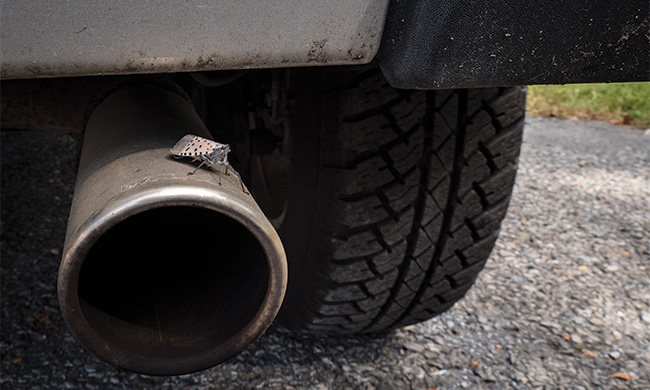
When you spend time outdoors hiking, camping, hunting or fishing, you could inadvertently spread invasive species. For example, transporting firewood from one location to another can spread tree-killing insects, such as the emerald ash borer, which can live inside the wood and emerge later in a new area. The safest choice is to buy or use firewood where you burn it. Additionally, clean all outdoor clothing, gear, equipment and vehicles before leaving an area.
Moving Outdoor Equipment
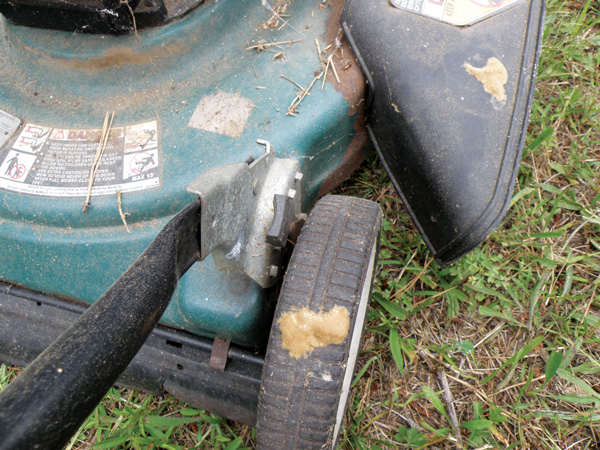
When you move to a new home, your move can create another opportunity for invasive insects to travel. Before relocating patio furniture, grills, trailers or lawn equipment, inspect and clean them carefully. Look for insects, plant debris and egg masses like spotted lanternfly egg masses, which can blend into outdoor surfaces and look like smears of mud or clumps of dirt. A few minutes of checking and cleaning before you move can help prevent pests from invading your new neighborhood.
Invasive pests cost the U.S. billions of dollars every year and damage forests, farms, parks and backyards. Stopping invasive pests starts with simple steps anyone can take: checking what you pack, clean, move and buy. When everyone does their part, fewer pests spread and communities stay healthier and more resilient.
Visit aphis.usda.gov/hungrypests to learn more about how invasive pests spread and the simple steps you can take to help stop them and protect America’s agriculture and natural resources.
Invasive Pest Protection Checklist
- Declare all food, plants and agricultural items when returning from another country.
- When ordering items online, check where the products ship from and verify U.S. import rules before buying.
- If you’re camping, buy firewood where you plan to burn it. Clean clothing, gear and vehicles before leaving.
- Before moving to a new home, inspect outdoor furniture and equipment, looking closely for egg masses or insects.
Content courtesy of USDA.

SOURCE:
United States Department of Agriculture
📰 Enjoying STM Daily News? Join the conversation!
💬 Leave a comment, share your thoughts, and subscribe to our newsletter for the latest stories, updates, and “News You Can Use This Moment!” delivered to your inbox.
Stay connected with STM Daily News!
Food and Beverage
Back-to-School Sandwiches to Nourish Kids’ Bodies and Minds
Back-to-School Sandwiches: When you picture a schoolchild sitting down at a cafeteria table and opening their lunchbox, you’re probably already imagining there’s a sandwich inside. For a nutritious lunch, pack this Ham, Turkey, Bacon and Cheese Pocket. Some school days call for simple, fun comfort food, and that’s where the Fluffernutter comes in.
Last Updated on July 16, 2026 by Daily News Staff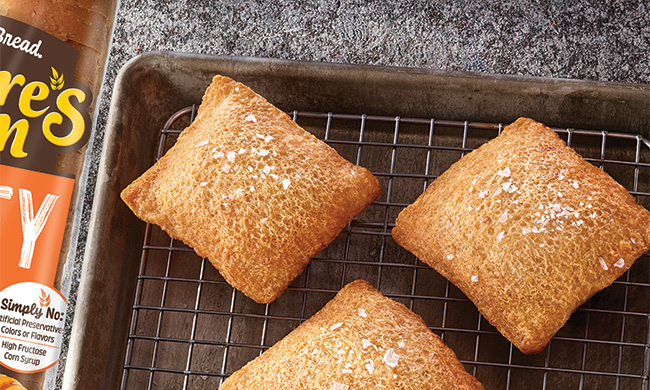
(Feature Impact) When you picture a schoolchild sitting down at a cafeteria table and opening their lunchbox, you’re probably already imagining there’s a sandwich inside. After all, it’s a classic back-to-school staple that parents rely on for ease, convenience and nutrition when they’re trying to get everyone out the door on time – all you have to do is put bread and fillings together, and you’re good to go. That, of course, only leaves the question of which bread and fillings to choose.
A new survey conducted by Atomik Research on behalf of Nature’s Own indicated that modern parents care a lot about nutrition when deciding which kind of bread to buy, with 88% of survey respondents agreeing that feeding their kids wholesome bread feels like an easy parenting win.
With clean, simple ingredients that balance taste and nutrition, Nature’s Own bread supports an attainably healthy lifestyle for busy families. Whether you choose a classic white bread, reach for a whole-wheat loaf or need to account for dietary restrictions, you can feel confident you’re selecting bread that’s free from artificial colors, flavors and preservatives.
For a nutritious lunch that fits the bill for 85% of parents who show strong interest in breads made with whole grains, pack this Ham, Turkey, Bacon and Cheese Pocket made with honey wheat bread. The flavorful mixture of deli meats and American cheese baked to perfection make every bite satisfying. Consider getting the whole family involved assembly-line style to make multiple batches at once, cutting down on time in the kitchen during the week ahead while encouraging learning opportunities as kids count ingredients and measure fillings.
Some school days call for simple, fun comfort food, and that’s where the Fluffernutter comes in. Soft bread, creamy peanut butter and fluffy marshmallow make for a combination that nourishes kids of all ages not just physically, but emotionally. Whether you pack it as a lunchbox surprise or have it ready as an after-school treat, this is a sandwich that promises sweetness and nostalgia – a perfect fit for the 78% of parents who agreed that sandwiches are a canvas for small moments of care, like notes in lunch bags.
Since sandwiches are so customizable, you can easily adapt these recipes to your family’s unique preferences and needs. Whether you decide to use different seasonings or swap to a multigrain bread, there’s no such thing as a wrong sandwich decision as long as it works for you.
To view ingredients and decide what kind of loaf you want to stock up on during the school year, visit naturesownbread.com.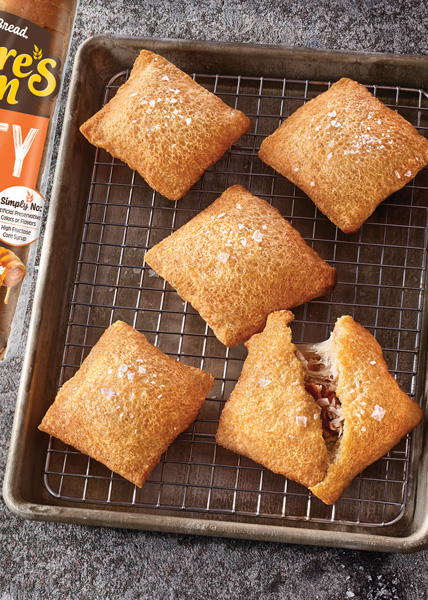
Ham, Turkey, Bacon and Cheese Pocket
- 8 slices Nature’s Own Honey Wheat Bread
- 1/4 pound deli turkey
- 1/4 pound deli ham
- 4 slices cooked bacon
- 4 slices white American cheese
- 1 egg
- 1 tablespoon cold water
- 1 teaspoon coarse salt
- Preheat oven to 350 F.
- Chop turkey, ham and bacon and toss together. Set aside.
- Using knife, cut off crust on each piece of bread.
- With rolling pin, roll and flatten each slice of crustless bread. Take four slices and place spoonful of chopped meats in middle of each slice. Top with broken slices of cheese.
- Place remaining slices of crustless bread on top of each pocket.
- In small bowl, crack egg and add water. Beat together. Dip fork into egg mixture and crimp each edge of pocket until two slices are sealed together. Repeat on each pocket. Brush top of each pocket with remaining egg mixture and sprinkle salt on top.
- Place on sheet pan and bake until golden brown, 7-10 minutes.
- Let cool a few minutes and enjoy.

Fluffernutter Sandwich
Total time: 10 minutes
Servings: 1
- 2 tablespoons peanut butter
- 2 slices Nature’s Own Butterbread
- 2 tablespoons marshmallow fluff
- Spread peanut butter on one bread slice. Spread marshmallow fluff on second slice. Put both slices together to form sandwich.

SOURCE:





