

holidays
Your Winter Wonderland Awaits

Last Updated on November 28, 2025 by Daily News Staff
Winter Wonderland: 5 private cabin destinations for your next adventure
(Family Features) As colder temperatures settle in across much of the country, now is a perfect time to start planning your cozy season getaway. Perfect for lovers of the great outdoors, with breathtaking views and amenities like hot tubs, ski lifts, gourmet kitchens, game rooms and more, a cabin retreat can make for a unique and memorable experience.
Specializing in private vacation homes, Vrbo, a seasoned veteran in the vacation rental industry with nearly 30 years of experience, has lodging options available in some of the most popular winter destinations, including these five getaways. Booking these homes, or any others on the platform, can also earn travelers rewards for future trips through the vacation rental industry’s first and only loyalty program, One Key. Plus, the Book with Confidence Guarantee offers comprehensive protection throughout your journey.
To find more winter retreats, visit Vrbo.com or use the app to start earning OneKeyCash with every reservation.
Lone Peak View Fire Lookout Tower – Big Sky, Montana
Situated on more than 60 acres, this one-of-a-kind cabin offers 360-degree views above some of Big Sky’s most beloved wilderness, including the famed Lone Peak and the Madison Range. Ideal for families or smaller groups, the Fire Lookout Tower comfortably sleeps up to eight guests and features a wraparound deck, perfect for taking in beautiful sunrises and sunsets. The home also boasts a floor-to-ceiling stone fireplace, gourmet kitchen and hot tub.

Trestle House – Winter Park, Colorado
Nestled amongst the pines in Winter Park’s most exclusive neighborhood, Trestle House – a Vrbo 2023 Vacation Home of the Year – boasts showstopping views, a slope-side hot tub and high-end amenities. The open main level offers views of tall pines, meandering ski trails and abounding mountains from the floor-to-ceiling windows. Plus, a full bar and game room cater to all ages and ski-in, ski-out access leads directly to the Winter Park Resort base area.
“The Overlook” Shipping Container – Rockbridge, Ohio
A unique, eco-friendly retreat located just outside Columbus, “The Overlook” is crafted from four 40-foot repurposed shipping containers and sits above the beautiful rolling acres of Hocking Hills, Ohio. Sitting on a total of 75 acres, the property is home to two waterfalls and a plethora of hiking possibilities on-site. Featuring three bedrooms and a hot tub for relaxing after a long day, the transformed cargo containers can accommodate up to eight guests.
Luxury Mountain Lodge with 360 Views – Gatlinburg, Tennessee
Ideally located for whatever adventure you wish to undertake, this luxury cabin offers panoramic Smoky Mountain views and rustic yet modern amenities that are perfect for that ultimate cozy cabin vibe. Designed for relaxation, family time and fun, Heaven’s Mountain Lodge features double-decker decks with unobstructed views, a private hot tub, multiple fire pits, a theater room, a stunning kitchen and a game room that includes pool, shuffleboard, foosball and a poker table.
“Shooting Star” Luxury Teton Village Cabin – Teton County, Wyoming
This classic and elegant cabin is a paradise for outdoor enthusiasts, surrounded by Grand Teton National Park with sweeping views of the mountains, ski slopes and curves of Shooting Star Jackson Hole Golf Club. With the look of a 19th century homestead, layers of modern and traditional detail are combined to create a cohesive richness and structure. The cabin sleeps eight and includes a stone dining terrace and hot tub, luxurious fireplace and gourmet kitchen.
SOURCE:
Vrbo


Food and Beverage
Jack-o’-Lantern Stuffed Peppers Prove Fun Isn’t Just for Pumpkins
These Jack-o’-Lantern Stuffed Peppers give you a Halloween-themed, kid-approved way to put vegetables on the dinner table.
Recipes:
Jack-o’-Lantern Stuffed Peppers
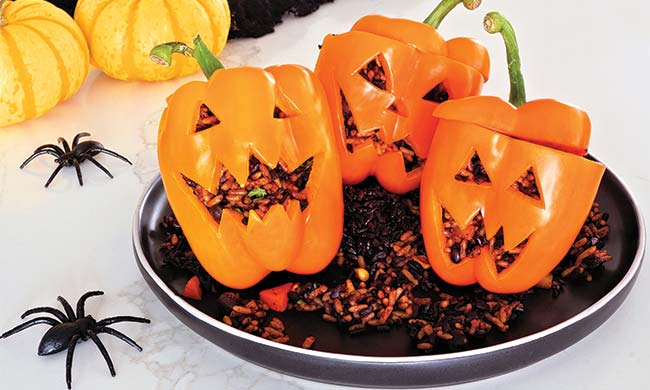
Jack-o’-Lantern Stuffed Peppers Prove Fun Isn’t Just for Pumpkins
(Feature Impact) Jack-o’-lantern carving is a cherished fall tradition – but pumpkins aren’t the only vegetables you can decorate with fun, spooky or scary faces. These Jack-o’-Lantern Stuffed Peppers give you a Halloween-themed, kid-approved way to put vegetables on the dinner table.
Filled with savory ground turkey, brown rice, melty cheese and warm, savory spices, these peppers taste as autumnal as they look. It’s simple to customize the filling to your family’s tastes, and you can even make the meal interactive by inviting kids to choose their own pepper colors and carve their own expressions.
Find more Halloween and seasonal recipes at Culinary.net.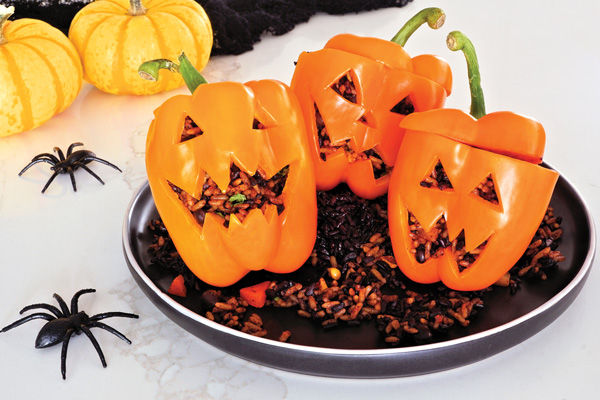
Jack-o’-Lantern Stuffed Peppers
Recipe adapted from AllRecipes
Prep time: 15 minutes
Cook time: 45 minutes
Servings: 4
- 1 teaspoon olive oil
- 1 pound ground turkey
- 3 cloves garlic, minced
- 1/2 medium onion, diced
- 1 teaspoon garlic powder
- 1 teaspoon cumin
- 4 large orange bell peppers
- 1 cup cooked brown rice
- 1 cup grated sharp cheddar cheese
- 2 teaspoons kosher salt
- 1/2 teaspoon ground black pepper
- cayenne pepper, to taste
- cups seasoned tomato sauce, warmed
- Preheat oven to 400 F and coat 9-by-13-inch baking dish with olive oil.
- In skillet, brown ground turkey with minced garlic, onion, garlic powder and cumin until meat is cooked, 4-5 minutes.
- With small knife, cut eyes, nose and mouth into flattest side of each pepper to resemble jack-o’-lantern. Cut around seed pods and remove pepper tops, trimming and discarding any seeds from under stems then setting tops aside. Trim white membranes from inside each pepper and shake out seeds. Place peppers in prepared baking dish.
- In bowl, combine turkey mixture with cooked rice, cheddar cheese, salt, black pepper and cayenne pepper, to taste.
- Divide and stuff mixture into peppers; cover with reserved pepper tops.
- Wrap baking dish loosely with aluminum foil and bake until peppers are tender, about 45 minutes.
- Spoon about 3 tablespoons warm tomato sauce onto each plate; place stuffed peppers on top. Serve remaining sauce on side.
Photo courtesy of Shutterstock
SOURCE:


New hybrid event aims to give grieving audiences meaningful holiday viewing, with films from more than 25 countries and a mission centered on love, loss, and emotional truth.
A new film festival debuting in late 2026 is taking a different approach to holiday entertainment. Grief Fest™: The Grief Film Festival, created by My Grief Angels Inc., is being introduced as what organizers believe is the world’s first film festival dedicated entirely to grief, remembrance, resilience, and healing.
The hybrid festival will run in two segments: November 25–29, 2026, during Thanksgiving week, and December 24, 2026, through January 3, 2027, during Christmas and New Year’s. Top Honors films will be announced on December 31, 2026.

Organizers say the timing is intentional. Research cited in the announcement shows that grief and loneliness are major holiday stressors for many Americans, making the season especially difficult for people coping with loss. In that context, Grief Fest™ is positioning itself as an alternative to the flood of traditional feel-good holiday programming.
The festival is open to short films, features, documentaries, experimental work, AI-generated projects, and VR experiences. It is described as inclusive, non-religious, and LGBTQ+ friendly, with submissions already received from more than 25 countries. All films will be presented in English, either spoken or subtitled.
Grief Fest™ will be available both in person and virtually through Film Festival Plus, making it accessible to audiences worldwide. The launch of GriefFest.com also includes Lumen, a multilingual AI guide designed to help filmmakers and attendees navigate the festival in their preferred language.
Rather than focusing on industry prestige, organizers say the festival is centered on community and emotionally honest storytelling. For audiences who feel unseen during the holidays, Grief Fest™ is aiming to offer something rare on the seasonal screen: recognition.
Source: PR Newswire
Related Reading
- Grief Fest: Official festival site
- My Grief Angels Inc.: About the nonprofit behind the festival
- Film Festival Plus: Virtual access platform
Catch the latest in movies, TV, music, pop culture, and live events in STM Daily News’ Entertainment section.
Food and Beverage
Ferrero Survey Says Adults Are Reclaiming Easter Candy Traditions
A new Ferrero survey finds adults are embracing Easter candy traditions, from building their own baskets to buying premium treats and raiding the kids’ stash.


Easter Is for Adults Now, Too
Ferrero’s latest survey suggests the holiday candy aisle is no longer just about kids. It is also about nostalgia, self-indulgence, and adults openly claiming a place in traditions they were once expected to outgrow.
At some point, adults stopped pretending they were only buying Easter candy for the kids.
Ferrero North America’s latest Easter Candy Survey leans hard into that reality, arguing that the “Adultoween” energy the company has been tracking around Halloween has now fully crossed into spring. According to the survey, 66% of North American adults say they deserve an Easter basket just as much as children do. If that sounds less like a shocking revelation and more like a formal acknowledgment of what has already been happening in grocery store checkout lines for years, that is probably because it is.
The bigger story here is not just that adults like candy. Of course they do. It is that brands are becoming much more comfortable marketing nostalgia, ritual, and seasonal indulgence directly to grown-ups. Easter, once framed mostly as a family holiday centered on children, is increasingly being recast as a shared cultural event where adults are not just participating politely. They are fully in it.
The Easter Bunny Has Entered the Group Chat
Ferrero’s survey of 1,000 adults in the United States and Canada paints a picture of Easter as a holiday that now comes with brunch plans, premium baskets, personal candy stashes, and a surprising amount of competitive behavior. Seventy percent of respondents said Easter is the best time of year for both adults and kids to indulge in candy together. Nearly half said they are likely to host or attend an adult Easter brunch, party, or gathering.
Then there are the confessions, which are really the heart of the whole thing. More than one in three adults said they have eaten their children’s Easter candy without telling them. More than one in four said they have competed with their own kids to find Easter eggs first. Eighteen percent admitted to cheating to win.
None of this is exactly noble, but it is revealing. The modern holiday experience is less about adults facilitating magic from the sidelines and more about everyone wanting in on the fun. Ferrero is smart to recognize that. Seasonal candy marketing has traditionally leaned on childhood wonder. What it is leaning on now is something slightly different: the idea that adulthood is stressful, nostalgia sells, and nobody really wants to age out of joy.
Candy as Culture, Not Just Confection
The survey also suggests that adults are not treating Easter candy as an afterthought. More than half of respondents said they would pay extra for a premium Easter basket, spending an average of $23 on a chocolate bunny or specialty treat. Dark chocolate, peanut butter candy, and chocolate eggs topped the wish lists. More than half also said Easter candy tastes better than Halloween candy, which feels like the kind of claim that could start arguments at a family gathering.
What matters more than the specific rankings, though, is what they signal. Holidays are increasingly being marketed as lifestyle moments rather than fixed traditions. The basket is no longer just for children. It is a seasonal self-care package, a joke, a nostalgic ritual, and a low-stakes luxury purchase all at once.
That shift says something broader about consumer culture. Adults are being invited to reclaim the symbols of childhood not because society has become less serious, but because modern life often feels serious all the time. A chocolate bunny is cheap therapy. A private stash of mini eggs is a coping mechanism with pastel packaging.
Why This Trend Matters
It would be easy to dismiss all of this as clever branding wrapped around survey data, and to be fair, Ferrero clearly knows how to turn consumer behavior into a seasonal narrative. But the company is tapping into something real. The line between kids’ traditions and adult participation has been softening for a while, whether that shows up in Halloween, themed merchandise, collectibles, or holiday food culture.
Easter now appears to be joining that list. Not because adults suddenly discovered candy in 2026, but because they are increasingly willing to admit that these rituals still mean something to them. Not everything has to be optimized, productive, or age-appropriate in the most boring sense of the phrase. Sometimes people just want the basket.
Ferrero’s Easter lineup this year includes products from Butterfinger, CRUNCH, Ferrero Rocher, Kinder, Nutella, Mother’s Cookies, Keebler, and Tic Tac, among others. The survey was conducted by Golin in partnership with Dynata between January 13 and January 27, 2026, among 1,000 respondents in the United States and Canada, with a margin of error of plus or minus 3%.
External Related Links
- Ferrero North America
- Ferrero Rocher Easter Products
- Kinder Easter Candy Collection
- Nutella Products and Brand Information
- PRNewswire Consumer Lifestyle News
Source: Ferrero North America via PRNewswire
The Food and Drink section at STM Daily News delivers fresh coverage on dining, drinks, recipes, and the food stories bringing communities together.




