
Connect with us

Science

Coral reefs face an uncertain recovery from the 4th global mass bleaching event – can climate refuges help?

Published

on

Coral reefs
The Great Barrier Reef stretches for 1,429 miles just off Australia’s northeastern coast.
Auscape/Universal Images Group via Getty Image

Noam Vogt-Vincent, University of Hawaii

Tropical reefs might look like inanimate rock, but these colorful seascapes are built by tiny jellyfish-like animals called corals. While adult corals build solid structures that are firmly attached to the sea floor, baby corals are not confined to their reefs. They can drift with ocean currents over great distances to new locations that might give them a better chance of survival.

The underwater cities that corals construct are home to about a quarter of all known marine species. They are incredibly important for humans, too, contributing at least a trillion dollars per year in ecosystem services, such as protecting coastlines from wave damage and supporting fisheries and tourism.

Unfortunately, coral reefs are among the most vulnerable environments on the planet to climate change.

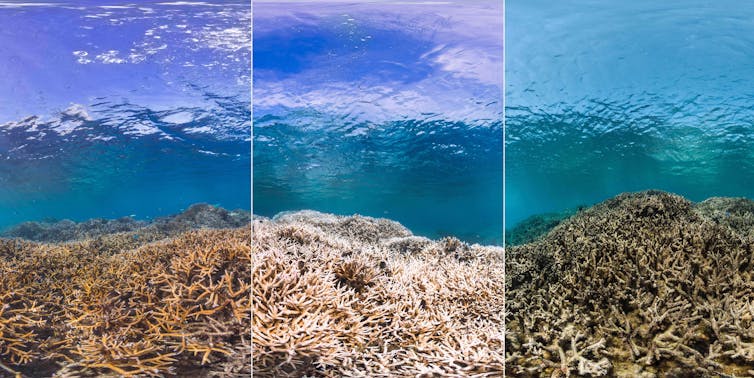
Since 2023, exceptionally warm ocean water has been fueling the planet’s fourth mass coral bleaching event on record, causing widespread mortality in corals around the world. This kind of harm is projected to worsen considerably over the coming decades as ocean temperatures rise.
file 20250507 56 t2zqkd.jpg?ixlib=rb 4.1
A healthy coral reef in American Samoa, left, experiencing coral bleaching due to a severe marine heatwave, center, and eventually dying, right.
The Ocean Agency and Ocean Image Bank., CC BY-NC

I am a marine scientist in Hawaii. My colleagues and I are trying to understand how coral reefs might change in the future, and whether new coral reefs might form at higher latitudes as the tropics become too warm and temperate regions become more hospitable. The results lead us to both good and bad news.

Corals can grow in new areas, but will they thrive?

Baby corals can drift freely with ocean currents, potentially traveling hundreds of miles before settling in new locations. That allows the distribution of corals to shift over time.

Major ocean currents can carry baby corals to temperate seas. If new coral reefs form there as the waters warm, these areas might act as refuges for tropical corals, reducing the corals’ risk of extinction.

Coral reefs made up of many individual coral polyps.
A close-up of double star corals (Diploastrea heliopora) off Indonesia.
Bernard DuPont/Flickr, CC BY-SA

Scientists know from the fossil record that coral reef expansions have occurred before. However, a big question remains: Can corals migrate fast enough to keep pace with climate change caused by humans? We developed a cutting-edge simulation to find the answer.

Field and laboratory studies have measured how coral growth depends on temperature, acidity and light intensity. We combined this information with data on ocean currents to create a global simulation that represents how corals respond to a changing environment – including their ability to adapt through evolution and shift their ranges.

Then, we used future climate projections to predict how coral reefs may respond to climate change.

We found that it will take centuries for coral reefs to shift away from the tropics. This is far too slow for temperate seas to save tropical coral species – they are facing severe threats right now and in the coming decades.

How coral reefs form.

Underwater cities in motion?

Under countries’ current greenhouse gas emissions policies, our simulations suggest that coral reefs will decline globally by a further 70% this century as ocean temperatures continue to rise. As bad as that sounds, it’s actually slightly more optimistic than previous studies that predicted losses as high as 99%.

Advertisement
Get More From A Face Cleanser And Spa-like Massage

Our simulations suggest that coral populations could expand in a few locations this century, primarily southern Australia, but these expansions may only amount to around 6,000 acres (2,400 hectares). While that might sound a lot, we expect to lose around 10 million acres (4 million hectares) of coral over the same period.

In other words, we are unlikely to see significant new tropical-style coral reefs forming in temperate waters within our lifetimes, so most tropical corals will not find refuge in higher latitude seas.

Even though the suitable water temperatures for corals are forecast to expand poleward by about 25 miles (40 kilometers) per decade, corals would face other challenges in new environments.

Our research suggests that coral range expansion is mainly limited by slower coral growth at higher latitudes, not by dispersal. Away from the equator, light intensity falls and temperature becomes more variable, reducing growth, and therefore the rate of range expansion, for many coral species.

It is likely that new coral reefs will eventually form beyond their current range, as history shows, but our results suggest this may take centuries.
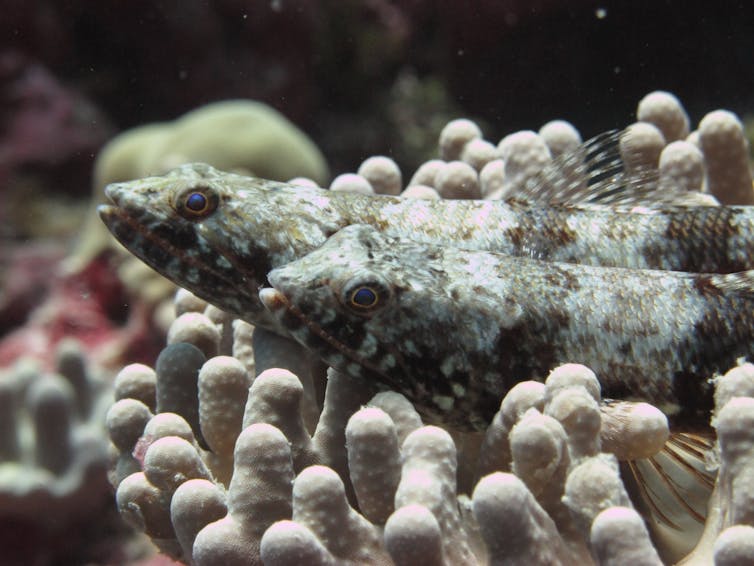
Two fish hide among the spikes of coral.
Fish hide out in the safety of Kingman Reef, in the Pacific Ocean between the Hawaiian Islands and American Samoa. Coral reefs provide protection for many species, particularly young fish.
USFWS, Pacific Islands

Some coral species are adapted to the more challenging environmental conditions at higher latitudes, and these corals are increasing in abundance, but they are much less diverse and structurally complex than their tropical counterparts.

Scientists have used human-assisted migration to try to restore damaged coral reefs by transplanting live corals. However, coral restoration is controversial, as it is expensive and cannot be scaled up globally. Since coral range expansion appears to be limited by challenging environmental conditions at higher latitudes rather than by dispersal, human-assisted migration is also unlikely to help them expand more quickly.

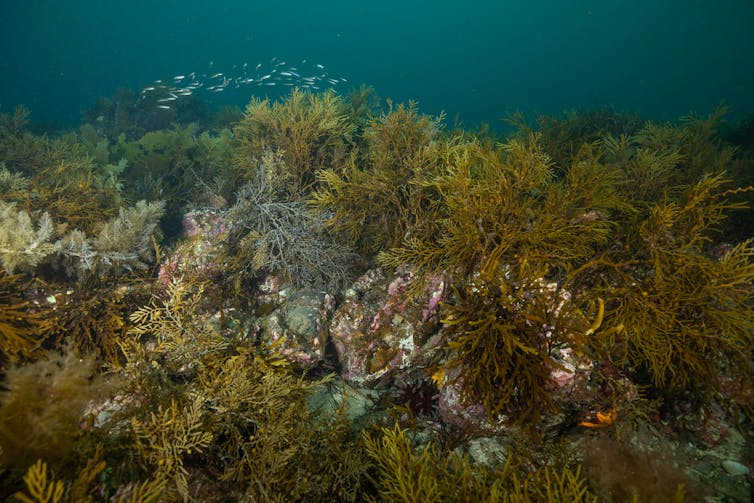
Importantly, these potential higher latitude refuges already have rich, distinct ecosystems. Establishing tropical corals within those ecosystems might disrupt existing species, so rapid expansions might not be a good thing in the first place.
file 20250507 56 e4ih71.jpg?ixlib=rb 4.1
A temperate reef near southern Australia, which could be threatened by expansions of tropical coral species.
Stefan Andrews/Ocean Image Bank, CC BY-NC

No known alternative to cutting emissions

Despite enthusiasm for coral restoration, there is little evidence to suggest that methods like this can mitigate the global decline of coral reefs.

As our study shows, migration would take centuries, while the most severe climate change harm for corals will occur within decades, making it unlikely that subtropical and temperate seas can act as coral refuges.

What can help corals is reducing greenhouse gas emissions that are driving global warming. Our study suggests that reducing emissions at a faster pace, in accordance with the Paris climate agreement, could cut the coral loss by half compared with current policies. That could boost reef health for centuries to come.

This means that there is still hope for these irreplaceable coral ecosystems, but time is running out.The Conversation

Noam Vogt-Vincent, Postdoctoral Fellow in Marine Biology, University of Hawaii

Advertisement
Get More From A Face Cleanser And Spa-like Massage

This article is republished from The Conversation under a Creative Commons license. Read the original article.

The science section of our news blog STM Daily News provides readers with captivating and up-to-date information on the latest scientific discoveries, breakthroughs, and innovations across various fields. We offer engaging and accessible content, ensuring that readers with different levels of scientific knowledge can stay informed. Whether it’s exploring advancements in medicine, astronomy, technology, or environmental sciences, our science section strives to shed light on the intriguing world of scientific exploration and its profound impact on our daily lives. From thought-provoking articles to informative interviews with experts in the field, STM Daily News Science offers a harmonious blend of factual reporting, analysis, and exploration, making it a go-to source for science enthusiasts and curious minds alike. https://stmdailynews.com/category/science/

Continue Reading
Advertisement SodaStream USA, inc

News

Joby Aviation and Toyota kick off manufacturing alliance to scale electric air taxi production

Joby Aviation and Toyota launch a joint venture to improve productivity, quality, and cost as they prepare to scale electric air taxi production.

Published

on

Joby Aviation and Toyota Motor Corporation have launched the initial phase of a strategic manufacturing alliance aimed at accelerating commercial production of electric air taxis—an early step the companies say is designed to make “air mobility for all” a practical, everyday reality.

Announced June 30, 2026, the partnership formalizes a new joint venture that will combine Joby’s electric aviation development with Toyota’s production systems and operational expertise. The near-term focus: building the groundwork for commercial production while pushing improvements in productivity, quality, and cost—key factors as the industry moves from prototypes to scaled manufacturing.

Joby Aviation and Toyota launch a joint venture to improve productivity, quality, and cost as they prepare to scale electric air taxi production.
Joby Aviation and Toyota Motor Corporation Launch Initial Phase of a Strategic Manufacturing Alliance to Realize Air Mobility for All

What the joint venture is designed to do

According to the companies, the alliance will initially concentrate on:

  • Establishing the foundation for commercial production capability
  • Advancing manufacturing excellence with an emphasis on productivity, quality, and cost
  • Supporting expansion of Joby’s production capacity as it works toward aircraft certification and prepares for anticipated demand

The announcement positions Toyota’s manufacturing playbook—known globally for lean production and continuous improvement—as a lever to help Joby move from development into repeatable, high-quality output at scale.

Why it matters: eVTOLs need scale, not just flight tests

Electric vertical take-off and landing (eVTOL) aircraft have become one of the most closely watched bets in next-generation transportation, but the path to viable air taxi services depends on more than successful test flights. Certification timelines, supply chain readiness, and the ability to produce aircraft consistently (and affordably) are often what separates promising technology from commercial reality.

By forming a joint venture focused on manufacturing readiness, Joby and Toyota are signaling that the next competitive frontier is industrialization—how quickly and reliably eVTOL aircraft can be built to meet safety standards and market demand.

Related Links for Further reading

  1. Joby Aviation (official): https://www.jobyaviation.com
  2. Joby Investor Relations / News (official updates & filings): https://ir.jobyaviation.com
  3. Toyota Newsroom (official): https://www.toyotanewsroom.com
  4. Toyota Global (corporate overview): https://global.toyota/en
  5. FAA Advanced Air Mobility / Air Taxis (context): https://www.faa.gov/air-taxis

What executives are saying

Joby founder and CEO JoeBen Bevirt emphasized the long-running relationship between the companies, calling the joint venture a reflection of shared confidence in the opportunity ahead.

“Toyota has been by Joby’s side for nearly a decade, providing invaluable guidance and support as we built the foundation for manufacturing our aircraft,” Bevirt said. “Together, we share a vision of making aerial mobility an everyday reality.”

Toyota Motor Corporation Chairman Akio Toyoda framed air mobility as an extension of the company’s broader mission.

“Since our founding, we’ve been guided by the philosophy of providing mobility for all,” Toyoda said, adding that Toyota views air mobility as “a natural extension of that philosophy—from the ground into the sky.”

About the companies

Joby Aviation (NYSE: JOBY) is a California-based transportation company developing an all-electric eVTOL air taxi. The company intends to operate its own air taxi service in cities worldwide and sell aircraft to other operators and partners.

Toyota (NYSE: TM) has operated in North America for nearly 70 years and says it is focused on sustainable, next-generation mobility through Toyota and Lexus brands. Toyota reports nearly 64,000 employees in North America, 14 manufacturing plants, and more than 1,800 dealerships. The company also noted that its North Carolina plant began assembling automotive batteries for electrified vehicles in 2025.

Advertisement
Get More From A Face Cleanser And Spa-like Massage

What to watch for next

For readers tracking the air taxi sector, the next milestones will likely center on:

  • Details on how the joint venture will be structured operationally
  • Updates on Joby’s certification progress and production ramp timelines
  • Signs of how manufacturing improvements translate into cost reductions and throughput
  • Additional agreements or expanded collaboration as the alliance progresses

While the companies highlighted expected benefits, they also noted the usual forward-looking risks—such as regulatory certification timelines, market conditions, and the ability to finalize additional agreements.

Source: Toyota Motor North America / PRNewswire (June 30, 2026)

📰 Enjoying STM Daily News? Join the conversation!

💬 Leave a comment, share your thoughts, and subscribe to our newsletter for the latest stories, updates, and “News You Can Use This Moment!” delivered to your inbox.

Stay connected with STM Daily News!

Start Your Morning Informed

Get the STM Morning Brief delivered to your inbox every weekday with breaking news, transportation updates, technology, science, and trending stories.

STM News Brief Ad 2

We don’t spam! Read our privacy policy for more info.

Advertisement
Get More From A Face Cleanser And Spa-like Massage
Continue Reading

STM Blog

From Hand Signals to Smart Crosswalks: The Evolution of the Modern Pedestrian Signal

Discover the history of the modern pedestrian signal, from Garrett A. Morgan’s groundbreaking traffic signal to today’s smart, accessible crosswalks.

Published

on

Last Updated on July 12, 2026 by Daily News Staff

The Evolution of the Modern Pedestrian Signal

Every day, millions of people rely on pedestrian signals to cross busy street safely. A glowing white walking figure, an orange-red hand, and a countdown timer have become familiar sights around the world. While these signals may seem like simple pieces of infrastructure, they are the result of more than a century of innovation, engineering, and public safety improvements.

The modern pedestrian signal did not appear overnight. Instead, it evolved through the contributions of inventors, engineers, city planners, and transportation officials who continually refined traffic control systems as cities grew and automobiles became more common.

The Early Days of Traffic Control

Before electric traffic signals, intersections were controlled by police officers, railway-style semaphores, or even hand signals. As horse-drawn wagons gave way to automobiles in the early 1900s, traffic congestion and accidents increased dramatically, creating an urgent need for better traffic management.

One of the earliest electric traffic lights was installed in Cleveland, Ohio, in 1914. It used red and green lights and was manually operated. While it improved vehicle movement, pedestrians still had to judge for themselves when it was safe to cross.

How the Modern Pedestrian Signal Changed the Way We Cross Streets

Garrett A. Morgan’s Breakthrough

One of the most important milestones came in 1923 when inventor and entrepreneur Garrett Augustus Morgan received U.S. Patent No. 1,475,024 for an improved traffic signal.

Morgan’s design introduced a third position in addition to “Stop” and “Go.” This intermediate phase temporarily stopped traffic in every direction before allowing vehicles to proceed. The brief pause reduced confusion at intersections and provided additional time for pedestrians to cross safely.

Morgan reportedly developed his design after witnessing a serious traffic accident. His invention demonstrated how thoughtful engineering could improve public safety while making increasingly busy streets more efficient.

Although Morgan did not invent the illuminated “WALK” and “DON’T WALK” pedestrian signal used today, his three-position signal became a foundational step in the evolution of modern traffic control.

The Birth of Dedicated Pedestrian Signals

As cities expanded after World War II, pedestrian safety became an even greater concern. More people were walking in increasingly crowded downtown districts, and separating pedestrian movements from vehicle traffic became a priority.

Advertisement
Get More From A Face Cleanser And Spa-like Massage

During the early 1950s, several American cities began experimenting with dedicated pedestrian signals. New York City became one of the first major municipalities to install illuminated “WALK” and “DON’T WALK” signs at busy intersections.

These early systems gave pedestrians their own designated crossing phase, reducing conflicts with turning vehicles and improving safety at some of the nation’s busiest intersections.

Standardization Across America

By the 1960s and 1970s, traffic engineers recognized the importance of creating consistent traffic control devices nationwide.

The Manual on Uniform Traffic Control Devices (MUTCD) established national standards for traffic signs, pavement markings, and pedestrian signals. Standardized designs helped ensure that pedestrians could understand crossing signals regardless of where they traveled in the United States.

Eventually, words gave way to internationally recognized symbols—a walking person to indicate it was safe to cross and an upraised hand to indicate pedestrians should wait. These symbols transcended language barriers and improved accessibility for visitors and non-English speakers.

The Countdown Era

One of the most significant modern improvements arrived with pedestrian countdown timers.

Rather than simply flashing a warning, countdown displays show exactly how many seconds remain before the crossing phase ends. Research has shown that countdown timers help pedestrians make better crossing decisions and improve compliance with traffic signals.

Today, countdown timers have become standard equipment at intersections across much of the United States.

Accessibility Takes Center Stage

Modern pedestrian signals are designed to serve everyone.

Accessible Pedestrian Signals (APS) now provide audible tones, spoken messages, vibrating push buttons, and locator sounds that assist pedestrians who are blind or have low vision. These features allow more people to navigate intersections independently and safely.

Advertisement
Get More From A Face Cleanser And Spa-like Massage

The continued development of accessible technology reflects a broader commitment to making transportation systems inclusive for all users.

The Future of Pedestrian Safety

Pedestrian signals continue to evolve.

Many cities now use smart traffic systems that detect pedestrians waiting to cross, automatically adjust signal timing based on traffic conditions, and prioritize people walking during busy periods.

Researchers are exploring artificial intelligence, connected vehicle technology, and sensor-based systems capable of communicating directly with autonomous vehicles. Future pedestrian crossings may adapt in real time to weather conditions, crowd sizes, emergency vehicles, and even the needs of older adults or individuals with disabilities.

A Legacy Built by Many Innovators

The pedestrian signal we know today is the product of more than a century of collaboration and innovation.

Early traffic engineers created the first electric traffic lights. Garrett A. Morgan improved intersection safety with his groundbreaking three-position traffic signal. Transportation agencies standardized traffic control devices, while engineers continued refining pedestrian technology through countdown timers, accessible features, and intelligent traffic systems.

Every safe crossing today reflects the work of countless inventors, planners, researchers, and public officials dedicated to protecting lives.

As cities continue to grow and transportation technology advances, the humble pedestrian signal remains one of the most effective—and often overlooked—public safety innovations ever developed.

At STM Daily News, we celebrate the inventors, engineers, and visionaries whose everyday innovations quietly improve life for millions of people. Sometimes the most important inventions aren’t the ones that grab headlines—they’re the ones we depend on every single day without giving them a second thought.

Related Reading

🧠 Discover the remarkable innovators, inventors, and trailblazers who helped shape our world but rarely receive the recognition they deserve. Share your thoughts in the comments and subscribe to the STM Daily News newsletter to catch every new Forgotten Genius Friday feature and more inspiring stories delivered to your inbox.

Advertisement
Get More From A Face Cleanser And Spa-like Massage

Continue Reading

The Earth

Cement has a climate problem — here’s how geopolymers with add‑ins like cork could help fix it

Portland cement drives ~8% of global emissions. Learn how low-carbon geopolymers—enhanced with add-ins like cork—could cut concrete’s footprint.

Published

on

file 20260208 56 zgr72e.jpg?ixlib=rb 4.1
Portland cement, widely used for concrete, is responsible for about 8% of global greenhouse gas emissions. Photovs/iStock/Getty Images Plus

Alcina Johnson Sudagar, Washington University in St. Louis

Concrete is all around you – in the foundation of your home, the bridges you drive over, the sidewalks and buildings of cities. It is often described as the second-most used material by volume on Earth after water.

But the way concrete is made today also makes it a major contributor to climate change.

Portland cement, the key component of concrete, is responsible for about 8% of global greenhouse gas emissions. That’s because it’s made by heating limestone to high temperatures, a process that burns a large amount of fossil fuels for energy and releases carbon dioxide from the limestone in the process.

The good news is that there are alternatives, and they are gaining attention.

Portland cement: A greenhouse gas problem

Cementlike substances have been used in construction for thousands of years. Architects have found evidence of their use in the pyramids of Egypt and the buildings and aqueducts of the Roman Empire.

The Portland cement commonly used in construction today was patented in 1824 by Joseph Aspdin, a British bricklayer.

Modern cement preparation starts with crushing the excavated raw materials limestone and clay and then heating them in a kiln at around 2,650 degrees Fahrenheit (about 1,450 degrees Celsius) to form clinker, a hard, rocklike residue. The clinker is then cooled and ground with gypsum into a fine powder, which is called cement.

About 40% of the carbon dioxide emissions from cement production come from burning fossil fuels to generate the high heat needed to run the kiln. The rest come as the heat converts limestone (calcium carbonate) to lime (calcium oxide), releasing carbon dioxide.

In all, between half a ton and 1 ton of greenhouse gas is released per ton of Portland cement. Cement is a binding agent that, mixed with water, holds aggregate together to create concrete. It makes up about 10% to 15% of the concrete mix by weight.

Alternative technologies can lower emissions

As populations, cities and the need for new infrastructure expand, the use of cement is growing, making it important to find alternatives with lower environmental costs.

Advertisement
Get More From A Face Cleanser And Spa-like Massage
Concrete has seen the fastest growth among commonly used construction materials with rising population between 1950 and 2023
As population has increased, annual global Portland cement production has risen with it. Hao Chen, et al., 2025, CC BY-NC-ND

Some techniques for reducing carbon dioxide emissions include substituting some of the clinker – the hard residue typically made from limestone – with supplementary materials such as clay, or fly ash and slag from industries. Other methods reduce the amount of cement by mixing in waste sawdust or recycled materials like plastics.

The long-term solution for reducing cement’s emissions, however, is to replace traditional cement completely with alternatives. One option is geopolymers made from earthen clay and industrial wastes.

Geopolymers: A more climate-friendly solution

Geopolymers can be made by mixing claylike materials that are rich in aluminum and silicon minerals with a chemical activator through a process called geopolymerization. The activator transforms the silicon and aluminum into a structure that will look like cement. All of this can happen at room temperature.

The major difference between cement and geopolymer is that cement is mainly made of calcium, whereas geopolymers are made of silicon and aluminum with some possible calcium in their structure.

Geopolymers offer advantages with lower number of steps, lower CO2 emission and lower water requirement over Portland cement
How the production of Portland cement and geopolymers compare. Alcina Johnson Sudagar, CC BY-NC

These geopolymers have been found to possess high strength and durability, including resilience in freeze-thaw cycles and resistance to heat and fire, which are important requirements in construction. Studies have found that some geopolymers can provide comparable if not better strength than traditional cement and, because they don’t require heat the way clinker does, they can be produced with significantly lower greenhouse gas emissions.

Geopolymers can also be produced from a variety of raw materials rich in aluminum and silicon, including earthen clays, fly ash, blast furnace slag, rice husk ash, iron ore wastes and recycled construction brick waste. Geopolymer technology can be adapted depending on the clay or industrial waste locally available in a region. https://www.youtube.com/embed/NOj3p6m9M7Q?wmode=transparent&start=0 A brief history of cement and geopolymers. Geopolymer International.

An added advantage of geopolymers is that changes to the mixture can produce a range of features.

For example, I and my co-researchers at the University of Aveiro in Portugal added a small amount of cork industry waste – the leftovers from creating bottle corks – to clay-based geopolymer and found it could improve the strength of the material by up to twofold. The cork particles filled the spaces in the geopolymer structure, making it denser, which increased the strength.

Similarly, additives such as sisal fibers from the agave plant, recycled plastic and steel fibers can change geopolymer properties. The additives do not participate in the geopolymerization process but act as fillers in the structure.

The structure of geopolymers can also be designed to act as adsorbents, attracting toxic metals in wastewater and capturing and storing radioactive wastes. Specifically, incorporating materials like zeolite that are natural adsorbents in the geopolymer structure can make them useful for such applications as well.

Where geopolymers are used now

Geopolymers have been used in many types of construction, including roads, coatings, 3D printing, coastal environmental protection, the steel and chemical industries, sewer rehabilitation and building radiation shielding and rocket launchpad and bunker infrastructure.

One of the earliest examples of a modern geopolymer concrete project was the Brisbane West Wellcamp airport in Australia.

Advertisement
Get More From A Face Cleanser And Spa-like Massage

It was built in 2014 with 70,000 metric tons of geopolymer concrete, which was estimated to have reduced the project’s carbon dioxide emissions by as much as 80%.

The geopolymer market is currently estimated to be between US$7 billion and $10 billion, with the largest growth in the Asia-Pacific region.

Analysts have estimated that the market could grow at a rate of 10% to 20% per year and reach about $62 billion by 2033.

In several countries, greenhouse gas regulations and green-building certifications are expected to support the continued growth of geopolymers in the construction industry.

Expanding the use of cement alternatives

The advantage of using industrial wastes in geopolymers is a double-edged sword, however. The composition of industrial wastes varies, so it can be difficult to standardize the processing methods. The geopolymer components need to be mixed in particular ratios to achieve desired properties.

Producing the activator for the geopolymer, typically done in chemical facilities, can raise the cost and contribute to the carbon footprint. And the long-term data about these materials’ stability is only now being developed given their newness. Also, these geopolymers can take longer to set than cement, though the setting time can be sped up by using raw materials that react quickly.

Developing cheaper, naturally available activators like agricultural waste rice husk with sustainable supply chains could help lower the costs and environmental impact. Also, printing the recipe on the raw material packaging could help simplify the job of determining the mixing ratio so geopolymers can be more widely used with confidence.

Even though geopolymer technology has some drawbacks, these low-carbon alternatives have great potential for reducing emissions from the construction sector.

Alcina Johnson Sudagar, Research Scientist in Chemistry, Washington University in St. Louis

This article is republished from The Conversation under a Creative Commons license. Read the original article.

Advertisement
Get More From A Face Cleanser And Spa-like Massage

📰 Enjoying STM Daily News? Join the conversation!

💬 Leave a comment, share your thoughts, and subscribe to our newsletter for the latest stories, updates, and “News You Can Use This Moment!” delivered to your inbox.

Stay connected with STM Daily News!

Continue Reading

Trending