Connect with us

The Bridge

Reverse discrimination? In spite of the MAGA bluster over DEI, data shows white Americans are still advantaged

Published

on

 MAGA
There’s no evidence of widespread racial discrimination against white people.
Sebastian Gorczowski/iStock/Getty Images Plus

Reverse discrimination? In spite of the MAGA bluster over DEI, data shows white Americans are still advantaged

Fred L. Pincus, University of Maryland, Baltimore County

Two big assumptions underlie President Donald Trump’s attack on diversity, equity and inclusion policies. The first is that discrimination against people of color is a thing of the past. The second is that DEI policies and practices discriminate against white people – especially white men – in what’s sometimes called “reverse discrimination.”

I’m a sociologist who’s spent decades studying race and inequality, and when I read the documents and statements coming out of the Trump White House, these assumptions jump out at me again and again – usually implicitly, but always there.

The problem is that the evidence doesn’t back these assumptions up.

For one thing, if discrimination against white Americans were widespread, you might expect large numbers to report being treated unfairly. But polling data shows otherwise. A 2025 Pew survey found that 70% of white Americans think Black people face “some” or “a lot” of discrimination in general, and roughly two-thirds say the same of Asian and Hispanic people. Meanwhile, only 45% of white Americans believe that white people in general experience that degree of discrimination.

In other words, white Americans believe that people of color, as a group, face more discrimination than white people do. People of color agree – and so do Americans overall.

In a second national study, using data collected in 2023, Americans were asked if they had personally experienced discrimination within the past year. Thirty-eight percent of white people said they had, compared to 54% of Black Americans, 50% of Latinos and 42% of Asian Americans. In other words, white Americans are much less likely to say that they’ve been discriminated against than people of color.

The ‘hard’ numbers show persistent privilege

These statistics are sometimes called “soft” data because they reflect people’s perceptions rather than verified incidents. To broaden the picture, it’s worth looking at “hard” data on measures like income, education and employment outcomes. These indicators also suggest that white Americans as a group are advantaged relative to people of color.

For example, federal agencies have documented racial disparities in income for decades, with white Americans, as a group, generally outearning Black and Latino Americans. This is true even when you control for education. When the Census Bureau looked at median annual earnings for Americans between 25 and 64 with at least a bachelor’s degree, it found that Black Americans received only 81% of what comparably educated white Americans earned, while Latinos earned only 80%. Asian Americans, on the other hand, earned 119% of what white people earned.

These gaps persist even when you hold college major constant. In the highest-paying major, electrical engineering, Black Americans earned only 71% of what white people did, while Latinos earned just 73%. Asian Americans, in contrast, earned 104% of what white people earned. In the lowest-paid major, family and consumer sciences, African Americans earned 97% of what white people did, and Latinos earned 94%. Asian Americans earned 117% of what white people earned. The same general pattern of white income advantage existed in all majors with two exceptions: Black people earned more in elementary education and nursing.

Remember, this is comparing individuals with a bachelor’s degree or higher to people with the same college major. Again, white Americans are still advantaged in most career paths over Black Americans and Latinos.

Advertisement
Get More From A Face Cleanser And Spa-like Massage

Disparities persist in the job market

Unemployment data show similar patterns. The July 2025 figures for workers at all education levels show that Black people were 1.9 times more likely to be unemployed than white Americans. Latinos were 1.4 times more likely to be unemployed, and Asian Americans, 1.1 times.

This same white advantage still occurs when looking only at workers who have earned a bachelor’s degree or more. Black Americans who have earned bachelor’s degrees or higher were 1.3 times more likely to be unemployed than similarly educated white Americans as of 2021, the last year for which data is available. Latinos with college degrees were 1.4 times more likely to be unemployed than similar white Americans. The white advantage was even higher for those with only a high school degree or less. Unfortunately, data for Asian Americans weren’t available.

In another study, researchers sent 80,000 fake resumes in response to 10,000 job listings posted by 97 of the largest employers in the country. The credentials on the resumes were essentially the same, but the names signaled race: Some had Black-sounding names, like Lakisha or Leroy, while others had more “white-sounding” names like Todd or Allison. This method is known as an “audit study.”

This research, which was conducted between 2019 and 2021, found that employers were 9.5% more likely to contact the Todds and Allisons than the Lakishas and Leroys within 30 days of receiving a resume. Of the 28 audit studies that have been conducted since 1989, each one showed that applicants with Black- or Latino-sounding names were less likely to be contacted that those with white-sounding or racially neutral names.

Finally, a 2025 study analyzed 600,000 letters of recommendation for college-bound students who used the Common App form during the 2018-19 and 2019-20 academic years. Only students who applied to at least one selective college were included. The study found that letters for Black and Latino students were shorter and said less about their intellectual promise.

Similarly, letters in support of first-generation students – that is, whose parents hadn’t graduated from a four-year college, and who are disproportionately likely to be Black and Latino – had fewer sentences dedicated to their scientific, athletic and artistic abilities, or their overall academic potential.

These and other studies don’t provide evidence of massive anti-white discrimination. Although scattered cases of white people being discriminated against undoubtedly exist, the data suggest that white people are still advantaged relative to non-Asian people of color. White Americans may be less advantaged than they were, but they’re still advantaged.

While it’s true that many working-class white Americans are having a tough time in the current economy, it’s not because of their race. It’s because of their class. It’s because of automation and overseas outsourcing taking away good jobs. It’s because of high health care costs and cuts in the safety nets.

In other words, while many working-class white people are struggling now, there’s little evidence race is the problem.

Fred L. Pincus, Emeritus Professor of Sociology, University of Maryland, Baltimore County

Advertisement
Get More From A Face Cleanser And Spa-like Massage

This article is republished from The Conversation under a Creative Commons license. Read the original article.

Community

4 Ways to Preserve Veterans’ Stories for Future Generations

Family stories, photographs, letters and memories all have a place in the broader story of humanity, but if they aren’t recorded and preserved, they can fade over time. Consider these ways to help the veterans in your life preserve their stories and leave their mark on history. Preserve Veterans’ Stories for Future Generations

Published

on

4 Ways to Preserve Veterans' Stories for Future Generations

4 Ways to Preserve Veterans’ Stories for Future Generations

(Feature Impact) History is built from stories and memories, which is why it’s important to listen to the people who were there as the world changed. Family stories, photographs, letters and memories all have a place in the broader story of humanity, but if they aren’t recorded and preserved, they can fade over time.

Because more than 70 years have passed since the Korean War ended, opportunities to hear firsthand accounts from earlier conflicts grow fewer as time passes. Veterans and their families may be able to help record stories and lessons from “The Forgotten War” that might otherwise be lost.

You don’t need to be a historian to help preserve your loved ones’ memories and experiences. Programs like the Library of Congress Veterans History Project are dedicated to collecting stories from people like Private First Class Robert Lawrence Barber, who wrote regular letters home to his mother while serving in Korea. They paint a harrowing picture of combat, exhaustion, cold, fatigue and the stark realities of war that should never be forgotten. Experiences away from combat can be equally revealing, from daily routines and friendships to unexpected challenges.

Consider these ways to help the veterans in your life preserve their stories and leave their mark on history.

Start the Conversation Now

When it comes to recording memories, time is of the essence, especially for those who served in Korea. Decades may have passed, but each day makes a difference. Sit down with your loved one and gently start the conversation. You don’t have to get the entire backstory at once, but you can begin asking questions about their military experience and give them time to gather their thoughts.

18193 detail embed2Record Their Story

How a story is told can add dimension to the story itself. An audio or video recording preserves your loved one’s voice, expressions and emotions along with their words, giving your family memories to look back on for generations. Choose a quiet, comfortable space and test the equipment before recording.

Consider Preserving the Story Beyond Your Family

Family stories are most meaningful to those who know and love the storyteller, but they also matter to the world. Sharing veterans’ stories – including difficulties and ordinary moments – offers others a firsthand view of military life. Libraries and oral history archives may be able to preserve qualifying material for a wider audience.

“We want all stories, not just those from the foxhole or the battlefronts, but from all veterans who served the United States in uniform,” said Monica Mohindra, director of the Veterans History Project. “What did they hear? What did they see? What did it mean to them?”

If you have oral history interviews, and/or original photographs, letters or other records, consider contributing them to be archived and made accessible to future generations. Staff members are available to help you curate and select physical materials to contribute to the nation’s library.

Give Old Photos and Letters Context

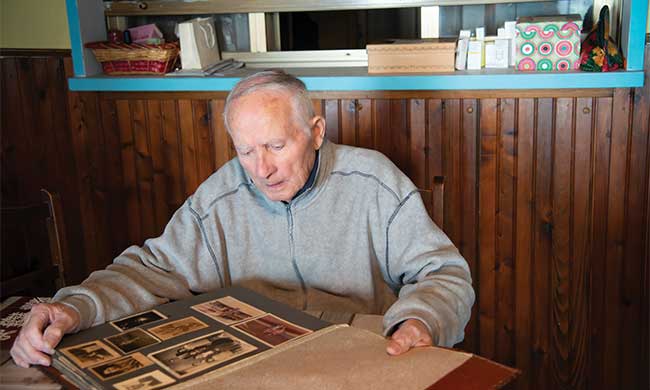
Brush the dust off those old photo albums, scrapbooks and memory boxes because they may contain tangible pieces of history. A photograph, letter or piece of memorabilia could be what a veteran needs to bring fuzzy memories back into focus – whether it’s seeing the face of an old comrade or reading a letter written home. That gives you the opportunity to hear new stories and fill in context.

Learn more, discover veterans’ histories and find instructions for contributing veterans’ stories at loc.gov/vets.

Advertisement
Get More From A Face Cleanser And Spa-like Massage

Photo courtesy of Shutterstock (man looking at photo album)

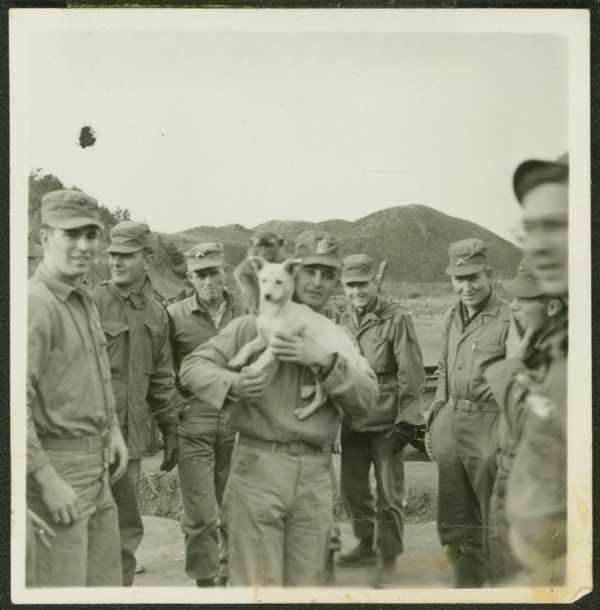
Photo courtesy of the Library of Congress (group of soldiers)

collect?v=1&tid=UA 482330 7&cid=1955551e 1975 5e52 0cdb 8516071094cd&sc=start&t=pageview&dl=http%3A%2F%2Ftrack.familyfeatures
track

SOURCE:

Library of Congress Veterans History Project

Start Your Morning Informed

Get the STM Morning Brief delivered to your inbox every weekday with breaking news, transportation updates, technology, science, and trending stories.

STM News Brief Ad 2

We don’t spam! Read our privacy policy for more info.

Continue Reading

Community

5 Meaningful Ways to Make a Difference This Holiday Season

Make a Difference This Holiday Season: Hunger relief is often top of mind during the holidays, and there are many ways to make a meaningful difference. Consider these ideas.

Published

on

5 Meaningful Ways to Make a Difference This Holiday Season

5 Meaningful Ways to Make a Difference This Holiday Season

(Feature Impact) The holiday season brings people together and often inspires them to think about how they can support others. Yet for many families, this time of year can bring added pressure as they balance the cost of food and other everyday essentials.

According to Feeding America’s latest Map the Meal Gap study, published in 2026, nearly 48 million people in the United States, including 14 million children, experience food insecurity.

Hunger relief is often top of mind during the holidays, and there are many ways to make a meaningful difference. Each year, Charles Schwab employees come together through Season of Giving to support local nonprofits and help make the holidays brighter for those in need.

Consider these ideas from Charles Schwab Foundation, a nonprofit dedicated to advancing financial literacy and strengthening communities.

https://stmdailynews.com/veggies-for-veterans-distributes-600-produce-bags-at-phoenix-va/

Give What’s Needed Most

When giving to a local food bank, pantry or other nonprofit, start by finding out what the organization needs most. Many organizations share lists of priority items, while monetary donations can give them flexibility to direct resources where they will have the greatest impact. A little planning can help make every contribution count.

Turn Giving Into a Group Activity

Invite family, friends, neighbors or coworkers to get involved with you. Organizing a donation drive, packing meals or volunteering together can multiply the impact while creating a meaningful way to connect during the holiday season.

Share Your Time and Talents

There are many ways to contribute beyond making a donation. Consider volunteering your time or putting your skills to use for an organization that could benefit from them. From sorting donations and packing meals to helping with special events or administrative projects, your time and expertise can make a meaningful impact.

Support Organizations in Your Own Community

The holidays are an opportunity to learn more about the organizations serving your neighbors every day. Look for local nonprofits addressing needs that matter to you, whether that is hunger, housing, education or another community priority. Supporting organizations close to home can help strengthen the networks people rely on throughout the year.

Keep Giving Beyond the Holidays

The spirit of giving doesn’t have to end when the holiday season is over. Consider turning a one-time contribution into an ongoing commitment, whether by volunteering periodically, making recurring donations or continuing to support an organization with a mission that resonates with you.

Learn more about the work being done to advance financial literacy and strengthen communities at schwabmoneywise.com/foundation.

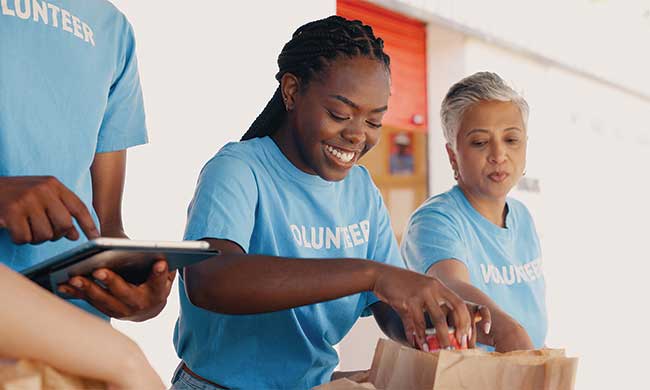
Photo courtesy of Shutterstock

Advertisement
Get More From A Face Cleanser And Spa-like Massage
collect?v=1&tid=UA 482330 7&cid=1955551e 1975 5e52 0cdb 8516071094cd&sc=start&t=pageview&dl=http%3A%2F%2Ftrack.familyfeatures
track

SOURCE:

Charles Schwab

Continue Reading

Community

Veggies for Veterans Distributes 700 Produce Bags at Phoenix VA

Published

on

Last Updated on November 11, 2026 by Daily News Staff

Fifty volunteers joined Diana Gregory Outreach Services and community partners on November 5, with support from AARP, State Farm, and BHHS Legacy Foundation.

Volunteers distribute fresh produce bags during Veggies for Veterans at Phoenix VA on November 5, 2026.
Fifty volunteers helped distribute 700 produce bags at the November 5, 2026, Veggies for Veterans event, hosted by Phoenix VA Health Care System. Image Credit: R Washington

PHOENIX — Fresh produce and community support came together Thursday morning, November 5, 2026, as Veggies for Veterans distributed 700 grocery bags during an event hosted by the Phoenix VA Health Care System.

The Diana Gregory Outreach Services (DGOS) program brought together 50 volunteers to help provide veterans with nutritious food. Each bag contained a variety of 13 fruits and vegetables, according to the event results supplied by organizers.

The effort also received a contribution from Peddler’s Son, which donated a five-pound bag of Idaho potatoes and a bag of grapes for each veteran.

More Than a Bag of Groceries

AARP, State Farm, and BHHS Legacy Foundation Lead Financial Support

AARP, State Farm, and BHHS Legacy Foundation were the event’s three largest financial sponsors, helping make the distribution possible.

Volunteers represented all three organizations, along with the Archer Ragsdale Arizona Chapter Tuskegee Airmen, Inc. Arizona Community Foundation and Santander also contributed volunteer support.

AARP Arizona State Director Dana Marie Kennedy attended the event. AARP’s participation included volunteers and an outreach table featuring candy and AARP-branded giveaway items for attendees and veterans.

Together, the financial contributions, donated food, and volunteer service supported an event centered on veterans and their access to fresh produce.

A Special Guest With a Remarkable Service History

Among those attending was 106-year-old Major Fannie Griffin McClendon, whose military career connects the gathering to an extraordinary chapter in American history.

McClendon served during World War II with the 6888th Central Postal Directory Battalion, widely known as the “Six Triple Eight.” The historic unit of Black women soldiers helped process a massive backlog of military mail in Europe.

Advertisement
Get More From A Face Cleanser And Spa-like Massage

Her service continued beyond World War II. The Library of Congress documents her later career in the Air Force, including service as a squadron commander.

Her attendance offered an opportunity to recognize a veteran whose career helped break barriers for Black women in the military.

More Than a Bag of Groceries

Veggies for Veterans’ purpose extends beyond the food distributed at an individual event. The program focuses on helping veterans access fresh produce while creating opportunities for connection and community support.

Grocery costs, transportation, and mobility can make obtaining nutritious food difficult. Bringing produce directly to veterans through VA and community settings is one way the program works to address those barriers.

The November 5 distribution also reflected the collective work behind that support: an organization coordinating the effort, a VA host, financial sponsors, a food donor, and volunteers contributing their time.

With 700 bags distributed and 50 volunteers participating, the event demonstrated how community partnerships can translate into practical support for veterans.

Readers interested in learning more about the program, volunteering, or exploring ways to support its work can visit Diana Gregory Outreach Services.


Reporting note: Event results, sponsor recognition, donations, volunteer participation, and attendee information were supplied for this recap. Historical background on Major McClendon is supported by the Library of Congress.

Sources and Further Information

https://stmdailynews.com/5-ways-to-make-a-difference-in-your-community/
Continue Reading

Trending