Connect with us

The Bridge

Bruce Springsteen’s ‘Born to Run’ still speaks to a nation vacillating between hope and despair

Published

on

Born to Run
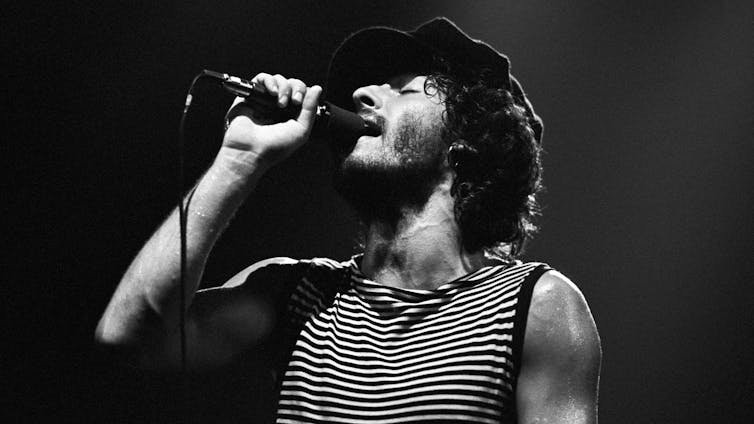
Bruce Springsteen performs in Atlanta on Aug. 22, 1975, during the ‘Born to Run’ tour.
Tom Hill/WireImage via Getty Images

Bruce Springsteen’s ‘Born to Run’ still speaks to a nation vacillating between hope and despair

Louis P. Masur, Rutgers University

I was 18 when Bruce Springsteen’s third album, “Born to Run,” was released 50 years ago, and it couldn’t have come at a better time.

I’d just finished my freshman year in college, and I was lost. My high school girlfriend had broken up with me by letter. I had no idea what I wanted to do with my life. I was stuck back in my parents’ apartment in the Bronx.

So when I dropped the record onto my Panasonic turntable and Springsteen sang, “So you’re scared and you’re thinking/That maybe we ain’t that young anymore” on the opening track, “Thunder Road,” I felt as if he were speaking directly to me.

But no song moved me more than the album’s title track, “Born to Run.” How I longed for that sort of love – and how I also felt strangled by the “runaway American dream.” The song was about getting out, but also about searching for a companion. I, too, was a “scared and lonely rider” who craved arriving at a special place. Decades later, I combined the personal and the professional and wrote a book about the making and meaning of the album.

All eyes on the Boss

The album was shaped by the times, particularly the malaise of the post-Vietnam and post-Watergate American landscape. There was an energy crisis, and it wasn’t only oil that was in short supply.

The excitement of the 1960s had passed, and rock ’n’ roll itself was in the doldrums. Elvis had become a Las Vegas lounge act; the Beatles had broken up; Bob Dylan had been a recluse since his motorcycle accident in 1966. The No. 1 hit in 1975 was “Love Will Keep Us Together,” by the Captain and Tennille. Obituaries to rock music appeared regularly.

Springsteen went into the studio feeling the pressure to produce. His first two albums had received good reviews but sold poorly. After seeing a show in Cambridge, Massachusetts, in 1974, writer Jon Landau proclaimed Springsteen “the future of rock ’n’ roll.” Springsteen wore the label uneasily, though he had more than enough ambition to try and fulfill the prophecy: He later called “Born to Run,” “my shot at the title, a 24-year-old kid aiming at the greatest rock ’n’ roll record ever.”

But in the studio, he struggled. It took him six months to record the title song. He kept rewriting the lyrics and experimenting with different sounds. He was composing epics: “Tenth Avenue Freeze Out,” “Backstreets,” “Jungleland.” And he was trying to tie it all together thematically as his characters searched for love and connection and endured disappointment and heartbreak.

When Springsteen was finally done with the album, he hated it. He even threw a test pressing into a pool. But Landau, who had come on to co-produce, convinced him to release it.

Poetry for the masses

Despite Springsteen’s apprehension, the response to “Born to Run” was remarkable. Hundreds of thousands of copies flew off the shelves.

Advertisement
Get More From A Face Cleanser And Spa-like Massage

Springsteen appeared on the covers of Newsweek and Time, where he was hailed as “Rock’s New Sensation.” Writing in Rolling Stone, critic Greil Marcus called it “a magnificent album that pays off on every bet ever placed on him.”

There was backlash from some corners: critics who resented all the hype Springsteen had received and who thought the music bombastic. But most agreed with John Rockwell of The New York Times, who praised the album’s songs as “poetry that attains universality. … You owe it to yourself to buy this record.”

An operatic drama

The album pulsates between hope and despair. Side 1 carries listeners from the elation of “Thunder Road” to the heartbreak of “Backstreets,” and Side 2 repeats the trajectory, from the exhilaration of “Born to Run” to the anguish of “Jungleland.”

I felt I knew the characters in these songs – Mary and Wendy, Terry and Eddie – and I identified with the narrator’s struggles and dreams. They all wrestled with feeling stuck. They longed for something bigger and more exciting. But what was the price to pay for taking the leap – whether for love or the open road?

These lyrical, operatic songs about freedom and fate, triumph and tragedy, still resonate, even though today’s music is more likely to emphasize beats, samples and software than extended guitar and saxophone solos. Springsteen continues to tour, and fans young and old fill arenas and stadiums to hear him because rock ’n’ roll still has something to say, still makes you shout, still makes you feel alive.

“It’s embarrassing to want so much, and to expect so much from music,” Springsteen said in 2005, “except sometimes it happens – the Sun Sessions, Highway 61, Sgt. Peppers, the Band, Robert Johnson, Exile on Main Street, Born to Run – whoops, I meant to leave that one out.”

In fall 1975, I played “Born to Run” over and over in my dorm room. I’d stare at Eric Meola’s cover photograph of a smiling Springsteen in leather jacket and torn T-shirt, his guitar pointing out and upward as he gazes toward his companion.

Who wouldn’t want to join Springsteen and his legendary saxophonist, Clarence Clemons, on their journey?

That October, I went on a first date with a girl. We’ve been married 44 years, and the stirring declaration from “Born to Run” has proven true time and again: “love is wild, love is real.”
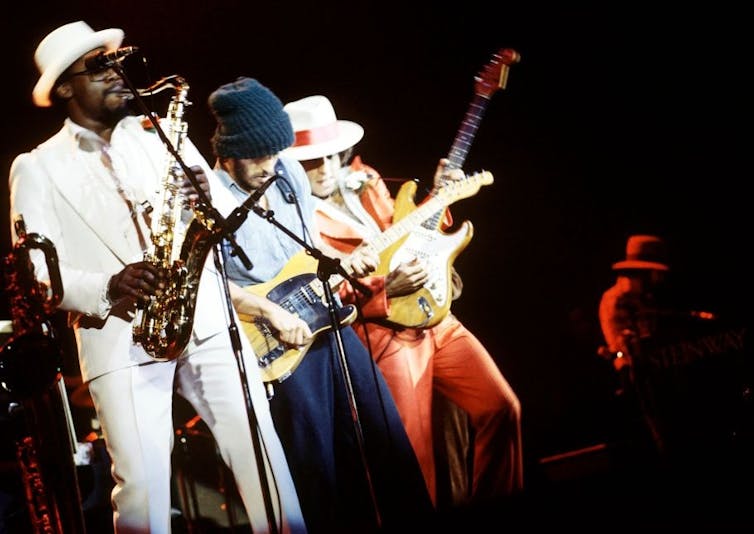
A saxophonist and two guitar players stand side-by-side as they perform on stage.
Saxophonist Clarence Clemons, Bruce Springsteen and guitarist Steven Van Zandt perform in the U.K. during the European leg of the ‘Born to Run’ tour.
Andrew Putler/Redferns via Getty Images

Louis P. Masur, Distinguished Professor of American Studies and History, Rutgers University

This article is republished from The Conversation under a Creative Commons license. Read the original article.

Advertisement
Get More From A Face Cleanser And Spa-like Massage

Continue Reading
Advertisement SodaStream USA, inc

The Knowledge

Metrolink Offers Fare-Free Rides for Earth Day 2026 Across Southern California

Metrolink offers fare-free rides for Earth Day 2026 across Southern California, encouraging sustainable travel and reduced emissions.

Published

on

Last Updated on April 21, 2026 by Daily News Staff

Metrolink Offers Fare-Free Rides for Earth Day 2026
Image Credit: Metrolink

Metrolink Offers Fare-Free Rides for Earth Day 2026

LOS ANGELES — April 22, 2026 — In a continued push toward sustainable transportation, Metrolink will once again offer systemwide free rides on Earth Day, inviting commuters and travelers to leave their cars behind and explore a cleaner way to move across the region.

A One-Day Opportunity to Ride Free

On Wednesday, April 22, passengers can board any Metrolink train — including the Arrow service — without purchasing a ticket. The initiative is part of the broader celebration of Earth Day, encouraging environmentally conscious travel choices.

The fare-free program is designed to appeal to both regular riders and first-time users, particularly those navigating Southern California’s persistent traffic congestion and rising fuel costs.

ml earth emailheader eng.jpg
Image Credit: Metrolink

Encouraging Sustainable Travel Habits

“Earth Day is a reminder that small changes, like choosing public transit over driving one day a week, can have a meaningful impact on our environment,” said Doug Chaffee, chair of the Metrolink Board.

With gas prices continuing to strain household budgets, the agency hopes the initiative will inspire more residents to consider rail as part of their regular commute.

Regional Connections Expand Access

Metrolink’s Earth Day promotion aligns with similar efforts by other Southern California transit providers. Riders can seamlessly connect to services operated by: LA Metro and the Orange County Transportation AuthorityRiverside County Transportation CommissionSan Bernardino County Transportation Authority and Ventura County Transportation Commission.

These partnerships extend the reach of fare-free travel across a six-county region, making it easier for riders to explore destinations without relying on personal vehicles.

Service Adjustments and Rider Tips

Passengers should note that trains will operate on a reduced weekday schedule, implemented earlier this spring. Despite the adjustment, all Metrolink lines and station cities remain in service.

For those planning a trip:

  • No ticket is required — simply board the train
  • Bikes are welcome, with capacity ranging from three bikes per standard car to nine in designated bike cars
  • A curated destination guide highlights attractions within walking or biking distance of stations

Environmental and Economic Impact

Metrolink is also promoting its Personal Impact Calculator, a digital tool that allows riders to estimate how switching from driving to rail can reduce greenhouse gas emissions and lower fuel expenses.

A Broader Trend in Public Transit

Fare-free transit days have gained traction nationwide as agencies look to boost ridership and promote sustainability. Southern California’s expansive commuter rail network makes it particularly well-suited for such initiatives, offering a viable alternative to one of the country’s most car-dependent regions.


Bottom Line

Metrolink’s Earth Day promotion is more than a one-day free ride — it’s a strategic effort to shift commuter behavior, reduce environmental impact, and showcase the convenience of regional rail. For Southern Californians, April 22 presents a low-risk opportunity to rethink how they travel.

Advertisement
Get More From A Face Cleanser And Spa-like Massage

Source: Metrolink

https://metrolinktrains.com/news/metrolink-goes-fare-free-for-earth-day-on-april-22

Dive into “The Knowledge,” where curiosity meets clarity. This playlist, in collaboration with STMDailyNews.com, is designed for viewers who value historical accuracy and insightful learning. Our short videos, ranging from 30 seconds to a minute and a half, make complex subjects easy to grasp in no time. Covering everything from historical events to contemporary processes and entertainment, “The Knowledge” bridges the past with the present. In a world where information is abundant yet often misused, our series aims to guide you through the noise, preserving vital knowledge and truths that shape our lives today. Perfect for curious minds eager to discover the ‘why’ and ‘how’ of everything around us. Subscribe and join in as we explore the facts that matter.  https://stmdailynews.com/the-knowledge/

View recent photos

Unlock fun facts & lost history—get The Knowledge in your inbox!

We don’t spam! Read our privacy policy for more info.

Continue Reading

Entertainment

Grief Fest Launches as a Holiday Film Festival for Stories of Love, Loss, and Healing

Published

on

people gathering in a street. Grief Fest
Photo by Luis Quintero on Pexels.com

New hybrid event aims to give grieving audiences meaningful holiday viewing, with films from more than 25 countries and a mission centered on love, loss, and emotional truth.

A new film festival debuting in late 2026 is taking a different approach to holiday entertainment. Grief Fest™: The Grief Film Festival, created by My Grief Angels Inc., is being introduced as what organizers believe is the world’s first film festival dedicated entirely to grief, remembrance, resilience, and healing.

The hybrid festival will run in two segments: November 25–29, 2026, during Thanksgiving week, and December 24, 2026, through January 3, 2027, during Christmas and New Year’s. Top Honors films will be announced on December 31, 2026.

My Grief Angels Inc Image
GriefFest.com

Organizers say the timing is intentional. Research cited in the announcement shows that grief and loneliness are major holiday stressors for many Americans, making the season especially difficult for people coping with loss. In that context, Grief Fest™ is positioning itself as an alternative to the flood of traditional feel-good holiday programming.

The festival is open to short films, features, documentaries, experimental work, AI-generated projects, and VR experiences. It is described as inclusive, non-religious, and LGBTQ+ friendly, with submissions already received from more than 25 countries. All films will be presented in English, either spoken or subtitled.

Grief Fest™ will be available both in person and virtually through Film Festival Plus, making it accessible to audiences worldwide. The launch of GriefFest.com also includes Lumen, a multilingual AI guide designed to help filmmakers and attendees navigate the festival in their preferred language.

Rather than focusing on industry prestige, organizers say the festival is centered on community and emotionally honest storytelling. For audiences who feel unseen during the holidays, Grief Fest™ is aiming to offer something rare on the seasonal screen: recognition.

Source: PR Newswire

Related Reading

Catch the latest in movies, TV, music, pop culture, and live events in STM Daily News’ Entertainment section.

Continue Reading

Space and Tech

Astronaut Victor Glover is the latest in a long line of Black American explorers − including York, the enslaved man who played a key role in the Lewis and Clark expedition

Published

on

Last Updated on April 10, 2026 by Daily News Staff

Four astronauts in orange suits. Astronaut Victor Glover
The Artemis II crew will include Victor Glover, second from left, the first Black astronaut to fly to the Moon. NASA/Frank Michaux

Craig Fehrman, Indiana University

Astronaut Victor Glover

In April 2026, four astronauts are scheduled to fly around the Moon. As part of NASA’s Artemis II mission, they will become the first humans to do so in half a century. One crew member, pilot Victor Glover, will become the first Black astronaut to ever orbit the Moon.

Glover’s achievement is worth celebrating. But it’s also worth remembering that he belongs to a long and underappreciated history. America’s first Black explorer didn’t fly an Apollo rocket or sail with the U.S. Exploring Expedition. He traveled with Lewis and Clark, and he was known by a single name: York.

I’m a historian who spent five years writing a book about Lewis and Clark, and I found new documents that show York was one of the most important people on their expedition. Even in a party that could number as many as 45 men, York stood out – for his courage, his skill and his sacrifices that helped the famous captains reach the Pacific Ocean.

York’s life as a slave

A bronze statue of a man holding a bird and a gun, looking off into the distance
A statue of York stands at the Riverfront Plaza in Louisville, Ky. The statue is speculative, as there is no record of what York looked like. Lucky For You/Wikimedia Commons, CC BY-SA

York was born in Virginia around 1770. Growing up, he was a creative and sociable child, unusually tall with dark hair and a dark complexion – “black as a bear,” a contemporary noted.

He was also enslaved by the Clarks. William Clark, who was around the same age, was also unusually tall, though his hair was a rusty red, and sometimes the boys played together. But the playing stopped once York turned 9 or 10. That’s when he joined the adult slaves in working full time. That’s also when he began to note the differences between his life and William’s – differences that became only clearer once William started ordering him around.

In the 1780s, the Clark household headed to Kentucky. York met a Black woman there and married her. He also became William’s “body servant.”

A body servant was a slave who stayed close to his owner and prioritized his comfort, laying out his clothes and serving his meals. When Meriwether Lewis asked Clark to join his expedition, in 1803, Clark ordered York to accompany him.

Perhaps York was excited for this adventure. Perhaps he was not – it would be punishing, and he would be separated from his wife.

Either way, York didn’t have a choice.

The Corps of Discovery

York proved his worth from the start. Once they reached St. Louis, the soldiers, later known as the Corps of Discovery, rushed to raise winter quarters. Working in hail and snow, York and the others built log huts. They needed rough planks for their tables and bunks, but the carpenters had only a single whipsaw to make them. They chose two men to operate this crucial tool. One of them was York.

Advertisement
Get More From A Face Cleanser And Spa-like Massage

On May 14, 1804, the corps began ascending the Missouri River. York helped row and tow the party’s barge, which was the size of a semi-truck trailer. He carried a rifle and hunted – according to the expedition’s journals, he was only the fifth named member to bring down a buffalo. York cooked for the captains. He collected scientific specimens. He nursed the sick, including several soldiers and, later on, Sacagawea, a Shoshone woman who would also prove essential to the expedition’s success.

An old photo of a river with rushing rapids
York helped Lewis and Clark’s expedition cross rapids in the Columbia River. Carleton Watkins/Oregon Historical Society

The soldiers were not always kind in return. During this period, officers rarely brought along enslaved body servants. York’s race probably made some of the men angry or uncomfortable. One day, someone threw so much sand in his face that it nearly blinded him. Clark claimed it was “in fun,” but he also wrote that York was “very near losing his eyes,” and no one else got cruelly sprayed with sand.

That fall, during councils with Native leaders, York played a surprising and vital role. The Arikara, Mandan and Hidatsa all crowded in to see him and to touch his skin. They had never met a Black person before, and York showed off his strength and played with the Native children. Later, the Arikara said York was “the most marvelous” thing about the corps.

The next year, the expedition crossed the Rockies and the Continental Divide. York’s most important – and most overlooked – contributions came soon after. On the Columbia River and its tributaries, the party had to dig out five new canoes and then paddle them through treacherous rapids.

Lewis and Clark allowed only their best rivermen on these foaming, rock-riven waters. One of them was almost certainly York. During my research, I found an unpublished letter in which Clark praised York’s ability to “manage the boats.”

Just as important, York was a strong swimmer, a rare thing in an era when many people never learned to swim.

York’s life as an explorer

On the Columbia River, the corps survived a series of terrifying choke points – soggy hazards they referred to as the “Long Narrows” and the “Great Chute.” After that came the ocean. They had traveled together for more than 4,000 miles (6,400 kilometers), and when the captains asked the men to vote on where to put their final winter quarters, they made sure to ask York, too.

a photo of a journal scrawled with cursive handwriting
In his elk-skin journal, William Clark recorded York’s winter quarters vote. Missouri Historical Society

It was the latest sign that his role had changed during this epic journey. But those changes began with York. In the West, he found ways to make choices and assert himself. He sent a buffalo robe to his wife in Kentucky. When Clark told him to scale back his performances for Native people, York ignored him – because he wanted to, and because he could.

York’s vote was also evidence that, like Victor Glover today, he was an official American explorer, a key member of a sprawling, federally funded mission. From 1804 to 1806, the government devoted a larger percentage of its budget to the corps than it devotes to NASA today.

Part of that money was earmarked for York. The Army gave officers who brought along their slaves a monthly ration or its cash equivalent. When the corps made it home, the government paid US$274.57 for York’s labor, a sum similar to what the privates received. But that money didn’t go to York. It went to Clark.

The hidden history of Black explorers

There have been many Black explorers in American history. Thomas Jefferson launched other expeditions besides Lewis and Clark’s, and those expeditions also included enslaved people, though their names have not survived. Isaiah Brown served on the Wheeler Survey, which mapped the West in greater detail after the Civil War. Matthew Henson accompanied Robert Peary on his Arctic expeditions, which received some federal support. More recently, NASA has depended on Black astronauts such as Guy Bluford, Mae Jemison and Jeanette Epps, among others.

York and Victor Glover are, for now, the first and most recent examples of this inspiring tradition. But their contributions go beyond that. When the captains asked York to vote on the winter quarters, they were acknowledging in some small way that he’d proven he was more than a body servant.

Advertisement
Get More From A Face Cleanser And Spa-like Massage

Of course, York had always been more than that. It just took 4,000 miles for Lewis and Clark to see it.

Craig Fehrman, Adjunct instructor at the Media School, Indiana University

This article is republished from The Conversation under a Creative Commons license. Read the original article.

🧠 Forgotten Genius Fridays

A Short-Form Series from The Knowledge by STM Daily News

Every Friday, STM Daily News shines a light on brilliant minds history overlooked.

Forgotten Genius Fridays is a weekly collection of short videos and articles dedicated to inventors, innovators, scientists, and creators whose impact changed the world—but whose names were often left out of the textbooks.

From life-saving inventions and cultural breakthroughs to game-changing ideas buried by bias, our series digs up the truth behind the minds that mattered.

Each episode of The Knowledge runs 30–90 seconds, designed for curious minds on the go—perfect for YouTube Shorts, TikTok, Reels, and quick reads.

Because remembering these stories isn’t just about the past—it’s about restoring credit where it’s long overdue.

Advertisement
Get More From A Face Cleanser And Spa-like Massage

🔔 New episodes every Friday

📺 Watch now at: stmdailynews.com/the-knowledge

🧠 Now you know.

Continue Reading

Trending

