

Blog
How VR and AI could help the next generation grow kinder and more connected
VR and AI: Technology can aid in developing empathy in children, particularly through virtual reality (VR) and artificial intelligence (AI). These tools can simulate emotional experiences and enhance social-emotional learning, fostering emotional connections and understanding among young learners.


How VR and AI could help the next generation grow kinder and more connected
Ekaterina Muravevskaia, Indiana University
Empathy is not just a “nice-to-have” soft skill – it is a foundation of how children and adults regulate emotions, build friendships and learn from one another.
Between the ages of 6 and 9, children begin shifting from being self-centered to noticing the emotions and perspectives of others. This makes early childhood one of the most important periods for developing empathy and other social-emotional skills.
Traditionally, pretend play has been a natural way to practice empathy. Many adults can remember acting out scenes as doctor and patient, or using sticks and leaves as imaginary currency. Those playful moments were not just entertainment – they were early lessons in empathy and taking someone else’s perspective.
But as children spend more time with technology and less in pretend play, these opportunities are shrinking. Some educators worry that technology is hindering social-emotional learning. Yet research in affective computing – digital systems that recognize emotions, simulate them or both – suggests that technology can also become part of the solution.
Virtual reality, in particular, can create immersive environments where children interact with characters who display emotions as vividly as real humans. I’m a human-computer interaction scientist who studies social-emotional learning in the context of how people use technology. Used thoughtfully, the combination of VR and artificial intelligence could help reshape social-emotional learning practices and serve as a new kind of “empathy classroom” or “emotional regulation simulator.”
Game of emotions
As a part of my doctoral studies at the University of Florida, in 2017 I began developing a VR Empathy Game framework that combines insights from developmental psychology, affective computing and participatory design with children. At the Human-Computer Interaction Lab at the University of Maryland, I worked with their KidsTeam program, where children of 7-11 served as design partners, helping us to imagine what an empathy-focused VR game should feel like.
In 2018, 15 master’s students at the Florida Interactive Entertainment Academy at the University of Central Florida and I created the first game prototype, Why Did Baba Yaga Take My Brother? This game is based on a Russian folktale and introduces four characters, each representing a core emotion: Baba Yaga embodies anger, Goose represents fear, the Older Sister shows happiness and the Younger Sister expresses sadness. https://www.youtube.com/embed/c6gMdx9zDFA?wmode=transparent&start=0 The VR game Why Did Baba Yaga Take My Brother? is designed to help kids develop empathy.
Unlike most games, it does not reward players with points or badges. Instead, children can progress in the game only by getting to know the characters, listening to their stories and practicing empathic actions. For example, they can look at the game’s world through a character’s glasses, revisit their memories or even hug Baba Yaga to comfort her. This design choice reflects a core idea of social-emotional learning: Empathy is not about external rewards but about pausing, reflecting and responding to the needs of others.
My colleagues and I have been refining the game since then and using it to study children and empathy.
Different paths to empathy
We tested the game with elementary school children individually. After asking general questions and giving an empathy survey, we invited children to play the game. We observed their behavior while they were playing and discussed their experience afterward.
Our most important discovery was that children interacted with the VR characters following the main empathic patterns humans usually follow while interacting with each other. Some children displayed cognitive empathy, meaning they had an understanding of the characters’ emotional states. They listened thoughtfully to characters, tapped their shoulders to get their attention, and attempted to help them. At the same time, they were not completely absorbed in the VR characters’ feelings.
Others expressed emotional contagion, directly mirroring characters’ emotions, sometimes becoming so distressed by fear or sadness that it made them stop the game. In addition, a few other children did not connect with the characters at all, focusing mainly on exploring the virtual environment. All three behaviors can happen in real life as well when children interact with their peers.
These findings highlight both the promise and the challenge. VR can indeed evoke powerful empathic responses, but it also raises questions about how to design experiences that support children with different temperaments – some need more stimulation, and others need gentler pacing.
AI eye on emotions
The current big question for us is how to effectively incorporate this type of empathy game into everyday life. In classrooms, VR will not replace real conversations or traditional role-play, but it can enrich them. A teacher might use a short VR scenario to spark discussion, encouraging students to reflect on what they felt and how it connects to their real friendships. In this way, VR becomes a springboard for dialogue, not a stand-alone tool.
We are also exploring adaptive VR systems that respond to a child’s emotional state in real time. A headset might detect if a child is anxious or scared – through facial expressions, heart rate or gaze – and adjust the experience by scaling down the characters’ expressiveness or offering supportive prompts. Such a responsive “empathy classroom” could give children safe opportunities to gradually strengthen their emotional regulation skills.
This is where AI becomes essential. AI systems can make sense of the data collected by VR headsets such as eye gaze, facial expressions, heart rate or body movement and use it to adjust the experience in real time. For example, if a child looks anxious or avoids eye contact with a sad character, the AI could gently slow down the story, provide encouraging prompts or reduce the emotional intensity of the scene. On the other hand, if the child appears calm and engaged, the AI might introduce a more complex scenario to deepen their learning.
In our current research, we are investigating how AI can measure empathy itself – tracking moment-to-moment emotional responses during gameplay to provide educators with better insight into how empathy develops.
Future work and collaboration
As promising as I believe this work is, it raises big questions. Should VR characters express emotions at full intensity, or should we tone them down for sensitive children? If children treat VR characters as real, how do we make sure those lessons carry to the playground or dinner table? And with headsets still costly, how do we ensure empathy technology doesn’t widen digital divides?
These are not just research puzzles but ethical responsibilities. This vision requires collaboration among educators, researchers, designers, parents and children themselves. Computer scientists design the technology, psychologists ensure the experiences are emotionally healthy, teachers adapt them for curriculum, and children co-create the games to make them engaging and meaningful.
Together, we can shape technologies that not only entertain but also nurture empathy, emotional regulation and deeper connection in the next generation.
Ekaterina Muravevskaia, Assistant Professor of Human-Centered Computing, Indiana University
This article is republished from The Conversation under a Creative Commons license. Read the original article.
STM Daily News is a vibrant news blog dedicated to sharing the brighter side of human experiences. Emphasizing positive, uplifting stories, the site focuses on delivering inspiring, informative, and well-researched content. With a commitment to accurate, fair, and responsible journalism, STM Daily News aims to foster a community of readers passionate about positive change and engaged in meaningful conversations. Join the movement and explore stories that celebrate the positive impacts shaping our world.


Lifestyle
California and Minnesota Face $1B Medicaid Funding Hold
The Trump administration is withholding more than $1 billion in Medicaid funding from California and Minnesota over disputed medical claims. A social-policy historian examines how concerns about fraud have historically been used to justify funding cuts and undermine public confidence in Medicaid.

Ben Zdencanovic, University of Cambridge
California and Minnesota Face $1B Medicaid Funding Hold
The Trump administration announced on July 21, 2026, that it’s withholding US$867 million in federal healthcare funding for California and $200 million for Minnesota – a total of more than $1 billion.
Federal officials said the two states had failed to provide sufficient evidence that a number of disputed medical claims were legitimate. These include bills for in-home care and other services covered by the two states’ Medicaid programs for low-income residents.
Medicaid administrators say the funds can be recovered if the states supply the requested documentation. But the action is highly unusual: Typically, Medicaid officials partner with states to conduct an audit when they suspect fraud, a careful process that often takes years.
It’s the second time in 2026 that the Trump administration has withheld or deferred federal Medicaid funds for several states, including California and Minnesota, because of alleged fraud and abuse. The Democratic governors of those states have called the decision a politically motivated attack on their constituents.
I’m a historian of social policy who led the first comprehensive historical overview of Medi-Cal, California’s statewide Medicaid system. I’ve found that U.S. leaders have long used the language of fraud and abuse to blur the line between correcting very real failures within Medicaid and – as I believe the Trump administration is currently doing – discrediting and defunding the program itself.
Slashing the safety net
The Medicaid restrictions are part of the Trump administration’s overall efforts to slash federal funding for the safety net.
The large tax-and-spending bill that Trump signed into law in July 2025 as the cornerstone of his second-term agenda pared eligibility for Medicaid by introducing work requirements for some adults. It is cutting close to $1 trillion in federal spending on the program over the next decade.
Researchers estimate that almost 12 million people, on top of the estimated 28 million without health insurance in 2025, could become uninsured by 2034 due to these changes. By mid-2026, more than 3 million people had already lost their insurance coverage due to Republican changes to the Affordable Care Act.
‘Padlocking’ the ‘cookie jar’
In February 2026, Vice President JD Vance, Health Secretary Robert F. Kennedy Jr. and Dr. Mehmet Oz, the administrator of the Centers for Medicare & Medicaid Services, or CMS, announced a new anti-fraud initiative called Comprehensive Regulations to Uncover Suspicious Healthcare.
Also known by its rather unsubtle acronym, CRUSH, this initiative is taking unprecedented steps to withhold and defer funds in response to suspected fraud. “CMS is done trying to catch fraudsters with their hands in the cookie jar,” Oz said in announcing CRUSH’s formation. “Instead, we’re padlocking the jar and letting them starve.”
To be sure, Medicaid fraud, waste and abuse – such as providers billing Medicaid for services that are unnecessary or never rendered – are very real problems that cost taxpayers billions of dollars annually. They do divert funds from the low-income and disabled Americans enrolled in the program.
But the Trump administration’s latest moves are part of a much broader history of weaponizing Medicaid fraud and abuse – both real and imagined. I see them as a politicized attempt to prove that Medicaid itself is wasteful, that state governments cannot be trusted to administer federal money, and that public benefits inevitably invite dishonesty.
Providing little oversight at the start
Medicaid was established, along with Medicare for older adults, in 1965 as part of President Lyndon B. Johnson’s “Great Society” reforms. Despite providing millions of Americans with health insurance coverage for the first time, these programs had few centralized mechanisms for the kind of federal oversight that could prevent and catch fraud and abuse.
And the sheer scale and complexity of the Medicaid system – joint federal-state funding, varying eligibility requirements, millions of enrollees and thousands of providers – created opportunities for questionable billing practices among providers.
The 1970s saw a number of highly publicized Medicaid scandals involving nursing homes, laboratories, pharmacies and so-called “Medicaid mills” – healthcare providers that sought to bill the government for large numbers of Medicaid patients for shoddy and often fraudulent care.
A series of high-profile congressional investigations spurred demand for stronger Medicaid oversight and enforcement. That led to the Medicare-Medicaid Anti-Fraud and Abuse Amendments of 1977, which established the national Medicaid Fraud Control Units program.
The state-run Medicaid Fraud Control Units received generous federal matching funds to investigate and prosecute fraud.
The most serious Medicaid fraud was generally committed by healthcare providers and contractors, not patients. Medicaid Fraud Control Units were principally responsible for investigating providers, while also prosecuting the abuse and neglect of patients whose care was billed to Medicaid.
At the same time, however, Medicaid was becoming entangled in a broader political debate over social spending, whether many Americans were becoming too dependent on government benefits, and the alleged use of benefits by people who should not have received them. In the 1980s and 1990s, widely circulated stories about Medicaid exposed fraud and malfeasance by providers.
But disproportionately, they also highlighted the comparatively few instances of fraud by people enrolled in the program, such as cases where they submitted false receipts for covered medically related travel or sold drugs they obtained through Medicaid for free or at low cost.
Using Medicare fraud to justify spending cuts
The distinction between Medicaid and cash assistance programs, such as the Aid to Families with Dependent Children “welfare” program, frequently disappeared in political rhetoric. False or exaggerated stories that portrayed African American single mothers living extravagantly while fraudulently claiming welfare benefits became potent symbols of supposed government failure.
While campaigning as a presidential candidate, Ronald Reagan seized on this trope of the “welfare queen” in his attacks on social spending.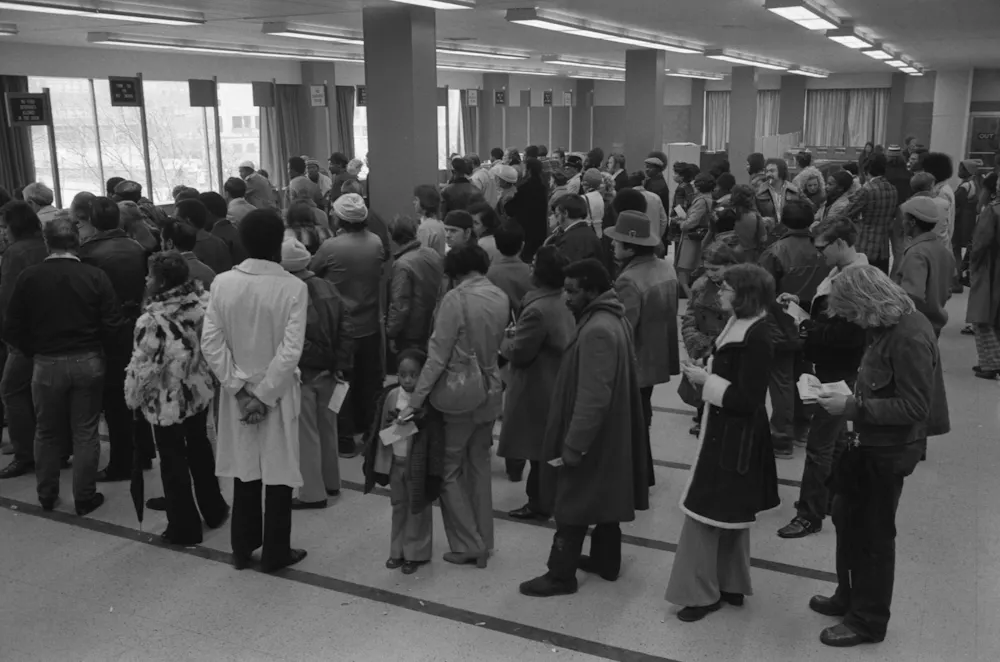
By the mid-1990s, opposition to welfare programs had become increasingly bipartisan. Politicians in both parties often used tales of Medicaid fraud on the part of providers and recipients to justify tighter eligibility rules and spending cuts.
Federal oversight expanded further with the Deficit Reduction Act of 2005, which created the Medicaid Integrity Program and strengthened federal oversight of state programs. The Affordable Care Act, the landmark healthcare legislation Congress passed in 2010, added new measures to screen providers and verify billing.
Concerns about Medicaid’s “integrity” became highly politicized in the debates surrounding the ACA. Critics of Medicaid expansion argued that increasing the number of people who could get health insurance through the program would increase fraud and improper enrollment. Supporters of expanding Medicaid to help more Americans gain health insurance maintained that anti-fraud rhetoric often disguised ideological opposition to the program’s expansion.
Blurring distinctions then and now
For the six decades that this program has helped millions of low-income Americans get healthcare, politicians have blurred the distinction between protecting Medicaid from abuse and using abuse to discredit Medicaid itself.
In my view, the Trump administration’s campaigns against California and Minnesota continue that pattern. It is using real weaknesses within Medicaid to advance much broader political arguments: that Democratic states cannot be trusted, that public benefits naturally invite abuse, and that withholding funds is itself a form of reform.
The result will no doubt be that fewer low-income Americans will be able to get the healthcare they need.
Ben Zdencanovic, Assistant Professor of U.S. History, University of Cambridge
This article is republished from The Conversation under a Creative Commons license. Read the original article.
💪 Your health journey starts here! Explore the latest health news, fitness tips, wellness trends, and healthy living advice. Share your thoughts in the comments and subscribe to the STM Daily News newsletter to stay informed and inspired every day.
Lifestyle
P.F. Chang’s Partners With Starlight Children’s Foundation for New “Spirit of the Zodiac” Giving Campaign
P.F. Chang’s launches Spirit of the Zodiac, a giving campaign supporting Starlight Children’s Foundation with Bao plush purchases and in-restaurant donations.


P.F. Chang’s Launches Spirit of the Zodiac Campaign to Support Starlight Children’s Foundation
P.F. Chang’s is launching a new annual charitable initiative designed to bring comfort to children during hospital stays. The Scottsdale-based restaurant brand announced Spirit of the Zodiac, a giving program inspired by the Chinese zodiac, with its inaugural campaign—Year of the Fire Horse: Spirit of Strength—benefiting Starlight Children’s Foundation.
What the campaign supports
Starlight Children’s Foundation serves more than 800 children’s hospitals nationwide, providing programs such as toy deliveries, hospital gowns, gaming stations, and other experiences intended to help kids feel more comfortable, connected, and supported during medical care.
How guests can participate (Sept. 2–Sept. 30)
From September 2 through September 30, 2026, guests can purchase Bao, a limited-edition horse plushie, for $10 through dine-in transactions at participating P.F. Chang’s restaurants (while supplies last). For each Bao purchased, P.F. Chang’s will donate an identical Bao plushie to Starlight for distribution through its hospital network—up to 20,000 donated plushies.
Guests can also support the campaign by rounding up their checks or making a direct donation in restaurant. The overall effort aims to raise $500,000 to support Starlight’s work with children and families.
Bonus offer for donors
P.F. Chang’s says guests who purchase Bao or make an in-restaurant donation of $10 or more to Starlight will receive an offer for a complimentary appetizer with the purchase of an entrée on a future dine-in visit, valid through October 31, 2026 (restrictions apply; participating locations only).
A story component for families
The campaign also includes a storytelling element: Bao’s journey will be featured in a digital story and an original children’s book by author Jenny Liao and illustrator Adriane Tsai, expected to publish later this month.
What to watch for
P.F. Chang’s and Starlight plan to continue the partnership beyond September, including in-hospital catering and plush deliveries in early October.
For more information, visit www.pfchangs.com/offers/spirit-of-the-zodiac. To learn more about the partnership, visit starlight.org/pfchangs.
💪 Your health journey starts here! Explore the latest health news, fitness tips, wellness trends, and healthy living advice. Share your thoughts in the comments and subscribe to the STM Daily News newsletter to stay informed and inspired every day.

Local Business
Roscoe’s Chicken and Waffles: An L.A. Institution Confronts a Complicated Legacy
Roscoe’s Chicken and Waffles grew from a Harlem-inspired restaurant into a symbol of Black Los Angeles. Fifty years later, lawsuits, bankruptcy, closures and questions about its leadership have complicated the celebrated chain’s legacy.

Last Updated on September 1, 2026 by Daily News Staff
For generations of Southern Californians, Roscoe’s was more than a famous combination of fried chicken and waffles. After 50 years, the restaurant’s cultural importance remains—but lawsuits, bankruptcy, closures and questions about its leadership have complicated the story.
What Happened to Roscoe’s Chicken and Waffles?
For many visitors to Los Angeles, Roscoe’s House of Chicken and Waffles is a destination—one of those famous places they have seen in movies, heard about in songs or watched celebrities visit.
For many of us who grew up in Los Angeles County, however, Roscoe’s occupies a different place in our memories. It was not necessarily our introduction to soul food, nor was chicken and waffles an exotic discovery. Roscoe’s was one among many soul-food restaurants where families ate in South Los Angeles, Inglewood, Compton, Watts and Long Beach.
I ate food from the South L.A. and Inglewood restaurants when I was young, although I was too young to compare the locations. When I returned to Roscoe’s as an adult and ate at the Long Beach location in 2021, I thought the food was good. That experience connected a familiar name from my Southern California childhood with the restaurant Roscoe’s had become decades later.
But the Roscoe’s story today is no longer only about food and nostalgia. It is also about how a Black cultural institution manages its legacy after lawsuits, bankruptcy proceedings, restaurant closures and a public controversy that caused some longtime customers to question who now controls the business—and whether its leadership still understands the community that helped make Roscoe’s famous.
From Harlem inspiration to a West Coast phenomenon
Herbert “Herb” Hudson, a Harlem native and former General Motors foreman, founded Roscoe’s in 1975. Accounts differ on whether the first restaurant was in Hollywood or Long Beach: Roscoe’s official history identifies the company as Hollywood-based, while culinary historian Adrian Miller and several contemporary reports place Hudson’s first location in Long Beach. What is undisputed is that Hudson brought a Harlem-influenced restaurant concept to Southern California and turned it into something distinctly Angeleno.
Hudson drew inspiration from the chicken-and-waffle restaurants and late-night music culture associated with Harlem, particularly Wells Supper Club. Chicken and waffles existed long before either Wells or Roscoe’s, with roots stretching through Pennsylvania Dutch cooking, Southern foodways and the work of Black cooks. Roscoe’s achievement was not inventing the pairing. It was making fried chicken and waffles a recognizable part of Los Angeles dining and eventually a national phenomenon.
In a 1978 advertisement in the Los Angeles Sentinel, Roscoe’s described the dish as “an East Coast specialty with a West Coast atmosphere.” It was an effective summary of Hudson’s idea.
His entertainment connections helped carry the restaurant beyond its neighborhood base. Stevie Wonder, Natalie Cole and comedian Redd Foxx were associated with its early rise, while athletes, actors, musicians and political figures followed. Roscoe’s became a place where local customers, tourists and celebrities could occupy the same dining room.
The restaurant also offered far more than its headline combination. Grits, eggs, greens, macaroni and cheese, red beans and rice, hot-water cornbread and chicken livers helped place Roscoe’s within the larger soul-food tradition. James Beard Award-winning author Adrian Miller’s history of Roscoe’s describes how Hudson used Black media, music connections and neighborhood locations to build the company.
Becoming part of Black Los Angeles
Roscoe’s did not become an institution merely because famous people ate there. Black Los Angeles made it an institution.
Families celebrated there. Musicians stopped in after performances. Local residents brought visiting relatives. Young people grew up knowing the name before national food television began treating chicken and waffles as a culinary discovery.
Roscoe’s also entered popular culture. It was referenced in movies including Jackie Brown, Rush Hour and Soul Plane, appeared in television productions and was mentioned in music. Its yellow-and-red signs became visual shorthand for a particular side of Los Angeles—one connected to Black culture, nightlife and neighborhood life rather than beaches and Hollywood premieres.
President Barack Obama’s 2011 visit to the Pico Boulevard restaurant represented a high point in that cultural journey. Obama ordered three wings and a waffle, and the meal became known as the “Obama’s Special.” A restaurant created by a Black entrepreneur and sustained heavily by Black customers had served the nation’s first Black president.
Roscoe’s fame, however, could sometimes obscure the larger community around it. Los Angeles has long supported many soul-food kitchens, family restaurants and neighborhood establishments. Roscoe’s became the name outsiders recognized, but it was never the whole story of soul food in Southern California.
The discrimination case and bankruptcy
The most consequential legal chapter began with former employee Daniel Beasley, a Black man who sued East Coast Foods, the company managing several Roscoe’s restaurants.
Beasley alleged that Latino managers gave Latino employees preferential schedules and working conditions while treating Black workers unfairly. He also alleged that he was terminated after complaining about discrimination. A jury found in his favor, and the resulting judgment was ultimately reported at approximately $3.2 million.
This was a particularly damaging case for Roscoe’s reputation. The allegations did not come from an outside critic attacking a Black-owned institution. They came from a Black employee accusing the company behind that institution of failing Black workers.
East Coast Foods filed for Chapter 11 bankruptcy protection in 2016. The discrimination judgment was a major factor, but it was not the company’s only financial obligation. Court proceedings described millions of dollars in additional debt.
The restructuring grew complicated. An examiner concluded that East Coast Foods could not meet its fiduciary responsibilities, and a court-appointed trustee effectively led the company for two years. A bankruptcy judge also ordered Hudson to reverse a transfer of the Roscoe’s name and trademark to an affiliated company he controlled, finding the transfer improper under bankruptcy law.
A restructuring plan took effect in September 2018. It promised creditors full payment with interest, secured by company assets and as much as $10 million from Hudson. The restaurants remained open. The U.S. Court of Appeals for the Ninth Circuit later summarized the proceedings and Hudson’s guarantee.
The bankruptcy is important when discussing claims that Roscoe’s “changed hands.” Court supervision, the temporary appointment of a trustee and the emergence of new executives clearly changed how parts of the company were controlled. However, available reporting does not establish a straightforward sale of the entire chain to a new owner.
That distinction matters. Social-media posts frequently describe Roscoe’s as no longer Black-owned, but the company has not publicly provided a clear, current breakdown of its ownership. The most accurate conclusion is that Roscoe’s corporate structure and leadership became more complicated and less transparent—not that a complete sale has been conclusively documented.
A second employee lawsuit
Roscoe’s faced another labor case in January 2024 when former employee Jaime Alejandro Carbajal-Torres filed a proposed class-action lawsuit in Los Angeles Superior Court.
Carbajal-Torres, who said he worked for the company for more than 20 years, alleged unpaid overtime, interrupted or missed meal and rest periods, unpaid vacation wages and unreimbursed work expenses. The complaint sought class-action status, unspecified damages and an injunction against further violations of California labor law.
These are allegations in a civil complaint, not proven findings, and Roscoe’s did not immediately respond to the original request for comment, according to L.A. Taco’s report.
Nevertheless, the filing revived uncomfortable questions about the treatment of the people whose labor sustains a celebrated restaurant brand. For a company whose identity is tied so strongly to community, repeated employee complaints cannot simply be dismissed as a public-relations inconvenience.
Closures, tragedy and public controversy
The last several years have brought additional challenges.
Roscoe’s closed its celebrated Pico Boulevard restaurant in January 2023 after approximately 32 years. The company directed customers to its newer La Brea flagship, which opened in 2021. In June 2024, the Pasadena restaurant closed after 30 years, although the company said it hoped to find an upgraded location in the city. The Los Angeles Times reported that some customers had begun questioning whether rising prices still matched the food’s quality.
The chain was also touched by tragedy in September 2022 when rapper PnB Rock was shot and killed during a robbery at the Manchester Avenue restaurant. That killing was not a business controversy created by Roscoe’s, but it attached another painful chapter to the restaurant’s recent history.
Then, in November 2024, a large inflatable figure of Donald Trump appeared near the Long Beach restaurant. Images spread online, leading some customers to believe Roscoe’s was endorsing Trump and prompting calls for a boycott.
Roscoe’s COO and creative director Diane Vara said the inflatable was connected to a political watch party at an adjacent jazz lounge, not the restaurant itself. According to Eater Los Angeles, the event was hosted by the Los Angeles County Republican Party and URBT News at the neighboring venue.
That explanation did not fully settle the controversy. Vara, who described herself publicly as a partner in Roscoe’s, had also exchanged contentious social-media comments with a food creator who criticized the restaurant and shared a homemade chicken-and-waffle recipe. The tone of the response intensified existing doubts about the company’s ownership, values and relationship with its traditional customers.
For many longtime patrons, the reaction was about more than partisan politics. Roscoe’s had spent decades benefiting from its status as a symbol of Black Los Angeles. Customers therefore expected its leadership to recognize how its actions—or events appearing to be associated with its property—would be understood by that community.
The state of Roscoe’s today
Roscoe’s reached its 50th anniversary in 2025. Its official website currently lists Hollywood, South L.A., Long Beach, Inglewood-LAX, Anaheim, La Brea and Pasadena, although the old Pasadena restaurant closed in 2024 and the company has discussed seeking a replacement site.
There are also signs of continued ambition. Roscoe’s has signed a lease for a space of more than 3,000 square feet at Los Angeles Union Station, according to 2026 reporting, though no firm public opening date had been announced. A Union Station restaurant would place Roscoe’s inside one of Southern California’s most important transportation landmarks as Los Angeles prepares for the 2028 Olympic and Paralympic Games.
This means Roscoe’s is not simply disappearing. It is contracting in some places, repositioning itself in others and attempting to carry a famous name into a new era.
But survival is not the same as renewal.
Roscoe’s still possesses something most restaurants could never purchase: a half-century of cultural memory. It helped popularize chicken and waffles across the country. It provided a gathering place for generations of Angelenos. It became one of the most recognizable Black-founded restaurant brands in America.
That history deserves recognition—but it should not shield the company from scrutiny.
To retain the loyalty of the community that built it, Roscoe’s needs greater clarity about its ownership and leadership, fair treatment of its workers, consistent food and service, and a more thoughtful relationship with longtime customers. Nostalgia can bring people back once. Trust is what keeps them returning.
Roscoe’s remains an L.A. institution. The question now is whether the company managing that institution understands the responsibility that comes with the name.
Editor’s note: This article distinguishes court findings from allegations. Claims in the 2024 labor complaint remain allegations unless proven in court or resolved through an acknowledged settlement. Publicly available reporting does not conclusively establish that the entire Roscoe’s chain was sold or ceased to be Black-owned.
Sources and related reading
- Roscoe’s House of Chicken and Waffles — official history
- The layered legacy of Roscoe’s — Adrian Miller, Resy
- In re East Coast Foods — Ninth Circuit opinion
- Roscoe’s sued by former employee over alleged labor violations — L.A. Taco
- Roscoe’s closes its Pasadena restaurant after three decades — Los Angeles Times
- The controversy surrounding the Trump inflatable near Roscoe’s — Eater Los Angeles





