Connect with us

health and wellness

Sunny with a chance of sneezing – I’m building a tool to forecast pollen levels that will help allergy sufferers know when it’s safe to go outside

Published

on

Last Updated on October 26, 2025 by Daily News Staff

pollen
Advance warning of high pollen levels could help people plan their activities to avoid allergies. Dobrila Vignjevic/E+ via Getty Images

Fiona Lo, University of Washington

Do flowers blossoming in spring make you miserable? Are you sworn enemies with fall bloomers like ragweed? If you suffer from pollen allergies, imagine the usefulness of a reliable pollen forecast that could help you manage your symptoms by providing an early warning when pollen conditions are bad.

We’re working on it! As an atmospheric scientist, I study the weather, climate and anything in our Earth’s atmosphere, including pollen. One in three people in the U.S. suffer from allergic rhinitis, otherwise known as “allergies,” and pollen is the most common cause.

While allergic rhinitis is not curable, its symptoms can be successfully treated. Two main methods are medication and pollen avoidance. They both rely on knowing when, where and how much pollen is, and is expected to be, in the air. Many medications work best if taken before symptoms occur. Advance knowledge of pollen allows allergy sufferers to change plans in order to minimize their exposure to pollen.

My colleagues and I are pulling together what we know about how plant biology and meteorology affect the amount of pollen in the air, along with pollen count numbers, to build a reliable pollen forecast.
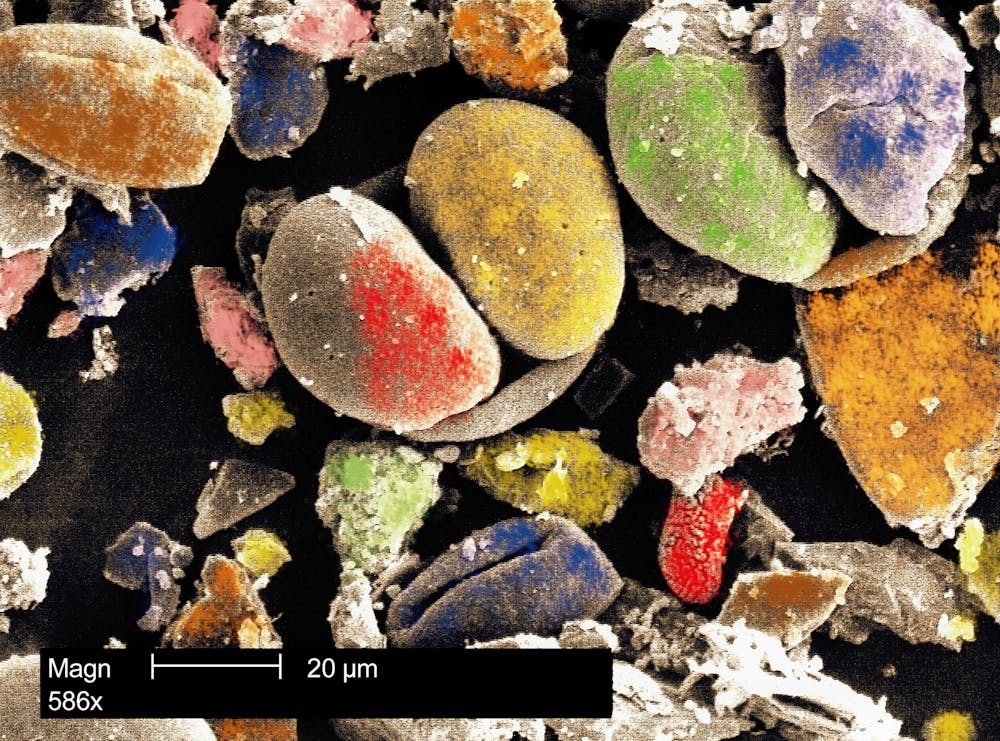
magnified view of pollen grains
A view of pollen from various plants, magnified 586 times under the microscope. BSIP/Universal Images Group via Getty Images

Counting pollen grain by grain

Allergic symptoms tend to be more severe the higher the concentration of airborne pollen. The amount of pollen in the air is constantly changing, so it would be ideal to monitor pollen in populated areas at regular frequent intervals. In the U.S., the National Allergy Bureau collects, processes and distributes daily pollen concentrations from stations around the country.

Unfortunately, there are fewer than 90 active stations. Of these, many do not count on weekends or outside of the main pollen season. Part of the reason is that these are volunteer-run stations, and pollen monitoring requires significant time and resources.

Pollen is collected using a machine that sucks in air and traps pollen on sticky tape. A trained technician then processes, identifies and counts the tiny pollen grains under a microscope. During the height of pollen season, it may take a few hours for a technician to count the day’s pollen. Automated pollen monitoring systems do exist and would greatly reduce the need for human resources. But for now, these systems are either extremely expensive or have not been evaluated for accuracy.

Building a forecasting model

Pollen that causes allergic reactions is from anemophilous or wind-pollinated plants. Pollen grains contain the male sperm from the plant, an essential component of plant reproduction. Anemophilous plants produce a lot of pollen because they rely on the whims of the wind to carry it to reach the female counterparts of their species to reproduce and grow new plants. The amount of pollen in the air has been rising because climate change is lengthening the pollen season and increasing how much pollen gets produced.

backlit pollen wafts in the air around a flowering tree branch
Certain weather conditions make it more likely to be a heavy pollen day. Alkimson/iStock via Getty Images Plus

Since we have access to only a limited amount of pollen count data, my colleagues and I leverage what we know about the environment to estimate the amount of pollen in the air. Generally warm, sunny, dry and windy days are correlated with high airborne pollen concentrations, and rainy and humid days with low concentrations.

Plants depend on water and sunlight to grow. The timing of precipitation, temperature and solar radiation can affect a plant’s development and its readiness to flower. Once the plant is ready to flower, environmental variables can determine when pollen is released, how far it travels and how long it remains in the air.

The pollen model my colleagues and I have developed uses these known relationships between meteorology and pollen to estimate airborne pollen. We also include satellite images of vegetation in the model because satellites can detect greening and provide an estimate of the beginning of spring.

Advertisement
Get More From A Face Cleanser And Spa-like Massage

Our model can forecast pollen 1 to 14 days in advance for locations where there are pollen stations. But due to the sparsity of pollen stations, we are working on extending the model to forecast in locations with no pollen counts. In those places we use nearby pollen station data, along with localized meteorology, to estimate the pollen.

Although pollen reporting and forecasts do exist in the popular media, their pollen reports differ from observations, and their forecasts are limited only to categories of trees, grasses and weeds. Our forecast can predict for specific pollen types because our model includes information about how each plant type interacts differently with the environment.

woman checks her phone against backdrop of windows at night
Checking the pollen forecast could help you plan when to take allergy medication and how much time you’d spend outside. Klaus Vedfelt/DigitalVision via Getty Images

A fine-tuned forecast in your pocket

We are collaborating with medical professionals and health scientists to understand the pollen levels associated with increasing severity of allergic symptoms. Our plan is to tailor the forecast to allow patients to better manage their symptoms.

So far, we can accurately forecast for four of the most abundant pollen types in the U.S. only in locations with pollen stations. We are seeking funding to expand to other pollen types and other locations, and we are working on creating a platform to automate the data processing and run the forecast.

Ultimately, we want to provide a forecast every day during pollen season to give allergy sufferers the information they need to manage their symptoms. Allergies are often undertreated and knowledge about self-care is limited, so a reliable pollen forecast that is easy to access – for example via an app on your phone – along with education on allergy management, could really help allergy sufferers.

[You’re smart and curious about the world. So are The Conversation’s authors and editors. You can read us daily by subscribing to our newsletter.]

Fiona Lo, Postdoctoral Researcher in Environmental and Occupational Health Sciences, University of Washington

This article is republished from The Conversation under a Creative Commons license. Read the original article.

Dive into “The Knowledge,” where curiosity meets clarity. This playlist, in collaboration with STMDailyNews.com, is designed for viewers who value historical accuracy and insightful learning. Our short videos, ranging from 30 seconds to a minute and a half, make complex subjects easy to grasp in no time. Covering everything from historical events to contemporary processes and entertainment, “The Knowledge” bridges the past with the present. In a world where information is abundant yet often misused, our series aims to guide you through the noise, preserving vital knowledge and truths that shape our lives today. Perfect for curious minds eager to discover the ‘why’ and ‘how’ of everything around us. Subscribe and join in as we explore the facts that matter.  https://stmdailynews.com/the-knowledge/


Discover more from Daily News

Subscribe to get the latest posts sent to your email.

Lifestyle

Swisse Launches Glam Bites: Zero-Sugar Beauty Gummies Designed for Busy Routines

Swisse launches Glam Bites: delicious beauty gummies with zero sugar, no sugar alcohols, and no artificial flavors, colors, or sweeteners—designed to support beauty from within.

Published

on

Swisse’s new Glam Bites feature collagen peptides, hyaluronic acid, biotin, astaxanthin, and more—three targeted formulas for glow, defense, and hair/skin/nails support.*

Swisse Launches Glam Bites: Zero-Sugar Beauty Gummies Designed for Busy Routines

Swisse, the premium supplement brand under Health & Happiness (H&H) Group and a Certified B Corp, is kicking off 2026 with a new way to support “beauty from within.” The company just introduced Swisse Beauty Glam Bites, a line of zero-sugar beauty gummies made with science-backed ingredients—without the usual “junk” found in many gummy supplements. Positioned for today’s always-on lifestyle, Glam Bites aims to make daily self-care feel less like another task and more like a quick, enjoyable habit: bite, nourish, and glow.

What makes Glam Bites different?

Gummy supplements are popular, but they often come with tradeoffs—added sugars, sugar alcohols, artificial flavors, or ingredients that don’t align with cleaner-label preferences. Swisse is leaning into the opposite approach. According to the company, Glam Bites are crafted with:
  • Zero sugar
  • No sugar alcohols
  • No artificial flavors, colors, or sweeteners
  • Gluten-free
  • Free from major allergens (milk, eggs, fish, crustacean shellfish, peanuts, wheat, soybeans, sesame)
That “clean but still tasty” promise is a big part of the launch—especially as more shoppers look for supplements that fit into wellness routines without feeling like a compromise.

A beauty routine that starts from the inside

Swisse is framing Glam Bites as a simple daily add-on that supports skin, hair, and nails through targeted micronutrients. Leading dietitian Dana A. White highlighted the brand’s approach in the announcement, noting that Glam Bites deliver “powerful, science-driven beauty benefits” through a precisely balanced blend of nutrients—while keeping the formula free from artificial colors, flavors, and sweeteners.

The Glam Bites lineup (available now)

Swisse launched Glam Bites in three formulas, each with its own ingredient blend and naturally flavored profile.

1) Hair Skin Nails Glam Bites

  • Price/Count: $19.99 (60 count)
  • Key ingredients: Biotin, Zinc, Bamboo Extract
  • What it supports: Stronger hair and nails, plus skin firmness and elasticity*
  • Flavor: Blood orange (naturally flavored)

2) Glow Skin Glam Bites

  • Price/Count: $24.99 (60 count)
  • Key ingredients: Hyaluronic Acid, Vitamins C & E, Sea Moss, Hydrolyzed Marine Collagen Peptides
  • What it supports: Collagen production, improved elasticity, and a stronger skin barrier*
  • Flavor: Blueberry lavender (naturally flavored)

3) Skin Defense Glam Bites

  • Price/Count: $24.99 (60 count)
  • Key ingredients: Astaxanthin, L-Glutathione, Green Tea Extract
  • What it supports: Healthy aging, even skin tone, and antioxidant protection against environmental stressors*
  • Flavor: Raspberry green tea (naturally flavored)

Why gummies—and why now?

Swisse is launching Glam Bites at a time when gummies are increasingly becoming the preferred supplement format for younger consumers. The company cited research showing:
  • 45% of Gen Z and 31% of millennials favor gummy supplements.
  • 74% of U.S. personal care buyers agree that skin health reflects overall health.
In other words: the market is shifting toward convenience, better taste, and wellness products that connect beauty with whole-body health.

A global wellness brand expanding its portfolio

Swisse was founded in Australia in 1969 and has grown into a global wellness name known for premium supplements made with ingredients backed by scientific research and produced under world-class manufacturing standards. With Glam Bites, the brand is clearly betting on a “cleaner gummy” future—one that fits modern routines and modern label expectations.

Where to buy

Swisse Beauty Glam Bites are available now.
*These statements have not been evaluated by the Food and Drug Administration. These products are not intended to diagnose, treat, cure, or prevent any disease.

Our Lifestyle section on STM Daily News is a hub of inspiration and practical information, offering a range of articles that touch on various aspects of daily life. From tips on family finances to guides for maintaining health and wellness, we strive to empower our readers with knowledge and resources to enhance their lifestyles. Whether you’re seeking outdoor activity ideas, fashion trends, or travel recommendations, our lifestyle section has got you covered. Visit us today at https://stmdailynews.com/category/lifestyle/ and embark on a journey of discovery and self-improvement.


Discover more from Daily News

Subscribe to get the latest posts sent to your email.

Continue Reading

Health

How C-reactive protein outpaced ‘bad’ cholesterol as leading heart disease risk marker

C-reactive protein (CRP) is a key inflammation marker that can predict heart attack and stroke risk—often better than LDL cholesterol. Here’s why it matters.

Published

on

C-reactive protein (CRP) is a key inflammation marker that can predict heart attack and stroke risk—often better than LDL cholesterol. Here’s why it matters.
Blood vessel damage from fatty and high-sugar diets leads to inflammation, which can be detected by measuring C-reactive protein. Mohammed Haneefa Nizamudeen/iStock via Getty Images Plus

How C-reactive protein outpaced ‘bad’ cholesterol as leading heart disease risk marker

Mary J. Scourboutakos, Macon & Joan Brock Virginia Health Sciences at Old Dominion University Heart disease is the leading cause of death in the United States. Since researchers first established the link between diet, cholesterol and heart disease in the 1950s, risk for heart disease has been partly assessed based on a patient’s cholesterol levels, which can be routinely measured via blood work at the doctor’s office. However, accumulating evidence over the past two decades demonstrates that a biomarker called C-reactive protein – which signals the presence of low-grade inflammation – is a better predictor of risk for heart disease than cholesterol. As a result, in September 2025, the American College of Cardiology published new recommendations for universal screening of C-reactive protein levels in all patients, alongside measuring cholesterol levels.

What is C-reactive protein?

C-reactive protein is created by the liver in response to infections, tissue damage, chronic inflammatory states from conditions like autoimmune diseases, and metabolic disturbances like obesity and diabetes. Essentially, it is a marker of inflammation – meaning immune system activation – in the body. C-reactive protein can be easily measured with blood work at the doctor’s office. A low C-reactive protein level – under 1 milligram per deciliter – signifies minimal inflammation in the body, which is protective against heart disease. An elevated C-reactive protein level of greater than 3 milligrams per deciliter, signifies increased levels of inflammation and thus increased risk for heart disease. About 52% of Americans have an elevated level of C-reactive protein in their blood. Research shows that C-reactive protein is a better predictive marker for heart attacks and strokes than “bad,” or LDL cholesterol, short for low-density lipoprotein, as well as another commonly measured genetically inherited biomarker called lipoprotein(a). One study found that C-reactive protein can predict heart disease just as well as blood pressure can.

Why does inflammation matter in heart disease?

Inflammation plays a crucial role at every stage in the development and buildup of fatty plaque in the arteries, which causes a condition called atherosclerosis that can lead to heart attacks and strokes. From the moment a blood vessel is damaged, be it from high blood sugar or cigarette smoke, immune cells immediately infiltrate the area. Those immune cells subsequently engulf cholesterol particles that are typically floating around in the blood stream to form a fatty plaque that resides in the wall of the vessel. This process continues for decades until eventually, one day, immune mediators rupture the cap that encloses the plaque. This triggers the formation of a blood clot that obstructs blood flow, starves the surrounding tissues of oxygen and ultimately causes a heart attack or stroke. Hence, cholesterol is only part of the story; it is, in fact, the immune system that facilitates each step in the processes that drive heart disease.
Three-dimensional concept of fatty plaque buildup in an artery.
Fatty plaque buildup in the arteries causes a blockage that starves tissues of oxygen and can lead to a heart attack or stroke. wildpixel/iStock via Getty Images Plus

Can diet influence C-reactive protein levels?

Lifestyle can significantly influence the amount of C-reactive protein produced by the liver. Numerous foods and nutrients have been shown to lower C-reactive protein levels, including dietary fiber from foods like beans, vegetables, nuts and seeds, as well as berries, olive oil, green tea, chia seeds and flaxseeds. Weight loss and exercise can also reduce C-reactive protein levels.
Colorful variety of foods that help lower heart disease risk.
Diet plays a key role in heart disease risk. monticelllo/iStock via Getty Images Plus

Does cholesterol still matter for heart disease risk?

Though cholesterol may not be the most important predictor of risk for heart disease, it does remain highly relevant. However, it’s not just the amount of cholesterol – or more specifically the amount of bad, or LDL, cholesterol – that matters. Two people with the same cholesterol level don’t necessarily have the same risk for heart disease. This is because risk is determined more so by the number of particles that the bad cholesterol is packaged into, as opposed to the total mass of bad cholesterol that’s floating around. More particles means higher risk. That is why a blood test known as apolipoprotein B, which measures the number of cholesterol particles, is a better predictor of risk for heart disease than measurements of total amounts of bad cholesterol. Like cholesterol and C-reactive protein, apolipoprotein B is also influenced by lifestyle factors like exercise, weight loss and diet. Nutrients like fiber, nuts and omega-3 fatty acids are associated with a decreased number of cholesterol particles, while increased sugar intake is associated with a larger number of cholesterol particles. Furthermore, lipoprotein(a), a protein that lives in the wall surrounding cholesterol particles, is another marker that can predict heart disease more accurately than cholesterol levels. This is because the presence of lipoprotein(a) makes cholesterol particles sticky, so to speak, and thus more likely to get trapped in an atherosclerotic plaque. However, unlike other risk factors, lipoprotein(a) levels are purely genetic, thus not influenced by lifestyle, and need only be measured once in a lifetime.

What’s the best way to prevent heart disease?

Ultimately, heart disease is the product of many risk factors and their interactions over a lifetime. Therefore, preventing heart disease is way more complicated than simply eating a cholesterol-free diet, as once thought. Knowing your LDL cholesterol level alongside your C-reactive protein, apolipoprotein B and lipoprotein (a) levels paints a comprehensive picture of risk that can hopefully help motivate long-term commitment to the fundamentals of heart disease prevention. These include eating well, exercising consistently, getting adequate sleep, managing stress productively, maintaining healthy weight and, if applicable, quitting smoking.The Conversation Mary J. Scourboutakos, Adjunct Assistant Professor in Family and Community Medicine, Macon & Joan Brock Virginia Health Sciences at Old Dominion University This article is republished from The Conversation under a Creative Commons license. Read the original article.

Discover more from Daily News

Subscribe to get the latest posts sent to your email.

Continue Reading

Lifestyle

How to reduce gift-giving stress with your kids – a child psychologist’s tips for making magic and avoiding tears

Reduce gift-giving stress with kids: A child psychologist shares practical rules for stress-free gift giving with kids—how many gifts to give, what holds attention, and how to avoid holiday tears.

Published

on

Last Updated on January 9, 2026 by Daily News Staff

Reduce gift-giving stress with kids: A child psychologist shares practical rules for stress-free gift giving with kids—how many gifts to give, what holds attention, and how to avoid holiday tears.
’Tis the season … for gift-buying stress. Photo by Ryan Miller/Invision/AP

How to reduce gift-giving stress with your kids – a child psychologist’s tips for making magic and avoiding tears

Angela J. Narayan, University of Denver As a child, I loved being the center of attention. So it was a problem when my baby brother was born a day before my birthday. For years, I would beg my parents for a birthday gift “one day early.” My laid-back brother remembers thinking, “I don’t care about presents. Just give her mine!” As an associate professor and child psychologist at the University of Denver who studies child development and parenting, I’ve come to learn about these types of challenges associated with gift giving. The holidays, while a magical time, can also be stressful. Society places an expectation on parents to buy gifts, regardless of their financial circumstances, and children themselves often feel a variety of complex emotions. How children react to getting presents is partially linked to temperament, which is the variety of ways that children experience, perceive and interact with the world. Temperament is the precursor to personality – some people are introverts, while others are extroverts. Temperament is partially heritable. That means an introverted parent who feels social pressure to buy many gifts for their shy and easily overwhelmed child may be inadvertently causing stress. Faced with this holiday conundrum, I’m often asked questions like “Is there a magic number of gifts to give my kids?” or “What gifts will hold my child’s attention the longest?” While there isn’t an easy answer to either question, these tips and tricks can help parents be more thoughtful and intentional about gift giving, especially for children who are young.

The age rule

Young children cannot focus on a lot of things at once. A good rule of thumb is that a 1-year-old can focus only on one thing at a time. A 2-year-old can maybe focus on two things at most, and a 3-year-old maybe three things, and so on. Stop at five. Very few children actually need more than five gifts, so feel free to go lower.

The attention rule

I have often searched for the magical gift that will keep my children occupied for hours, and so far I haven’t found it. What I have found is that my children – ages 5 and 7 – get excited about the things that I get excited about. So I try to buy things that I think are fun. Ask yourself what you would like to play with if you got to be a child again. I bet your children would be eager to join you in those things.

The games rule

Card and board games are great gifts, often inexpensive, fun for many ages – excepting babies, of course – and capable of holding attention for a long time. Plus, they usually don’t take up much storage space. I love giving my kids games that are not only fun but also teach them helpful skills. Collaborative games for preschoolers and early school-age children like the Fairy Game and Outfoxed teach problem-solving, teamwork and early reasoning skills. Games for elementary-age children, such as Sorry and Battleship, teach kids how to manage difficult situations, like not always being in the lead, being a good sport even if you’re behind, and losing gracefully. Timeless card games like Uno and Memory, and newer ones like Sleeping Queens and Exploding Kittens, are great for using working memory, thinking flexibly, persisting and strategizing. Most importantly, playing games together supports positive family time, which is an excellent antidote to stress, bad moods or boredom.

The pressure rule

Imagine the holiday experience through the eyes of each of your children. Some children relish receiving gifts, like I did. Others, however, may feel self-conscious, overwhelmed by the sensory overload – all the textures, commotion and bright colors, not to mention people staring at them. The elements of surprise combined with the unspoken social pressure to be gracious and well regulated are challenging for any young child. We expect small children to contain their excitement, delay gratification and react positively to the surprise. And then come up with a polite response. These are all complex requests, rarely directly or explicitly taught. It’s no wonder that many children show negative emotions, have tantrums, or even just say, “I’m tired!” during holiday celebrations. That’s why beyond the precise nature of “the perfect gift,” we shouldn’t lose sight of what we should be doing. And that is investing in togetherness and helping kids learn skills like being patient and taking turns, strengthening memory capacities, planning ahead, not giving up, and that being a team player will pay off later. These skills pave the way for longer sustained attention, focus and concentration, as well as confidence. My 7-year-old is becoming a skillful chess player because we have taught him the rules and strategy and helped him practice. Maybe this is the real magical gift – not the purchase itself, but the decision to invest in time with your child early. Angela J. Narayan, Associate Professor, Clinical Child Psychology Ph.D. program, University of Denver This article is republished from The Conversation under a Creative Commons license. Read the original article.

Dive into “The Knowledge,” where curiosity meets clarity. This playlist, in collaboration with STMDailyNews.com, is designed for viewers who value historical accuracy and insightful learning. Our short videos, ranging from 30 seconds to a minute and a half, make complex subjects easy to grasp in no time. Covering everything from historical events to contemporary processes and entertainment, “The Knowledge” bridges the past with the present. In a world where information is abundant yet often misused, our series aims to guide you through the noise, preserving vital knowledge and truths that shape our lives today. Perfect for curious minds eager to discover the ‘why’ and ‘how’ of everything around us. Subscribe and join in as we explore the facts that matter.  https://stmdailynews.com/the-knowledge/


Discover more from Daily News

Subscribe to get the latest posts sent to your email.

Continue Reading

Trending