

STM Blog
Why I Want to Take the Train from Phoenix to Los Angeles—Even If It’s Not Easy
The author expresses a deep love for train travel, particularly the Amtrak routes. Despite Phoenix lacking direct Amtrak service, the longing for a train journey from Phoenix to Los Angeles remains strong. The experience of transitioning from desert landscapes to the California coast symbolizes the possibilities of enhancing passenger rail connectivity in the region.


I’ve always loved trains.
Not just as transportation, but as an idea: the rhythm of the rails, the slow reveal of landscapes you’d never notice from 35,000 feet, the sense that the journey itself actually matters. That’s why every time I read about Amtrak’s Sunset Limited, especially its long sweep across the Southwest, I can’t help but think the same thing:
I wish I could take the train from Phoenix to Los Angeles—and then ride the Pacific Surfliner.
The Arizona Reality: Close, But Not Quite
Here’s the catch that every Arizona rail fan knows too well: Phoenix doesn’t have direct Amtrak service. https://stories-this-moment.castos.com/episodes/why-i-want-to-take-the-train-from-phoenix-to-los-angeles
The Sunset Limited does cross southern Arizona, stopping in places like Yuma, Tucson, Benson, and Maricopa. Maricopa is technically the closest Amtrak station serving the Phoenix metro area—but it’s about 30 miles south of downtown, meaning a car ride or bus connection is still required.
It’s a small detail, but it matters. Phoenix is the fifth-largest city in the United States, yet if I want to ride Amtrak west to Los Angeles, I first have to leave the city by road just to board the train.
Still, even with that inconvenience, the idea is hard to shake.
Boarding the Sunset Limited
The Sunset Limited is one of Amtrak’s most historic long-distance routes, running from Los Angeles to New Orleans. In Arizona, it cuts through desert landscapes that feel timeless—wide skies, distant mountains, and towns that grew up alongside the railroad itself.
This isn’t high-speed rail. It’s not flashy. It’s slow, deliberate travel, the kind that lets you sit back, watch the desert roll by, and remember that the Southwest was built on rail long before interstates and budget airlines.
From Maricopa or Tucson, the train heads west toward California, crossing into the Imperial Valley before arriving in Los Angeles.
The Real Dream: Connecting to the Surfliner
For me, Los Angeles isn’t the end of the line—it’s the gateway.
Once in LA, I’d love to step off the Sunset Limited and transfer to the Pacific Surfliner, one of the most scenic passenger rail routes in the country. From there, the journey hugs the coastline through Santa Barbara, Ventura, Orange County, and San Diego, offering ocean views that feel almost unreal from a train window.
That connection—from Arizona desert to California coastline—feels like the perfect expression of what passenger rail does best. You don’t just arrive somewhere. You experience the transition.
Why This Matters
This isn’t just about nostalgia or being a train enthusiast.
It’s about options.

Rail travel offers something planes and highways don’t: accessibility, comfort, and a sense of continuity between communities. The fact that Phoenix still lacks direct passenger rail service feels like a missed opportunity—not just for travelers like me, but for the region as a whole.
Every time stories circulate about the Sunset Limited or long-distance Amtrak routes, they remind me that the bones of a better rail network already exist. What’s missing is the will to connect major cities like Phoenix directly into that system.
Someday Soon?
I still hope that one day, taking the train from Phoenix to Los Angeles won’t require a workaround. Until then, the Sunset Limited remains both a real option—and a symbol of what could be.
Because if there’s one thing I know for sure, it’s this:
If I ever get the chance to roll out of Arizona by rail, connect in LA, and ride the Surfliner along the Pacific, I’ll be on that train—camera ready, coffee in hand, watching the country unfold exactly the way it’s meant to be seen.
Coming Soon: Travel Stories from STM Daily News
Travel is more than getting from one place to another—it’s about how we experience the journey. In the weeks ahead, STM Daily News will be sharing new travel stories that explore rail routes, regional history, overlooked connections, and the human side of movement across the Southwest and beyond.
From passenger rail reflections and historic routes to modern transit challenges and scenic journeys worth slowing down for, our upcoming coverage looks at travel as culture, infrastructure, and lived experience.
Follow along at STM Travels as we continue to explore the roads—and rails—that shape how we move.


Community
4 Ways to Preserve Veterans’ Stories for Future Generations
Family stories, photographs, letters and memories all have a place in the broader story of humanity, but if they aren’t recorded and preserved, they can fade over time. Consider these ways to help the veterans in your life preserve their stories and leave their mark on history. Preserve Veterans’ Stories for Future Generations

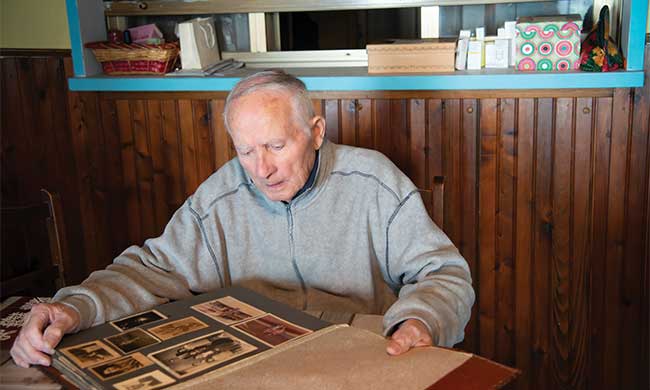
4 Ways to Preserve Veterans’ Stories for Future Generations
(Feature Impact) History is built from stories and memories, which is why it’s important to listen to the people who were there as the world changed. Family stories, photographs, letters and memories all have a place in the broader story of humanity, but if they aren’t recorded and preserved, they can fade over time.
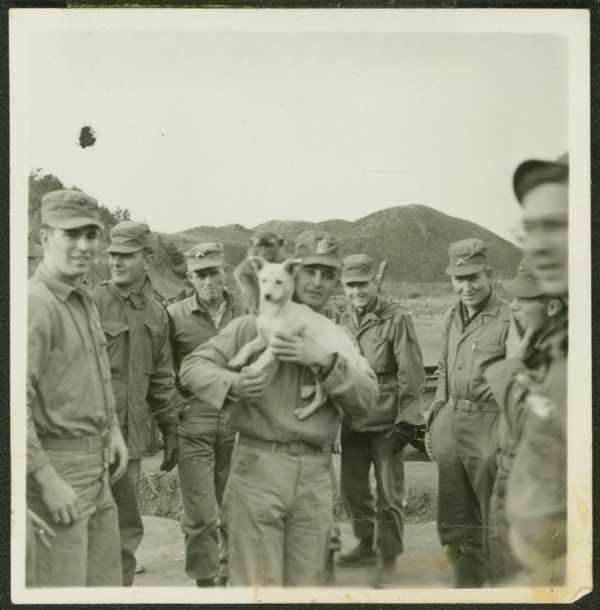
Because more than 70 years have passed since the Korean War ended, opportunities to hear firsthand accounts from earlier conflicts grow fewer as time passes. Veterans and their families may be able to help record stories and lessons from “The Forgotten War” that might otherwise be lost.
You don’t need to be a historian to help preserve your loved ones’ memories and experiences. Programs like the Library of Congress Veterans History Project are dedicated to collecting stories from people like Private First Class Robert Lawrence Barber, who wrote regular letters home to his mother while serving in Korea. They paint a harrowing picture of combat, exhaustion, cold, fatigue and the stark realities of war that should never be forgotten. Experiences away from combat can be equally revealing, from daily routines and friendships to unexpected challenges.
Consider these ways to help the veterans in your life preserve their stories and leave their mark on history.
Start the Conversation Now
When it comes to recording memories, time is of the essence, especially for those who served in Korea. Decades may have passed, but each day makes a difference. Sit down with your loved one and gently start the conversation. You don’t have to get the entire backstory at once, but you can begin asking questions about their military experience and give them time to gather their thoughts.
 Record Their Story
How a story is told can add dimension to the story itself. An audio or video recording preserves your loved one’s voice, expressions and emotions along with their words, giving your family memories to look back on for generations. Choose a quiet, comfortable space and test the equipment before recording.
Consider Preserving the Story Beyond Your Family
Family stories are most meaningful to those who know and love the storyteller, but they also matter to the world. Sharing veterans’ stories – including difficulties and ordinary moments – offers others a firsthand view of military life. Libraries and oral history archives may be able to preserve qualifying material for a wider audience.
“We want all stories, not just those from the foxhole or the battlefronts, but from all veterans who served the United States in uniform,” said Monica Mohindra, director of the Veterans History Project. “What did they hear? What did they see? What did it mean to them?”
If you have oral history interviews, and/or original photographs, letters or other records, consider contributing them to be archived and made accessible to future generations. Staff members are available to help you curate and select physical materials to contribute to the nation’s library.
Give Old Photos and Letters Context
Brush the dust off those old photo albums, scrapbooks and memory boxes because they may contain tangible pieces of history. A photograph, letter or piece of memorabilia could be what a veteran needs to bring fuzzy memories back into focus – whether it’s seeing the face of an old comrade or reading a letter written home. That gives you the opportunity to hear new stories and fill in context.
Learn more, discover veterans’ histories and find instructions for contributing veterans’ stories at loc.gov/vets.
Photo courtesy of Shutterstock (man looking at photo album)
Photo courtesy of the Library of Congress (group of soldiers)
SOURCE:
Library of Congress Veterans History Project

Rod's Pure Thoughts
Remembering Patrick Stewart: A Star Trek Journey Through My Life
Remembering Patrick Stewart: From childhood adventures with Kirk to finding another favorite captain in Picard, Rod Washington reflects on Patrick Stewart, the Next Generation cast, and the creativity they inspired.

From childhood afternoons with the original Enterprise crew to the reunion in Picard, Star Trek has been part of my life for decades. Patrick Stewart helped make that journey unforgettable.
Remembering Patrick Stewart
The news of Sir Patrick Stewart’s passing has me thinking about how much of my life has had Star Trek somewhere in the background—and often right in the foreground.
Star Trek: The Original Series has been my favorite since I was in single digits. Kirk, Spock, McCoy and the rest of that crew were part of my childhood. Long before there was a Captain Picard, that was my Enterprise.
Then came the motion-picture era with the original cast. The Wrath of Khan arrived during my teenage years. The Voyage Home followed in my young adulthood. As I grew up, those familiar characters kept coming back with new adventures.
Then we got a new Enterprise and a new generation.
A New Crew Earned Its Place
When Star Trek: The Next Generation began, my reaction was something like, “It’s okay.”
I continued watching. I was curious, but I already had a strong attachment to the original crew. That kind of connection takes time to build.
By the end of the first season, though, I was crazy about The Next Generation.
Patrick Stewart had a lot to do with that. His portrayal of Jean-Luc Picard gave me another captain to believe in. He had his own presence, his own way of handling a situation, and a way of making you listen when he spoke.
Eventually, Picard was on par with Kirk in my eyes. Coming from someone who had loved the original series since childhood, that says a lot.
From the Enterprise to First Contact
The series became an important part of my adult entertainment life. I cared about the characters and wanted to see where their stories would go.
After the television series ended, the TNG movies gave us more time with them. My favorite remains First Contact. It is the one that stands out most for me from that chapter of Star Trek.
Looking back, I can trace different stages of my life through these shows and movies: childhood with the original series, my teenage years with The Wrath of Khan, young adulthood with The Voyage Home, and then the years spent getting to know Picard’s crew.
That is a long relationship to have with a fictional universe. The people who bring it to life become familiar faces across decades.
Seeing Everyone Together Again
By the time Star Trek: Picard arrived, I was well into another chapter of my own life.
It was fun to see those familiar faces again, especially when the crew came back together. There was a lot of personal history attached to watching them share the screen.
Patrick Stewart and the rest of the cast—and yes, that includes Wil Wheaton—were an important part of my adult life as a viewer. Each contributed to a crew I grew to love.
Seeing them again brought back the feeling that had kept me watching all those years earlier.
Thank You for the Inspiration
What stays with me most is how much creativity those performances sparked.
As someone who enjoys filmmaking and storytelling, I appreciate entertainment that leaves me wanting to create something of my own. Stewart and his castmates gave me that feeling many times over the years.
His passing makes me appreciate the time we had with him on screen and the work we can return to. I can watch an episode, revisit First Contact, or spend another evening with the crew and remember why these stories meant so much to me.
The original series will always have that special place in my heart. Patrick Stewart helped another Enterprise crew earn a place there, too.
Thank you, Sir Patrick, for the years of entertainment, the inspiration, and a captain who became part of my life.
News Background
Stewart died October 28, 2026, at age 86, according to his spokesperson’s statement reported by Reuters. This entry is a personal reflection on his work and its place in my life.
Reader question: When did Captain Picard and the Next Generation crew win you over?
STM Blog
Golden Bird in Compton: When Mom Took a Night Off
Golden Bird in Compton was an occasional Friday or Saturday treat when Mom wanted a break from cooking. A personal look back at its Alondra Boulevard location and the memories that linger.

Some childhood meals stay with you for decades. For me, Golden Bird fried chicken in Compton is one of them.
Growing up in the Los Angeles area, an occasional Friday or Saturday meant my mom wanted a break from cooking. Those were the nights when takeout became a treat, and Golden Bird was one of the places I remember enjoying most.
The location on East Alondra Boulevard sounds like the one we visited. Researching it brought me to 2600 East Alondra Boulevard, Compton—an address listed in Los Angeles County records under Golden Bird #1.
An address can help place a memory on a map. But what I remember most is much simpler: the chicken was delicious, and getting it was a welcome weekend treat.
Part of Our Family’s Takeout Rotation
Golden Bird wasn’t our only chicken stop. Over the years, there was Pioneer, KFC, Church’s, Louisiana Fried Chicken, and later Popeyes. I also remember Jim Dandy from when I was very young, especially its crinkle-cut fries.
Each name brings back a different memory. Golden Bird brings me back to Compton and those evenings when my mother could take some time off from preparing dinner.
As a kid, I thought about enjoying the food. Looking back, I also appreciate what those meals meant for her: one less dinner to cook and a chance to take a break.
The History Behind the Address
Golden Bird’s own history describes a family recipe associated with Zelma and a wet batter designed to give the chicken a crisp outside while keeping the meat moist. My own memory is simply that I loved eating it.
The Alondra Boulevard location also connects to another chapter in Southern California’s fried-chicken history. Vincent Williams opened a Compton Golden Bird franchise in 1983, according to the Los Angeles Times.
A later profile described Williams developing his Honey’s Kettle concept in his former Compton franchise location. Honey’s Kettle dates its beginnings on Alondra Boulevard to 2000, and a 2012 restaurant visit documented its original location at 2600 East Alondra Boulevard. Those accounts point to a connection between the two businesses at that address.
I haven’t established who operated the restaurant during every year my family visited. But learning about its history adds another layer to a place I remember through its food.
A Weekend Memory Worth Keeping
For me, Golden Bird’s place in the story starts with family. It was an occasional treat, a meal I enjoyed, and a Friday or Saturday when Mom could let someone else handle the cooking.
Decades later, that is still a good reason to remember a neighborhood restaurant.
Editor’s note: Golden Bird is still serving fried chicken in South Los Angeles at 8300 South Western Avenue, at West 83rd Street. For those of us who remember it as a weekend family treat, it’s good to know the Golden Bird name remains part of LA’s food scene. Order pickup and delivery
Did you eat at the Golden Bird on Alondra Boulevard—or another Golden Bird location? Share your memories and favorite orders in the comments.
Explore more food stories in STM Daily News’ Food & Drink section.




