

Entertainment
Catherine O’Hara and the Late-Night TV That Stayed With Me
A personal reflection on watching Catherine O’Hara on SCTV during late-night television and how those early performances shaped a lifelong love of character-driven comedy.


Catherine O’Hara and the Late-Night TV That Shaped a Generation of Comedy Fans
From a personal point of view, one of my earliest memories of Catherine O’Hara doesn’t come from a movie theater or a prime-time sitcom. It comes from the quiet glow of late-night television, long after most of the house had gone to sleep.
As a youngster, I remember staying up late enough to catch Second City Television (SCTV), which aired after Saturday Night Live and Don Kirshner’s Rock Concert. That meant it didn’t come on until around 1:30 a.m. Pacific Time, deep into Saturday night and early Sunday morning. Even at that young age, I knew I was watching something different. The humor felt sharper, stranger, and somehow smarter — and Catherine O’Hara stood out immediately.
Even before I understood why it was funny, I understood that it mattered.
Late-Night Television as a Classroom
Looking back now, it’s clear that late-night television quietly shaped my taste in comedy. SCTV didn’t feel like it was aiming for the widest possible audience. It felt like it trusted the viewer to catch up. Catherine O’Hara’s performances weren’t just about delivering punchlines — they were about inhabiting characters completely, no matter how absurd, subtle, or offbeat they were.
That kind of comedy asks you to pay attention. And for a kid watching far past his bedtime, it was oddly captivating. I didn’t have the vocabulary for “character work” or “commitment to the bit,” but I recognized authenticity when I saw it. O’Hara had it in abundance.
Seeing the Through-Line Years Later
As the years went on, Catherine O’Hara kept showing up in new places — and each time, something clicked. In Beetlejuice, there was that same fearless weirdness. In Home Alone, she brought warmth and panic and humanity to what could have easily been a one-note role. She grounded the chaos without ever dulling it.

Then came Schitt’s Creek. By the time Moira Rose entered our cultural vocabulary, it felt less like a reinvention and more like a full-circle moment. The bold choices, the musicality of her voice, the unapologetic commitment — it all traced back to those SCTV performances from decades earlier.
Moira Rose didn’t come out of nowhere — she came from years of late nights, sharp instincts, and fearless comedy.
Why Those Early Moments Matter
What I didn’t realize at the time was that those 1:30 a.m. viewings were teaching me how to appreciate comedy that lingered. Not everything had to land immediately. Not every joke needed a laugh track. Some performances simply stayed with you.

Catherine O’Hara’s work did exactly that. It stayed. Through different decades, formats, and genres, her performances carried a consistency of intelligence and heart. For many of us who grew up sneaking glances at late-night television, she became a familiar presence — someone who trusted the audience enough to go all in.
A Personal Goodbye
With news of her passing, those memories feel closer than ever. Not just of Catherine O’Hara the icon, but of Catherine O’Hara the performer who helped shape how many of us learned to watch comedy. She wasn’t just funny — she was formative.
Late-night television doesn’t always get credit for the role it plays in shaping taste, curiosity, and imagination. But for those of us who were there, watching quietly while the rest of the world slept, it mattered. And Catherine O’Hara was a big part of why.
— STM Daily News
For more on her early career in comedy, see Forbes retrospective on Catherine O’Hara’s career history and influence. [oai_citation:3‡Forbes](https://www.forbes.com/sites/hannahabraham/2026/01/30/how-catherine-ohara-became-beloved-across-three-generations-from-sctv-to-home-alone-to-schitts-creek/?utm_source=chatgpt.com)
Learn about the cultural impact and awards for Schitt’s Creek Schitt’s Creek Wikipedia overview. [oai_citation:4‡Wikipedia](https://en.wikipedia.org/wiki/Schitt%27s_Creek?utm_source=chatgpt.com)
See a broad overview of her life and legacy from PBS NewsHour PBS retrospective. [oai_citation:5‡pbs.org](https://www.pbs.org/newshour/arts/catherine-ohara-emmy-winning-actor-and-comedian-of-schitts-creek-fame-dies-at-71?utm_source=chatgpt.com)
Looking for an entertainment experience that transcends the ordinary? Look no further than STM Daily News Blog’s vibrant Entertainment section. Immerse yourself in the captivating world of indie films, streaming and podcasts, movie reviews, music, expos, venues, and theme and amusement parks. Discover hidden cinematic gems, binge-worthy series and addictive podcasts, gain insights into the latest releases with our movie reviews, explore the latest trends in music, dive into the vibrant atmosphere of expos, and embark on thrilling adventures in breathtaking venues and theme parks. Join us at STM Entertainment and let your entertainment journey begin! https://stmdailynews.com/category/entertainment/
and let your entertainment journey begin!


Entertainment
Lights, Camera, Snackers: How Aspiring Filmmakers Can Enter to Win $25,000
The director’s chair is open and the opportunity to create the next great snack-sized movie could be yours. Aspiring filmmakers and creators have the chance to turn a prewritten script into an original short film for a $25,000 prize.

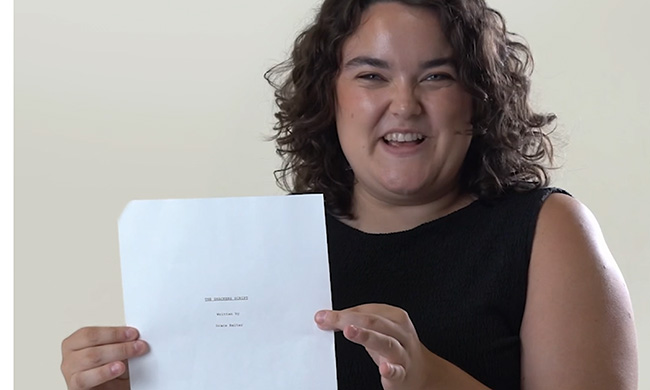
Lights, Camera, Snackers: How Aspiring Filmmakers Can Enter to Win $25,000
(Feature Impact) The director’s chair is open and the opportunity to create the next great snack-sized movie could be yours.
For the second year, Bumble Bee is bringing back its Tuna “Cans”Film Festival, giving aspiring filmmakers and creators the chance to turn a script written by comedian and actress, Grace Reiter, into an original short film starring its deliciously convenient tuna Snackers.
Watch the video to learn more!
“I love a chance to support those starting out in the film industry – and this time, I’m partnering with Bumble Bee for the Tuna Cans Film Festival to do it,” Reiter said. “Plus, I’m making it easy: I already wrote the script.”
Using Reiter’s scripted lines, creators can make the story entirely their own, bringing their vision to life through original characters, settings, music, editing and creative flair.
The creative brief is simple: The finished film must be 60 seconds or less and Bumble Bee Snackers™ need to get their moment in the spotlight.
Plus, the stakes are bigger than ever: The winning filmmaker will take home a $25,000 grand prize to help make their filmmaking dreams a reality.
Creators can submit their original short film by Oct. 23, 2026, at 11:59 p.m. PT.
The film can be funny, dramatic, unexpected or all three. The lines are already written but the order, arrangement and any additions are open to creative interpretation. Now it’s time to see what you can do with it.
Visit tunacansfilmfest.com, where you can find Reiter’s original script, submission instructions and complete contest details, to get started.
SOURCE:
Bumble Bee

Last Updated on October 9, 2026 by Daily News Staff
From haunted mazes after dark to daytime trick-or-treating with Snoopy, Knott’s offers two ways to celebrate Halloween in 2026.
BUENA PARK, Calif. — Halloween season is underway at Knott’s Berry Farm, where visitors can choose between the nighttime frights of Knott’s Scary Farm and the playful daytime activities of Knott’s Spooky Farm.
For readers planning a Southern California outing this October, the two celebrations offer different ways to get into the Halloween spirit.
Scary Farm brings new nightmares after dark
Knott’s Scary Farm runs on select nights through October 31, 2026, transforming the park with haunted mazes, scare zones, shows, and more than 1,000 creatures, according to Knott’s.
Two new mazes join this year’s lineup. Inked turns a cartoonist’s creations into a nightmare, while Unearthed sends visitors into an excavation where an ancient evil has awakened.
Also new for 2026 is Color Collect, an activity in which guests use an interactive lantern to activate pillars around the park and collect six colors.
Scary Farm requires its own paid event admission. As of October 4, online single-night tickets are advertised from $65, with taxes potentially additional. Knott’s does not recommend the event for children under 13.
Spooky Farm offers daytime Halloween fun
For families seeking a gentler celebration, Knott’s Spooky Farm takes place Thursdays through Sundays, September 24–October 31, plus October 12, according to the park’s events calendar, which lists the additional date as Columbus Day.
Children can trick-or-treat through Ghost Town, enjoy games and spooky stories with Snoopy and the Peanuts characters, and show off their Halloween outfits at Snoopy’s Spooktacular Costume Party.
Other activities include the Creepy Critters of Calico, cookie decorating in the pumpkin patch, and performances by the Bob Baker Marionette Theater. Cookie decorating carries an additional fee.
The daytime celebration gives families a chance to enjoy Halloween decorations, treats, and entertainment together before the nighttime haunt begins.
Planning your visit
Knott’s Berry Farm is located at 8039 Beach Boulevard in Buena Park, California. Before heading out, check the park’s official calendar for your chosen date, operating hours, admission options, and event policies.
Whether your Halloween plans call for a bag of candy or a trip through a haunted maze, Knott’s has a seasonal celebration to match.
Keep the fun going: Visit STM Daily News for more entertainment news, theme park updates, and stories worth sharing.
Official sources
- Knott’s Scary Farm: attractions and tickets
- Knott’s Spooky Farm: activities and entertainment
- Knott’s Berry Farm: seasonal event dates
Information checked October 4, 2026. Event schedules, offerings, and ticket prices may change.


The next round of Street Fighter is heading to the big screen. Paramount Pictures and Legendary Pictures will release the new live-action movie exclusively in theaters on October 16, 2026, bringing Capcom’s video game characters into a story built around rivalries, a dangerous tournament, and a conspiracy lurking behind the competition.
Directed by Kitao Sakurai, the film features Andrew Koji as Ryu, Noah Centineo as Ken Masters, and Callina Liang as Chun-Li, alongside an ensemble that includes Jason Momoa, Curtis “50 Cent” Jackson, and wrestling stars Roman Reigns and Cody Rhodes.
Ryu and Ken Face a Fight Beyond the Arena
Set in 1993, the movie finds Ryu and Ken estranged when Chun-Li draws them back into combat for the next World Warrior Tournament. What initially looks like a chance to test their fighting skills becomes something much more dangerous.
According to the studio’s synopsis, a deadly conspiracy puts the two fighters on a collision course, forcing them to confront both each other and unresolved struggles from their past. That setup gives the film a personal conflict to explore alongside its tournament action.
For viewers who remember gathering around an arcade cabinet, the 1993 setting offers a nostalgic hook. The studio is also promising familiar signature moves, including Hadoukens and roundhouse kicks, as the game’s combat makes the jump to live action.
A Cast Packed With Familiar Fighters
Beyond its central trio, the announced lineup brings together actors, comedians, musicians, wrestlers, and martial artists. Among the character pairings:
- Joe “Roman Reigns” Anoai as Akuma
- David Dastmalchian as M. Bison
- Cody Rhodes as Guile
- Vidyut Jammwal as Dhalsim
- Orville Peck as Vega
- Olivier Richters as Zangief
- Hirooki Goto as E. Honda
- Mel Jarnson as Cammy
- Curtis “50 Cent” Jackson as Balrog
- Jason Momoa as Blanka
The cast also includes Andrew Schulz as Dan Hibiki, Eric André as Don Sauvage, Rayna Vallandingham as Juli, Kyle Mooney as Marvin, and Alexander Volkanovski as Joe.
With so many characters sharing the screen, one question will be how the movie balances the wider roster with Ryu and Ken’s central story. The announced cast gives longtime fans plenty of familiar names to watch for.
Who Is Behind the Movie?
Paramount Pictures and Legendary Pictures present Street Fighter in association with Capcom. The Legendary Pictures production is based on the Capcom video game, with a story by Dalan Musson and Gary Dauberman and a screenplay by T.J. Fixman and Kitao Sakurai.
Producers include Mary Parent, Cale Boyter, Jason Momoa, Takayuki Nakayama, and Stefan Makhoul. The supplied production announcement notes that credits are subject to change.
Release Date and Rating
Street Fighter opens only in theaters October 16, 2026. The film is rated PG-13 for violence/action, bloody images, strong language, sexual references, partial nudity, and brief smoking, according to the supplied studio announcement.
Fans can visit Paramount’s official Street Fighter page for the trailer and film information, and follow #StreetFighterMovie for promotional updates.
Which fighter are you most excited to see in live action? Share your pick in the comments, and visit STM Daily News for more Entertainment coverage and newsletter updates.
Source: Supplied Paramount Pictures/Legendary Pictures production announcement; release date, synopsis, and selected credits checked against Paramount’s official film page. This article is a preview, not a review.





