Community
Local governments provide proof that polarization is not inevitable
Local politics help mitigate national polarization by focusing on concrete issues like infrastructure and community needs rather than divisive symbolic debates. A survey indicates that local officials experience less partisanship, as interpersonal connections foster recognition of shared interests. This suggests that reducing polarization is possible through collaboration and changes in election laws.

Last Updated on March 8, 2026 by Daily News Staff
Lauren Hall, Rochester Institute of Technology
When it comes to national politics, Americans are fiercely divided across a range of issues, including gun control, election security and vaccines. It’s not new for Republicans and Democrats to be at odds over issues, but things have reached a point where even the idea of compromising appears to be anathema, making it more difficult to solve thorny problems.
But things are much less heated at the local level. A survey of more than 1,400 local officials by the Carnegie Corporation and CivicPulse found that local governments are “largely insulated from the harshest effects of polarization.” Communities with fewer than 50,000 residents proved especially resilient to partisan dysfunction.
Why this difference? As a political scientist, I believe that lessons from the local level not only open a window onto how polarization works but also the dynamics and tools that can help reduce it.
Problems are more concrete
Local governments deal with concrete issues – sometimes literally, when it comes to paving roads and fixing potholes. In general, cities and counties handle day-to-day functions, such as garbage pickup, running schools and enforcing zoning rules. Addressing tangible needs keeps local leaders’ attention fixed on specific problems that call out for specific solutions, not lengthy ideological debates.
By contrast, a lot of national political conflict in the U.S. involves symbolic issues, such as debates about identity and values on topics such as race, abortion and transgender rights. These battles are often divisive, even more so than purely ideological disagreements, because they can activate tribal differences and prove more resistant to compromise.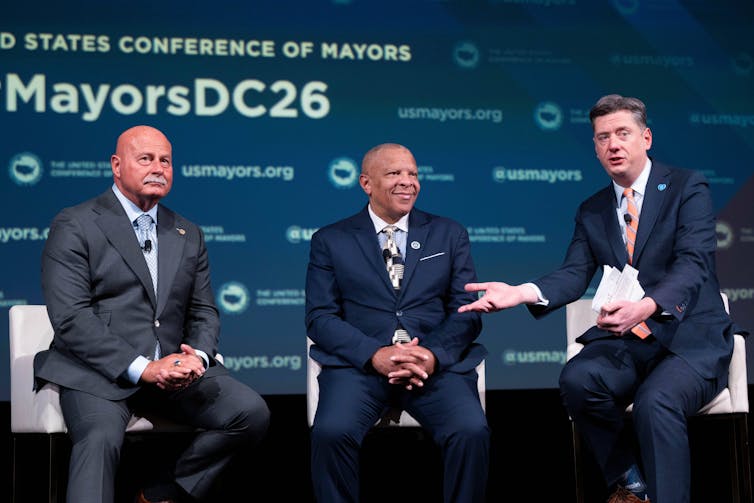
Such arguments at the national level, or on social media, can lead to wildly inaccurate stereotypes about people with opposing views. Today’s partisans often perceive their opponents as far more extreme than they actually are, or they may stereotype them – imagining that all Republicans are wealthy, evangelical culture warriors, for instance, or conversely being convinced that all Democrats are radical urban activists. In terms of ideology, the median members of both parties, in fact, look similar.
These kinds of misperceptions can fuel hostility.
Local officials, however, live among the human beings they represent, whose complexity defies caricature. Living and interacting in the same communities leads to greater recognition of shared interests and values, according to the Carnegie/CivicPulse survey.
Meaningful interaction with others, including partisans of the opposing party, reduces prejudice about them. Local government provides a natural space where identities overlap.
People are complicated
In national U.S. politics today, large groups of individuals are divided not only by party but a variety of other factors, including race, religion, geography and social networks. When these differences align with ideology, political disagreement can feel like an existential threat.
Such differences are not always as pronounced at the local level. A neighbor who disagrees about property taxes could be the coach of your child’s soccer team. Your fellow school board member might share your concerns about curriculum but vote differently in presidential elections.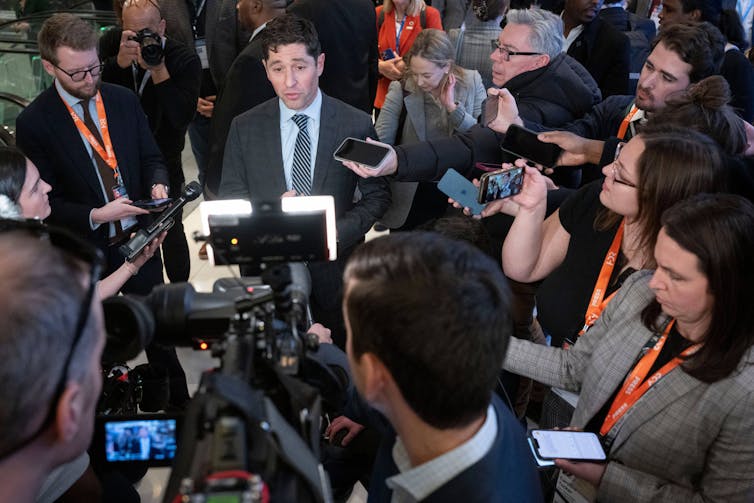
These cross-cutting connections remind us that political opponents are not a monolithic enemy but complex individuals. When people discover they have commonalities outside of politics with others holding opposing views, polarization can decrease significantly.
Finally, most local elections are technically nonpartisan. Keeping party labels off ballots allows voters to judge candidates as individuals and not merely as Republicans or Democrats.
National implications
None of this means local politics are utopian.
Like water, polarization tends to run downhill, from the national level to local contests, particularly in major cities where candidates for mayor and other office are more likely to run as partisans. Local governments also see culture war debates, notably in the area of public school instruction.
Nevertheless, the relative partisan calm of local governance suggests that polarization is not inevitable. It emerges from specific conditions that can be altered.
Polarization might be reduced by creating more opportunities for cross-partisan collaboration around concrete problems. Philanthropists and even states might invest in local journalism that covers pragmatic governance rather than partisan conflict. More cities and counties could adopt changes in election law that would de-emphasize party labels where they add little information for voters.
Aside from structural changes, individual Americans can strive to recognize that their neighbors are not the cardboard cutouts they might imagine when thinking about “the other side.” Instead, Americans can recognize that even political opponents are navigating similar landscapes of community, personal challenges and time constraints, with often similar desires to see their roads paved and their children well educated.
The conditions shaping our interactions matter enormously. If conditions change, perhaps less partisan rancor will be the result.
Lauren Hall, Associate professor of Political Science, Rochester Institute of Technology
This article is republished from The Conversation under a Creative Commons license. Read the original article.
The Bridge is a section of the STM Daily News Blog meant for diversity, offering real news stories about bona fide community efforts to perpetuate a greater good. The purpose of The Bridge is to connect the divides that separate us, fostering understanding and empathy among different groups. By highlighting positive initiatives and inspirational actions, The Bridge aims to create a sense of unity and shared purpose. This section brings to light stories of individuals and organizations working tirelessly to promote inclusivity, equality, and mutual respect. Through these narratives, readers are encouraged to appreciate the richness of diverse perspectives and to participate actively in building stronger, more cohesive communities.
https://stmdailynews.com/the-bridge

Sports
More Than a Game: Young Athletes Show the Power of Giving Back
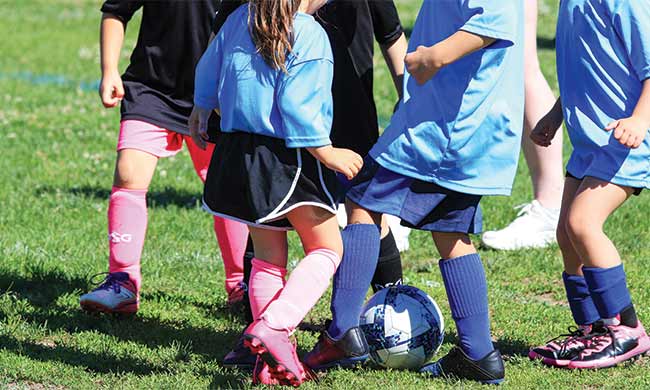
More Than a Game for Young Athletes: Becoming a community difference-maker doesn’t require years of experience. In fact, two young soccer players received recognition for superstar service in their communities and are being celebrated for making a difference beyond the field.

More Than a Game: Young Athletes Show the Power of Giving Back
(Feature Impact) Becoming a community difference-maker doesn’t require years of experience. In fact, some of the youngest in hometowns around the country are finding ways to give back, support their neighbors and inspire others to do the same. All it takes is a creative idea, a willingness to lend a hand and the determination to turn good intentions into action.
Two young soccer players received recognition for superstar service in their communities through the first CVS Home Team Heroes contest, a nationwide initiative celebrating youth athletes who made a difference beyond the field.
Caroline, 9, and Zoe, 12, were selected as grand prize winners. Each will receive a $25,000 grant for their nonprofit soccer organization, a block party for their team and a spot on limited-edition packaging for select Well Market snacks, expected to arrive on select CVS Pharmacy shelves in spring 2027, while supplies last.
Seattle Reign and U.S. Women’s National Team defender Jordyn Bugg surprised the winners via video.
“Getting to tell Caroline and Zoe they’re CVS Home Team Heroes was one of the best moments of my year,” Bugg said. “I started on a local field with coaches and teammates who believed in me, and it’s really special to see these two show up for the players and communities around them.”
Echoing that sentiment, Croix Bethune, Kansas City Current midfielder, celebrated the winners and the impact they’re making in their communities.
“Caroline and Zoe show what being a true team player is all about,” Bethune said. “I’m honored to be part of sharing their stories and can’t wait to see what the future holds for them.”
Rebuilding a Community with Creativity
When two hurricanes devastated The Center of Anna Maria Island, where Caroline plays youth soccer, she and her older brother, Parker, found a creative way to help their community recover. The siblings launched Print Wizards to sell 3D-printed toys to raise money, and their efforts have generated more than $6,000 to help repair damaged fields and establish an all-girls soccer and flag football team.
For Caroline, soccer is a place to build camaraderie, confidence and leadership skills alongside her teammates. The $25,000 grant will help the center continue rebuilding, support local families affected by the hurricanes and expand youth sports programming so more children can play.
“As Caroline’s parents, we’re so proud to see her enthusiasm for her all-girls flag football and soccer team and her business, Print Wizards, recognized,” said Brooke and Mike Svoboda. “At 9 years old, she’s discovering how her ideas can bring people together, and this support means so much to her and our family. It encourages her to keep dreaming big and making a difference in her community.”
Inspiring Others Through Leadership
Zoe, born with progressive hearing loss, regularly meets with newly diagnosed deaf and hard-of-hearing infants and their families, helping ease parents’ concerns about their children’s futures and serving as a role model for younger children. She hopes to inspire other deaf and hard-of-hearing soccer players by one day playing for the U.S. Women’s Deaf National Team.
Her club team, Tudela Fútbol Club Los Angeles, will use the $25,000 grant to help make soccer more accessible by bridging gender and opportunity gaps and challenging the typical pay-to-play youth sports model.
“Discovering the U.S. Women’s Deaf National Team gave Zoe something she had been missing: the chance to see herself reflected in the athletes she admired,” said Angie Winslow, Zoe’s mother. “Through USA Deaf Soccer, she found the confidence to embrace who she is. When she arrived at her first Tudela FC tryout, someone greeted her in sign language – a simple gesture that showed her she belonged. We’re incredibly proud to see Zoe now extending that same spirit of inclusion to younger athletes and grateful that CVS is celebrating the power of a game that truly belongs to everyone.”
Learn more about the initiative by visiting cvs.com/content/soccer/home-team-heroes.
Photo courtesy of Shutterstock
SOURCE:
CVS

Community
4 Ways to Preserve Veterans’ Stories for Future Generations
Family stories, photographs, letters and memories all have a place in the broader story of humanity, but if they aren’t recorded and preserved, they can fade over time. Consider these ways to help the veterans in your life preserve their stories and leave their mark on history. Preserve Veterans’ Stories for Future Generations
4 Ways to Preserve Veterans’ Stories for Future Generations
(Feature Impact) History is built from stories and memories, which is why it’s important to listen to the people who were there as the world changed. Family stories, photographs, letters and memories all have a place in the broader story of humanity, but if they aren’t recorded and preserved, they can fade over time.
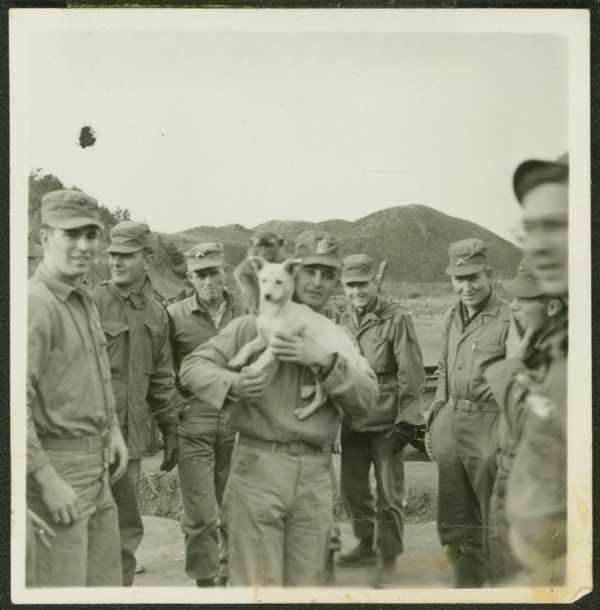
Because more than 70 years have passed since the Korean War ended, opportunities to hear firsthand accounts from earlier conflicts grow fewer as time passes. Veterans and their families may be able to help record stories and lessons from “The Forgotten War” that might otherwise be lost.
You don’t need to be a historian to help preserve your loved ones’ memories and experiences. Programs like the Library of Congress Veterans History Project are dedicated to collecting stories from people like Private First Class Robert Lawrence Barber, who wrote regular letters home to his mother while serving in Korea. They paint a harrowing picture of combat, exhaustion, cold, fatigue and the stark realities of war that should never be forgotten. Experiences away from combat can be equally revealing, from daily routines and friendships to unexpected challenges.
Consider these ways to help the veterans in your life preserve their stories and leave their mark on history.
Start the Conversation Now
When it comes to recording memories, time is of the essence, especially for those who served in Korea. Decades may have passed, but each day makes a difference. Sit down with your loved one and gently start the conversation. You don’t have to get the entire backstory at once, but you can begin asking questions about their military experience and give them time to gather their thoughts.
 Record Their Story
How a story is told can add dimension to the story itself. An audio or video recording preserves your loved one’s voice, expressions and emotions along with their words, giving your family memories to look back on for generations. Choose a quiet, comfortable space and test the equipment before recording.
Consider Preserving the Story Beyond Your Family
Family stories are most meaningful to those who know and love the storyteller, but they also matter to the world. Sharing veterans’ stories – including difficulties and ordinary moments – offers others a firsthand view of military life. Libraries and oral history archives may be able to preserve qualifying material for a wider audience.
“We want all stories, not just those from the foxhole or the battlefronts, but from all veterans who served the United States in uniform,” said Monica Mohindra, director of the Veterans History Project. “What did they hear? What did they see? What did it mean to them?”
If you have oral history interviews, and/or original photographs, letters or other records, consider contributing them to be archived and made accessible to future generations. Staff members are available to help you curate and select physical materials to contribute to the nation’s library.
Give Old Photos and Letters Context
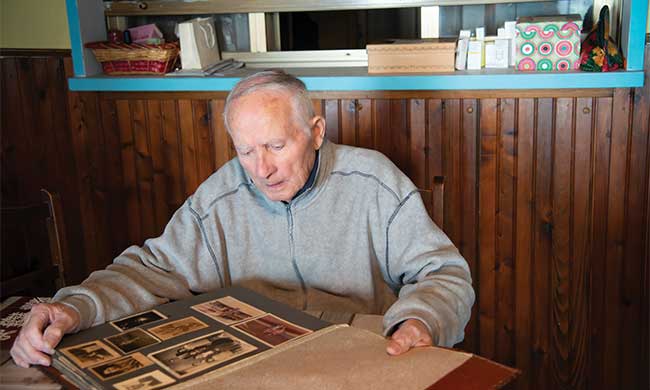
Brush the dust off those old photo albums, scrapbooks and memory boxes because they may contain tangible pieces of history. A photograph, letter or piece of memorabilia could be what a veteran needs to bring fuzzy memories back into focus – whether it’s seeing the face of an old comrade or reading a letter written home. That gives you the opportunity to hear new stories and fill in context.
Learn more, discover veterans’ histories and find instructions for contributing veterans’ stories at loc.gov/vets.
Photo courtesy of Shutterstock (man looking at photo album)
Photo courtesy of the Library of Congress (group of soldiers)
SOURCE:
Library of Congress Veterans History Project
Community
5 Meaningful Ways to Make a Difference This Holiday Season
Make a Difference This Holiday Season: Hunger relief is often top of mind during the holidays, and there are many ways to make a meaningful difference. Consider these ideas.
5 Meaningful Ways to Make a Difference This Holiday Season
(Feature Impact) The holiday season brings people together and often inspires them to think about how they can support others. Yet for many families, this time of year can bring added pressure as they balance the cost of food and other everyday essentials.
According to Feeding America’s latest Map the Meal Gap study, published in 2026, nearly 48 million people in the United States, including 14 million children, experience food insecurity.
Hunger relief is often top of mind during the holidays, and there are many ways to make a meaningful difference. Each year, Charles Schwab employees come together through Season of Giving to support local nonprofits and help make the holidays brighter for those in need.
Consider these ideas from Charles Schwab Foundation, a nonprofit dedicated to advancing financial literacy and strengthening communities.
Give What’s Needed Most
When giving to a local food bank, pantry or other nonprofit, start by finding out what the organization needs most. Many organizations share lists of priority items, while monetary donations can give them flexibility to direct resources where they will have the greatest impact. A little planning can help make every contribution count.
Turn Giving Into a Group Activity
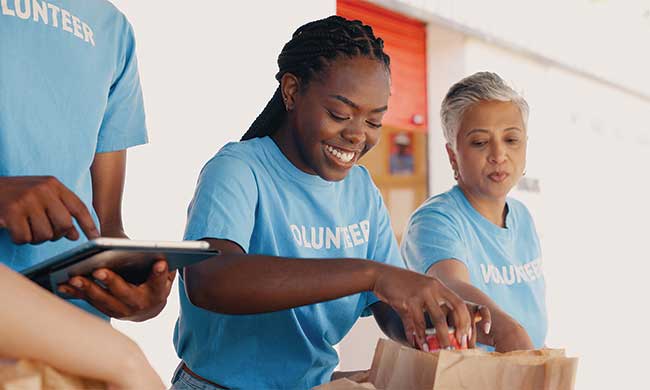
Invite family, friends, neighbors or coworkers to get involved with you. Organizing a donation drive, packing meals or volunteering together can multiply the impact while creating a meaningful way to connect during the holiday season.
Share Your Time and Talents
There are many ways to contribute beyond making a donation. Consider volunteering your time or putting your skills to use for an organization that could benefit from them. From sorting donations and packing meals to helping with special events or administrative projects, your time and expertise can make a meaningful impact.
Support Organizations in Your Own Community
The holidays are an opportunity to learn more about the organizations serving your neighbors every day. Look for local nonprofits addressing needs that matter to you, whether that is hunger, housing, education or another community priority. Supporting organizations close to home can help strengthen the networks people rely on throughout the year.
Keep Giving Beyond the Holidays
The spirit of giving doesn’t have to end when the holiday season is over. Consider turning a one-time contribution into an ongoing commitment, whether by volunteering periodically, making recurring donations or continuing to support an organization with a mission that resonates with you.
Learn more about the work being done to advance financial literacy and strengthen communities at schwabmoneywise.com/foundation.
Photo courtesy of Shutterstock

SOURCE: