

Health
Gen Z is least likely to believe cancer can be prevented. Many don’t know basic screenings exist.


(Sheeka Sanahori) Gen Z adults are at the stage when lifelong habits start to take shape. They’re launching careers, reflecting on their values, and building relationships and routines. They’re also navigating messages about beauty standards that sometimes oppose the needs of their long-term health. Case in point: the “tanmaxxing” trend found on social media.
“Ain’t no way I’m letting my job stop me from soaking in the 8 UV,” one Instagram user wrote while tanning from a car with the convertible roof down. The video is one of hundreds by “tanfluencers” documenting the ways they take tanning to the extreme, including skipping sunscreen or tanning in the middle of the day, when the sun’s ultraviolet (UV) rays are at their most harmful.
This risky trend is one example of a growing generational gap in beliefs about cancer prevention. According to the 2026 Early Detection Survey from the Prevent Cancer Foundation, Gen Z adults (ages 21-29) are less likely than their parents and grandparents to fully consider that cancer risk can be reduced through prevention and early detection.
Gen Z faces a cancer prevention awareness gap
Across every generation, most adults believe cancer risk can be reduced, but Gen Z is the least convinced. While 73% of Baby Boomers agree, only 64% of Gen Z adults do.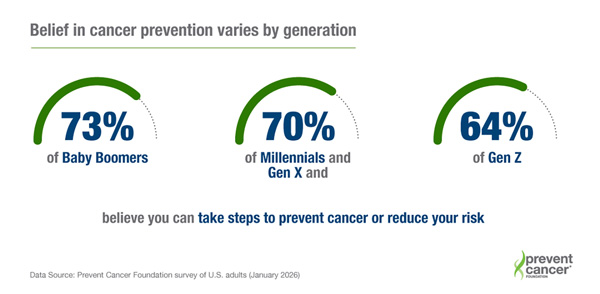
That same pattern continues when focusing specifically on skin cancer. Nearly half of Gen Z respondents believe sunscreen and sun-protective clothing can help reduce their skin cancer risk, compared to 53% of Millennials and 64% of Gen X.
Only 37% of Gen Z respondents have had a routine medical appointment or cancer screening in the last year, the lowest of any generation. Although certain cancer screenings, including breast and colorectal cancer, begin in middle age, some are also recommended for young adults. Cervical cancer is highly preventable, with screening beginning for people with a cervix and of average risk at the age of 21. Forty-six percent of Gen Z adults who are eligible said they were not up to date.
Systemic barriers prevent healthier lifestyles
For some Gen Z adults, the health care system itself is part of the problem. Nearly a third report experiencing discrimination or bias from a health care provider, and 44% believe the system prioritizes profit over patient care. Those experiences could be enough to make someone skip a future health appointment.
The most common barrier for Gen Z isn’t what you might expect. Three in 5 respondents say they simply lack motivation, a higher rate than Millennials or Gen X. Among the three youngest surveyed generations, Gen Z is the only group that doesn’t rank cost as its primary obstacle. The bigger challenge is making preventive care feel urgent and relevant now.
Better communication and education could help more get screened
Data suggests that practical guidance and clearer communication could make a difference. More than half of Gen Z adults say having a provider to help them navigate the system would increase trust in health care and make it easier for them to get their recommended cancer screenings. Affordable, predictable costs would help 52% of respondents.
Sixty-five percent of Gen Z adults say they’re motivated to schedule cancer screenings because they want to live a long, healthy life. Colorectal cancer is now the leading cause of cancer death in people under 50, and skin cancer is one of the most common cancers in people younger than 30. The motivation is there. Reaching them with the right information at the right time may be what it takes.
Methodology
The Prevent Cancer Foundation commissioned Atomik Research to conduct the Foundation’s 4th annual Pan-Cancer Early Detection Survey of U.S. adults ages 21 or older. The margin of error of the overall sample is +/- 1 percentage point with a confidence level of 95%. Fieldwork took place between Jan. 10 and Jan. 30 of 2026. The cancer screenings studied in this survey were for breast cancer, cervical cancer, colorectal cancer, lung cancer, oral cancer, prostate cancer, skin cancer and testicular cancer.
Atomik Research is an independent market research agency.
Photo courtesy of Shutterstock

SOURCE:
💪 Your health journey starts here! Explore the latest health news, fitness tips, wellness trends, and healthy living advice. Share your thoughts in the comments and subscribe to the STM Daily News newsletter to stay informed and inspired every day.


Health
Caring for the Caregiver: 7 Ways to Support Those Who Care for Others
Caring for the Caregiver:Whether it’s helping an older family member manage appointments and medications, caring for a sick child or coordinating disability services for a loved one, almost everyone will be a caregiver, need a caregiver or both at some point in their lifetime.

Caring for the Caregiver: 7 Ways to Support Those Who Care for Others
(Feature Impact) Caregiving is some of the most important work a person can do, yet it’s often overlooked and undervalued in society. Whether it’s helping an older family member manage appointments and medications, caring for a sick child or coordinating disability services for a loved one, almost everyone will be a caregiver, need a caregiver or both at some point in their lifetime.
In fact, more than 53 million Americans support the health, quality of life and independence of an older adult or family member with a serious illness or disability each year, according to the Administration for Community Living.
Caregiving can be exhausting, stressful and overwhelming at times. In fact, research shows caregivers face real health impacts from physical and emotional strain, according to research published by the National Institutes of Health. Having the right support, however, can improve life for them and those they care for. Consider these practical, accessible ways to support caregivers from the experts at Community Catalyst.
Build a Caregiving Team
Support can begin with reimagining caregiving as a team effort instead of expecting one person to handle every task. Involving other family members, neighbors, local support services and healthcare professionals means many hands and lighter work, whether their help comes in the form of cooking meals, handling transportation or assisting with paperwork.
 Make Time for Your Own Health and Emotions
As a caregiver, you may be tempted to put the needs of others before yours. In fact, many caregivers find themselves scheduling doctors’ appointments for others while skipping their own. Remember your needs are just as important, and you can’t pour from an empty cup. Carve out time for self-care activities like healthy eating, movement, therapy and time with friends. Online support groups and forums can connect you with people who understand, so you feel less isolated.
Look for Respite Care Opportunities
Even if an ill or disabled loved one doesn’t require full-time in-home support, it may be possible to arrange occasional professional respite care. Depending on where you live, Medicaid waivers or local grants could help cover costs – but keep in mind that waitlists can be long, so don’t wait to start exploring these opportunities. For help accessing respite care and other caregiver support, reach out to your state’s “No Wrong Door” center, which can connect you to long-term services and assistance.
Talk to Your Employer
Juggling full-time work and caregiving can be a recipe for burnout, but an understanding employer can make a world of difference. Discuss possibilities like flexible scheduling, remote work, expanded family leave or intermittent leave via the Family and Medical Leave Act, dependent care assistance options and peer support networks.
Get Help Navigating Coverage and Benefits
Between insurance coverage, benefits programs, medical bills and more, the logistics of caregiving can make your head spin. Organizations like Community Catalyst work with local, state and community partners to help caregivers sort through the noise and take actions to improve their families’ lives, like signing up for Medicaid or Medicare.
Through a program funded by the Administration for Community Living, the organization is helping states build systems designed to support caregivers’ health, well-being and financial security. Furthermore, it shares education around family caregiving issues, features the stories of real people who often feel invisible and provides practical, usable guidance for those struggling to navigate insurance and healthcare.
Stay Connected and Organized with Technology
Coordinating care often feels like staying on top of hundreds of details simultaneously. Tools like group chats, video calls, shared calendars, medication apps, remote monitoring devices and telehealth portals can streamline some everyday logistics and keep you in touch with your support network.
Discuss Long-Term Plans Openly
Caregiving is a marathon, not a sprint. Open, honest conversations about the future can help caregivers make more informed decisions, share responsibilities and have greater peace of mind. Discuss medical care, living arrangements, finances, future goals and your loved one’s preferences as you look toward the years ahead.
When caregivers have the support they need, the people they care for – and the communities around them – are stronger. Learn more and find additional caregiver resources at CommunityCatalyst.org.
Photos courtesy of Shutterstock
SOURCE:
Community Catalyst
fitness
Real-World Weight Journeys: Exploring Health Experiences to Improve Care
Exploring Health Experiences: A number on a scale tells only part of the story. Living well is also about having energy, feeling your best and enjoying a good quality of life. Yet each person’s path is different, and lifestyle changes, medicines and other approaches to managing weight can affect health in different ways.

Real-World Weight Journeys: Exploring Health Experiences to Improve Care
(Feature Impact) A number on a scale tells only part of the story. Living well is also about having energy, feeling your best and enjoying a good quality of life. Yet each person’s path is different, and lifestyle changes, medicines and other approaches to managing weight can affect health in different ways.
No two weight-management journeys look the same. Some people are taking their first steps toward healthier habits. Others are balancing health conditions, caring for family members, coping with stress or exploring new treatment options. Along the way, they may find support that helps them succeed or encounter obstacles that make progress more difficult.
These stories provide valuable insights into what it takes to improve health in everyday life.
That’s the idea behind the American Heart Association’s Healthy Living BEYOND Weight Study. By learning directly from adults across the country, researchers aim to better understand the challenges, motivations and factors that shape weight and health outcomes over time. The goal is to generate insights that can help improve support, inform care and empower more people to live healthier lives.
What Factors Influence Weight
Nearly 1 in 3 U.S. adults are overweight and 2 in 5 are obese, according to the National Institutes of Health. Weight is shaped by many factors, including:
- Genetics and hormones
- Access to healthy food, safe places to exercise and healthcare
- Chronic stress and mental health
- Medications and metabolism
- Community conditions, as where you live can influence your ability to live a healthy life
How Joining a Study Can Make a Difference
Led by the American Heart Association, the Healthy Living BEYOND Weight Study is open to U.S. adults with a BMI of 25 or higher, including those who have tried lifestyle changes, weight-management medicines or weight-loss surgery. By sharing information about their health and daily lives, participants can help researchers better understand how to improve care.
Interest in newer weight-loss medicines, such as GLP-1s, has grown rapidly. While these treatments are helping many people, researchers are still learning about their long-term effects and how they fit into everyday life. People who currently use or previously used a GLP-1 may be eligible to participate and help generate insights that could improve care for others.
Reasons to Join This Study
By joining this study, participants can help researchers better understand the long-term impact of treatments, identify what helps people succeed and uncover the challenges they face along the way. The information they share can help fill important gaps in research, shape better and more compassionate care and guide future health recommendations.
According to the Pew Research Center, 31% of U.S. adults report they’re online “almost constantly.” The study is conducted entirely online, making participation convenient and easy. It can be completed from home on a schedule that works best for each participant.
Consider these reasons to participate:
- Your story matters. By participating, you may help build knowledge that can improve care, guide health recommendations and help people live healthier lives.
- It’s easy. The study is conducted entirely online, making it simple to join and stay involved at your own pace.
- It’s safe and respectful. All data is collected with your informed consent, protected by privacy safeguards and handled according to rigorous ethical and scientific standards.
- You won’t be alone. Millions of people are navigating weight and health challenges. By sharing your journey, you can help researchers better understand what works, what support is needed and how to shape better and more compassionate care for others.
Learn more and consider signing up at Heart.org/GoBeyond.
Photo courtesy of Shutterstock
SOURCE:
Health and Life Insurance
Review Your Medicare Coverage Options: Open Enrollment is Through Dec. 7
Medicare Coverage Options: Medicare Open Enrollment is your opportunity to give your Medicare plan a check-up. Plans change every year, and now is the time to check if a new plan could be better for you.

Review Your Medicare Coverage Options: Open Enrollment is Through Dec. 7
(Feature Impact)Medicare Open Enrollment is your opportunity to give your Medicare plan a check-up. Plans change every year, and now is the time to check if a new plan could be better for you.
If you have Medicare, taking the time to review your coverage options each fall is one of the most important health decisions you can make.
Give Your Medicare Plan a Check-up
- Check your coverage. Ensure your preferred doctors, prescriptions and preferred pharmacies are covered.
- Check your costs. Look at premiums, deductibles, copays and other out-of-pocket costs.
- Check for changes. See what will be different in your plan for the coming year.
- Check your options. Compare plans side by side based on the prescriptions you take. Find the right plan for your health needs and your budget. Make sure your drugs are covered.
Now is the one time you can make changes to your health and prescription drug plans and find a plan that’s better for you. Medicare Open Enrollment is your opportunity to review and compare options and take control of your expenditures and coverage.
 Medicare plans change annually and so does your health. What worked for you last year may be different than what will work best this year. A review of your options can help you secure a plan best fit to your current lifestyle and health needs – while potentially saving you hundreds of dollars on out-of-pocket costs.
For instance, a person with Medicare compared drug plans to find the best costs and coverage for their prescriptions, including a blood thinner and a common cholesterol medication. Using medicare.gov, they found the yearly cost for a Medicare drug plan and these prescriptions ranged from $1,356-2,965. By choosing the lowest-cost plan, they saved more than $1,600 while keeping their essential medications covered.
Medicare.gov is the Official Source
For all your Open Enrollment needs, Medicare.gov is your official source. It’s the trusted resource to help you navigate Open Enrollment, allowing you to explore and compare every available Medicare health and drug plan available in your area. If you prefer speaking with someone directly, call 1-800-MEDICARE to connect with a team of experts who are available 24/7 to help you review your options and answer any questions about your Medicare coverage.
To get started, go to Medicare.gov and click on “Find Plans Now.” For the best shopping experience, log in or create a Medicare account. You can easily compare plan costs, side by side, based on the medications you take. Make sure the plan you choose covers your prescription drugs and your doctors.
Don’t Wait – Open Enrollment Ends Dec. 7
If you miss the Dec. 7 deadline, you may need to wait a full year before you can make any changes to your coverage. That’s why getting started early is important. Make sure you give yourself enough time to review and compare your options. You’ll want to consider factors like costs, benefits and prescription drug plans.
Medicare Open Enrollment is the perfect time to plan for the future and prioritize your health. Making sure you have a health plan that can support you in your wellness journey is critical, so don’t wait. Start reviewing your Medicare plan options today at Medicare.gov.
Information provided by the U.S. Department of Health & Human Services.
Photos courtesy of Shutterstock
SOURCE:
Centers for Medicare and Medicaid Services




