

child education
Observing Autism Awareness Day
Autism Awareness Day is observed on April 2nd every year with the aim of raising awareness about autism and advocating for the rights of people on the autism spectrum.

Last Updated on July 27, 2024 by Daily News Staff
Autism Awareness Day is observed on April 2nd every year with the aim of raising awareness about autism and advocating for the rights of people on the autism spectrum. Autism, also known as Autism Spectrum Disorder (ASD), is a developmental disorder that affects communication, social interaction, and behavior. It is a lifelong condition that affects people all over the world irrespective of their gender, race, or social class.
The United Nations General Assembly declared April 2nd as World Autism Awareness Day in 2007 to highlight the need for early diagnosis, intervention, and support for people on the autism spectrum. The day is marked by various events and activities that aim to raise awareness and promote understanding of autism.
One of the main objectives of Autism Awareness Day is to promote the inclusion and acceptance of people with autism in society. This involves breaking down the social barriers and stereotypes that often prevent people with autism from accessing education, healthcare, and employment opportunities. It also involves creating a more inclusive society where people with autism are valued and respected for their unique abilities and contributions.
Another important goal of Autism Awareness Day is to promote early diagnosis and intervention for children with autism. Early diagnosis and intervention can greatly improve the outcomes for children with autism by providing them with the support and resources they need to develop their communication, social, and cognitive skills.
Finally, Autism Awareness Day aims to promote research into the causes and treatments of autism. There is still much that is unknown about autism and much that needs to be discovered in order to better understand the condition and develop effective treatments and therapies.
In conclusion, Autism Awareness Day is a crucial event that helps to raise awareness and promote understanding of autism. By promoting inclusion, early diagnosis, and research, we can work towards a more inclusive and accepting society where people with autism can thrive and achieve their full potential.
National Day Calendar: https://nationaldaycalendar.com/world-autism-day-april-2/
Our Lifestyle section on STM Daily News is a hub of inspiration and practical information, offering a range of articles that touch on various aspects of daily life. From tips on family finances to guides for maintaining health and wellness, we strive to empower our readers with knowledge and resources to enhance their lifestyles. Whether you’re seeking outdoor activity ideas, fashion trends, or travel recommendations, our lifestyle section has got you covered. Visit us today at https://stmdailynews.com/category/lifestyle/ and embark on a journey of discovery and self-improvement.


child education
Where Curiosity Builds Trade Skills: 5 Ways to Help Kids Discover the Skilled Trades
Help Kids Discover the Skilled Trades: Parents, educators and mentors can encourage young people to broaden their horizons as they plan their futures and build awareness around careers in the skilled trades with these tips.

Where Curiosity Builds Trade Skills: 5 Ways to Help Kids Discover the Skilled Trades
(Feature Impact) Most students hear questions about what they want to be when they grow up. By the time their middle and high school years arrive, they’re often starting to consider their answers more in depth. Conversations with adults can help shape their awareness of and interest in various career paths, including skilled trades.
When they’re provided with opportunities to learn, build, experiment and solve problems, young people can discover whether their talents and passions are a good fit for a career in the trades. Programs likePath to Pro Skills Explorers, launched by The Home Depot in partnership with Scouting America and Boys & Girls Clubs of America, provide free, accessible ways to introduce students to options like the plumbing, construction and electrical fields, as well as content on leadership and soft skills.
Parents, educators and mentors can encourage young people to broaden their horizons as they plan their futures and build awareness around careers in the skilled trades with these tips.
Start Career Conversations Early
Choosing a career path doesn’t have to be one intimidating, life-changing moment. Parents and mentors can normalize career conversations by starting them early and keeping things casual. Opening the dialogue sparks curiosity about the activities kids enjoy and allows them to start connecting those interests to potential career paths. To get started, set kids up with access to online programs, videos and introductory courses so they can explore a variety of possibilities.
 Turn Curiosity Into Hands-On Learning
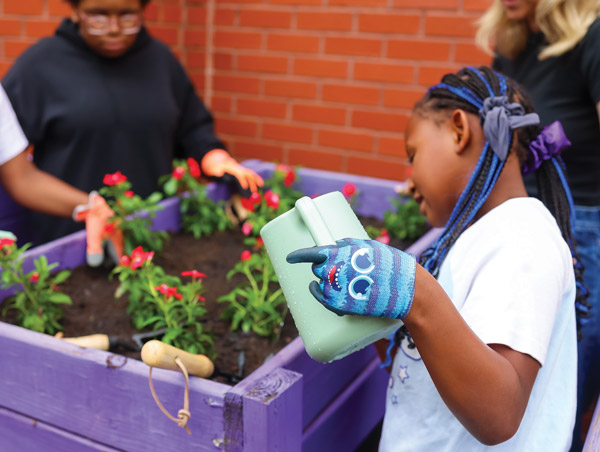
For many students, learning by doing is the most satisfying way to test, improve and build skills. Instead of only reading textbooks or listening to instructors, offer them the chance to follow a plan, work with different materials, troubleshoot problems and build something tangible. Young people considering hands-on careers need hands-on practice to develop confidence and adaptability. Take the first step by researching online resources and local opportunities for classes, job shadowing or even apprenticeships.
Recognize the Skills Kids Are Already Building
Skilled trades aren’t just about knowing which wires to connect or what tool to reach for. They also rely on a variety of soft skills like communication, patience, critical thinking, time management, attention to detail and more. When kids demonstrate these traits, point them out and encourage them. Take opportunities to let them experiment with hands-on projects, whether they want to try building a treehouse, repairing a bike or tinkering with technology.
Expand Views of Career Pathways and Success
The road to success is more like an intersection. Let young people know there are many pathways to fulfilling careers and futures, and while the traditional college-to-career plan can still be a viable option, it isn’t the only one. Skilled trades offer competitive salaries, job security and the opportunity to learn hands-on skills that will always be in demand. Even in a world where technology is rapidly changing many career fields, it takes skilled workers to replace roofs, repair electrical systems, fix sewer lines and lead disaster recovery efforts.
Find Programs That Make Skilled Trades Exploration Accessible
There is a gap between labor supply and demand in the trades, and it’s only widening as older generations approach retirement age. Programs like The Home Depot’s Skills Explorers are designed to empower young people to step into these roles by providing a mix of online resources and hands-on activities to explore viable career paths. As a key part of a commitment by The Home Depot and The Home Depot Foundation to deliver 15 million introductions to the skilled trades by 2032, the program offers an accessible, no-cost curriculum for youth education groups to learn what it’s like to work in these important fields.
“For years, The Home Depot and The Home Depot Foundation’s Path to Pro program have helped separating military, career changers and others build pathways to the trades,” said Michael Rowe, executive vice president of Pro for The Home Depot. “We know that closing the skilled labor gap starts much earlier. We need more young people to see what’s possible and understand the lucrative opportunities these careers provide.”
Visit pathtopro.com/skills-explorers to access the free curriculum and discover how to bring hands-on skilled trade exploration to students.
SOURCE:
🔧 Curiosity today can become a skill for tomorrow. Giving kids opportunities to build, fix, create, and explore trades at an early age can turn natural curiosity into confidence, practical skills, and even inspiration for a future career. Whether it’s woodworking, automotive repair, cooking, electronics, or construction, hands-on learning shows kids that there’s more than one path to success. Visit: https://stmdailynews.com/lifestyle/
Community
Zum Begins 2026–27 School Year With Expanded Student Transportation Network
Zum is launching the 2026–27 school year with expanded school bus operations in Fresno, Los Angeles and other communities, bringing real-time tracking and modern transportation technology to students and families.

New partnerships in Fresno and Kansas join ongoing operations in Omaha, St. Louis, Santa Barbara and Los Angeles
As millions of students return to classrooms, transportation company Zūm is beginning the 2026–27 school year with new district partnerships, expanded technology deployments and thousands of drivers preparing for what the company calls “the most important commute in America.”
The Redwood City, California-based student mobility company announced that its teams have completed months of driver training, route validation and operational planning ahead of the new academic year.
“There is nothing quite like the first day of school at Zum,” founder and CEO Ritu Narayan said in the company’s announcement. “You see drivers arriving before sunrise, teams making final preparations and buses rolling out of yards across the country—all united around one purpose: getting students safely and reliably to school.”
New buses roll out in Fresno
One of Zūm’s largest new launches is in California’s Fresno Unified School District. According to the company, 168 buses were placed into service just two weeks after its local team moved into a new transportation yard.
The district is also introducing the Zūm Parent App, which allows families to track buses in real time, receive arrival alerts, view scheduled rides and receive notifications when a child boards or exits a bus. Registered students will receive bus cards connected to the transportation system, according to Fresno Unified.
The rollout is part of a broader change in how Fresno Unified manages student transportation. Routes and stops will continue to be evaluated using registration information, actual ridership and family feedback, the district says. Beginning September 28, registered students will generally be required to show a bus pass before boarding. Fresno Unified’s transportation page provides registration instructions and assistance for families.
Technology comes to LAUSD’s in-house fleet
In Los Angeles, Zūm says its CMX technology has been deployed across the Los Angeles Unified School District’s internally operated bus fleet.
The platform is designed to connect routing, dispatch, drivers, schools, transportation officials and families through one operating system. Its tools include real-time vehicle visibility, route planning, operational coordination and family communications.
Rather than replacing the district’s in-house drivers, the Los Angeles deployment focuses on providing the technology used to coordinate district-operated buses.
New partnership in Kansas
Zūm also began a new partnership with the Shawnee Mission School District in Kansas. District leaders, drivers, monitors and school employees marked the start of the program with a launch celebration.
The company said Shawnee Mission’s transition is intended to give the district a more modern and technology-supported approach to student transportation.
Meanwhile, Zūm is returning for a third school year in Omaha and Santa Barbara. Its St. Louis operation is entering its second year.
Drivers remain at the center
Although technology plays a growing role in school transportation, Zūm emphasized that drivers remain essential to the daily experience of students and their families.
“Back to school is when months of preparation come to life,” said Liz Sanchez, Zūm’s executive vice president of student mobility. “Our teams spend months hiring and training drivers, validating routes and working alongside our district partners to prepare.”
Drivers often serve as the first school-related adults students see in the morning and the last they see before returning home. Their work can also determine whether students arrive safely and on time—especially in communities where families have limited transportation choices.
A changing school-bus experience
School transportation has traditionally depended on separate systems for scheduling, dispatching, vehicle tracking and communicating with parents. Zūm CMX is designed to bring those functions together and give school districts a clearer view of their daily operations.
For families, the most visible change may be access to real-time bus locations and arrival notifications. These tools can reduce some of the uncertainty associated with late buses, route changes and missed pickups.
Zūm reports that its technology and transportation services now support more than 6,500 schools across 19 states. As the company expands, the 2026–27 school year will test how effectively its technology, drivers and district partnerships can translate into dependable daily service.
For students, however, the goal remains straightforward: a safe ride to school, a reliable trip home and one less obstacle between them and their education.
This article is based primarily on information provided in an August 21, 2026, Zūm press release. Statements about the company’s national reach, fleet deployments and technology are attributed to Zūm unless independently noted.
Source: Zūm official website
Related links:
- Fresno Unified: Zūm Parent App
- Fresno Unified: New Transportation Model
- Fresno Unified: Bus Routes
- Fresno Unified: Back-to-School Resources
📰 Enjoying STM Daily News? Join the conversation!
💬 Leave a comment, share your thoughts, and subscribe to our newsletter for the latest stories, updates, and “News You Can Use This Moment!” delivered to your inbox.
Stay connected with STM Daily News!
Family
6 Hacks to Prep Your Mudroom for Back-to-School Season
When school is back in session, it means a lot of coming and going to and from your home – often in a rush. Start with these mudroom organization and habit hacks to make your family’s daily routines a little easier.

(Feature Impact) When school is back in session, it means a lot of coming and going to and from your home – often in a rush. Smooth out those morning scrambles and save yourself some afternoon cleanups by turning your mudroom into a space that feels more organized and less chaotic.
Start with these mudroom organization and habit hacks to make your family’s daily routines a little easier.
Do a Beginning-of-Year Declutter
If the coat hooks are still sporting rain jackets the kids outgrew several seasons ago, that’s your sign to plan a purge. Out with the old, in with the new: collect last year’s coats, too-small shoes, the backpack with the broken zipper, worn-out accessories and that pile of junk mail then figure out what to keep, toss and donate.
Create a “Get-Out-The-Door” Spot for Essentials
“Have you seen my…” is a sentence you can only stand to hear (and say) so many times in one morning. Set up shelves or baskets for important items like keys, permission slips, library books, water bottles, lunchboxes, sports gear and anything else that needs to leave the house with the family. Repetition will build the habit, and even if things still get lost from time to time, this system gives everyone a first place to look.
Choose a Shoe System
Whether you’re a shoe rack kind of family or you’ve got DIY dreams of building an aesthetic wooden bench with shoe storage underneath, lock it in. Shoes are easy for kids to kick off when they get home, and if they aren’t sure where to put them, they’ll remain wherever they land or pile up by the door. Also consider putting down washable mats so grime doesn’t accumulate on your rack or floor.
Give Each Child a Designated Drop Zone
It’s easier for kids to stay organized when they have their own dedicated spaces to hang up jackets, set down backpacks, put shoes and store everyday essentials. Provide each child with their own coat hooks, cubbies, bins or lockers. Build them at kid-friendly heights and make it fun by letting everyone decorate their own zone.
Have Options Ready for Bad Weather
With a little advanced planning, you can prevent your mudroom from living up to its name. Set up a rainy-day corner with an umbrella stand, boot tray, towel basket and hooks or racks to hang damp outerwear. Keep a laundry hamper in the mudroom, too, so wet clothes and dirty uniforms don’t migrate through the house.
Label Storage Areas Clearly
Nearly everyone’s been there: you start a new organization system feeling efficient and optimistic, then over time, memories lapse and it descends back into anarchy. Labels may not stop this from happening every time, but at least they might make kids stop and consider whether their books should go in the basket labeled “Books” or on top of the shoe rack. That’s one step closer to restoring order.
For more back-to-school tips and tricks, visit eLivingToday.com.

Photo courtesy of Unsplash
SOURCE:
📰 Enjoying STM Daily News? Join the conversation!
💬 Leave a comment, share your thoughts, and subscribe to our newsletter for the latest stories, updates, and “News You Can Use This Moment!” delivered to your inbox.
Stay connected with STM Daily News!





