

Child Health
A child rings the cancer bell. Here’s what that moment doesn’t show
Cancer Bell: A child who’s been treated for cancer walks down the hall of a medical facility, nurses and doctors smiling at them from all corners of the room. The child rings a bell, and everyone cheers as the kid hugs their loved ones. These heartfelt videos appear regularly across social media. What helps make each of those moments possible is decades of research and innovation. For every bell-ringing child whose video goes viral online, a longer health journey awaits.


A child rings the cancer bell. Here’s what that moment doesn’t show
(Sheeka Sanahon) A child who’s been treated for cancer walks down the hall of a medical facility, nurses and doctors smiling at them from all corners of the room. The child rings a bell, and everyone cheers as the kid hugs their loved ones. These heartfelt videos appear regularly across social media. What helps make each of those moments possible is decades of research and innovation. In the last 10 years, the Food and Drug Administration (FDA) approved 10 new immunotherapies and 20 molecularly targeted therapies to treat pediatric cancers, according to the American Association for Cancer Research.
For every bell-ringing child whose video goes viral online, a longer health journey awaits. Hyundai Hope on Wheels, which has funded pediatric cancer research for nearly three decades, commissioned a survey to understand how much Americans know about that journey.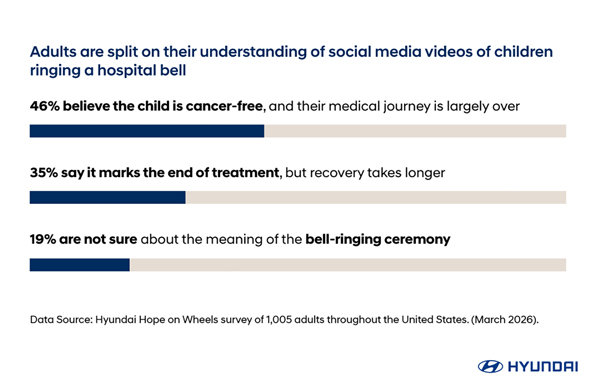
As September marks Childhood Cancer Awareness Month, what that journey actually looks like is worth understanding. According to the survey, 46% of U.S. adults believe that a child ringing a hospital bell after cancer treatment signifies the child is cancer-free and their medical journey is largely over. The reality is more nuanced than that.
When cancer survivorship begins
Many health care organizations define survivorship as beginning at the time of diagnosis and continuing through treatment and beyond. Understanding survivorship this way helps recognize that a child’s cancer journey is about more than reaching the end of treatment. It also includes managing long-term physical, emotional and medical needs that may continue for years to come.
More than a third of U.S. adults say they’re not familiar with the term cancer survivorship or they have heard theterm but don’t fully understand what it means.
According to the American Association for Cancer Research, children who survive cancer face several long-term physical and psycho-social challenges due to their cancer and treatment. Children could face planned surgeries, additional rounds of radiation, or other forms of medical treatment to address common physical challenges stemming from chemotherapy. Every child’s medical treatment plan is different based on their specific needs, but one thing is clear: Pediatric cancer survivors need ongoing support as they navigate long-term health challenges.
Supporting children to live long, full lives
More than 3 in 4 U.S. adults are encouraged by the progress in pediatric cancer, up 5 points from last year. There’s good reason to be hopeful, too. According to the American Cancer Society, the survival rate among pediatric cancer patients has increased from 75% to 85% in nearly three decades, representing 40,000 more children surviving their cancer diagnosis.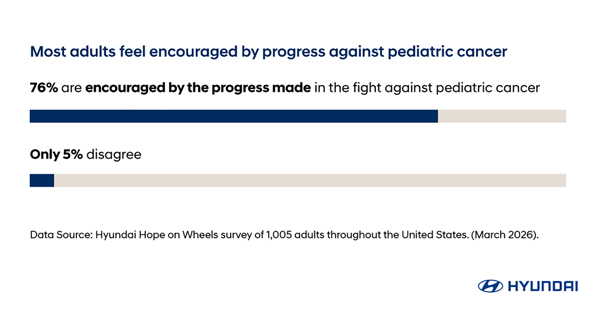
Survival rates continue to increase thanks to breakthrough science and technology, and higher standards of care. Pediatric cancer research has led to new insights into cancer biology, clinical trials, and new drug development.
More than 8 in 10 adults say they’re more likely to support organizations that fund survivorship services, which creates more opportunities to fund crucial research and support for children facing pediatric cancer.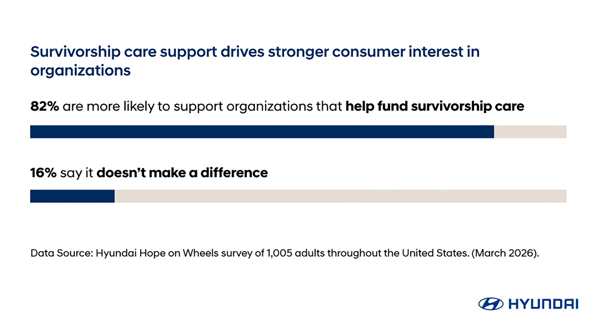
Methodology
Hyundai Hope on Wheels commissioned Atomik Research to conduct an online survey of 1,005 adults throughout the United States. The margin of error is +/- 3 percentage points with a confidence level of 95%. Fieldwork took place March 19-26, 2026. Atomik Research, part of 4media group, is a creative market research agency.
Photo courtesy of Shutterstock

SOURCE:
💪 Your health journey starts here! Explore the latest health news, fitness tips, wellness trends, and healthy living advice. Share your thoughts in the comments and subscribe to the STM Daily News newsletter to stay informed and inspired every day.


Food and Beverage
Halloween candy binges can overload your gut microbiome – a gut doctor explains how to minimize spooking your helpful bacteria

Last Updated on October 29, 2026 by Daily News Staff
Christopher Damman, University of Washington
Each October, as the days shorten and the air grows crisp, millions of Americans prepare for the beloved – and often sugar-fueled – tradition of Halloween. From jack-o’-lanterns glowing on porches to costumes ranging from the whimsical to the gory, Halloween is a time of playful scares, childhood memories and, of course, candy.
But as the wrappers pile up and the sugar rush hits, there’s something far more sinister brewing beneath the surface: the negative effects of candy on your gut health.
Sugar and other ingredients in Halloween treats can cast a sickly spell on the trillions of microorganisms that reside in your gut, collectively known as the gut microbiome. As a gastroenterologist and gut microbiome researcher at the University of Washington School of Medicine, I have dedicated my career to decoding the cipher of how food affects this microbial community within your gut.
While no candy is truly healthy, some options are better for your gut than others. And there are ways you can help wake your gut from its sugar “spell” after holiday indulgence.
Gut-busting treats
What does all this candy do to your gut?
In a healthy state, your gut microbiome acts like a microbial factory. It digests nutrients your body can’t – such as fiber and colorful, health-conferring plant compounds called polyphenols – and produces important molecules called metabolites that protect against infection and support brain health. It also regulates metabolism, or the transformation of food into useful components that power and grow cells.
A balanced diet keeps your gut’s microbial cauldron churning smoothly. But the concentrated sugar, saturated fat and additives in candy can throw things into disarray by feeding inflammatory microbes that weaken your gut barrier – the protective lining that separates your microbiome from the rest of the body.
Once the gut barrier is breached, even friendly microbes can stir up inflammation, causing health issues ranging from overweight to obesity, infections to autoimmune disease, and mild cognitive impairment to Alzheimer’s.
Sugar and inflammation impair your microbiome’s ability to digest food and regulate metabolism. Instead of producing healthy byproducts – such as butyrate from fiber and urolithin A from polyphenols – candy lacking these nutrients may trick your system into storing more fat, providing less energy for your muscles and brain.
Too much candy can also affect your immune system. A healthy gut microbiome helps your immune system distinguish between friend and foe, reducing the risk of infections and autoimmune disorders. Sugar and inflammation undermine the microbiome’s role in training the immune system to distinguish between harmful invaders and harmless substances. Without a carefully calibrated immune system, your body may not effectively clear infections or may strongly react to its own cells.
Neurologically, excess sweets can also affect the gut-brain axis, the two-way communication between the gut and brain. A healthy microbiome normally produces neurotransmitters and metabolites, such as serotonin and butyrate, that influence mood and cognitive performance. Sugar and inflammation adversely affects the microbiome’s role in mental health and cognitive function, contributing to depression, anxiety and memory troubles.
The candy conundrum
Not all Halloween treats are created equal, especially when it comes to their nutritional value and effects on gut health. Sugar-coated nuts and fruit such as honey-roasted almonds and candy apples rank among the top, offering whole food benefits just beneath the sugary coating. Packed with fiber and polyphenols, they help support gut health and healthy metabolism.
On the opposite end of the spectrum are chewy treats such as candy corn, Skittles, Starbursts and Twizzlers. These sugar-laden confections are mostly made of high fructose corn syrup, saturated fat and additives. They can increase the unsavory bacterial species in your gut and lead to inflammation, making them one of the least healthy Halloween choices.
Chocolate-based candies, however, stand out as a more microbiome-friendly option. While varieties such as Twix, Three Musketeers and Milky Way contain only a small amount of chocolate, pure chocolate bars – especially dark chocolate – are rich in fiber and polyphenols. In moderation, dark chocolate with at least 80% to 85% cacao may even benefit your gut microbiome and mood by encouraging beneficial bacterial species to grow.
Chocolates with whole nuts, such as almonds or peanuts, offer a boost of fiber, protein and omega-3 fats, making them a healthier choice. Dark chocolate with nuts is best. But when sorting through Halloween treats, Peanut M&Ms, 100 Grands and Almond Joys may be better options over Rolos, Krackels and Crunches. Even candies with processed nuts, such as Reese’s Peanut Butter Cups and Butterfingers, retain small amounts of fiber and protein, making them preferable to nut-free options.
At the bottom of the list, along with chewy sugar candies, are pure sugar candies such as lollipops, Jolly Ranchers, gummies and Smarties. These sweets lack nutritional value, and their high sugar content can contribute to the growth of unhealthy bacteria in your gut microbiome.
In the end, all candies are high in sugar, which can be harmful when consumed in large quantities. Moderation and an otherwise balanced diet is key to enjoying Halloween treats.
Rebalancing after indulgence
If the microbiome is critical for health, and candy can disrupt its balance, how can you restore gut health after Halloween?
One simple strategy is focusing on the four F’s of food: fiber, phytochemicals, unsaturated fats and fermented foods. These food components can help support gut health.
Fiber-rich foods such as whole grains, nuts, seeds, beans, fruits and vegetables regulate digestion and nourish beneficial gut bacteria.

Polyphenol-rich foods such as dark chocolate, berries, red grapes, green tea and extra virgin olive oil help reduce inflammation and encourage the growth of healthy gut bacteria.
Unsaturated fats such as omega-3 fats, walnuts, chia seeds, flaxseed, avocados and fatty fish such as salmon can also support a healthy microbiome.
Fermented foods such as sauerkraut, kimchi, yogurt, kefir and miso help replenish beneficial bacteria and restore gut balance.
To make tracking your diet easier, consider using a food calculator to measure how well your meals align with the four F’s and microbiome friendly options. Like a virtual “spellbook,” an online tool can help ensure your food choices support your gut health and ward off the effects of sugar overload.
As my daughters often remind me, it’s perfectly fine to indulge every now and then in a few tricks and treats. But remember, moderation is key. With a balanced diet, you’ll keep your gut healthy and strong long after the Halloween season ends.
Christopher Damman, Associate Professor of Gastroenterology, School of Medicine, University of Washington
This article is republished from The Conversation under a Creative Commons license. Read the original article.
Our Lifestyle section on STM Daily News is a hub of inspiration and practical information, offering a range of articles that touch on various aspects of daily life. From tips on family finances to guides for maintaining health and wellness, we strive to empower our readers with knowledge and resources to enhance their lifestyles. Whether you’re seeking outdoor activity ideas, fashion trends, or travel recommendations, our lifestyle section has got you covered. Visit us today at https://stmdailynews.com/category/lifestyle/ and embark on a journey of discovery and self-improvement.
Food and Beverage
A Lesson in Kindness, Inclusion and How Kids Eat Differently
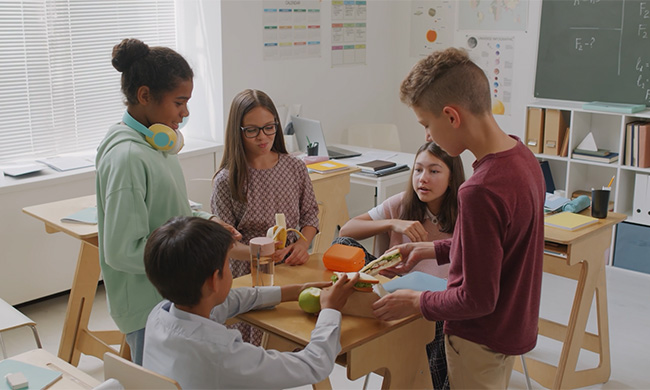
Kids Eat Differently: The school year brings new classmates, routines and opportunities for children to learn about people whose experiences may be different from their own. They could include friends who use a wheelchair, carry an inhaler or even receive nutrition through a feeding tube.
A Lesson in Kindness, Inclusion and How Kids Eat Differently
(Feature Impact) The school year brings new classmates, routines and opportunities for children to learn about people whose experiences may be different from their own. They could include friends who use a wheelchair, carry an inhaler or even receive nutrition through a feeding tube.
Watch this video to learn more
For families who rely on tube feeding, it is an essential part of daily life but is often understood only by those who experience it. That limited awareness can leave children who are tube fed and their families feeling isolated or unseen, according to Gerard Minor, a pediatric gastroenterology and hepatology specialist.
Parents can use everyday questions as opportunities to help children understand there are many ways people receive nourishment. Teachers, classmates, caregivers and communities can also help make tube feeding part of the everyday conversation around childhood rather than something that separates children from it.
“Helping children understand those differences early can encourage curiosity, kindness and inclusion,” Minor said.
To help bring greater awareness, understanding and representation to children and families who experience tube feeding every day, Compleat, a leader in tube feeding formulas, launched “What Is Better Than How,” featuring “Sesame Street’s” Elmo and his signature warmth and curiosity. The original song celebrates the many ways people eat. Some people eat with a fork, some use a spoon and some use a tube, reinforcing a simple message: What matters is not how you eat. What matters is that you are nourished, loved and included.
To hear the song, create a personalized version and learn more about the campaign, visit Compleat.com/WhatIsBetterThanHow.

SOURCE:

Child Health
Changing the Landscape of Childhood Cancer Survivorship
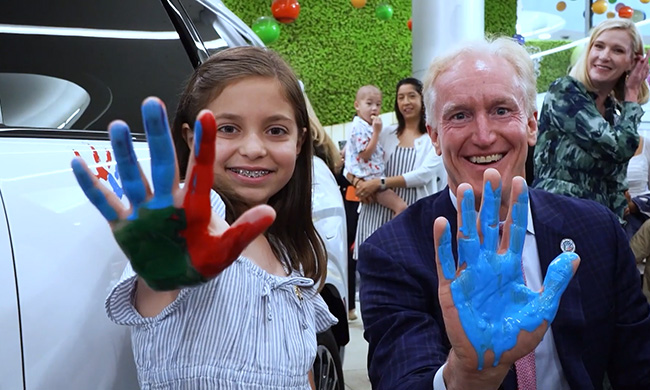
Childhood Cancer: hile “cancer” is a term no family wants to hear, especially when it comes to their children, there is reason for hope. Today, 85% of children diagnosed with cancer survive at least five years. Survival is only part of the journey, however.
Changing the Landscape of Childhood Cancer Survivorship
(Feature Impact) While “cancer” is a term no family wants to hear, especially when it comes to their children, there is reason for hope. Today, 85% of children diagnosed with cancer survive at least five years, according to the National Cancer Institute, up from 75% three decades ago.
Watch this video to learn more
“This progress is driven in large part by dedicated research,” Hyundai Hope on Wheels Board Member Kevin Reilly said. “Over the last 28 years, Hyundai Hope on Wheels has committed over $300 million in pediatric cancer research and program grants, awarding more than 1,600 grants to 210 medical institutions nationwide, impacting thousands of young lives each year.”
Survival is only part of the journey, however. Nearly half (46%) of U.S. adults believe a child ringing the hospital bell after cancer treatment means the child is cancer-free and their medical journey is largely over, according to a survey conducted by Atomik Research on behalf of Hyundai Hope on Wheels. For the children and families living through a diagnosis, the reality is far more complex.
“The reality is that healing continues long after treatment, which is why sustained investment in survivorship care is a priority for us,” said John Guastaferro, executive director of Hyundai Hope on Wheels.
Isabella Franco-Capps, 11, understands that journey firsthand. Diagnosed with B-cell acute lymphoblastic leukemia at age 5, her journey took two years before she could say she’s “a cancer survivor.”
“I was diagnosed with b-cell acute lymphoblastic leukemia,” she said. “This began my two-year-long journey of scans, pokes, chemotherapy and hospital stays. And now I’m a cancer survivor.”
Fellow Hyundai Hope on Wheels National Youth Ambassador, Jackson Trihn, 12, is using his voice to call for continued research and to bring hope to others.
“The role … is being able to share my story,” he said. “Not just to spread awareness but to spread hope to kids that need it. And awareness is so important because people don’t understand how hard pediatric cancer can be.”
Continued progress can help ensure more children ring the bell and receive the care and support they need long after they’ve had the opportunity to do so. To learn more about these efforts and how you can help, visit HyundaiHopeOnWheels.org.

SOURCE:
💪 Your health journey starts here! Explore the latest health news, fitness tips, wellness trends, and healthy living advice. Share your thoughts in the comments and subscribe to the STM Daily News newsletter to stay informed and inspired every day.




