

Automotive
Beyond the Sticker Price: Identifying the Most Affordable New Vehicles to Insure for 2026
For most households, buying a new vehicle is one of the largest financial decisions they’ll make. The purchase price is only the beginning, however. To help consumers make more informed purchasing decisions, consider these rankings of the most affordable new 2026 model year vehicles to insure.

Beyond the Sticker Price: Identifying the Most Affordable New Vehicles to Insure for 2026
(Feature Impact)For most households, buying a new vehicle is one of the largest financial decisions they’ll make. The purchase price is only the beginning, however. Fuel, maintenance, depreciation and insurance all contribute to the total cost of ownership, making affordability a consideration that extends well beyond the showroom.
To help consumers make more informed purchasing decisions, Mercury Insurance recently released its annual rankings of the most affordable new 2026 model year vehicles to insure, identifying the top-performing SUV, truck, sedan and electric or hybrid vehicles in four of today’s most popular categories.
“Consumers naturally compare purchase price, fuel economy, safety ratings and technology features before buying a vehicle,” said Chong Gao, director of research and development for Mercury Insurance. “Insurance is one of the few ownership costs drivers can estimate before making a purchase. Factoring it into the decision gives consumers a more complete picture of what that vehicle is likely to cost over the years they own it.”
While every driver’s premium is unique, this year’s rankings also revealed a broader trend: Practical, mainstream vehicles continue to offer some of the strongest long-term insurance value.
“Vehicles designed for everyday drivers often strike the best balance between safety, repairability and replacement costs,” Gao said. “That’s reflected in this year’s rankings, where familiar models from manufacturers like Hyundai, Chevrolet, Honda, Kia and Volkswagen rose to the top. It reinforces the idea that choosing a practical vehicle can pay dividends well beyond the purchase price.”
 A Cost You Can Plan For
Unlike unexpected repairs or fluctuating fuel prices, insurance is a predictable ownership expense consumers can research before purchasing a vehicle.
Comparing insurance costs alongside purchase price, fuel economy, maintenance expenses and expected repair costs can help shoppers better understand the long-term financial commitment of vehicle ownership.
Factors Influencing Insurance Costs
Insurance costs are influenced by many factors, but repair complexity, parts availability, vehicle safety systems and historical claims experience all contribute to how a vehicle is insured. While advanced safety technology can help reduce accidents, vehicles that are easier and less expensive to repair can also help improve long-term affordability. Among the considerations insurers evaluate are:
- Repair and replacement costs
- Historical claims experience
- Vehicle safety features and crash performance
- Theft frequency
- Availability and cost of replacement parts
- Vehicle performance characteristics
The Most Affordable Vehicles to Insure
This year’s rankings show practical, mainstream vehicles continue to offer some of the strongest insurance value. The top spot in both the SUV and electric and hybrid categories was claimed by Hyundai while Chevrolet led the truck category and Volkswagen topped the sedan rankings. Rounding out Mercury’s rankings were several familiar nameplates recognized for balancing insurance affordability with everyday value.
SUVs:
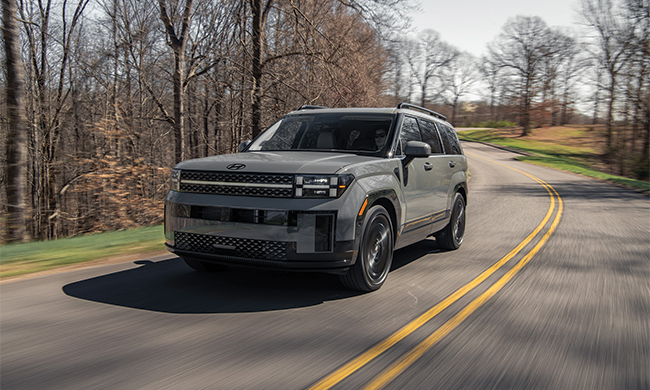
- Hyundai Santa Fe
- Chevrolet Blazer
- Honda Pilot
- Kia Sportage
- Honda Passport
Trucks:
- Chevrolet Colorado LT
- Chevrolet Silverado C3500
- Ford Maverick and Ranger
- Hyundai Santa Cruz SE
- Toyota Tundra CrewMax
Sedans and Coupes:
- Volkswagen Golf R
- Acura Integra
- Honda Prelude
- Kia K4
- Mazda3
Electric and Hybrids:
- Hyundai Santa Fe Hybrid
- Chevrolet Blazer EV
- Kia Sportage Hybrid
- Ford Escape Hybrid
- Honda CR-V Hybrid
“The smartest vehicle purchase isn’t always the one with the lowest sticker price,” Gao said. “It’s the one that delivers the best overall value over time. Comparing insurance before buying gives consumers another tool to make a more informed decision.”
Visit MercuryInsurance.com to see the full rankings and request a quote to get a more complete understanding of long-term ownership costs.
Photo courtesy of Hyundai America (Hyundai Santa Fe)
Photo courtesy of Shutterstock (couple using laptop)

SOURCE:
📰 Enjoying STM Daily News? Join the conversation!
💬 Leave a comment, share your thoughts, and subscribe to our newsletter for the latest stories, updates, and “News You Can Use This Moment!” delivered to your inbox.
Stay connected with STM Daily News!


Automotive
2027 Toyota Tundra Adds Trailhunter Package and Updated Technology
The 2027 Toyota Tundra adds a Trailhunter package, refreshed styling and a standard 14-inch touchscreen. Starting MSRP is $42,890.

Last Updated on November 7, 2026 by Daily News Staff
PLANO, Texas — Toyota is updating the 2027 Tundra with refreshed exterior styling, a new Trailhunter package and additional technology for its full-size pickup lineup.

2027 Toyota Tundra: Trailhunter Package and Tech Updates
Based on the SR5 grade, the Trailhunter package adds Old Man Emu suspension, Michelin all-terrain tires, front recovery hooks and extra underbody protection. A locking rear differential, Multi-Terrain Select and Crawl Control help drivers navigate challenging terrain, while bronze-colored wheels distinguish the package.
The TRD Pro receives newly designed, adjustable FOX Q3S shocks, standard red tow hooks and a new Honeycomb paint option.
Inside, a 14-inch multimedia touchscreen becomes standard. Toyota also adds a built-in drive recorder and makes Toyota Safety Sense 4.0 standard across the lineup. Gas and i-FORCE MAX hybrid powertrains remain available.
Toyota lists the 2027 Tundra with a starting MSRP of $42,890. Buyers should check destination charges, options and dealer pricing when comparing total costs.
Sources:


Slate Auto and Smarties Launch Colorful EV Starter Packs
Slate Auto has partnered with Smarties Candy Company on six pastel customization packages for its upcoming electric truck. Announced October 27, the Smarties x Slate collection gives buyers another way to personalize the minimalist EV before deliveries begin.
The six Starter Packs are inspired by Smarties flavors: Blue Raspberry, Cherry, Grape, Pineapple, Orange and Strawberry. Each package includes a coordinating vehicle wrap, color-matched mirror decals, a Smarties-branded rocker decal, a logo decal, a customized key-fob end cap and a matching interior Slatelet.
Customers will be able to purchase the packages through the Slate Marketplace as their delivery dates approach. Pricing for the Smarties packages was not included in the announcement.
The collaboration fits Slate’s strategy of selling one simplified vehicle platform that owners can customize over time. Every truck leaves the Warsaw, Indiana, factory with gray exterior panels designed to be wrapped instead of conventionally painted. Buyers can keep the two-seat pickup configuration or select one of Slate’s five-seat SUV conversions.
The partnership does not change the truck’s core price or specifications. Slate continues to list the Blank Slate pickup at $24,950 before its $1,450 destination charge, with an estimated 205 miles of range. The range figure is still a company projection rather than a final EPA rating, and Slate continues to say its first deliveries are expected in the fourth quarter of 2026.
For Slate, the Smarties collection is more than a seasonal promotion. It demonstrates how branded wraps and accessories could become an important part of the company’s business model while allowing buyers to change the appearance of their vehicles without purchasing a different truck.
Source: Slate Auto’s official Smarties collaboration announcement
Automotive
4 Tips for Efficient EV Charging at Home
Efficient EV Charging at Home: Your car has one job – to take you where you need to go. For electric vehicle (EV) owners, that means keeping it charged so it’s ready to hit the road when you are. Charging your car at home is convenient and cost-effective, especially if you have the right equipment and routines.

4 Tips for Efficient EV Charging at Home
(Feature Impact) Your car has one job – to take you where you need to go. For electric vehicle (EV) owners, that means keeping it charged so it’s ready to hit the road when you are.
Charging your car at home is convenient and cost-effective, especially if you have the right equipment and routines. Consider these quick tips from the EV experts at Schneider Electric.
Watch this video to learn more:
//www.youtube.com/embed/IELsXkSgOQQ
Install a Level 2 Home Charger
While many EV owners start with standard Level 1 charging using typical 120-volt household outlets, upgrading to a 240-volt Level 2 charger can offer extra efficiency and convenience. With significantly faster charging speeds, these units increase your driving range per charging hour and can replenish your battery in a fraction of the time.
Charge During Off-Peak Hours
If your electric company has variable pricing based on the time of day, you may be able to lower your utility bill by shifting your charging routines. This could mean doing most of your charging overnight and unplugging during peak daytime hours when rates are often more expensive.
Consider a Smart Charger
Since Level 2 chargers can add significant electrical load to your home, many EV owners are concerned they’ll need to make costly electrical upgrades to accommodate the higher power requirements. Instead, consider a smart Level 2 home charger with dynamic power management like the Schneider Charge.
With built-in technology called SmartAmp, this charger intelligently monitors the electrical demand in the home and adjusts the output to your EV accordingly. Whether you’re running a dryer full of laundry or turning on the air conditioning, the system can automatically dial back the charging power to your EV when necessary then ramp it back up when demand drops. This way, you won’t have to worry about overloading your electrical system or being forced to install pricey new panels so you can get everything done.
Since it works with all standard EV charging formats, it’s built to fit your current vehicle and whatever you buy next. Plus, through the connected app, you can conveniently schedule charging with a tap, giving you the ability to manage your EV routine remotely – or just set it and forget it.
Track Your Habits
Understanding your current charging habits can help you fine-tune your routines over time. Smart chargers can make tracking simple and automatic with apps that allow you to access information like how often you’re charging your vehicle, how long it takes and how much energy it consumes.
Learn more about smart EV charging at SE.com.
SOURCE:




