

Entertainment
Eastlake, Ohio: The Small Lake Erie City Behind the Golden Girls Kitchen Nightmares Episode

For many television viewers, Eastlake, Ohio, may not have been a familiar name before Gordon Ramsay arrived in town. That changed when the Lake Erie community appeared on Kitchen Nightmares, with Ramsay attempting to rescue the struggling Golden Girls Restaurant.
The episode offered more than the familiar formula of disappointing food, frustrated owners and a dramatic restaurant makeover. It also briefly placed a national spotlight on Eastlake—a small Greater Cleveland city with a waterfront identity, a minor-league baseball team and a population of approximately 17,000 residents.
Unfortunately, the Golden Girls story did not end as viewers might have hoped.
Gordon Ramsay Comes to Eastlake
Golden Girls Restaurant was presented on Kitchen Nightmares as a neighborhood diner operated by two best friends who had become co-owners. According to the episode’s description, the restaurant was struggling with unappealing food and a local community that had lost confidence in the business.
Those problems made Golden Girls a natural candidate for Ramsay’s intervention. As he typically does on the program, the celebrity chef examined the restaurant’s food, kitchen practices, leadership and relationship with its customers.
Ramsay’s challenge was not simply to create a few improved dishes. He needed to help the owners restore consistency, rebuild trust and give Eastlake residents a reason to return.
The Golden Girls makeover reportedly took place in June 2025. That was more than a year before the episode reached television, creating an unusually long gap between Ramsay’s visit and the public broadcast.
Golden Girls Closed Before the Episode Aired
By the time television viewers watched Ramsay attempt to save Golden Girls, the restaurant had reportedly already closed.
The Eastlake diner shut its doors in January 2026, approximately six months after the Kitchen Nightmares makeover and several months before the episode aired. The result was a bittersweet viewing experience: audiences were watching a rescue effort whose ultimate outcome was already known locally.
Online reviews and community reactions reported by sites following the program suggest that Golden Girls continued to face problems after the makeover. However, the complete circumstances behind the closure have not been publicly documented in detail.
The restaurant’s fate illustrates an important reality frequently hidden behind the drama of restaurant-makeover television. A renovated dining room, simplified menu and burst of publicity cannot automatically resolve debt, staffing problems, ownership conflicts or years of lost customer confidence.
Television can provide a second chance, but the restaurant must sustain the changes long after the cameras leave.
Where Is Eastlake, Ohio?
Eastlake sits in Lake County approximately 19 miles northeast of Cleveland. The city is part of the Greater Cleveland metropolitan area and occupies about 6.5 square miles near the Lake Erie shoreline.
The U.S. Census Bureau counted 17,670 residents in Eastlake during the 2020 census. Its July 2025 estimate placed the population at 17,357, representing a modest decline from 2020.
Eastlake’s geography is strongly connected to the water. The Chagrin River travels nearly 48 miles before emptying into Lake Erie at Eastlake. The river and nearby lakefront support boating, fishing, paddling, birdwatching and other recreational activities.
Chagrin River Park also has a western entrance in Eastlake, giving visitors access to trails and natural areas along the river corridor.
Although Eastlake is part of a large metropolitan region, it retains the atmosphere of a smaller, largely residential community. That setting helped make Golden Girls appear like the kind of locally rooted diner where regular customers, employees and owners often know one another personally.
When a restaurant loses the trust of such a community, repairing that relationship can be especially difficult.
Eastlake’s Baseball Connection
Golden Girls may have brought Eastlake to the attention of Kitchen Nightmares viewers, but the city’s most recognizable attraction is Classic Auto Group Park.
The ballpark is home to the Lake County Captains, the High-A minor-league affiliate of the Cleveland Guardians. The stadium opened in 2003 and hosts baseball games, concerts, fundraisers and community events.
For residents and visitors, Captains baseball gives Eastlake a regional identity that extends beyond its residential neighborhoods. The team also connects the relatively small city directly to Northeast Ohio’s larger professional baseball culture.
A City Connected to a Historic Blackout
Eastlake also holds an unexpected place in modern North American history.
The massive power blackout of August 14, 2003, began after problems developed within FirstEnergy’s Ohio transmission system. An Eastlake generating unit had gone offline earlier that day, although investigators determined that the cascading outage involved a more complicated combination of overloaded transmission lines, inadequate tree maintenance and failures in monitoring and alarm systems.
The blackout eventually affected an estimated 50 million people across portions of the United States and Canada.
It is a remarkable historical connection for a city that many Americans may otherwise know only as a Cleveland suburb—or now as the setting of a memorable Kitchen Nightmares episode.
More Than the Setting of a Television Episode
The Golden Girls episode may not have produced a lasting restaurant turnaround, but it introduced millions of viewers to a community they might never have encountered otherwise.
Behind the televised kitchen problems is a real city shaped by Lake Erie, the Chagrin River, neighborhood businesses and summer nights at the ballpark. Eastlake represents the kind of smaller American community where independent restaurants can become gathering places—and where their closure can leave a noticeable gap.
Golden Girls is gone, but its appearance on Kitchen Nightmares has given the restaurant an unusual afterlife. Viewers discovering the episode will continue searching for the diner, wondering whether it survived and, in the process, learning a little more about Eastlake itself.
For some viewers—including this writer—that simple mention on a television program was enough to put a previously unfamiliar Ohio city on the map.
Sources and Related Links
- U.S. Census Bureau QuickFacts: Eastlake, Ohio
- City of Eastlake
- Lake County Captains and Classic Auto Group Park
- Chagrin River — Encyclopedia of Cleveland History
- Chagrin River Park — Lake Metroparks
- Season 10 restaurants featured on Kitchen Nightmares
- Golden Girls post-show update
Hungry for more? Visit the STM Daily News Food & Drink page for restaurant news, delicious recipes, food trends and the stories behind what we eat. Explore more Food & Drink articles today!


Entertainment
Lights, Camera, Snackers: How Aspiring Filmmakers Can Enter to Win $25,000
The director’s chair is open and the opportunity to create the next great snack-sized movie could be yours. Aspiring filmmakers and creators have the chance to turn a prewritten script into an original short film for a $25,000 prize.

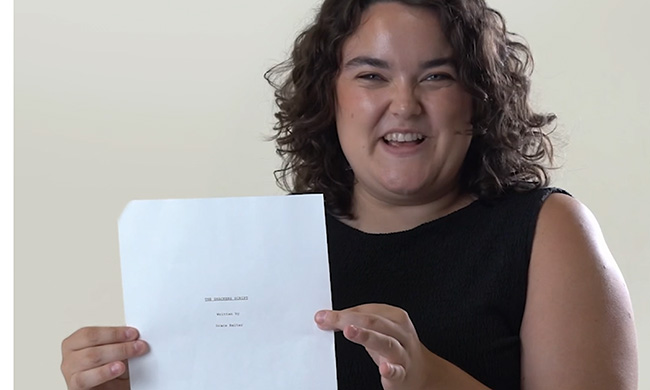
Lights, Camera, Snackers: How Aspiring Filmmakers Can Enter to Win $25,000
(Feature Impact) The director’s chair is open and the opportunity to create the next great snack-sized movie could be yours.
For the second year, Bumble Bee is bringing back its Tuna “Cans”Film Festival, giving aspiring filmmakers and creators the chance to turn a script written by comedian and actress, Grace Reiter, into an original short film starring its deliciously convenient tuna Snackers.
Watch the video to learn more!
“I love a chance to support those starting out in the film industry – and this time, I’m partnering with Bumble Bee for the Tuna Cans Film Festival to do it,” Reiter said. “Plus, I’m making it easy: I already wrote the script.”
Using Reiter’s scripted lines, creators can make the story entirely their own, bringing their vision to life through original characters, settings, music, editing and creative flair.
The creative brief is simple: The finished film must be 60 seconds or less and Bumble Bee Snackers™ need to get their moment in the spotlight.
Plus, the stakes are bigger than ever: The winning filmmaker will take home a $25,000 grand prize to help make their filmmaking dreams a reality.
Creators can submit their original short film by Oct. 23, 2026, at 11:59 p.m. PT.
The film can be funny, dramatic, unexpected or all three. The lines are already written but the order, arrangement and any additions are open to creative interpretation. Now it’s time to see what you can do with it.
Visit tunacansfilmfest.com, where you can find Reiter’s original script, submission instructions and complete contest details, to get started.
SOURCE:
Bumble Bee

Last Updated on October 9, 2026 by Daily News Staff
From haunted mazes after dark to daytime trick-or-treating with Snoopy, Knott’s offers two ways to celebrate Halloween in 2026.
BUENA PARK, Calif. — Halloween season is underway at Knott’s Berry Farm, where visitors can choose between the nighttime frights of Knott’s Scary Farm and the playful daytime activities of Knott’s Spooky Farm.
For readers planning a Southern California outing this October, the two celebrations offer different ways to get into the Halloween spirit.
Scary Farm brings new nightmares after dark
Knott’s Scary Farm runs on select nights through October 31, 2026, transforming the park with haunted mazes, scare zones, shows, and more than 1,000 creatures, according to Knott’s.
Two new mazes join this year’s lineup. Inked turns a cartoonist’s creations into a nightmare, while Unearthed sends visitors into an excavation where an ancient evil has awakened.
Also new for 2026 is Color Collect, an activity in which guests use an interactive lantern to activate pillars around the park and collect six colors.
Scary Farm requires its own paid event admission. As of October 4, online single-night tickets are advertised from $65, with taxes potentially additional. Knott’s does not recommend the event for children under 13.
Spooky Farm offers daytime Halloween fun
For families seeking a gentler celebration, Knott’s Spooky Farm takes place Thursdays through Sundays, September 24–October 31, plus October 12, according to the park’s events calendar, which lists the additional date as Columbus Day.
Children can trick-or-treat through Ghost Town, enjoy games and spooky stories with Snoopy and the Peanuts characters, and show off their Halloween outfits at Snoopy’s Spooktacular Costume Party.
Other activities include the Creepy Critters of Calico, cookie decorating in the pumpkin patch, and performances by the Bob Baker Marionette Theater. Cookie decorating carries an additional fee.
The daytime celebration gives families a chance to enjoy Halloween decorations, treats, and entertainment together before the nighttime haunt begins.
Planning your visit
Knott’s Berry Farm is located at 8039 Beach Boulevard in Buena Park, California. Before heading out, check the park’s official calendar for your chosen date, operating hours, admission options, and event policies.
Whether your Halloween plans call for a bag of candy or a trip through a haunted maze, Knott’s has a seasonal celebration to match.
Keep the fun going: Visit STM Daily News for more entertainment news, theme park updates, and stories worth sharing.
Official sources
- Knott’s Scary Farm: attractions and tickets
- Knott’s Spooky Farm: activities and entertainment
- Knott’s Berry Farm: seasonal event dates
Information checked October 4, 2026. Event schedules, offerings, and ticket prices may change.


The next round of Street Fighter is heading to the big screen. Paramount Pictures and Legendary Pictures will release the new live-action movie exclusively in theaters on October 16, 2026, bringing Capcom’s video game characters into a story built around rivalries, a dangerous tournament, and a conspiracy lurking behind the competition.
Directed by Kitao Sakurai, the film features Andrew Koji as Ryu, Noah Centineo as Ken Masters, and Callina Liang as Chun-Li, alongside an ensemble that includes Jason Momoa, Curtis “50 Cent” Jackson, and wrestling stars Roman Reigns and Cody Rhodes.
Ryu and Ken Face a Fight Beyond the Arena
Set in 1993, the movie finds Ryu and Ken estranged when Chun-Li draws them back into combat for the next World Warrior Tournament. What initially looks like a chance to test their fighting skills becomes something much more dangerous.
According to the studio’s synopsis, a deadly conspiracy puts the two fighters on a collision course, forcing them to confront both each other and unresolved struggles from their past. That setup gives the film a personal conflict to explore alongside its tournament action.
For viewers who remember gathering around an arcade cabinet, the 1993 setting offers a nostalgic hook. The studio is also promising familiar signature moves, including Hadoukens and roundhouse kicks, as the game’s combat makes the jump to live action.
A Cast Packed With Familiar Fighters
Beyond its central trio, the announced lineup brings together actors, comedians, musicians, wrestlers, and martial artists. Among the character pairings:
- Joe “Roman Reigns” Anoai as Akuma
- David Dastmalchian as M. Bison
- Cody Rhodes as Guile
- Vidyut Jammwal as Dhalsim
- Orville Peck as Vega
- Olivier Richters as Zangief
- Hirooki Goto as E. Honda
- Mel Jarnson as Cammy
- Curtis “50 Cent” Jackson as Balrog
- Jason Momoa as Blanka
The cast also includes Andrew Schulz as Dan Hibiki, Eric André as Don Sauvage, Rayna Vallandingham as Juli, Kyle Mooney as Marvin, and Alexander Volkanovski as Joe.
With so many characters sharing the screen, one question will be how the movie balances the wider roster with Ryu and Ken’s central story. The announced cast gives longtime fans plenty of familiar names to watch for.
Who Is Behind the Movie?
Paramount Pictures and Legendary Pictures present Street Fighter in association with Capcom. The Legendary Pictures production is based on the Capcom video game, with a story by Dalan Musson and Gary Dauberman and a screenplay by T.J. Fixman and Kitao Sakurai.
Producers include Mary Parent, Cale Boyter, Jason Momoa, Takayuki Nakayama, and Stefan Makhoul. The supplied production announcement notes that credits are subject to change.
Release Date and Rating
Street Fighter opens only in theaters October 16, 2026. The film is rated PG-13 for violence/action, bloody images, strong language, sexual references, partial nudity, and brief smoking, according to the supplied studio announcement.
Fans can visit Paramount’s official Street Fighter page for the trailer and film information, and follow #StreetFighterMovie for promotional updates.
Which fighter are you most excited to see in live action? Share your pick in the comments, and visit STM Daily News for more Entertainment coverage and newsletter updates.
Source: Supplied Paramount Pictures/Legendary Pictures production announcement; release date, synopsis, and selected credits checked against Paramount’s official film page. This article is a preview, not a review.





