

gaming
FAZE CLAN WELCOMES STRANGER THINGS ACTRESS AND TWITCH STREAMER GRACE VAN DIEN

INTRODUCING FAZE BLUEFILLE;
FAZE’S NEWEST GAMER GIRL IS ON A MISSION TO BRING FEMALES TO THE FOREFRONT
LOS ANGELES /PRNewswire/ — Today, FaZe Clan Inc. (“FaZe Clan”), the lifestyle and media platform rooted in gaming and youth culture, announced the newest addition to their roster, Grace Van Dien aka FaZe Bluefille [pronounced /bloo · fee/]. Well known for her role as Chrissy Cunningham in season four of Stranger Things, Grace is taking the industry by storm and giving her community a whole new look into her life by channeling her gaming skills and becoming a dedicated Twitch streamer (streaming today on twitch.com/bluefille).

Check out “Meet FaZe Bluefille” and hear from Grace herself on her plans to impact the gaming world and why she’s ready for the fight that comes with being a female in a male dominated industry. Grace is also celebrating her announcement with a content piece featuring an anime version of FaZe Bluefille sharing the news with close friends Valkyrae, Pokimane, DisguisedToast, Amouranth, Tarik and Sykkuno – watch HERE.
“Ever since my first meeting with FaZe, we shared the same vision in working together to create lasting change for female gamers in this industry,’ said Grace Van Dien aka FaZe Bluefille. “We picked each other for a reason and I’m excited to take on an important role in bringing women to the forefront. This is not just about the announcement of me joining FaZe, it’s what we’re going to do together.”
“I’m stoked to have Grace on board with us, she’s been a friend for a little while now and is genuinely one of the kindest people I know,” said FaZe Nate Hill. “She’s also super talented – people know her as an actress but she’s carried me on Valorant more than a few times. Grace adds another element to the team and she’s a great fit for the future of FaZe Clan.”
Born and raised as a California native, Grace grew up on video games from watching and playing classic shooters as a kid with her Dad, Casper Van Dien. Now, with over 6.2M followers across all platforms and over 106M social views and engagements in 2022, Grace is ready to add herself to the growing list of iconic female gamers and build a fanbase that embraces the fun and feminine side of gaming. She’s focused on creating content surrounding her everyday life and VALORANT gameplay with popular streamers including Valkyrae, Pokimane, DisguisedToast, Amouranth and more.
“Grace exemplifies the unwavering personal identity and resilience required to help pave the way in the necessary evolution of female gamers,” said FaZe Clan President, Erik Anderson. “We are thrilled to collaborate with her in our ongoing mission to empower women in their roles as gamers, streamers, creators and esports professionals.”
FaZe Bluefille joins the ranks of FaZe Clan’s female members following FaZe Kalei, a highly-skilled gamer with a provocative personality to match, and most recently, FaZe’s Female Valorant team competing in the 2023 Valorant Champions Tour (VCT) Game Changers Series.
FOLLOW FAZE BLUEFILLE: INSTAGRAM TWITTER TWITCH YOUTUBE TIKTOK
ABOUT FAZE HOLDINGS INC.
FaZe Holdings Inc. (Nasdaq: FAZE) (“FaZe Clan”), is a digital-native lifestyle and media platform rooted in gaming and internet culture, reimagining traditional entertainment for the next generation. Founded in 2010 by a group of kids on the internet, FaZe Clan was created for and by gamers and today operates across multiple verticals with transformative content, tier-one brand partnerships, a collective of notable talent, and fashion and consumer products. Reaching over 500 million followers across social platforms globally, FaZe Clan delivers a wide variety of entertainment spanning video blogs, lifestyle and branded content, gaming highlights and live streams of highly competitive gaming tournaments. FaZe Clan’s roster of more than 100 influential personalities consists of engaging content creators, esports professionals, world-class gamers and a mix of talent who go beyond the world of gaming, including NFL star Kyler “FaZe K1” Murray, LeBron “FaZe Bronny” James Jr., Lil Yachty aka “FaZe Boat”, Offset aka “FaZe Offset” and Snoop Dogg aka “FaZe Snoop.” Its gaming division includes 15 competitive esports teams who have won 40 world championships. The content of any website referenced or hyperlinked in this communication is neither incorporated into, nor part of, this communication. For more information, visit www.fazeclan.com, investor.fazeclan.com and follow FaZe Clan on Twitter, Instagram, YouTube, TikTok, and Twitch.
FORWARD LOOKING STATEMENTS:
The information in this communication includes “forward-looking statements” pursuant to the “safe harbor” provisions of the United States Private Securities Litigation Reform Act of 1995. All statements, other than statements of present or historical fact included in this communication, regarding the company’s strategy, future operations and financial performance, market opportunity prospects, plans and objectives of management are forward-looking statements. These forward-looking statements generally are identified by the words “budget,” “could,” “forecast,” “future,” “might,” “outlook,” “plan,” “possible,” “potential,” “predict,” “project,” “seem,” “seek,” “strive,” “would,” “should,” “may,” “believe,” “intend,” “expects,” “will,” “projected,” “continue,” “increase,” and/or similar expressions that concern strategy, plans or intentions, but the absence of these words does not mean that a statement is not forward-looking. Such statements are made pursuant to the safe harbor provisions of the Private Securities Litigation Reform Act of 1995 and are based on the management’s belief or interpretation of information currently available.
These forward-looking statements are based on various assumptions, whether or not identified herein, and on the current expectations of management and are not predictions of actual performance. Because forward-looking statements are predictions, projections and other statements about future events that are based on current expectations and assumptions, whether or not identified in this communication, they are subject to inherent uncertainties, risks and changes in circumstances that are difficult to predict. Many factors could cause actual results and condition (financial or otherwise) to differ materially from those indicated in the forward-looking statements. These forward-looking statements are provided for illustrative purposes only and are not intended to serve as, and must not be relied on by any investor as, a guarantee, an assurance, a prediction or a definitive statement of fact or probability. Actual events and circumstances are difficult or impossible to predict and will differ from assumptions. Many actual events and circumstances are beyond the control of the company. Forward-looking statements speak only as of the date they are made. While FaZe Clan may elect to update these forward-looking statements at some point in the future, FaZe Clan specifically disclaims any obligation to do so. These forward-looking statements should not be relied upon as representing FaZe Clan’s assessments as of any date subsequent to the date of this communication. Accordingly, undue reliance should not be placed upon the forward-looking statements.
SOURCE FaZe Clan





Tech
Professional gaming is brutal on the body – inside the growing field of treating esports injuries
Professional gaming can cause serious physical and mental strain, including wrist injuries, back pain, vision problems and sleep disturbances. As esports grows, specialists are developing new prevention and rehabilitation strategies to protect players.

Erica D. Henn, Temple University
Chinese esports player Jian “Uzi” Zi-hao was more than a star “League of Legends” player: He was so talented that his team structured its entire strategy around his abilities, funneling resources to him and another teammate, Shi “Ming” Sen-Ming, so the duo could lead the team to victory. Over the course of his career, he earned more than US$500,000 in tournament prize money.
And yet in 2020, Jian announced his retirement, his storied career cut short by chronic wrist and arm injuries.
He was 25 years old.
Video games have a reputation for keeping people glued to the couch. But for those who compete against the best players in the world, gaming can be surprisingly physically and mentally taxing.
The strain of ‘climbing the ladder’
The best esports players often have grinding schedules. They’re expected to regularly practice, participate in scrimmages and compete in official matches. Even at the recreational level, esports players cite the mental toll: playing for hours a day, every day, to hone their skills so they can “climb the ladder.”
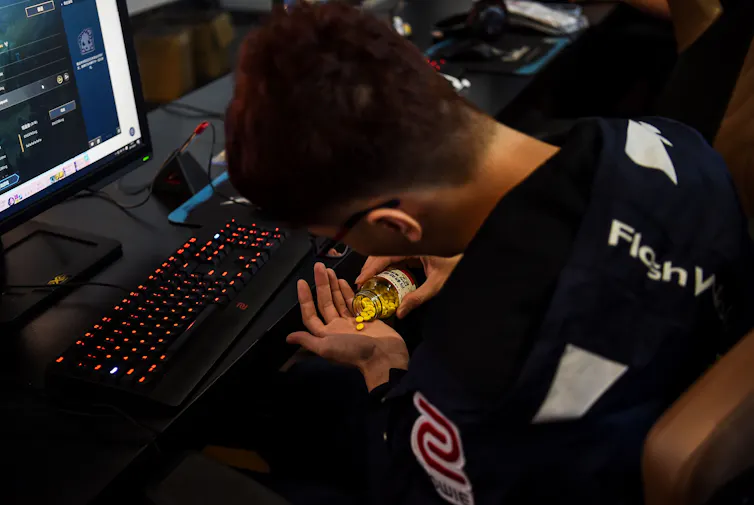
A 2021 study of Portuguese esports players found that 37% experienced anxiety and depression, and 45% experienced sleep disturbances. The most common physical injuries in esports generally fall under eye problems and musculoskeletal issues.
Prolonged screen time leads to many types of vision problems in gamers, from the more common eye fatigue to a decreased ability to focus. Furthermore, the light emitted from screens appears to contribute to sleep disturbances by disrupting the release of melatonin, the hormone that helps regulate your sleep-wake cycle.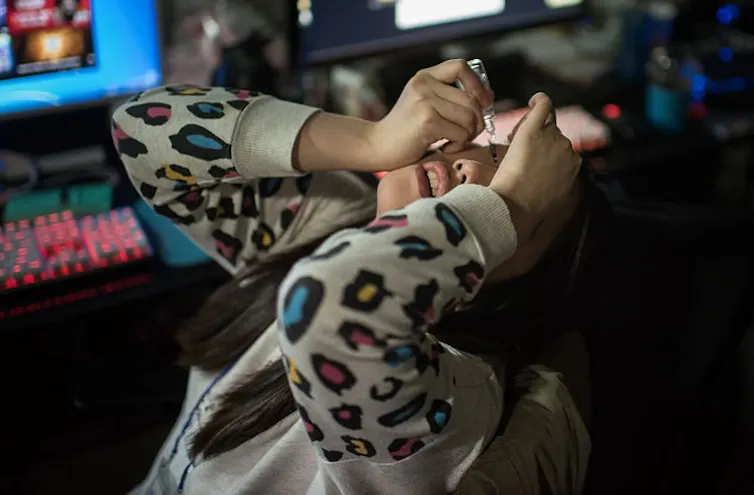
Many esport players – professional or otherwise – also battle hand and wrist pain, with repetitive button-smashing causing injuries such as carpal tunnel syndrome, tendonitis and “gamer’s thumb,” which arises from overuse or irritation of the tendons around the thumb and wrist. Many of the overuse injuries seen among video game players are also familiar to assembly-line workers, whose jobs can involve similarly repetitive movements.
Then there are the back injuries. Players can remain seated for three or more hours without a break, and this prolonged sitting can take a toll on the lower back and spine.
The sedentary nature of esports has also led to a lesser-known – sometimes fatal – injury called deep vein thrombosis: a blood clot, often in the leg, that can become life-threatening if it travels to the lungs. In 2011, British gamer Chris Staniforth – who would play for as long as 12 hours at a time – died of the condition.
Preventative measures
As more esports injury research has been published, more treatment and prevention strategies have emerged.
Top esports teams now have physical therapists, performance psychologists, athletic trainers and even massage therapists on staff to optimize the performance and recovery of their players.
Teams often incorporate group exercise activities to both build rapport among players and reduce the risk of injuries. During competition, proper positioning of the spine and limbs has become an essential injury prevention strategy. For example, selecting a chair that encourages an upright posture can reduce pain and injury risk, especially when gamers couple ergonomics with an exercise program that centers on functional strength, mobility and stretching of the upper limbs.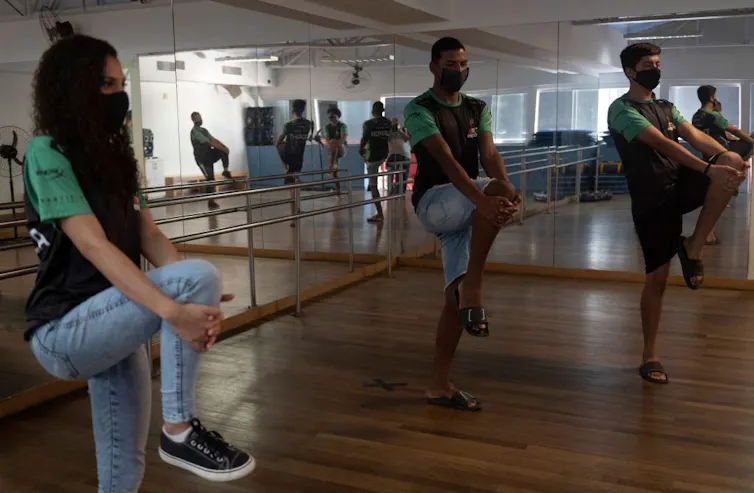
Looking to the stage
When esports began gaining mainstream popularity in the 1990s and early 2000s, its proponents were eager to draw comparisons to traditional sports and athletic competition. The parallels helped establish esports’ legitimacy and gave non-gamers a familiar framework for understanding the competition.
As esports became a big business and a lucrative career path, players and teams hired a web of support staff – trainers, coaches and therapists – that mirrored the structure of professional sports. In this vein, a lot of esports injury research has pulled from the training methods of traditional sports.
However, as a scholar of exercise science, I think injury treatment and prevention strategies could be further improved by seeing esports competitors as more like musicians and dancers than football players and basketball players.
Performance optimization and injury research on professional performing artists has existed for centuries, and I think it represents a valuable, untapped resource. That’s because the physical and mental stresses experienced during musical performance have a lot in common with esports competition: long stretches of sitting; small, dexterous hand movements; and performing without the real-time input of a coach.
For example, biomechanics research has found similar patterns of forearm muscle fatigue among esports players and piano players. However, no studies to date have directly compared the two groups.
And what if the interest in joint hypermobility or hand size among performing artists were translated to esport populations? Could popular piano warm-up exercises be effective for esports athletes who use keyboards?
Even research on sports like car racing might offer valuable insights. As with gamers, many people overlook how physically demanding car racing can be – and yes, that includes sitting for extended periods of time.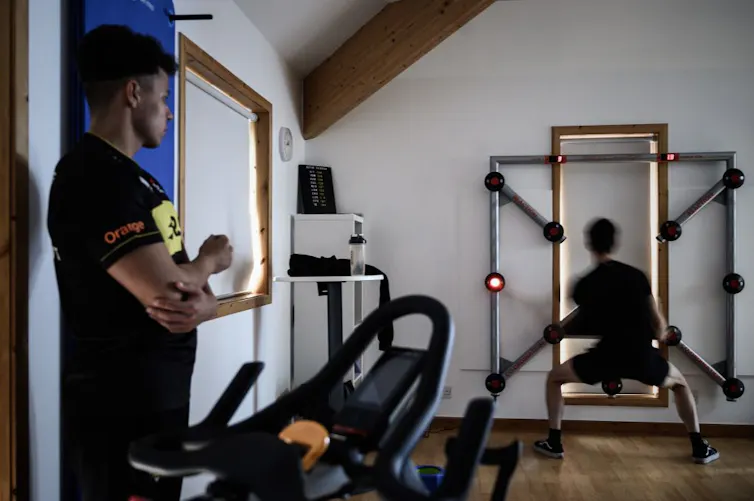
Prevention and rehabilitation techniques continue to improve. Even Jian, the player who retired in 2020, returned to play for a few splits, or partial seasons, in 2022 and 2023.
In July 2023, “League of Legends” star Lee “Faker” Sang-hyeok was relegated to the bench due to cubital tunnel syndrome, an injury that emerges from arm and hand overuse.
Through a treatment plan that included changing his gaming posture and intensive physical therapy, Lee was able to return to play just a month later. He went on to win three consecutive world championships, with his support team helping prevent recurrence of injury throughout each season.
Thanks to his rehabilitation, Lee’s fans will be able to follow his hunt for his fourth “League of Legends” World Championship, which kicks off in October 2026 in the United States.
Sienna Cinti assisted with the research and writing of this article.
Erica D. Henn, Assistant Professor of Kinesiology and Exercise Science, Temple University
This article is republished from The Conversation under a Creative Commons license. Read the original article.
📰 Enjoying STM Daily News? Join the conversation!
💬 Leave a comment, share your thoughts, and subscribe to our newsletter for the latest stories, updates, and “News You Can Use This Moment!” delivered to your inbox.
Stay connected with STM Daily News!
health and wellness
Millions of mobile gamers prize stress relief over winning
Mobile Gamers Prize Stress: In the school’s car pickup line, five minutes before it starts moving. In the doctor’s office waiting room for an appointment that you’ve been heavily anticipating. In bed, just before going to sleep. In these transitional moments, many people reach for their phones — not to scroll, but to play.

Millions of mobile gamers prize stress relief over winning
(Sheeka Sanahori) In the school’s car pickup line, five minutes before it starts moving. In the doctor’s office waiting room for an appointment that you’ve been heavily anticipating. In bed, just before going to sleep. In these transitional moments, many people reach for their phones — not to scroll, but to play.
According to a June 2026 survey of more than 128,000 KashKick mobile gamers, playing a mobile game is more than a way to pass the time. Stress relief and relaxation are the top reasons respondents play, beating out entertainment and fun. As KashKick reports, for many people, this means mobile games are less a simple distraction and more a coping mechanism for the daily stress of life.
A quick reset for life’s transitional moments
Most respondents identify as women, and 60% live in households that earn less than $50,000 per year. In the ranking of their reasons for playing, stress relief and relaxation topped the list, with boredom relief, entertainment and fun close behind.
The ranking reads less like a profile of a gaming hobby and more like a profile of a coping behavior.
More than half of the respondents play games daily or multiple times a day. When they reach for a mobile game, about 53% of the time it’s for a short session—usually 30 minutes or less. Where and when people play tells its own story: 58% play in bed before going to sleep and 40% play in the bathroom. These are private, solitary moments, not the times people typically plan entertainment into their day.
Coping with stress by gaming
To understand why respondents play games for stress relief more than for fun, it helps to look at who they are. Among those surveyed, 19% say they’re unemployed or looking for work, and 60% live in lower-income households. There are likely some areas of their life where they must make every dollar stretch to cover the things they need.
The survey findings coincide with research from the American Psychological Association’s 2025 Stress in America report. According to the report, 18% of men and 22% of women under age 65 rate their stress level at eight or higher on a scale of one to 10. Although the KashKick survey didn’t measure stress, respondents are mostly women and fall within the age and income groups the APA found to carry the most stress.
The APA’s report also describes loneliness as a major strain for Americans. The KashKick survey didn’t measure feelings of isolation, but 55% prefer to play alone, and 60% rarely or never discuss their gameplay with friends or family.
Overall, the survey identifies a group of people who have found a routine, low-cost approach to cope with stress. They’re not necessarily there to get the highest score. They’re playing a mobile game to help them navigate a day that, with all of life’s to-dos and challenges, could quickly feel overwhelming.
Methodology
The KashKick Gaming Habits Survey was fielded from June 8, 2026, through Aug. 10, 2026, among KashKick members in the United States who play mobile games. The Gaming Habits Survey was available to all members on KashKick’s Surveys page post-profile completion. The survey received 128,218 total responses, with question-level response counts ranging from approximately 109,793 to 128,218 depending on attrition. All findings describe KashKick mobile gamers and should not be interpreted as representative of U.S. mobile gamers overall. Industry and stress context references publicly available data from the American Psychological Association, Statista, and Newzoo.
Photo courtesy of Shutterstock

SOURCE:
KashKick
📰 Enjoying STM Daily News? Join the conversation!
💬 Leave a comment, share your thoughts, and subscribe to our newsletter for the latest stories, updates, and “News You Can Use This Moment!” delivered to your inbox.
Stay connected with STM Daily News!


LIGHTSPEED STUDIOS used GDC 2026 to spotlight the next phase of its “Original IP Initiative,” outlining a proprietary development framework aimed at building high-end, original AAA games for a global audience. The studio said the initiative, first introduced at GDC 2025, now includes active development of a new globally driven blockbuster title and a more formalized system for shaping future intellectual property.
A major part of that strategy came from newly appointed Creative Director Feng Zhu, who described a structured approach to original game creation centered on strong visual identity, disciplined worldbuilding, and repeatable production methods. During his GDC session, Zhu introduced the studio’s “90:10 Balance” philosophy, where 90% of a game is grounded in real-world references like authentic locations, historical context, and realistic proportions, while the remaining 10% is used to deliver the creative hooks, tension, and storytelling elements that define the title’s identity.
LIGHTSPEED also emphasized its investment in production infrastructure, including a purpose-built in-house motion capture facility in Los Angeles. Led by Motion Capture Studio Manager Kristin Gallagher, the studio says the facility is designed to handle complex performance capture with greater efficiency, supported by a custom API and advanced technical pipeline developed jointly by teams in LA and across the company’s global network.

The announcement reinforces LIGHTSPEED STUDIOS’ broader ambition to grow beyond service and co-development work into a stronger portfolio of original blockbuster properties. Best known as a co-developer of PUBG MOBILE and the developer of the upcoming Last Sentinel, the company says its long-term focus is on delivering cinematic, culturally resonant game experiences built for players worldwide.
Related Links
Source
Visit the Entertainment section on STM Daily News for the latest entertainment news, movie updates, TV coverage, music stories, pop culture trends, and event highlights.





