

News
Introducing Dill Dinkers: The Future of Indoor Pickleball Facilities
Dill Dinkers: The future of indoor pickleball facilities, spreading joy through inclusive community, professional partnerships, and rapid growth.

If you’re a pickleball enthusiast, you’re going to love this. Dill Dinkers, the established leader of indoor pickleball facilities, is revolutionizing the pickleball experience with its inclusive community and commitment to playing safe and playing well for all skill levels. Made by pickleball players for pickleball players, Dill Dinkers is taking the sport to new heights and spreading the joy of pickleball across the nation. In just a short time, Dill Dinkers has quickly risen to prominence, with four locations in the DMV and over 200 locations in development nationwide.
But what sets Dill Dinkers apart from the rest? It’s their unwavering dedication to providing a quality pickleball experience. From their exceptional leadership support system to their industry-leading partnerships, Dill Dinkers has left no stone unturned in their quest to be the best. And now, they have added another feather to their cap with their recent national brand partnership with Collin Johns, one half of the world’s No. 1 doubles team.
Collin Johns, a top professional pickleball player, will represent the Dill Dinkers brand in various capacities. From promoting Dill Dinkers at nationally televised events to assisting in the education of staff and membership, Johns will be a driving force behind the growth of pickleball and making the sport accessible to all players. His expertise and passion for pickleball make him the perfect fit for this partnership.
Johns himself is no stranger to the pickleball world. Having made his professional debut in 2019, he quickly rose through the ranks and has captured nearly 40 professional titles to date. His experience in tennis, table tennis, and baseball has given him a unique perspective on the technique and strategy involved in pickleball. This expertise will undoubtedly contribute to the continued growth and success of Dill Dinkers.
The vision behind Dill Dinkers is clear – to provide a top-quality pickleball experience to as many people as possible. Co-founders and pickleball enthusiasts, Will Richards and Denise Richards, have poured their passion into creating the perfect business model and support system for franchisees, investors, and players alike. With their turnkey marketing program, intensive training system, and proprietary reporting and management platform, Dill Dinkers is setting the standard for indoor pickleball facilities.
But it doesn’t stop there. Dill Dinkers is not just about providing a place to play pickleball; it’s also about nurturing the growth and development of pickleball players. Through clinics, tournaments, and mentorship programs with industry-leading players and sponsors, Dill Dinkers is giving rise to the next generation of professional pickleball athletes. This commitment to fostering talent and supporting players sets Dill Dinkers apart from other facilities.
When you step into a Dill Dinkers Pickleball Club, you can expect nothing but the best. Each facility is equipped with a pro pickleball director and offers industry-leading paddles, nets, and other high-quality products through their national brand partnership with JOOLA, the leading manufacturer of table tennis and pickleball equipment. It’s clear that Dill Dinkers is leaving no stone unturned in their quest to provide a national quality professional experience.
So, whether you’re a seasoned pickleball pro or just starting out, Dill Dinkers has something for everyone. With their focus on inclusivity, safety, and continuous improvement, Dill Dinkers is changing the pickleball landscape in Maryland and around the country. The partnership with Collin Johns is just the beginning of an exciting journey for Dill Dinkers, and we can’t wait to see what the future holds for this pioneering brand.
If you’re as excited about pickleball as we are, keep an eye out for Dill Dinkers’ upcoming locations and events. And remember, with Dill Dinkers, you’re not just joining a pickleball facility – you’re joining a community of passionate players who are dedicated to spreading the joy of pickleball one game at a time.
About Dill Dinkers Pickleball
Dill Dinkers Pickleball is the leading provider of dedicated indoor pickleball facilities on the East Coast. With the announcement of their fifth facility, Dill Dinkers will offer 50 dedicated indoor pickleball courts in the DMV by early 2024. The Dill Dinkers brand is known for its fun, friendly, and welcoming environment where players of all ages and skill levels can play, socialize, and improve their skills. Each facility offers dedicated indoor courts with fences and outdoor surfaces, event space, a ball machine, and a state-of-the-art reservation system powered by Court Reserve. Dill Dinkers offers court reservations for members and visitors. They also offer clinics, private and semi-private lessons, leagues, business advertising, and rental for private events.
For more information about Dill Dinkers, visit www.dilldinkers.com or you can follow Dill Dinkers on LinkedIn at https://www.linkedin.com/company/dill-dinkers.
SOURCE Dill Dinkers
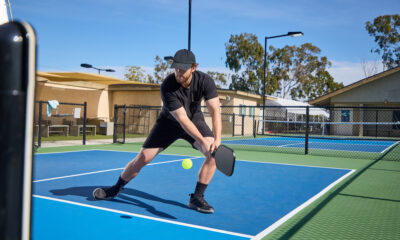
https://stmdailynews.com/sleeves-senior-pickleball-report/




Daily News
Major Construction Begins on Metro’s East San Fernando Valley Light Rail Line
LA Metro has moved the East San Fernando Valley Light Rail Transit Project into major construction. The 6.7-mile Van Nuys Boulevard line will add 11 stations, connect with the G Line and regional rail services, and is now targeted for completion in early 2032.
After years of utility relocation and planning, LA Metro is moving into major construction on a new rail line along Van Nuys Boulevard. The milestone also comes with a revised early-2032 completion target.
LA Metro has officially marked the beginning of major construction on the East San Fernando Valley Light Rail Transit Project, moving one of the region’s most important rail projects from preparatory work into full-scale construction.
Metro held a groundbreaking ceremony on October 19, 2026, for the 6.7-mile line, which will run along Van Nuys Boulevard from the G Line busway north to San Fernando Road in Pacoima. The project will add 11 light-rail stations serving Van Nuys, Panorama City, Arleta and Pacoima.
This was not the project’s first groundbreaking. Metro held an earlier ceremony in December 2022 when crews began relocating utility infrastructure. The new milestone is more consequential for riders: the major-construction phase covers the guideway, stations, traction-power substations, rail systems and a maintenance and storage facility.
From utility work to a new rail corridor
The project has spent several years in utility relocation, property acquisition, design and other early work. Metro’s current construction timeline shows major work continuing from 2026 through 2032, with phased traffic changes and K-rail installations expected along Van Nuys Boulevard.
When completed, trains are expected to operate every seven to 10 minutes during peak periods. The line will connect directly with the G Line and provide access to the Van Nuys Metrolink and Amtrak station. It is also expected to become an important transfer point for the future Sepulveda Transit Corridor and a planned Metrolink station in Pacoima.
The corridor already has a substantial transit market. Metro reported that bus Lines 233 and 761, which serve Van Nuys Boulevard, recorded nearly 20,000 boardings in September 2026. The agency also says approximately 19 percent of households in the project area lack access to a car, compared with about 8 percent countywide.
Those figures help explain why this project matters beyond its construction footprint. It is intended to give residents in some of the Valley’s most transit-dependent communities more reliable access to jobs, schools, healthcare and the wider regional transit network.
The opening target has moved to 2032
Metro’s current project page lists an estimated completion date of early 2032. That is later than the 2031 opening forecast the agency publicized when it celebrated an $893-million federal grant in September 2024. Earlier plans were more optimistic still: when utility work began in 2022, Metro said the first segment could open between 2028 and 2030.
The project’s financial scale has also grown clearer. In May 2026, the Metro Board established a life-of-project budget of approximately $3.999 billion and authorized the next phase of its progressive design-build contract with San Fernando Transit Constructors, a joint venture of Skanska and Stacy and Witbeck.
That authorization increased the construction contract’s value to roughly $2.431 billion. Funding for the larger project combines federal, state and local sources, including revenue from Los Angeles County’s Measure M transportation sales tax.
Rail returns to Van Nuys Boulevard
The East San Fernando Valley line will restore passenger rail to Van Nuys Boulevard for the first time since Pacific Electric ended streetcar service there in 1952. It will also become the first major new Metro rail project in the San Fernando Valley since the subway reached North Hollywood in 2000.
The historical parallel is significant. Van Nuys Boulevard once developed around electric railway service before the region shifted heavily toward automobiles and buses. Metro is now rebuilding rail in the same broad corridor, but as part of a modern network designed to connect local riders with bus rapid transit, regional rail and future high-capacity projects.
The current project ends in Pacoima. Metro continues to study a separate 2.5-mile northern extension that would reach the Sylmar/San Fernando Metrolink station. That extension is not included in the segment now entering major construction.
For riders, the October groundbreaking does not mean trains are imminent. Several years of disruptive and technically complex work remain, and the schedule has already moved beyond earlier forecasts. Still, it represents a tangible transition: the East San Fernando Valley line is no longer primarily a planning exercise or utility-relocation program. Metro has begun building the infrastructure that will carry trains.
That makes this a major step in Los Angeles County’s long effort to restore frequent rail transit to communities that lost it generations ago—and another chapter in The Long Track Back.
Primary sources
- LA Metro: Major construction will soon be underway
- LA Metro project page: East San Fernando Valley Light Rail Transit
- LA Metro Board meeting, May 28, 2026 — project budget and contract authorization
- LA Metro: $893 million federal grant announcement, September 6, 2024
- LA Metro: Advanced utility-work groundbreaking, December 2, 2022
This article is part of The Long Track Back, STM Daily News’ continuing coverage of how Los Angeles is rebuilding and expanding a passenger-rail network after decades of automobile-centered grow

For generations, the Santa Monica Pier sign has marked the start of a day at the beach. Now, the familiar blue neon landmark is preparing for a journey of its own.
Santa Monica scheduled removal of the 1941 sign for October 20–22, with shipment to Las Vegas anticipated October 26. The timetable is subject to change, according to the city’s October 19 announcement.
The temporary removal accompanies replacement of the aging bridge connecting Ocean Avenue to the pier. It also creates an opportunity to preserve the historic sign.
YESCO will restore it at its Las Vegas facility. The company’s experience includes work on the “Welcome to Fabulous Las Vegas” sign.
Crews will repair neon tubing, treat rust, repaint components and address structural needs while retaining historic features. The sign will remain in secure storage during bridge construction.
Once the project is finished, it will return above the new bridge at a slightly greater height for visibility and vehicle clearance. The city’s latest announcement targets project completion by 2028, ahead of the Los Angeles Olympics and Paralympics.
Meanwhile, visitors can photograph a lighted, half-scale replica near Pier Burger.
For anyone who associates that glowing arch with Southern California memories, its absence will be noticeable. The restoration is intended to ensure future generations can make memories beneath it, too.
Source: City of Santa Monica — October 19, 2026 announcement
Related Links
- City of Santa Monica: Official sign restoration announcement — October 19, 2026. Primary source for removal dates, shipment to Las Vegas, YESCO’s restoration work and the sign’s planned return.
- Santa Monica Daily Press: Sign restoration during bridge rebuild — October 20, 2026. Additional local reporting on the project and visitor access.
- LAist: Sign removal and how to watch — Reporting on the removal schedule and public viewing opportunities.
Follow more Southern California stories at STM Daily News.
Automotive
Slate Truck Gets Real: First Experience Center Opens Ahead of Planned Deliveries
Slate Auto’s first permanent Experience Center gives consumers an up-close look at its customizable electric truck ahead of planned customer deliveries.
Slate Auto’s new Chicago location gives prospective buyers a permanent place to see the minimalist electric pickup, explore customization options and learn about demo opportunities—but it is not yet proof that customer deliveries have begun.
CHICAGO — October 20, 2026 — The Slate Truck is moving out of computer renderings and temporary roadshow stops and into a permanent retail setting. Slate Auto opened its first Experience Center on October 15 at 1053 W. Grand Avenue in Chicago, giving consumers a year-round location to get an up-close look at the company’s highly anticipated electric pickup.
The Near West Side facility occupies a former Tesla location and includes showroom, retail and garage space, along with electric-vehicle charging infrastructure. For Slate, the opening represents an important step in turning strong online interest into a more tangible buying experience as the startup works toward launching its first vehicle.
Visitors can examine the truck’s compact dimensions, deliberately simple cabin and accessory-driven design in person. The center also showcases Slate’s personalization strategy, including exterior wraps, add-on accessories and digital design tools intended to let owners configure the truck around their needs.
Slate has also promoted demonstration opportunities connected with the location, although availability may be limited or appointment-based as the company continues to prepare its fleet. Early media access included passenger rides rather than unrestricted customer test drives, so prospective visitors should confirm current availability before making a special trip.
Why the Chicago opening matters
Until now, most consumers have encountered the Slate Truck through online reservations, media coverage or temporary appearances. A permanent showroom gives buyers a chance to judge details that are difficult to evaluate on a screen, including seating position, bed access, cabin materials and the overall size of the vehicle.
That is especially important for a product built around an unconventional value proposition. Slate is promoting a basic two-seat, two-door electric truck with manual crank windows and no factory-installed infotainment screen or stereo. The company’s strategy is to keep the starting price low and let buyers add features later through accessories and conversion kits.
The physical location also gives Slate a place to explain that approach directly. Rather than presenting the truck as an unfinished vehicle, the company can demonstrate how its modular accessories, wraps and planned SUV-style conversion components are meant to expand the vehicle’s usefulness over time.
Chicago is a logical first market for that effort. The city offers access to a large Midwestern customer base and is within the broader region of Slate’s planned manufacturing operation in Warsaw, Indiana. Reusing a former Tesla store also gives the startup a space already suited to displaying and servicing electric vehicles.
The roadshow continues beyond Chicago
The Experience Center is opening as Slate expands its public demonstration schedule. The company’s events calendar lists a Boston-area demo ride event from October 21 through October 25 at The Shops at Chestnut Hill, followed by an appearance at RADwood in Alameda, California, on October 24 and a New Jersey demo ride event in Freehold from October 28 through October 31.
Slate also lists future stops in Washington, D.C., Raleigh, Atlanta, Miami and Orlando. Together, the permanent Chicago center and the traveling events suggest the company is moving into a broader customer-education phase ahead of planned deliveries.
What has—and has not—changed
The showroom opening does not change Slate’s headline pricing or range claims. The truck is still advertised with a base price of $24,950 before taxes, registration and destination charges. With the currently listed $1,450 destination fee, the entry price would be approximately $26,400 before other costs or optional equipment.
Slate also continues to advertise an estimated range of up to 205 miles. That figure remains an estimate rather than a final EPA-certified rating.
Most importantly, Slate has not publicly confirmed that regular customer production has started or that the first retail deliveries have occurred. Limited deliveries have been reported as possible before the end of December 2026, while many reservation holders may receive later delivery windows in 2027. The Chicago opening is therefore a commercialization milestone, not a manufacturing milestone.
For customers and industry observers, the next major signals will be the start of production at the Warsaw factory, final specifications and EPA range ratings, and confirmed handoffs to paying buyers.
The bottom line
Slate Auto now has a permanent place where consumers can see and evaluate its unusually simple electric truck. That makes the product feel more real and gives the company a platform to explain a customization-heavy business model that may be unfamiliar to traditional truck buyers.
Still, the biggest questions remain unanswered. Opening a showroom demonstrates progress in marketing and customer engagement; producing vehicles at scale, holding the promised price and delivering a 205-mile truck to reservation holders will determine whether Slate can convert enthusiasm into a viable automotive business.
Sources and more information
- Slate Auto events and demo schedule
- Electrek: Slate opens its first Experience Center in Chicago
- Autoblog: Slate opens its first U.S. showroom
- Slate Auto
Category: Consumer Corner / Automotive




