

Lifestyle
Career Ready: 3 strategies to prepare teens for life after school
New jobs and a labor shortage have changed how employers and job seekers view careers and young talent.

Last Updated on July 26, 2024 by Daily News Staff
(Family Features) For some time, heading to college or joining the workforce have been the standard choices for teens upon high school graduation. Today, in part due to technology and social media, students have access to myriad career paths that are all but traditional.
With an increasingly dynamic career landscape creating an awareness of jobs that didn’t exist even 10 years ago and a shortage in the workforce, there’s a willingness for both potential employees and employers to look at careers and young talent from a whole new perspective.
“There isn’t a ‘typical’ career anymore,” said Dr. Lorna Bryant, Gen Z career expert and head of career education for Pearson Virtual Schools. “With the perfect storm in the workforce of boomers retiring, many people still not returning to work in the wake of the pandemic and a population that has declined for the last 50 years, this generation (ages 11-26) is positioned extremely well. Employers want and need them. In short, the scales have flipped to the supply side and demand is causing many employers to remove barriers to work entry. Whether high school grads go to college or work, developing in-demand skills early will help them secure and succeed in the jobs of the future.”
Consider these tips from Bryant to help students explore the many options in front of them and prepare for the possibilities that await after high school.
Help Kids Cultivate Durable Skills
While technology has transformed the world of work, an increasing number of careers prioritize durable skills over technical or hard skills. Durable skills (also known as “soft” or “human” skills) include collaboration, leadership, communication and attention to detail, along with traits like empathy, grit and resilience. According to Pearson’s Power Skills report, these are some of the most in-demand skills for employers. In addition, research from America Succeeds found employers seek durable skills 3.8 times more frequently than the top five technical or hard skills in every location, industry sector and educational attainment level. Possessing these skills is not only attractive to employers but colleges and universities, too. One of the best ways to prepare for the jobs of tomorrow, which don’t exist today, is to focus on timeless durable skills.
Many students already possess or are actively developing these skills in high school. The key is to raise awareness of their importance, seek ways to boost them and showcase them on college and job applications or resumes. For example, teens can display their leadership skills by captaining sports teams or starting a club at school. They can showcase collaboration and communication abilities by holding and thriving in student government positions, volunteering or working part-time jobs.
Bridge Passions and Hobbies to Careers
Beginning conversations with children as early as middle school that expose students to job roles, responsibilities and salaries connected to areas of interest is important for setting them up for long-term success. Nurturing interests – rather than dismissing them as flights of fancy – and finding paths to explore that align with those hobbies or interests in real-world applications can open doors to potential careers that may not have previously been considered.
For example, Lake Liao, a 2023 Lighthouse Connections Academy grad, is attending Princeton University on a pre-law track. The flexibility of online school enabled him to dig into his passions for political and community organizing and activism in high school, including activism around climate and environmental policy. It was through joining local nurses in their fight for a fair contract he realized he wanted to be a lawyer and make a difference in the labor rights cause.
To help students align their values and interests with potential careers, ask questions such as:
- What is it, specifically, you enjoy about your interests? What jobs rely on related skills (working with your hands, serving others, being creative, etc.)?
- Do you have the skills to do those jobs? If not, what research and training do you need to acquire the necessary skillset?
- Are there related jobs available in the geographic location you want to live?
- Can you make enough money to live the lifestyle you want doing this job?
- Can you envision enjoying this type of work for 8 (or more) hours per day?
Get a Head Start on Credentials or College Credit
As earning college credits, career-ready credentials and specialized training for future careers is becoming more accessible for high school and middle school students, it’s important to research available options. From online resources, workshops, career counselors and accelerated career readiness programs that allow students to enter college or the workforce “job-ready,” there are more options available now than ever before.
One example, Connections Academy, a K-12 online school program, has expanded its slate of college and career readiness initiatives for middle and high school students to offer an innovative tri-credit approach where courses can deliver high school credit; industry-recognized micro-credentials (to help qualify for careers in data analytics, UX design, software development, cybersecurity and more); and eligibility for college credit toward more than 150 bachelor’s degree programs at partner universities in the United States. In addition, the Career Pathways program delivers curated learning experiences in fields such as IT, business and health care, allowing students to connect with employers, internships and clubs, and take advantage of specialized classes that transition seamlessly to higher education or nationally recognized, industry certifications.
Taking advantage of program offerings, aspiring paramedic Maeson Frymire, a 2022 Inspire Connections Academy graduate, became certified as an EMT before graduating high school. After graduation, he became a firefighter and is now working toward becoming an advanced certified EMT, carving out a career path toward flight paramedicine.
Or consider Abigail Sanders, also a 2022 graduate, who completed her bachelor’s degree by the time she graduated high school. Now in the second year of her doctorate program in medical school, she aspires to be a doctor by the age of 22 and uses her love of learning and passion for science to advance her career while seeking to become an oncologist.
For more information on online schools and career readiness programs for teens, visit ConnectionsAcademy.com.
Photos courtesy of Getty Images
SOURCE:
Connections Academy
Our Lifestyle section on STM Daily News is a hub of inspiration and practical information, offering a range of articles that touch on various aspects of daily life. From tips on family finances to guides for maintaining health and wellness, we strive to empower our readers with knowledge and resources to enhance their lifestyles. Whether you’re seeking outdoor activity ideas, fashion trends, or travel recommendations, our lifestyle section has got you covered. Visit us today at https://stmdailynews.com/category/lifestyle/ and embark on a journey of discovery and self-improvement.


Business and Finance
Handshake Launches Free AI Skills Studio to Help Job Seekers Prepare for an AI-Driven Workplace
Handshake has launched AI Skills Studio, a free project-based learning hub designed to help students and job seekers develop practical AI skills and demonstrate what they can do to prospective employers.

As artificial intelligence becomes a bigger part of everyday work, knowing how to actually use AI tools may become just as important as knowing what they can do.
Career platform Handshake is betting on that shift with the launch of AI Skills Studio, a free learning hub designed to give students and job seekers practical experience using AI through short, hands-on projects.
Handshake’s AI Skills Studio aims to help job seekers build practical, hands-on AI experience as artificial intelligence becomes increasingly important across the workplace. Image: Rod Washington and Firefly.
Announced September 22, AI Skills Studio offers project-based learning “missions” that generally take between 10 and 45 minutes to complete. Instead of focusing primarily on lectures or traditional coursework, participants work directly with AI and technology tools to create something tangible.
Projects can include automated workflows, software, interactive games, data dashboards, portfolios, and tools aimed at preparing users for jobs in areas such as sales and marketing.
The program was developed with a broad group of technology companies and educational partners, including Clay, Figma, Gamma, Google, Lovable, Notion, OpenAI, Replit, Salesforce, Southern New Hampshire University and Vercel.
Turning AI knowledge into something employers can see
One of the more notable aspects of AI Skills Studio is its emphasis on demonstrating skills rather than simply listing them on a résumé.
After completing a mission, learners can add their projects to their Handshake profiles and potentially feature them in the platform’s AI Showcase. Participants also receive verified skill badges intended to provide employers with evidence that they have applied particular AI skills.
That approach reflects a growing challenge for both applicants and businesses: simply saying someone is familiar with artificial intelligence doesn’t necessarily show an employer what that person can accomplish with it.
“Employers know they need people who can work effectively with AI, but a résumé can’t tell you what someone is truly capable of,” Handshake Chief Operating Officer Jon Stull said in announcing the program.
For job seekers, that could make small AI projects increasingly useful as part of a professional portfolio, particularly for people entering the workforce without years of experience.
Students see AI skills becoming increasingly important
Handshake says its own research indicates that many students recognize the importance of AI but don’t necessarily believe their education has kept pace.
According to the company’s 2026 Network Trends Report, 58% of graduating seniors surveyed said they would need a stronger understanding of AI to succeed in the workplace. Only 28%, however, said AI had been meaningfully integrated into their educational programs.
Those figures come from Handshake’s own research, but they highlight a broader issue confronting workers, schools and businesses as generative AI moves rapidly into professional environments.
Julia Stiglitz, Handshake’s Chief Education and Workforce Officer, said people shouldn’t necessarily wait for the technology—or the workplace—to stop changing before beginning to develop AI skills.
“The best thing people can do is start learning and start building,” Stiglitz said.
Learning with tools used in the workplace
Rather than teaching AI only as a theoretical subject, the Studio is designed around tools people could encounter professionally.
OpenAI, for example, is participating with projects involving ChatGPT and Codex. Google is contributing training involving its AI tools and workflows, while other partners bring experience in areas ranging from software development and design to productivity and enterprise technology.
An AI Skills Instructor provides learners with guidance and feedback while they complete projects.
Handshake says connecting those projects directly to a career profile could also give employers another way to evaluate applicants—allowing recruiters to look at what candidates have actually built instead of relying entirely on degrees, résumés or self-reported skills.
AI could change what “experience” means
The development is especially interesting for students, career changers and early-career workers.
Traditionally, gaining experience has often created a familiar problem: employers want applicants with experience, while applicants need employment opportunities to acquire that experience.
Project-based AI training doesn’t eliminate that problem, and completing a short AI exercise isn’t the same as performing a job professionally. But projects can provide another way for someone to demonstrate curiosity, technical familiarity and the ability to apply new tools to a specific task.
As AI becomes embedded in more occupations, portfolios demonstrating how someone uses the technology could become an increasingly useful complement to conventional credentials.
That doesn’t mean everyone needs to become an AI engineer. The more immediate workplace skill may simply be understanding how to use AI effectively within an existing profession—whether that’s marketing, design, software development, sales, research or business operations.
Handshake’s new program is another indication that career preparation is beginning to adjust to that reality.
AI Skills Studio is available free through Handshake’s website and mobile app.
Source: Handshake press release, September 22, 2026. Statistics regarding graduating seniors and AI education are attributed to Handshake’s 2026 Network Trends Report.
Source and Related Links
Handshake — Introducing AI Skills Studio: AI Skills Studio launch and overview — Details the program, project-based missions, participating partners and how completed projects can be displayed to employers.
Handshake — What is AI Skills Studio?: AI Skills Studio Help Center — Official information on how the program works, eligibility, missions and access.
Handshake — Class of 2026 Graduation Report: AI and the Workforce Ahead — Supports the article’s statistics that 58% of graduating seniors say they need stronger AI skills while only 28% say AI has been meaningfully integrated into their academic program. Handshake
Handshake — Workforce Outlook: Class of 2026 in the AI Economy — Additional research on AI adoption, employer demand and attitudes toward AI among graduating students.
Stay informed. Stay curious. From business and technology to lifestyle, entertainment, transportation, science and the stories shaping everyday life, STM Daily News brings you news, insight and useful information that matters.
Discover more stories at STM Daily News: https://stmdailynews.com


(Feature Impact) Dry eye is one of the most overlooked symptoms of perimenopause, the phase of fluctuating hormones leading up to a woman’s final period, and menopause, the point in a woman’s life when she’s gone a year without a period.
In fact, 79% of women1 recognize hot flashes as a symptom of menopause, but only 14% recognize dry eye as a menopause-related symptom, according to the 2026 Bausch + Lomb (Peri)Menopausal Survey. What’s more, 78% of women1 were surprised to learn that dry eye is a symptom of perimenopause or menopause.
“Dry eye is still widely overlooked as a symptom of menopause, and many women think it’s just a minor nuisance, but the truth is it can significantly affect your daily life,” said Neda Gioia, OD, CNS, IFMCP, FOWNS, founder, Integrative Vision. “Early symptoms are often misunderstood or self-treated but it’s very important for women who experience symptoms to see an eye doctor and get an accurate diagnosis and treatment.”
During perimenopause and menopause, declining hormone levels can impact tear production, tear quality and tear evaporation, contributing to dry eye symptoms including redness, fluctuating vision and a gritty or tired feeling in the eyes, all of which can impact day-to-day comfort and quality of life. If left untreated, dry eyes may worsen over time, potentially impacting eye health and vision. Among peri-, menopausal and post-menopausal women who experienced dry eye, 80% said the symptom came as a surprise.
Respondents reported their dry eye symptoms caused difficulty reading (58%), difficulty using screens (53%), difficulty driving (26%) and reduced productivity (17%), underscoring the often-overlooked impact dry eyes can have on everyday life.1
However, there are a variety of products and treatment approaches available to help manage dry eye symptoms. For example, Bausch + Lomb offers a range of options designed to address the main causes of dry eye.
A doctor-recommended, clinically proven once-daily soft gel supplement that targets the key root causes of dry eyes, Blink NutriTears supports healthy tear production and provides lasting, continuous relief.* § As part of a comprehensive approach to dry eye management, the supplement can be used with Blink Triple Care Preservative Free Lubricant Eye Drops, which are designed to directly address tear evaporation, one of the leading causes of dry eye, and provide instant and long-lasting symptom relief.
An eye care professional can help determine the approach that’s right for each individual. To learn more about dry eye and products to help combat it, visit JustBlink.com.*These statements have not been evaluated by the Food and Drug Administration. This product is not intended to diagnose, treat, cure or prevent any disease.
12026 Bausch & Lomb (Peri)Menopause Survey via Suzy, n=402; Women ages 30–80+ who are perimenopausal, menopausal, or post-menopausal
§Based on a clinical study
SOURCE:
Bausch + Lomn
child education
Where Curiosity Builds Trade Skills: 5 Ways to Help Kids Discover the Skilled Trades
Help Kids Discover the Skilled Trades: Parents, educators and mentors can encourage young people to broaden their horizons as they plan their futures and build awareness around careers in the skilled trades with these tips.
Where Curiosity Builds Trade Skills: 5 Ways to Help Kids Discover the Skilled Trades
(Feature Impact) Most students hear questions about what they want to be when they grow up. By the time their middle and high school years arrive, they’re often starting to consider their answers more in depth. Conversations with adults can help shape their awareness of and interest in various career paths, including skilled trades.
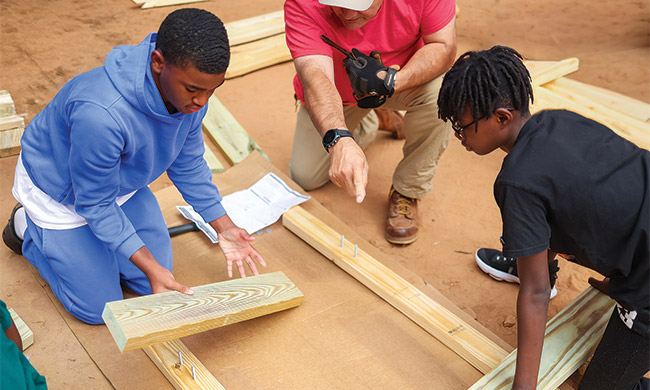
When they’re provided with opportunities to learn, build, experiment and solve problems, young people can discover whether their talents and passions are a good fit for a career in the trades. Programs likePath to Pro Skills Explorers, launched by The Home Depot in partnership with Scouting America and Boys & Girls Clubs of America, provide free, accessible ways to introduce students to options like the plumbing, construction and electrical fields, as well as content on leadership and soft skills.
Parents, educators and mentors can encourage young people to broaden their horizons as they plan their futures and build awareness around careers in the skilled trades with these tips.
Start Career Conversations Early
Choosing a career path doesn’t have to be one intimidating, life-changing moment. Parents and mentors can normalize career conversations by starting them early and keeping things casual. Opening the dialogue sparks curiosity about the activities kids enjoy and allows them to start connecting those interests to potential career paths. To get started, set kids up with access to online programs, videos and introductory courses so they can explore a variety of possibilities.
 Turn Curiosity Into Hands-On Learning
For many students, learning by doing is the most satisfying way to test, improve and build skills. Instead of only reading textbooks or listening to instructors, offer them the chance to follow a plan, work with different materials, troubleshoot problems and build something tangible. Young people considering hands-on careers need hands-on practice to develop confidence and adaptability. Take the first step by researching online resources and local opportunities for classes, job shadowing or even apprenticeships.
Recognize the Skills Kids Are Already Building
Skilled trades aren’t just about knowing which wires to connect or what tool to reach for. They also rely on a variety of soft skills like communication, patience, critical thinking, time management, attention to detail and more. When kids demonstrate these traits, point them out and encourage them. Take opportunities to let them experiment with hands-on projects, whether they want to try building a treehouse, repairing a bike or tinkering with technology.
Expand Views of Career Pathways and Success
The road to success is more like an intersection. Let young people know there are many pathways to fulfilling careers and futures, and while the traditional college-to-career plan can still be a viable option, it isn’t the only one. Skilled trades offer competitive salaries, job security and the opportunity to learn hands-on skills that will always be in demand. Even in a world where technology is rapidly changing many career fields, it takes skilled workers to replace roofs, repair electrical systems, fix sewer lines and lead disaster recovery efforts.
Find Programs That Make Skilled Trades Exploration Accessible
There is a gap between labor supply and demand in the trades, and it’s only widening as older generations approach retirement age. Programs like The Home Depot’s Skills Explorers are designed to empower young people to step into these roles by providing a mix of online resources and hands-on activities to explore viable career paths. As a key part of a commitment by The Home Depot and The Home Depot Foundation to deliver 15 million introductions to the skilled trades by 2032, the program offers an accessible, no-cost curriculum for youth education groups to learn what it’s like to work in these important fields.
“For years, The Home Depot and The Home Depot Foundation’s Path to Pro program have helped separating military, career changers and others build pathways to the trades,” said Michael Rowe, executive vice president of Pro for The Home Depot. “We know that closing the skilled labor gap starts much earlier. We need more young people to see what’s possible and understand the lucrative opportunities these careers provide.”
Visit pathtopro.com/skills-explorers to access the free curriculum and discover how to bring hands-on skilled trade exploration to students.
SOURCE:
🔧 Curiosity today can become a skill for tomorrow. Giving kids opportunities to build, fix, create, and explore trades at an early age can turn natural curiosity into confidence, practical skills, and even inspiration for a future career. Whether it’s woodworking, automotive repair, cooking, electronics, or construction, hands-on learning shows kids that there’s more than one path to success. Visit: https://stmdailynews.com/lifestyle/





