

Food and Beverage
Eating beans improves gut health, regulates immune and inflammatory processes in colorectal cancer survivors

Last Updated on September 13, 2025 by Rod Washington
Adding navy beans to diet diversified gut microbiome which could aid in cancer prevention and treatment

Newswise — HOUSTON ― Incorporating navy beans into the diet of colorectal cancer (CRC) survivors has the potential to positively impact both gut and host health by modulating markers linked to obesity and disease, according to new research from The University of Texas MD Anderson Cancer Center.
The findings published today in eBIOMedicine, part of The Lancet family of journals, revealed BE GONE trial participants who added a cup of navy beans daily to their regular meals saw positive changes in their gut microbiome, which is associated with cancer prevention and improved treatment outcomes. Changes included an increase of alpha diversity, or beneficial bacteria (Faecalibacterium, Eubacterium and Bifidobacterium) and a decrease in pathogenic, or opportunistic, bacteria.
“Observing a shift in microbiome diversity with diet intervention alone is rare, and this study underscores the ability of a readily available prebiotic food to bring about such changes,” said corresponding author Carrie Daniel-MacDougall, Ph.D., associate professor of Epidemiology. “Over the course of eight weeks, there was an improvement in participants’ gut health, marked by an increase in beneficial bacteria, which wards off the harmful bacteria.”
Obesity, poor diet, or gastrointestinal issues can cause disturbances in a person’s normal microbial balance. For people who have had or have CRC, these changes cause inflammation and can affect survival. Even after cancer treatment or precancerous polyp removal, a poor diet and an unbalanced gut microbiome can have negative effects on prevention efforts for both cardiovascular disease and cancer.
Beans, particularly small white navy beans, are full of gut-supporting fibers, amino acids, and other nutrients, which can help the beneficial bacteria in your colon flourish, supporting immune health and regulating inflammation, Daniel-MacDougall explains. Despite being accessible and cost-effective, the legumes are frequently avoided by Americans due to mild or acute gastrointestinal side effects, which can be mitigated by proper preparation and consistent consumption.
Daniel-MacDougall cautions that individuals should not attempt this diet without speaking to a physician, as it could have negative impacts without proper guidance. Further study is needed in order to determine how dietary changes can be used to lower cancer risk or improve treatment outcomes.
The randomized BE GONE trial followed 48 men and women over age 30 who met the criteria for obesity via body mass index (BMI) or waist size and who had a history of bowel lesions. This included patients with a history of CRC (75%) and/or high-risk, precancerous polyps of the colon or rectum detected at colonoscopy. For eight weeks, participants either followed their regular diet or included a daily cup of organic, canned pressure-cooked white navy beans.
Patients were able to choose and prepare their own meals, with close follow-up and counseling from the study dietitian. Every four weeks, participants provided stool and fasting blood samples to assess shifts in the gut microbiome as well as host metabolites and markers. Participants were considered adherent if they consumed at least 80% of the beans over the intervention period and followed the prescribed regimen at least five days a week. Limitations of this study include participant aversion to continually consuming navy beans. No serious side effects were reported.
“The beans did not appear to induce gut inflammation or seriously impact bowel habits, which is crucial for CRC survivors and patients,” Daniel-MacDougall said. “However, once participants stopped eating the beans, the positive effects faded quickly, highlighting the need to educate patients on how to maintain healthy habits.”
The study highlights the therapeutic role of naturally prebiotic-rich foods, while further emphasizing the need for consistent and sustainable dietary adjustments for high-risk cancer patients. In the next steps, researchers will focus on a wider variety of prebiotic foods and how changes to the microbiome affect patients undergoing immunotherapy.
The trial was funded by the American Cancer Society, with initial support from an MD Anderson Institutional Research Grant. Additional funding support was provided by the National Cancer Institute (NCI) (P30 CA016672), the Andrew Sabin Family Fellowship Program, the Cancer Prevention and Research Institute of Texas (CPRIT) (RP160097), and MD Anderson’s Moon Shots Program®. Study beans were independently purchased with funds from the Dry Bean Health Research Program, a peer-reviewed incentive award created by the Northarvest Bean Growers Association, Communique Inc. to identify and encourage researchers that apply for NIH-funding to support studies on beans and human health. A full list of co-authors and disclosures can be found here.
Read this press release in the MD Anderson Newsroom.
Journal Link: eBIOMedicineREQUEST AN EXPERT


Food and Beverage
Make Mealtime Easier with These Air Fryer Recipes
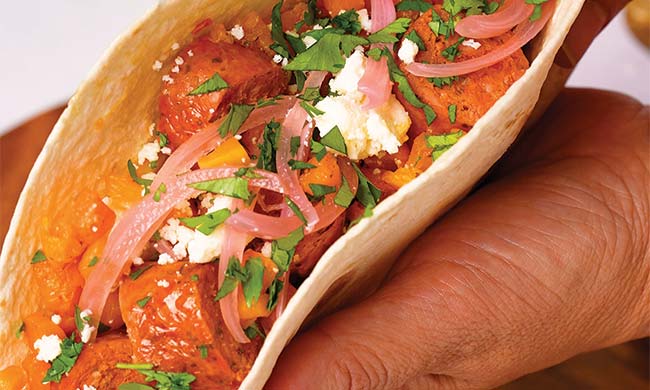
When busy weeknights begin to make dinners feel more like a race against the clock than a chance to slow down, families need meals that come together quickly without defaulting to takeout. Whether you’re cooking for a busy weeknight or simply looking to try something new, recipes like Air Fryer Butternut Squash and Chorizo Tacos and Air Fryer Chicken Katsu Bowls can help you get more from your air fryer.
(Feature Impact) When busy weeknights begin to make dinners feel more like a race against the clock than a chance to slow down, families need meals that come together quickly without defaulting to takeout. One solution may already be sitting on your counter: an air fryer.
Air fryers are now found in 7 of 10 American homes, according to new consumer research from the National Frozen and Refrigerated Foods Association, but consumers are still learning how to use them beyond dinner, despite nearly 9 in 10 owners saying they’d like to discover more ways to get the most from their air fryer.
Nearly two-thirds (65%) of air fryer users said the appliance is faster than their oven, making it a convenient solution for everything from quick breakfasts and lunches to snacks and weeknight dinners. With the added convenience encouraging users to eat at home more often, air fryers can also help stretch the family food budget.
If you’re looking to get more from your air fryer, start by thinking beyond dinner. Frequent users treat air fryers as an all-day essential, putting them to work for breakfast, quick lunches, after-school snacks and beyond. Look for frozen and refrigerated products that include air fryer directions on the packaging, such as frozen potatoes and vegetables, then visit Easy Home Meals for even more recipe inspiration.
//www.youtube.com/embed/QotJkv_MFu8
Whether you’re cooking for a busy weeknight or simply looking to try something new, recipes like Air Fryer Butternut Squash and Chorizo Tacos and Air Fryer Chicken Katsu Bowls can help you get more from your air fryer while bringing fresh flavors to the table.
For more air fryer recipes, tips and inspiration for every meal occasion, visit EasyHomeMeals.com.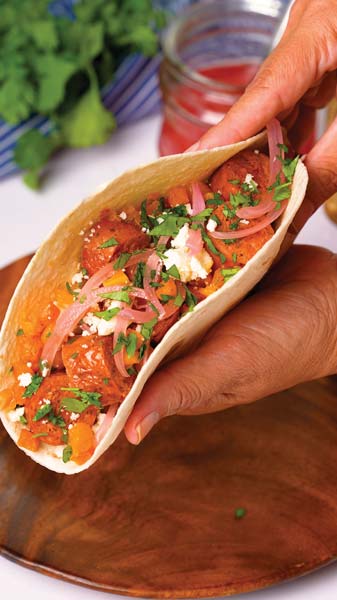
Air Fryer Butternut Squash and Chorizo Tacos
Recipe courtesy of Easy Home Meals
Total time: 15-30 minutes
Servings: 1-4
- 1 pound fresh chorizo sausage links
- 1 pound frozen, diced butternut squash
- 1 tablespoon olive oil
- kosher salt, to taste
- freshly ground black pepper, to taste
- 12 flour tortillas (6 inches)
- 1/2 cup crumbled queso fresco
- 1/4 cup pickled red onions
- chopped fresh cilantro, for garnish
- Preheat air fryer to 400 F 5 minutes. Place chorizo and butternut squash in even layer in air fryer basket. Drizzle with olive oil and toss to coat. Season with salt and pepper, to taste. Air-fry 10-14 minutes, flipping sausage and butternut squash halfway through, until chorizo’s internal temperature reaches 160 F and vegetables are tender.
- Transfer sausage to cutting board. Cut into 1/4-inch slices. Top tortillas with sausage and butternut squash. Garnish with queso fresco, pickled red onions and cilantro.
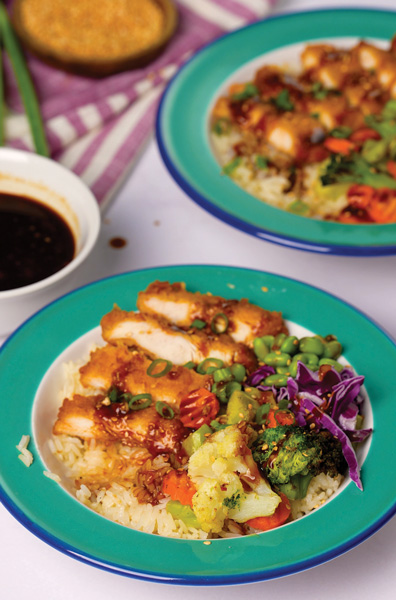
Air Fryer Chicken Katsu Bowls
Recipe courtesy of Easy Home Meals
Total time: 15-30 minutes
Servings: 1-4
- 1/4 cup ketchup
- 1/4 cup Worcestershire sauce
- 1 tablespoon molasses
- 1 1/2 teaspoons soy sauce
- 1 1/2 teaspoons sugar
- 1 clove garlic, finely grated
- 2 frozen, breaded chicken breast cutlets
- 1 bag (10.8 ounces) frozen California blend vegetables, such as broccoli, cauliflower and carrots
- 1 tablespoon olive oil
- kosher salt, to taste
- freshly ground black pepper, to taste
- 1 microwavable bag (8.5 ounces) jasmine rice, prepared and kept warm
- 1 cup shredded purple cabbage
- 1/2 cup shelled edamame
- toasted sesame seeds, for garnish
- chopped green onions, for garnish
- In small bowl, combine ketchup, Worcestershire sauce, molasses, soy sauce, sugar and garlic. Set aside.
- Preheat air-fryer to 400 F 5 minutes. Place chicken cutlets in even layer in air-fryer basket. Arrange vegetables in even layer around chicken cutlets. Drizzle vegetables with oil and season with salt and pepper, to taste. Cook 10-15 minutes, flipping cutlets halfway through, until lightly browned and crisp and vegetables are tender. Slice chicken cutlets.
- Divide prepared rice evenly between bowls. Top with chicken cutlets, vegetables, cabbage and edamame. Garnish with sesame seeds and green onions. Serve with ketchup mixture.

SOURCE:
National Frozen and Refrigerated Foods Association
(Feature Impact) Game day is about more than the big plays, touchdown-saving tackles and final score. Whether you’re gathering in the stadium parking lot or hosting friends for an at-home watch party, a memorable experience begins long before kickoff.
Start your pregame festivities with an MVP-worthy spread that’s simple to serve, easy to eat and keeps fans full through the final whistle. For example, the flavor of Buffalo is a game-day staple, but wings aren’t the only way to enjoy it.
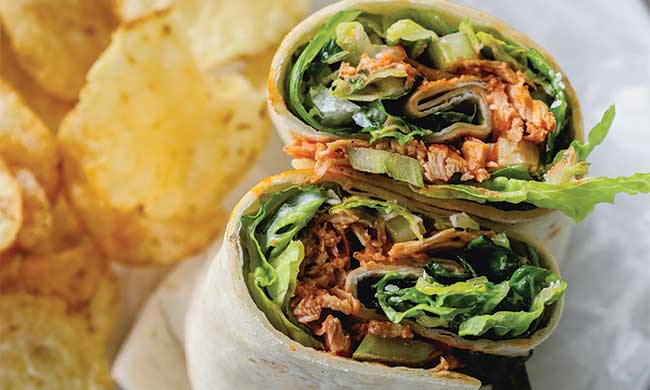
For less mess, Buffalo Chicken Caesar and Celery Wraps pair convenience with the cool crunch of Dandy Celery, a year-round superstar ingredient for many of your favorite football-inspired dishes. It’s packed with flavor and low in calories, making it a smart choice for snacking.
The contrasting tastes and textures offer a satisfying bite, whether you slice the wraps into smaller portions for appetizer-style serving or leave them whole for fans with hearty appetites.
Nervous nibblers during the game’s most tense moments may prefer a lighter bite, and that’s where a dependable dip can come through in the clutch. This Buffalo Hummus recipe puts a tailgate-spin on the familiar favorite, combining creamy texture with a little heat.
Serve it alongside crackers, chips or crisp vegetables like Dandy celery dippers, fresh-cut celery sticks that are pre-washed and ready to eat at your convenience – a true time-saver when the clock is ticking.
Design your own winning game plan by finding more tailgating recipes at DudaFresh.com.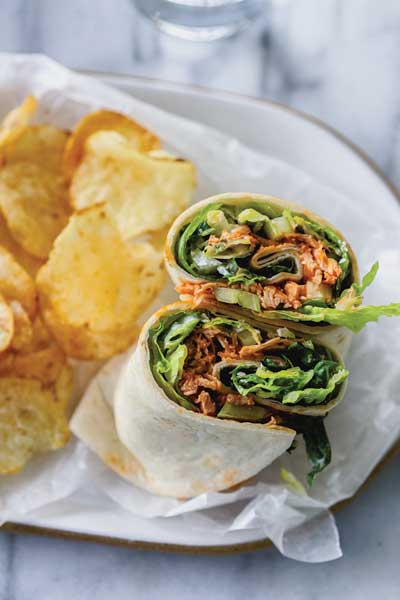
Buffalo Chicken Caesar and Celery Wraps
Servings: 4
- 2 cups shredded rotisserie chicken
- 1/4 cup Buffalo sauce
- 2 cups Dandy romaine hearts, chopped
- 1 cup Dandy celery, chopped (about 4 ribs)
- 1/3 cup Caesar dressing
- 1/4 cup grated Parmesan cheese
- 1/2 teaspoon black pepper
- 4 large flour tortillas (10 inches)
- In bowl, toss shredded chicken with Buffalo sauce. Set aside.
- To make salad: In separate bowl, combine romaine, celery, Caesar dressing, Parmesan cheese and black pepper. Mix well.
- To assemble wraps: Spoon about 1/4 cup Buffalo chicken along center of each tortilla, leaving small border at each end; top with Caesar salad. Fold up bottom of tortilla over filling then fold in sides and roll up tightly. Slice in half diagonally.
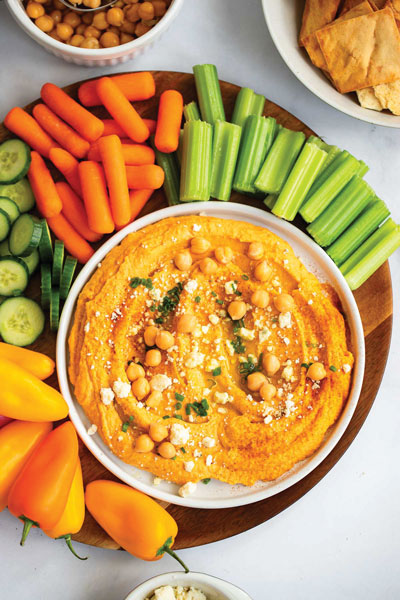
Buffalo Hummus
Prep time: 5 minutes
Servings: 8
- 1 can (15 ounces) chickpeas, drained and rinsed
- 1/4 cup tahini
- 1/4 cup Buffalo sauce
- 2 tablespoons olive oil
- 1/2 lemon, juice only
- 2 cloves garlic
- 2-3 tablespoons ice water
- dairy-free blue cheese, for garnish (optional)
- chopped chives, for garnish (optional)
- paprika, for garnish (optional)
- olive oil, for garnish (optional)
- Dandy Celery Dippers
- pita chips
- In food processor, puree drained chickpeas, tahini, Buffalo sauce, olive oil, lemon juice and garlic until smooth, stopping to scrape down sides as needed. Add water through lid until desired consistency is achieved.
- Spread hummus onto serving plate or bowl. Garnish, if desired, with dairy-free blue cheese, chopped chives, paprika and drizzle of olive oil. Serve with celery dippers and pita chips.

SOURCE:
Food and Beverage
ALDI Rolls Out Its First-Ever Line of Ready-Made Meals
ALDI is entering the ready-made meal market with seven fresh, refrigerated dishes priced under $15. The rollout begins in October, with nationwide availability expected by January 2027.
Busy shoppers looking for a quick dinner option will soon have something new waiting in the refrigerated section at ALDI.
ALDI is launching its first-ever collection of fresh, ready-made meals, introducing seven single-serve and family-size dishes designed to combine convenience, affordability and familiar comfort-food flavors.
The new meals begin rolling out at select ALDI stores in early October, with additional markets receiving them throughout the fall. ALDI expects the entire collection to be available nationwide by January 2027.
Seven New Meals — Ready to Heat and Eat
Unlike frozen dinners, ALDI says its new meals are delivered fresh and sold refrigerated in easy-to-heat trays.
The initial lineup includes five single-serve meals priced under $8:
- Beef Bolognese Spaghetti
- Beef Brisket with White Mac & Cheese
- Butter Chicken & Rice
- Chicken Burrito Bowl
- Chicken Fettuccine Alfredo
Two larger family-size meals will be available for under $15:
- Chicken and Bacon Mac n’ Cheese
- Meat Lovers Pizza Bake
ALDI says the recipes were developed around ingredients including chicken breast, smoked beef brisket, real cheeses and made-from-scratch sauces.
The single-serve meals contain between 30 and 46 grams of protein per serving, according to the company. Family-size offerings provide between 16 and 22 grams per serving.
Convenience Without the Restaurant Bill
The move puts ALDI more directly into the growing market for prepared refrigerated meals — an increasingly attractive option for consumers who want something more substantial than a frozen dinner but don’t necessarily have the time or desire to cook from scratch.
ALDI cited the 2026 International Food Information Council Food & Health Survey, which found that 61% of Americans consider convenience an important factor when purchasing food.
“Our shoppers are looking for meals that fit into busy lives without sacrificing quality or stretching their budgets,” Joan Kavanaugh, Vice President of National Buying for ALDI U.S., said in the company’s announcement.
ALDI supplier Kitchen Food Company said hundreds of recipes were tested while developing the new collection.
Dinner in Just a Few Minutes
Convenience is a major part of the concept.
Depending on the variety, ALDI’s single-serve meals require roughly 3½ to 4½ minutes in the microwave. The company instructs consumers to heat the meals until they reach an internal temperature of 165 degrees Fahrenheit.
The larger family meals can be prepared in a conventional oven at 350 degrees, with approximately 40 minutes of total cooking time.
Shoppers will find the meals in the refrigerated meals section near the front of participating ALDI stores.
More Meals Are Coming
The seven dishes are only the beginning.
ALDI says it plans to introduce additional ready-made meals through its rotating ALDI Finds selection every month during the next year. That could allow the retailer to experiment with additional recipes, flavors and seasonal offerings while expanding its presence in prepared foods.
The timing also makes the rollout noteworthy. With restaurant meals and takeout competing for household food dollars, prepared grocery-store meals occupy a middle ground: more convenient than cooking from scratch while potentially costing considerably less than feeding a family through restaurant delivery or takeout.
For ALDI shoppers, that means the familiar question of “What’s for dinner?” may soon have a few more answers — and they could be waiting just inside the front door.
Source: ALDI, September 22, 2026
Sources & Related Links
- ALDI — Official Announcement: ALDI Launches First-Ever Collection of Ready-Made Meals
- Original Press Release: ALDI Ready-Made Meals — PR Newswire
- Consumer Research: 2026 IFIC Food & Health Survey — Convenience Outranks Healthfulness
- More ALDI News: ALDI U.S. Newsroom
- More Food & Drink Coverage: STM Daily News Food & Drink
Hungry for More?
Looking for more easy dinner ideas, meal-planning inspiration, and affordable meals? Explore STM Daily News Food & Drink for the latest recipes, food news, restaurant stories, culinary trends and more.





