

Food and Beverage
Level Up Brunch Spreads with Natural Sweetness

Last Updated on July 7, 2024 by Daily News Staff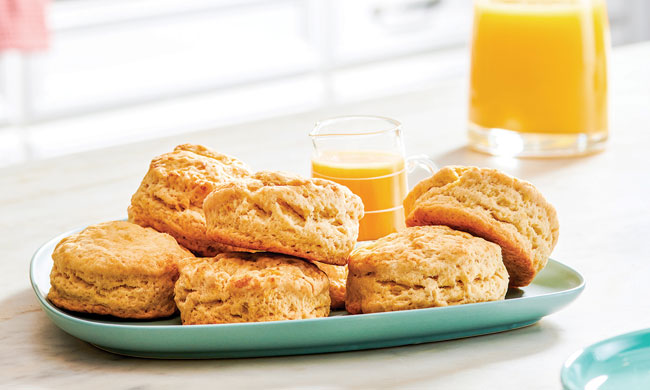
(Family Features) Breezy spring days can lead you on nearly any adventure, and they can happen in your own backyard, on a short road trip or during a full-blown beach vacation. No matter where you are when those warmer days arrive, you can put outdoor meals on the menu and take advantage of perfect opportunities for fresh brunch spreads to share with loved ones.
Whether you’re enjoying spring sunshine at home or traveling with friends and family, Florida Orange Juice can be a delicious, nutritious addition to your outdoor plans. By delivering a powerful combination of vitamins, minerals and phytonutrients that have associated health benefits, it’s perfect for supporting healthy immune systems and overall health.
With no added sugar, 100% orange juice comes coupled with essential nutrients like vitamin C, potassium, folate and thiamin. Orange juice is one of nature’s nutrient-rich foods, and it can serve as a substitution for sugar-sweetened beverages in the diets of both children and adults while providing a convenient way to complement whole fruit intake to help reach one’s daily fruit intake recommendations.
As an ultimate go-to beverage and ingredient, Florida Orange Juice is convenient and versatile for use in breakfast recipes like these Orange Juice Biscuits or cocktails such as Orange Juice Spicy Margaritas. These naturally sweet, tasty recipes make for ideal additions to brunch menus all spring long.
“Families across the country are planning spring vacations and springtime brunches, so it’s an important time to think about wellness and immune health,” said Dr. Rosa Walsh, director of scientific research at the Florida Department of Citrus. “As the ultimate drink for spring, 100% orange juice is a healthy option while on the go and it’s easy to add into almost any recipe. It’s rich in vitamin C and includes other nutrients like potassium, folate and thiamin, making it a great choice for overall wellness.”
To find more ways to enhance spring brunches, visit FloridaJuice.com.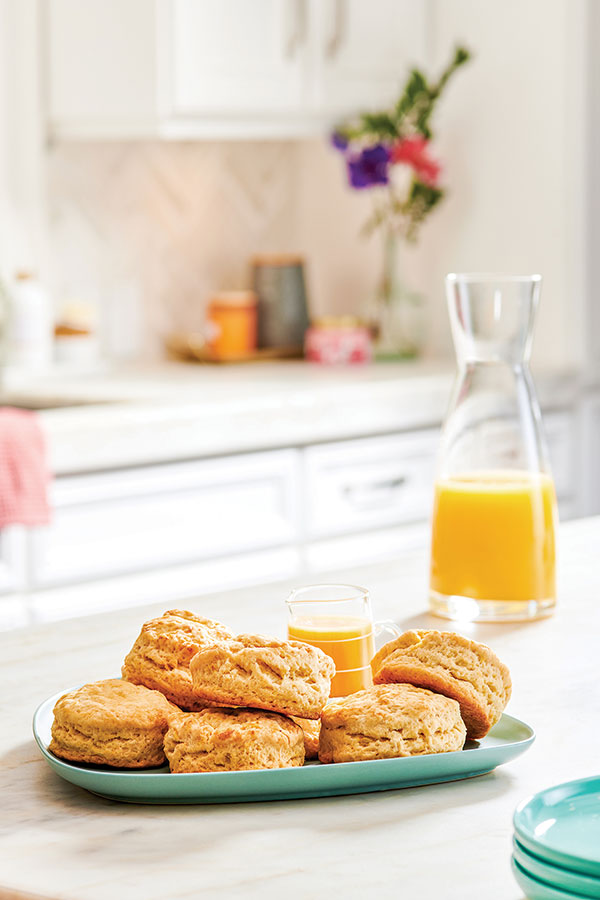
Orange Juice Biscuits
Orange Butter Sauce:
- 1 1/2 cups Florida Orange Juice
- 2 1/2 tablespoons unsalted butter
Orange Biscuits:
- 1 1/2 tablespoons granulated sugar
- 2 teaspoons grated orange zest
- 2 cups bleached all-purpose flour, plus additional for kneading
- 1 2/3 tablespoons baking powder
- 3/4 teaspoon salt
- 1/2 cup shortening
- 1/2 cup whole milk
- 1/4 cup Florida Orange Juice
- To make orange butter sauce: Boil orange juice 5 minutes, or until reduced by half. Add butter and stir until melted. Remove from heat.
- To make orange biscuits: Preheat oven to 425 F.
- Use fingers to rub sugar and zest together until sugar is moistened and looks like wet sand.
- In large bowl, whisk orange sugar, 2 cups flour, baking powder and salt. Using two forks or pastry blender, cut in shortening to size of small peas.
- Combine milk and orange juice then stir into flour mixture to make sticky dough.
- Turn out dough onto well-floured work surface. Sprinkle top with flour and knead about six times while folding dough over in half and using more flour as needed.
- Pat dough out to 3/4-inch thickness. Cut out biscuits with round cutter by dipping cutter in flour then pressing into dough. Do not turn cutter while pressing.
- Place biscuits close together but not touching on baking sheet.
- Gather dough scraps and fold 2-3 times, pat out again and cut biscuits. Repeat until dough is used.
- Brush tops with orange butter sauce. Bake 15-20 minutes, or until lightly browned.
- Serve warm or at room temperature with remaining sauce.
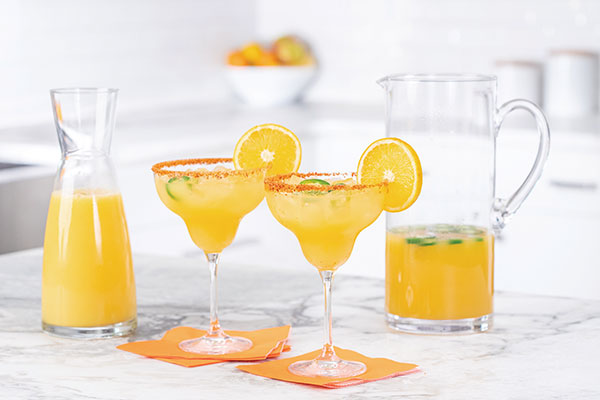
Orange Juice Spicy Margaritas
- 2 cups Florida Orange Juice
- ice
- 2 cups simple syrup
- 8 ounces silver tequila
- 2 ounces triple sec or orange liqueur
- 2 ounces lime juice
- 4 ounces seltzer
- ghost pepper salt, to taste
- 4 Florida Orange slices, 1/4-inch thick
- In saucepan over medium heat, reduce orange juice to 1 cup and allow to cool.
- Fill cocktail shaker 3/4 full with ice. Add orange juice reduction, simple syrup, tequila, triple sec and lime juice.
- Shake and pour into four glasses. Top each glass with 1 ounce seltzer.
- Pour ghost pepper salt onto saucer and dip edges of orange slices in ghost pepper salt. Place orange slices on rim of each glass, if desired.
SOURCE:
Florida Department of Citrus
At our core, we at STM Daily News, strive to keep you informed and inspired with the freshest content on all things food and beverage. From mouthwatering recipes to intriguing articles, we’re here to satisfy your appetite for culinary knowledge.
Visit our Food & Drink section to get the latest on Foodie News and recipes, offering a delightful blend of culinary inspiration and gastronomic trends to elevate your dining experience.
https://stmdailynews.com/category/food-and-beverage
You can also find food and beverage-related videos on our YouTube channel, where we regularly post new content and share tips, recipes, and demonstrations. https://youtube.com/playlist?list=PLEhXBupt8tVynuUhpQZMxQt4lvPmOiAtQ&si=InDwc7YaB0KIwmxy


(Feature Impact) Game day is about more than the big plays, touchdown-saving tackles and final score. Whether you’re gathering in the stadium parking lot or hosting friends for an at-home watch party, a memorable experience begins long before kickoff.
Start your pregame festivities with an MVP-worthy spread that’s simple to serve, easy to eat and keeps fans full through the final whistle. For example, the flavor of Buffalo is a game-day staple, but wings aren’t the only way to enjoy it.
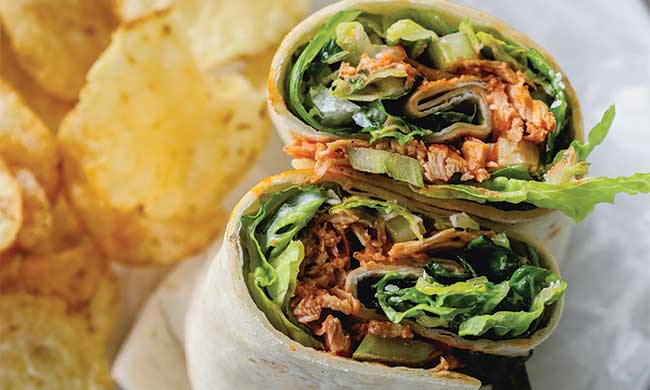
For less mess, Buffalo Chicken Caesar and Celery Wraps pair convenience with the cool crunch of Dandy Celery, a year-round superstar ingredient for many of your favorite football-inspired dishes. It’s packed with flavor and low in calories, making it a smart choice for snacking.
The contrasting tastes and textures offer a satisfying bite, whether you slice the wraps into smaller portions for appetizer-style serving or leave them whole for fans with hearty appetites.
Nervous nibblers during the game’s most tense moments may prefer a lighter bite, and that’s where a dependable dip can come through in the clutch. This Buffalo Hummus recipe puts a tailgate-spin on the familiar favorite, combining creamy texture with a little heat.
Serve it alongside crackers, chips or crisp vegetables like Dandy celery dippers, fresh-cut celery sticks that are pre-washed and ready to eat at your convenience – a true time-saver when the clock is ticking.
Design your own winning game plan by finding more tailgating recipes at DudaFresh.com.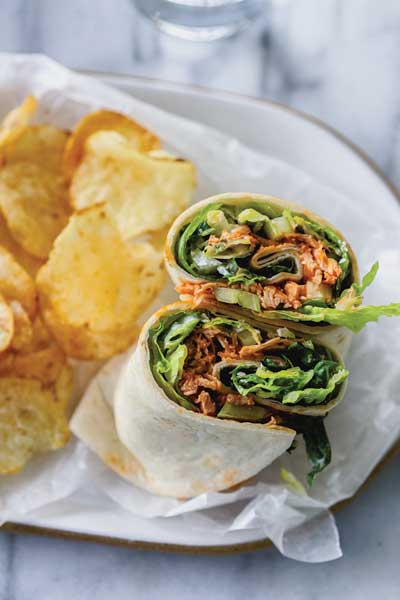
Buffalo Chicken Caesar and Celery Wraps
Servings: 4
- 2 cups shredded rotisserie chicken
- 1/4 cup Buffalo sauce
- 2 cups Dandy romaine hearts, chopped
- 1 cup Dandy celery, chopped (about 4 ribs)
- 1/3 cup Caesar dressing
- 1/4 cup grated Parmesan cheese
- 1/2 teaspoon black pepper
- 4 large flour tortillas (10 inches)
- In bowl, toss shredded chicken with Buffalo sauce. Set aside.
- To make salad: In separate bowl, combine romaine, celery, Caesar dressing, Parmesan cheese and black pepper. Mix well.
- To assemble wraps: Spoon about 1/4 cup Buffalo chicken along center of each tortilla, leaving small border at each end; top with Caesar salad. Fold up bottom of tortilla over filling then fold in sides and roll up tightly. Slice in half diagonally.
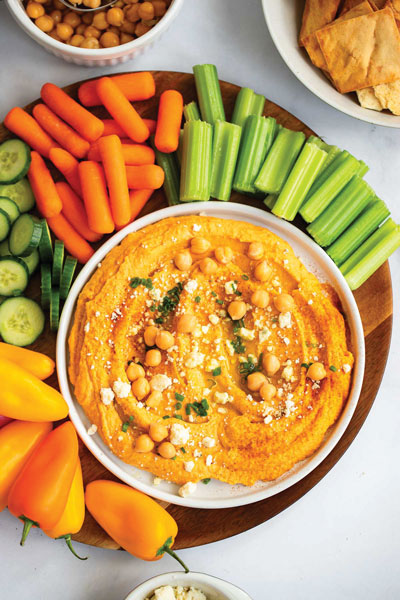
Buffalo Hummus
Prep time: 5 minutes
Servings: 8
- 1 can (15 ounces) chickpeas, drained and rinsed
- 1/4 cup tahini
- 1/4 cup Buffalo sauce
- 2 tablespoons olive oil
- 1/2 lemon, juice only
- 2 cloves garlic
- 2-3 tablespoons ice water
- dairy-free blue cheese, for garnish (optional)
- chopped chives, for garnish (optional)
- paprika, for garnish (optional)
- olive oil, for garnish (optional)
- Dandy Celery Dippers
- pita chips
- In food processor, puree drained chickpeas, tahini, Buffalo sauce, olive oil, lemon juice and garlic until smooth, stopping to scrape down sides as needed. Add water through lid until desired consistency is achieved.
- Spread hummus onto serving plate or bowl. Garnish, if desired, with dairy-free blue cheese, chopped chives, paprika and drizzle of olive oil. Serve with celery dippers and pita chips.

SOURCE:
Food and Beverage
ALDI Rolls Out Its First-Ever Line of Ready-Made Meals
ALDI is entering the ready-made meal market with seven fresh, refrigerated dishes priced under $15. The rollout begins in October, with nationwide availability expected by January 2027.
Busy shoppers looking for a quick dinner option will soon have something new waiting in the refrigerated section at ALDI.
ALDI is launching its first-ever collection of fresh, ready-made meals, introducing seven single-serve and family-size dishes designed to combine convenience, affordability and familiar comfort-food flavors.
The new meals begin rolling out at select ALDI stores in early October, with additional markets receiving them throughout the fall. ALDI expects the entire collection to be available nationwide by January 2027.
Seven New Meals — Ready to Heat and Eat
Unlike frozen dinners, ALDI says its new meals are delivered fresh and sold refrigerated in easy-to-heat trays.
The initial lineup includes five single-serve meals priced under $8:
- Beef Bolognese Spaghetti
- Beef Brisket with White Mac & Cheese
- Butter Chicken & Rice
- Chicken Burrito Bowl
- Chicken Fettuccine Alfredo
Two larger family-size meals will be available for under $15:
- Chicken and Bacon Mac n’ Cheese
- Meat Lovers Pizza Bake
ALDI says the recipes were developed around ingredients including chicken breast, smoked beef brisket, real cheeses and made-from-scratch sauces.
The single-serve meals contain between 30 and 46 grams of protein per serving, according to the company. Family-size offerings provide between 16 and 22 grams per serving.
Convenience Without the Restaurant Bill
The move puts ALDI more directly into the growing market for prepared refrigerated meals — an increasingly attractive option for consumers who want something more substantial than a frozen dinner but don’t necessarily have the time or desire to cook from scratch.
ALDI cited the 2026 International Food Information Council Food & Health Survey, which found that 61% of Americans consider convenience an important factor when purchasing food.
“Our shoppers are looking for meals that fit into busy lives without sacrificing quality or stretching their budgets,” Joan Kavanaugh, Vice President of National Buying for ALDI U.S., said in the company’s announcement.
ALDI supplier Kitchen Food Company said hundreds of recipes were tested while developing the new collection.
Dinner in Just a Few Minutes
Convenience is a major part of the concept.
Depending on the variety, ALDI’s single-serve meals require roughly 3½ to 4½ minutes in the microwave. The company instructs consumers to heat the meals until they reach an internal temperature of 165 degrees Fahrenheit.
The larger family meals can be prepared in a conventional oven at 350 degrees, with approximately 40 minutes of total cooking time.
Shoppers will find the meals in the refrigerated meals section near the front of participating ALDI stores.
More Meals Are Coming
The seven dishes are only the beginning.
ALDI says it plans to introduce additional ready-made meals through its rotating ALDI Finds selection every month during the next year. That could allow the retailer to experiment with additional recipes, flavors and seasonal offerings while expanding its presence in prepared foods.
The timing also makes the rollout noteworthy. With restaurant meals and takeout competing for household food dollars, prepared grocery-store meals occupy a middle ground: more convenient than cooking from scratch while potentially costing considerably less than feeding a family through restaurant delivery or takeout.
For ALDI shoppers, that means the familiar question of “What’s for dinner?” may soon have a few more answers — and they could be waiting just inside the front door.
Source: ALDI, September 22, 2026
Sources & Related Links
- ALDI — Official Announcement: ALDI Launches First-Ever Collection of Ready-Made Meals
- Original Press Release: ALDI Ready-Made Meals — PR Newswire
- Consumer Research: 2026 IFIC Food & Health Survey — Convenience Outranks Healthfulness
- More ALDI News: ALDI U.S. Newsroom
- More Food & Drink Coverage: STM Daily News Food & Drink
Hungry for More?
Looking for more easy dinner ideas, meal-planning inspiration, and affordable meals? Explore STM Daily News Food & Drink for the latest recipes, food news, restaurant stories, culinary trends and more.


A poached egg may look fancy, but it is surprisingly easy to prepare. With a tender egg white and warm, runny yolk, it makes a delicious addition to toast, salads, breakfast bowls or avocado toast.
Ingredients
- 1 large fresh egg
- Water
- 1 teaspoon white vinegar, optional
- Salt and black pepper
- Toast or English muffin for serving, optional
Instructions
Fill a saucepan with about 2 to 3 inches of water and bring it to a gentle simmer. Avoid a rolling boil, which can break the egg apart.
Crack the egg into a small cup or bowl. Add the vinegar to the water if desired—it helps the egg white hold its shape.
Gently slide the egg into the simmering water. Cook for about 3 minutes for a runny yolk, or 4 to 5 minutes for a firmer center.
Remove the egg with a slotted spoon and place it briefly on a paper towel to absorb excess water. Season with salt and pepper, then serve immediately.
Quick Tip
Fresh, cold eggs usually produce the neatest poached eggs because their whites are thicker and stay closer to the yolk while cooking.
Simple, satisfying and ready in minutes, a poached egg is an easy way to make an everyday breakfast feel a little more special.





