Connect with us

News

Lady Gaga bomb plot: Thwarted plan lifts veil on the gamification of hate and gendered nature of online radicalization

Published

on

Last Updated on May 23, 2025 by Rod Washington

Lady Gaga
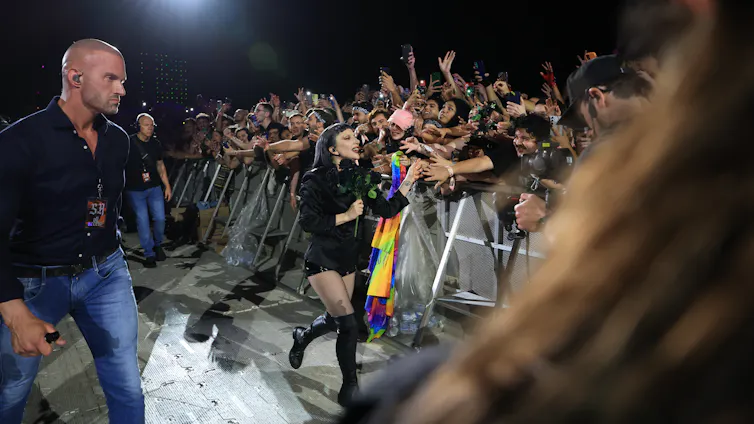
Lady Gaga performs at Copacabana Beach on May 3, 2025, in Rio de Janeiro, Brazil.
Kevin Mazur/WireImage for Live Nation

David Nemer, University of Virginia and Arthur Coelho Bezerra, Instituto Brasileiro de Informação em Ciência e Tecnologia (Ibict)

The more than 2 million people who attended Lady Gaga’s free concert on Copacabana Beach on May 3, 2025, had no idea of a plot that, if successful, would have turned the event into a tragedy fueled by hate. Just hours before a sea of admirers waved fans in sync with the singer during the event, the Rio de Janeiro Civil Police thwarted a planned attack involving Molotov cocktails and improvised bombs – and targeting the American singer’s LGBTQ following.

Two people have since been arrested over the plot, which was organized by users of digital platforms such as Discord. The intent, authorities say, was radicalizing and recruiting teenagers to carry out the planned attack.

Those responsible hoped to entice these young people into actions that would gain online notoriety.

A crowd of people interspersed by umbrellas
More than 2 million people are said to have attended the Lady Gaga concert in Rio.
Daniel Ramalho/AFP via Getty Images

Although authorities were able to prevent the attack, the incident stands as a stark warning about the growth of hate networks among youth − and how platforms fuel the radicalization of teenagers, especially boys and young men.

As experts in the anthropology of technology and information science, we see something deeply generational about this phenomenon. The recent Netflix series “Adolescence” broke viewership records by portraying an environment in which young people live in hyperconnected online spheres, absent of state oversight and parental supervision. In these spheres, bullying toxic masculinity permeates, and violence – often targeted at women and sexual minorities – is normalized.

The show was set in the U.K., but it holds up a mirror to the world. Data from polling company Gallup reveals a growing ideological divide between young men and women in Gen Z across the globe. Too often, that divide, in which young men and boys are turning against progressive values, is being expressed through actions associated with the “manosphere,” such as misogyny and incel behavior.

Platforms for hate

In the United States, women aged 18 to 30 are now 30 percentage points more liberal than their male counterparts, according to Gallup’s surveys. In Germany, where a right-wing coalition recently won national elections and the extreme-right AfD party is rising in popularity at an alarming rate, the gap is also 30 points. In Poland, although the far-right left power at the end of 2023 after eight years, nearly half of men ages 18 to 21 support far-right parties − compared with just one-sixth of women in the same age range.

This polarization is emerging just as online platforms such as Discord, TikTok and Reddit have become formative spaces of identity.

Instead of promoting diversity, however, many of these platforms have been used as machines for producing and spreading hate. The 2021 study Mapping Discord’s Darkside, published in the journal New Media & Society, shows that despite marketing efforts to distance itself from the far right, Discord hosts thousands of servers associated with neo-Nazi, misogynistic, racist, transphobic and conspiratorial discourse. Researchers identified 2,741 such servers − with more than 850,000 active members.

These networks end up functioning as recruitment hubs, where young people − especially boys − are lured in by edgy memes, promises of belonging and identity games based on excluding others. Discord’s structure, which prioritizes privacy and decentralization, has become fertile ground for the emergence of what scholar Adrienne Massanari calls “toxic technocultures.”

Advertisement
Get More From A Face Cleanser And Spa-like Massage

Services such as Disboard − an informal search engine for Discord servers − are used to recruit teens into communities that glorify Nazism, encourage hatred toward women and people from the LGBTQ+ community, and even offer “services” for coordinated attacks on other servers. And this appears to be the case in the thwarted attack on the Lady Gaga concert.

Presenting a challenge

A significant factor in the success of these radicalizing environments is gamification − the use of gamelike elements such as challenges, rewards and leaderboards in nongame contexts. When applied to social networks and extremist forums, gamification turns engagement into competition and hate speech into a playful challenge.

This practice makes the entrance into extremism more palatable for young, impressionable people by masking violence behind seemingly harmless mechanics. As noted in the European Commission’s 2021 report Gamification and Online Hate Speech, gamification has become a powerful tool for normalizing and spreading hate, particularly among young people seeking recognition and belonging.

This process, known as “bottom-up gamification,” occurs when users create the rules, symbolic rewards and challenges. For example, by turning hate speech into “challenges” that involve humiliating women or people from the LGBTQ+ community online, the dehumanization of targets is presented in playful, viral ways.

Turning hate into entertainment

The investigation into the foiled attack on Lady Gaga’s Copacabana concert revealed exactly this mechanism: The attack was treated as a “collective challenge,” with youths recruited to build Molotov cocktails and explosive backpacks in order to gain notoriety on social media.

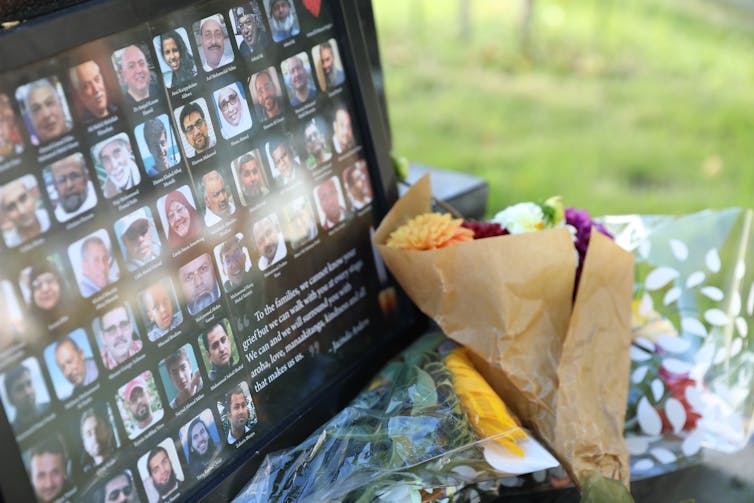
The logic of gamification also creates a structure of “achievement” and “scoring” that fosters competition and reinforces radical ideology. As shown in the 2022 study by criminologists Suraj Lakhani and Susann Wiedlitzka, attacks such as the 2019 mosque attack in Christchurch, New Zealand, in which 51 people were killed, were planned and executed with strong inspiration from gaming, including live broadcasts similar to “Let’s Play” sessions, in which people offer live commentary during walk-throughs of games, typically first-person shooting games, and viewer comments that treat the number of deaths as a “score.”
Flowers are laid next to a board showing the names and faces of people
More than 50 people were killed in the terrorist attack on Christchurch mosques in New Zealand on March 15, 2019.
Omer Kablan/Anadolu Agency via Getty Images

This aestheticization of violence serves as a bonding element among young men in digital spaces, especially those who already feel marginalized or frustrated and who find in these games of hate a sense of belonging and affirmation. In this way, gamification transforms hate into entertainment, strengthening ties in toxic communities and making it harder to recognize the behavior as extremism.

Turning a generation off hate

Society is, we believe, facing a dual challenge: the need for moderation of platforms and for support for measures preventing men and boys from being drawn into toxic digital spaces.

The gender divide within Gen Z is no small matter, too. It reflects, in broad terms, a rift between a generation of young women who, empowered by #MeToo and other feminist movements, have embraced progressive causes, and a generation of men who, threatened by their perceived diminished power in this new environment, are being co-opted by far-right and misogynistic discourse in digital spaces.

This gap has real consequences in personal relationships, in schools and for democracy at large. But it also reveals something that we believe must be stated clearly: Platform regulation is not just a technical issue. The future of a generation cannot be built on algorithms that reward hate and radicalization.

This article is a translated and adapted version of a story that was originally published by The Conversation Brazil on May 8, 2025.The Conversation

David Nemer, Associate Professor in the Department of Media Studies, University of Virginia and Arthur Coelho Bezerra, Professor titular, Instituto Brasileiro de Informação em Ciência e Tecnologia (Ibict)

Advertisement
Get More From A Face Cleanser And Spa-like Massage

This article is republished from The Conversation under a Creative Commons license. Read the original article.

Continue Reading
Advertisement SodaStream USA, inc

Food Truths

The Truth About the “Chemical” in McDonald’s Burger Buns: Should Consumers Be Concerned?

What’s in the Burger Buns:The “yoga mat chemical” controversy changed how consumers view food additives. Here’s what azodicarbonamide is, why McDonald’s removed it, and what the science actually says.

Published

on

The Truth About the "Yoga Mat Chemical" in McDonald's Burger Buns
Image Credit: Adobe Stock

For years, headlines and social media posts have warned consumers about a so-called “yoga mat chemical” found in hamburger buns served by major fast-food chains. The claims sparked widespread concern, prompted petitions, and eventually led several restaurant companies—including McDonald’s—to change their recipes.

But what was the chemical, and is there actually a health risk today?

What Was the Controversial Ingredient?

The ingredient at the center of the controversy was azodicarbonamide (ADA), a chemical used as a dough conditioner. It helped improve the texture of bread, making dough easier to handle and producing softer, more consistent buns.

Ironically, the same compound is also used in manufacturing certain foamed plastics, including some yoga mats and shoe soles. That connection gave rise to the viral nickname, “the yoga mat chemical.”

While the comparison was technically accurate, it also lacked important context. Food-grade azodicarbonamide and industrial applications are very different, and many chemicals have multiple uses across industries.

Why Did People Become Concerned?

The concern wasn’t simply that ADA was used in food. Scientists focused on what happens during baking.

When bread is baked, most azodicarbonamide breaks down into other compounds. Some laboratory studies involving animals raised questions about one of these breakdown products, called semicarbazide (SEM), when administered in high doses.

Those findings prompted some countries to take a more cautious regulatory approach.

mouthwatering close up of a double patty hamburger 2026 03 26 04 39 10 utc
Image Credit: Adobe Stock

Why Is It Banned in Some Countries?

The European Union and Canada do not permit azodicarbonamide as a flour treatment agent. Their food safety policies often follow the precautionary principle, removing ingredients when safer alternatives exist or when scientific uncertainty remains.

In contrast, the U.S. Food and Drug Administration has determined that azodicarbonamide is safe when used within approved limits.

These differing regulations don’t necessarily mean one side believes the ingredient is dangerous while the other believes it is harmless. Instead, they reflect different philosophies about regulating food additives.

Does McDonald’s Still Use It?

No.

Advertisement
Get More From A Face Cleanser And Spa-like Massage

McDonald’s removed azodicarbonamide from its U.S. hamburger buns in 2014 following growing consumer demand for simpler ingredient lists.

Today’s buns no longer contain the ingredient, joining a broader trend among food manufacturers to eliminate additives that have become controversial with consumers.

Are There Other Ingredients Consumers Should Know About?

Modern commercial bread still contains ingredients designed to improve freshness, texture, and shelf life.

These may include:

  • Calcium propionate to prevent mold
  • Ascorbic acid (Vitamin C) as a dough conditioner
  • Enzymes that improve consistency
  • Emulsifiers that help maintain softness

These ingredients have been evaluated by food safety agencies and are generally recognized as safe when used according to regulations.

The Bigger Health Picture

Nutrition experts generally agree that focusing on one ingredient can distract from the larger issue.

The greatest health risks associated with fast food are more closely linked to:

  • High sodium intake
  • Excess saturated fat
  • Added sugars
  • Large portion sizes
  • Frequent consumption of ultra-processed foods

An occasional fast-food meal is unlikely to determine someone’s long-term health. Overall dietary patterns, physical activity, sleep, and other lifestyle factors have a much greater impact.

Consumer Awareness Is Changing the Food Industry

Whether or not an ingredient poses a measurable health risk, public concern can influence corporate decisions.

Over the past decade, many food companies have reformulated products to remove controversial ingredients, reduce artificial additives, and simplify ingredient labels. In many cases, those changes have been driven as much by consumer preferences as by regulatory requirements.

The Bottom Line

The “yoga mat chemical” story captured public attention because it combined science, food safety, and memorable marketing. While azodicarbonamide was once used in some hamburger buns, including those supplied to McDonald’s, the company removed it from its U.S. buns years ago.

Current evidence suggests consumers are better served by paying attention to their overall diet rather than worrying about a single ingredient that has already disappeared from many products.

Advertisement
Get More From A Face Cleanser And Spa-like Massage

Being an informed consumer means looking beyond the headlines, understanding the science, and recognizing that nutrition is about the complete picture—not just one ingredient.

Related External Links

🍴 What’s your favorite food, recipe, or dining spot? Tell us in the comments! Then subscribe to the STM Daily News Food and Drink newsletter for fresh recipes, restaurant news, food trends, and delicious stories delivered straight to your inbox. Join our growing community of food lovers today!

Continue Reading

STM Blog

Association of Black Cardiologists to Celebrate Legacy and Leadership at 16th Annual Spirit of the Heart Awards

Published

on

AdobeStock 326809259 scaled
Adobe Stock

The Association of Black Cardiologists (ABC) is bringing its signature celebration of impact back to New York City this fall—spotlighting leaders and organizations working to make cardiovascular care more equitable, more accessible, and more effective. The 16th Annual Spirit of the Heart Awards Program & Fundraiser is set for Saturday, October 3, 2026 (6:00 p.m.–9:00 p.m.) at Cipriani Wall Street in Manhattan.

For ABC, the evening is more than a high-profile awards program. It’s a cornerstone fundraising event that helps power the organization’s year-round work—supporting medical student scholarships, fellowships, education, and programs designed to strengthen the pipeline of diverse clinicians and researchers while improving outcomes in communities that carry a disproportionate burden of heart disease.

1
The official invitation for the ABC 16th Annual Spirit of the Heart Awards Program & Fundraiser, taking place October 3, 2026, at Cipriani Wall Street in New York City.

A fundraising night with long-term stakes

ABC leaders say the Spirit of the Heart Awards is built around a simple idea: celebrating progress while investing in the people who will drive the next wave of change.

Event co-chair Icilma Fergus, MD—Director of the Cardiovascular Disparities Center at Mount Sinai Medical Center and Board Chair of ABC—framed the night as a forward-looking commitment.

“This gathering is about more than one evening of celebration; it is about investing in the future of cardiovascular health for years to come,” Fergus said in the announcement. She added that the support generated through the event helps expand opportunities for aspiring clinicians, researchers, and leaders whose work can transform care and improve lives nationwide.

Honorary Chairperson: Samin K. Sharma, MD

ABC announced Samin K. Sharma, MD as the event’s Honorary Chairperson. Sharma serves as Chief of Clinical Cardiology, Director of the Cardiovascular Clinical Institute, and the Anandi Lal Sharma Professor of Medicine at the Icahn School of Medicine at Mount Sinai.

In the release, ABC highlighted Sharma’s international reputation in interventional cardiology and physician education, noting that he has trained cardiovascular specialists from around the world while advancing the field through research, mentorship, and patient care.

“I am honored to serve as Honorary Chairperson for this important event,” Sharma said. “The Spirit of the Heart Awards Program reflects the power of partnership, philanthropy, and leadership to advance cardiovascular health.”

The Association of Black Cardiologists will host the 16th Annual Spirit of the Heart Awards Oct. 3, 2026 in NYC to honor leaders advancing heart health equity and fund scholarships.
The official invitation schedule for the ABC 16th Annual Spirit of the Heart Awards Program & Fundraiser, taking place October 3, 2026, at Cipriani Wall Street in New York City.

A full weekend of impact, including policy

The awards program is part of a broader weekend of programming. On Friday, October 2, ABC will host its Annual Policy Pulse Summit at Venable LLP in New York City, convening leaders to discuss policy issues shaping the future of cardiovascular health.

What to expect at the Spirit of the Heart Awards

ABC is positioning the evening as both a celebration and a community gathering—bringing together leaders from healthcare, philanthropy, industry, and advocacy.

The event will be co-emceed by:

  • Sandra Bookman, award-winning journalist and anchor of Eyewitness News on ABC7/WABC-TV New York
  • Thomas Cunningham IV, President and Chief Content Officer of BrandCunningham

The program is expected to include:

  • Presentation of the Spirit of the Heart Awards
  • Recognition of medical student scholarship recipients
  • Special guest appearances
  • live auction
  • Musical entertainment

Event co-chair Barbara Hutchinson, MD, PhD, President of Chesapeake Cardiac Care, emphasized the role of sustained collaboration in moving the needle on heart health.

“The Spirit of the Heart Awards Program is a reminder that lasting progress in cardiovascular health is achieved through vision, partnership, and sustained commitment,” Hutchinson said.

How to attend, sponsor, or support

ABC is directing attendees and supporters to its event site for tickets, sponsorship opportunities, and donations:

Advertisement
Get More From A Face Cleanser And Spa-like Massage

About the Association of Black Cardiologists

Founded on the belief that “every heart counts,” the Association of Black Cardiologists works to promote prevention and treatment of cardiovascular disease and to advance health equity by eliminating disparities. ABC’s membership is open to all, regardless of race, ethnicity, or vocation. The organization’s work spans education, advocacy, research, patient and community outreach, and leadership development.

Source and media contact

Media Contact (from the release):

📰 Enjoying STM Daily News? Join the conversation!

💬 Leave a comment, share your thoughts, and subscribe to our newsletter for the latest stories, updates, and “News You Can Use This Moment!” delivered to your inbox.

Stay connected with STM Daily News!

Continue Reading

Food and Beverage

Millions of Eggs Recalled Over Possible Salmonella Risk: What Consumers Need to Know

A major egg recall is affecting nearly 1.6 million dozen eggs sold under several popular brands. Here’s how to determine if your eggs are included and what steps to take if they are.

Published

on

News You Can Use This Moment!

close up shot of brown eggs in a bowl
Photo by Nda Arsa on Pexels.com

Consumers are being urged to check their refrigerators after a major recall involving nearly 1.6 million dozen shell eggs due to the potential presence of Salmonella Enteritidis, a bacterium that can cause serious foodborne illness.

The voluntary recall, announced by Midwest Poultry Services, L.P., affects white shell eggs and brown cage-free eggs produced at two Texas farms and distributed between June 6 and July 3, 2026. According to the U.S. Food and Drug Administration (FDA), the eggs were sold through grocery stores and foodservice distributors in Texas, Louisiana, Oklahoma, Arkansas, Mississippi, and New Mexico.

What Brands Are Included?

The recalled eggs were sold under several familiar brand names, including:

  • Kroger
  • Simple Truth
  • Brookshire’s
  • Country Morning
  • Sunups

Not every carton under these brands is affected. Consumers should look for:

  • Plant Code: P-1950 or 0840962
  • Julian Dates: 157 through 184
  • Best By/Sell By Dates: July 20, 2026, through August 17, 2026

Why the Recall Matters

Salmonella can cause symptoms including:

  • Diarrhea
  • Fever
  • Stomach cramps
  • Nausea
  • Vomiting

Symptoms typically begin 12 to 72 hours after eating contaminated food and usually last four to seven days. While many healthy adults recover without treatment, infections can become severe in young children, older adults, pregnant women, and people with weakened immune systems.

The FDA and the Centers for Disease Control and Prevention (CDC) are investigating a multistate outbreak involving 98 confirmed illnesses across 17 states, resulting in 26 hospitalizations. No deaths have been reported. Investigators say the recalled eggs are linked to part of the outbreak, although they do not account for every reported illness.

What Should You Do?

If you have eggs matching the recalled codes:

  • Do not eat them.
  • Return them to the store for a refund or dispose of them safely.
  • Wash your hands thoroughly after handling the carton.
  • Clean and sanitize any refrigerator shelves, containers, or kitchen surfaces the eggs may have touched.

If you have already eaten the eggs and develop symptoms of Salmonella infection, contact your healthcare provider, especially if symptoms are severe or persist.

Are Arizona Consumers Affected?

The recalled products were officially distributed in six states, and Arizona is not listed among the primary distribution states. However, because food products can move through wholesalers, travelers, or secondary retailers, Arizona consumers who recently purchased eggs while traveling—or who received eggs from family or friends in affected states—should still check the carton codes.

The Bottom Line

Food recalls are an important part of protecting public health. Taking a few moments to inspect the eggs in your refrigerator could help prevent a serious illness. If your carton matches the recalled plant codes and date range, don’t take the risk—return it or throw it away.

STM Daily News will continue to monitor this developing story and provide updates as additional information becomes available.

Related Resources

Continue Reading

Trending


