“Managers or upper management have looked down upon taking time off.”
“People think that maybe you’re not as invested in the job, that you’re shirking your duties or something.”
These are just a few of the responses to questions I asked during a study I conducted on vacation guilt among American workers.
More than 88% of full-time, private sector workers in the U.S. receive paid time off. This benefit is ostensibly in place to improve employee morale and well-being.
Yet a 2024 Pew Research Center survey found that nearly half of American workers don’t take all the vacation days they’ve been allotted. And many of them feel as if they’re discouraged from using their time off. Ironically, what’s supposed to be a source of relaxation and restoration morphs into a stressor: As vacations approach, feelings of doubt and guilt creep in.
I’m from Singapore. Upon moving to the U.S. in 2016, I was surprised at how pervasive vacation guilt appeared to be.
Compared with many of the other countries where I’ve lived or worked, American culture seems to prioritize mental healthand wellness. I assumed these attitudes extended to the American workplace.
Surprisingly, though, I noticed that many of my American friends felt guilty about taking time off that they’d earned. So as a scholar of tourism and hospitality, I wanted to understand how and why this happened.
Advertisement
Vacation guilt
To carry out the study, I collaborated with tourism scholar Robert Li. We interviewed 15 workers who had experienced feelings of guilt over taking time off. We also administered an online survey to 860 full-time employees who received paid time off from their employers.
We wanted to know whether employees felt less respected or believed that their bosses and colleagues saw them in a worse light for taking time off. Maybe they feared being seen as slackers or, worse, replaceable.
We found that 1 in 5 respondents to our survey experienced vacation guilt, and these concerns made them think twice about following through with their vacation plans. For those who eventually did take a vacation, they often tried to ease their guilt by going for fewer days. They might also apologize for taking a vacation or avoid talking about their vacation plans at work.
Some of the people we interviewed had pushed through their hesitation and taken their vacation as planned. Yet all of these employees believed that they’d been penalized for taking time off and that it led to poor performance reviews, despite the fact that their paid vacation days had been a clearly articulated, earned benefit.
Meanwhile, the law in other advanced economies entitles employees to a minimum amount of annual paid leave. The EU, for example, mandates at least 20 days per year on top of paid public holidays, such as Christmas and New Year’s Day, with a number of EU member countries requiring more than 20 days of paid vacation for full-time employees. Even in Japan, which is notorious for its workaholic culture, employees are entitled to a minimum of 10 days of paid leave every year.
Throughout much of the U.S., whether paid vacation time is offered at all depends on an employer’s generosity, while many employees face a “use-it-or-lose-it” situation, meaning unused vacation days don’t roll over from one year to the next.
For paid time off to serve its purpose, I think employers need to provide more than vacation days. They also need to have a supportive culture that readily encourages employees to use this benefit without having to worry about repercussions.
STM Daily News is a multifaceted podcast that explores a wide range of topics, from life and consumer issues to the latest in food and beverage trends. Our discussions dive into the realms of science, covering everything from space and Earth to nature, artificial intelligence, and astronomy. We also celebrate the amateur sports scene, highlighting local athletes and events, including our special segment on senior Pickleball, where we report on the latest happenings in this exciting community. With our diverse content, STM Daily News aims to inform, entertain, and engage listeners, providing a comprehensive look at the issues that matter most in our daily lives. https://stories-this-moment.castos.com/
STM Daily News is a vibrant news blog dedicated to sharing the brighter side of human experiences. Emphasizing positive, uplifting stories, the site focuses on delivering inspiring, informative, and well-researched content. With a commitment to accurate, fair, and responsible journalism, STM Daily News aims to foster a community of readers passionate about positive change and engaged in meaningful conversations. Join the movement and explore stories that celebrate the positive impacts shaping our world.
A new real-world study of adults over age 55 with overweight or obesity found that sustained use of Zepbound (tirzepatide) for weight management was associated with lower healthcare costs over time compared with similar adults who were not treated. Eli Lilly and Company said the findings were driven in part by lower rates of hospital admissions and emergency department visits, and were published in Diabetes, Obesity and Metabolism.
According to Lilly, researchers estimated healthcare cost differences over time (excluding the cost of Zepbound itself) using two established analytic methods. Across both approaches, monthly healthcare costs were lower, on average, among older adults who stayed on Zepbound.
Key estimates reported in the release include:
At six months: costs were up to 15% lower (up to $181 per patient, per month).
At 12 months: the estimated difference widened to as much as $607 per patient, per month, reflecting up to 38% lower costs than those not treated (estimates varied by model).
In the primary analysis, adults over 55 treated with Zepbound had lower rates of hospital admissions and emergency department visits across every follow-up period, along with numerically higher rates of routine outpatient and office visitsa pattern the company said was consistent with greater engagement in routine care.
Lilly said the cost findings may be relevant for older adults, including those in Medicares GLP-1 Bridge program. The company noted that beginning at six months, estimated healthcare savings nearly covered the programs monthly treatment cost of $195 per patient, per month, and by 12 months the estimated savings exceeded the reported monthly treatment cost.
Its important to note the release also emphasizes a limitation: claims data do not capture Zepbounds net price, and the study excluded the cost of Zepbound from total treatment costs. That means the reported differences reflect potential savings elsewhere in care that could offset treatment costs, not the full net cost impact.
The retrospective observational cohort study used Komodos Healthcare Map, a database of de-identified claims data from more than 330 million individuals enrolled in U.S. healthcare plans. The analysis included 15,843 adults over age 55 (mean age 64.5) with obesity or overweight plus at least one obesity-related complication who initiated Zepbound between November 2023 and September 2025. Each Zepbound user was matched 1:1 with a control participant who met the same eligibility criteria but did not initiate GLP-1 or GIP/GLP-1 receptor agonist medication.
Zepbound (tirzepatide) is a dual GIP and GLP-1 receptor agonist indicated for adults with obesity, or some adults with overweight who also have at least one weight-related medical problem, to lose weight and keep it off. Lilly also noted Zepbound is FDA-approved to treat adults with moderate-to-severe obstructive sleep apnea and obesity, and should be used alongside a reduced-calorie diet and increased physical activity.
The release includes an indications and safety summary with warnings. Among other risks, Lilly notes Zepbound carries a warning about thyroid tumors, including thyroid cancer, and may cause serious side effects such as severe stomach problems, dehydration leading to kidney problems, gallbladder problems, pancreatitis, serious allergic reactions, and low blood sugar (especially when used with certain diabetes medicines). Patients should talk with a healthcare provider about risks and whether the medication is appropriate for them.
PRNewswire / Eli Lilly and Company press release (Aug. 26, 2026): Zepbound linked to lower healthcare costs in adults over age 55 with obesity according to a real-world study
💪 Your health journey starts here! Explore the latest health news, fitness tips, wellness trends, and healthy living advice. Share your thoughts in the comments and subscribe to the STM Daily News newsletter to stay informed and inspired every day.
U.S. Consumer Confidence Slips as Americans Grow More Cautious About the Future
U.S. consumer confidence edged lower in August as Americans became more pessimistic about jobs, income and business conditions over the next six months, despite improved views of the current economy.
NEW YORK — U.S. consumer confidence edged lower in August as Americans expressed greater concern about future business conditions, jobs and household income, even as their assessment of the current economy improved.
The Conference Board reported that its Consumer Confidence Index fell 0.8 points to 89.4 in August, down from 90.2 in July.
The relatively small decline, however, masks a widening gap between how consumers view conditions today and what they expect in the months ahead.
The Present Situation Index, which measures consumers’ assessment of current business and labor market conditions, climbed 6.8 points to 121.2, reversing three consecutive months of declines.
Meanwhile, the Expectations Index, which measures the short-term outlook for income, business and employment conditions, dropped 5.8 points to 68.2.
“Consumer confidence moderated slightly in August for a second consecutive month,” Dana M. Peterson, chief economist at The Conference Board, said in the organization’s Aug. 25 release.
Jobs Look Better Today — But Consumers Worry About Tomorrow
Americans’ perceptions of the current labor market improved considerably during August. About 27% said jobs were plentiful, up from 24.4% in July, while 19.5% said jobs were hard to get, down from 21.7%.
The outlook for the next six months was considerably weaker.
Only 14.6% expected more jobs to become available, compared with 16.4% in July. At the same time, 26.1% expected fewer jobs.
Consumers were also less optimistic about their incomes. About 17.6% expected their income to increase, down from 19.5% in July, while 13.8% expected their income to decline.
Prices Remain on Consumers’ Minds
Inflation continues to influence how Americans feel about the economy. According to The Conference Board, consumers’ written responses frequently mentioned prices, oil and gasoline, food and groceries, trade, jobs, and war or conflict.
Average and median expectations for inflation over the next 12 months also increased slightly.
Advertisement
Interest rates remain another concern. More than six in 10 consumers — 61.3% — expected interest rates to rise over the next year, although that was slightly lower than the 62% recorded in July.
Consumers Are Still Planning to Spend
The softer outlook hasn’t eliminated Americans’ willingness to make purchases.
Auto-buying expectations remained strong on a six-month moving-average basis, while homebuying expectations declined slightly in August but remained on a longer-term upward trend after hitting decade lows in early 2024.
Restaurants, bars and takeout; utilities; and streaming, internet and mobile services ranked among consumers’ leading planned service expenses.
Consumers were less enthusiastic about discretionary activities including movies, personal-travel hotels, airfare, amusement parks, museums and historical sites.
Why It Matters
The August numbers paint a mixed picture of the American consumer.
People are seeing some improvement in the economy they are experiencing today, particularly in the labor market. But their expectations for the next six months are becoming noticeably more cautious.
That divide matters because consumer spending represents a major part of U.S. economic activity. If concerns about employment, inflation and household income begin translating into reduced spending, weakening confidence could eventually become more significant for the broader economy.
For now, the August survey suggests Americans haven’t stopped spending — but they’re increasingly keeping an eye on what may be coming next.
The preliminary August Consumer Confidence Survey was conducted online for The Conference Board by Toluna. The survey period was Aug. 3–16, 2026.
Advertisement
Source: The Conference Board, August 2026 Consumer Confidence Survey®, released Aug. 25, 2026.
California and Minnesota Face $1B Medicaid Funding Hold
The Trump administration is withholding more than $1 billion in Medicaid funding from California and Minnesota over disputed medical claims. A social-policy historian examines how concerns about fraud have historically been used to justify funding cuts and undermine public confidence in Medicaid.
Federal officials said the two states had failed to provide sufficient evidence that a number of disputed medical claims were legitimate. These include bills for in-home care and other services covered by the two states’ Medicaid programs for low-income residents.
Medicaid administrators say the funds can be recovered if the states supply the requested documentation. But the action is highly unusual: Typically, Medicaid officials partner with states to conduct an audit when they suspect fraud, a careful process that often takes years.
I’m a historian of social policy who led the first comprehensive historical overview of Medi-Cal, California’s statewide Medicaid system. I’ve found that U.S. leaders have long used the language of fraud and abuse to blur the line between correcting very real failures within Medicaid and – as I believe the Trump administration is currently doing – discrediting and defunding the program itself.
Who pays when Medicaid is cut? It affects children’s health care, nursing home care, disability services and health insurance.
Researchers estimate that almost 12 million people, on top of the estimated 28 million without health insurance in 2025, could become uninsured by 2034 due to these changes. By mid-2026, more than 3 million people had already lost their insurance coverage due to Republican changes to the Affordable Care Act.
‘Padlocking’ the ‘cookie jar’
In February 2026, Vice President JD Vance, Health Secretary Robert F. Kennedy Jr. and Dr. Mehmet Oz, the administrator of the Centers for Medicare & Medicaid Services, or CMS, announced a new anti-fraud initiative called Comprehensive Regulations to Uncover Suspicious Healthcare.
Also known by its rather unsubtle acronym, CRUSH, this initiative is taking unprecedented steps to withhold and defer funds in response to suspected fraud. “CMS is done trying to catch fraudsters with their hands in the cookie jar,” Oz said in announcing CRUSH’s formation. “Instead, we’re padlocking the jar and letting them starve.”
Advertisement
To be sure, Medicaid fraud, waste and abuse – such as providers billing Medicaid for services that are unnecessary or never rendered – are very real problems that cost taxpayers billions of dollars annually. They do divert funds from the low-income and disabled Americans enrolled in the program.
But the Trump administration’s latest moves are part of a much broader history of weaponizing Medicaid fraud and abuse – both real and imagined. I see them as a politicized attempt to prove that Medicaid itself is wasteful, that state governments cannot be trusted to administer federal money, and that public benefits inevitably invite dishonesty.Secretary of Health and Human Services Robert F. Kennedy Jr. speaks about alleged Medicaid fraud and charges in Minneapolis in May 2026. Christopher Juhn/Anadolu via Getty Images
Providing little oversight at the start
Medicaid was established, along with Medicare for older adults, in 1965 as part of President Lyndon B. Johnson’s “Great Society” reforms. Despite providing millions of Americans with health insurance coverage for the first time, these programs had few centralized mechanisms for the kind of federal oversight that could prevent and catch fraud and abuse.
And the sheer scale and complexity of the Medicaid system – joint federal-state funding, varying eligibility requirements, millions of enrollees and thousands of providers – created opportunities for questionable billing practices among providers.
The 1970s saw a number of highly publicized Medicaid scandals involving nursing homes, laboratories, pharmacies and so-called “Medicaid mills” – healthcare providers that sought to bill the government for large numbers of Medicaid patients for shoddy and often fraudulent care.
The state-run Medicaid Fraud Control Units received generous federal matching funds to investigate and prosecute fraud.
The most serious Medicaid fraud was generally committed by healthcare providers and contractors, not patients. Medicaid Fraud Control Units were principally responsible for investigating providers, while also prosecuting the abuse and neglect of patients whose care was billed to Medicaid.
At the same time, however, Medicaid was becoming entangled in a broader political debate over social spending, whether many Americans were becoming too dependent on government benefits, and the alleged use of benefits by people who should not have received them. In the 1980s and 1990s, widely circulated stories about Medicaid exposed fraud and malfeasance by providers.
But disproportionately, they also highlighted the comparatively few instances of fraud by people enrolled in the program, such as cases where they submitted false receipts for covered medically related travel or sold drugs they obtained through Medicaid for free or at low cost.
Using Medicare fraud to justify spending cuts
The distinction between Medicaid and cash assistance programs, such as the Aid to Families with Dependent Children “welfare” program, frequently disappeared in political rhetoric. False or exaggerated stories that portrayed African American single mothers living extravagantly while fraudulently claiming welfare benefits became potent symbols of supposed government failure.
Advertisement
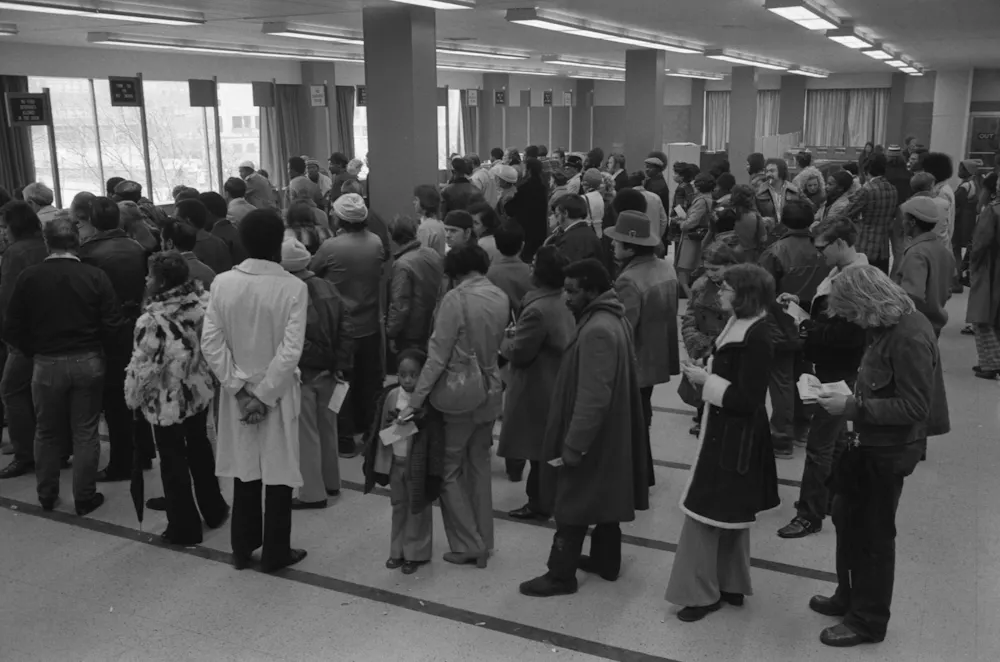
While campaigning as a presidential candidate, Ronald Reagan seized on this trope of the “welfare queen” in his attacks on social spending.People line up at the Baltimore City Welfare Office in 1975, years before concerns about social spending led to big cuts to safety net programs. O’Halloran/Library of Congress via Getty Images
By the mid-1990s, opposition to welfare programs had become increasingly bipartisan. Politicians in both parties often used tales of Medicaid fraud on the part of providers and recipients to justify tighter eligibility rules and spending cuts.
Concerns about Medicaid’s “integrity” became highly politicized in the debates surrounding the ACA. Critics of Medicaid expansion argued that increasing the number of people who could get health insurance through the program would increase fraud and improper enrollment. Supporters of expanding Medicaid to help more Americans gain health insurance maintained that anti-fraud rhetoric often disguised ideological opposition to the program’s expansion.
Blurring distinctions then and now
For the six decades that this program has helped millions of low-income Americans get healthcare, politicians have blurred the distinction between protecting Medicaid from abuse and using abuse to discredit Medicaid itself.
In my view, the Trump administration’s campaigns against California and Minnesota continue that pattern. It is using real weaknesses within Medicaid to advance much broader political arguments: that Democratic states cannot be trusted, that public benefits naturally invite abuse, and that withholding funds is itself a form of reform.
The result will no doubt be that fewer low-income Americans will be able to get the healthcare they need.