

News
New UFO files offer no answers – but something is happening in the skies
Newly released U.S. government UAP and UFO files reveal unexplained aerial phenomena, mysterious drone swarms, and military encounters that continue to puzzle experts and raise national security questions.


James Dwyer, University of Tasmania
New UFO files offer no answers – but something is happening in the skies
The US Government has released a new trove of documents on various cases of “Unidentified Anomalous Phenomena” (UAPs) – many of which would have been described in the past as Unidentified Flying Objects or UFOs – including photos, videos and reports of unexplained events sighted in the sky and in space.
The files detail “unresolved cases” where “the government is unable to make a definitive determination on the nature of the observed phenomena”.
As a researcher of military strategy, national security, and weapons and technology capabilities, I find several examples of UAPs intriguing in what they reveal and the questions they raise.
Taking this new release together with other reports from the past few years, a picture of what might be behind UAPs – and the current state of our understanding – begins to emerge.
The easy ones
Not everything in the new release seems inexplicable. Some images, like those that appear to show unidentified lights recorded by astronauts from the surface of the Moon, are most likely just visual noise or other image artefacts.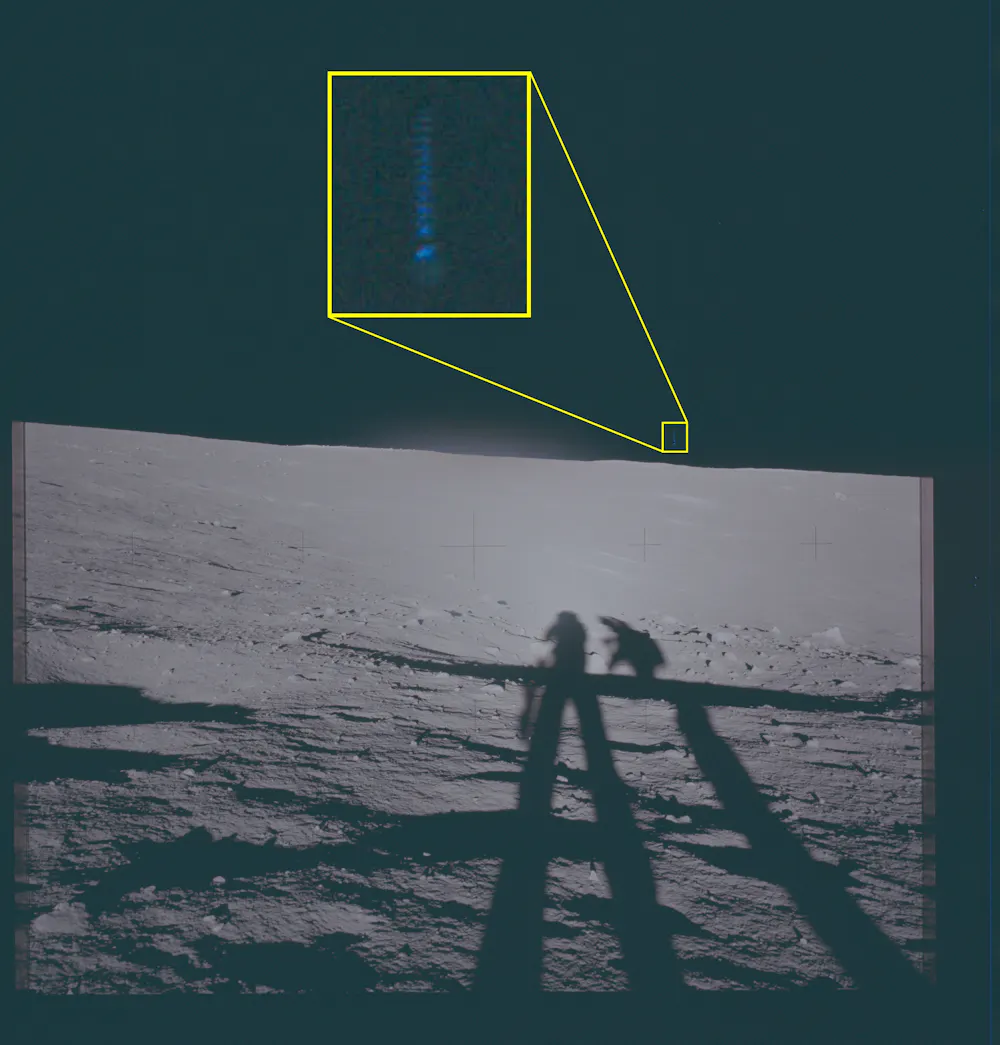
Astronauts have also reported seeing bright lights with the naked eye. These may be flashes from high-energy cosmic rays, which are more prevalent outside Earth’s protective magnetic field.
Likewise, video recordings showing bright lights zipping may be explained by insects flying by the camera at close proximity – they would be out of focus, and appear to move at high speeds.
Something is happening
Other cases are more difficult to immediately dismiss. Some recent examples demonstrate that something is occurring, even if we do not know what.
In 2020, the US Navy declassified three videos recorded by F/A-18 Super Hornets, showing mysterious “Tic Tac” objects flying in ways that defy current understanding of technology, without any obvious propulsion. The US Navy stated it did not know what the objects were.
Advanced sensors on fighter aircraft detected and tracked these phenomena, which suggests they were some kind of real objects rather than due to equipment errors or erroneous noise.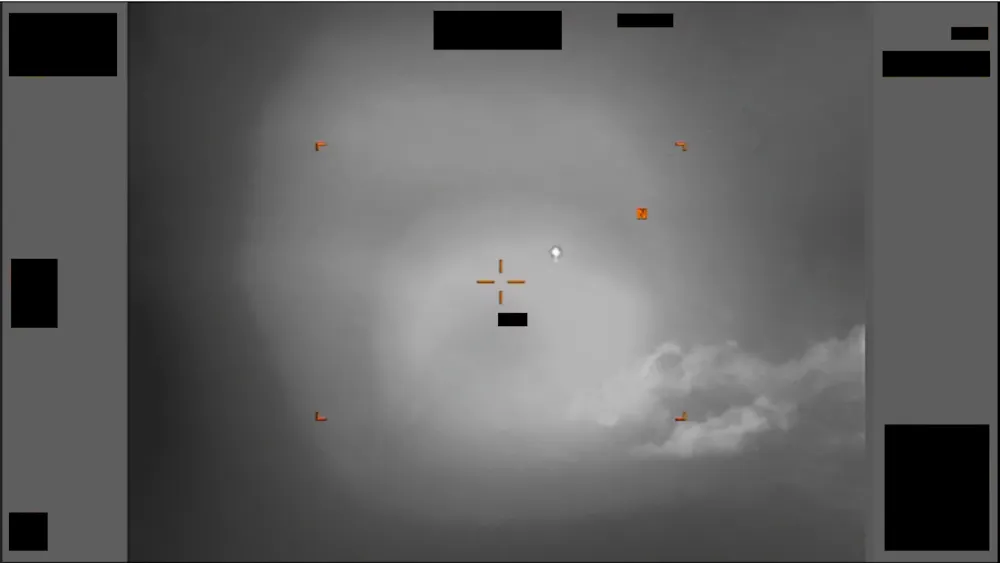
One of the most intriguing recordings was shared in a US congressional hearing in 2025. It appeared to be recorded by an MQ-9 Reaper drone, which was tracking a UAP.
The drone fired a Hellfire missile at the object and appeared to have successfully hit it. The object seemed to be deflected from its direction of travel momentarily, suggesting it was a real physical thing, but it appeared to suffer no damage and continued on its course.
Drone swarms and mystery objects
Over the past decade, there have also been multiple reports of unidentified groups of UAPs around US and European military bases.
In several cases, US Navy Destroyers apparently met mysterious “drone swarms”. While these may have been conventional drones, there were no apparent launch vessels nearby which could have allowed these relatively small drones (with presumably short range) to be where they were.
We also know that in 2023, the US used an F-22 fighter to shoot down a Chinese high-altitude spy balloon over the continental US. Another similar incident occurred over Hawaii the same year, although the US reportedly did not consider this one to be from China.
Also in 2023, the US engaged several other objects over North America, but both the US and Canadian governments have refused to provide any information on what they were.
So what exactly are these objects?
There is no easy explanation for these incidents.
Some leap to the idea that non-human intelligences are at work. However, there is no evidence for this. It may be fun to think of aliens or interdimensional beings, but this is not really a satisfying answer to the UAP question.
Perhaps the “best” explanation we have is drones, or other known technologies. This still seems partial, as some phenomena seem to exceed current technological capabilities, and it leaves open the question of who is behind the phenomena.
New technologies could be responsible. Perhaps operated by “friendly” forces – within the US military or allied defence manufacturers – testing their products against unknowing military operators to see how they respond. Similarly, the incidents may be tests carried out by adversaries such as China.
But still, some incidents are hard to explain given what we know about physics. The object in the “Tic Tac” videos don’t seem to behave how any kind of aircraft should, showing no signs of propulsion.
Alternatively, some UAPs could be as simple as malfunctions in sensor systems. However, this too seems partial – there are multiple cases of warplanes and warships detecting these objects with multiple sensors operating on different frequencies, both actively and passively.
Not aliens, but what?
The most recent release from the US does little to answer the questions about what UAPs are. This lack of answers is perhaps the most intriguing part.
Given the wide range of cases, there is likely no single explanation for all of them. Some seem likely to be drones and others likely image artefacts, but there is a real group of genuinely hard-to-identify phenomena.
Of the available explanations, non-human intelligence is perhaps the most entertaining – but also by far the least probable. It is far more likely that the cause of these incidents will eventually be identified much closer to home.
What does seem clear is that governments are watching closely, and with significant concern.
James Dwyer, Lecturer, School of Social Sciences, University of Tasmania
This article is republished from The Conversation under a Creative Commons license. Read the original article.
For more breaking news, in-depth analysis, and updates on UFOs, technology, transportation, and world events, visit STM Daily News and stay informed with the latest stories shaping our world.


The Knowledge
Where Does Federal Money Go? The Biggest Costs Behind the Budget
Where does federal money go? Part two of our National Debt Explained series examines the biggest expenses in the 2025 budget and how spending connects to government borrowing.

Last Updated on October 13, 2026 by Daily News Staff
The Knowledge | National Debt Explained, Part 2
When discussing debt, ask: Who borrowed the money? That question helps distinguish a family’s finances from the federal budget. Our first episode explained why your credit card balance is separate from the national debt. Now comes the next question: What does the federal government spend money on?
Much of it pays for retirement benefits, health coverage, national defense, public services, and interest on previous borrowing.
Social Security was the largest individual program in fiscal year 2025, costing approximately $1.6 trillion. But combine the major health care programs—including Medicare, Medicaid, and health insurance subsidies—and their spending reached about $1.8 trillion, exceeding Social Security alone. cbo.gov
The figures below cover October 1, 2024, through September 30, 2025.Major expense FY 2025 spending What it supports Social Security About $1.6 trillion Retirement, survivor, and disability benefits Medicare, net $988 billion Health coverage for older adults and certain people with disabilities Net interest $970 billion Cost of servicing publicly held federal debt, after subtracting interest income Discretionary defense $893 billion Military personnel, operations, equipment, and research Medicaid $668 billion Federal contribution toward health coverage and care for eligible people
These are selected expenses, not the entire budget. Medicare spending is shown after premiums and other offsetting receipts. The combined health care total already includes Medicare and Medicaid, so it should not be added to those rows. cbo.gov
The government also supports veterans’ health care, transportation, education, housing assistance, courts, law enforcement, scientific research, disaster response, and environmental protection. Nondefense discretionary spending totaled approximately $980 billion in 2025, covering many of these services. Some funding for these areas falls elsewhere in the budget. cbo.gov
Federal spending falls into three broad groups:
- Mandatory spending: Payments governed by existing eligibility rules and benefit formulas, including Social Security and major health programs.
- Discretionary spending: Funding lawmakers control through appropriations legislation, including most defense spending and many public services.
- Net interest: The expense of servicing publicly held federal debt, minus government interest income. cbo.gov
Interest deserves attention because it pays for borrowing already undertaken. In 2025, net interest exceeded discretionary defense spending. Congressional Budget Office
A program’s cost does not automatically translate into an equal increase in national debt. Taxes and other receipts finance much of federal spending. Social Security and Medicare’s hospital insurance program receive dedicated payroll taxes, while Medicare also collects premiums.
In 2025, federal spending totaled approximately $7 trillion, compared with $5.2 trillion in revenue. The roughly $1.8 trillion shortfall was the deficit, requiring borrowing. Understanding national debt therefore means examining both what government spends and what it collects. cbo.gov
Explore more explanations behind the headlines at STM Daily News, home of The Knowledge.
Sources for this episode
- CBO: The Federal Budget in Fiscal Year 2025 — Overview of spending, revenue, deficits, and debt interest.
- CBO: Mandatory Spending in Fiscal Year 2025 — Breakdown of Social Security, Medicare, Medicaid, and other benefit programs.
- CBO: Discretionary Spending in Fiscal Year 2025 — Defense spending and services including transportation, education, and veterans’ health care.
- CBO: Overview of the FY 2025 Budget Infographics — Highlights the largest expenses and broader budget trends.
Related reading
- U.S. Treasury: Understanding the National Debt — What federal debt represents and how borrowing works.
- U.S. Treasury: Understanding the National Deficit — Explains the difference between an annual deficit and accumulated debt.
- U.S. Treasury: Federal Spending — Additional context about where federal money goes.

Daily News
Whose Debt Is the National Debt?
The national debt isn’t Americans’ credit card balances added together. This simple explainer separates federal borrowing from household debt and explains the difference between debt and a deficit.
Last Updated on October 11, 2026 by Daily News Staff
The Knowledge | STM Daily News
When you hear “national debt,” do you picture everyone’s credit card balances added together? The name can create that impression, but the national debt and household debt measure different borrowing.
The U.S. national debt is money the federal government owes. Your personal credit card balance is not included.
Federal debt versus household debt
The Treasury defines national debt as the federal government’s total outstanding borrowing accumulated over the country’s history. Household debt covers borrowing by individuals and families, including mortgages, credit cards, auto loans, and student loans.
|Type of debt |Who borrowed? |Examples |
|————–|————————|————————————————–|
|National debt |Federal government |Outstanding Treasury securities |
|Household debt|Individuals and families|Credit cards, mortgages, auto loans, student loans|
Putting a $500 purchase on your credit card increases your personal balance. It does not add $500 to the national debt.
How does the national debt grow?
When federal spending exceeds tax collections and other revenue, the government runs a budget deficit. Treasury sells securities to borrow money to cover the gap.
Consider a simplified, hypothetical example: the government collects $5 trillion and spends $6 trillion in one year. That leaves a $1 trillion deficit requiring financing.
A deficit measures a shortfall over a period, usually a year. Debt measures outstanding borrowing accumulated over time. Repeated deficits generally increase that debt. Interest on existing borrowing is also a federal expense.
Does paying off your credit card reduce the national debt?
Paying off a card reduces what you owe your lender. It does not directly repay Treasury borrowing. Household debt and government debt can influence the same economy, but they remain separate obligations.
When discussing debt, ask: Who borrowed the money? That one question helps distinguish a family’s finances from the federal budget.
Find more explanations of the ideas behind the headlines at STM Daily News, home of The Knowledge.
Sources
● U.S. Treasury: Understanding the National Debt
● U.S. Treasury: Understanding the National Deficit
● Federal Reserve Bank of New York: Household Debt and Credit Report
Science
October Meteor Showers Give Phoenix Skywatchers a Reason to Look Up
Phoenix skywatchers have several chances to catch October’s meteor showers. Here’s when to watch the Taurids and Orionids—and how moonlight affects the view.

Last Updated on October 10, 2026 by Daily News Staff
PHOENIX — October is bringing several opportunities to spot shooting stars over the Valley, with the Draconids reaching their October 8–9 peak and more meteor activity ahead.
The Draconids remain active through October 10, although viewers should expect a light display as the peak passes. Under favorable conditions, the shower typically produces only a handful of meteors per hour. timeanddate.com

Next, the Southern Taurids have an annual activity peak around October 14. Known for occasional bright fireballs, the shower continues into November. The stronger Orionids peak on the night of October 21 into the morning of October 22, typically producing 10–20 meteors per hour under dark skies. A bright Moon will interfere with this year’s display. American Meteor Society
The Orionids originate from debris left by Halley’s Comet. For Phoenix viewers, the best opportunity will be after moonset and before dawn, weather permitting. City lights will further reduce the number visible. amsmeteors.org
NASA recommends finding a viewing area away from streetlights, allowing about 30 minutes for eyes to adjust, and watching a broad stretch of sky. No telescope is needed—just a comfortable chair and patience. NASA Science
ECurious about what’s happening above us? Explore more space stories and science explainers in The Knowledge at STM Daily News.xplore more space, science and everyday






