Connect with us

Beverages

Pop, soda or coke? The fizzy history behind America’s favorite linguistic debate

Published

on

Last Updated on July 18, 2025 by Daily News Staff

soda
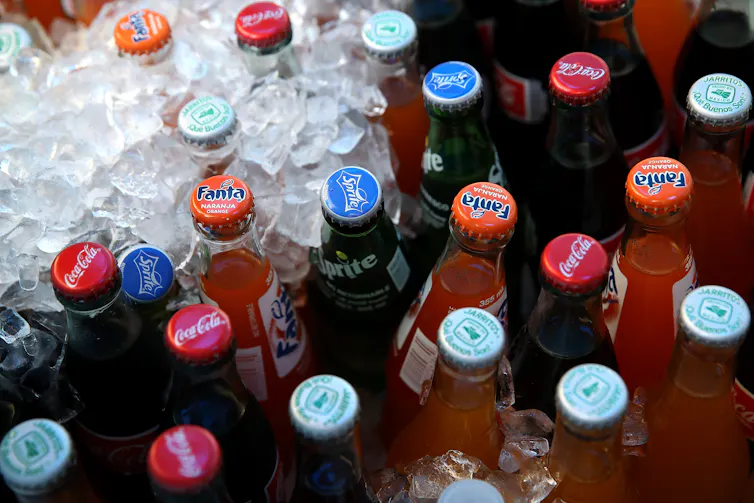
‘I’ll have a coke – no, not Coca-Cola, Sprite.’
Justin Sullivan/Getty Images

Valerie M. Fridland, University of Nevada, Reno

With burgers sizzling and classic rock thumping, many Americans revel in summer cookouts – at least until that wayward cousin asks for a “pop” in soda country, or even worse, a “coke” when they actually want a Sprite.

Few American linguistic debates have bubbled quite as long and effervescently as the one over whether a generic soft drink should be called a soda, pop or coke.

The word you use generally boils down to where you’re from: Midwesterners enjoy a good pop, while soda is tops in the North and far West. Southerners, long the cultural mavericks, don’t bat an eyelash asking for coke – lowercase – before homing in on exactly the type they want: Perhaps a root beer or a Coke, uppercase.

As a linguist who studies American dialects, I’m less interested in this regional divide and far more fascinated by the unexpected history behind how a fizzy “health” drink from the early 1800s spawned the modern soft drink’s many names and iterations.

Bubbles, anyone?

Foods and drinks with wellness benefits might seem like a modern phenomenon, but the urge to create drinks with medicinal properties inspired what might be called a soda revolution in the 1800s.

Drawing of hexogonal soda fountain with three visible spouts.
An 1878 engraving of a soda fountain.
Smith Collection/Gado via Getty Images

The process of carbonating water was first discovered in the late 1700s. By the early 1800s, this carbonated water had become popular as a health drink and was often referred to as “soda water.” The word “soda” likely came from “sodium,” since these drinks often contained salts, which were then believed to have healing properties.

Given its alleged curative effects for health issues such as indigestion, pharmacists sold soda water at soda fountains, innovative devices that created carbonated water to be sold by the glass. A chemistry professor, Benjamin Stillman, set up the first such device in a drugstore in New Haven, Connecticut, in 1806. Its eventual success inspired a boom of soda fountains in drugstores and health spas.

By the mid-1800s, pharmacists were creating unique root-, fruit- and herb-infused concoctions, such as sassafras-based root beer, at their soda fountains, often marketing them as cures for everything from fatigue to foul moods.

These flavored, sweetened versions gave rise to the linking of the word “soda” with a sweetened carbonated beverage, as opposed to simple, carbonated water.

Seltzer – today’s popular term for such sparkling water – was around, too. But it was used only for the naturally carbonated mineral water from the German town Nieder-Selters. Unlike Perrier, sourced similarly from a specific spring in France, seltzer made the leap to becoming a generic term for fizzy water.
Advertisement
Get More From A Face Cleanser And Spa-like Massage
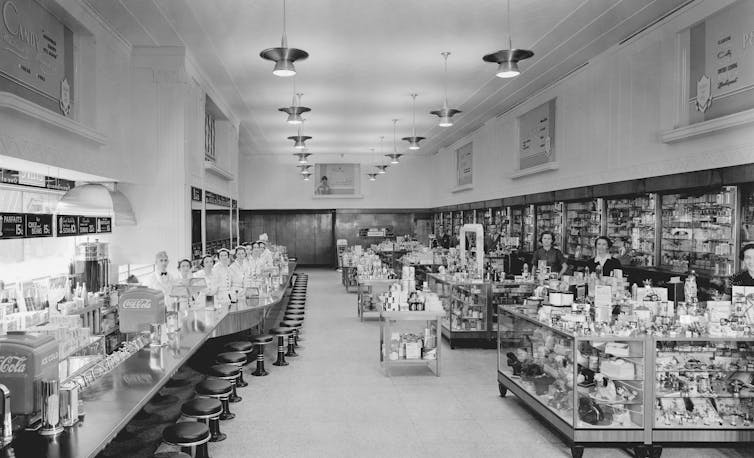
Black and white photo of the interior of a drug store, with various health remedies sold on the right side, and a soda fountain with stools on the left.
Many late-19th-century and early 20th-century drugstores contained soda fountains – a nod to the original belief that the sugary, bubbly drink possessed medicinal qualities.
Hall of Electrical History Foundation/Corbis via Getty Images

Regional naming patterns

So how did “soda” come to be called so many different things in different places?

It all stems from a mix of economic enterprise and linguistic ingenuity.

The popularity of “soda” in the Northeast likely reflects the soda fountain’s longer history in the region. Since a lot of Americans living in the Northeast migrated to California in the mid-to-late 1800s, the name likely traveled west with them.

As for the Midwestern preference for “pop” – well, the earliest American use of the term to refer to a sparkling beverage appeared in the 1840s in the name of a flavored version called “ginger pop.” Such ginger-flavored pop, though, was around in Britain by 1816, since a Newcastle songbook is where you can first see it used in text. The “pop” seems to be onomatopoeic for the noise made when the cork was released from the bottle before drinking.

A jingle for Faygo touts the company’s ‘red pop.’

Linguists don’t fully know why “pop” became so popular in the Midwest. But one theory links it to a Michigan bottling company, Feigenson Brothers Bottling Works – today known as Faygo Beverages – that used “pop” in the name of the sodas they marketed and sold. Another theory suggests that because bottles were more common in the region, soda drinkers were more likely to hear the “pop” sound than in the Northeast, where soda fountains reigned.

As for using coke generically, the first Coca-Cola was served in 1886 by Dr. John Pemberton, a pharmacist at Jacobs’ Pharmacy in Atlanta and the founder of the company. In the 1900s, the Coca-Cola company tried to stamp out the use of “Coke” for “Coca-Cola.” But that ship had already sailed. Since Coca-Cola originated and was overwhelmingly popular in the South, its generic use grew out of the fact that people almost always asked for “Coke.”

Advertisement for orange soda reading 'a soft drink made from real oranges.'
No alcohol means not ‘hard’ but ‘soft.’
Nostalgic Collections/eBay

As with Jell-O, Kleenex, Band-Aids and seltzer, it became a generic term.

What’s soft about it?

Speaking of soft drinks, what’s up with that term?

It was originally used to distinguish all nonalcoholic drinks from “hard drinks,” or beverages containing spirits.

Interestingly, the original Coca-Cola formula included wine – resembling a type of alcoholic “health” drink popular overseas, Vin Mariani. But Pemberton went on to develop a “soft” version a few years later to be sold as a medicinal drink.

Due to the growing popularity of soda water concoctions, eventually “soft drink” came to mean only such sweetened carbonated beverages, a linguistic testament to America’s enduring love affair with sugar and bubbles.

With the average American guzzling almost 40 gallons per year, you can call it whatever you what. Just don’t call it healthy.The Conversation

Valerie M. Fridland, Professor of Linguistics, University of Nevada, Reno

Advertisement
Get More From A Face Cleanser And Spa-like Massage

This article is republished from The Conversation under a Creative Commons license. Read the original article.


The Great American Soda Divide: How Geography Shapes What We Call Our Fizzy Drinks

Dive into “The Knowledge,” where curiosity meets clarity. This playlist, in collaboration with STMDailyNews.com, is designed for viewers who value historical accuracy and insightful learning. Our short videos, ranging from 30 seconds to a minute and a half, make complex subjects easy to grasp in no time. Covering everything from historical events to contemporary processes and entertainment, “The Knowledge” bridges the past with the present. In a world where information is abundant yet often misused, our series aims to guide you through the noise, preserving vital knowledge and truths that shape our lives today. Perfect for curious minds eager to discover the ‘why’ and ‘how’ of everything around us. Subscribe and join in as we explore the facts that matter.  https://stmdailynews.com/the-knowledge/

Continue Reading
Advertisement SodaStream USA, inc

Festivals

Presqu’ile Winery Partners With LAND to Bring Contemporary Art to Santa Maria Valley

Presqu’ile Winery and LAND are partnering to bring free, site-responsive contemporary art to the Santa Maria Valley estate in Santa Barbara Wine Country.

Published

on

glass of wine
Photo by Arthur Brognoli on Pexels.com

Santa Barbara Wine Country is about to get a fresh reason to linger a little longer. Presqu’ile Winery has announced a new collaboration with Los Angeles Nomadic Division (LAND), the nationally recognized nonprofit known for taking contemporary art out of traditional museums and galleries and placing it directly into the environments that shape it. The result: curated, site-responsive works—some created specifically for the property—installed across Presqu’ile’s Santa Maria Valley estate.

A winery becomes an open-air gallery—at no cost

Under the partnership, Presqu’ile will serve as a host site for LAND programming, opening its estate to the public for free. Visitors can expect contemporary art integrated into the vineyard setting, with select installations shaped by the landscape itself. The goal is simple and ambitious at the same time: expand no-cost access to contemporary art along California’s Central Coast while creating a cultural experience that feels inseparable from the place it inhabits.

LAND’s approach is rooted in the belief that art should be experienced where people actually live, work, and gather. Rather than building exhibitions around white walls and controlled lighting, LAND supports projects driven by place—work that engages the environment, the community, and the lived experience of the artists creating it.

“Nourishing reciprocity” between art, landscape, and community

Laura Hyatt, Director of LAND, emphasized how the Central Coast setting opens new creative possibilities for artists.

Hyatt noted that collaborating with Presqu’ile gives artists the opportunity to engage with the region’s natural beauty and unique ecology—placing artworks in what she described as “nourishing reciprocity” with the landscape and the visitors moving through it. She also highlighted the long-term potential of the partnership, which allows for deeper exploration over time, expands LAND’s geographic reach, and strengthens connections between Southern and Central California.

For Hyatt, the collaboration is personal as well: her family has roots in the area going back five generations, adding another layer of community connection to the work LAND hopes to cultivate.

A shared mindset: tradition, experimentation, and a sense of place

Presqu’ile framed the partnership as a natural extension of what the winery already does—balancing tradition with experimentation. In the same way winemaking can honor time-tested methods while still pushing toward new expressions, contemporary art can offer new ways of seeing familiar processes and landscapes.

Matt Murphy, co-founder of Presqu’ile Winery, said the family’s appreciation for the visual arts made the collaboration an easy “yes.” He pointed to the opportunity to create “fun, compelling and unexpected” ways for the community to engage with both the installations and the estate itself—and to experience Presqu’ile through each artist’s creative lens.

PQLAND
Presqu’ile Winery x LAND

What happens next

In the near term, LAND will install artworks developed through its programming on the Presqu’ile property, with public access remaining free. The collaboration is designed with community benefit at its center, positioning the estate as a cultural and agricultural destination—not just a tasting room.

Looking ahead, Presqu’ile has submitted plans for approval to develop expanded spaces intended to support free public art, cultural programming, and community gathering. If approved, those improvements would signal a long-term commitment to integrating arts and culture into the estate experience and welcoming future partners whose work aligns with Presqu’ile’s values of openness, creativity, and place-based expression.

Additional details—including participating artists and installation timelines—will be announced as the collaboration progresses.

About the partners

Presqu’ile Winery

Presqu’ile (pronounced press-keel) is a family-owned estate winery in Santa Maria Valley on California’s Central Coast. Founded in 2007, the winery produces cool-climate wines from its sustainably farmed estate vineyard and from a select group of growers across Santa Barbara County. The name—French Creole for “almost an island”—reflects the Murphy family’s Gulf Coast heritage and the winery’s deep emphasis on place.

Advertisement
Get More From A Face Cleanser And Spa-like Massage

Los Angeles Nomadic Division (LAND)

Founded in 2009, LAND is a nonprofit arts organization dedicated to connecting people and places through site-responsive public art and programs. Over 15 years, LAND has presented more than 500 artists across 300+ programs and exhibitions, ranging from large-scale sculptural commissions to billboards, roadside screenings, workshops, and city-wide video presentations—reaching millions of people.

Why it matters

This collaboration isn’t just about adding art to a winery—it’s about rethinking where art belongs, who gets to access it, and how landscape can become part of the creative process. For the Central Coast, Presqu’ile and LAND are setting the stage for a new kind of cultural destination: one where a walk through the vines can also be a walk through contemporary ideas, made visible in the open air.

Source: Presqu’ile Winery

Organization: Los Angeles Nomadic Division (LAND)

Our Lifestyle section on STM Daily News is a hub of inspiration and practical information, offering a range of articles that touch on various aspects of daily life. From tips on family finances to guides for maintaining health and wellness, we strive to empower our readers with knowledge and resources to enhance their lifestyles. Whether you’re seeking outdoor activity ideas, fashion trends, or travel recommendations, our lifestyle section has got you covered. Visit us today at https://stmdailynews.com/category/lifestyle/ and embark on a journey of discovery and self-improvement.

Author

Continue Reading

Food and Beverage

Casamigos Introduces New Pre-Mixed Margaritas (Classic Lime + Spicy) Ahead of FIFA World Cup 2026

Published

on

Casamigos kicks off its FIFA World Cup 2026 moment with Gabrielle Union and Keegan-Michael Key and introduces new pre-mixed margaritas in Classic Lime and Spicy, designed for easy match-day hosting.

Casamigos is getting an early start on FIFA World Cup 2026™ watch-party season—and it’s doing it with a little friendly rivalry. The tequila brand announced a new World Cup campaign starring Gabrielle Union and Keegan-Michael Key, pairing the two as playful “hosts” who go head-to-head over a simple match-day question: are you Team Classic or Team Spicy?

The campaign tagline says it all: “Rivals at the game, Casamigos at the Bar.” The idea is less about picking sides forever and more about leaning into the competitive energy of the tournament—then coming together once the final whistle blows.

Team Classic vs. Team Spicy: the new bottled margaritas

Alongside the celebrity-led campaign, Casamigos introduced new pre-mixed margaritas in two flavors:

  • Classic Lime
  • Spicy

Both are designed for “pour, serve, and get back to the game” hosting—no extra ingredients, no shaking, no measuring. According to the brand, each pre-mixed margarita is 20.5% ABV and made with Casamigos Tequila, orange liqueur, lime juice, and natural flavors.

Casamigos says the bottles are meant to keep hosting simple during the tournament’s full 90 minutes (plus stoppage time), whether fans are gathering at home, meeting up at the bar, or celebrating in host cities.

Casamigos kicks off its FIFA World Cup 2026 moment with Gabrielle Union and Keegan-Michael Key and introduces new pre-mixed margaritas in Classic Lime and Spicy, designed for easy match-day hosting.
Casamigos, an Official Tequila Supporter of the FIFA World Cup 2026™.

What Gabrielle Union and Keegan-Michael Key are bringing to the campaign

Casamigos is leaning into Union and Key’s chemistry to capture what makes World Cup fandom so fun: the passion, the pride, and the rivalries that can get loud—without getting personal.

Union, who said she grew up playing soccer, is firmly Team Spicy, noting she loves “a little heat,” and that the best part of the sport is how it brings people together.

Key, a longtime World Cup viewer, is Team Classic, saying the “classic rivalries” already provide all the spice he needs.

World Cup activations and limited-time packaging

Casamigos is an Official Tequila Supporter of the FIFA World Cup 2026™ and plans to activate in host cities throughout the tournament with fan-first experiences. The brand also noted that its pre-mixed margaritas will feature limited-time FIFA World Cup 2026™ packaging.

For shoppers, the new pre-mixed margaritas are available in:

  • 750ml bottles (about 10 cocktails)
  • 375ml bottles (about 5 cocktails)

Casamigos lists 110 calories per serving and a suggested retail price of $21.99 MSRP, with both flavors best served chilled.

What to watch for

The World Cup is still months away, but brands are already battling for a spot on your watch-party table. Casamigos’ move is a clear bet on convenience: bottled margaritas that keep the vibe high without turning the host into the bartender.

And if you’re the type who treats every match like a personal derby, Casamigos’ message is basically this: talk your trash during the game—then toast like friends afterward.


Source:
Casamigos Spirits Company (PRNewswire), March 19, 2026.

Advertisement
Get More From A Face Cleanser And Spa-like Massage

Related Links:

Enjoy responsibly.

Hungry for what’s next? STM Daily News’ Food and Drink section dishes up the latest in restaurant news, beverage trends, seasonal recipes, culinary events, and food culture stories readers love to share.

Continue Reading

Food and Beverage

NYC to Host 5th International Volcanic Wines Conference on June 10

New York City will host the 5th International Volcanic Wines Conference on June 10, 2026 at Manhatta, featuring global volcanic regions, masterclasses, a Grand Tasting, and the Volcanic Wine Awards with JancisRobinson.com.

Published

on

New York City is about to get a crash course in “wines with a sense of place.” Volcanic Wines International (VWI) announced the 5th International Volcanic Wines Conference (IVWC), set for June 10, 2026 at Manhatta in Manhattan. The one-day event brings together producers, sommeliers, buyers, journalists, and educators for tastings and masterclasses focused on wines grown in volcanic soils—an increasingly talked-about category known for its tension, mineral-driven structure, and unmistakable origin.

red wine pouring into glass close up shot. 5th International Volcanic Wines Conference (IVWC)
Photo by Andrew Patrick Photo on Pexels.com

Why volcanic wines are having a moment

Volcanic vineyards sit on some of the planet’s most dramatic landscapes—think steep slopes, black sand, and lava-strewn terrain. But the conference isn’t just about scenery. The IVWC is built around a simple idea: volcanic terroir can shape wine in distinctive ways, influencing everything from texture and acidity to aromatics and perceived “energy” in the glass.

As VWI co-founder John Szabo, MS put it, volcanic wines often stand out for their “energy, structure, and clear sense of origin,” making them a natural fit for wine lists that prioritize discovery.

A global tasting tour—without leaving Manhattan

Hosted in what VWI calls the largest and most influential wine market in the U.S., the conference offers a rare side-by-side look at volcanic regions from around the world. Participating producers are expected from territories including:

  • Etna (Sicily)
  • Santorini (Greece)
  • Canary Islands (Spain)
  • Hungary
  • Pantelleria (Italy)
  • Lake County (California)

Masterclasses, seminars, and a Grand Tasting

The June 10 program is designed for wine professionals who want to go deeper than a quick sip. Attendees can expect guided tastings and educational sessions exploring how different volcanic soils—and the climates that surround them—can influence grape varieties and wine styles.

Seminars are slated to spotlight volcanic wines from:

  • Soave (Italy)
  • Etna
  • Hungary
  • Canary Islands
  • Lazio (Italy)

The day also includes a Grand Tasting, where exhibiting wineries will pour for a curated audience of sommeliers, buyers, importers, educators, and media.

A new “Volcanic Origin” certification will be announced in the U.S.

One of the headline moments: the conference will host the official U.S. announcement of a new Volcanic Origin certification, created by the Vinora association of Auvergne, France. The certification is designed to help recognize authentic expressions from volcanic regions worldwide—an important step as interest grows and consumers look for clearer signals of provenance.

Volcanic Wine Awards + JancisRobinson.com partnership

VWI also highlighted a major media partnership with JancisRobinson.com for the Volcanic Wine Awards, an international competition celebrating standout wines from volcanic regions.

Award-winning wines will be featured on JancisRobinson.com and showcased in a dedicated space during the NYC conference.

“Volcanic regions produce some of the most characterful wines in the world,” said Tara Q Thomas, Managing Editor at JancisRobinson.com, adding that the partnership aims to bring greater attention to these terroirs.

The big picture: story-driven wine in a crowded market

Beyond the technical details, the conference is tapping into something the wine world is actively chasing: narrative and identity.

“Today more than ever, the wine world needs compelling stories that reconnect wine lovers with place and identity,” said Gino Colangelo, President of Colangelo & Partners and partner in VWI. Volcanic wines, he noted, offer “dramatic landscapes, ancient soils, and wines with unmistakable character.”

Advertisement
Get More From A Face Cleanser And Spa-like Massage

How to attend or exhibit

For information about exhibiting or attending, VWI directs inquiries to Bianca Panichi at bpanichi@colangelopr.com. Updates are also available at www.volcanicwinesinternational.com, with social channels on Instagram (@volcanicwines_intl) and Facebook (Volcanic Wines International).

What to watch for (STM Daily News)

  • Whether the new Volcanic Origin certification becomes a widely adopted benchmark
  • Which regions and producers dominate the Volcanic Wine Awards spotlight
  • How volcanic wines continue to move from “sommelier obsession” to broader consumer demand

Hungry for what’s next? STM Daily News’ Food and Drink section dishes up the latest in restaurant news, beverage trends, seasonal recipes, culinary events, and food culture stories readers love to share.

Continue Reading

Trending

