

Lifestyle
Recognizing Holiday Hazards: 5 seasonal safety tips for pet owners
The holiday season presents opportunities for celebrating with loved ones, and for many families, that includes their dogs and cats. However, holiday foods and decorations can pose health risks for pets and the hustle and bustle may be overwhelming.

Last Updated on November 22, 2024 by Daily News Staff
Holiday Awareness and Your Pets
(Family Features) The holiday season presents opportunities for celebrating with loved ones, and for many families, that includes their dogs and cats. However, holiday foods and decorations can pose health risks for pets and the hustle and bustle may be overwhelming.
To help keep your pet safe amid the jolly chaos, consider these potential hazards from the experts at VCA Animal Hospitals, which has more than 1,000 locations across North America that cared for more than 4.5 million pets last year.
Decorations
Decorations are part of almost every holiday celebration but making some pet-proofed choices can make your home safe for four-legged guests as well. If you put up a tree (live or artificial), ensure it’s set up securely and use shatter-proof ornaments, ideally hung above tail height and out of paws’ reach. If you have kittens less than 1 year old in your home, they sometimes like to climb up the tree trunk to the top, so extra care may be needed. Hang smaller ornaments toward the top of the tree to reduce potential choking hazards and avoid salt dough ornaments, which may look like a snack to pets but can cause electrolyte problems, and tinsel as it can become lodged in a pet’s gut and cause issues.
Additionally, consider battery-operated candles instead of real ones, which can be easily knocked over by curious pets and burn them or lead to more serious fire risks. Dangling cords from seasonal decor can also appeal to pets, and if chewed while plugged in could result in electrical shock or burn to the tongue, so secure them out of sight and unplug when not in use.
Food
With the holidays comes a delicious variety of baked goods, chocolate confections and other rich foods. However, some of those seasonal goodies can present problems for pets. For example, chocolate and cocoa contain theobromine, a chemical similar to caffeine that’s highly toxic to both dogs and cats. Ingestion in small amounts can cause vomiting and diarrhea, but large amounts can cause seizures and heart arrhythmias.
Other traditional holiday mainstays such as fruitcakes, breads and cookies that contain grapes, raisins or currants can cause kidney failure in dogs. Sugarless gums and candies may contain xylitol, a natural sweetener, which can cause serious conditions like dangerously low blood sugar and liver failure in dogs. Leftover fatty meat scraps can produce severe inflammation of the pancreas (pancreatitis), leading to abdominal pain, vomiting and bloody diarrhea.
Plants
Although live trees are non-toxic, their needles do not digest well, and their water may contain bacteria, mold or fertilizer that should not be ingested. Additionally, poinsettias, which often have a bad reputation among pet owners, can cause upset stomachs if the leaves are ingested though it’s typically milder than the symptoms associated with holly, mistletoe and amaryllis. Daffodils, lilies and narcissi are also toxic to pets.
Guests
An increase in visitors, ringing of the doorbell and extra excitement of the holiday season can be stressful for pets. Try to keep your four-legged friend’s feeding and exercise schedule as regular as possible, and make time for additional stress-relieving playtime and snuggles. To help avoid overstimulation, it may be best to keep your pets in their own crates or a quiet room with food, water and comfortable bedding while you have company. If you need additional assistance, consult with your veterinarian.
Travel
Holiday travel with your four-legged family members requires some extra packing and precautions. If traveling by car, make sure your pet is safely restrained using a secure harness or carrier and placed away from any airbags. Make sure pets are microchipped and their registration is up to date in case you become separated. Never leave pets alone in a vehicle or transport them in the bed of a truck. Also be sure you have updated health certificates from your veterinarian, if required by any states you will visit or pass through, and pack copies of medical records, first aid supplies, food and medications, leashes, collars and favorite toys.
For more tips to make the holidays safe for pets, visit vcahospitals.com.
Photos courtesy of Getty Images
SOURCE:
VCA Animal Hospitals

Community
Zum Begins 2026–27 School Year With Expanded Student Transportation Network
Zum is launching the 2026–27 school year with expanded school bus operations in Fresno, Los Angeles and other communities, bringing real-time tracking and modern transportation technology to students and families.


New partnerships in Fresno and Kansas join ongoing operations in Omaha, St. Louis, Santa Barbara and Los Angeles
As millions of students return to classrooms, transportation company Zūm is beginning the 2026–27 school year with new district partnerships, expanded technology deployments and thousands of drivers preparing for what the company calls “the most important commute in America.”
The Redwood City, California-based student mobility company announced that its teams have completed months of driver training, route validation and operational planning ahead of the new academic year.
“There is nothing quite like the first day of school at Zum,” founder and CEO Ritu Narayan said in the company’s announcement. “You see drivers arriving before sunrise, teams making final preparations and buses rolling out of yards across the country—all united around one purpose: getting students safely and reliably to school.”
New buses roll out in Fresno
One of Zūm’s largest new launches is in California’s Fresno Unified School District. According to the company, 168 buses were placed into service just two weeks after its local team moved into a new transportation yard.
The district is also introducing the Zūm Parent App, which allows families to track buses in real time, receive arrival alerts, view scheduled rides and receive notifications when a child boards or exits a bus. Registered students will receive bus cards connected to the transportation system, according to Fresno Unified.
The rollout is part of a broader change in how Fresno Unified manages student transportation. Routes and stops will continue to be evaluated using registration information, actual ridership and family feedback, the district says. Beginning September 28, registered students will generally be required to show a bus pass before boarding. Fresno Unified’s transportation page provides registration instructions and assistance for families.
Technology comes to LAUSD’s in-house fleet
In Los Angeles, Zūm says its CMX technology has been deployed across the Los Angeles Unified School District’s internally operated bus fleet.
The platform is designed to connect routing, dispatch, drivers, schools, transportation officials and families through one operating system. Its tools include real-time vehicle visibility, route planning, operational coordination and family communications.
Rather than replacing the district’s in-house drivers, the Los Angeles deployment focuses on providing the technology used to coordinate district-operated buses.
New partnership in Kansas
Zūm also began a new partnership with the Shawnee Mission School District in Kansas. District leaders, drivers, monitors and school employees marked the start of the program with a launch celebration.
The company said Shawnee Mission’s transition is intended to give the district a more modern and technology-supported approach to student transportation.
Meanwhile, Zūm is returning for a third school year in Omaha and Santa Barbara. Its St. Louis operation is entering its second year.
Drivers remain at the center
Although technology plays a growing role in school transportation, Zūm emphasized that drivers remain essential to the daily experience of students and their families.
“Back to school is when months of preparation come to life,” said Liz Sanchez, Zūm’s executive vice president of student mobility. “Our teams spend months hiring and training drivers, validating routes and working alongside our district partners to prepare.”
Drivers often serve as the first school-related adults students see in the morning and the last they see before returning home. Their work can also determine whether students arrive safely and on time—especially in communities where families have limited transportation choices.
A changing school-bus experience
School transportation has traditionally depended on separate systems for scheduling, dispatching, vehicle tracking and communicating with parents. Zūm CMX is designed to bring those functions together and give school districts a clearer view of their daily operations.
For families, the most visible change may be access to real-time bus locations and arrival notifications. These tools can reduce some of the uncertainty associated with late buses, route changes and missed pickups.
Zūm reports that its technology and transportation services now support more than 6,500 schools across 19 states. As the company expands, the 2026–27 school year will test how effectively its technology, drivers and district partnerships can translate into dependable daily service.
For students, however, the goal remains straightforward: a safe ride to school, a reliable trip home and one less obstacle between them and their education.
This article is based primarily on information provided in an August 21, 2026, Zūm press release. Statements about the company’s national reach, fleet deployments and technology are attributed to Zūm unless independently noted.
Source: Zūm official website
Related links:
- Fresno Unified: Zūm Parent App
- Fresno Unified: New Transportation Model
- Fresno Unified: Bus Routes
- Fresno Unified: Back-to-School Resources
📰 Enjoying STM Daily News? Join the conversation!
💬 Leave a comment, share your thoughts, and subscribe to our newsletter for the latest stories, updates, and “News You Can Use This Moment!” delivered to your inbox.
Stay connected with STM Daily News!

College Life
The Princeton Review’s “Best Colleges for 2027” Rankings Are Out: 50 Student-Driven Lists Spotlight Campus Life, Aid, and Fit
The Princeton Review’s Best Colleges for 2027 rankings are out, based on surveys of 172,000 students across 392 schools in 50 categories.
The Princeton Review has released its “Best Colleges for 2027” rankings, a set of 50 category-based lists built entirely from student feedback—an approach designed to help applicants and families focus less on prestige and more on campus fit.
The rankings are now searchable for free on PrincetonReview.com and are also published in a dedicated chapter of The Best 392 Colleges: 2027 Edition (Penguin Random House, $26.99), which went on sale August 18.
A rankings system built on student experience
Unlike lists that attempt to name a single “best” college overall, The Princeton Review’s project breaks the undergraduate experience into categories that mirror real questions students and parents ask: How good are the professors? Is financial aid strong? What’s campus food like? Do students feel supported?
This year’s rankings are based on surveys of 172,000 students at the 392 colleges featured in the book—about 439 students per school on average. Students completed a 98-question survey rating academics, administrative services, financial aid, campus amenities, and social dynamics, including topics like political leanings, race/class interaction, and LGBTQ acceptance.
Each ranking list names the top 25 schools in a specific category, using data drawn from one or more survey questions. The Princeton Review also posts information online about how each list is calculated.
Rob Franek, Editor-in-Chief at The Princeton Review and lead author of the guide, emphasized that the schools profiled vary widely by “type, size, locale, and campus culture,” but each offers an academically strong undergraduate education. He also reiterated a key point behind the project: there is no single “best” college—only the best fit for a given student.
Notable #1 schools across the 2027 lists
The 2027 rankings highlight how different “best” can look depending on what matters most to a student.
For academics and campus operations, several schools earned top spots:
- Professors Get High Marks: Franklin W. Olin College of Engineering (Massachusetts)
- Best Classroom Experience: Reed College (Oregon)
- Best-Run Colleges: Claremont McKenna College (California)
- Great Financial Aid: Washington and Lee University (Virginia)
- Best Career Services: Bentley University (Massachusetts)
- Best Health Services: The University of Chicago (Illinois)
- Best Student Support and Counseling Services: Macalester College (Minnesota)
Campus life categories also drew attention:
- Best Campus Food: University of Massachusetts—Amherst
- Best College Dorms: Bowdoin College (Maine)
- Most Beautiful Campus: University of San Diego (California)
The lists also capture student-reported culture and community dynamics:
- Most Politically Conservative Students: Texas Christian University
- Most Politically Liberal Students: Bennington College (Vermont)
- Most Politically Moderate Students: Manhattan University (New York)
- Most Religious Students: Brigham Young University (Utah)
- LGBTQ-Friendly: University of Vermont
- Lots of Race/Class Interaction: Rice University (Texas)
- Friendliest Students: William & Mary (Virginia)
- Happiest Students: Vanderbilt University (Tennessee)
One new addition in the 2027 edition is “Great Outdoors: Students Get Outside,” with The University of the South (Tennessee) ranked #1.
“Statistical Stand-Out Schools” adds a data lens
In addition to student rankings, The Best 392 Colleges includes a feature called “Statistical Stand-Out Schools for 2027,” based on surveys of college administrators. A few of the standout distinctions include:
- Lowest Tuition & Fees (In-State) / Public College: University of Central Florida ($5,954)
- Highest Average Need-Based Scholarships: Princeton University ($80,837)
- Lowest Student/Faculty Ratio: Caltech (3:1) and MIT (3:1)
- Lowest Average Undergraduate Debt: CUNY: City College ($7,849)
- Most Applications / Public College: UCLA (145,086)
- Most Applications / Private College: NYU (114,125)
For families weighing cost, support, and outcomes, these stats can provide a useful counterpoint to reputation-driven decision-making.
How to use the rankings
The Princeton Review’s 2027 lists are best used as a starting point for research: identify what you value most—teaching quality, career preparation, affordability, student support, or campus culture—then compare schools through that lens.
The full rankings hub is available at: www.princetonreview.com/college-rankings/best-colleges
Automotive
Beyond the Sticker Price: Identifying the Most Affordable New Vehicles to Insure for 2026
For most households, buying a new vehicle is one of the largest financial decisions they’ll make. The purchase price is only the beginning, however. To help consumers make more informed purchasing decisions, consider these rankings of the most affordable new 2026 model year vehicles to insure.
Beyond the Sticker Price: Identifying the Most Affordable New Vehicles to Insure for 2026
(Feature Impact)For most households, buying a new vehicle is one of the largest financial decisions they’ll make. The purchase price is only the beginning, however. Fuel, maintenance, depreciation and insurance all contribute to the total cost of ownership, making affordability a consideration that extends well beyond the showroom.
To help consumers make more informed purchasing decisions, Mercury Insurance recently released its annual rankings of the most affordable new 2026 model year vehicles to insure, identifying the top-performing SUV, truck, sedan and electric or hybrid vehicles in four of today’s most popular categories.
“Consumers naturally compare purchase price, fuel economy, safety ratings and technology features before buying a vehicle,” said Chong Gao, director of research and development for Mercury Insurance. “Insurance is one of the few ownership costs drivers can estimate before making a purchase. Factoring it into the decision gives consumers a more complete picture of what that vehicle is likely to cost over the years they own it.”
While every driver’s premium is unique, this year’s rankings also revealed a broader trend: Practical, mainstream vehicles continue to offer some of the strongest long-term insurance value.
“Vehicles designed for everyday drivers often strike the best balance between safety, repairability and replacement costs,” Gao said. “That’s reflected in this year’s rankings, where familiar models from manufacturers like Hyundai, Chevrolet, Honda, Kia and Volkswagen rose to the top. It reinforces the idea that choosing a practical vehicle can pay dividends well beyond the purchase price.”
 A Cost You Can Plan For
Unlike unexpected repairs or fluctuating fuel prices, insurance is a predictable ownership expense consumers can research before purchasing a vehicle.
Comparing insurance costs alongside purchase price, fuel economy, maintenance expenses and expected repair costs can help shoppers better understand the long-term financial commitment of vehicle ownership.
Factors Influencing Insurance Costs
Insurance costs are influenced by many factors, but repair complexity, parts availability, vehicle safety systems and historical claims experience all contribute to how a vehicle is insured. While advanced safety technology can help reduce accidents, vehicles that are easier and less expensive to repair can also help improve long-term affordability. Among the considerations insurers evaluate are:
- Repair and replacement costs
- Historical claims experience
- Vehicle safety features and crash performance
- Theft frequency
- Availability and cost of replacement parts
- Vehicle performance characteristics
The Most Affordable Vehicles to Insure
This year’s rankings show practical, mainstream vehicles continue to offer some of the strongest insurance value. The top spot in both the SUV and electric and hybrid categories was claimed by Hyundai while Chevrolet led the truck category and Volkswagen topped the sedan rankings. Rounding out Mercury’s rankings were several familiar nameplates recognized for balancing insurance affordability with everyday value.
SUVs:
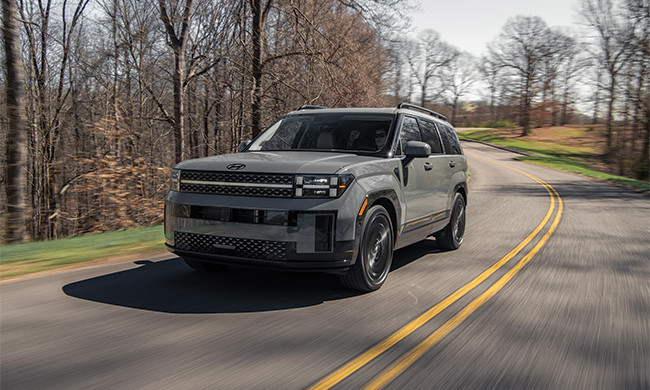
- Hyundai Santa Fe
- Chevrolet Blazer
- Honda Pilot
- Kia Sportage
- Honda Passport
Trucks:
- Chevrolet Colorado LT
- Chevrolet Silverado C3500
- Ford Maverick and Ranger
- Hyundai Santa Cruz SE
- Toyota Tundra CrewMax
Sedans and Coupes:
- Volkswagen Golf R
- Acura Integra
- Honda Prelude
- Kia K4
- Mazda3
Electric and Hybrids:
- Hyundai Santa Fe Hybrid
- Chevrolet Blazer EV
- Kia Sportage Hybrid
- Ford Escape Hybrid
- Honda CR-V Hybrid
“The smartest vehicle purchase isn’t always the one with the lowest sticker price,” Gao said. “It’s the one that delivers the best overall value over time. Comparing insurance before buying gives consumers another tool to make a more informed decision.”
Visit MercuryInsurance.com to see the full rankings and request a quote to get a more complete understanding of long-term ownership costs.
Photo courtesy of Hyundai America (Hyundai Santa Fe)
Photo courtesy of Shutterstock (couple using laptop)

SOURCE:
📰 Enjoying STM Daily News? Join the conversation!
💬 Leave a comment, share your thoughts, and subscribe to our newsletter for the latest stories, updates, and “News You Can Use This Moment!” delivered to your inbox.
Stay connected with STM Daily News!





