

health and wellness
Warmer temps bring soaring tick populations – here’s how to stay safe from Lyme disease
Tick bites are rising in 2026. Learn where Lyme disease is spreading, early symptoms like the bull’s-eye rash, treatment options, and practical ways to prevent tick bites.

Last Updated on June 6, 2026 by Daily News Staff
Lakshmi Chauhan, University of Colorado Anschutz
Spring’s warmer weather lures people outdoors – and into possible contact with ticks that spread Lyme disease.
Already, the 2026 tick season is booming. On April 23, the Centers for Disease Control and Prevention warned that emergency room visits due to tick bites are at their highest level since 2017. That may portend an especially severe season for Lyme disease and other tick-borne illnesses.
State health departments reported more than 89,000 cases of Lyme disease in 2023, the last year for which data is available. But public health experts believe that close to 500,000 people in the U.S. get Lyme disease every year.
As an infectious disease doctor with experience treating some of this infection’s long-term outcomes, I know that Lyme disease can be tricky because people often don’t notice tick bites and may overlook early symptoms of an infection. But left untreated, the infection can cause serious lingering – and even permanent – health issues.
Here’s what you need to know about Lyme disease to stay safe this season:
What causes Lyme disease?
Lyme disease, named after the Connecticut town where the disease was first identified in 1975, is caused by a group of bacteria called Borrelia – most often, the species Borrelia burgdorferi.
Deer ticks – also called black-legged ticks, and members of a group called Ixodes – transmit the disease after feeding on an infected animal, usually a bird, mouse or deer. When they then bite a person, they can transmit the bacteria into the person’s bloodstream.
Usually, the tick must attach for 24-48 hours to transmit the bacteria causing Lyme disease.
Where and when does Lyme disease occur?
Lyme disease can occur in most regions where deer ticks live.
These ticks are most active in late spring, summer and fall – usually April to November in most regions. They emerge when the temperature is above freezing. In years when winter is shorter, ticks can emerge earlier. And they may be active year-round in regions where freezing temperatures are rare.
Approximately 90% of U.S. cases are reported from states in the Northeast, mid-Atlantic from Virginia to eastern Canada, and Upper Midwest regions including Wisconsin, Michigan and Minnesota. A few cases occasionally pop up in California, Oregon and Washington.
Since 1995, the incidence of Lyme disease in the U.S. has almost doubled.
Warmer weather and changes in rainfall patterns now allow ticks to survive in new regions of the country – and for longer periods. But even in regions where ticks lived before, Lyme disease has become more common due to increases in deer populations. As woodland areas are increasingly being developed, it may be bringing the habitat of deer and mice closer to people, increasing the risk of transmission.
Lyme disease symptoms to watch for
Early symptoms of Lyme disease – fever, muscle aches and fatigue – generally emerge within three to 30 days after a tick bite. Another classic symptom in the first month is a target or bull’s eye rash at the site of tick bite, which occurs in about 70% to 80% of cases.
Other rashes following a tick bite can also occur. Some may be due to irritation from the bite, and not necessarily an infection.
If you know you’ve had a tick bite and experience flu-like symptoms – or if you see a bull’s-eye rash, whether you know you were bitten or not – it’s important to check with your healthcare provider about whether you should be treated with antibiotics.
A blood test for antibodies can help confirm the infection, but it can sometimes yield a false negative result, particularly in the first couple of weeks of the disease.
In most people, the rash goes away on its own. However, treatment may shorten its duration and is important for preventing other symptoms. A two- to four-week course of antibiotics can generally treat Lyme disease. Severe cases might require intravenous antibiotics.
A promising new vaccine for Lyme disease is currently being tested. In March 2026, Pfizer, the pharmaceutical company developing it, announced that in a late-stage study, the vaccine prevented the disease in 70% of people who received it.
Later Lyme symptoms
If left untreated, the bacteria that causes Lyme can spread, potentially causing longer-term symptoms. About 60% of people who get Lyme disease and don’t treat it can develop arthritis.
In rare cases, Lyme disease can also affect the heart and the nervous system. Inflammation in the brain or the tissues surrounding it, called meninges, can cause headaches and neck pain, as well as balance issues and memory and behavior changes. It can also cause nerve damage that results in numbness, tingling and muscle weakness.
These symptoms can appear right away or much later – sometimes months to years after infection. And in cases where the disease wasn’t promptly treated, late-stage symptoms can linger even after antibiotics kill the bacteria.
Scientists don’t fully understand why, but one intriguing study found that some particles from the bacteria’s cell wall leak into the joints and can persist after treatment, spurring ongoing inflammation and arthritis symptoms.
Another reason for Lyme’s long-term effects is that it can trigger autoimmune disease, which is when the immune system attacks its own cells. What’s more, because the nervous system may be particularly sensitive to damage caused by the bacteria and related inflammation, it may take an especially long time to heal. In some situations, the damage could be permanent.
Preventing Lyme disease
Until a vaccine becomes available, there are steps you and your family can take to help protect against Lyme disease:
- Use tick and insect repellents such as DEET and picaridin, which can be applied to skin, and permethrin, which is sprayed onto clothing, to keep ticks at bay. Treating clothing with permethrin may be especially beneficial, since the substance withstands several washes.
- Wear long-sleeve shirts and pants while you are gardening, hiking or walking through grass or woods to prevent tick bites. Wearing light-colored clothes makes ticks more visible, and tucking your pants into your socks can also prevent the little buggers from traveling from your pants, shoes and socks onto your legs.
- Remove your outdoor clothes immediately. Washing and drying clothes at high temperature can help kill any ticks that managed to hitch a ride. And a quick shower immediately after spending time outdoors can wash ticks off the skin before they have a chance to attach.
- If you spend time outdoors, perform daily tick checks, paying special attention to warm areas like your armpits, neck, ears and underwear line. If you find a tick attached, pull it off with tweezers, holding them perpendicular to the skin.
- If you find a tick that may have been on the skin for more than 36 hours, ask your healthcare provider whether a dose of preventive antibiotics – generally given within 72 hours of the bite – would be appropriate.
Lakshmi Chauhan, Associate Professor of Infectious Disease Medicine, University of Colorado Anschutz
This article is republished from The Conversation under a Creative Commons license. Read the original article.


(Feature Impact) Dry eye is one of the most overlooked symptoms of perimenopause, the phase of fluctuating hormones leading up to a woman’s final period, and menopause, the point in a woman’s life when she’s gone a year without a period.
In fact, 79% of women1 recognize hot flashes as a symptom of menopause, but only 14% recognize dry eye as a menopause-related symptom, according to the 2026 Bausch + Lomb (Peri)Menopausal Survey. What’s more, 78% of women1 were surprised to learn that dry eye is a symptom of perimenopause or menopause.
“Dry eye is still widely overlooked as a symptom of menopause, and many women think it’s just a minor nuisance, but the truth is it can significantly affect your daily life,” said Neda Gioia, OD, CNS, IFMCP, FOWNS, founder, Integrative Vision. “Early symptoms are often misunderstood or self-treated but it’s very important for women who experience symptoms to see an eye doctor and get an accurate diagnosis and treatment.”
During perimenopause and menopause, declining hormone levels can impact tear production, tear quality and tear evaporation, contributing to dry eye symptoms including redness, fluctuating vision and a gritty or tired feeling in the eyes, all of which can impact day-to-day comfort and quality of life. If left untreated, dry eyes may worsen over time, potentially impacting eye health and vision. Among peri-, menopausal and post-menopausal women who experienced dry eye, 80% said the symptom came as a surprise.
Respondents reported their dry eye symptoms caused difficulty reading (58%), difficulty using screens (53%), difficulty driving (26%) and reduced productivity (17%), underscoring the often-overlooked impact dry eyes can have on everyday life.1
However, there are a variety of products and treatment approaches available to help manage dry eye symptoms. For example, Bausch + Lomb offers a range of options designed to address the main causes of dry eye.
A doctor-recommended, clinically proven once-daily soft gel supplement that targets the key root causes of dry eyes, Blink NutriTears supports healthy tear production and provides lasting, continuous relief.* § As part of a comprehensive approach to dry eye management, the supplement can be used with Blink Triple Care Preservative Free Lubricant Eye Drops, which are designed to directly address tear evaporation, one of the leading causes of dry eye, and provide instant and long-lasting symptom relief.
An eye care professional can help determine the approach that’s right for each individual. To learn more about dry eye and products to help combat it, visit JustBlink.com.*These statements have not been evaluated by the Food and Drug Administration. This product is not intended to diagnose, treat, cure or prevent any disease.
12026 Bausch & Lomb (Peri)Menopause Survey via Suzy, n=402; Women ages 30–80+ who are perimenopausal, menopausal, or post-menopausal
§Based on a clinical study
SOURCE:
Bausch + Lomn

health and wellness
The Oral and Cardiovascular Health Connection: 4 Tips to Protect Your Teeth, Gums and Heart
People often think of dentists and doctors as totally separate healthcare professionals: one cares for your teeth and mouth while the other handles the rest of the body. In reality, the different systems in the human body are closely interconnected and oral health is no exception, making dentists a vital part of your healthcare team. Care for your teeth, gums and heart all at once using these tips.

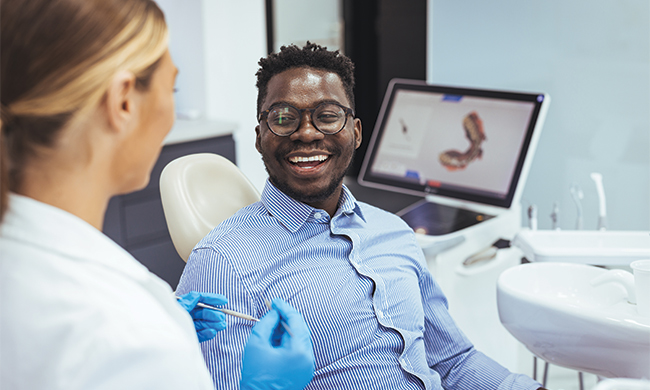
(Feature Impact) People often think of dentists and doctors as totally separate healthcare professionals: one cares for your teeth and mouth while the other handles the rest of the body. In reality, the different systems in the human body are closely interconnected and oral health is no exception, making dentists a vital part of your healthcare team.
Oral health and heart health have a particularly close connection, with inflammation at the core of it. When your gums are inflamed, the resulting bacteria can make their way from your mouth through your bloodstream, potentially contributing to your blood vessels constricting or becoming blocked. This, in turn, may force your heart to work harder and raise your blood pressure, putting you at risk of heart disease and stroke. More than 46% of adults in the U.S. have high blood pressure, and more than 40% of adults age 30 and older are affected by periodontal (gum) disease.
To help address these issues, the American Heart Association’s Healthy Smiles, Healthy Hearts initiative, in collaboration with Delta Dental of California, is encouraging dental teams to take a total-body perspective with their patients. Simple steps like blood pressure screenings during checkups can give a more complete picture of a person’s overall health. If a member of your dental care team pulls out a blood pressure cuff at your next appointment, it’s a good sign.
“The mouth is a gateway to the body and can often reveal more about your total body health than you may think,” said Daniel Croley, D.M.D., chief dental officer at Delta Dental of California and Affiliates. “Oral health professionals have a powerful opportunity to integrate more into their patients’ collective health care team beyond protecting their patients’ teeth By connecting oral health and heart health, this initiative helps dentists identify risks early and guide patients toward care that can improve and even save lives.”
Care for your teeth, gums and heart all at once using these tips from experts at the American Heart Association.
Follow a Brushing and Flossing Schedule
 Good dental health starts with a daily routine. If you don’t want to sheepishly cringe next time the dentist inquires about yours, brush at least twice a day and floss at least once a day to disrupt plaque-forming bacteria. Dentists recommend using toothpaste with fluoride and brushing your teeth and gums thoroughly yet gently, as applying too much pressure can wear away enamel and cause gum recession.
Eat a Healthy Diet and Limit Sugar
Most kids are used to hearing sugar will rot their teeth – and that’s not just a parental scare tactic to get their little hands out of the candy jar. Sugar feeds harmful bacteria in your mouth, producing acid that can cause cavities and gum disease. For a diet your heart and teeth will both appreciate, prioritize vegetables, lean proteins, complex carbohydrates and healthy fats, while limiting added sugars and refined carbohydrates.
Avoid Smoking and Tobacco Products
The connection between smoking and oral disease is well established: smokers face significantly higher risks of developing periodontal disease, losing teeth or being diagnosed with oral cancer. Cigarettes aren’t the only form of tobacco to worry about, either. Vaping, dipping and chewing tobacco can also harm your dental health by drying out your mouth and restricting blood flow to the gums. Since these products are also harmful to heart health, quitting or avoiding them offers plenty of worthwhile benefits. Seek support if you need help to kick the habit.
Communicate with Your Healthcare Team
Since your body’s systems are connected to each other, it’s helpful to talk to your dentist about your blood pressure and to your doctor about your oral health. Start thinking of your dentist as a key member of your integrated healthcare team. Don’t be afraid to share your medical history, discuss the side effects of any medications you’re taking and ask for personalized recommendations on caring for your teeth, gums and overall health.
To learn more about how to improve your oral and cardiovascular health, visit Heart.org/OralHealth.
Photos courtesy of Shutterstock

SOURCE:

5 Habits to Boost Immunity During Cold and Flu Season
(Feature Impact) Your immune system is your strongest ally during cold and flu season, working hard to keep you healthy as you start hearing those telltale coughs and sneezes all around. Help your body do its job well by adopting a few simple habits that naturally support its ability to fight off germs or recover faster.
Talk to your healthcare provider for personalized advice then work on making these habits normal in your household.
Get Regular Exercise
Exercise is like a wonder drug that can improve nearly every aspect of health and wellness. Physical activity increases blood flow, reduces long-term inflammation, helps immune cells circulate through the body to guard against invaders and may even flush bacteria out of your lungs and airways. Plan to fit at least 150 minutes of moderate exercise into each week, like a bike ride, brisk walk, yoga class or on-demand video workout.
Eat Foods That Support Immune Health
To keep your immune system fueled, experts recommend eating a varied diet featuring plenty of fruits, vegetables, nuts, seeds, whole grains and healthy fats like olive oil. Consider adding fresh grapes to your diet to enjoy benefits from their naturally occurring plant compounds.
Protecting the body starts all the way down at the cellular level, and grapes contain powerful polyphenols that support the health and function of cells. Studies indicate certain compounds in grapes, like resveratrol and flavonoids, support immune system function as well as brain, skin, GI and heart health.
These little fruits are easy to add to your diet, whether you enjoy sweet, juicy Grapes from California by the handful or toss them in a blender to make this California Grape Wellness Juice recipe. Support multiple aspects of wellness with the drink’s powerful combination of fruits and vegetables, delivering a variety of immune-boosting vitamins, minerals and antioxidants.
Stay Hydrated
Drinking enough water helps clean your lymphatic system, which is responsible for producing special white blood cells that fight germs. It also keeps membranes in your nose and mouth moist, decreasing infection risk. If you struggle to drink enough, eating water-rich foods like grapes also helps you improve hydration.
Practice Good Germ Hygiene
To increase your odds of staying healthy during peak illness season, hearken back to the tried-and-true hygiene advice your parents might have tried to drill into your head as a kid. Regularly wash your hands with warm water and soap, avoid touching your face while out and about, keep your distance from symptomatic people and disinfect commonly used surfaces like doorknobs when someone in the house or office is sick.
Sleep More, Stress Less
Before you start feeling stressed that you aren’t getting enough sleep, rest assured there are easy changes you can make to support your well-being in both areas. Try switching up your nightly routine to be oriented less around screens and more around calming activities that actually help you wind down, like yoga, meditation or reading.
Discover more health information and recipes at GrapesFromCalifornia.com.
California Grape Wellness Juice
Servings: 3 (1 cup each)
- 5 cups black or red Grapes from California
- 1/2 cup peeled raw beet slices
- 3/4 cup orange juice
- 1/4 cup lemon juice
- 1 small carrot, peeled and sliced
- 1 piece fresh turmeric (1-inch), peeled and sliced or1 teaspoon ground turmeric
- In high-speed blender, puree grapes, beet slices, orange juice, lemon juice, carrot and turmeric until smooth.
- Pour through fine mesh sieve, stirring to extract as much juice as possible, about 3 cups. Stop when mixture starts to get thick. Enjoy immediately or cover and refrigerate until ready to serve.
Notes: This juice can also be added to iced tea or fizzy water.
Nutritional information per serving: 230 calories; 3 g protein; 58 g carbohydrates; 0.5 g fat (2% calories from fat); 0 g saturated fat (0% calories from saturated fat); 0 mg cholesterol; 35 mg sodium; 0 g fiber.

SOURCE:
California Table Grape Commission





