

The Bridge
Large trunks discovered in a basement offer a window into the lives and struggles of early Filipino migrants
Abandoned trunks became time capsules of Little Manila’s Filipino migrant story.

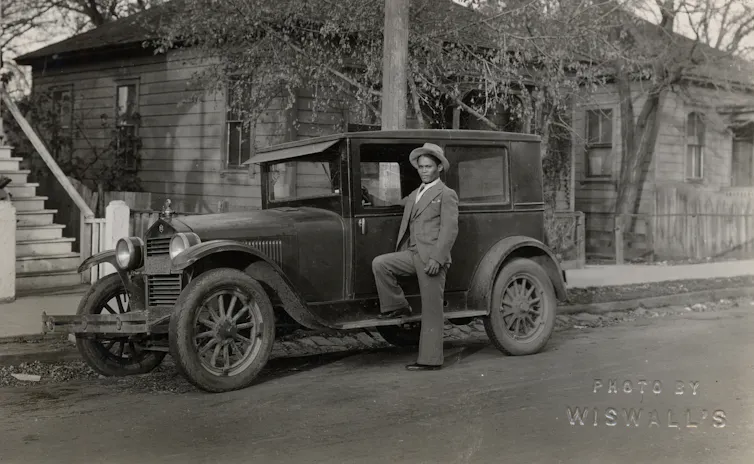
Sam Vong, Smithsonian Institution
In 2005, Antonio Somera, a Filipino American member of the Legionarios del Trabajo, a Masonic fraternal order, stumbled across a trove of mysterious-looking containers while he was cleaning out the basement of the Daguhoy Lodge in Stockton, California.
The containers, which had been abandoned for decades, included more than a dozen steamer trunks – large luggage chests designed for long-distance travel – and a handful of suitcases dating to the 1910s.
They belonged to former Legionarios del Trabajo members who at some point lived in the lodge but had passed away. Fraternal brothers packed their personal belongings to memorialize the deceased and hoped that surviving family members would later reclaim the objects.
These unusual time capsules and their contents tell a largely forgotten history of the men and women who had left the Philippines in the 1910s to work in Hawaii’s sugar industry and later settled in California’s San Joaquin Valley. Affectionately dubbed “Little Manila,” south Stockton became an important hub for one of the largest communities of Filipinos outside the Philippines.
Along with my curatorial assistant, Ethan Johanson, we studied the fascinating objects and photographs found in the trunks to tell the story of this largely forgotten cohort of migrants.
Here are five objects that capture the breadth and depth of life and work in California, Hawaii and other states for Filipino migrants. They’re among those featured in an exhibition created by the Smithsonian Asian Pacific American Center on display at the Smithsonian’s National Museum of American History. Titled, “How Can You Forget Me: Filipino American Stories,” the exhibition explores the making of the Filipino American community in Stockton between the 1910s and 1970s.
1. The steamer trunk
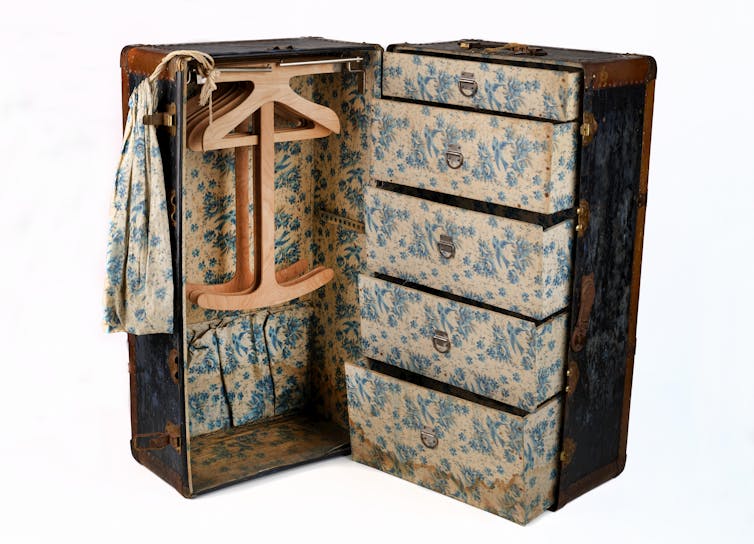
This steamer trunk formerly belonged to Anastacio Atig Omandam, a worker who arrived in Honolulu from the Philippine province Negros Oriental in January 1916.
In his 20s, Omandam embarked on a two- to three-week voyage across the Pacific Ocean, leaving his rural and impoverished hometown to earn money to send home.
Omandam was part of a group of mostly young, single men who were recruited by sugar plantation companies as early as 1906 to work in Hawaii’s booming sugar industry. Between 1906 and 1935, thousands of men – and later women – left their hometowns in the Ilocos and Visayas regions of the Philippines for Hawaii, toiling on plantations alongside other immigrant workers.
After the United States defeated Spain in the 1898 Spanish-American War, the Philippines was under U.S. colonial rule until 1935.
Filipinos living under American rule and in U.S. territories were designated as U.S. nationals, an ambiguous legal status. It allowed Filipinos to migrate relatively freely within U.S. territories, but they lacked constitutional protections and privileges such as citizenship and voting rights.
Omandam’s steamer trunk is emblematic of the trunks discovered by Somera in 2005. Omandam likely bought the trunk secondhand in the Philippines or Hawaii. While the origins of the trunk remain a mystery, it traveled with Omandam from job to job, reflecting the life of a migrant worker continually on the move. Many of these trunks – Omandam’s included – contained handwritten correspondence written in beautiful cursive, photographs, postcards, work tools, garments and pay stubs.
They were, in essence, time capsules of each of these men’s lives.
2. An asparagus knife
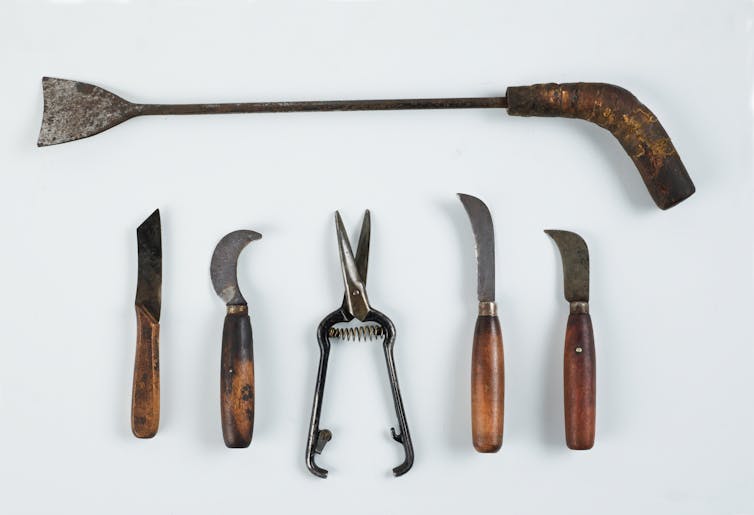
The large, unusual-looking metal instrument found in one trunk is a knife that farmworkers used to harvest asparagus.
During the harvesting season, typically between February and June, workers wielded this knife, using the sharp edge of the forked blade to pierce approximately 6 inches (15 centimeters) below the soil to cut the root of the asparagus.
Harvesting asparagus demanded dexterity and speed. Workers needed to constantly bend over to cut and collect the produce as they moved up and down the rows. This repetitive and backbreaking motion earned Filipino farmworkers the derogatory label “stoop labor.”
After a series of restrictive immigration laws barred Chinese, Japanese and other immigrant groups between the 1870s and 1920s, growers and agribusiness turned to hiring Filipinos and Mexicans to harvest seasonal crops such as lettuce, grapes and asparagus, among others.
When the harvesting season was over, Filipino farmworkers migrated to other West Coast states to harvest apples, hops and grapes. Others went to Alaska to can salmon.
The asparagus knife was found among the containers in the basement, alongside other grafting and pruning knives. These tools – still carrying the soil from which they were tilled – represent the work of the immigrant farmworkers of all backgrounds who helped build California’s agriculture industry, which continues to feed the nation today.
3. Three-piece suits
Three-piece suits were found in nearly all the steamer trunks, along with Stetson hats, bow ties and other fashionable accessories from the 1920s and ’30s.
Despite earning meager wages, most Filipino farmworkers saved their hard-earned money to purchase at least one tailored three-piece suit. Men donned these stylish garments to attend Sunday Mass, dinners and taxi-dance halls – where they could pay a small fee to dance with a professional dancer – or merely to strut their stuff down the streets of Stockton’s Little Manila.
Because Americans often looked down upon agricultural workers as uncultured and illiterate – “little brown monkeys” was a common slur – Filipinos resisted these negative characterizations by presenting themselves like the Hollywood movie stars they saw at the cinema. They understood the power of self-presentation: By embracing popular American styles, they sought to command respect and dignity.
They also wore these suits to pose for fancy photographs that were sent back home to the Philippines as a way to display affluence and social mobility – and to entice their compatriots to join them in the U.S.
Not everyone was enchanted. Some white Americans viewed these slick, handsomely dressed Filipino men as a sexual threat that could “steal” their women.
4. A pageant dress
This sequined dress belonged to Barbara Nambatac, a longtime resident of Livingston, California, who grew up among the “manongs,” a kinship title meaning older brother often used when referring to this early generation of Filipino migrants.
Her Filipino father was a cook who served food to Filipino and Mexican field hands on farms throughout California’s Central Valley, where he later met Nambatac’s Mexican mother.
In the 19th century and into the 20th century, California’s anti-miscegenation laws prohibited whites from marrying outside their race. At the same time, the shared experiences of Mexican and Filipino farmworkers often led to relationships between members of the two migrant groups.
When Barbara was 21, Nambatac’s father, who was a member of the Legionarios del Trabajo in Stockton, saved his modest salary to buy the dress from the Philippines and registered her in a beauty pageant that helped raise funds for the lodge. She ultimately took first place.
In Stockton’s Little Manila, pageants reinforced the importance of women in the community. Since women were discouraged from migrating, there was a gender imbalance in Filipino American communities that persisted for decades.
Filipinas who were able to migrate to the United States were important pillars in Stockton’s Filipino American community and assumed multiple roles. Women labored tirelessly alongside men in the fields, performed domestic work in households, advised young men to save money and go to school, and built and maintained networks that sustained local communities and transpacific ties back home in the Philippines.
Although the gender disparity was stark in Little Manila before the 1960s, the presence of women and girls ensured the survival of Filipino American families.
5. A pillowcase
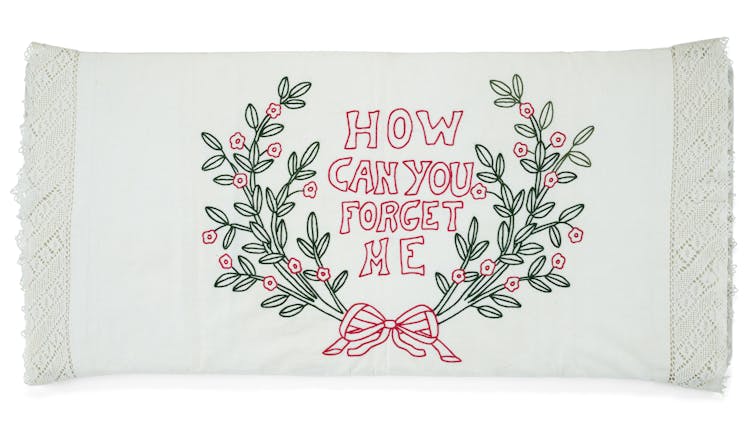
This pillowcase was one of three found in Anastacio Omandam’s steamer trunk.
It’s embroidered with floral patterns and a poignant message – “How Can You Forget Me” – which inspired the exhibition’s title. The pillowcases, along with letters and photographs, evoke the sentimental messages that connected friends, families and lovers separated by a vast ocean.
In the case of Omandam, a loved one from the Philippines likely sent him the pillowcase. The lack of punctuation is interesting: It serves as neither a question nor a declaration, but nonetheless urges Omandam to never let go of his memories of home.
In the same way, I hope the exhibition will implore visitors to never forget this generation of men and women who paved a path for other Filipino immigrants. More than 4.4 million Americans identify as having Filipino ancestry, according to the 2020 U.S. census.
These objects reflect the stories of ordinary people who were resourceful, creative, resilient and filled with hope in the face of discrimination, racism and legal exclusion.
The odds were constantly stacked against them. And yet they persevered – each strike into the soil, each coin saved to save up for a new suit, each lodge meeting and each beauty pageant taking them one step closer to forging a place for themselves in the American story.
Sam Vong, Curator of Asian Pacific American History, Smithsonian Institution
This article is republished from The Conversation under a Creative Commons license. Read the original article.
WATCH MORE • READ MORE • STAY INFORMED
STMDailyNews.com


5 Ways to Make a Difference in Your Community
(Feature Impact) Communities are strengthened every day by local organizations working to address challenges close to home, whether that’s helping families access food, supporting students, expanding opportunity or providing essential resources to those who need them most. Often operating with limited resources, these organizations are finding practical solutions that make a meaningful difference in neighborhoods and communities across the country.
Many of these efforts happen quietly, powered by people who volunteer their time, share their expertise, donate resources or simply help spread awareness of causes they care about.
For individuals looking to make a difference where they live, community involvement doesn’t have to start with a large commitment. Consider these five options to get involved.
Give Your Time
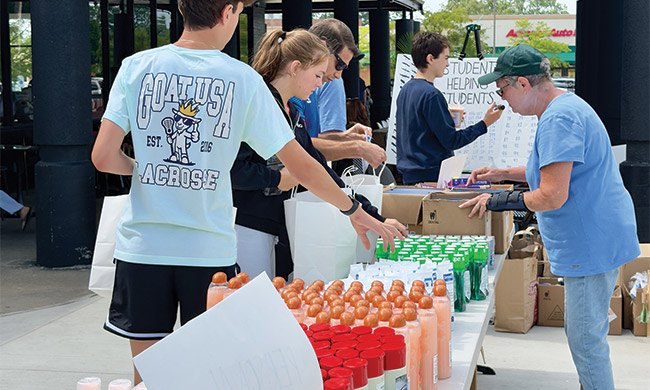
Giving your time is one of the most direct ways to support organizations serving your community. Whether it’s packing meals, mentoring young people or participating in neighborhood cleanups, volunteering allows people to contribute directly while gaining a deeper understanding of local needs.
 Share Your Skills
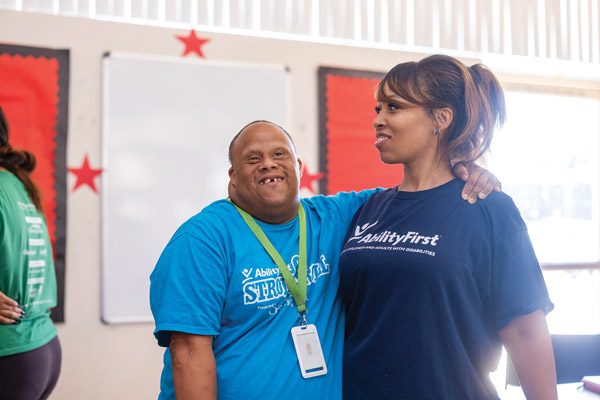
Nonprofits often need specialized skills in addition to hands-on volunteer support. Communications support, technology expertise, event planning, photography, financial guidance and other professional skills can help organizations expand their reach and strengthen their operations. Contributing the skills you’ve developed can often be just as valuable as donating time or resources.
Tap Into Your Workplace
Many employers offer opportunities to support causes that matter to their employees, such as volunteer programs, community grants or other charitable opportunities.
In communities across the country, local nonprofits can receive support through programs like the PepsiCo Foundation’s Community Impact Awards, where employees can nominate nonprofit organizations in their local communities for grant funding. Since 2022, the program has invested more than $3.7 million into organizations working on issues ranging from food access to education and community development.
“Across North America, there are organizations showing up every day for their communities, often without recognition and with limited resources,” said Monica Bauer, SVP of social impact, PepsiCo and president of the PepsiCo Foundation. “The Community Impact Awards help shine a light on organizations that are creating opportunities, solving local challenges and making a real difference in people’s lives. What makes this program special is that the recognition comes from PepsiCo associates who know these organizations firsthand and have seen their impact up close.”
This year, 100 organizations across the U.S. and Canada received $500,000 total in grants and teamed up with their respective nominating employees for volunteer activities supporting their missions, giving employees another opportunity to engage directly.
Give What You Can
Financial contributions are a valuable way to give back, but they aren’t the only option. Many organizations need non-monetary donations such as school supplies, canned goods, clothing, toys and technology. Before collecting items, check with organizations to learn what is most needed and how contributions can make the greatest impact.
Use Your Voice
One person can make a difference. When that person gets a friend or family member involved, more people can discover and support organizations doing important work. Sharing a nonprofit’s mission on social media, inviting others to volunteer or connecting people with causes you care about can help organizations reach new supporters and expand their impact.
Making a difference doesn’t require doing everything at once. Whether you contribute your time, skills, resources or advocacy, small actions can help make a big impact over time.
Across the U.S., nonprofit organizations are helping improve lives, create opportunities and respond to community needs every day. Their work is a reminder that meaningful change often starts locally with people willing to get involved.
Learn more about how individuals and organizations can help address some of the most pressing needs in their communities by visiting PepsiCo.com/about/social-impact.
SOURCE:
PepsiCo

Community
‘Give Like a Kid Again’ for Real-World Impact This Halloween
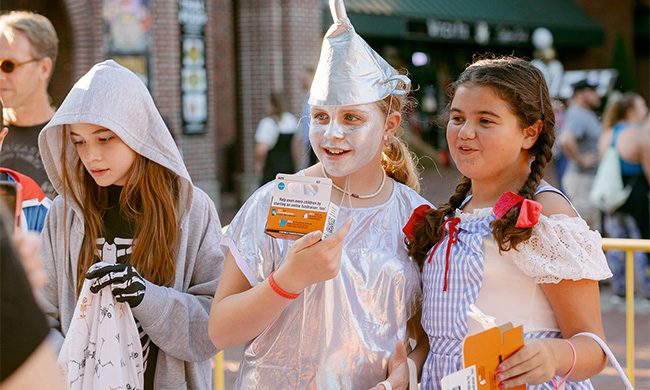
Costumes. Candy. Jack-o-lanterns glowing on porches. Halloween is filled with moments that spark children’s imaginations. This Halloween, children and families can “Give Like a Kid Again,” turning imagination into kindness and helping children around the world.

‘Give Like a Kid Again’ for Real-World Impact This Halloween
(Feature Impact)Costumes. Candy. Jack-o-lanterns glowing on porches. Halloween is filled with moments that spark children’s imaginations.
This Halloween, Trick-or-Treat for UNICEF is inviting children and families to “Give Like a Kid Again,” turning imagination into kindness and helping children around the world. For eight decades,the campaign has shown children that even the smallest act of kindness can travel farther than any front porch and shine brighter than any jack-o-lantern. As the longest-running youth engagement campaign in the United States, it has inspired generations of children to discover that when kids help kids, one Halloween tradition can turn into a lifetime of impact.
What started with just $17 in 1950, when a small group of children filled milk cartons with spare change to help children recovering from World War II, has grown into one of America’s most beloved Halloween traditions, raising nearly $200million to help the organization deliver lifesaving support for children around the world. Today, the iconic orange collection box reminds families that small acts of generosity can create lasting change.
“Each Halloween, Trick-or-Treat for UNICEF reminds us that even the smallest acts of generosity can grow into something extraordinary,” said Shelley Diamond, chief marketing officer, UNICEF USA. “For more than 75 years, this campaign has shown generations of children that you are never too young to make a difference and ‘Give Like a Kid Again’ is about passing that belief on to the next generation.”
Beyond supporting programs in more than 190 countries and territories, donations strengthen the organization’s global humanitarian supply network, delivering emergency essentials like therapeutic food, medicine, blankets and safe water to children impacted by conflict, disasters and disease.
- Be a mermaid and help make waves for clean water. Help provide safe water for a child for a year for $5.
- Be a vampire and help scare away preventable diseases. World Polio Day, just a week before Halloween, provides an opportunity to protect 200 children under age 5 from polio with a $43 donation.
- Be a scientist and help uncover lifesaving answers. Provide 25 malaria diagnostic tests for just $8, helping children receive timely treatment.
- Be a teacher and help children write their next chapter. Provide 1,000 pencils to help children put their ideas, lessons and dreams on paper for $30.
- Be a chef and help cook up a healthier future. Over a two-month period, $10 can treat 15 children by providing 450 packets of micronutrient powder.
- Be an astronaut and help a girl reach for the stars. To helpsix girls feel confident in school, $36 can provide reusable menstrual pads.
- Be a snowman and help bundle up a child against the cold. A donation of $50 could provide a child in an emergency setting with winter clothing, including a jacket, hat, scarf, mittens, socks, winter boots, a warm sweater and warm puffball trousers.
- Be a soccer player (or referee) and help kick off playtime. Provide up to four packages of soccer balls for a child-friendly space for $25 to help kids just be kids again.
This October, everyone can “Give Like a Kid Again” through the iconic orange collection box, online fundraising and family-friendly activities. Visit unicefusa.org/TOT2026 to join the tradition and help make a difference for children around the world.
SOURCE:
UNICEF
📰 Enjoying STM Daily News? Join the conversation!
💬 Leave a comment, share your thoughts, and subscribe to our newsletter for the latest stories, updates, and “News You Can Use This Moment!” delivered to your inbox.
Stay connected with STM Daily News!
Community
PenFed Foundation Raises Over $1.2M for Veterans and Military Families at 23rd Annual Military Heroes Golf Classic
The PenFed Foundation says it raised over $1.2 million for veterans and military families at its 23rd annual Military Heroes Golf Classic.

The PenFed Foundation for Military Heroes said it raised more than $1.2 million to support veterans and military families during its 23rd annual Military Heroes Golf Classic, held Monday, Aug. 31, according to a PRNewswire release. The nonprofit, based in the Washington, D.C. region, focuses on helping veterans transition “from service to success” through programs and grants aimed at military-connected communities.
“We are deeply grateful to our partners and supporters whose generosity and dedication make this event—and the Foundation’s work—possible,” said retired Air Force Lt. Gen. Bradford J. “B.J.” Shwedo, president of the PenFed Foundation, in a statement announcing the fundraising total.
At a dinner held the night before the Golf Classic, PenFed Credit Union President/CEO and PenFed Foundation CEO James Schenck recognized Ed Cody for 25 years of service on the foundation’s board of directors. Cody also serves as chairman of the PenFed Credit Union board and was credited with helping guide initiatives including Defender’s Lodge, the Afghan Rescue and Resettlement Program, the Veteran Entrepreneur Program, and grants supporting wounded, ill, and injured service members.
The foundation said it has provided more than $55 million in financial support to veterans, active-duty service members, and military families since it was founded in 2001. It also noted that PenFed Credit Union covers salaries and administrative costs, allowing more donations to go directly to programs.
What to watch for: How the foundation allocates the new $1.2M across its veteran transition and emergency support programs—and whether it announces new grant rounds tied to entrepreneurship and resettlement work.
SOURCE PenFed Foundation
Subscribe to our newsletter STM Morning Brief!





