

STM Blog
Vaccine mandates misinformation: 2 experts explain the true role of slavery and racism in the history of public health policy – and the growing threat ignorance poses today
Vaccine mandates misinformation: Florida’s vaccination rates decline as the state plans to eliminate mandates. Experts warn this could deepen health disparities, undermine public trust, and threaten community health, especially given the history of racism in vaccination practices.

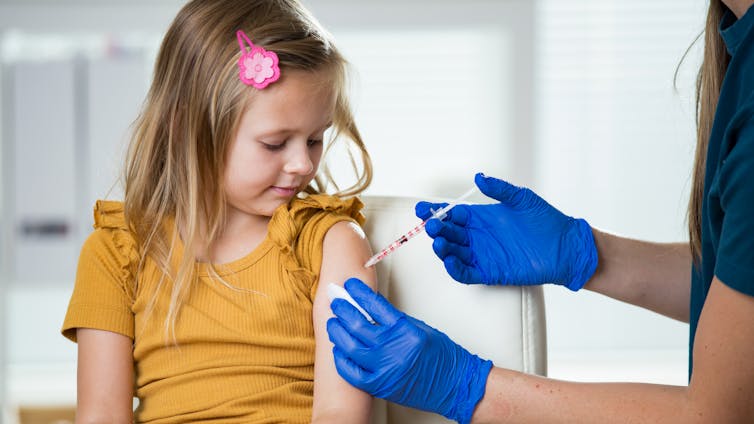
Vaccine mandates misinformation:
Lauren MacIvor Thompson, Kennesaw State University and Stacie Kershner, Georgia State University
On Sept. 3, 2025, Florida announced its plans to be the first state to eliminate vaccine mandates for its citizens, including those for children to attend school.
Current Florida law and the state’s Department of Health require that children who attend day care or public school be immunized for polio, diphtheria, rubeola, rubella, pertussis and other communicable diseases. Dr. Joseph Ladapo, Florida’s surgeon general and a professor of medicine at the University of Florida, has stated that “every last one” of these decades-old vaccine requirements “is wrong and drips with disdain and slavery.”
As experts on the history of American medicine and vaccine law and policy, we took immediate note of Ladapo’s use of the word “slavery.”
There is certainly a complicated history of race and vaccines in the United States. But, in our view, invoking slavery as a way to justify the elimination of vaccines and vaccine mandates will accelerate mistrust and present a major threat to public health, especially given existing racial health disparities. It also erases Black Americans’ key work in centuries of American public health initiatives, including vaccination campaigns.
What’s clear: Vaccines and mandates save human lives
Evidence and data show that vaccines work, as do mandates, in keeping Americans healthy. The World Health Organization reported in a landmark 2024 study that vaccines have saved more than 154 million lives globally in just the past 50 years.
In the United States, vaccines for children are one of the top public health achievements of the 20th century. Rates of eight of the most common vaccine-preventable diseases in school-age children dropped by 97% or more from pre-vaccine levels, preventing an estimated 1,129,000 deaths and resulting in direct savings of US$540 billion and societal savings of $2.7 trillion.
History of vaccine mandates in the United States
Vaccine mandates in the United States date to the Colonial period and have a complex history. George Washington required his troops be inoculated, the predecessor of vaccination, against smallpox during the American Revolution.
To prevent outbreaks of this debilitating, disfiguring and deadly disease, state and local governments implemented smallpox inoculation and vaccination campaigns into the early 1900s. They targeted various groups, including enslaved people, immigrants, people living in tenement and other crowded housing conditions, manual laborers and others, forcibly vaccinating those who could not provide proof of prior vaccination.
Although religious exemptions were not recognized by law until the 1960s, some resisted these vaccination campaigns from the beginning, and 19th-century anti-vaccination societies urged the rollback of state laws requiring vaccination.
By the turn of the 20th century, however, the U.S. Supreme Court also began to intervene in matters of public health and vaccination. The court ultimately upheld vaccine mandates in Jacobson v. Massachusetts in 1905, in an effort to strike a balance between individual rights with the need to protect the public’s health. In Zucht v. King in 1922, the court also ruled in favor of vaccine mandates, this time for school attendance.
Vaccine mandates expanded by the middle of the 20th century to include vaccines for many dangerous childhood diseases, such as polio, measles, rubella and pertussis. When Jonas Salk’s polio vaccine became available, families waited in long lines for hours to receive it, hoping to prevent their children from having to experience paralysis or life in an iron lung.
Scientific studies in the 1970s demonstrated that state declines in measles cases were correlated with enforcement of school vaccine mandates. The federal Childhood Immunization Initiative launched in the late 1970s helped educate the public on the importance of vaccines and encouraged enforcement. All states had mandatory vaccine requirements for public school entry by 1980, and data over the past several decades continues to demonstrate the importance of these laws for public health.
Most parents also continue to support school mandates. A survey conducted in July and August 2025 by The Washington Post and the Kaiser Family Foundation finds that 81% of parents support laws requiring vaccines for school.
Black Americans’ long fight for public health equity
Despite the proven success of vaccines and the importance of vaccine mandates in maintaining high vaccination rates, there is a vocal anti-vaccine minority in the U.S. that has gained traction since the COVID-19 pandemic.
Misinformation proliferates both online and off. Some of the misinformation originates in the historical realities of vaccines and social policy in the United States.
When Ladapo, the Florida surgeon general, invoked the term “slavery” to refer to vaccine mandates, he may have been referring to the history of racism in the medical field, such as the U.S. Public Health Service Untreated Syphilis Study at Tuskegee. The study, which started in 1932 and spanned four decades, involved hundreds of Black men who were recruited without their knowledge or consent so that researchers could study the effects of untreated syphilis. Investigators misled the participants about the nature of the study and actively withheld treatment – including penicillin, which became the standard therapy in the late 1940s – in order to study the effects of untreated syphilis on the men’s bodies.
Today, the study is remembered as one of the most egregious instances of racism and unethical experimentation in American medicine. Its participants had enrolled in the study because it was advertised as a chance to receive expert medical care but, instead, were subjected to lies and painful “treatments.”
Despite these experiences in the medical system, Black Americans have long advocated for better health care, connecting it to the larger struggle for racial equality.
Vaccination is no exception. Despite the fact that they were often the subject of forced innoculation, enslaved people helped to lead the first American public health initiatives around epidemic disease. Historians’ research on smallpox and slavery, for example, has found that inoculation was widely accepted and practiced by West Africans by the early 1700s, and that enslaved people brought the practice to the Colonies.
Although his role is often downplayed, an African man known as Onesimus introduced his enslaver Cotton Mather to inoculation.
Throughout the next century, enslaved people often continued to inoculate each other to prevent smallpox outbreaks, and enslaved and free people of African descent played critical roles in keeping their own communities as healthy as possible in the face of violence, racism and brutality. The modern Civil Rights Movement explicitly drew on this history and centered health equity for Black Americans as one of its key tenets, including working to provide access to vaccines for preventable diseases.
In our view, Ladapo’s reference to vaccines as “slavery” ignores this important and nuanced history, especially Black Americans’ role in the history of preventing communicable disease with vaccines.
Lessons to learn from Tuskegee
Ladapo’s word choice also runs the risk of perpetuating the rightful mistrust that continues to exist in communities of color about vaccines and the American health system more broadly. Studies show that lingering effects of Tuskegee and other instances of medical racism have had real consequences for the health and vaccination rates of Black Americans.
A large body of evidence shows the existence of persistent health disparities for Black people in the United States compared with their white counterparts, leading to shorter lifespans, higher rates of maternal and infant mortality and higher rates of communicable and chronic diseases, with worse outcomes.
Eliminating vaccine mandates in Florida and expanding exemptions in other states will continue to widen these already existing disparities that stem from past public health wrongs.
There is an opportunity here, however, for health officials, not just in Florida but across the nation, to work together to learn from the past in making American public health better for everyone.
Rather than weakening vaccine mandates, national, state and local public health guidance can focus on expanding access and communicating trustworthy information about vaccines for all Americans. Policymakers can acknowledge the complicated history of vaccines, public health and race, while also recognizing how advancements in science and medicine have given us the opportunity to eradicate many of these diseases in the United States today.
Lauren MacIvor Thompson, Assistant Professor of History and Interdisciplinary Studies, Kennesaw State University and Stacie Kershner, Deputy Director of the Center for Law, Health & Society, Georgia State University
This article is republished from The Conversation under a Creative Commons license. Read the original article.
The Bridge is a section of the STM Daily News Blog meant for diversity, offering real news stories about bona fide community efforts to perpetuate a greater good. The purpose of The Bridge is to connect the divides that separate us, fostering understanding and empathy among different groups. By highlighting positive initiatives and inspirational actions, The Bridge aims to create a sense of unity and shared purpose. This section brings to light stories of individuals and organizations working tirelessly to promote inclusivity, equality, and mutual respect. Through these narratives, readers are encouraged to appreciate the richness of diverse perspectives and to participate actively in building stronger, more cohesive communities.
https://stmdailynews.com/the-bridge


College Life
Is College Worth It? New U.S. News Rankings Put More Weight on What Graduates Earn
Is college worth it? MIT has taken the No. 1 spot in the 2027 U.S. News Best Colleges rankings, ending Princeton’s 15-year run. But a new Earnings by Major metric could be even more important for families asking whether college is worth the investment.
For millions of students and families, choosing a college increasingly comes down to a basic question: Is college worth it?
The latest U.S. News & World Report Best Colleges rankings are attempting to provide another piece of information to help answer that question.
The 2027 rankings place the Massachusetts Institute of Technology (MIT) at No. 1 among National Universities, ending Princeton University’s 15-year run at the top. But perhaps the bigger story for prospective students isn’t which university occupies the No. 1 position.
It’s a significant change in how U.S. News measures the value of attending college.
For the first time, the rankings include an Earnings by Major factor designed to examine what graduates earn after leaving school — and to compare those earnings with graduates who studied the same subjects elsewhere.
Is College Worth It? U.S. News Looks Beyond Graduation
College has traditionally been promoted as an investment in a person’s future. But as families confront tuition, housing expenses and the possibility of student debt, simply earning a degree may no longer be enough information when deciding where — or whether — to attend.
Students increasingly want to know what happens after graduation.
The new U.S. News Earnings by Major metric examines graduate earnings four years after graduation using data from the U.S. Department of Education’s College Scorecard.
Importantly, the system doesn’t simply compare the average salary of graduates from one university with another.
Instead, earnings are compared within specific academic disciplines.
That distinction matters.
A university graduating large numbers of engineers, computer scientists or students entering other relatively high-paying occupations could otherwise appear to produce stronger financial outcomes simply because of the subjects its students choose to study.
Comparing graduates within similar fields is intended to provide a clearer picture of how graduates from different institutions fare financially.
From Student Debt to Graduate Earnings
The new Earnings by Major metric replaces the Graduate Indebtedness factor previously used by U.S. News.
That represents an important shift in perspective.
Instead of focusing primarily on how much debt students accumulate, the new measure looks at one aspect of what students may receive financially from their education after entering the workforce.
The metric examines employed federal financial aid recipients whose highest degree is a bachelor’s degree.
According to U.S. News, the approach is intended to reduce the influence of family financial advantages and provide a better indication of the economic value institutions may contribute to graduates.
That doesn’t mean earnings alone determine whether a college education is worthwhile.
But for a student potentially investing tens of thousands of dollars — and several years of their life — knowing how graduates in a particular major perform economically can be an important part of the decision.
MIT Takes the No. 1 Spot
Against that changing methodology, MIT moved into the No. 1 position among National Universities in the 2027 rankings.
The top three are:
- Massachusetts Institute of Technology
- Princeton University
- Harvard University
Princeton’s move to second place ends a run at No. 1 that began with the 2012 edition of the rankings.
Among National Liberal Arts Colleges, Williams College remained No. 1, followed by Amherst College at No. 2. Bowdoin College, Claremont McKenna College, Pomona College and Swarthmore College tied for third.
Nearly 1,700 institutions were evaluated in the 2027 edition.
Outcomes Are Becoming a Bigger Part of the Equation
The addition of graduate earnings is part of a broader emphasis on student outcomes in the U.S. News methodology.
U.S. News says outcomes now account for more than half of a school’s total score.
Institutions can be evaluated using as many as 17 weighted measures, including graduation and retention rates, social mobility for lower-income students, post-graduate earnings, faculty resources and academic peer assessments.
The shift reflects a changing conversation surrounding higher education.
For generations, students were often encouraged to focus heavily on getting into the most prestigious college possible. Today’s students may also be asking more practical questions:
How much will it cost?
How much financial aid will I receive?
How much debt might I have when I graduate?
What do graduates in my intended major earn?
And perhaps most importantly:
Will the investment pay off for me?
College Value Isn’t Just About Salary
Graduate earnings can provide useful information, but salary shouldn’t be treated as the sole measurement of the value of higher education.
Different careers have dramatically different compensation structures.
A graduate pursuing teaching, public service, social work, the arts or nonprofit work may earn less than someone entering engineering, finance or technology while still considering their education worthwhile.
There are also benefits of higher education that are difficult to capture in a salary statistic.
That’s why students comparing schools may want to look beyond an institution’s overall ranking and examine factors such as net price after financial aid, scholarships, graduation rates, student debt, internship opportunities, career placement, location and the strength of the program they actually intend to study.
The best-known university isn’t automatically the best financial or educational choice for every student.
Economic Diversity Also Gets Attention
The 2027 rankings also highlight economic diversity among highly ranked institutions.
According to U.S. News, MIT and Princeton rank third and fourth, respectively, among the top 25 National Universities in the percentage of students receiving federal Pell Grants.
Pell Grants generally assist undergraduate students with significant financial need and typically do not have to be repaid.
Among the top 25 National Liberal Arts Colleges, Amherst College ranked highest for economic diversity under the U.S. News measure.
A New Ranking Looks at In-State Value
U.S. News is also placing additional attention on affordability for students considering public universities.
The 2027 edition introduces a Best Value Schools for In-State Students ranking, which evaluates public universities based on academic quality and affordability for residents.
The University of North Carolina at Chapel Hill took the No. 1 position in the inaugural ranking.
That category could be particularly relevant to families deciding whether the prestige associated with attending a private or out-of-state university justifies potentially higher costs compared with attending a public institution in their home state.
The Rankings Look Different This Year
There is another important caveat when comparing the 2027 results with previous years.
Changes to the Carnegie Classification framework resulted in approximately 20% of previously ranked institutions moving into different U.S. News categories.
Because some colleges are now being compared against different groups of institutions, their 2027 rankings may not be directly comparable with previous years.
The changes also expanded eligibility, allowing additional institutions specializing in areas such as engineering, business and health to enter the rankings.
U.S. News also introduced an undergraduate economics specialty ranking while continuing rankings covering areas such as social mobility, innovation, historically Black colleges and universities, artificial intelligence programs, internships, undergraduate research and study-abroad opportunities.
Public Universities, HBCUs and Social Mobility
Among public National Universities, the University of California, Berkeley and UCLA tied for the No. 1 position, followed by the University of Michigan–Ann Arbor.
The top three Historically Black Colleges and Universities were:
- Spelman College
- Howard University
- Tuskegee University
For social mobility among National Universities, Florida International University and the University of California, Riverside tied for No. 1, with Oakland City University ranked third.
These categories illustrate another reason students may want to look deeper than a school’s overall national position. Different rankings can reveal institutions performing particularly well in areas that may matter more to an individual student.
So, Is College Worth It?
There isn’t one answer that applies to every student.
The cost of attending, financial aid, chosen major, career goals, likelihood of graduating and potential debt can dramatically change the financial equation.
A college with a famous name and high national ranking could be a poor financial choice for one student while a less prominent public university with generous financial aid could be an excellent investment for another.
That’s what makes the addition of Earnings by Major noteworthy.
Instead of asking only “Which college ranks highest?”, prospective students now have another reason to ask a much more personal question:
“What am I paying for — and what could I realistically get in return?”
MIT replacing Princeton at No. 1 makes the headline.
But for students and parents trying to decide whether college is worth the cost, the growing emphasis on outcomes, affordability and post-graduation earnings may ultimately be the more important story.
Source: U.S. News & World Report, 2027 Best Colleges rankings, released September 22, 2026.
U.S. News & World Report press release:
MIT Claims No. 1 Spot in U.S. News 2027 Best Colleges Rankings PR Newswire
Stay Informed with STM Daily News
From education and personal finance to technology, lifestyle, transportation and the stories shaping our everyday lives, STM Daily News keeps you informed about what matters — and why it matters. Get more news, useful insights and the latest updates by visiting STM Daily News and subscribe to stay connected to the stories worth knowing.
Forgotten Genius Fridays
Sarah Boone Improved the Ironing Board by Thinking About the Sleeve
Sarah Boone didn’t invent the first ironing board. The New Haven dressmaker patented a clever improvement shaped for pressing sleeves and fitted clothing.

Forgotten Genius | STM Daily News
Try ironing a sleeve on a wide, flat board. The fabric bunches, the seams curve, and pressing one side can leave a crease on the other. For dressmaker Sarah Boone, that everyday frustration presented a problem she could solve.
Working in New Haven, Connecticut, Boone designed an ironing board shaped for sleeves and fitted garments. Her board was narrow enough for a sleeve to slip over it, allowing one side to be pressed without flattening the other. Its curved edges followed the lines of a sleeve’s seams, while its supports helped position the board for different uses.
Boone filed her patent application in 1891. On April 26, 1892, she received U.S. Patent No. 473,653 for her improvement.
Boone did not invent the first ironing board. What she patented was a thoughtful redesign for a particular task. That distinction makes her achievement more interesting: she understood how the tool was used, recognized where it fell short, and changed its shape to make the work easier.
The patent drawing brings her idea to life. Instead of the broad surface most people picture when they hear “ironing board,” Boone’s design looks almost like the part of a garment it was meant to support. It is a practical solution from someone who knew the job firsthand.
That is the heart of Sarah Boone’s story. Invention does not always begin with an entirely new machine. Sometimes it begins when a person doing familiar work asks a better question: What would this tool look like if it truly fit the task?
Boone answered with a design—and secured a place in the history of Black innovation.
References:
Sarah Boone’s Original Ironing Board Patent — U.S. Patent No. 473,653, granted April 26, 1892. Includes her description, construction details, and original drawings.
USPTO: Beyond Baker’s List—Black Innovation Then and Now — Identifies Boone as a New Haven dressmaker who patented an improved ironing board shaped for bodices and sleeves.
USPTO: Found on Baker’s List — Background on Henry Baker’s work documenting Black patent holders, providing historical context for the Forgotten Genius series.
Explore more inventors and innovators in STM Daily News’ Forgotten Genius series.
Sources: U.S. Patent and Trademark Office; Sarah Boone’s original 1892 patent, available through Google Patents.
unknown
Did Jackie Gleason See Aliens? Inside the Strange Nixon–UFO Legend
Jackie Gleason reportedly told his wife that President Richard Nixon arranged for him to view preserved extraterrestrial bodies at a Florida Air Force base. Here is what we know—and why the remarkable story remains unverified.
The beloved comedian reportedly told his wife that President Richard Nixon arranged for him to view preserved extraterrestrial bodies at a Florida Air Force base. Decades later, the extraordinary story remains fascinating—but unverified.
Jackie Gleason is remembered as “The Great One,” the larger-than-life entertainer who turned bus driver Ralph Kramden into one of television’s most enduring characters on The Honeymooners. Away from the cameras, however, Gleason had another consuming interest: UFOs, psychic phenomena and the possibility of extraterrestrial life.
That interest eventually became the foundation of one of the strangest stories ever associated with an American president and a Hollywood celebrity. According to Gleason’s second wife, Beverly McKittrick, her husband came home late one night in 1973 and claimed that President Richard Nixon had helped him see the preserved bodies of extraterrestrial beings at Homestead Air Force Base in Florida.
Did Jackie Gleason really see aliens?
The honest answer is that we do not know. The allegation is remarkable, but the available evidence never rises above an uncorroborated story attributed to Gleason years after the supposed event.
Gleason’s fascination with UFOs was real
There is little question that Gleason took the UFO subject seriously. He reportedly assembled a substantial personal library devoted to UFOs, the paranormal and related mysteries. His unusual circular home in New York—often nicknamed “The Mothership”—only strengthened his public association with flying saucers, although its distinctive architecture is not evidence of an extraterrestrial encounter.
Gleason also had a genuine social connection with Nixon. The two men shared an interest in golf and spent time together in Florida. That documented friendship is the factual starting point from which the more sensational story grew.
The alleged trip to Homestead Air Force Base
McKittrick said that Gleason returned to their Florida home at about 11:30 one evening looking disturbed. According to her account, he told her that Nixon had arrived without the usual presidential entourage and taken him to Homestead Air Force Base, south of Miami.
Once there, Gleason allegedly entered a secured building where he saw small humanoid bodies preserved inside glass-topped containers. Published versions differ over the number of bodies and some physical details, but they generally describe child-sized beings with oversized heads.
Importantly, McKittrick did not claim to have accompanied the men or witnessed anything at the base. Her account was based entirely on what she said Gleason told her after returning home.
The story became public in 1983, years after the alleged visit and after the couple had divorced. It circulated widely through tabloid reporting, UFO publications and later books, gradually becoming part of UFO folklore.
Why the story remains unverified
No authenticated photograph, visitor record, military document or firsthand statement from Nixon has emerged to confirm the alleged trip. Gleason also never provided investigators with a signed affidavit describing the experience.
UFO researcher Larry Bryant reportedly sought records from Homestead and tried to obtain a statement from Gleason, but those efforts produced no confirming documentation. Gleason’s refusal to address the account publicly has sometimes been portrayed as suspicious, but silence is not proof that an event occurred.
There is another important complication: McKittrick later expressed uncertainty about her former husband’s story.
During telephone interviews conducted by researcher Kenny Young in 2003, she stood by her recollection that Gleason told her he had seen “dead aliens.” She also acknowledged that, as the years passed, she wondered whether he might have invented the explanation because he had been out late. She declined to appear on camera and said the story should be authenticated first.
Her later comments do not establish that the account was false, but they considerably weaken any attempt to treat it as verified history.
Could a president have slipped away unnoticed?
Some versions of the legend emphasize that Nixon supposedly drove to Gleason’s house alone and then entered a military installation without his Secret Service detail. Presidents have occasionally sought privacy or slipped away from tightly managed schedules, but a secret nighttime excursion of this nature would have involved serious security and logistical obstacles.
The claim becomes even more difficult to accept when we consider what Nixon allegedly revealed. If the United States possessed extraterrestrial bodies, granting a comedian personal access to them would have represented an extraordinary breach of national security—with no apparent official purpose and no surviving documentation.
None of that makes the episode logically impossible. It does, however, mean that the story requires exceptionally strong evidence. That evidence has never appeared.
A compelling legend, not a confirmed encounter
The Jackie Gleason story endures because it combines three irresistible ingredients: a famous comedian fascinated by UFOs, a secretive American president and a nighttime visit to a military base containing an alleged government secret.
What can be established is that Gleason was deeply interested in UFOs, knew Nixon and was said by his former wife to have made an extraordinary claim. What cannot be established is that Nixon took him to Homestead Air Force Base or that preserved extraterrestrial bodies were ever stored there.
So, did Jackie Gleason see aliens?
Perhaps he believed that he did—or perhaps he simply told an unforgettable story. Until corroborating evidence emerges, the alleged encounter belongs in the intriguing borderland between celebrity history and American UFO mythology.
Sources and further reading
- The Black Vault: Jackie Gleason and the Pickled Alien
- University of Miami Libraries: The Jackie Gleason Collection
- U.S. Department of Defense: All-domain Anomaly Resolution Office
Step into The Unknown, where STM Daily News explores the strange phenomena, unexplained encounters and enduring mysteries that continue to challenge what we think we know. From UFO sightings and paranormal events to historical mysteries and unusual scientific discoveries, we examine the stories, evidence and competing explanations—without losing our sense of wonder. https://stmdailynews.com/science/unknown/





