

health and wellness
Heat waves can leave homes dangerously hot – even for young, healthy adults
Heat waves can turn homes into dangerous heat traps—especially during blackouts or in houses without AC—pushing indoor temperatures and humidity into lethal territory even for young, healthy adults, not just the elderly.


Heat waves can leave homes dangerously hot – even for young, healthy adults
Zoltan Nagy, Eindhoven University of Technology
Most people know that heat waves can be dangerous, but what they may not realize is that the heat indoors can be much worse than outdoors.
When the power goes out and air conditioning stops, or in homes without cooling, a house starts to function like a greenhouse during a heat wave. Heat enters through windows and walls and has nowhere to go. Air stagnates.
Within hours, indoor temperatures can climb well above what the thermometer shows outside, especially on upper floors and in rooms with south-facing windows. Over longer periods, especially if temperatures don’t cool off overnight, conditions can become lethal.
Most heat-related deaths occur indoors. When a heat dome sent temperatures soaring in the Pacific Northwest in 2021, 98% of the more than 600 deaths in British Columbia happened inside homes. Washington and Oregon also saw high numbers of deaths in homes that lacked air conditioning.
In Europe, where only 1 in 10 households have air conditioning, heat waves killed an estimated 60,000 people in 2022 and 47,000 in 2023, largely inside buildings never designed for these temperatures.
People of all ages are at risk in heat waves like these. I spent eight years at the University of Texas at Austin studying how buildings respond to extreme heat. In a recent study, my team assessed the heat risk in every single-family home in Austin.
We found that even younger, healthy adults face far more risk than they realize.
How hot is too hot for a human body?
Your body maintains a core temperature of about 98.6 degrees Fahrenheit (37 degrees Celsius). To cool down, it pushes blood to the skin and sweats. But when air temperature is high, that convective cooling weakens. When humidity is also high, sweat cannot evaporate.
If the body has no way to release heat, core temperature rises. If the core temperature increases past about 104 F (40 C), the body’s thermoregulation starts to fail. Past 109 F (42.8 C), death becomes likely.
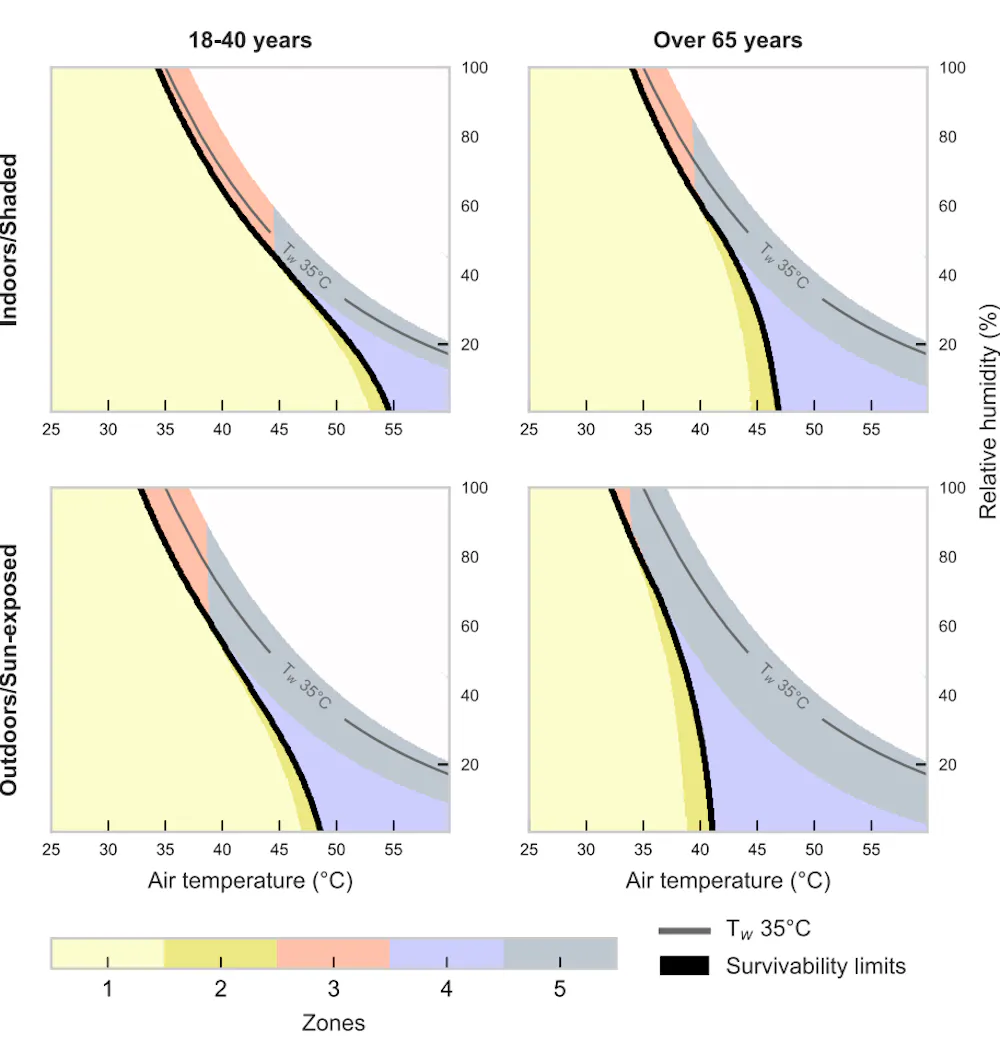
What makes indoor heat especially dangerous is that it does not let up at night in homes that lack air conditioning. Outdoor temperatures typically drop after sunset, and someone outside can get a few hours of recovery. But a poorly insulated home that has been absorbing heat all day releases that heat slowly, keeping indoor temperatures elevated through the night. A person inside the home never gets a break.
After two or three nights of this, even healthy people start to be at serious risk for heat-related illnesses.
Why homes heat up more than people expect
People tend to underestimate indoor heat for a few reasons.
One is that the thermostat typically sits on one wall in one room. It does not tell what the temperature is in an upstairs bedroom or near a sun-facing window. In older, underinsulated homes, the actual felt temperature can exceed 90 F (32.2 C) even when a thermostat reads 75 F (23.9 C). The hot walls, ceilings and windows can radiate heat directly onto your body.
Another reason is that people assume all homes respond to heat the same way. However, a newer home with double-pane windows and good insulation acts like a thermos, keeping heat out for a longer time. An older home with single-pane windows and cracks in the walls heats up fast.
Two houses on the same street, exposed to the same outdoor conditions, can have completely different temperatures inside. And in a blackout, where neither home has cooling, those differences can become a matter of life and death.
What we found in Austin
Our study combined two datasets. From Austin’s tax appraisal records, we pulled basic property information, such as the year the home was built, the size and the number of stories for each of the city’s 213,000 single-family homes. We then matched each home to the most similar energy simulation models in a U.S. Department of Energy database that contains thousands of detailed, physics-based building energy models representing the U.S. residential building stock.
Using those models, we simulated each building’s indoor temperatures over time during a three-day heat wave and power outage with outdoor temperatures above 110 F (43 C).
We found that 85% of homes got hot enough to pose a significant risk of death for an elderly occupant. But what surprised us was the risk to younger people.
Under today’s climate conditions in Austin, about 15% of homes already have the potential to get hot enough without air conditioning to pose serious heat risks to healthy adults. Under future warming scenarios, that number jumps to as high as 65% if average summer highs reach 104 F (40 C). Further, climate projections for Austin show that heat waves will double in frequency by the end of the century.
We found three types of buildings and accompanying risks:
- Resilient homes, which are newer and well insulated, tended to have temperature and humidity conditions that would be survivable for an elderly occupant throughout the simulated heat wave with blackout.
- Critical-risk buildings, which are mostly older homes, became dangerous almost immediately.
- And then there was the middle group – homes where temperatures rose slowly during the simulated blackout, day by day, possibly giving occupants a false sense of security until it was too late.
Texas has already seen conditions like our case study’s – a heat wave paired with a power outage. In 2024, a derecho knocked out power for nearly 900,000 Houston households while the heat index climbed to 100 F (37.8 C). Seven weeks later, Hurricane Beryl cut power to 2.6 million homes, leaving them without power for over three days, with temperatures over 90 F (32.2 C).
What you can do to stay safe
If you can’t get cooling at home, there are steps you can take that can help.
Move to the lowest floor of your home, where it will be coolest. Close the blinds and curtains on sun-facing windows. Drink water constantly to stay hydrated, which is essential for regulating body temperature.
If you’re facing a blackout, be sure to also check on elderly neighbors, especially those living alone. You can also try to find a public cooling center; many cities now open them during heat emergencies.
Longer term, upgrades such as reflective window film, attic insulation and lighter-colored roofing can reduce how much a home heats up. After the 2021 heat dome, British Columbia’s coroner recommended updating building codes to address heat.
Our own findings point in the same direction: We propose that new homes should be required by building codes to maintain conditions in which at least light physical activity remains possible for all occupants for at least 72 hours during a power outage.
As summers get hotter with climate change and blackouts become more frequent, the risks of people suffering heat illnesses will only continue to rise.
Zoltan Nagy, Professor of Building Services, Eindhoven University of Technology
Heat waves can leave homes dangerously hot – even for young, healthy adults
This article is republished from The Conversation under a Creative Commons license. Read the original article.
💪 Your health journey starts here! Explore the latest health news, fitness tips, wellness trends, and healthy living advice. Share your thoughts in the comments and subscribe to the STM Daily News newsletter to stay informed and inspired every day.


Women's Health
Menopause changes your mouth. Most women have no idea.
Menopause changes your mouth: Many women are familiar with the most talked-about symptoms of menopause – hot flashes, disrupted sleep, brain fog and mood swings. Far fewer know that dry mouth and sensitive teeth belong on that list too.


Menopause changes your mouth. Most women have no idea.
(Sheeka Sanahori) Many women are familiar with the most talked-about symptoms of menopause – hot flashes, disrupted sleep, brain fog and mood swings. Far fewer know that dry mouth and sensitive teeth belong on that list too.
There’s a name for it: menopause mouth. According to survey data from Delta Dental Insurance Company, 83% of women 40 and older in menopause aren’t aware of any of its symptoms.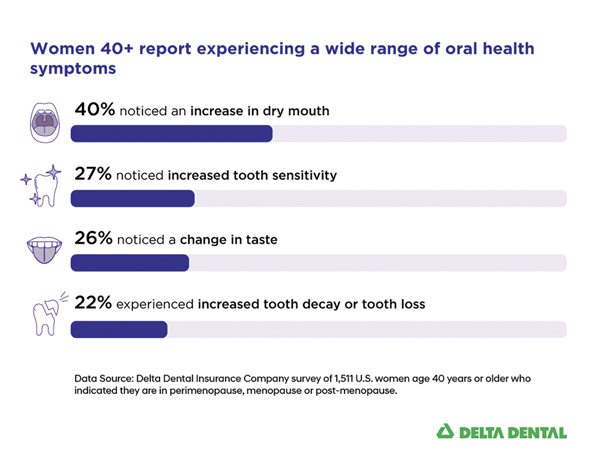
What menopause mouth feels like
Forty percent say they have noticed an increase in dry mouth. Another 27% have noticed more tooth sensitivity in recent months, and 26% say things taste different than they used to. You tell yourself it’s something else. You’re not drinking enough water; you’ve been brushing too hard. Menopause isn’t the first thing that comes to mind.
It adds up. Forty-five percent say oral symptoms associated with menopause, such as tooth pain, dry mouth or gum inflammation, take a toll on their confidence, mood or mental health.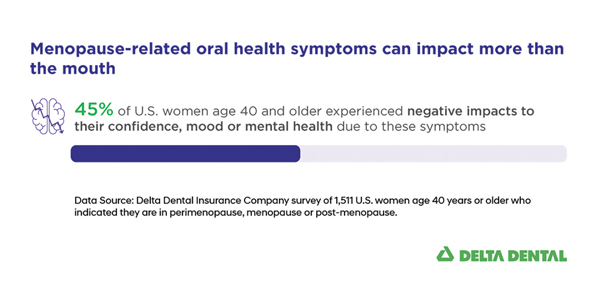
Menopause affects the whole body, mentally and physically. So why is the mouth left out?
Even after learning about this connection, 30% of women say they can’t find information about menopause-related oral health concerns. It isn’t that no one is willing to discuss it.
What makes the conversation hard to start
Three-quarters of dentists say they are comfortable discussing menopause with patients. They just want to know who they’re talking to. Most say they would want more patient history, or to know a patient was in menopause, before raising the subject. Forty-five percent say they would not bring up how menopause affects oral health unless a patient asked.
Dentists also believe that patients are already informed. Ninety-four percent say their patients are at least somewhat aware that menopause can affect oral health. So a patient says nothing about her dry mouth, because it doesn’t seem like a dental problem. The dentist doesn’t bring it up either, assuming someone already has.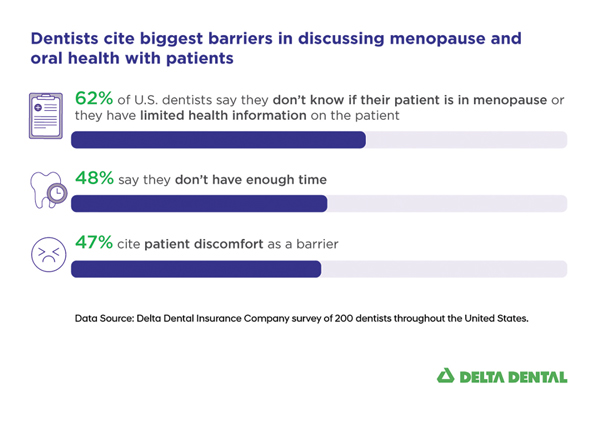
Women are asking for the information
Nearly nine in 10 women say it would help to receive specific instructions during dental visits about managing oral health during menopause. And 69% say they would be more likely to book an appointment if a primary care provider or OB-GYN had told them menopause affects oral health.
No matter who brings it up, the conversation is one worth having. Hormonal changes during menopause can increase the risk of tooth loss or tooth decay, gum disease, receding gumline or loss of jawbone density. Discussing new oral symptoms with a dentist can help women identify potential problems and address them early.
How to start the conversation with your dentist
Your dentist probably doesn’t know you’re in menopause. Start there.
Questions worth asking:
- “Could the changes I’m noticing be related to menopause?”
- “I haven’t had a cavity in 30 years, and now I have two. Could that be tied to hormonal changes?”
- “What can I do about dry mouth?”
- “Are there symptoms I should watch for?”
- “Should I adjust my oral care routine?”
Any one of these questions can get the conversation started.
Methodology
Delta Dental Insurance Company commissioned Atomik Research to conduct two online surveys between June 25 and July 2, 2025.
The first surveyed 200 dentists throughout the United States. The margin of error is +/- 7 percentage points with a 95% confidence level.
The second surveyed 1,511 women ages 40 or older throughout the United States. To qualify, participants had to indicate they are in perimenopause, menopause or post-menopause. Those who were not sure which stage they were in, or who indicated they were not yet in one of the three stages, were excused from participation. The margin of error is +/- 3 percentage points with a 95% confidence level
Atomik Research, part of 4media group, is an independent market research agency.
Photo courtesy of Shutterstock
SOURCE:
Delta Dental Insurance Company

health and wellness
Flu Season Arrives Early: Walgreens Launches 2026-2027 Flu Index as Activity Rises Across the U.S.
The 2026-2027 flu season is tracking four weeks ahead of recent years. Explore Walgreens’ new Flu Index, rising activity, and ways to stay protected.
Last Updated on November 6, 2026 by Daily News Staff
2026-2027 Flu Season: New tracking data suggests influenza activity is running approximately four weeks ahead of recent seasons, with increases reported across western states and Florida.
2026-2027 Flu Season Starts Early as Walgreens Launches New Flu Index
STM Daily News | Health & Wellness
October 30, 2026
Flu season may be getting an early start this year, and a new online tracking tool from Walgreens is giving Americans a closer look at respiratory illness activity in their communities.
On October 21, Walgreens announced the launch of its 2026-2027 Flu Index, an interactive tool that monitors influenza, COVID-19, and other acute respiratory illnesses across the United States.
According to the company’s initial findings, national flu activity is tracking approximately four weeks ahead of recent flu seasons, with increasing activity reported across several western states and Florida.
The early trends serve as a reminder that influenza doesn’t necessarily wait until winter to begin spreading.
Flu Activity Is Increasing Earlier Than Expected
Walgreens reports that its early-season data indicates influenza activity is already increasing in multiple parts of the country.
The company’s findings include:
- Earlier flu activity: National flu activity is tracking approximately four weeks ahead of recent seasons.
- Regional increases: Several western states and Florida are experiencing rising activity.
- More antiviral prescriptions: Walgreens reports dispensing more flu antiviral medications than during the same period in 2025.
- Growing demand for cold and flu products: Sales of cold and flu medications, at-home respiratory illness tests, cough drops, and tea have increased by double-digit percentages compared with last year.
Although these indicators suggest respiratory illness activity is increasing, they do not necessarily mean the current flu season will be more severe than previous seasons.
Increased purchases of cold medications and testing products can reflect changes in consumer behavior as well as illness trends.
The findings come from Walgreens’ pharmacy and retail data and should be considered alongside public health surveillance from the Centers for Disease Control and Prevention (CDC).
What Is the Walgreens Flu Index?
The Walgreens Flu Index is an interactive online platform designed to help consumers understand where respiratory illnesses are circulating and how activity is changing over time.
The tool combines several types of information, including:
- Flu and COVID-19 testing data from Walgreens locations
- Prescription antiviral medication trends
- Over-the-counter cold and flu product purchases
- Geographic patterns in respiratory illness activity
Using these indicators, Walgreens calculates an activity score ranging from 0 to 10.
A score of zero represents the lowest level of activity, while a score of ten represents the highest.
The index provides weekly information for states and territories, along with more than 1,500 counties where sufficient Walgreens data is available.
The map is updated every Monday, allowing users to compare current activity with previous weeks and the prior flu season.
Importantly, Walgreens emphasizes that the index measures relative illness activity, not disease severity. A higher score does not necessarily indicate more hospitalizations, more serious infections, or a greater risk of complications.
The index also does not represent a complete count of influenza cases nationwide.
Explore the interactive map:
https://www.walgreens.com/seasonal/respiratory-illness-index
Why Local Flu Activity Matters
Influenza does not spread evenly across the country.
Some communities may experience increasing cases weeks before others, making local information useful for families, schools, healthcare providers, and individuals who may be at higher risk of complications.
“Flu activity can vary significantly from one community to another, and knowing what’s happening locally can make a real difference,” said Rick Gates, Walgreens’ chief pharmacy and enterprise external affairs officer.
Gates added that the index is intended to help people make informed decisions about prevention, including vaccination before influenza becomes more widespread in their communities.
For residents of states such as Arizona, California, Nevada, and other western states, the reported regional increases make monitoring local respiratory illness trends particularly relevant.
However, the company’s announcement does not establish that every western county is experiencing elevated flu activity. Readers should consult the latest local data for a more accurate picture.
Why Getting a Flu Shot Still Matters
Annual influenza vaccination remains an important tool for reducing the risk of flu illness and serious complications.
Because influenza viruses change over time, flu vaccines are reviewed and updated each season to target strains expected to circulate.
The CDC recommends annual influenza vaccination for most people ages six months and older, with rare exceptions.
Vaccination is especially important for people who face a greater risk of serious complications, including:
- Adults ages 65 and older
- Young children, particularly those younger than five
- Pregnant individuals
- People with chronic conditions such as asthma, diabetes, or heart disease
- People with weakened immune systems
For adults 65 and older, the CDC preferentially recommends certain enhanced influenza vaccines, including higher-dose, recombinant, or adjuvanted options, when available.
Walgreens says its pharmacies offer standard-dose and higher-dose vaccines, along with a new mRNA influenza vaccine at select locations.
Vaccine selection should follow current CDC recommendations, individual eligibility, and guidance from a qualified healthcare professional.
It generally takes about two weeks after vaccination for the body to develop protective antibodies.
Even if influenza is already circulating locally, vaccination can still provide benefits throughout the season.
Practical Ways to Reduce Your Risk of Getting Sick
Vaccination is an important preventive measure, but it is not the only step people can take to reduce the spread of respiratory illnesses.
Public health guidance also encourages several everyday precautions.
Wash your hands regularly. Use soap and water, particularly after touching shared surfaces or being in public places. Alcohol-based hand sanitizer can help when soap and water are unavailable.
Cover coughs and sneezes. Use a tissue or your elbow to reduce the spread of respiratory droplets.
Improve indoor air quality. Opening windows when practical, improving ventilation, and using appropriate air filtration can help reduce exposure to airborne respiratory viruses.
Avoid close contact when sick. Staying home when experiencing respiratory illness symptoms can help protect coworkers, classmates, friends, and family members.
Consider wearing a well-fitting mask. Masks can provide an additional layer of protection, particularly in crowded indoor spaces or around people at higher risk.
Pay attention to symptoms. Fever, coughing, sore throat, fatigue, muscle aches, and congestion can occur with influenza and other respiratory infections.
Because flu and COVID-19 can produce similar symptoms, testing may help determine the cause of an illness.
People at higher risk of complications should contact a healthcare professional promptly if flu symptoms develop. Prescription antiviral medications work best when started early, ideally within the first two days of symptoms, although treatment can still benefit some patients later.
Walgreens Expands Vaccination Access for the 2026–2027 Season
Alongside the launch of its Flu Index, Walgreens announced several efforts to make seasonal vaccinations more convenient.
The company says it is increasing pharmacy staffing, expanding appointment availability, and allowing customers to schedule vaccinations further in advance.
Customers can arrange appointments through several methods:
- Online: https://www.walgreens.com/ScheduleVaccine
- Mobile: Walgreens app
- Text: Send “Flu” to 66879
- Telephone: 1-800-WALGREENS
- Walk-in: Participating Walgreens pharmacies, subject to availability
Walgreens also announced promotional Walgreens Cash rewards for eligible myWalgreens members receiving vaccinations.
Under the limited-time promotion, qualifying members may earn $15 in Walgreens Cash rewards on eligible purchases, along with an additional 10% back on qualifying purchases for a limited period.
Restrictions, exclusions, geographic limitations, and promotional deadlines apply. Customers should review the official terms before participating.
What About COVID-19 and Other Respiratory Illnesses?
Although influenza is the primary focus of the seasonal announcement, the Walgreens Flu Index also tracks COVID-19 and broader acute respiratory illness trends.
This distinction matters because several respiratory viruses can circulate simultaneously during the fall and winter months.
Influenza, COVID-19, respiratory syncytial virus (RSV), and common cold viruses can produce overlapping symptoms, but their potential complications and recommended treatments differ.
Vaccination eligibility and recommendations also vary by disease, age, and individual health circumstances.
Readers should consult current CDC guidance and their healthcare providers when considering flu, COVID-19, or RSV vaccination.
The Bottom Line: Flu Season May Be Early, but Prevention Still Matters
The launch of the 2026–2027 Walgreens Flu Index offers another resource for Americans who want to monitor respiratory illness activity in their communities.
While Walgreens’ early findings suggest influenza activity is increasing sooner than in recent years, it is still too early to determine how severe the overall season will become.
The most important message for consumers is to prepare before respiratory illnesses become widespread.
Staying current with recommended vaccinations, practicing good hygiene, monitoring local illness trends, and seeking medical attention when appropriate can help reduce the risk of serious illness.
With flu activity already rising in some regions, now is a good time for families to review their seasonal health plans.
Related Links for Further Information
Walgreens Resources
- Walgreens Respiratory Illness Index — Interactive map showing respiratory illness activity across the United States.
- Walgreens Vaccination Scheduling — Schedule a flu vaccination or explore available vaccines.
Public Health Resources
- CDC Seasonal Influenza Information — Information about influenza symptoms, prevention, vaccination, and treatment.
- CDC FluView Surveillance — National influenza surveillance and weekly activity reports.
- CDC: Flu and People 65 Years and Older — Guidance for older adults and influenza vaccination.
- CDC Respiratory Illnesses — Prevention information for flu, COVID-19, and RSV.
Source: Walgreen Co., press release, October 21, 2026, Walgreens Launches 2026–2027 Flu Index as Activity Tracks Four Weeks Ahead of Recent Seasons.
Editor’s Note: This article summarizes information from Walgreens’ October 21, 2026, announcement. The reported early-season trends reflect the company’s findings at that time and are not a substitute for current CDC surveillance or medical advice. Readers should consult healthcare professionals about individual vaccination and treatment decisions.
STM Daily News — News You Can Use This Moment!
Health and Life Insurance
Medicare Open Enrollment Ends Dec. 7: Give Your Plan a Check-up
Medicare Open Enrollment Ends Dec. 7: Medicare Open Enrollment runs now through Dec. 7. Use this time to make sure your plan still fits your needs with these four steps.

Medicare Open Enrollment Ends Dec. 7: Give Your Plan a Check-up
(Feature Impact) Medicare Open Enrollment runs now through Dec. 7. Use this time to make sure your plan still fits your needs. Medicare.gov is your official source for Open Enrollment. Compare every Medicare health and drug plan available in your area. You can easily compare Medicare plan costs, side-by-side, by simply entering the prescription drugs you take. If you prefer to talk with someone, call 1-800-MEDICARE (1-800-633-4227), available 24/7, to review your options and get your questions answered.
Information provided by the U.S. Department of Health & Human Services.


SOURCE:
Centers for Medicare and Medicaid Services




