

love and romance
Dating.com’s “Single Tax Index” Names the Priciest Places to Be Solo This Summer


Summer is supposed to be the season of yes: yes to rooftop drinks, weekend flights, beach clubs, festivals, and finally trying that hobby you’ve been bookmarking since January. But according to a new Dating.com analysis, the “main character summer” lifestyle can come with a very real price tag—especially if you’re paying for everything on your own.
Dating.com’s latest report, Dating.com Reveals the Most Expensive Cities to Be Single in Summer 2026, looked at 50 popular destinations worldwide and ranked them by what it calls a Single Tax Score—a composite measure of the costs singles are likely to face during peak summer months.
Why being single can cost more than you think
The study builds on Dating.com’s earlier findings that 43% of singles focus on self-care—from gym memberships and skincare to solo dates and travel. At the same time, 41% of singles say they’d feel less lonely if they had more money, underscoring how financial flexibility can influence how often people can say yes to experiences that build connection.
Dating.com’s resident therapist, Jaime Bronstein, LCSW, notes that the assumption “single = cheaper” often doesn’t hold up. Couples can split rent, transportation, meals, and entertainment, while singles absorb the full cost alone—plus summer’s calendar tends to be packed with higher-priced social events and trips.
The 10 most expensive cities to be single in Summer 2026
Here are the top destinations where the summer “single tax” hits hardest, based on Dating.com’s ranking.
1) Miami (Single Tax Score: 75)
Miami takes the top spot thanks to steep nightlife and entertainment costs. Dating.com estimates:
- $110 for a solo date night
- $200/night for beach clubs and nightlife venues
- $280/night average summer hotel rates
2) New York (74)
New York lands at #2 with high costs across nearly every category:
- $115 average solo date night
- $380/night average summer hotel rates
Even without flight costs for locals, accommodation and social spending push NYC near the top.
3) Mykonos (72)
Europe’s most expensive destination for singles on the list, Mykonos is priced like a fantasy:
- $1,900 average summer flights from New York
- $280/night beach club and nightlife costs (highest in the study)
- $300/night average hotels
4) Las Vegas (70)
Vegas is built for entertainment—and the bill reflects it:
- $250 average festival/concert tickets (highest among the top ten)
- $180/night nightlife costs
- $145/night average hotels (relatively affordable, but spending adds up fast)
5) Boston (67)
Boston’s biggest driver is lodging:
- $390/night average summer hotel stays (highest of any city in the top ten)
- $108 average solo date night
6) Maldives (64)
A classic “romantic” destination that gets especially expensive solo:
- $480/night average hotels (highest in the top ten)
- $1,300 average summer flights from New York
- $124 average solo date night
7) San Francisco (62)
San Francisco remains costly for both travel and everyday experiences:
- $820 average flights from London
- $100 typical solo date
- $245/night average hotels
8) Los Angeles (61)
LA’s premium social scene pushes it into the top ten:
- $100 average solo date night
- $820 average flights from London
- $22 average rooftop cocktail
9) London (61)
London’s costs are driven by international travel and peak-season lodging:
- $1,900 average flights from New York
- $295/night average hotels
- $108 average solo date
10) Santorini (61)
Like Mykonos, Santorini’s popularity inflates nearly every summer expense:
- $1,900 average flights from New York
- $160/night beach club and nightlife costs
- $310/night average hotels
What to watch for (and how to plan smarter)
The takeaway isn’t “don’t travel” or “don’t go out.” It’s that destination choice can dramatically change the cost of a solo summer, and singles may want to budget differently than couples.
If you’re planning a solo trip (or just trying to make the most of where you live), consider:
- Swapping one premium hotspot for a value city (the ranking includes lower-cost options like Bangkok, Medellín, Mexico City, and Kuala Lumpur)
- Prioritizing experiences that don’t scale with group size (museums, walking tours, day trips, free festivals)
- Booking lodging early in high-demand cities where hotels are doing the most damage
As Bronstein emphasizes, being single isn’t a problem to solve—and solo experiences can be just as meaningful as romantic ones. The goal is to make sure your summer plans support your life, not stress your wallet.
Methodology (in plain English)
Dating.com reviewed 50 popular destinations and analyzed costs associated with being single in summer, including:
- Date night costs for one person
- Summer hotel rates
- Summer flight costs
- Rooftop cocktail prices
- Festival and concert ticket prices
- Beach club costs
- Pet-related surcharges
- Other seasonal leisure expenses
Each factor was normalized on a 0–1 scale (with 1 representing the highest cost), then combined into a final score to rank cities from most to least expensive for singles.
Source: Dating.com, via PRNewswire (June 25, 2026)
📰 Enjoying STM Daily News? Join the conversation!
💬 Leave a comment, share your thoughts, and subscribe to our newsletter for the latest stories, updates, and “News You Can Use This Moment!” delivered to your inbox.
Stay connected with STM Daily News!

Lifestyle
Mother’s Day Celebration: Honoring the Hardest Job in the World
“On Mother’s Day, let’s celebrate the sacrifices and unwavering love of mothers. Join us in honoring the hardest job in the world – motherhood.”

Last Updated on May 4, 2026 by Daily News Staff
Mother’s Day is a special day that celebrates the hard work and dedication of mothers around the world. Being a mother is one of the most difficult jobs there is, yet it is also one of the most rewarding. Mothers work tirelessly to care for their children, often sacrificing their own needs and wants in order to provide for their families.
On Mother’s Day, it is important to take the time to show appreciation for all that mothers do. Whether it’s a simple card, a bouquet of flowers, or a heartfelt message, any gesture of gratitude can go a long way in letting mothers know that their efforts are valued and appreciated.
However, it’s important to remember that Mother’s Day is not just about gifts and presents. It’s a day to acknowledge the sacrifices that mothers make on a daily basis, and to recognize the love and care that they provide to their families.
Mothers work hard to instill values, provide guidance and support, and create a safe and nurturing home environment for their children. They are often the backbone of the family, and their contributions cannot be overstated.
So, on this Mother’s Day, let us take the time to celebrate the mothers in our lives. Let us thank them for their hard work, their sacrifices, and their unwavering love and support. Let us show them that they are valued and appreciated, not just on this special day, but every day of the year.
https://en.wikipedia.org/wiki/Mother%27s_Day
https://stmdailynews.com/category/lifestyle/

love and romance
Love Your Space: 4 Valentine’s Day Home Decor Ideas
Valentine’s Day offers an opportunity to enhance home decor with love-themed touches. Key ideas include using a classic red and pink palette, incorporating soft lighting and inviting textures, adding fresh flowers and heartfelt accents, and personalizing decor with meaningful items. Each element contributes to a romantic and welcoming atmosphere.

Last Updated on February 14, 2026 by Daily News Staff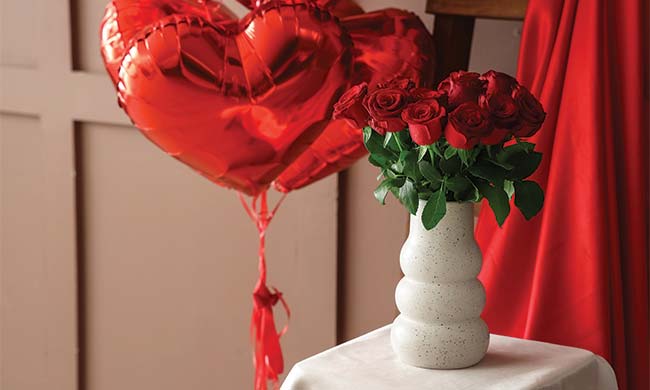
Love Your Space: 4 Valentine’s Day Home Decor Ideas
(Family Features) From planning a romantic night in with your significant other to hosting friends for Galentine’s Day, Valentine’s Day is a perfect opportunity to fill your home with love and heartfelt style.
Whether you add subtle accents or bold pops of color, decorating for the season of love is about adding intentional touches that make your spaces feel special.
1. Choose a Valentine’s Palette
The classic red and pink motif is a perfect starting point. A few heart-shaped throw pillows, blush pink accessories or a rich red accent blanket can capture the spirit without overwhelming. If bold colors don’t match your current design style, ground them with neutrals like soft whites, creams or grays to create a romantic look that feels intentional and cohesive.
2. Set the Mood with Lighting and Texture
Soft lighting – think string lights draped along a mantel, clusters of warm-hued candles or a table lamp with a rosy glow – can make rooms feel cozier, as can layering sensual textures like velvet pillows, knit throws and lace or crochet accents. These elements feel inviting and chic, creating a relaxed, intimate ambience perfect for a celebratory evening at home.
3. Fresh Florals and Heartfelt Accents
A timeless Valentine’s Day tradition, fresh flowers can bring life, color and fragrance to any room. A vase of red roses, pink tulips or mixed seasonal blooms can serve as a centerpiece on your dining room table or entry console. For an added seasonal touch, consider heart-shaped garlands or DIY paper hearts on shelves, mirrors or around picture frames.
4. Personalize With Love
Much like heart-warming gifts, the most meaningful decor often has a personal story. Frame a favorite photo, display a handwritten love note or incorporate a treasured keepsake into your Valentine’s arrangement to make your space feel uniquely yours.
For more ideas to celebrate love every time you walk through the door, visit eLivingtoday.com.
Photo courtesy of Shutterstock
SOURCE:
adult relationships
How Valentine’s Day was transformed by the Industrial Revolution and ‘manufactured intimacy’

Last Updated on February 14, 2026 by Daily News Staff
Christopher Ferguson, Auburn University
When we think of Valentine’s Day, chubby Cupids, hearts and roses generally come to mind, not industrial processes like mass production and the division of labor. Yet the latter were essential to the holiday’s history.
As a historian researching material culture and emotions, I’m aware of the important role the exchange of manufactured greeting cards played in the 19th-century version of Valentine’s Day.
At the beginning of that century, Britons produced most of their valentines by hand. By the 1850s, however, manufactured cards had replaced those previously made by individuals at home. By the 1860s, more than 1 million cards were in circulation in London alone.
The British journalist and playwright Andrew Halliday was fascinated by these cards, especially one popular card that featured a lady and gentleman walking arm-in-arm up a pathway toward a church.
Halliday recalled watching in fascination as “the windows of small booksellers and stationers” filled with “highly-coloured” valentines, and contemplating “how and where” they “originated.” “Who draws the pictures?” he wondered. “Who writes the poetry?”
In 1864 he decided to find out.
Manufactured intimacy
Today Halliday is most often remembered for his writing on London beggars in a groundbreaking 1864 social survey, “London Labour and the London Poor.” However, throughout the 1860s he was a regular contributor to Charles Dickens’ popular journal “All the Year Round,” in which he entertained readers with essays addressing various facets of ordinary British daily existence, including family relations, travel, public services and popular entertainments.
In one essay for that journal – “Cupid’s Manufactory,” which was later reprinted in 1866 in the collection “Everyday Papers” – Halliday led his readers on a guided tour of one of London’s foremost card manufacturers.
Inside the premises of “Cupid and Co.,” they followed a “valentine step by step” from a “plain sheet of paper” to “that neat white box in which it is packed, with others of its kind, to be sent out to the trade.”
Touring ‘Cupid’s Manufactory’
“Cupid and Co.” was most likely the firm of Joseph Mansell, a lace-paper and stationary company that manufactured large numbers of valentines between the 1840s and 1860s – and also just happened to occupy the same address as “Mr. Cupid’s” in London’s Red Lion Square.
The processes Halliday described, however, were common to many British card manufacturers in the 1860s, and exemplified many industrial practices first introduced during the late 18th century, including the subdivision of tasks and the employment of women and child laborers.
Halliday moved through the rooms of “Cupid’s Manufactory,” describing the variety of processes by which various styles of cards were made for a range of different people and price points.
He noted how the card with the lady and gentleman on the path to the church began as a simple stamped card, in black and white – identical to one preserved today in the collections of the London Museum – priced at one penny.
A portion of these cards, however, then went on to a room where a group of young women were arranged along a bench, each with a different color of “liquid water-colour at her elbow.” Using stencils, one painted the “pale brown” pathway, then handed it to the woman next to her, who painted the “gentleman’s blue coat,” who then handed it to the next, who painted the “salmon-coloured church,” and so forth. It was much like a similar group of female workers depicted making valentines in the “Illustrated London News” in the 1870s.
These colored cards, Halliday noted, would be sold for “sixpence to half-a-crown.” A portion of these, however, were then sent on to another room, where another group of young women glued on feathers, lace-paper, bits of silk or velvet, or even gold leaf, creating even more ornate cards sometimes sold for 5 shillings and above.
All told, Halliday witnessed “about sixty hands” – mostly young women, but also “men and boys,” who worked 10 hours a day in every season of the year, making cards for Valentine’s Day.
Yet, it was on the top floor of the business that Halliday encountered the people who arguably fascinated him the most: the six artists who designed all the cards, and the poets who provided their text – most of whom actually worked offsite.
Here were the men responsible for manufacturing the actual sentiments the cards conveyed – and in the mid-19th century these encompassed a far wider range of emotions than the cards produced by Hallmark and others in the 21st century.
A spectrum of ‘manufactured emotions’
Many Victorians mailed cards not only to those with whom they were in love, but also to those they disliked or wished to mock or abuse. A whole subgenre of cards existed to belittle the members of certain trades, like tailors or draper’s assistants, or people who dressed out of fashion.

Cards were specifically designed for discouraging suitors and for poking fun of the old or the unattractive. While some of these cards likely were exchanged as jokes between friends, the consensus among scholars is that many were absolutely intended to be sent as cruel insults.
Furthermore, unlike in the present day, in the 19th century those who received a Valentine were expected to send one in return, which meant there were also cards to discourage future attentions, recommend patience, express thanks, proclaim mutual admiration, or affirm love’s effusions.
Halliday noted the poet employed by “Cupid’s” had recently finished the text for a mean-spirited comic valentine featuring a gentleman admiring himself in a mirror:
Looking at thyself within the glass,
You appear lost in admiration;
You deceive yourself, and think, alas!
You are a wonder of creation.
This same author, however, had earlier completed the opposite kind of text for the card Halliday had previously highlighted, featuring the “lady and gentleman churchward-bound”:
“The path before me gladly would I trace,
With one who’s dearest to my constant heart,
To yonder church, the holy sacred place,
Where I my vows of Love would fain impart;
And in sweet wedlock’s bonds unite with thee,
Oh, then, how blest my life would ever be!”
These were very different texts by the very same man. And Halliday assured his readers “Cupid’s laureate” had authored many others in every imaginable style and sentiment, all year long, for “twopence a line.”
Halliday showed how a stranger was manufacturing expressions of emotions for the use of other strangers who paid money for them. In fact, he assured his readers that in the lead up to Valentine’s Day “Cupid’s” was “turning out two hundred and fifty pounds’ worth of valentines a week,” and that his business was “yearly on the increase.”
Halliday found this dynamic – the process of mass producing cards for profit to help people express their authentic emotions – both fascinating and bizarre. It was a practice he thought seemed like it ought to be “beneath the dignity of the age.”
And yet it thrived among the earnest Victorians, and it thrives still. Indeed, it remains a core feature of the modern holiday of Valentine’s Day.
This year, like in so many others, I will stand at a display of greeting cards, with many other strangers, as we all try to find that one card designed by someone else, mass-produced for profit, that will convey our sincere personal feelings for our friends and loved ones.
Christopher Ferguson, Associate Professor of History, Auburn University
This article is republished from The Conversation under a Creative Commons license. Read the original article.
The Legacy of the Datsun 510: How a Game-Changing Car Helped Nissan Conquer the US Market




