Connect with us

Lifestyle

Bird flu could be on the cusp of transmitting between humans − but there are ways to slow down viral evolution

Published

on

Last Updated on April 7, 2025 by Daily News Staff

file 20250320 56 9y7zti.jpg?ixlib=rb 4.1
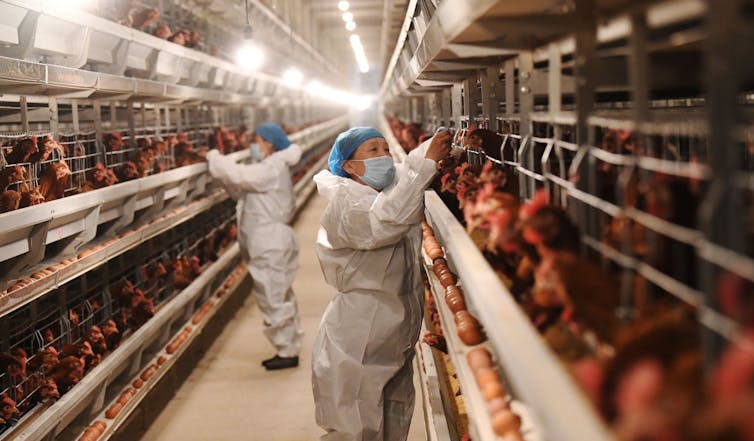
Workers who are in frequent contact with potentially sick animals are at high risk of bird flu infection.
Costfoto/NurPhoto via Getty Images

Ron Barrett, Macalester College

Disease forecasts are like weather forecasts: We cannot predict the finer details of a particular outbreak or a particular storm, but we can often identify when these threats are emerging and prepare accordingly.

The viruses that cause avian influenza are potential threats to global health. Recent animal outbreaks from a subtype called H5N1 have been especially troubling to scientists. Although human infections from H5N1 have been relatively rare, there have been a little more than 900 known cases globally since 2003 – nearly 50% of these cases have been fatal – a mortality rate about 20 times higher than that of the 1918 flu pandemic. If the worst of these rare infections ever became common among people, the results could be devastating.

Approaching potential disease threats from an anthropological perspective, my colleagues and I recently published a book called “Emerging Infections: Three Epidemiological Transitions from Prehistory to the Present” to examine the ways human behaviors have shaped the evolution of infectious diseases, beginning with their first major emergence in the Neolithic period and continuing for 10,000 years to the present day.

Viewed from this deep time perspective, it becomes evident that H5N1 is displaying a common pattern of stepwise invasion from animal to human populations. Like many emerging viruses, H5N1 is making incremental evolutionary changes that could allow it to transmit between people. The periods between these evolutionary steps present opportunities to slow this process and possibly avert a global disaster.

Spillover and viral chatter

When a disease-causing pathogen such as a flu virus is already adapted to infect a particular animal species, it may eventually evolve the ability to infect a new species, such as humans, through a process called spillover.

Spillover is a tricky enterprise. To be successful, the pathogen must have the right set of molecular “keys” compatible with the host’s molecular “locks” so it can break in and out of host cells and hijack their replication machinery. Because these locks often vary between species, the pathogen may have to try many different keys before it can infect an entirely new host species. For instance, the keys a virus successfully uses to infect chickens and ducks may not work on cattle and humans. And because new keys can be made only through random mutation, the odds of obtaining all the right ones are very slim.

Given these evolutionary challenges, it is not surprising that pathogens often get stuck partway into the spillover process. A new variant of the pathogen might be transmissible from an animal only to a person who is either more susceptible due to preexisting illness or more likely to be infected because of extended exposure to the pathogen.

Even then, the pathogen might not be able to break out of its human host and transmit to another person. This is the current situation with H5N1. For the past year, there have been many animal outbreaks in a variety of wild and domestic animals, especially among birds and cattle. But there have also been a small number of human cases, most of which have occurred among poultry and dairy workers who worked closely with large numbers of infected animals.

Diagram depicting three stages, the first of bird to bird, the second bird to human and duck, and the third duck to duck and human to human
Pathogen transmission can be modeled in three stages. In Stage 1, the pathogen can be transmitted only between nonhuman animals. In stage 2, the pathogen can also be transmitted to humans, but it is not yet adapted for human-to-human transmission. In Stage 3, the pathogen is fully capable of human-to-human transmission.
Ron Barrett, CC BY-SA

Epidemiologists call this situation viral chatter: when human infections occur only in small, sporadic outbreaks that appear like the chattering signals of coded radio communications – tiny bursts of unclear information that may add up to a very ominous message. In the case of viral chatter, the message would be a human pandemic.

Sporadic, individual cases of H5N1 among people suggest that human-to-human transmission may likely occur at some point. But even so, no one knows how long or how many steps it would take for this to happen.

Advertisement
Get More From A Face Cleanser And Spa-like Massage

Influenza viruses evolve rapidly. This is partly because two or more flu varieties can infect the same host simultaneously, allowing them to reshuffle their genetic material with one another to produce entirely new varieties.
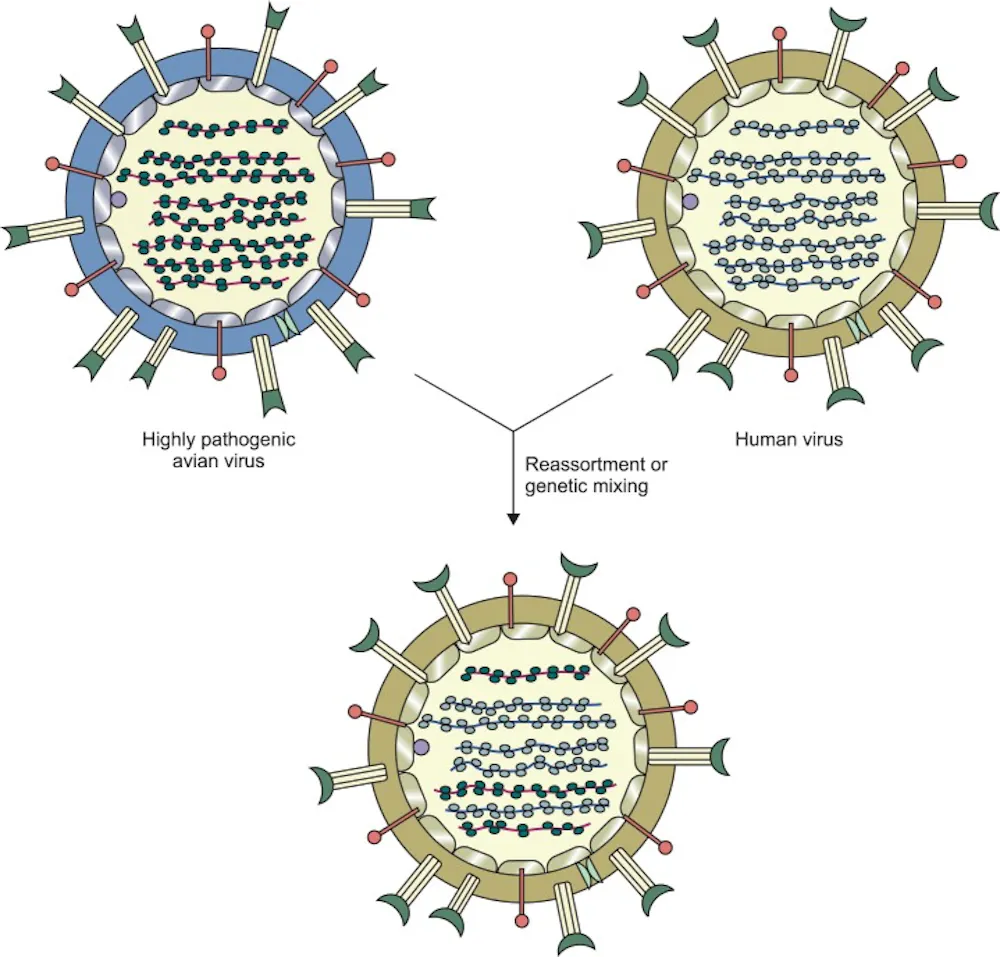
Diagram showing a virus with genetic strands derived from two other viruses
Genetic reshuffling – aka antigenic shift – between a highly pathogenic strain of avian influenza and a strain of human influenza could create a new strain that’s even more infectious among people.
Eunsun Yoo/Biomolecules & Therapeutics, CC BY-NC

These reshuffling events are more likely to occur when there is a diverse range of host species. So it is particularly concerning that H5N1 is known to have infected at least 450 different animal species. It may not be long before the viral chatter gives way to larger human epidemics.

Reshaping the trajectory

The good news is that people can take basic measures to slow down the evolution of H5N1 and potentially reduce the lethality of avian influenza should it ever become a common human infection. But governments and businesses will need to act.

People can start by taking better care of food animals. The total weight of the world’s poultry is greater than all wild bird species combined. So it is not surprising that the geography of most H5N1 outbreaks track more closely with large-scale housing and international transfers of live poultry than with the nesting and migration patterns of wild aquatic birds. Reducing these agricultural practices could help curb the evolution and spread of H5N1.

Back of truck filled with chickens in stacked cages
Large-scale commercial transport of domesticated animals is associated with the evolution and spread of new influenza varieties.
ben/Flickr, CC BY-SA

People can also take better care of themselves. At the individual level, most people can vaccinate against the common, seasonal influenza viruses that circulate every year. At first glance this practice may not seem connected to the emergence of avian influenza. But in addition to preventing seasonal illness, vaccination against common human varieties of the virus will reduce the odds of it mixing with avian varieties and giving them the traits they need for human-to-human transmission.

At the population level, societies can work together to improve nutrition and sanitation in the world’s poorest populations. History has shown that better nutrition increases overall resistance to new infections, and better sanitation reduces how much and how often people are exposed to new pathogens. And in today’s interconnected world, the disease problems of any society will eventually spread to every society.

For more than 10,000 years, human behaviors have shaped the evolutionary trajectories of infectious diseases. Knowing this, people can reshape these trajectories for the better.The Conversation

Ron Barrett, Professor of Anthropology, Macalester College

This article is republished from The Conversation under a Creative Commons license. Read the original article.

Lifestyle

8 Ways to Help Protect Your Vision Right Now

As you get older, your risk for some eye diseases may increase. However, there are steps you can take to keep your eyes healthy – and it starts with taking care of your overall health. Set yourself up for a lifetime of seeing your best with these eight tips in honor of Healthy Vision Month. Protect Your Vision!

Published

on

Protect Your Vision

8 Ways to Help Protect Your Vision Right Now

(Feature Impact) As you get older, your risk for some eye diseases may increase. However, there are steps you can take to keep your eyes healthy – and it starts with taking care of your overall health.

Set yourself up for a lifetime of seeing your best with these eight tips from the experts at the National Eye Institute in honor of Healthy Vision Month:

1. Find an eye doctor you trust.
Many eye diseases don’t have any early symptoms, so you could have a problem and not know it. An eye doctor can help you stay on top of your eye health. Find an eye doctor you trust by asking friends and family if they like their doctors. You can also check with your health insurance plan to find eye doctors near you.

2. Ask how often you need a dilated eye exam.
Getting a dilated eye exam is the single best thing you can do for your eye health. It’s the only way to find eye diseases early, when they’re easier to treat – and before they cause vision loss. Your eye doctor will decide how often you need an exam based on your risk for eye diseases.

3. Add more movement to your day.
Physical activity can lower your risk for health conditions that can affect your vision, like diabetes and high blood pressure. If you have trouble finding time for physical activity, try building it into other activities. Walk around while you’re on the phone, do push-ups or stretch while you watch TV or dance while you’re doing chores. Anything that gets your heart pumping counts.

4. Get your family talking about eye health history.
Some eye diseases – like glaucoma and age-related macular degeneration – can run in families. While it may not be the most exciting topic of conversation, talking about your family health history can help everyone stay healthy. The next time you’re chatting with relatives, ask if anyone knows about eye problems in your family. Be sure to share what you learn with your eye doctor to see if you need to take steps to lower your risk.

5. Step up your healthy eating game.
Eating healthy foods helps prevent health conditions – like diabetes or high blood pressure – that can put you at risk for eye problems. Eat right for your sight by adding more eye-healthy foods to your plate, such as dark, leafy greens like spinach, kale and collard greens, and fish high in omega-3 fatty acids like halibut, salmon or tuna.

6. Make a habit of wearing your sunglasses – even on cloudy days.
The sun’s UV rays can not only harm your skin, but the same goes for your eyes. However, wearing sunglasses that block 99-100% of both UVA and UVB radiation can protect your eyes and lower your risk for cataracts.

7. Stay on top of long-term health conditions like diabetes and high blood pressure.
Diabetes and high blood pressure can increase your risk for some eye diseases, like glaucoma. If you have diabetes or high blood pressure, ask your doctor about steps you can take to manage your condition and lower your risk of vision loss.

8. If you smoke, make a plan to quit.
Quitting smoking is good for your entire body, including your eyes. Kicking the habit can help lower your risk for eye diseases like macular degeneration and cataracts. Quitting smoking is hard, but it’s possible – and a plan can help.

Test your eye health knowledge with a quick quiz and find more vision resources at nei.nih.gov/hvm.

Advertisement
Get More From A Face Cleanser And Spa-like Massage

Photo courtesy of Shutterstock

collect?v=1&tid=UA 482330 7&cid=1955551e 1975 5e52 0cdb 8516071094cd&sc=start&t=pageview&dl=http%3A%2F%2Ftrack.familyfeatures
track

SOURCE:

National Eye Institute

Our Lifestyle section on STM Daily News is a hub of inspiration and practical information, offering a range of articles that touch on various aspects of daily life. From tips on family finances to guides for maintaining health and wellness, we strive to empower our readers with knowledge and resources to enhance their lifestyles. Whether you’re seeking outdoor activity ideas, fashion trends, or travel recommendations, our lifestyle section has got you covered. Visit us today at https://stmdailynews.com/category/lifestyle/ and embark on a journey of discovery and self-improvement.

Continue Reading

Lifestyle

Tobacco is still one of the world’s top killers – here are the key obstacles to enacting generational smoking bans

Published

on

Smoking is really bad for you. Most people know that. Even smokers think smoking is bad for one’s health. But most people don’t know just how bad it is.
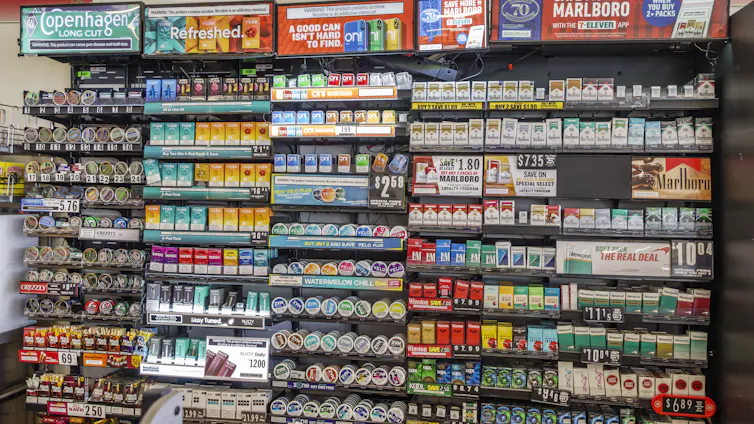
Cigarette display at a 7-Eleven convenience store in Miami, Fla., in July 2025. Jeffrey Greenberg/Universal Images Group via Getty Images

Marie Helweg-Larsen, Dickinson College

Smoking is really bad for you. Most people know that. Even smokers think smoking is bad for one’s health. But most people don’t know just how bad it is.

More people in the United States die every year from smoking than from alcohol, illegal drug use, car accidents, suicides and murders combined. Cigarette smoking costs an estimated US$240 billion annually in health care costs, which harm not only smokers but also nonsmokers, communities and the economy. Smoking is the top preventable cause of death and disease in the U.S. and worldwide.

The number of smokers in the U.S. has declined from 41% in 1944 to 11% in 2024. However, over 25 million Americans still smoke.

This drop is partly the result of many smoking laws enacted in the past 50 years. They include national bans on cigarette advertising on television and radio (1971), smoking on commercial flights (2000), sale of fruit- or candy-flavored cigarettes (2009), and sale of cigarettes to people ages 18 to 20 (2019). New policies might seem as strange or unfamiliar as these measures did at the time.

One potentially transformative idea – creating a tobacco-free generation – would build on these past laws. It would phase out smoking by banning it permanently for anyone born after a specific date. For example, a law could make it illegal for anyone under 21 to ever buy cigarettes, whereas people age 21 or older at the time would not be affected. The focus would be on tobacco sales, which already require age verification in the U.S., not on criminalizing tobacco use.

As a psychological scientist, I have studied for decades how people think about smoking. In my view, the key obstacle to creating future generations of nonsmokers is that people do not fully understand how dangerous smoking is and do not realize the formidable influence of the tobacco industry.

Creating a tobacco-free generation

The idea of creating a tobacco-free generation was first proposed by health researchers in 2010. In 2021 the town of Brookline, Massachusetts, became the first U.S. community to adopt it. Brookline’s ordinance prohibits tobacco and vape sales to anyone born on or after Jan. 1, 2000. It has survived a legal challenge and has been emulated in 22 more Massachusetts towns.

As of early 2026, Hawaii and Massachusetts are considering statewide tobacco-free generation bills. Abroad, the Maldives enacted the first countrywide ban in 2025.

Similar proposals have faced pushback elsewhere. In New Zealand, a ban was adopted in 2022 but repealed in 2024. The United Kingdom is considering a similar bill after an earlier version was scrapped due to a snap election.

Why people underestimate harm from cigarettes

It is hard to visualize what exactly it means that 480,000 people in the U.S. die from smoking every year or that each cigarette that you smoke shortens your life by 20 minutes. It is also easy to feel optimistically biased about one’s personal risk as a smoker and believe that others are more likely to become addicted or die prematurely.

Advertisement
Get More From A Face Cleanser And Spa-like Massage

Studies show that nonsmokers, former smokers and current smokers underestimate smoking risks. One likely reason is messaging by the tobacco industry, which claimed for decades that cigarettes were safe, even though tobacco industry scientists knew as early as 1953 that smoking caused lung cancer.

Another factor is glamorization of cigarettes in movies. Fully half of the top films released in 2024 showed tobacco imagery, typically of cigarettes. Research shows that adolescents and young adults who watch smoking in movies are more interested in taking up smoking.

Finally, smoking deaths may seem to be unremarkable because some of the illnesses that cigarette smoking causes, such as heart disease or cancer, are commonplace. And unlike deaths from drug overdoses, we do not always see the consequences of a lifetime of smoking. https://www.youtube.com/embed/2mKyosQbFNY?wmode=transparent&start=0 Smoking imagery is widespread in popular culture and may be one driver of tobacco use, especially among young Americans.

What about freedom of choice?

A common argument against laws that regulate personal choices, such as whether to smoke or wear seat belts, is that people prize their autonomy and don’t like governments telling them how to live. This isn’t a new challenge for public health policies, which often restrict private citizens’ freedom to do as they wish.

People can be persuaded that community action should trump individual choice if a behavior, such as smoking cigarettes or driving while drunk, harms others who don’t engage in it. Many public health laws are designed to protect people who are innocent or vulnerable. For example, current smoking laws have been enacted in part to protect nonsmokers who are exposed to secondhand smoke, especially children. And smoking increases health care costs for everyone, not just smokers.

By preventing people in the U.S. who cannot legally buy cigarettes now from ever doing so, generational smoking bans balance the rights of current adult smokers against the major public health benefits of a phased smoking ban that will eventually end the smoking epidemic.

Arguments against generational smoking laws

The tobacco industry’s attempts to undermine tobacco health policies are well documented and follow a predictable pattern. For example, when the U.K. government considered a generational smoking policy in 2023, tobacco companies and their supporters argued that smoking was a minor problem, that individuals should be responsible for their own choices, and that a nationwide ban would lead to illegal behavior or hurt business profits.

In a 2025 study assessing how Belgian politicians viewed generational smoking bans, researchers heard similar arguments. Respondents across the political spectrum valued personal freedom and informed individual choice more highly than protecting children. The politicians also believed that young people could understand how smoking affected their health, and that raising awareness was more important than bans. These arguments aligned with tobacco industry positions.

However, research shows that young people hold many optimistic beliefs about smoking, especially with respect to the addictiveness of nicotine and the likelihood that they will avoid becoming lifelong smokers. Studies have also found that adolescents don’t know enough to make an informed choice to smoke. These findings matter because the tobacco industry routinely targets young people in an effort to create lifelong smokers.

The tobacco industry’s harm reduction approach frames e-cigarettes, also known as vapes, as a way to create a smoke-free future by transitioning smokers to other nicotine products. But research shows that the tobacco industry actively markets nicotine products such as vapes to young people to create a new generation of nicotine users.

Advertisement
Get More From A Face Cleanser And Spa-like Massage

Not a silver bullet

Curbing the use of an addictive product is challenging, and there are ways for young people to obtain cigarettes illegally, as they do now in places where cigarette buyers must be at least 21. Tactics include shopping at stores that don’t check IDs, having older friends buy cigarettes and purchasing cigarettes illegally online.

Tobacco-free generation policies aren’t a silver bullet. They work most effectively in conjunction with other measures, such as plain packaging; high prices; bans on displays, advertising and flavored products; smoking cessation support; and public health messages making clear that cigarettes are unsafe at any age.

Still, health experts and groups including the American Heart Association and the American College of Cardiology argue that creating a tobacco-free generation could dramatically reduce preventable deaths and secure a healthier future for today’s children and future generations. In my view, understanding the obstacles to change is a critical step toward achieving this goal.

Marie Helweg-Larsen, Professor of Psychology, Dickinson College

This article is republished from The Conversation under a Creative Commons license. Read the original article.

STM Daily News is a vibrant news blog dedicated to sharing the brighter side of human experiences. Emphasizing positive, uplifting stories, the site focuses on delivering inspiring, informative, and well-researched content. With a commitment to accurate, fair, and responsible journalism, STM Daily News aims to foster a community of readers passionate about positive change and engaged in meaningful conversations. Join the movement and explore stories that celebrate the positive impacts shaping our world. 

https://stmdailynews.com/

Continue Reading

cruise

Top Trends for Swoon-Worthy Cruise Vacations

Swoon-Worthy Cruise Vacations: From immersive dining to wellness at sea and elevated entertainment, cruise vacations are becoming some of the most experience-rich trips travelers can take. To take advantage of the evolution of the industry when planning your next vacation at sea, consider these emerging trends.

Published

on

17865 A detail intro

Top Trends for Swoon-Worthy Cruise Vacations

(Feature Impact) From immersive dining to wellness at sea and elevated entertainment, cruise vacations are becoming some of the most experience-rich trips travelers can take.

“Our industry has long been known for innovation, but what’s most compelling now is how that scale is being leveraged to invest in more immersive entertainment, wellness experiences and purpose-driven exploration at destinations around the world,” said Chiara Giorgi, global event and brand director for Seatrade Cruise Global, the largest and longest-running annual event of its kind serving every sector of the international cruise industry, including cruise lines, suppliers, travel agents and partners.

//www.youtube.com/embed/3tlYK2jcy94

To take advantage of the evolution of the industry when planning your next vacation at sea, consider these emerging trends identified at the conference.

The Rise of Floating Wellness Retreats

Once upon a time, wellness meant spas, saunas and massages. Wellness in 2026 is much more luxurious and is deeply embedded into the cruise experience. For example, Cunard’s “Wellness at Sea” voyages integrate expert-led fitness, nutrition, mindfulness and recovery programming, turning wellness into a structured, goal-driven experience and elevating wellness as a core pillar of the onboard experience. Additional cruise lines, including Virgin Voyages and Celebrity Cruises, are also helping raise the bar on floating wellness. Think thermal suites, meditation spaces and sleep-focused programming, along with wellness excursions and destination-inspired spa rituals that extend the experience to the shore.

Dining Becomes the Experience

17865 B detail embedDining has long been a key component of many cruises, but now, food and drink are evolving from a cruise staple to a central form of entertainment and cultural discovery. Cruise lines are investing in immersive dining environments, destination-inspired menus and beverage programs that connect guests more directly with the places they visit.

From location-specific cuisine to interactive dining concepts and destination-driven cocktail programs, F&B@Sea, Seatrade Cruise Global’s companion show, found culinary experiences are increasingly designed to be memorable punctuation points of the journey itself. Across the industry, cruise lines are investing heavily in culinary programs that blur the line between dining and entertainment. Tapping into the supper club trend, Royal Caribbean introduced the Empire Supper Club to turn dinner into a night out at sea, combining multi-course menus, craft cocktails and live music for a full evening experience.

Exploring Expeditions with Purpose

Expedition travel is having more than a moment. It continues to grow as travelers seek deeper engagement with the natural world. Leading the shift toward purpose-driven explorations, operators such as National Geographic-Lindblad Expeditions, long recognized for pioneering modern expedition travel, helped define this category through a model rooted in education, conservation and hands-on exploration. Built on the belief that exploring the world can inspire people to care more deeply for it, expert-led expeditions, such as kayaking among glaciers, participating in citizen science programs studying seabirds and learning directly from naturalists and scientists, place a strong emphasis on stewardship and real-world learning.

Ships as Cultural Hubs

Entertainment at sea is expanding beyond traditional stage shows to include immersive productions, music residencies and partnerships with leading performing arts brands. For example, Holland America Line joined forces with The Verdon Fosse Legacy to debut “Fosse and Verdon, The Duet That Changed Broadway,” a live musical and multimedia tribute celebrating the revolutionary work of Bob Fosse and Gwen Verdon by bringing it to an international stage at sea for the first time.

As cruises continue to expand their global footprint, the Seatrade Cruise Global event positions itself not simply as a trade gathering, but as the central forum where trends are explored and defined. To learn more, visit seatradecruiseevents.com.

Photos courtesy of Shutterstock

Advertisement
Get More From A Face Cleanser And Spa-like Massage
    collect?v=1&tid=UA 482330 7&cid=1955551e 1975 5e52 0cdb 8516071094cd&sc=start&t=pageview&dl=http%3A%2F%2Ftrack.familyfeatures
track

SOURCE:

Seatrade Cruise Global

Our Lifestyle section on STM Daily News is a hub of inspiration and practical information, offering a range of articles that touch on various aspects of daily life. From tips on family finances to guides for maintaining health and wellness, we strive to empower our readers with knowledge and resources to enhance their lifestyles. Whether you’re seeking outdoor activity ideas, fashion trends, or travel recommendations, our lifestyle section has got you covered. Visit us today at https://stmdailynews.com/category/lifestyle/ and embark on a journey of discovery and self-improvement.

Continue Reading

Trending