

Beverages
Celebrating the Sweet History and Refreshing Delights of Lemonade Day – August 20, 2024

Last Updated on August 25, 2024 by Daily News Staff
A Twist in the Tale of Traditional Lemonade Days
Just this past Tuesday, we celebrated another Lemonade Day, but let’s not mix it up with the familiar National Lemonade Day in May. While the May event focuses on nurturing young entrepreneurs through the classic lemonade stand experience, August 20th is dedicated purely to the love of lemonade itself. This delightful summer staple has quenched thirsts and sweetened palates since the mid-17th century, proving its timeless appeal.
Lemonade Through the Ages
Tracing its roots back, lemonade has not only served as a refreshing beverage but also played a role in historical commerce, with vibrant scenes of lemonade vendors dotting the streets of Rome and Paris centuries ago. These spirited beginnings highlight the drink’s integral part in social settings and its evolution into a symbol of leisure and refreshment.
The Essence of Lemonade Day
Today, Lemonade Day on August 20 serves to celebrate this iconic drink in all its glory, inviting everyone to savor its sweet, refreshing zest. It’s a day to appreciate lemonade’s simplicity and versatility, perhaps inspiring you to experiment with creating your own perfect blend. Whether you like it still, sparkling, sweet, or tart, lemonade continues to spark joy and creativity.
Beyond Just a Beverage
However, Lemonade Day is more than just about enjoying a delicious drink; it aligns closely with the larger mission of Lemonade.org. This organization is dedicated to preparing youth for life’s adventures through entrepreneurial and experiential learning, primarily by encouraging the traditional act of running a lemonade stand. These activities imbue young minds with crucial skills in business and customer service, cultivating future leaders and innovators.
Lemonade Variations to Explore
While classic lemonade remains a beloved choice, the world of lemonade variations is vast. From the cloudy lemonade favored in North America to the fizzy versions popular in the UK and Australia, this beverage transforms to match regional tastes.
Try This Simple Lemonade Recipe
In celebration of Lemonade Day, why not try making your own batch? Here’s a simple recipe to get you started:
- Ingredients:
- 1 3/4 cup freshly squeezed lemon juice (about 6-9 lemons)
- 1 3/4 cup sugar (adjust based on your preference)
- 7 cups cold water
- Ice cubes
- Lemon slices for garnish
- Directions:
- In a small saucepan, combine sugar with 1 cup of water and bring to a boil. Stir until sugar is fully dissolved to create a simple syrup.
- In a large pitcher, combine the freshly squeezed lemon juice, simple syrup, and remaining water. Adjust sweetness and tartness as desired.
- Add ice and lemon slices to the pitcher or serve directly into glasses garnished with lemon slices.
Embrace the Spirit of Lemonade Day
Whether you decide to whip up your own lemonade or support a local lemonade stand, remember every sip celebrates a rich history and a brighter future. So here’s to Lemonade Day—may it be filled with refreshing moments and sweet memories!
Further Reading and Celebrations
Curious about more lemonade facts or how you can participate in next year’s May Lemonade Day event focused on youth entrepreneurship? Visit Lemonade.org for more information, tips, and ways to get involved.
Let’s raise a glass to the sweet simplicity and bright future of lemonade. Cheers to Lemonade Day!
At our core, we at STM Daily News, strive to keep you informed and inspired with the freshest content on all things food and beverage. From mouthwatering recipes to intriguing articles, we’re here to satisfy your appetite for culinary knowledge.
Visit our Food & Drink section to get the latest on Foodie News and recipes, offering a delightful blend of culinary inspiration and gastronomic trends to elevate your dining experience.
https://stmdailynews.com/category/food-and-beverage


The Knowledge
When Did Water Vending Machines Become a Thing?
When did water vending machines appear in America? Explore their history from a 1908 penny water vendor to the refill machines of the 1970s and 1980s.

You’ve probably seen them hundreds of times.
They sit outside supermarkets, convenience stores and shopping centers—or sometimes stand alone in small roadside kiosks. You bring an empty bottle, usually one, three or five gallons, put in some money, push a button and watch purified water pour into your container.
For many people in California, Arizona and other parts of the American West, water vending machines seem like they’ve simply always been there.
But when did we actually start buying water this way?
The answer takes us back more than a century, although the machines we recognize today didn’t really arrive until the 1970s.
The Water Vending Machine’s Surprising Ancestor
The story begins in Boston in 1908 with a man named Lawrence Luellen.
Luellen was working on something that sounds surprisingly modern: a machine that would allow someone to pay a penny and receive a clean drink of water in an individual disposable cup.
At the time, public drinking water was often consumed from a communal cup or metal dipper—a practice that increasingly worried public-health officials because of the potential spread of disease.
Luellen developed a paper drinking cup along with what became known as the Luellen Cup & Water Vendor. The porcelain machine contained water, ice, disposable cups and a place for discarded cups.
For one penny, a customer could get a drink of cold water in a fresh cup.
Historical records at Lafayette College’s Hugh Moore Dixie Cup Company Collection show that Luellen completed work on the vending apparatus in early 1908. His company, the American Water Supply Company of New England, was incorporated on April 4 of that year.
There was just one problem.
The complete water machine was expensive to manufacture.
The company eventually concentrated on selling the disposable cups and cup dispensers instead. Those cups ultimately evolved into one of America’s most recognizable household products—the Dixie Cup.
So although Luellen’s machine wasn’t the five-gallon refill station we know today, the basic idea was already there:
Put money into a machine and receive drinking water.
The Modern Water Vending Machine Arrives
The next major chapter didn’t occur until roughly 65 years later.
According to histories of the water-vending industry, the first practical machines designed to sell purified water in bulk appeared during the mid-1970s.
These were fundamentally different from Luellen’s machine.
Instead of giving customers a cup of water, the new machines treated water—typically municipal tap water—and allowed customers to fill their own reusable containers.
And we have unusually strong evidence that these machines were operating by 1976.
On July 26, 1976, the U.S. Environmental Protection Agency issued a memorandum specifically addressing the regulatory status of water vending machines.
The EPA described machines that filtered and disinfected water with ultraviolet light and then dispensed the treated water into a customer’s own container using a coin-operated mechanism.
In other words, by the summer of 1976, the basic water-refill machine many of us recognize today was already operating in the United States.
Why the 1970s?
The timing wasn’t accidental.
Americans had become increasingly concerned about pollution and drinking-water quality during the 1960s and 1970s.
Congress passed the Safe Drinking Water Act in 1974, establishing a federal framework for protecting public drinking-water supplies. National drinking-water regulations followed during the decade.
Meanwhile, technologies such as filtration, activated carbon treatment, ultraviolet disinfection and eventually reverse osmosis made it practical to build relatively compact systems capable of treating municipal water at the point where it was sold.
The result was a new business opportunity:
Instead of transporting thousands of bottles of water to a store, a vending company could connect a machine to the local water supply, purify that water on site and sell it by the gallon.
Customers supplied the bottle.
California Helps Turn It Into a Business
California became one of the industry’s most important early markets.
One company that would eventually become a major player was founded by Robert G. Miller.
In 1983, Miller established Bottle Water Vending Inc., the predecessor of Glacier Water Services.
The company manufactured water vending machines and placed many of them outside supermarkets. Customers brought their own containers, while participating stores often sold reusable plastic jugs nearby.
The machines treated municipal water using combinations of filtration, reverse osmosis, carbon treatment and ultraviolet sterilization.
The idea caught on quickly.
In 1984, the company expanded from California into Arizona.
Nevada followed in 1986.
By 1987, the company reportedly had nearly 900 water vending machines operating.
Texas and Florida followed in 1988.
The familiar supermarket water-refill station was becoming a significant business.
Then Came the Drive-Up Water Kiosk
Another variation appeared at almost exactly the same time.
In 1984, Lani and Don Dolifka developed what became Watermill Express in Colorado.
Their idea was an automated stand-alone purification kiosk capable of taking municipal water, processing it through multiple purification stages and selling the finished drinking water directly to customers.
Instead of walking into a supermarket, customers could pull up to the kiosk with their bottles.
Later Watermill Express systems were designed to accommodate reusable containers ranging from one to five gallons, using treatment processes including sediment filtration, activated carbon, reverse osmosis, ultraviolet disinfection and ozone treatment.
That basic concept remains familiar today.
Why Five-Gallon Bottles?
The five-gallon container was already well established through traditional bottled-water delivery services.
But refill vending changed the economics.
Instead of purchasing another filled bottle—or waiting for a delivery—a customer could keep the same container and refill it repeatedly.
That eliminated much of the packaging and transportation involved with conventional bottled water.
It also made purified drinking water relatively inexpensive.
Bring the jug.
Buy the water.
Take the same jug home.
Bring it back when it’s empty.
More than four decades later, that’s still essentially how the system works.
So Who Invented the Modern Water Vending Machine?
That’s where the story gets complicated.
There doesn’t appear to be a single universally recognized inventor of the modern bulk purified-water vending machine.
Lawrence Luellen developed an important early coin-operated water vending concept in 1908, but his machine dispensed an individual drink and disposable cup—not gallons of purified water into a customer’s reusable bottle.
The modern bulk-water machine emerged much later, apparently during the mid-1970s, as water-treatment technology and consumer concern about drinking-water quality converged.
By 1976, the EPA was already dealing with the regulatory implications of machines that treated municipal water and sold it through coin-operated dispensers into customers’ own containers.
Entrepreneurs and companies then refined and expanded the idea during the 1980s.
From a Penny Cup to Five Gallons at a Time
The evolution is remarkable.
1908: Put in a penny and receive a cup of cold water.
Mid-1970s: Machines begin treating municipal water and selling purified water in bulk.
1976: The EPA documents coin-operated machines dispensing treated water into customers’ containers.
1983: Bottle Water Vending, the predecessor of Glacier Water Services, begins operations in California.
1984: Glacier’s predecessor expands into Arizona, while Watermill Express develops its automated purification kiosk in Colorado.
Late 1980s and beyond: Water refill machines become increasingly familiar outside supermarkets and at stand-alone locations throughout the United States.
Today, paying a few coins—or tapping a card—and filling a five-gallon jug might seem thoroughly ordinary.
But the machine sitting outside your neighborhood supermarket represents more than a century of evolution in how Americans buy something that once seemed almost unimaginable to sell from a vending machine:
a drink of water.
Sources and Further Reading
U.S. EPA — Status of Water Vending Machines Under Public Law 93-523
Lafayette College — Hugh Moore Dixie Cup Company Collection
U.S. EPA — Safe Water Research Milestones
Glacier Water Services Company History
World Vision — History of Watermill Express
📰 Enjoying STM Daily News? Join the conversation!
💬 Leave a comment, share your thoughts, and subscribe to our newsletter for the latest stories, updates, and “News You Can Use This Moment!” delivered to your inbox.
Stay connected with STM Daily News!

Every year on the first Friday in August, beer lovers around the world come together to celebrate International Beer Day. In 2026, the celebration falls on Friday, August 7, offering the perfect opportunity to discover new brews, support local breweries, and enjoy time with friends.
Founded in 2007 in Santa Cruz, California, International Beer Day has grown into a global event observed in dozens of countries. The celebration recognizes not only the beverage itself but also the brewers, bartenders, servers, and everyone who helps bring beer from the brewery to your glass.
Whether you’re a fan of crisp lagers, hoppy IPAs, rich stouts, refreshing wheat beers, or adventurous sour ales, International Beer Day is a great excuse to step outside your comfort zone and sample something new. Many breweries and pubs celebrate with special releases, tasting flights, live entertainment, brewery tours, and food pairings.
As the craft beer movement continues to flourish across the United States, this annual celebration is also a reminder of the creativity and community that local breweries bring to neighborhoods large and small.
If you decide to celebrate, remember to drink responsibly, arrange for a designated driver or rideshare if needed, and support your favorite local brewery.
Cheers to International Beer Day!
Related Links
- Make Mealtime Easier with These Air Fryer Recipes
 When busy weeknights begin to make dinners feel more like a race against the clock than a chance to slow down, families need meals that come together quickly without defaulting to takeout. Whether you’re cooking for a busy weeknight or simply looking to try something new, recipes like Air Fryer Butternut Squash and Chorizo Tacos and Air Fryer Chicken Katsu Bowls can help you get more from your air fryer.
 - Build a Winning Game-Day Spread with Big Flavor and Less Mess
 (Feature Impact) Game day is about more than the big plays, touchdown-saving tackles and final score. Whether you’re gathering in the stadium parking lot or hosting friends for an at-home watch party, a memorable experience begins long before kickoff. Start your pregame festivities with an MVP-worthy spread that’s simple to serve, easy to eat and… Read more: Build a Winning Game-Day Spread with Big Flavor and Less Mess
 - ALDI Rolls Out Its First-Ever Line of Ready-Made Meals
 ALDI is entering the ready-made meal market with seven fresh, refrigerated dishes priced under $15. The rollout begins in October, with nationwide availability expected by January 2027.
 - How to Make a Perfectly Poached Egg
 A poached egg may look fancy, but it is surprisingly easy to prepare. With a tender egg white and warm, runny yolk, it makes a delicious addition to toast, salads, breakfast bowls or avocado toast. Ingredients Instructions Fill a saucepan with about 2 to 3 inches of water and bring it to a gentle simmer.… Read more: How to Make a Perfectly Poached Egg
 - Fiber is Trending: Sorghum Makes it Simple
 One whole grain quietly gaining recognition for its impressive nutritional profile and versatility in the kitchen is sorghum. This Sorghum Fall Harvest Salad makes it easy to add more fiber to your plate, pairing whole-grain sorghum with seasonal produce like kale, butternut squash and apples.
🍽️ Love discovering great food and drink? Join the conversation! Share your thoughts in the comments and subscribe to the STM Daily News Food and Drink newsletter for the latest recipes, restaurant news, food trends, and culinary stories delivered straight to your inbox.

(Family Features) Whether you’re lounging by the pool or hitting the trails for a family hike or bike ride, exposure to summer heat can leave you feeling dehydrated and fatigued.
Comprised of nearly 90% water and delivering essential electrolytes like potassium and magnesium, 100% orange juice can serve as a healthy complement to your hydration routine. These electrolytes are crucial in helping to maintain fluid balance and muscle function regardless of the time of year, but they’re especially important during the warmer summer months when you are exerting more.
Consider these unexpected ways Florida Orange Juice can help power your summer.
Support Immunity
100% orange juice isn’t just a tasty drink; it’s also packed with essential nutrients that support your immune system. An 8-ounce glass of 100% orange juice is an excellent source of vitamin C, plus it provides key nutrients such as folate, potassium and thiamin, as well as vitamin D and calcium (in fortified juices), that help support the immune system all year long.
Add Healthy Flavor to Meals
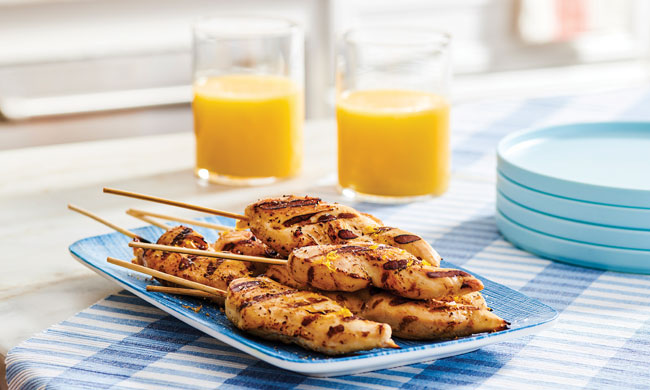
Fat-free, cholesterol-free and sodium-free with no added sugar, 100% orange juice is a healthy addition to any diet, adding a burst of flavor to favorite dishes. Consider using Florida Orange Juice as part of the marinade in these Orange Juice Citrus Chicken Kebabs or as a base for salad dressings to create a perfect balance that will delight your taste buds.
Electrolyte and Hydration Support
With many kids participating in summer sports and other outdoor demands on families during the warmer months, it can be difficult to provide your family with healthy, hydrating beverages. However, an option like this On-the-Go Orange Juice Sports Drink helps to replenish carbohydrates and electrolytes during and after physical activity, such as running, biking, exercising or playing sports.
Find more nutritious and delicious recipes to keep your family energized during summer activities at FloridaJuice.com.
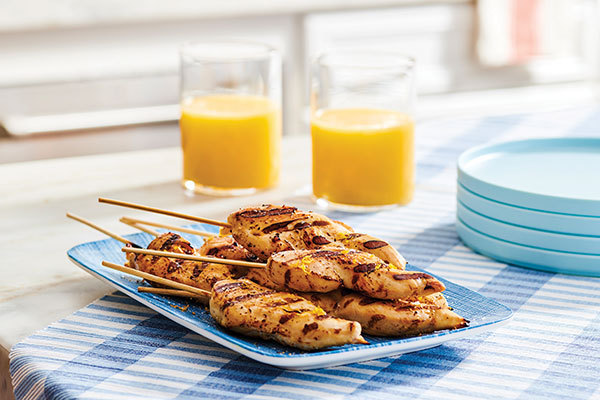
Orange Juice Citrus Chicken Kebabs
Recipe courtesy of Aaron Himrod on behalf of the Florida Department of Citrus
Servings: 8 (2 kebabs per serving)
- 1 large Florida Orange, zest only
- 1 lime, zest only
- 1/2 teaspoon ground thyme
- 2 tablespoons vegetable oil
- 1/4 teaspoon granulated garlic
- 1 teaspoon salt
- white pepper, to taste
- 1 cup Florida Orange Juice
- 1 cup lemon-lime soda
- 2 pounds chicken tenders
- 8 wooden skewers
- To make marinade: In medium mixing bowl, combine orange zest; lime zest; thyme; oil; garlic; salt; white pepper, to taste; orange juice; and soda.
- Add chicken and completely coat with marinade. Cover bowl and place in refrigerator at least 1 hour.
- Soak wooden skewers in water 20-30 minutes.
- To make kebabs: Remove chicken from fridge and lace through each skewer using weaving motion. Repeat for all chicken tenders and set aside.
- When skewers are prepared, drizzle extra marinade over chicken.
- Heat grill to medium. Place chicken on grill. Cover and cook 3 minutes per side, or until center of meat reaches internal temperature of 170 F.
- Remove from grill and serve immediately, or cover with foil and serve later.
Tips: Cover kebabs with foil for at least 20 minutes after cooking to trap in flavor and juices.
Add vegetables to kebabs, if desired, to increase flavor
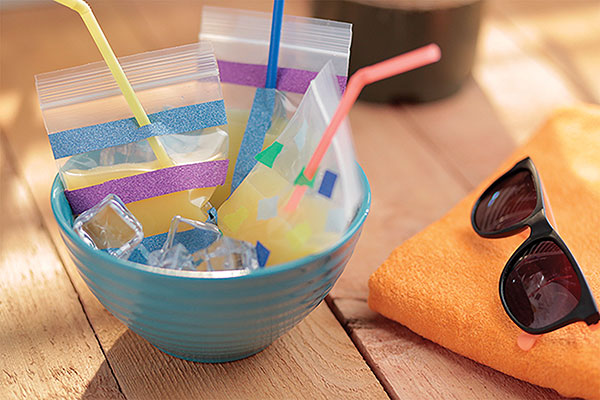
On-the-Go Orange Juice Sports Drink
Recipe courtesy of the Florida Department of Citrus
Servings: 1
- 8 ounces Florida Orange Juice
- 8 ounces water
- 1 pinch salt
- Mix orange juice and water.
- Add pinch of salt.
- Pour into small bottle or reusable pouch.
SOURCE:
 What’s your favorite food, recipe, or dining spot? Tell us in the comments! Then subscribe to the STM Daily News Food and Drink newsletter for fresh recipes, restaurant news, food trends, and delicious stories delivered straight to your inbox. Join our growing community of food lovers today!






