

health and wellness
Heat waves can leave homes dangerously hot – even for young, healthy adults
Heat waves can turn homes into dangerous heat traps—especially during blackouts or in houses without AC—pushing indoor temperatures and humidity into lethal territory even for young, healthy adults, not just the elderly.


Heat waves can leave homes dangerously hot – even for young, healthy adults
Zoltan Nagy, Eindhoven University of Technology
Most people know that heat waves can be dangerous, but what they may not realize is that the heat indoors can be much worse than outdoors.
When the power goes out and air conditioning stops, or in homes without cooling, a house starts to function like a greenhouse during a heat wave. Heat enters through windows and walls and has nowhere to go. Air stagnates.
Within hours, indoor temperatures can climb well above what the thermometer shows outside, especially on upper floors and in rooms with south-facing windows. Over longer periods, especially if temperatures don’t cool off overnight, conditions can become lethal.
Most heat-related deaths occur indoors. When a heat dome sent temperatures soaring in the Pacific Northwest in 2021, 98% of the more than 600 deaths in British Columbia happened inside homes. Washington and Oregon also saw high numbers of deaths in homes that lacked air conditioning.
In Europe, where only 1 in 10 households have air conditioning, heat waves killed an estimated 60,000 people in 2022 and 47,000 in 2023, largely inside buildings never designed for these temperatures.
People of all ages are at risk in heat waves like these. I spent eight years at the University of Texas at Austin studying how buildings respond to extreme heat. In a recent study, my team assessed the heat risk in every single-family home in Austin.
We found that even younger, healthy adults face far more risk than they realize.
How hot is too hot for a human body?
Your body maintains a core temperature of about 98.6 degrees Fahrenheit (37 degrees Celsius). To cool down, it pushes blood to the skin and sweats. But when air temperature is high, that convective cooling weakens. When humidity is also high, sweat cannot evaporate.
If the body has no way to release heat, core temperature rises. If the core temperature increases past about 104 F (40 C), the body’s thermoregulation starts to fail. Past 109 F (42.8 C), death becomes likely.

What makes indoor heat especially dangerous is that it does not let up at night in homes that lack air conditioning. Outdoor temperatures typically drop after sunset, and someone outside can get a few hours of recovery. But a poorly insulated home that has been absorbing heat all day releases that heat slowly, keeping indoor temperatures elevated through the night. A person inside the home never gets a break.
After two or three nights of this, even healthy people start to be at serious risk for heat-related illnesses.
Why homes heat up more than people expect
People tend to underestimate indoor heat for a few reasons.
One is that the thermostat typically sits on one wall in one room. It does not tell what the temperature is in an upstairs bedroom or near a sun-facing window. In older, underinsulated homes, the actual felt temperature can exceed 90 F (32.2 C) even when a thermostat reads 75 F (23.9 C). The hot walls, ceilings and windows can radiate heat directly onto your body.
Another reason is that people assume all homes respond to heat the same way. However, a newer home with double-pane windows and good insulation acts like a thermos, keeping heat out for a longer time. An older home with single-pane windows and cracks in the walls heats up fast.
Two houses on the same street, exposed to the same outdoor conditions, can have completely different temperatures inside. And in a blackout, where neither home has cooling, those differences can become a matter of life and death.
What we found in Austin
Our study combined two datasets. From Austin’s tax appraisal records, we pulled basic property information, such as the year the home was built, the size and the number of stories for each of the city’s 213,000 single-family homes. We then matched each home to the most similar energy simulation models in a U.S. Department of Energy database that contains thousands of detailed, physics-based building energy models representing the U.S. residential building stock.
Using those models, we simulated each building’s indoor temperatures over time during a three-day heat wave and power outage with outdoor temperatures above 110 F (43 C).
We found that 85% of homes got hot enough to pose a significant risk of death for an elderly occupant. But what surprised us was the risk to younger people.
Under today’s climate conditions in Austin, about 15% of homes already have the potential to get hot enough without air conditioning to pose serious heat risks to healthy adults. Under future warming scenarios, that number jumps to as high as 65% if average summer highs reach 104 F (40 C). Further, climate projections for Austin show that heat waves will double in frequency by the end of the century.
We found three types of buildings and accompanying risks:
- Resilient homes, which are newer and well insulated, tended to have temperature and humidity conditions that would be survivable for an elderly occupant throughout the simulated heat wave with blackout.
- Critical-risk buildings, which are mostly older homes, became dangerous almost immediately.
- And then there was the middle group – homes where temperatures rose slowly during the simulated blackout, day by day, possibly giving occupants a false sense of security until it was too late.
Texas has already seen conditions like our case study’s – a heat wave paired with a power outage. In 2024, a derecho knocked out power for nearly 900,000 Houston households while the heat index climbed to 100 F (37.8 C). Seven weeks later, Hurricane Beryl cut power to 2.6 million homes, leaving them without power for over three days, with temperatures over 90 F (32.2 C).
What you can do to stay safe
If you can’t get cooling at home, there are steps you can take that can help.
Move to the lowest floor of your home, where it will be coolest. Close the blinds and curtains on sun-facing windows. Drink water constantly to stay hydrated, which is essential for regulating body temperature.
If you’re facing a blackout, be sure to also check on elderly neighbors, especially those living alone. You can also try to find a public cooling center; many cities now open them during heat emergencies.
Longer term, upgrades such as reflective window film, attic insulation and lighter-colored roofing can reduce how much a home heats up. After the 2021 heat dome, British Columbia’s coroner recommended updating building codes to address heat.
Our own findings point in the same direction: We propose that new homes should be required by building codes to maintain conditions in which at least light physical activity remains possible for all occupants for at least 72 hours during a power outage.
As summers get hotter with climate change and blackouts become more frequent, the risks of people suffering heat illnesses will only continue to rise.
Zoltan Nagy, Professor of Building Services, Eindhoven University of Technology
Heat waves can leave homes dangerously hot – even for young, healthy adults
This article is republished from The Conversation under a Creative Commons license. Read the original article.
💪 Your health journey starts here! Explore the latest health news, fitness tips, wellness trends, and healthy living advice. Share your thoughts in the comments and subscribe to the STM Daily News newsletter to stay informed and inspired every day.


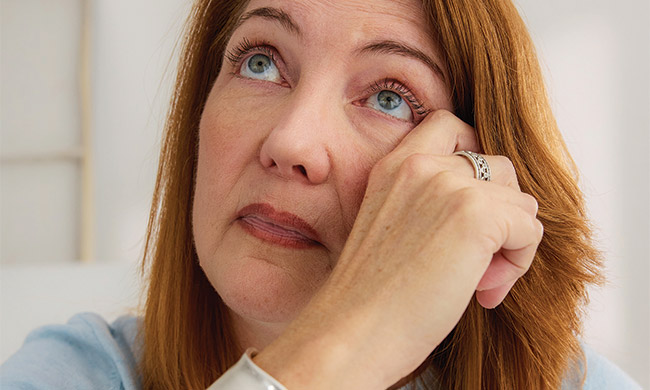
(Feature Impact) Dry eye is one of the most overlooked symptoms of perimenopause, the phase of fluctuating hormones leading up to a woman’s final period, and menopause, the point in a woman’s life when she’s gone a year without a period.
In fact, 79% of women1 recognize hot flashes as a symptom of menopause, but only 14% recognize dry eye as a menopause-related symptom, according to the 2026 Bausch + Lomb (Peri)Menopausal Survey. What’s more, 78% of women1 were surprised to learn that dry eye is a symptom of perimenopause or menopause.
“Dry eye is still widely overlooked as a symptom of menopause, and many women think it’s just a minor nuisance, but the truth is it can significantly affect your daily life,” said Neda Gioia, OD, CNS, IFMCP, FOWNS, founder, Integrative Vision. “Early symptoms are often misunderstood or self-treated but it’s very important for women who experience symptoms to see an eye doctor and get an accurate diagnosis and treatment.”
During perimenopause and menopause, declining hormone levels can impact tear production, tear quality and tear evaporation, contributing to dry eye symptoms including redness, fluctuating vision and a gritty or tired feeling in the eyes, all of which can impact day-to-day comfort and quality of life. If left untreated, dry eyes may worsen over time, potentially impacting eye health and vision. Among peri-, menopausal and post-menopausal women who experienced dry eye, 80% said the symptom came as a surprise.
Respondents reported their dry eye symptoms caused difficulty reading (58%), difficulty using screens (53%), difficulty driving (26%) and reduced productivity (17%), underscoring the often-overlooked impact dry eyes can have on everyday life.1
However, there are a variety of products and treatment approaches available to help manage dry eye symptoms. For example, Bausch + Lomb offers a range of options designed to address the main causes of dry eye.
A doctor-recommended, clinically proven once-daily soft gel supplement that targets the key root causes of dry eyes, Blink NutriTears supports healthy tear production and provides lasting, continuous relief.* § As part of a comprehensive approach to dry eye management, the supplement can be used with Blink Triple Care Preservative Free Lubricant Eye Drops, which are designed to directly address tear evaporation, one of the leading causes of dry eye, and provide instant and long-lasting symptom relief.
An eye care professional can help determine the approach that’s right for each individual. To learn more about dry eye and products to help combat it, visit JustBlink.com.*These statements have not been evaluated by the Food and Drug Administration. This product is not intended to diagnose, treat, cure or prevent any disease.
12026 Bausch & Lomb (Peri)Menopause Survey via Suzy, n=402; Women ages 30–80+ who are perimenopausal, menopausal, or post-menopausal
§Based on a clinical study
SOURCE:
Bausch + Lomn

health and wellness
The Oral and Cardiovascular Health Connection: 4 Tips to Protect Your Teeth, Gums and Heart
People often think of dentists and doctors as totally separate healthcare professionals: one cares for your teeth and mouth while the other handles the rest of the body. In reality, the different systems in the human body are closely interconnected and oral health is no exception, making dentists a vital part of your healthcare team. Care for your teeth, gums and heart all at once using these tips.


(Feature Impact) People often think of dentists and doctors as totally separate healthcare professionals: one cares for your teeth and mouth while the other handles the rest of the body. In reality, the different systems in the human body are closely interconnected and oral health is no exception, making dentists a vital part of your healthcare team.
Oral health and heart health have a particularly close connection, with inflammation at the core of it. When your gums are inflamed, the resulting bacteria can make their way from your mouth through your bloodstream, potentially contributing to your blood vessels constricting or becoming blocked. This, in turn, may force your heart to work harder and raise your blood pressure, putting you at risk of heart disease and stroke. More than 46% of adults in the U.S. have high blood pressure, and more than 40% of adults age 30 and older are affected by periodontal (gum) disease.
To help address these issues, the American Heart Association’s Healthy Smiles, Healthy Hearts initiative, in collaboration with Delta Dental of California, is encouraging dental teams to take a total-body perspective with their patients. Simple steps like blood pressure screenings during checkups can give a more complete picture of a person’s overall health. If a member of your dental care team pulls out a blood pressure cuff at your next appointment, it’s a good sign.
“The mouth is a gateway to the body and can often reveal more about your total body health than you may think,” said Daniel Croley, D.M.D., chief dental officer at Delta Dental of California and Affiliates. “Oral health professionals have a powerful opportunity to integrate more into their patients’ collective health care team beyond protecting their patients’ teeth By connecting oral health and heart health, this initiative helps dentists identify risks early and guide patients toward care that can improve and even save lives.”
Care for your teeth, gums and heart all at once using these tips from experts at the American Heart Association.
Follow a Brushing and Flossing Schedule
 Good dental health starts with a daily routine. If you don’t want to sheepishly cringe next time the dentist inquires about yours, brush at least twice a day and floss at least once a day to disrupt plaque-forming bacteria. Dentists recommend using toothpaste with fluoride and brushing your teeth and gums thoroughly yet gently, as applying too much pressure can wear away enamel and cause gum recession.
Eat a Healthy Diet and Limit Sugar
Most kids are used to hearing sugar will rot their teeth – and that’s not just a parental scare tactic to get their little hands out of the candy jar. Sugar feeds harmful bacteria in your mouth, producing acid that can cause cavities and gum disease. For a diet your heart and teeth will both appreciate, prioritize vegetables, lean proteins, complex carbohydrates and healthy fats, while limiting added sugars and refined carbohydrates.
Avoid Smoking and Tobacco Products
The connection between smoking and oral disease is well established: smokers face significantly higher risks of developing periodontal disease, losing teeth or being diagnosed with oral cancer. Cigarettes aren’t the only form of tobacco to worry about, either. Vaping, dipping and chewing tobacco can also harm your dental health by drying out your mouth and restricting blood flow to the gums. Since these products are also harmful to heart health, quitting or avoiding them offers plenty of worthwhile benefits. Seek support if you need help to kick the habit.
Communicate with Your Healthcare Team
Since your body’s systems are connected to each other, it’s helpful to talk to your dentist about your blood pressure and to your doctor about your oral health. Start thinking of your dentist as a key member of your integrated healthcare team. Don’t be afraid to share your medical history, discuss the side effects of any medications you’re taking and ask for personalized recommendations on caring for your teeth, gums and overall health.
To learn more about how to improve your oral and cardiovascular health, visit Heart.org/OralHealth.
Photos courtesy of Shutterstock

SOURCE:

5 Habits to Boost Immunity During Cold and Flu Season
(Feature Impact) Your immune system is your strongest ally during cold and flu season, working hard to keep you healthy as you start hearing those telltale coughs and sneezes all around. Help your body do its job well by adopting a few simple habits that naturally support its ability to fight off germs or recover faster.
Talk to your healthcare provider for personalized advice then work on making these habits normal in your household.
Get Regular Exercise
Exercise is like a wonder drug that can improve nearly every aspect of health and wellness. Physical activity increases blood flow, reduces long-term inflammation, helps immune cells circulate through the body to guard against invaders and may even flush bacteria out of your lungs and airways. Plan to fit at least 150 minutes of moderate exercise into each week, like a bike ride, brisk walk, yoga class or on-demand video workout.
Eat Foods That Support Immune Health
To keep your immune system fueled, experts recommend eating a varied diet featuring plenty of fruits, vegetables, nuts, seeds, whole grains and healthy fats like olive oil. Consider adding fresh grapes to your diet to enjoy benefits from their naturally occurring plant compounds.
Protecting the body starts all the way down at the cellular level, and grapes contain powerful polyphenols that support the health and function of cells. Studies indicate certain compounds in grapes, like resveratrol and flavonoids, support immune system function as well as brain, skin, GI and heart health.
These little fruits are easy to add to your diet, whether you enjoy sweet, juicy Grapes from California by the handful or toss them in a blender to make this California Grape Wellness Juice recipe. Support multiple aspects of wellness with the drink’s powerful combination of fruits and vegetables, delivering a variety of immune-boosting vitamins, minerals and antioxidants.
Stay Hydrated
Drinking enough water helps clean your lymphatic system, which is responsible for producing special white blood cells that fight germs. It also keeps membranes in your nose and mouth moist, decreasing infection risk. If you struggle to drink enough, eating water-rich foods like grapes also helps you improve hydration.
Practice Good Germ Hygiene
To increase your odds of staying healthy during peak illness season, hearken back to the tried-and-true hygiene advice your parents might have tried to drill into your head as a kid. Regularly wash your hands with warm water and soap, avoid touching your face while out and about, keep your distance from symptomatic people and disinfect commonly used surfaces like doorknobs when someone in the house or office is sick.
Sleep More, Stress Less
Before you start feeling stressed that you aren’t getting enough sleep, rest assured there are easy changes you can make to support your well-being in both areas. Try switching up your nightly routine to be oriented less around screens and more around calming activities that actually help you wind down, like yoga, meditation or reading.
Discover more health information and recipes at GrapesFromCalifornia.com.
California Grape Wellness Juice
Servings: 3 (1 cup each)
- 5 cups black or red Grapes from California
- 1/2 cup peeled raw beet slices
- 3/4 cup orange juice
- 1/4 cup lemon juice
- 1 small carrot, peeled and sliced
- 1 piece fresh turmeric (1-inch), peeled and sliced or1 teaspoon ground turmeric
- In high-speed blender, puree grapes, beet slices, orange juice, lemon juice, carrot and turmeric until smooth.
- Pour through fine mesh sieve, stirring to extract as much juice as possible, about 3 cups. Stop when mixture starts to get thick. Enjoy immediately or cover and refrigerate until ready to serve.
Notes: This juice can also be added to iced tea or fizzy water.
Nutritional information per serving: 230 calories; 3 g protein; 58 g carbohydrates; 0.5 g fat (2% calories from fat); 0 g saturated fat (0% calories from saturated fat); 0 mg cholesterol; 35 mg sodium; 0 g fiber.

SOURCE:
California Table Grape Commission





