

Food and Beverage
Joy to Arlington, Texas! Jollibee Set to Open Its 7th Store in the Lone Star State on Friday, August 16, 2024

Last Updated on August 16, 2024 by Daily News Staff
Newest Texas outpost marks the global restaurant brand’s 74th location in the U.S., as Jollibee continues to grow its fanbase in North America
WEST COVINA, Calif. /PRNewswire/ — Global restaurant brand, Jollibee, recently hailed “the best fast food fried chicken” in America by USA TODAY, is excited to announce the opening of its first location in Arlington, Texas, on Friday, August 16, 2024. The new Jollibee will be located at 1700 West Pleasant Ridge Road in the heart of South Arlington’s vibrant retail corridor, just off Interstate 20. Beloved for its mouth-watering Chickenjoy fried chicken, crispy and juicy chicken sandwiches and iconic Peach Mango Pie, Jollibee’s new Arlington outpost marks its 7th location in the Lone Star State and its 74th in the U.S., as the brand continues to bolster its fanbase across North America.

Situated almost exactly halfway between the cities of Dallas and Fort Worth, Arlington enjoys convenient access to both cities, while also being in the center of the action. For those who want to check out Jollibee’s new Arlington, Texas location, here are the key details:
- Address: 1700 West Pleasant Ridge Road, Arlington, TX 76015
- Store Hours: 9AM – 11PM, seven days a week
- How to Order: This location will offer dine-in, take-out and drive-thru service, with online ordering available in the coming weeks.
Jollibee invites curious first-time customers in and around Arlington – from fried-chicken lovers to those who simply crave something deliciously different – to discover for themselves why fans line up for hours when a new Jollibee opens its doors. Not sure what to try first? Here are some of the brand’s “must have” menu items:
- Chickenjoy: Jollibee’s signature crispy and juicy bone-in fried chicken. Also available in a spicy version.
- Chicken Sandwich: A crispy, juicy chicken breast fillet is spread with umami mayo, and sandwiched between a toasted brioche bun.
- Spicy Chicken Sandwich: The spicy version features a sriracha mayo spread and fresh jalapeno slices.
- Peach Mango Pie: Made with peaches and real Philippine mangoes in a warm, light, and crispy crust.
“We are simply thrilled to bring our famous Chickenjoy and other Jollibee favorites to our many loyal fans who call Arlington home, but we also can’t wait to win over first-time guests with the great-tasting food, happy moments, and the warm and friendly service that makes Jollibee so special,” said Maribeth Dela Cruz, Business Group Head, Honeybee Foods Corporation dba Jollibee. “Arlington not only enjoys excellent proximity to both Dallas and Fort Worth, but it also is consistently ranked as one of America’s most desirable cities to live, work and play – making it the perfect place to continue spreading our joy in the Great State of Texas!”
The Arlington grand opening promises to be absolutely buzzing with the fun and excitement that makes Jollibee openings a true celebration for all ages. To jumpstart the joy, Jollibee will be hosting a three-day promotion, whereby the first 50 in-store customers and first 50 drive-thru customers who spend $25 or more will be gifted these Jollibee goodies:
- Day 1: One year of free Jollibee Chicken Sandwiches (1 sandwich per month for 12 months) and an exclusive Jollibee t-shirt designed just for this opening
- Day 2: Jollibee Red Bucket Hat – A streetwear must-have that features Jollibee’s embroidered logo front and center. Like Jollibee’s Chickenjoy Bucket, it is fast becoming a brand icon in its own right.
- Day 3: Jollibee Black T-shirt with Red Pocket – Comfort meets cool with this exclusive unisex design that features screen-printed Jollibee logos collaged on the front pocket with the Jolly Bee Mascot peeking out.
Jollibee’s new Arlington location joins its two existing locations in North Texas: Dallas, which opened to great fanfare in November 2023, and Plano, which opened in 2020. As Jollibee continues its expansion across North America, it will be bringing its joy in new markets, like Portland, OR, as well as spreading its joy in regions, like New York City (Queens, NY) and Northern California (Alameda, CA), where demand for the brand is especially high.
Jollibee is the flagship brand of the Jollibee Group, which is on a mission to become one of the top-five restaurant companies in the world, one joyful customer at a time. As Jollibee continues to take North America by storm, be sure to follow along at @jollibeeus on Facebook, @jollibeeus on Instagram and @jollibeeusa on TikTok to get updates on upcoming store openings, new product launches and other exciting news and announcements.
About Jollibee Group
Jollibee Foods Corporation (JFC, also known as Jollibee Group) is one of the fastest-growing restaurant companies in the world. Its mission is to serve great-tasting food and bring the joy of eating to everyone through its 18 brands with over 6,900 stores across 32 countries.
The Jollibee Group has eight wholly owned brands (Jollibee, Chowking, Greenwich, Red Ribbon, Mang Inasal, Yonghe King, Hong Zhuang Yuan, Smashburger); four franchised brands (Burger King, Panda Express, and Yoshinoya in the Philippines, and Tim Ho Wan in certain territories in China); 80% ownership of The Coffee Bean and Tea Leaf; 60% ownership in the SuperFoods Group that owns Highlands Coffee; and 51% ownership of Milksha, a popular Taiwanese bubble tea brand. JFC also has a business venture with award-winning Chef Rick Bayless for Tortazo, a Mexican fast-casual restaurant business in the United States.
The Jollibee Group, through its subsidiary Jollibee Worldwide Pte. Ltd. (JWPL) owns 92% participating interest in Titan Dining LP, a private equity fund that owns the Tim Ho Wan brand. The Jollibee Group has a joint venture with the THW Group to open and operate THW restaurants in Mainland China. The Company also established a joint venture company that will own and operate Tiong Bahru Bakery and Common Man Coffee Roasters in the Philippines. Recently, the Jollibee Group signed agreements to own 10% ownership in Botrista, a leader in the beverage technology space. The Company also owns a 90% participating interest in Titan Dining Partners II Ltd to further grow Asia Pacific food service brands and/or bring strong global food service brands to Asia Pacific.
The Jollibee Group has launched its global sustainability agenda dubbed Joy for Tomorrow, which aims to strengthen the Company’s commitment to sustainable business practices. The agenda centers on the key pillars of Food, People, and Planet, and consists of 10 focus areas namely: food safety, food quality, nutrition & transparency, employee welfare, farmers livelihood, community support, good governance, packaging & recycling, waste reduction, and energy & water efficiency. Each focus area sets goals and initiatives that contribute and align with the United Nations Sustainable Development Goals (UN SDGs).
The Jollibee Group was named the Philippines’ Most Admired Company by the Asian Wall Street Journal for ten years. It was also honored as one of Asia’s Fab 50 Companies and among the World’s Best Employers and World’s Top Female-Friendly Companies by Forbes. The Company is also a three-time recipient of Gallup’s Exceptional Workplace Award and was recently cited in TIME’s List of the World’s Best Companies and Fortune’s Southeast Asia 500 List.
To learn more about Jollibee Group, visit www.jollibeegroup.com.
SOURCE Jollibee Foods Corporation
At our core, we at STM Daily News, strive to keep you informed and inspired with the freshest content on all things food and beverage. From mouthwatering recipes to intriguing articles, we’re here to satisfy your appetite for culinary knowledge.
Visit our Food & Drink section to get the latest on Foodie News and recipes, offering a delightful blend of culinary inspiration and gastronomic trends to elevate your dining experience.
https://stmdailynews.com/category/food-and-beverage


Food and Beverage
Jack-o’-Lantern Stuffed Peppers Prove Fun Isn’t Just for Pumpkins
These Jack-o’-Lantern Stuffed Peppers give you a Halloween-themed, kid-approved way to put vegetables on the dinner table.
Recipes:
Jack-o’-Lantern Stuffed Peppers
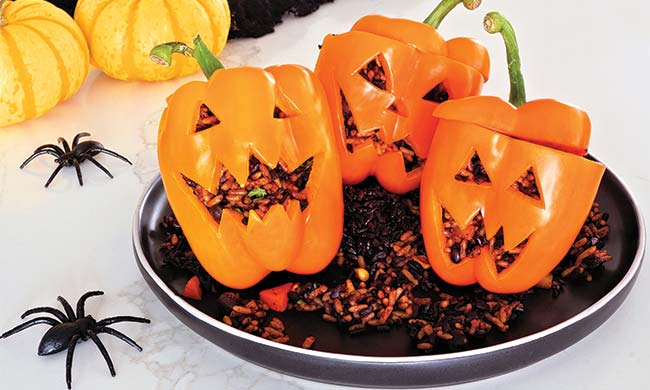
Jack-o’-Lantern Stuffed Peppers Prove Fun Isn’t Just for Pumpkins
(Feature Impact) Jack-o’-lantern carving is a cherished fall tradition – but pumpkins aren’t the only vegetables you can decorate with fun, spooky or scary faces. These Jack-o’-Lantern Stuffed Peppers give you a Halloween-themed, kid-approved way to put vegetables on the dinner table.
Filled with savory ground turkey, brown rice, melty cheese and warm, savory spices, these peppers taste as autumnal as they look. It’s simple to customize the filling to your family’s tastes, and you can even make the meal interactive by inviting kids to choose their own pepper colors and carve their own expressions.
Find more Halloween and seasonal recipes at Culinary.net.
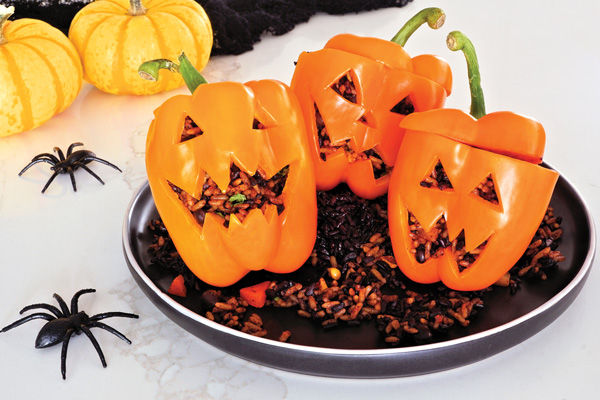
Jack-o’-Lantern Stuffed Peppers
Recipe adapted from AllRecipes
Prep time: 15 minutes
Cook time: 45 minutes
Servings: 4
- 1 teaspoon olive oil
- 1 pound ground turkey
- 3 cloves garlic, minced
- 1/2 medium onion, diced
- 1 teaspoon garlic powder
- 1 teaspoon cumin
- 4 large orange bell peppers
- 1 cup cooked brown rice
- 1 cup grated sharp cheddar cheese
- 2 teaspoons kosher salt
- 1/2 teaspoon ground black pepper
- cayenne pepper, to taste
- cups seasoned tomato sauce, warmed
- Preheat oven to 400 F and coat 9-by-13-inch baking dish with olive oil.
- In skillet, brown ground turkey with minced garlic, onion, garlic powder and cumin until meat is cooked, 4-5 minutes.
- With small knife, cut eyes, nose and mouth into flattest side of each pepper to resemble jack-o’-lantern. Cut around seed pods and remove pepper tops, trimming and discarding any seeds from under stems then setting tops aside. Trim white membranes from inside each pepper and shake out seeds. Place peppers in prepared baking dish.
- In bowl, combine turkey mixture with cooked rice, cheddar cheese, salt, black pepper and cayenne pepper, to taste.
- Divide and stuff mixture into peppers; cover with reserved pepper tops.
- Wrap baking dish loosely with aluminum foil and bake until peppers are tender, about 45 minutes.
- Spoon about 3 tablespoons warm tomato sauce onto each plate; place stuffed peppers on top. Serve remaining sauce on side.
Photo courtesy of Shutterstock

SOURCE:
Food and Beverage
Serve Up Smiles with Favorite Holiday Sides
Turkey and ham may sit centerstage, but classic holiday sides can make the season truly special. You can bring smiles to your loved ones’ faces by dishing out those favorite recipes everyone asks for year after year.
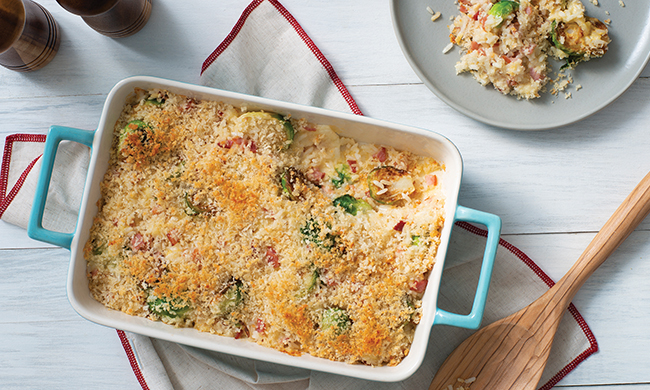
(Family Features) Turkey and ham may sit centerstage, but classic holiday sides can make the season truly special. You can bring smiles to your loved ones’ faces by dishing out those favorite recipes everyone asks for year after year.
Made with a delicious combination of rice, cheddar cheese, cream of mushroom soup and broccoli florets, this quick and easy version of Broccoli and Cheese Rice Casserole is an ideal one-pot dish to keep the holidays simple. With three easy steps and everyday ingredients, it comes together with minimal effort for traditional casserole taste.
When it comes to feeding a crowd, it’s often best to let your oven do the work. This Brussels Sprouts and Ham Rice Gratin recipe allows you to serve up a filling favorite with little effort using pantry staples. Plus, it’s a kid-friendly way to encourage veggies at this year’s holiday meal with gooey cheese providing tempting taste bud motivation.
These seasonal classics and more are made quick and easy with an option like Success Boil-in-Bag Rice, a pre-measured, mess-free way to make fluffy, high-quality rice. It’s cooked by simply dropping a bag of rice in a pot of water or broth then boiling it for 10 minutes. BPA-free and FDA-approved, the bags are safe to use and made to withstand high temperatures.
An added bonus: If you’re aiming to achieve a particular flavor, just season the rice by cooking in water infused with herbs, spices, broth, coconut milk or other liquids like juice for sweeter recipes.
Visit SuccessRice.com to find more holiday recipe inspiration.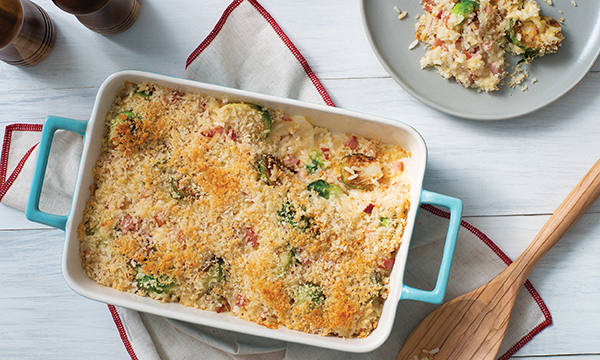
Brussels Sprouts and Ham Rice Gratin
Prep time: 20 minutes
Cook time: 25 minutes
Servings: 4
- 1 bag Success White Rice
- 1/2 pound Brussels sprouts, trimmed and halved
- 1/3 cup diced ham
- 1 clove garlic, minced
- 1 tablespoon olive oil
- 3/4 teaspoon salt, divided
- 3/4 teaspoon black pepper, divided
- 1 cup heavy cream
- 2 tablespoons finely chopped fresh chives
- 2 tablespoons Dijon mustard
- 1 cup shredded sharp cheddar cheese
- 1/2 cup grated Parmesan cheese, divided
- 1/3 cup breadcrumbs
- 2 tablespoons butter, melted
- Preheat oven to 450 F. Prepare rice according to package directions.
- In large bowl, toss Brussels sprouts, ham, garlic, olive oil, 1/4 teaspoon salt and 1/4 teaspoon pepper. Place on parchment paper-lined baking tray and roast 12-15 minutes, or until caramelized. Decrease oven temperature to 425 F.
- In large bowl, toss rice, Brussels sprouts mixture, cream, chives, Dijon mustard, remaining salt and remaining pepper. Stir in cheddar and 1/3 cup Parmesan cheese. Transfer mixture to greased, 2-quart baking dish.
- In small bowl, stir breadcrumbs, remaining Parmesan and melted butter. Sprinkle over rice mixture.
- Bake 12-15 minutes, or until golden brown and bubbling.
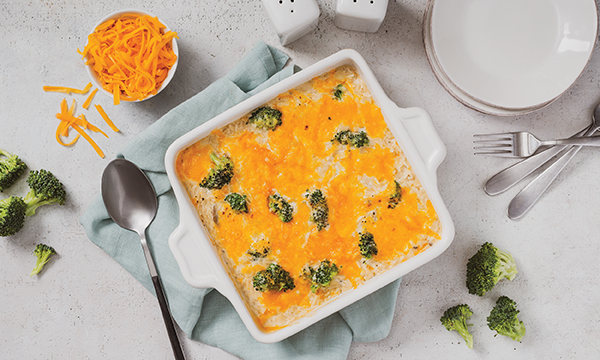
Broccoli and Cheese Rice Casserole
Prep time: 5 minutes
Cook time: 30 minutes
Servings: 4-6
- 1 bag Success White Rice or Brown Rice
- nonstick cooking spray
- 1 can (10 3/4 ounces) condensed cream of mushroom soup
- 2 cups frozen broccoli florets, thawed and drained
- 1 1/2 cups shredded cheddar cheese, divided
- 1/2 cup evaporated milk
- 3 tablespoons butter, melted
- 1 tablespoon grated onion
- 1/2 teaspoon salt
- 1/2 teaspoon black pepper
- Prepare rice according to package directions. Preheat oven to 350 F.
- Coat 2-quart casserole dish with nonstick cooking spray. In medium bowl, combine soup, broccoli, 1 cup cheddar cheese, evaporated milk, butter, onion, salt and pepper. Fold in rice.
- Pour mixture into prepared dish and top with remaining cheddar cheese. Bake 20 minutes.
SOURCE:
Success Rice
At our core, we at STM Daily News, strive to keep you informed and inspired with the freshest content on all things food and beverage. From mouthwatering recipes to intriguing articles, we’re here to satisfy your appetite for culinary knowledge.
Visit our Food & Drink section to get the latest on Foodie News and recipes, offering a delightful blend of culinary inspiration and gastronomic trends to elevate your dining experience.
https://stmdailynews.com/category/food-and-beverage
You can also find food and beverage-related videos on our YouTube channel, where we regularly post new content and share tips, recipes, and demonstrations. https://youtube.com/playlist?list=PLEhXBupt8tVynuUhpQZMxQt4lvPmOiAtQ&si=InDwc7YaB0KIwmxy
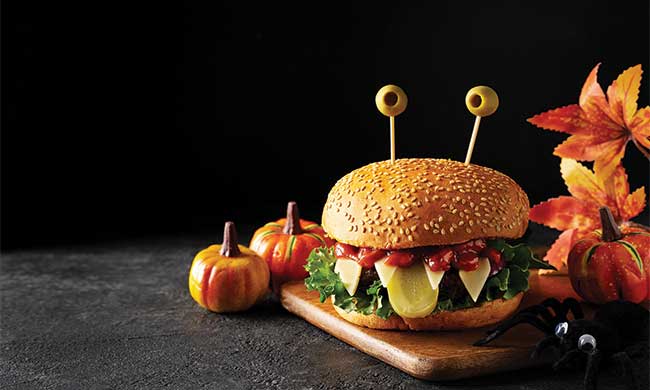
(Feature Impact) Out with the ordinary, in with the weird – that’s what the Halloween season is all about. These Halloween Monster Burgers give a ghoulishly fun twist on burger night, featuring all your favorite toppings transformed into olive eyes, cheese fangs and a pickle tongue.
Whether you reach for a traditional hamburger patty or switch it up with chicken, turkey, bean or veggie options, the effect is the same: a dinner that looks like it escaped from a mad scientist’s lab. It’s a good way to get some protein and veggies into kids before the trick-or-treating sugar rush, and you can even make it interactive by inviting them to decorate their own monsters and come up with creative variations.
Alternatively, if you’re looking for some spooky hors d’oeuvres to impress at this year’s Halloween party, these burgers are easy to size down into slider form. Serve a whole tray of mini monsters ready to devour – or be devoured by – hungry guests.
Find more Halloween recipe inspiration at Culinary.net.
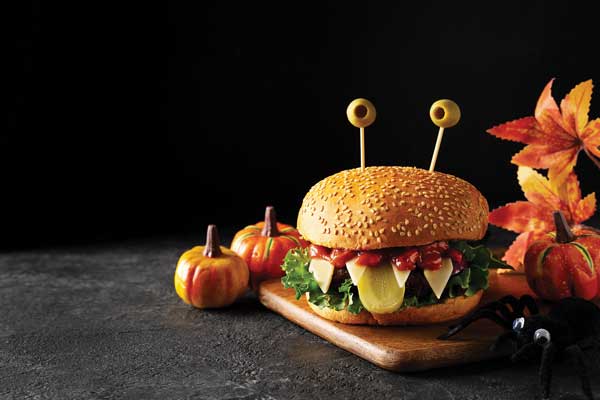
Halloween Monster Burgers
Recipe adapted from Happy Foods Tube
Prep time: 10 minutes
Total time: 18 minutes
Servings: 4
- 4 hamburger, chicken or veggie patties
- 4 tablespoons mayonnaise
- 4 teaspoons ketchup, plus additional, to taste, divided
- 4 hamburger buns
- 8 leaves baby romaine lettuce
- 4 slices dill pickles, sliced lengthwise
- 4 cheese slices
- 8 large green olives, pits removed
- Cook burger patties until they reach desired doneness.
- In small bowl, combine mayonnaise and 4 teaspoons ketchup. Spread each bun base with about 1 tablespoon mayo sauce then add two lettuce leaves and cooked burger patty.
- Add pickle slice as monster “tongue.” Take each cheese slice and cut triangles into one side to resemble teeth; add to burger then cover with ketchup “blood,” to taste.
- Stick olives on toothpicks and add two to each top bun as “eyeballs.”
Photo courtesy of Shutterstock

SOURCE:




