

Entertainment
The Largest AI Film Competition Is a Snapshot of Where AI Filmmaking Is Headed
Largest AI Film Competition : Ten Los Angeles Film School and Los Angeles Recording School alumni contributed to 2026 Oscar-winning films including One Battle After Another, Sinners, F1, and Avatar: Fire and Ash.


A year ago, “AI film” still sounded like a niche experiment—cool demos, rough edges, and lots of debate about whether it could ever look truly cinematic. Higgsfield’s latest competition results suggest we’ve crossed into a new phase: AI filmmaking is becoming a real, global production lane, driven by independent creators working outside traditional studio systems.
According to the company, its AI Film Competition drew nearly 8,800 submissions from 139 countries, with a $500,000 cash prize pool distributed to independent filmmakers. Beyond the winners, the dataset reads like a market signal: generative tools are lowering the cost of entry for high-end visuals, and the talent pipeline is no longer geographically locked to legacy production hubs.
A global creator map is replacing the old studio map
One of the most telling takeaways is where the work is coming from. Higgsfield reports the largest volume of entries came from:
- India (1,805)
- United States (1,041)
- Germany (278)
- France (230)
- Italy (228)
- Brazil (212)
- United Kingdom (196)
Historically, cinematic action and high-end VFX were concentrated in a handful of established centers—places with the budgets, infrastructure, and specialized crews to pull off complex sequences. Higgsfield’s results point to a different reality: subscription-based, production-grade AI tools are reducing geographic barriers, enabling creators across Latin America, Southeast Asia, and Eastern Europe to compete in the same visual arena.
Higgsfield CEO Alex Mashrabov framed it as a creator inflection point, arguing that the scale of participation signals the next breakout franchise “can come from anywhere on Earth.” Whether or not you buy the blockbuster prediction, the underlying shift is hard to ignore: global access is now a feature of the production model.
The judging criteria hints at what matters next
Another important detail: the prize pool wasn’t awarded for “best render” alone. Higgsfield says the jury—made up of both traditional production veterans and AI-native creators—prioritized storytelling and directorial intent over technical polish.
That’s a meaningful signal for where AI filmmaking is headed. As tools improve, the baseline for visual quality rises. What differentiates creators isn’t just the ability to generate a shot—it’s the ability to direct one: pacing, tone, character, and clarity of vision.
The jury included names and studios spanning both worlds, such as Secret Level (founded by Emmy-winning filmmaker Jason Zada), Buralqy, concept artist Jama Jurabaev, and PJ Ace of Genre.ai—who called it “the best-looking AI film contest” they’ve seen.
Decentralized production is no longer theoretical
The Grand Prize winner is also a case study in how AI changes collaboration. 1st Place ($150,000) went to Muhannad Nassar (Detroit) and Simon Meyer (Germany) for “GRANDMA vs WASP.” The pair reportedly never met in person, instead using an asynchronous workflow across time zones with Higgsfield’s Cinema Studio.
That’s not just a fun anecdote—it’s a preview of a parallel production ecosystem where teams form around taste and capability rather than geography. If the toolchain is centralized in the cloud, the “studio” becomes a workflow, not a building.
Winners show two pathways: new creators and experienced pros
The rest of the top placements reflect how broad the adoption curve is becoming:
- 2nd Place ($100,000): Nikolay Shestak for “CUPID,” using Higgsfield to execute concepts that would normally be budget-prohibitive. He plans to apply the prize toward an independent superhero film.
- 3rd Place ($50,000): Brothers Ash and Aram Gevorkyan for “SCRATCH,” created in five days. Ash noted audiences mistook it for a studio-backed theatrical release and asked for a link to the “full movie.”
What’s emerging is a two-lane future: newcomers using AI to enter filmmaking for the first time, and established creatives using it to expand what they can produce independently.
Money is starting to loop back into production
Higgsfield also highlights something that looks a lot like early-stage industry deal flow: one top winner is reportedly reinvesting prize money back into the platform to produce a feature-length film, and the project has already attracted involvement from a major Hollywood figure.
That matters because it suggests AI-generated work isn’t staying in a separate “AI corner.” It’s beginning to intersect with the traditional financing-and-distribution ecosystem—especially when the output looks cinematic enough to be taken seriously.
The market is growing—and the infrastructure is consolidating
The competition results land in a market that’s expanding quickly. Citing Grand View Research, Higgsfield notes the global AI video generator market was estimated at $788.5 million in 2025 and is projected to reach $3.44 billion by 2033 (a 20.3% CAGR).
Higgsfield is positioning itself as an all-in-one workflow layer, combining its own models with third-party options (including OpenAI’s Sora and Google’s Veo, among others) so creators can choose the best model per task without rebuilding pipelines. The company says it serves 20 million+ users who have generated 50 million+ videos, and it reports a most recent valuation of $1.3 billion.
What to watch for next
If you’re tracking where AI filmmaking is going, this competition offers a few clear “watch points”:
- More global breakout creators as the cost of cinematic visuals continues to fall
- Decentralized teams forming around projects, not locations
- A shift from “can it look good?” to “can you direct it?” as quality becomes more accessible
- Traditional industry crossover as AI-native projects attract recognizable partners
Want to see the winning films and action scenes? Higgsfield has them here: https://higgsfield.ai/contests/make-your-action-scene
Source: Higgsfield press release distributed via PRNewswire (March 18, 2026).
Looking for an entertainment experience that transcends the ordinary? Look no further than STM Daily News Blog’s vibrant Entertainment section. Immerse yourself in the captivating world of indie films, streaming and podcasts, movie reviews, music, expos, venues, and theme and amusement parks. Discover hidden cinematic gems, binge-worthy series and addictive podcasts, gain insights into the latest releases with our movie reviews, explore the latest trends in music, dive into the vibrant atmosphere of expos, and embark on thrilling adventures in breathtaking venues and theme parks. Join us at STM Entertainment and let your entertainment journey begin! https://stmdailynews.com/category/entertainment/
and let your entertainment journey begin!


Entertainment
Lights, Camera, Snackers: How Aspiring Filmmakers Can Enter to Win $25,000
The director’s chair is open and the opportunity to create the next great snack-sized movie could be yours. Aspiring filmmakers and creators have the chance to turn a prewritten script into an original short film for a $25,000 prize.

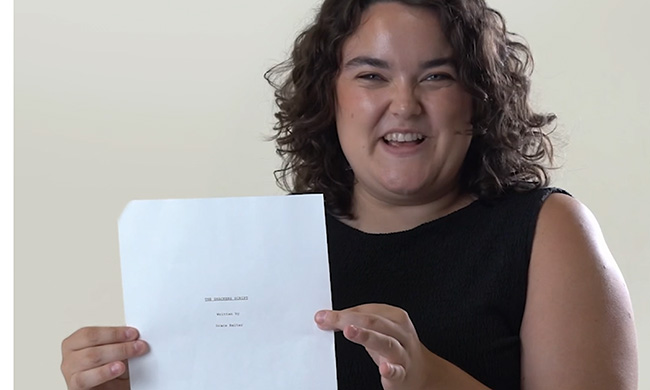
Lights, Camera, Snackers: How Aspiring Filmmakers Can Enter to Win $25,000
(Feature Impact) The director’s chair is open and the opportunity to create the next great snack-sized movie could be yours.
For the second year, Bumble Bee is bringing back its Tuna “Cans”Film Festival, giving aspiring filmmakers and creators the chance to turn a script written by comedian and actress, Grace Reiter, into an original short film starring its deliciously convenient tuna Snackers.
Watch the video to learn more!
“I love a chance to support those starting out in the film industry – and this time, I’m partnering with Bumble Bee for the Tuna Cans Film Festival to do it,” Reiter said. “Plus, I’m making it easy: I already wrote the script.”
Using Reiter’s scripted lines, creators can make the story entirely their own, bringing their vision to life through original characters, settings, music, editing and creative flair.
The creative brief is simple: The finished film must be 60 seconds or less and Bumble Bee Snackers™ need to get their moment in the spotlight.
Plus, the stakes are bigger than ever: The winning filmmaker will take home a $25,000 grand prize to help make their filmmaking dreams a reality.
Creators can submit their original short film by Oct. 23, 2026, at 11:59 p.m. PT.
The film can be funny, dramatic, unexpected or all three. The lines are already written but the order, arrangement and any additions are open to creative interpretation. Now it’s time to see what you can do with it.
Visit tunacansfilmfest.com, where you can find Reiter’s original script, submission instructions and complete contest details, to get started.
SOURCE:
Bumble Bee

Last Updated on October 9, 2026 by Daily News Staff
From haunted mazes after dark to daytime trick-or-treating with Snoopy, Knott’s offers two ways to celebrate Halloween in 2026.
BUENA PARK, Calif. — Halloween season is underway at Knott’s Berry Farm, where visitors can choose between the nighttime frights of Knott’s Scary Farm and the playful daytime activities of Knott’s Spooky Farm.
For readers planning a Southern California outing this October, the two celebrations offer different ways to get into the Halloween spirit.
Scary Farm brings new nightmares after dark
Knott’s Scary Farm runs on select nights through October 31, 2026, transforming the park with haunted mazes, scare zones, shows, and more than 1,000 creatures, according to Knott’s.
Two new mazes join this year’s lineup. Inked turns a cartoonist’s creations into a nightmare, while Unearthed sends visitors into an excavation where an ancient evil has awakened.
Also new for 2026 is Color Collect, an activity in which guests use an interactive lantern to activate pillars around the park and collect six colors.
Scary Farm requires its own paid event admission. As of October 4, online single-night tickets are advertised from $65, with taxes potentially additional. Knott’s does not recommend the event for children under 13.
Spooky Farm offers daytime Halloween fun
For families seeking a gentler celebration, Knott’s Spooky Farm takes place Thursdays through Sundays, September 24–October 31, plus October 12, according to the park’s events calendar, which lists the additional date as Columbus Day.
Children can trick-or-treat through Ghost Town, enjoy games and spooky stories with Snoopy and the Peanuts characters, and show off their Halloween outfits at Snoopy’s Spooktacular Costume Party.
Other activities include the Creepy Critters of Calico, cookie decorating in the pumpkin patch, and performances by the Bob Baker Marionette Theater. Cookie decorating carries an additional fee.
The daytime celebration gives families a chance to enjoy Halloween decorations, treats, and entertainment together before the nighttime haunt begins.
Planning your visit
Knott’s Berry Farm is located at 8039 Beach Boulevard in Buena Park, California. Before heading out, check the park’s official calendar for your chosen date, operating hours, admission options, and event policies.
Whether your Halloween plans call for a bag of candy or a trip through a haunted maze, Knott’s has a seasonal celebration to match.
Keep the fun going: Visit STM Daily News for more entertainment news, theme park updates, and stories worth sharing.
Official sources
- Knott’s Scary Farm: attractions and tickets
- Knott’s Spooky Farm: activities and entertainment
- Knott’s Berry Farm: seasonal event dates
Information checked October 4, 2026. Event schedules, offerings, and ticket prices may change.


The next round of Street Fighter is heading to the big screen. Paramount Pictures and Legendary Pictures will release the new live-action movie exclusively in theaters on October 16, 2026, bringing Capcom’s video game characters into a story built around rivalries, a dangerous tournament, and a conspiracy lurking behind the competition.
Directed by Kitao Sakurai, the film features Andrew Koji as Ryu, Noah Centineo as Ken Masters, and Callina Liang as Chun-Li, alongside an ensemble that includes Jason Momoa, Curtis “50 Cent” Jackson, and wrestling stars Roman Reigns and Cody Rhodes.
Ryu and Ken Face a Fight Beyond the Arena
Set in 1993, the movie finds Ryu and Ken estranged when Chun-Li draws them back into combat for the next World Warrior Tournament. What initially looks like a chance to test their fighting skills becomes something much more dangerous.
According to the studio’s synopsis, a deadly conspiracy puts the two fighters on a collision course, forcing them to confront both each other and unresolved struggles from their past. That setup gives the film a personal conflict to explore alongside its tournament action.
For viewers who remember gathering around an arcade cabinet, the 1993 setting offers a nostalgic hook. The studio is also promising familiar signature moves, including Hadoukens and roundhouse kicks, as the game’s combat makes the jump to live action.
A Cast Packed With Familiar Fighters
Beyond its central trio, the announced lineup brings together actors, comedians, musicians, wrestlers, and martial artists. Among the character pairings:
- Joe “Roman Reigns” Anoai as Akuma
- David Dastmalchian as M. Bison
- Cody Rhodes as Guile
- Vidyut Jammwal as Dhalsim
- Orville Peck as Vega
- Olivier Richters as Zangief
- Hirooki Goto as E. Honda
- Mel Jarnson as Cammy
- Curtis “50 Cent” Jackson as Balrog
- Jason Momoa as Blanka
The cast also includes Andrew Schulz as Dan Hibiki, Eric André as Don Sauvage, Rayna Vallandingham as Juli, Kyle Mooney as Marvin, and Alexander Volkanovski as Joe.
With so many characters sharing the screen, one question will be how the movie balances the wider roster with Ryu and Ken’s central story. The announced cast gives longtime fans plenty of familiar names to watch for.
Who Is Behind the Movie?
Paramount Pictures and Legendary Pictures present Street Fighter in association with Capcom. The Legendary Pictures production is based on the Capcom video game, with a story by Dalan Musson and Gary Dauberman and a screenplay by T.J. Fixman and Kitao Sakurai.
Producers include Mary Parent, Cale Boyter, Jason Momoa, Takayuki Nakayama, and Stefan Makhoul. The supplied production announcement notes that credits are subject to change.
Release Date and Rating
Street Fighter opens only in theaters October 16, 2026. The film is rated PG-13 for violence/action, bloody images, strong language, sexual references, partial nudity, and brief smoking, according to the supplied studio announcement.
Fans can visit Paramount’s official Street Fighter page for the trailer and film information, and follow #StreetFighterMovie for promotional updates.
Which fighter are you most excited to see in live action? Share your pick in the comments, and visit STM Daily News for more Entertainment coverage and newsletter updates.
Source: Supplied Paramount Pictures/Legendary Pictures production announcement; release date, synopsis, and selected credits checked against Paramount’s official film page. This article is a preview, not a review.





