Connect with us

STM Blog

Misinformation lends itself to social contagion – here’s how to recognize and combat it

Published

on

Misinformation
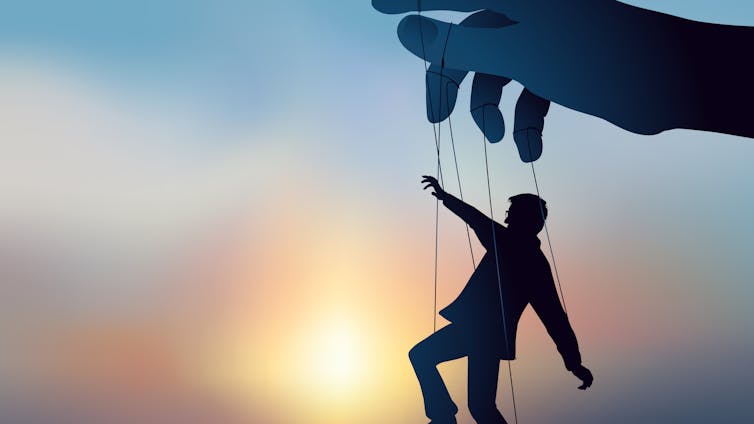
Misinformation on social media has the potential to manipulate millions of people.
Pict Rider/iStock via Getty Images Plus

Shaon Lahiri, College of Charleston

Misinformation lends itself to social contagion – here’s how to recognize and combat it

In 2019, a rare and shocking event in the Malaysian peninsula town of Ketereh grabbed international headlines. Nearly 40 girls age 12 to 18 from a religious school had been screaming inconsolably, claiming to have seen a “face of pure evil,” complete with images of blood and gore.

Experts believe that the girls suffered what is known as a mass psychogenic illness, a psychological condition that results in physical symptoms and spreads socially – much like a virus.

I’m a social and behavioral scientist within the field of public health. I study the ways in which individual behavior is influenced by prevailing social norms and social network processes, across a wide range of behaviors and contexts. Part of my work involves figuring out how to combat the spread of harmful content that can shape our behavior for the worse, such as misinformation.

Mass psychogenic illness is not misinformation, but it gives researchers like me some idea about how misinformation spreads. Social connections establish pathways of influence that can facilitate the spread of germs, mental illness and even behaviors. We can be profoundly influenced by others within our social networks, for better or for worse.

The spreading of social norms

Researchers in my field think of social norms as perceptions of how common and how approved a specific behavior is within a specific network of people who matter to us.

These perceptions may not always reflect reality, such as when people overestimate or underestimate how common their viewpoint is within a group. But they can influence our behavior nonetheless. For many, perception is reality.

Social norms and related behaviors can spread through social networks like a virus can, but with one crucial caveat. Viruses often require just one contact with a potential host to spread, whereas behaviors often require multiple contacts to spread. This phenomenon, known as complex contagion, highlights how socially learned behaviors take time to embed.

Watch the people in this video and see how you react.

Fiction spreads faster than fact

Consider a familiar scenario: the return of baggy jeans to the fashion zeitgeist.

For many millennials like me, you may react to a friend engaging in this resurrected trend by cringing and lightly teasing them. Yet, after seeing them don those denim parachutes on multiple occasions, a brazen thought may emerge: “Hmm, maybe they don’t look that bad. I could probably pull those off.” That’s complex contagion at work.

This dynamic is even more evident on social media. One of my former students expressed this succinctly. She was looking at an Instagram post about Astro Boy Boots – red, oversize boots based on those worn by a 1952 Japanese cartoon character. Her initial skepticism quickly faded upon reading the comments. As she put it, “I thought they were ugly at first, but after reading the comments, I guess they’re kind of fire.”

Advertisement
Get More From A Face Cleanser And Spa-like Massage

Moving from innocuous examples, consider the spread of misinformation on social media. Misinformation is false information that is spread unintentionally, while disinformation is false information that is intentionally disseminated to deceive or do serious harm.

Research shows that both misinformation and disinformation spread faster and farther than truth online. This means that before people can muster the resources to debunk the false information that has seeped into their social networks, they may have already lost the race. Complex contagion may have taken hold, in a malicious way, and begun spreading falsehood throughout the network at a rapid pace.

People spread false information for various reasons, such as to advance their personal agenda or narrative, which can lead to echo chambers that filter out accurate information contrary to one’s own views. Even when people do not intend to spread false information online, doing so tends to happen because of a lack of attention paid to accuracy or lower levels of digital media literacy.

Inoculation against social contagion

So how much can people do about this?

One way to combat harmful contagion is to draw on an idea first used in the 1960s called pre-bunking. The idea is to train people to practice skills to spot and resist misinformation and disinformation on a smaller scale before they’re exposed to the real thing.

The idea is akin to vaccines that build immunity through exposure to a weakened form of the disease-causing germ. The idea is for someone to be exposed to a limited amount of false information, say through the pre-bunking with Google quiz. They then learn to spot common manipulation tactics used in false information and learn how to resist their influence with evidence-based strategies to counter the falsehoods. This could also be done using a trained facilitator within classrooms, workplaces or other groups, including virtual communities.

Then, the idea is to gradually repeat the process with larger doses of false information and further counterarguments. By role-playing and practicing the counterarguments, this resistance skills training provides a sort of psychological innoculation against misinformation and disinformation, at least temporarily.

Importantly, this approach is intended for someone who has not yet been exposed to false information – hence, pre-bunking rather than debunking. If we want to engage with someone who firmly believes in their stance, particularly when it runs contrary to our own, behavioral scientists recommend leading with empathy and nonjudgmentally exchanging narratives.

Debunking is difficult work, however, and even strong debunking messages can result in the persistence of misinformation. You may not change the other person’s mind, but you may be able to engage in a civil discussion and avoid pushing them further away from your position.

Spreading facts, not fiction

When everyday people apply this with their friends and loved ones, they can train people to recognize the telltale signs of false information. This might be recognizing what’s known as a false dichotomy – for instance, “either you support this bill or you HATE our country.”

Advertisement
Get More From A Face Cleanser And Spa-like Massage

Another signal of false information is the common tactic of scapegoating: “Oil industry faces collapse due to rise in electric car ownership.” And another is the slippery slope of logical fallacy. An example is “legalization of marijuana will lead to everyone using heroin.”

All of these are examples of common tactics that spread misinformation and come from a Practical Guide to Pre-Bunking Misinformation, created by a collaborative team from the University of Cambridge, BBC Media Action and Jigsaw, an interdisciplinary think tank within Google.

This approach is not only effective in combating misinformation and disinformation, but also in delaying or preventing the onset of harmful behaviors. My own research suggests that pre-bunking can be used effectively to delay the initiation of tobacco use among adolescents. But it only works with regular “booster shots” of training, or the effect fades away in a matter of months or less.

Many researchers like me who study these social contagion dynamics don’t yet know the best way to keep these “booster shots” going in people’s lives. But there are recent studies showing that it can be done. A promising line of research also suggests that a group-based approach can be effective in maintaining the pre-bunking effects to achieve psychological herd immunity. Personally, I would bet my money on group-based approaches where you, your friends or your family can mutually reinforce each other’s capacity to resist harmful social norms entering your network.

Simply put, if multiple members of your social network have strong resistance skills, then your group has a better chance of resisting the incursion of harmful norms and behaviors into your network than if it’s just you resisting alone. Other people matter.

In the end, whether we’re empowering people to resist the insidious creep of online falsehoods or equipping adolescents to stand firm against peer pressure to smoke or use other substances, the research is clear: Resistance skills training can provide an essential weapon for safeguarding ourselves and young people from harmful behaviors.

Shaon Lahiri, Assistant Professor of Public Health, College of Charleston

This article is republished from The Conversation under a Creative Commons license. Read the original article.

Advertisement
Get More From A Face Cleanser And Spa-like Massage

unknown

Did Jackie Gleason See Aliens? Inside the Strange Nixon–UFO Legend

Jackie Gleason reportedly told his wife that President Richard Nixon arranged for him to view preserved extraterrestrial bodies at a Florida Air Force base. Here is what we know—and why the remarkable story remains unverified.

Published

on

The beloved comedian reportedly told his wife that President Richard Nixon arranged for him to view preserved extraterrestrial bodies at a Florida Air Force base. Decades later, the extraordinary story remains fascinating—but unverified.

Jackie Gleason and Richard Nixon portrayed against a mysterious nighttime military-base setting
Jackie Gleason’s alleged encounter with preserved alien bodies remains one of Hollywood’s strangest UFO legends.

Jackie Gleason is remembered as “The Great One,” the larger-than-life entertainer who turned bus driver Ralph Kramden into one of television’s most enduring characters on The Honeymooners. Away from the cameras, however, Gleason had another consuming interest: UFOs, psychic phenomena and the possibility of extraterrestrial life.

That interest eventually became the foundation of one of the strangest stories ever associated with an American president and a Hollywood celebrity. According to Gleason’s second wife, Beverly McKittrick, her husband came home late one night in 1973 and claimed that President Richard Nixon had helped him see the preserved bodies of extraterrestrial beings at Homestead Air Force Base in Florida.

Did Jackie Gleason really see aliens?

The honest answer is that we do not know. The allegation is remarkable, but the available evidence never rises above an uncorroborated story attributed to Gleason years after the supposed event.

Gleason’s fascination with UFOs was real

There is little question that Gleason took the UFO subject seriously. He reportedly assembled a substantial personal library devoted to UFOs, the paranormal and related mysteries. His unusual circular home in New York—often nicknamed “The Mothership”—only strengthened his public association with flying saucers, although its distinctive architecture is not evidence of an extraterrestrial encounter.

Gleason also had a genuine social connection with Nixon. The two men shared an interest in golf and spent time together in Florida. That documented friendship is the factual starting point from which the more sensational story grew.

The alleged trip to Homestead Air Force Base

McKittrick said that Gleason returned to their Florida home at about 11:30 one evening looking disturbed. According to her account, he told her that Nixon had arrived without the usual presidential entourage and taken him to Homestead Air Force Base, south of Miami.

Once there, Gleason allegedly entered a secured building where he saw small humanoid bodies preserved inside glass-topped containers. Published versions differ over the number of bodies and some physical details, but they generally describe child-sized beings with oversized heads.

Importantly, McKittrick did not claim to have accompanied the men or witnessed anything at the base. Her account was based entirely on what she said Gleason told her after returning home.

The story became public in 1983, years after the alleged visit and after the couple had divorced. It circulated widely through tabloid reporting, UFO publications and later books, gradually becoming part of UFO folklore.

Advertisement
Get More From A Face Cleanser And Spa-like Massage

Why the story remains unverified

No authenticated photograph, visitor record, military document or firsthand statement from Nixon has emerged to confirm the alleged trip. Gleason also never provided investigators with a signed affidavit describing the experience.

UFO researcher Larry Bryant reportedly sought records from Homestead and tried to obtain a statement from Gleason, but those efforts produced no confirming documentation. Gleason’s refusal to address the account publicly has sometimes been portrayed as suspicious, but silence is not proof that an event occurred.

There is another important complication: McKittrick later expressed uncertainty about her former husband’s story.

During telephone interviews conducted by researcher Kenny Young in 2003, she stood by her recollection that Gleason told her he had seen “dead aliens.” She also acknowledged that, as the years passed, she wondered whether he might have invented the explanation because he had been out late. She declined to appear on camera and said the story should be authenticated first.

Her later comments do not establish that the account was false, but they considerably weaken any attempt to treat it as verified history.

Could a president have slipped away unnoticed?

Some versions of the legend emphasize that Nixon supposedly drove to Gleason’s house alone and then entered a military installation without his Secret Service detail. Presidents have occasionally sought privacy or slipped away from tightly managed schedules, but a secret nighttime excursion of this nature would have involved serious security and logistical obstacles.

The claim becomes even more difficult to accept when we consider what Nixon allegedly revealed. If the United States possessed extraterrestrial bodies, granting a comedian personal access to them would have represented an extraordinary breach of national security—with no apparent official purpose and no surviving documentation.

None of that makes the episode logically impossible. It does, however, mean that the story requires exceptionally strong evidence. That evidence has never appeared.

A compelling legend, not a confirmed encounter

The Jackie Gleason story endures because it combines three irresistible ingredients: a famous comedian fascinated by UFOs, a secretive American president and a nighttime visit to a military base containing an alleged government secret.

What can be established is that Gleason was deeply interested in UFOs, knew Nixon and was said by his former wife to have made an extraordinary claim. What cannot be established is that Nixon took him to Homestead Air Force Base or that preserved extraterrestrial bodies were ever stored there.

Advertisement
Get More From A Face Cleanser And Spa-like Massage

So, did Jackie Gleason see aliens?

Perhaps he believed that he did—or perhaps he simply told an unforgettable story. Until corroborating evidence emerges, the alleged encounter belongs in the intriguing borderland between celebrity history and American UFO mythology.

Sources and further reading

Step into The Unknown, where STM Daily News explores the strange phenomena, unexplained encounters and enduring mysteries that continue to challenge what we think we know. From UFO sightings and paranormal events to historical mysteries and unusual scientific discoveries, we examine the stories, evidence and competing explanations—without losing our sense of wonder. https://stmdailynews.com/science/unknown/

View recent photos

Unlock fun facts & lost history—get The Knowledge in your inbox!

We don’t spam! Read our privacy policy for more info.

Continue Reading

Community

PenFed Foundation Raises Over $1.2M for Veterans and Military Families at 23rd Annual Military Heroes Golf Classic

The PenFed Foundation says it raised over $1.2 million for veterans and military families at its 23rd annual Military Heroes Golf Classic.

Published

on

The PenFed Foundation says it raised over $1.2 million for veterans and military families at its 23rd annual Military Heroes Golf Classic.
PenFed Foundation for Military Heroes Raises Over $1.2 Million for Veterans and Military Families at 23rd Annual Military Heroes Golf Classic

The PenFed Foundation for Military Heroes said it raised more than $1.2 million to support veterans and military families during its 23rd annual Military Heroes Golf Classic, held Monday, Aug. 31, according to a PRNewswire release. The nonprofit, based in the Washington, D.C. region, focuses on helping veterans transition “from service to success” through programs and grants aimed at military-connected communities.

“We are deeply grateful to our partners and supporters whose generosity and dedication make this event—and the Foundation’s work—possible,” said retired Air Force Lt. Gen. Bradford J. “B.J.” Shwedo, president of the PenFed Foundation, in a statement announcing the fundraising total.

At a dinner held the night before the Golf Classic, PenFed Credit Union President/CEO and PenFed Foundation CEO James Schenck recognized Ed Cody for 25 years of service on the foundation’s board of directors. Cody also serves as chairman of the PenFed Credit Union board and was credited with helping guide initiatives including Defender’s Lodge, the Afghan Rescue and Resettlement Program, the Veteran Entrepreneur Program, and grants supporting wounded, ill, and injured service members.

The foundation said it has provided more than $55 million in financial support to veterans, active-duty service members, and military families since it was founded in 2001. It also noted that PenFed Credit Union covers salaries and administrative costs, allowing more donations to go directly to programs.

What to watch for: How the foundation allocates the new $1.2M across its veteran transition and emergency support programs—and whether it announces new grant rounds tied to entrepreneurship and resettlement work.

SOURCE PenFed Foundation

Subscribe to our newsletter STM Morning Brief!

Continue Reading

Entertainment

Apple Music Super Bowl LX Halftime Show Starring Bad Bunny Wins 7 Emmys, Sets New Record

Published

on


Executive produced by Roc Nation and JAY-Z, the show becomes the most-awarded halftime production in Emmy history.

Stadium vibe: Nighttime stadium halftime stage with bright spotlights, confetti, and a silhouetted performer before a packed crowd. Super Bowl LX Halftime Show
A nighttime Super Bowl-style stadium halftime stage lit with dramatic spotlights and pyrotechnics, as a silhouetted performer stands center stage with confetti falling and a packed crowd glowing with phone lights.

The Apple Music Super Bowl LX Halftime Show starring Bad Bunny took home seven Emmy Awards at the 78th Emmy Awards, making it the most-awarded Super Bowl halftime show in Emmy history, according to Roc Nation. The live spectacle—executive produced by Roc Nation and JAY-Z—won across major production categories, underscoring how the halftime stage has evolved into a full-scale, awards-caliber live television event.

The record-setting wins included Outstanding Variety Special (Live), Outstanding Music Direction, Outstanding Directing for a Variety Special, Outstanding Choreography for Variety or Reality Programming, Outstanding Sound Mixing for a Variety Series or Special, Outstanding Lighting Design/Lighting Direction for a Special, and Outstanding Technical Direction and Camerawork for a Special. Roc Nation also noted the show set a global viewership record, pulling 4.157 billion views in 24 hours across global broadcast, YouTube, and social platforms.

Beyond the trophies and viewership numbers, the halftime show leaned into big-name star power with special guest performers Lady Gaga and Ricky Martin, plus additional appearances from Karol G, Cardi B, Jessica Alba, Pedro Pascal, Young Miko, and others. The sweep signals not just a win for the artists on stage, but for the behind-the-scenes creative teams turning the halftime show into one of the most technically ambitious live productions on television.

What to watch for: With Emmy recognition now firmly in the conversation, expect future halftime shows to push even harder on cinematic staging, choreography, and broadcast innovation—because the bar (and the awards) just got higher.

Source: Roc Nation (PRNewswire), Sept. 6, 2026

Link to original press release: https://prnmedia.prnewswire.com/news-releases/the-apple-music-super-bowl-lx-halftime-starring-bad-bunny–executive-produced-by-roc-nation–jay-z-wins-seven-emmys-302870842.html

📰 Enjoying STM Daily News? Join the conversation!

💬 Leave a comment, share your thoughts, and subscribe to our newsletter for the latest stories, updates, and “News You Can Use This Moment!” delivered to your inbox.

Stay connected with STM Daily News!

Advertisement
Get More From A Face Cleanser And Spa-like Massage
Continue Reading

Trending


