Connect with us

Community

Children living near oil and gas wells face higher risk of rare leukemia, studies show

Published

on

rare leukemia
The U.S. has nearly 1 million oil and natural gas wells. Some, like the one here in Commerce City, Colo., are within a few thousand feet of schools and neighborhoods.
RJ Sangosti/Getty Images

Lisa McKenzie, University of Colorado Anschutz Medical Campus and Nicole Deziel, Yale University

Children living near oil and gas wells face higher risk of rare leukemia, studies show

Acute lymphocytic leukemia is one of the most commonly diagnosed cancers in children, although it is rare. It begins in the bone marrow and rapidly progresses.

Long-term survival rates exceed 90%, but many survivors face lifelong health challenges. Those include heart conditions, mental health struggles and a greater chance of developing a second cancer.

Overall cancer rates in the U.S. have declined since 2002, but childhood acute lymphocytic leukemia rates continue to rise. This trend underscores the need for prevention rather than focusing only on treatment for this disease.

A growing body of literature suggests exposure to the types of chemicals emitted from oil and natural gas wells increases the risk of developing childhood acute lymphocytic leukemia.
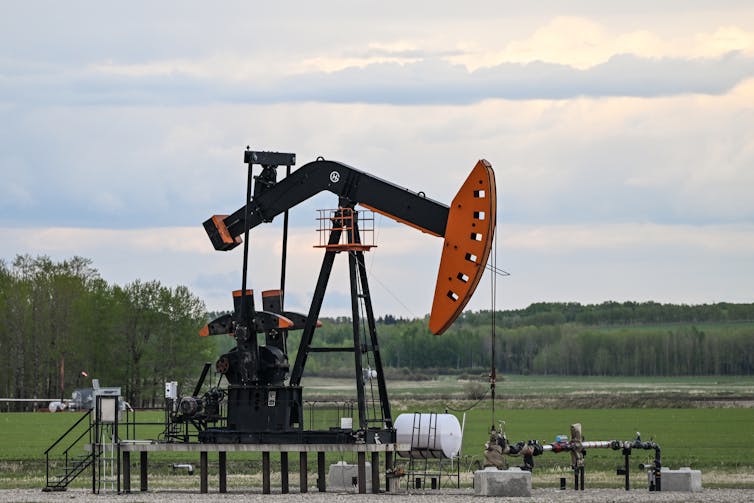
Oil and gas drill extracting oil from the earth.
Heavy machinery injects water under the surface of the earth to push oil and natural gas out.
NurPhoto/GettyImages

We are environmental epidemiologists focused on understanding the health implications of living near oil and natural gas development operations in Colorado and Pennsylvania. Both states experienced a rapid increase in oil and natural gas development in residential areas beginning in the early 21st century. We’ve studied this issue in these states, using different datasets and some different approaches.

2 studies, similar findings

Both of our studies used a case-control design. This design compares children with cancer, known as cases, with children without cancer, known as controls. We used data from statewide birth and cancer registries.

We also used specialized mapping techniques to estimate exposure to oil and natural gas development during sensitive time windows, such as pregnancy or early childhood.

The Colorado study looked at children born between 1992 and 2019. The study included 451 children diagnosed with leukemia and 2,706 children with no cancer diagnosis. It considered how many oil and natural gas wells were near a child’s home and how intense the activity was at each well. Intensity of activity included the volume of oil and gas production and phase of well production.

The Colorado study found that children ages 2-9 living in areas with the highest density and intensity wells within eight miles (13 kilometers) of their home were at least two times more likely to be diagnosed with acute lymphocytic leukemia. Children with wells within three miles (five kilometers), of their home bore the greatest risk.

The Pennsylvania study looked at 405 children diagnosed with leukemia between 2009 and 2017 and 2,080 children without any cancer diagnosis. This study found that children living within 1.2 miles (two kilometers) of oil and natural gas wells at birth were two to three times more likely to be diagnosed with acute lymphocytic leukemia between ages 2 to 7 than those who lived farther than 1.2 miles away.

The risk of developing leukemia was more pronounced in children who were exposed during their mother’s pregnancy.

Advertisement
Get More From A Face Cleanser And Spa-like Massage

The results of our two studies are also supported by a previous study in Colorado published in 2017. That study found children diagnosed with acute lymphocytic leukemia were four times more likely to live in areas with a high density of oil and natural gas wells than children diagnosed with other cancers.

Policy implications

To extract oil and natural gas from underground reserves, heavy drilling equipment injects water and chemicals into the earth under high pressure. Petroleum and contaminated wastewater are returned to the surface. It is well established that these activities can emit cancer-causing chemicals. Those include benzene, as well as other pollutants, to the air and water.

The U.S. is the world’s largest producer of oil and natural gas. There are almost 1 million producing wells across the country, and many of these are located in or near residential areas. This puts millions of children at increased risk of exposure to cancer-causing chemicals.

In the U.S., oil and natural gas development is generally regulated at the state level. Policies aimed at protecting public health include establishing minimum distances between a new well and existing homes, known as a setback distance. These policies also include requirements for emission control technologies on new and existing wells and restrictions on the construction of new wells.

Setbacks offer a powerful solution to reduce noise, odors and other hazards experienced by communities near oil and gas wells. However, it is challenging to establish a universal setback that optimally addresses all hazards. That’s because noise, air pollutants and water contaminants dissipate at different rates depending on location and other factors.

In addition, setbacks focus exclusively on where to place oil and natural gas wells but do not impose any restrictions on releases of air pollutants or greenhouse gases. Therefore, they do not address regional air quality issues or mitigate climate change.
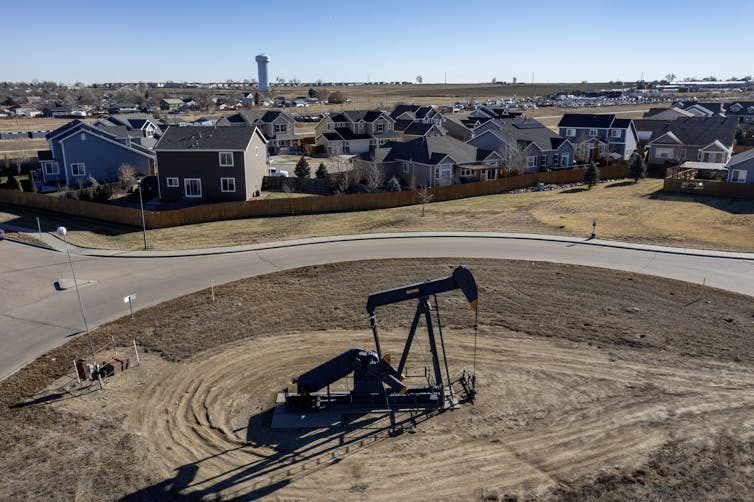
An oil rig sits across the street from a residential neighborhood in Frederick, Colorado.
In many U.S. cities there are set distances that oil and gas wells are allowed to be from places such as schools and neighborhoods. In this Frederick, Colo., neighborhood the oil rig is very near houses.
UGC/GettyImages

Furthermore, current U.S. setback distances range from just 200 feet to 3,200 feet. Our results indicate that even the largest setback of 3,200 feet (one kilometer) is not sufficient to protect children from an increased leukemia risk.

Our results support a more comprehensive policy approach that considers both larger setback distances and mandatory monitoring and control of hazardous emissions on both new and existing wells.

Future research

More research is needed in other states, such as Texas and California, that have oil and natural gas development in residential areas, as well as on other pediatric cancers.

One such cancer is acute myeloid leukemia. This is another type of leukemia that starts in bone marrow and rapidly progresses. This cancer has exhibited a strong link to benzene exposure in adult workers in several industries, including the petroleum industry. Researchers have also documented a moderate cancer link for children exposed to vehicular benzene.

It remains unclear whether benzene is the culprit or if another agent or combination of hazards is an underlying cause of acute myeloid leukemia.

Advertisement
Get More From A Face Cleanser And Spa-like Massage

Even though questions remain, we believe the existing evidence coupled with the seriousness of childhood acute lymphocytic leukemia supports enacting further protective measures. We also believe policymakers should consider the cumulative effects from wells, other pollution sources and socioeconomic stressors on children and communities.

Read more of our stories about Colorado and Pennsylvania.

Lisa McKenzie, Associate Professor of Health, Department of Environmental & Occupational Health, University of Colorado Anschutz Medical Campus and Nicole Deziel, Associate Professor of Epidemiology and Associate Professor of Environment and of Chemical and Environmental Engineering, Yale University

This article is republished from The Conversation under a Creative Commons license. Read the original article.

Continue Reading
Advertisement SodaStream USA, inc

Entertainment

Grief Fest Launches as a Holiday Film Festival for Stories of Love, Loss, and Healing

Published

on

people gathering in a street. Grief Fest
Photo by Luis Quintero on Pexels.com

New hybrid event aims to give grieving audiences meaningful holiday viewing, with films from more than 25 countries and a mission centered on love, loss, and emotional truth.

A new film festival debuting in late 2026 is taking a different approach to holiday entertainment. Grief Fest™: The Grief Film Festival, created by My Grief Angels Inc., is being introduced as what organizers believe is the world’s first film festival dedicated entirely to grief, remembrance, resilience, and healing.

The hybrid festival will run in two segments: November 25–29, 2026, during Thanksgiving week, and December 24, 2026, through January 3, 2027, during Christmas and New Year’s. Top Honors films will be announced on December 31, 2026.

My Grief Angels Inc Image
GriefFest.com

Organizers say the timing is intentional. Research cited in the announcement shows that grief and loneliness are major holiday stressors for many Americans, making the season especially difficult for people coping with loss. In that context, Grief Fest™ is positioning itself as an alternative to the flood of traditional feel-good holiday programming.

The festival is open to short films, features, documentaries, experimental work, AI-generated projects, and VR experiences. It is described as inclusive, non-religious, and LGBTQ+ friendly, with submissions already received from more than 25 countries. All films will be presented in English, either spoken or subtitled.

Grief Fest™ will be available both in person and virtually through Film Festival Plus, making it accessible to audiences worldwide. The launch of GriefFest.com also includes Lumen, a multilingual AI guide designed to help filmmakers and attendees navigate the festival in their preferred language.

Rather than focusing on industry prestige, organizers say the festival is centered on community and emotionally honest storytelling. For audiences who feel unseen during the holidays, Grief Fest™ is aiming to offer something rare on the seasonal screen: recognition.

Source: PR Newswire

Related Reading

Catch the latest in movies, TV, music, pop culture, and live events in STM Daily News’ Entertainment section.

Want more stories 👋
“Your morning jolt of Inspiring & Interesting Stories!”

Sign up to receive awesome articles directly to your inbox.

STM Coffee Newsletter 1

We don’t spam! Read our privacy policy for more info.

Continue Reading

Entertainment

America-Dreams.com Launches Ahead of PBS Documentary AMERIGO

Published

on

As the United States moves toward the 250th anniversary of its independence, a new public storytelling project is asking Americans to answer a big question: what does the American Dream mean today?

the flag of united states of america. PBS documentary AMERIGO
Photo by Roxanne Minnish on Pexels.com

McCourt Entertainment has launched America-Dreams.com at SXSW as a digital platform designed to collect video submissions from people across the country. The goal is ambitious: gather one million voices reflecting on hope, opportunity, and what Americans want the future of the country to look like.

The initiative is tied to AMERIGO, an upcoming documentary presented by South Florida PBS and distributed by American Public Television. The film, which will be available to PBS stations nationwide beginning in June as part of 2026 programming tied to the nation’s 250th anniversary, explores the past, present, and future of the American Dream through conversations with people across the United States.

According to the project team, selected user-submitted videos may become part of the broader AMERIGOstorytelling effort, turning the campaign into more than a promotional rollout. Instead, it is being framed as a living archive of public voices gathered during a milestone moment in American history.

South Florida PBS President and CEO Dolores Fernandez Alonso said the goal is to make the anniversary feel inclusive and participatory.

“To celebrate the 250th anniversary of America’s independence, we wanted to do something truly remarkable and invite all Americans to share their hope for the American Dream at America-Dreams.com,” Alonso said. “We are extremely proud of the cross-section of voices from across our nation and we want to capture these stories, experiences and perspectives so that people feel included in this historic national conversation.”

Emmy Award-winning producer David McCourt said the project builds on the documentary team’s nationwide reporting.

“As the United States approaches its 250th anniversary, this project asks a simple but powerful question: ‘What is your hope for the American Dream?’” McCourt said. “We want to hear directly from people across the country.”

The campaign arrives at a moment when interactive documentary projects and audience participation are becoming a larger part of public media storytelling. With AMERIGO, the combination of a PBS documentary and a nationwide video submission initiative gives the project a broader cultural footprint than a traditional film release.

Submissions are now open at America-Dreams.com. A trailer for AMERIGO is also available on Vimeo.

For entertainment audiences, the project stands out less as a conventional documentary launch and more as a large-scale invitation to participate in a national media moment ahead of America’s semiquincentennial.

Advertisement
Get More From A Face Cleanser And Spa-like Massage

Catch the latest in movies, TV, music, pop culture, and live events in STM Daily News’ Entertainment section.

Related Links

STM Daily News

Source Link

Authors

Continue Reading

Community

Viewpoint Hosted by Dennis Quaid Brings Attention to a Little-Understood Condition Affecting Families Nationwide

A new Viewpoint hosted by Dennis Quaid segment with APFED raises awareness of eosinophilic esophagitis, its subtle symptoms, and its impact on families.
For more information, readers can visit viewpointproject.com and apfed.org.

Published

on

For many families, health conditions do not always begin with a dramatic diagnosis. Sometimes they show up in small, everyday habits that seem easy to explain away. Cutting food into tiny bites. Drinking extra water with every meal. Quietly avoiding certain foods altogether. A new educational segment from Viewpoint hosted by Dennis Quaid is shining a light on those subtle warning signs through a collaboration with the American Partnership for Eosinophilic Disorders, helping more people recognize the realities of living with eosinophilic esophagitis, or EoE.

photo of a studio set up. Viewpoint hosted by Dennis Quaid 
Photo by SHAHBAZ ZAMAN on Pexels.com

Viewpoint hosted by Dennis Quaid 

The segment, distributed to Public Television stations across the country, focuses on making this chronic inflammatory condition easier for the public to understand. For viewers, that matters because EoE is often misunderstood or overlooked, even as it affects daily routines, family meals, and quality of life. By connecting medical information to real-life experiences, the program gives audiences a more human picture of what people with the condition may be facing.

Viewpoint APFED
APFED

When everyday habits tell a bigger story

Eosinophilic esophagitis occurs when eosinophils, a type of white blood cell, build up in the esophagus, causing inflammation that can lead to tissue damage and narrowing. But what stands out most in this story is not just the science. It is the way people often adapt without realizing it. Behaviors like chewing excessively, avoiding certain textures, or relying on liquids to help swallow can become so routine that they no longer feel unusual.

That is one reason the segment carries real community value. It encourages people to look more closely at symptoms that may have been normalized for years and to seek evaluation from specialists such as gastroenterologists or allergists. It also raises awareness among parents, caregivers, and primary care providers who may be the first to notice that something is not quite right.

More than awareness

The program also explores the emotional and social side of the condition, especially for people navigating dietary restrictions and the uncertainty of delayed diagnosis. In that sense, this is not only a story about medicine. It is also a story about advocacy, support, and the importance of helping people feel seen.

APFED Executive Director Mary Jo Strobel noted that many people with EoE do not realize they have adapted their lives around a medical condition. That message gives the segment its strongest human element: awareness can change lives, not only by leading to diagnosis, but by helping families better understand experiences that may have felt isolating or confusing.

Originally distributed in January 2025, the documentary will continue to be made available to stations through March 2027, extending its reach to more households nationwide.


Related Coverage

Read more from STM Daily News on community issues, public television, health awareness, and stories that connect national topics to everyday life.

For More Information

STM Daily News is a vibrant news blog dedicated to sharing the brighter side of human experiences. Emphasizing positive, uplifting stories, the site focuses on delivering inspiring, informative, and well-researched content. With a commitment to accurate, fair, and responsible journalism, STM Daily News aims to foster a community of readers passionate about positive change and engaged in meaningful conversations. Join the movement and explore stories that celebrate the positive impacts shaping our world. 

https://stmdailynews.com/

Authors

Continue Reading

Trending