

Food Truths
What’s Really in Imitation Crab?
Imitation crab, a staple in California rolls and seafood salads, isn’t actually crab at all. Made from surimi fish paste, starches, flavorings, and food coloring, this processed seafood product is a clever substitute—but not without additives and allergens.

Last Updated on August 29, 2025 by Daily News Staff

Sushi california roll with sauce and sesame on black plate
When you grab a California roll, seafood salad, or even a budget-friendly seafood platter at the grocery store, chances are the “crab” you’re eating isn’t crab at all. Instead, it’s imitation crab—a clever creation that’s been popular in American kitchens since the 1970s. But what exactly is in it?
The Surimi Secret
Imitation crab starts with surimi, a finely minced fish paste typically made from mild white fish such as Alaska pollock or Pacific whiting. This paste is the foundation, giving imitation crab its flaky texture that mimics real crab meat.

Ingredients That Shape the Flavor
To transform fish paste into something resembling shellfish, manufacturers add a range of ingredients, including:
Starches (wheat, tapioca, or potato) to bind and give a firm, meaty bite. Egg whites for texture and protein structure. Vegetable oil for richness and mouthfeel. Salt and sugar for balance and preservation. Flavorings—sometimes from real crab extract, but often enhanced with natural or artificial flavoring agents and MSG.
The Signature Red Stripe
That familiar orange-red strip on the outside isn’t from the sea—it comes from food coloring, such as paprika extract or carmine. It gives imitation crab its “freshly cooked crab leg” look.
Preservatives and Additives
To extend shelf life and maintain consistency, ingredients like sorbitol (a sugar alcohol that also adds moisture) and preservatives such as sodium benzoate are often included.
A Word on Allergens
Because of added ingredients, imitation crab is not always allergy-friendly. Depending on the brand, it may contain gluten, soy, milk proteins, or egg whites—making label-reading essential for those with dietary restrictions.
The Bottom Line
While imitation crab is budget-friendly and versatile in recipes, it’s important to know that it’s a highly processed food. If you’re looking for pure seafood flavor and nutritional value, real crab still takes the crown. But if you enjoy sushi rolls, seafood salads, or even crab-style dips on a budget, imitation crab continues to be a widely enjoyed alternative.
👉 Food for thought: Next time you bite into a California roll, you’ll know the fascinating science—and processing—behind that “crab” flavor.
Related Links
Food Related Daily News Links
- Enjoy an Easy, Tasty Taco Salad – Craving something fresh and flavorful? Try this quick-to-make taco salad, a bright and satisfying counterpoint to creamy or seafood-forward dishes.
- Food & Beverage – Explore more engaging Food & Drink content, from ingredient deep dives to delicious recipes and sector trends.
- The Sweet History of Thrifty Ice Cream: Why It’s Still a West Coast Favorite – Scoop into nostalgia with a charming look at one of the West Coast’s most beloved frozen traditions.
- The Best Way to Serve Spaghetti: Separate or Combined? – Delicious debate ahead: Should spaghetti and sauce mingle from the start or stay neatly apart? Rule-breaking pasta lovers—take your stance.


Food Truths
The Truth About the “Chemical” in McDonald’s Burger Buns: Should Consumers Be Concerned?
What’s in the Burger Buns:The “yoga mat chemical” controversy changed how consumers view food additives. Here’s what azodicarbonamide is, why McDonald’s removed it, and what the science actually says.


For years, headlines and social media posts have warned consumers about a so-called “yoga mat chemical” found in hamburger buns served by major fast-food chains. The claims sparked widespread concern, prompted petitions, and eventually led several restaurant companies—including McDonald’s—to change their recipes.
But what was the chemical, and is there actually a health risk today?
What Was the Controversial Ingredient?
The ingredient at the center of the controversy was azodicarbonamide (ADA), a chemical used as a dough conditioner. It helped improve the texture of bread, making dough easier to handle and producing softer, more consistent buns.
Ironically, the same compound is also used in manufacturing certain foamed plastics, including some yoga mats and shoe soles. That connection gave rise to the viral nickname, “the yoga mat chemical.”
While the comparison was technically accurate, it also lacked important context. Food-grade azodicarbonamide and industrial applications are very different, and many chemicals have multiple uses across industries.
Why Did People Become Concerned?
The concern wasn’t simply that ADA was used in food. Scientists focused on what happens during baking.
When bread is baked, most azodicarbonamide breaks down into other compounds. Some laboratory studies involving animals raised questions about one of these breakdown products, called semicarbazide (SEM), when administered in high doses.
Those findings prompted some countries to take a more cautious regulatory approach.
Why Is It Banned in Some Countries?
The European Union and Canada do not permit azodicarbonamide as a flour treatment agent. Their food safety policies often follow the precautionary principle, removing ingredients when safer alternatives exist or when scientific uncertainty remains.
In contrast, the U.S. Food and Drug Administration has determined that azodicarbonamide is safe when used within approved limits.
These differing regulations don’t necessarily mean one side believes the ingredient is dangerous while the other believes it is harmless. Instead, they reflect different philosophies about regulating food additives.
Does McDonald’s Still Use It?
No.
McDonald’s removed azodicarbonamide from its U.S. hamburger buns in 2014 following growing consumer demand for simpler ingredient lists.
Today’s buns no longer contain the ingredient, joining a broader trend among food manufacturers to eliminate additives that have become controversial with consumers.
Are There Other Ingredients Consumers Should Know About?
Modern commercial bread still contains ingredients designed to improve freshness, texture, and shelf life.
These may include:
- Calcium propionate to prevent mold
- Ascorbic acid (Vitamin C) as a dough conditioner
- Enzymes that improve consistency
- Emulsifiers that help maintain softness
These ingredients have been evaluated by food safety agencies and are generally recognized as safe when used according to regulations.
The Bigger Health Picture
Nutrition experts generally agree that focusing on one ingredient can distract from the larger issue.
The greatest health risks associated with fast food are more closely linked to:
- High sodium intake
- Excess saturated fat
- Added sugars
- Large portion sizes
- Frequent consumption of ultra-processed foods
An occasional fast-food meal is unlikely to determine someone’s long-term health. Overall dietary patterns, physical activity, sleep, and other lifestyle factors have a much greater impact.
Consumer Awareness Is Changing the Food Industry
Whether or not an ingredient poses a measurable health risk, public concern can influence corporate decisions.
Over the past decade, many food companies have reformulated products to remove controversial ingredients, reduce artificial additives, and simplify ingredient labels. In many cases, those changes have been driven as much by consumer preferences as by regulatory requirements.
The Bottom Line
The “yoga mat chemical” story captured public attention because it combined science, food safety, and memorable marketing. While azodicarbonamide was once used in some hamburger buns, including those supplied to McDonald’s, the company removed it from its U.S. buns years ago.
Current evidence suggests consumers are better served by paying attention to their overall diet rather than worrying about a single ingredient that has already disappeared from many products.
Being an informed consumer means looking beyond the headlines, understanding the science, and recognizing that nutrition is about the complete picture—not just one ingredient.
Related External Links
- U.S. FDA – Food Additives & GRAS Ingredients Information for Consumers
- U.S. FDA – Food Additives and Petitions
- FDA – Azodicarbonamide (ADA) Food Substance Database
- Electronic Code of Federal Regulations – 21 CFR §172.806 (Azodicarbonamide)
- FDA – Types of Food Ingredients and Why They’re Used
- Health Canada – Permitted Flour Treatment Agents
- McDonald’s USA – Nutrition Calculator & Ingredient Information
🍴 What’s your favorite food, recipe, or dining spot? Tell us in the comments! Then subscribe to the STM Daily News Food and Drink newsletter for fresh recipes, restaurant news, food trends, and delicious stories delivered straight to your inbox. Join our growing community of food lovers today!
Food and Beverage
Balance Your Plate with Produce, Protein and Whole Grains
Making health-conscious decisions with your at-home menu doesn’t have to be complicated, but it does require commitment and a little more foresight at the grocery store. Simple adjustments to overall eating patterns, like building your plate around produce, powerful proteins and whole grains, can encourage better health.

Last Updated on June 29, 2026 by Daily News Staff
(Feature Impact) Making health-conscious decisions with your at-home menu doesn’t have to be complicated, but it does require commitment and a little more foresight at the grocery store. Simple adjustments to overall eating patterns, like building your plate around produce, powerful proteins and whole grains, can encourage better health.
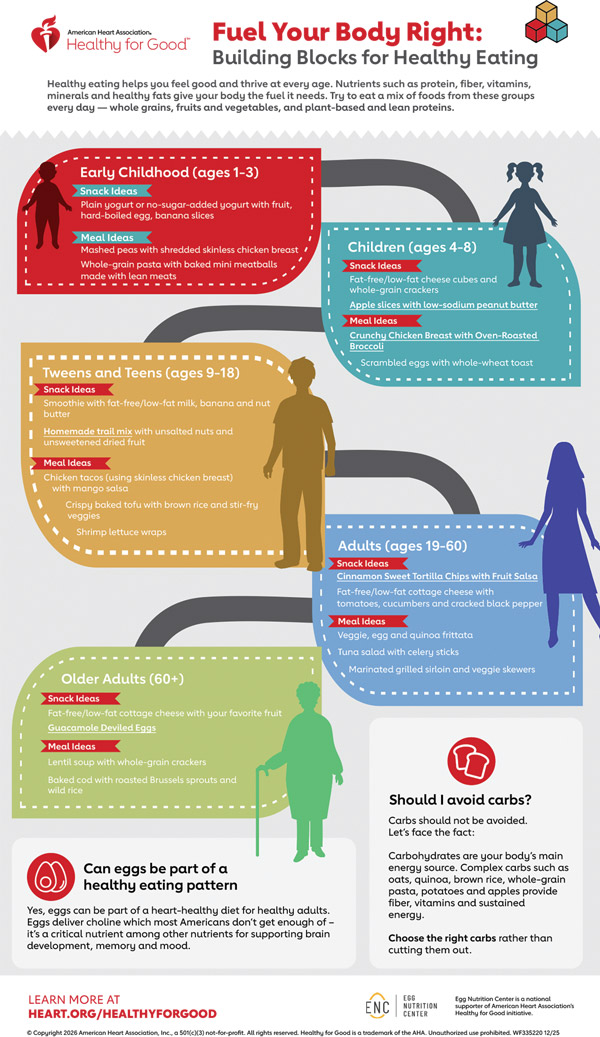
Nutritious meal-planning can be easy, affordable and delicious – and it all starts with a little balance. Consider this advice from the American Heart Association’s Healthy for Good initiative, nationally sponsored by the Egg Nutrition Center, to adequately round out a healthy plate.
Fill Half Your Plate with Fruits and Veggies
Loaded with nutrients, fresh produce is a perfect place to start each plate. Fill about half your plate with combinations of bananas, strawberries, blueberries, sweet potatoes, peas, carrots and more of your favorites. To boost variety with each meal, look for fruit and veggie blends or step out of your usual routine and try something new.
Grocery tip: Frozen fruits and veggies are often cheaper and just as delicious as their fresh counterparts. It’s frozen right after it’s picked, locking in freshness for a longer shelf life. Just be sure to avoid products with added salt or sugar.
Carve Out a Quarter of the Plate for Powerful Proteins
Healthy food isn’t just fuel. It should be easy and nourish you, too. Look for versatile solutions that provide a protein power-up like skinless chicken breast, no-salt-added beans, low-sodium tuna, tofu or eggs.
High-quality protein from foods, along with a balanced diet and regular exercise, can help support the muscles in your body. Eggs are an example, along with lean animal protein and some plant-based proteins. According to the American Heart Association’s guidelines, healthy people can include up to one whole egg daily, and up to seven per week, as part of a heart-healthy diet. For older adults with normal cholesterol, two eggs per day is acceptable.
Eggs deliver both protein and choline, nutrients that help support growing brains and bodies, especially early in life. In fact, many Americans don’t get enough choline, a critical nutrient for supporting brain development, memory and mood.
Grocery tip: Stock up on proteins that offer both versatility and affordability, helping you cook multiple meals per week without putting a dent in your wallet. Eggs are a perfect example as they can be used at any meal, not just breakfast – try them in wraps or omelets in the morning, hard-boil them to go with a lunchtime salad or add to a frittata at dinner.
 Save a Corner for Whole Grains
Finally, fill that last quarter of the plate with ready-to-go whole grains, many of which provide dietary fiber that can support a healthy heart and healthy digestion. Conversely, most refined grains contain little or no fiber.
Examples of whole grains include barley, brown rice, corn, oatmeal, rolled or steel-cut oats, popcorn, quinoa, sorghum and wild rice, along with products labeled “whole grain” or “whole wheat” like bread or pasta.
Grocery tip: Look for whole grains that can make mealtime a cinch. Corn tortillas, instant oats and even popcorn can help you create nutritious plates and better-for-you snacks with the snap of your fingers. Try keeping packets of pre-cooked brown rice on hand to bulk up favorite dishes or toss with leftovers to round out a healthy plate.
Visit Heart.org to discover more nutrition guidance for heart-healthy meals.
3 Tips to Complement a Healthy, Balanced Plate
Nutrition isn’t just about what’s on your plate – it’s also about what’s next to it and how much is on it. Pair a balanced meal with this advice to help take healthy eating to the next level.
Stay Hydrated
If it’s not already a habit, add a glass of water to each meal. Staying hydrated helps your heart pump blood throughout the body, get rid of waste and regulate body temperature. While water is the best source of hydration, water-rich foods like fruits and vegetables can also play a role.
Watch Portion Sizes
Pay attention to suggested servings from your favorite food groups. For example, one slice of whole-grain bread, 1/2 cup of cooked pasta and two ounces of cheese (about the size of a domino) are the suggested serving sizes for these popular foods.
You can serve and eat smaller portions by:
- When cooking at home, offer the proper serving size to each family member then put extra food away for leftovers.
- When dining out, skip appetizers and split your meal with a friend or partner.
- Avoid eating while watching TV or at your computer. It may be harder to control how much you’re eating if you’re not paying full attention.
- Mindfully measure out your snacks – even fruits and veggies – into appropriate portions before serving instead of helping yourself directly from the bag or box.
Limit Salt
While sodium supports vital functions like controlling your body’s fluid balance, excess sodium in your bloodstream pulls water into the blood vessels, increasing the amount of blood inside them and thus increasing blood pressure. More than 70% of the sodium people eat comes from packaged, prepared and restaurant foods due to salt added for flavoring, stabilizing, preserving and reducing bacterial risk, according to the American Heart Association.
Cutting back on sodium can help reduce the rise in blood pressure that occurs as you age, even if you don’t have high blood pressure now. It may also help reduce the risk of heart attack, heart failure, kidney disease and more.
Try cooking more meals at home where you can control sodium intake, flavoring foods with herbs and spices instead of table salt and rinsing canned beans and vegetables to wash away excess sodium.
Photo courtesy of Shutterstock (family preparing meal)


SOURCE:
Our Lifestyle section on STM Daily News is a hub of inspiration and practical information, offering a range of articles that touch on various aspects of daily life. From tips on family finances to guides for maintaining health and wellness, we strive to empower our readers with knowledge and resources to enhance their lifestyles. Whether you’re seeking outdoor activity ideas, fashion trends, or travel recommendations, our lifestyle section has got you covered. Visit us today at https://stmdailynews.com/category/lifestyle/ and embark on a journey of discovery and self-improvement.
Child Health
9 Steps for a Lifetime of Heart-Healthy Eating
Heart Healthy: More than half of adults and about 60% of children in the United States have unhealthy diets, which can contribute to higher rates of health factors such as high blood pressure and obesity. However, these nine key features of a heart-healthy dietary pattern may help reduce cardiovascular disease risk and improve quality of life.

9 Steps for a Lifetime of Heart-Healthy Eating
(Feature Impact) More than half of adults and about 60% of children in the United States have unhealthy diets, which can contribute to higher rates of health factors such as high blood pressure and obesity, and lead directly to poor health outcomes including death from chronic conditions such as cardiovascular disease.
These findings come from the American Heart Association, a global force changing the future of health for all, which published its “2026 Dietary Guidance to Improve Cardiovascular Health” in its peer-reviewed, flagship journal “Circulation” recommending Americans follow a lifelong healthy eating pattern that may reduce cardiovascular disease risk and improve quality of life based on the latest in evidence-based science.
The statement outlines nine key features of a heart-healthy dietary pattern:
- Adjust energy intake and expenditure to achieve and maintain a healthy body weight: Try to balance how much you eat with how active you are to reach and maintain a healthy body weight.
- Eat a variety of vegetables and fruits: Include different colors, textures and types of produce. Remember, even canned and frozen can be nutritious and affordable.
- Choose foods made mostly with whole grains: Foods such as whole‑wheat bread, brown rice and oatmeal are typically better choices than refined grains including white bread or rice.
- Choose healthy sources of protein: Shift from meat to plant-based sources such as legumes, including beans, peas and lentils, along with nuts and seeds; regularly consume fish and seafood; select low-fat or fat-free dairy products; and, if red meat is desired, choose lean cuts, avoid processed forms and limit portion size.
- Choose sources of unsaturated fats: Replace saturated fats with healthy unsaturated fats, including those from nuts, seeds, avocados and nontropical plant oils.
- Choose minimally processed foods: Go with foods close to their natural state, with minimal added commercial ingredients, rather than those that are highly processed with additives.
- Minimize intake of added sugars: Limit the sugar-sweetened beverages you drink and the foods with added sugar you eat.
- Choose foods low in sodium and prepare foods with minimal or no salt: Be aware of hidden sources of sodium in prepared and packaged foods, and season food with healthier options such as herbs, spices or lemon instead of salt.
- If alcohol is not consumed, do not start; if alcohol is consumed, limit intake: Alcohol can increase your risk for high blood pressure and other health conditions, so if you don’t drink, don’t start.
“For healthy eating to be more attainable and sustainable, we recommend people focus on their overall eating pattern rather than specific nutrients or foods,” said Alice H. Lichtenstein, D.Sc., FAHA, volunteer chair of the scientific statement writing committee and senior scientist and leader of the Diet and Chronic Disease Prevention Directive at the Jean Mayer USDA Human Nutrition Research Center on Aging at Tufts University. “Every time you choose to make a swap for a healthier alternative, you’re making a step toward a healthier life.”
While the updated guidance is specifically designed to improve cardiovascular health, it’s generally consistent with dietary recommendations for other conditions like Type 2 diabetes, kidney disease, some cancers and brain health as well due to shared risk factors, including high blood pressure, high cholesterol, high blood sugar, excess weight and reduced kidney function.
“A healthy dietary pattern can support lifelong health and well-being beyond cardiovascular health,” Lichtenstein said.
To learn more about eating for heart and brain health, visit heart.org/healthydietand talk to your health care provider about what will work best for you.
Photo courtesy of Shutterstock


SOURCE:
The Food and Drink section at STM Daily News delivers fresh coverage on dining, drinks, recipes, and the food stories bringing communities together.





