Connect with us

Sports

Hulk Hogan and the unraveling of worker solidarity

Published

on

Last Updated on August 29, 2025 by Daily News Staff

Hulk Hogan
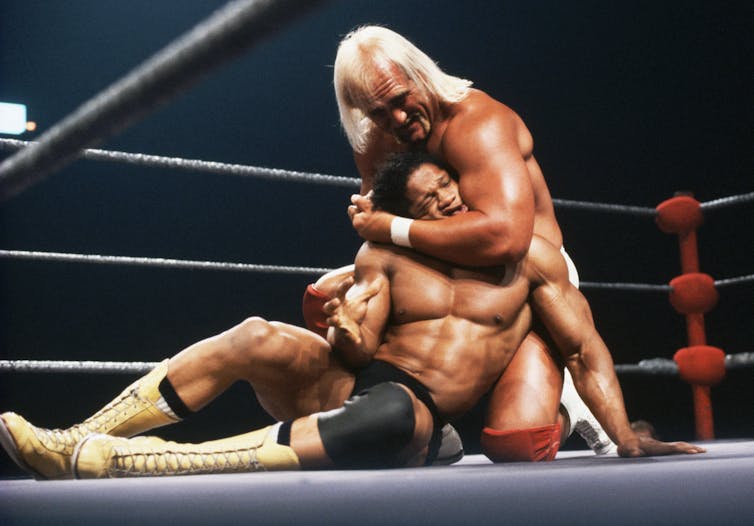
Hulk Hogan was arguably WWE’s biggest star in the 1980s.
Wally McNamee/Corbis via Getty Images

Hulk Hogan and the unraveling of worker solidarity

Brian Jansen, University of Maine

Hulk Hogan’s death by heart attack at age 71 came as a shock to many fans of the larger-than-life wrestler who’d earned the nickname “The Immortal.”

But in many respects, the real surprise was that Hogan, born Terry Gene Bollea, lived as long a life as he did.

Despite the staged nature of its combat, professional wrestling is a notoriously dangerous career. Studies rank it among the riskiest professions. Wikipedia even maintains a comprehensive list of premature wrestler deaths.

The reasons for professional wrestling’s dangers are largely tied up in the industry’s working conditions. And part of Hogan’s legacy may be his complicity in those conditions. In 1986, he allegedly played a key role in undercutting a unionization effort – arguably the closest pro wrestling has come to unionizing.

‘The Body’ sticks his neck out

WWE’s first WrestleMania was held in 1985. The pay-per-view event was enormously successful and established the company – then known as WWF – as the nation’s preeminent wrestling promotion.

During the buildup to WrestleMania 2 the following year, wrestler Jesse “The Body” Ventura understood that performers had more leverage than they’d ever had. He began advocating behind the scenes for a wrestling union.

The story, as recounted by Ventura, goes like this: An acquaintance of Ventura’s in the NFL encouraged him to start organizing behind the scenes. WWE was behind the ball: In 1956, the NFL became the first American pro sports league to have its union recognized. It was followed by the NBA in 1957, MLB in 1966 and the NHL in 1967.

It helped that Ventura had little to lose. He’d be appearing in the forthcoming “Predator” film; should he get blackballed from wrestling for trying to form a union, he could probably earn a living as an actor. (Few could have predicted that he would go on to be elected governor of Minnesota in 1998.)

As Ventura brought together his peers to hash out the details of what a pro wrestling union might look like, he also included the promotion’s reigning champion, Hogan, with the thinking that the support of the WWF’s biggest star would boost the cause and insulate others from retaliation.

Advertisement
Get More From A Face Cleanser And Spa-like Massage

Instead, WWF owner Vince McMahon got wind of the effort and called his performers individually, threatening their jobs. The unionization effort sputtered, and McMahon eventually pushed Ventura out of wrestling.
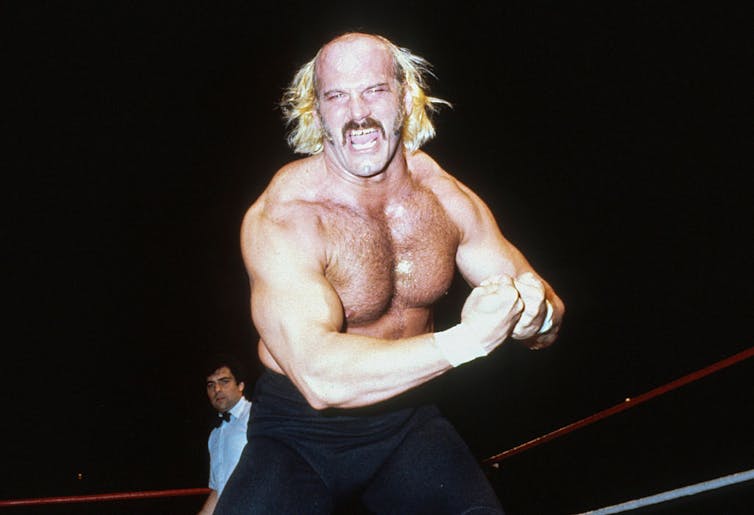
Balding man with huge muscles flexes and screams.
After Jesse ‘The Body’ Ventura tried to unionize his fellow wrestlers, WWE owner Vince McMahon caught wind of the effort – and nipped it in the bud.
WWE/Getty Images

Ventura went on to sue the WWF over unpaid royalties. During the discovery process, Ventura testified that he had learned it was Hulk Hogan who snitched to McMahon and effectively sabotaged the union drive.

Hogan never publicly admitted to telling McMahon about the rumblings of a union. The WWE has never confirmed nor denied the series of events.

Either way, there have been no unionization campaigns in professional wrestling since then.

‘Do the job’

Today’s WWE performers are legally classified as “independent contractors.” They’re responsible for their own travel, training, costuming and insurance, even as their employer owns their likeness and is indemnified from liability due to injury or death.

One of pro wrestling’s paradoxes is that the top promotion’s wrestlers aren’t unionized, even as its audience has historically skewed low income and blue collar. Wrestling has long been a family business, and most wrestlers are part-timers working additional jobs – often in blue-collar, union positions. Many of them are truck drivers and warehouse employees, construction workers and bouncers.

Wrestler-turned-scholar Laurence de Garis has written about how the language of wrestling is rich with references to labor. A “work” in wrestling is a staged storyline; to “do the job” is to lose a match. The goal of many performers is to be considered a “good worker” by peers, and WWE performers wrestle as many as 300 nights per year. The company has no offseason.

The steroid, painkiller and alcohol abuse that has been endemic to the industry may well stem from pressures on wrestlers to perform night after night, even if they’re in pain, for fear of losing their position. In the 1990s, Hogan himself confessed to extensive steroid use, which is known to contribute to heart disease.

You’d think that these harsh working conditions would make wrestlers ripe for a union. Why that hasn’t happened is up for debate. WWE bought out its competition in the early 2000s; perhaps its status as the last remaining major wrestling promotion in the nation has weakened the leverage of wrestlers. Or maybe the testosterone-driven, masculine nature of the sport makes solidarity seem like weakness.

Workers left holding the bag

The story of Ventura’s failed unionization bid is a story of what could have been. But in some sense, I see the story of the WWE as part of a broader story of the U.S. economy.

After a period of relative stability after World War II, American work since the 1980s has become dominated by mergers, buyouts, deregulation and financialization. Profits are increasingly generated by financial means such as interest and capital gains instead of through offering genuine goods or services. Layoffs and precarious work have become the norm.

Advertisement
Get More From A Face Cleanser And Spa-like Massage

WWE’s profits exploded in the 1990s and 2000s. The company went public in 1999 – though the McMahon family retained majority control – and dipped its toes into film production, reality television and online streaming.

In 2023, WWE merged with UFC’s parent company Endeavor to form TKO Group Holdings. TKO’s revenue was more than US$2.8 billion in 2024.

Meanwhile, Endeavor has been spun off as a Hollywood talent agency and was acquired by a private equity firm. The fruits of these new revenue streams and mergers haven’t trickled down to its in-ring performers. So far in 2025, WWE has laid off or released more than 30 wrestlers and at least 10 employees from the company’s corporate wing.
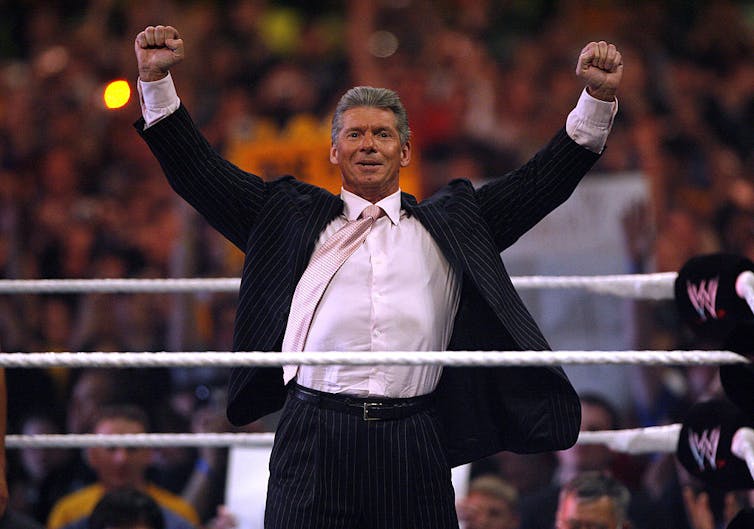
Middle-aged man with gray hair wearing a suit stands in a wrestling ring and raises both fists in celebration.
According to Forbes, Vince McMahon’s net worth is $3.1 billion.
Leon Halip/WireImage via Getty Images

Much as professional wrestlers have remained independent contractors, this arrangement has become normalized in the broader American economy, with more than 36% of Americans participating in the gig economy. In 2022, Stanford researchers identified gig work as a “social determinant of health,” since most gig workers lack employer-sponsored health care, paid time off or sick days.

All for one and none for all

In today’s economy, luck or happenstance, rather than merit, seem more likely to influence who achieves financial security and who scrapes by, living paycheck to paycheck.

Hulk Hogan, as professional wrestling’s biggest star for 20 years, certainly believed he earned his place at the top of the industry. But without diminishing his talents, it’s worth noting he arrived at precisely the correct moment in history to become that star. For many years, a wrestler was expected to have “shoot” skills – that is, actual wrestling expertise – should an opponent ever go rogue and turn a staged performance into a real fight.

But as McMahon’s power and influence expanded, the look, the sound and the character of the wrestler became most important. How well could a wrestler perform for the camera? How well could he sell T-shirts to young fans?

Despite Hogan’s limitations as a technical in-ring performer, his mullet, mustache and “24-inch pythons” – the nickname given to his enormous biceps – made him the right person at the right time.

Hogan also succeeded because his opponents in the ring were willing to make him look like a star. They were able to “do the job” and do it safely.

Another paradox of professional wrestling is that it requires performers to appear as if they are hurting one another. But their primary goal, in fact, is keeping one another safe.

To me, that sounds a lot like solidarity.

Advertisement
Get More From A Face Cleanser And Spa-like Massage

Brian Jansen, Assistant Professor of English and Media Studies, University of Maine

This article is republished from The Conversation under a Creative Commons license. Read the original article.

Continue Reading
Advertisement SodaStream USA, inc

health and wellness

“Protect Your Skin: Celebrate Sunscreen Day”

“May 27th is Sunscreen Day! Protect your skin from harmful UV rays with broad-spectrum sunscreen and sun safety practices.”

Published

on

Last Updated on May 27, 2026 by Daily News Staff

woman seated on textile applying suncsreen. Celebrate Sunscreen Day
Photo by RF._.studio on Pexels.com

Sunscreen Day is a day dedicated to promoting the importance of wearing sunscreen and protecting our skin from harmful UV rays. Observed annually on May 27th, this day serves as a reminder that sunscreen is not just for the beach or pool, but an essential part of our daily routine.

The sun emits two types of harmful UV rays: UVA and UVB. UVA rays are responsible for premature aging, such as wrinkles and age spots, while UVB rays cause sunburn and can lead to the development of skin cancer. Sunscreen works by absorbing or reflecting these rays, preventing them from penetrating the skin.

Unfortunately, many people still do not wear sunscreen or do not wear it correctly. According to the Skin Cancer Foundation, only 30% of Americans regularly use sunscreen. This is concerning, as skin cancer is the most common cancer in the United States, with over 5 million cases diagnosed each year.

To ensure that sunscreen is effective, it is important to choose a broad-spectrum sunscreen with at least SPF 30. Broad-spectrum sunscreens protect against both UVA and UVB rays, while SPF 30 provides adequate protection for most skin types. Sunscreen should be applied 15 minutes before sun exposure and reapplied every two hours, or more frequently if swimming or sweating.

It is also important to remember that sunscreen is not the only way to protect your skin from the sun. Seeking shade, wearing protective clothing, and avoiding peak sun hours (10 am to 4 pm) can also help reduce your risk of sun damage.

Sunscreen Day is a great opportunity to start incorporating sunscreen into your daily routine. Make it a habit to apply sunscreen every morning before leaving the house, and keep a bottle in your car or bag for reapplication throughout the day. Encourage your friends and family to do the same, and spread awareness about the importance of sun protection.

“Happy Sunscreen Day!”

In conclusion, sunscreen is a crucial aspect of protecting our skin from the harmful effects of the sun. By choosing a broad-spectrum sunscreen with at least SPF 30 and incorporating it into our daily routine, we can reduce our risk of skin cancer and premature aging. So let’s celebrate Sunscreen Day by making a commitment to protect our skin and encouraging others to do the same!

For more information heres a link to the Skin Cancer Foundation: https://www.skincancer.org/skin-cancer-prevention/sun-protection/sunscreen/

https://stmdailynews.com/category/lifestyle/health-and-wellness/

Advertisement
Get More From A Face Cleanser And Spa-like Massage
SLeeves SPR Newsletter

DON’T MISS A DINK

Stay up-to-date with the latest Pickleball news, and be the first to know when the newest episode of Sleeve’s Senior Pickleball Report is released on YouTube and much more.

We don’t spam! Read our privacy policy for more info.

Continue Reading

Sports

CatchCorner by Sports Illustrated Partners With CityPickle to Expand Urban Pickleball Access in NYC

CatchCorner by Sports Illustrated partners with CityPickle to expand NYC pickleball access, adding Central Park, Times Square and LIC courts to easy online booking.

Published

on

New York City’s pickleball boom is getting a little easier to navigate. CatchCorner by Sports Illustrated, a North America–wide platform for booking sports facilities, announced a strategic partnership with CityPickle that will bring several of the operator’s most recognizable NYC courts onto CatchCorner’s reservation network.

The launch includes three CityPickle locations: Wollman Rink in Central Park, the flagship facility in Times Square, and indoor courts in Long Island City. A fourth site at Brooklyn Bridge is expected to open soon, expanding the footprint even further. The idea is simple: players can discover and book court time through CatchCorner in “just a few clicks,” with real-time availability and built-in payment options.

CityPickle pickleball courts at Wollman Rink in Central Park, one of several NYC locations now bookable through CatchCorner by Sports Illustrated.
Wollman Rink in Central Park, CityPickle Location (CNW Group/CatchCorner)

Why this partnership matters

Pickleball’s growth has been fueled by accessibility, but in dense cities the biggest barrier is often logistics: finding courts, knowing what’s available, and actually locking in a time slot. By pairing CityPickle’s high-profile, high-traffic venues with CatchCorner’s booking infrastructure, the partnership aims to reduce friction for everyone from first-timers to regular players.

CatchCorner CEO Jonathan Azouri framed CityPickle as a key player in expanding access, pointing to the way the operator is repurposing iconic city spaces into “dynamic hubs for sport, community, and social connection.” CityPickle’s Director of Strategic Operations, Nate Hamowy, echoed that community-first approach, saying the company’s mission is to create a place where “everyone can enjoy the game,” and that CatchCorner’s platform helps players find and connect across sports.

The bigger trend: racquet sports go urban

The announcement also signals a broader shift in how racquet sports are being built into city life. Instead of relying solely on traditional clubs or hard-to-access public courts, operators are increasingly activating prominent locations and creating event-like environments around play. In a place like NYC—where space is scarce and demand is high—partnerships like this can be the difference between pickleball feeling like a trend and pickleball becoming a permanent part of the city’s recreation ecosystem.

What to watch for next

  • Brooklyn Bridge expansion: The upcoming fourth location could be a major demand driver, especially if it mirrors the visibility and foot traffic of the Central Park and Times Square sites.
  • More venue additions: CatchCorner’s model is built for scale. If the CityPickle rollout performs well, it could accelerate additional urban racquet-sport partnerships.
  • Community programming: The most successful city courts tend to pair bookings with leagues, clinics, and social play—expect more structured programming as these venues attract new players.

Players looking to reserve court time can do so through CatchCorner’s platform at www.catchcorner.comor via the CatchCorner app on the App Store and Google Play.

The Sports section of STM Daily News is your ultimate destination for all things sports, catering to everyday fans and dedicated enthusiasts alike. We cover a wide range of topics, from the thrill of amateur competitions to the excitement of semi-professional and professional leagues. Our content delves into physical and mental fitness, providing insights and tips that help individuals elevate their performance, whether on the field or in their personal wellness journeys. Stay informed and inspired as we explore the dynamic world of sports, celebrating both the passion of the players and the joy of the fans.

https://stmdailynews.com/sports

Continue Reading

Senior Pickleball Report

Pickleball Kingdom’s California Expansion Starts in Roseville; Sleeves SPR Has Full Details

West Coast pickleball players could see more indoor options soon as Pickleball Kingdom’s California Expansion becomes statewide. The first club opens in Roseville with 11 indoor courts.

Published

on

SACRAMENTO, Calif. — Pickleball Kingdom, which calls itself the world’s largest indoor pickleball entity, announced a landmark agreement to develop locations across California, with multi-unit franchisees Parminder and Komal Saini leading the statewide expansion.

Pickleball Kingdom’s California Expansion Begins With 11-Court Roseville Facility
Interior view of a Pickleball Kingdom club, featuring multiple professional-grade indoor courts.

Pickleball Kingdom’s California Expansion

The company said demand is rising across the Bay Area, Sacramento, Los Angeles, Orange County, San Diego County, and the Inland Empire, and that future clubs are expected to include professional-grade indoor courts, coaching and clinics for all skill levels, youth development programs, leagues and tournaments, a pro shop, and social areas.

The first California location is set to open in Roseville with grand opening activities the weekend of March 28. The club will feature 11 professional-grade indoor courts across approximately 32,900 square feet at 10251 Fairway Drive, Roseville, CA 95678.

For more context on the announcement and what the rollout could mean for California players, Sleeves Senior Pickleball Report published a full write-up here: https://sleeves-spr.com/pickleball-kingdom-announces-major-california-expansion-first-club-opens-in-roseville/Pickleball Kingdom also said it is seeking additional franchise partners in California. More information is available at https://pickleballkingdom.com/franchise/

Get the latest updates and information on the rapidly growing sport of pickleball, specifically designed for the senior community aged 50+. Check out Sleeve’s Senior Pickleball Report on YouTube to stay informed and up-to-date with the ever-changing world of pickleball. Join the community and stay ahead of the game. https://stmdailynews.com/sleeves-senior-pickleball-report/

Continue Reading

Trending

