Connect with us

STM Blog

Trump isn’t cutting Pell Grants, after all − but other changes could complicate financial aid for some students

Pell Grants, crucial for college funding without repayment, face changes amid rising tuition and student debt. Recent policy shifts aim to limit borrowing and expand assistance for short-term training, impacting choices for prospective students regarding affordability and program selection.

Published

on

Pell Grants
Amid a complicated federal financial aid system, Pell Grants are the largest source of federal funds for college that students do not have to repay.
iStock/Getty Images Plus

Jennifer L. Steele, American University

As an education researcher who has studied the economic returns of higher education, I know that college degrees remain cost-effective investments for most students.

But college tuition has risen at roughly twice the rate of inflation during the past two decades, and federal student debt climbed 500% to US$1.6 trillion during that same period.

The Biden administration sought to address this problem with plans that accelerated student loan forgiveness for lower-income borrowers with small balances, allowing debt cancellation after 10 years of repayment, instead of 20 or 25.

However, the courts blocked those efforts, and the Trump administration has taken a sharply different approach.

Guided by evidence that higher borrowing limits contribute to tuition increases, the tax breaks and spending cuts bill that President Donald Trump signed into law in July 2025 brings changes to the federal financial aid system that prospective higher education students should understand.

The Pell Grant – a need-based higher education grant from the U.S. Department of Education that, unlike a loan, does not need to be repaid – lies at the heart of the federal financial aid system.

While the Trump administration is slightly expanding people’s eligibility for Pell Grants, the new policies also aim to reduce the national student loan spiral by reducing limits on how much some students can borrow for their educations.

A young Black man wearing a blue blazer holds a yellow sign that says 'Cancel student debt' and walks with other people who hold signs.
Wisdom Cole, the national director of the NAACP Youth and College Division, marches with others in Washington, D.C., after the Supreme Court struck down President Joe Biden’s student debt relief program in June 2023.
Kent Nishimura/Los Angeles Times via Getty Images

Rising college costs and government involvement

The average annual cost of tuition, fees, room and board for a student at a four-year college in the U.S. in the 2022-23 school year was $30,884, according to the latest available Department of Education data.

But the cost of tuition alone varies dramatically between in-state rates for public colleges, which receive state funding, and private nonprofit colleges, which do not.

While the average annual tuition was $9,750 per year for in-state students at public four-year colleges in 2022-23, it reached $38,421 at private nonprofit colleges, even if a student lived at home and did not pay for room and board.

These prices are roughly two to 200 times those of 42 other countries across six continents that have high-quality education data – not including seven countries, including Sweden and Saudi Arabia, that essentially have free tuition.

Advertisement
Get More From A Face Cleanser And Spa-like Massage

While many countries around the world subsidize tuition directly, the U.S. government focuses assistance toward individual students based on their financial need.

It does this through a combination of federal grants, loans and subsidies for campus jobs, all administered by the Department of Education.

In 2019-20, about 40% of the nation’s 17 million undergraduates received federal grants – mostly Pell Grants, according to the latest federal data.

Meanwhile, 34% of undergraduates and 39% of the country’s 3 million graduate students received federal loans during this same time period.

Roughly 5% of undergraduates received subsidized on-campus jobs through federal work study in the 2019-20 school year.

Changes ahead for Pell Grants

The U.S. government first awarded Pell Grants to students in 1973. They are designed to make college affordable for families, as determined by their income, family size and savings.

Historically, Pell Grants have focused just on undergraduates.

In 2022-23, about 75% of Pell funds went to students from families earning less than $40,000 per year.

Still, a family of four earning as much as $92,000 a year in 2024 would also qualify for a small Pell Grant in some circumstances.

A version of the Trump administration’s budget proposal for October 2025 through September 2026 called for reducing the maximum federal Pell Grant award to $5,710 a year from $7,395.

Advertisement
Get More From A Face Cleanser And Spa-like Massage

This caused some observers to worry that the Trump administration would try to scale back federal Pell Grants, which offer $740 to $7,395 per year to students in the 2025-26 school year.

Instead, the budget bill shores up overall Pell Grant funding and holds grant amounts level with those of previous years. It also creates a new type of Pell Grant to support workers seeking short-term retraining in a particular industry.

The budget bill also introduces another new grant called the Workforce Pell Grant. Starting July 1, 2026, this program will make small Pell Grants available for students pursuing career training programs of eight to 15 weeks toward recognized credentials in “in-demand industry sectors or occupations,” even if students already have bachelor’s degrees.

Controversially, a new House of Representatives appropriations bill proposes to rename the Workforce Pell Grants as
Trump Grants.”

But whether or not Congress approves the renaming, the grants will for the first time make Pell funds available to people who need short-term training to stay current in the labor market.

This is particularly important as long-term unemployment rises among the college-educated, driven by federal layoffs as well as the growth of artificial intelligence.

The role played by federal student loans

Despite some of their advantages, Pell Grants cover only about a quarter of the total cost of college attendance. As a result, 83% of Pell Grant recipients also receive other forms of aid – mostly through federal direct loans, which must be repaid.

The average undergraduate direct loan borrower graduated with about $26,000 in federal debt in 2019-20.

Assuming the 6.08% interest rate on federal loans at that time, it would have cost a graduate $290 a month to repay the loans under the standard 10-year payment plan.

Even so, about 10% of student loan borrowers default, meaning they stop paying on their loans entirely.

Advertisement
Get More From A Face Cleanser And Spa-like Massage

Loan default rates are higher among students who attended less-selective colleges and those who did not finish their degrees.

Under existing rules that are not changing under the Trump administration, undergraduates will still be able to borrow up to roughly $10,000 per year in federal direct loans, depending on how far along they are in school.

Graduate students, meanwhile, will still be able to borrow up to $20,500 per year.

New limits for part-time and graduate students

One important change following the Trump budget bill’s passage is that the Department of Education will pro-rate, or reduce, Pell Grant limits for students enrolled part time.

This means tuition at some higher-priced colleges may become unaffordable for part-time students.

This change will force some students to choose between enrolling part time in a low-tuition program or full time in a higher-tuition program.

The other change to federal borrowing limits pertains to graduate students.

The budget bill lowers the lifetime borrowing limit for graduate study from $138,500 to $100,000.

For students pursuing professional degrees such as law and medicine, the limit rises to $200,000.

But the law does away with a program for graduate students called PLUS Loans that now serves about 11% of graduate students, including about 40% of students seeking professional doctorates.

Advertisement
Get More From A Face Cleanser And Spa-like Massage

These changes may make it more expensive for graduate students to receive a degree, which could steer them toward lower-priced programs.

A woman with dark hair and a black graduation cap with yellow flowers is seen in front of a crowd of people seated also wearing black caps.
An MIT graduate lines up to get her diploma in May 2025 in Cambridge, Mass.
Suzanne Kreiter/The Boston Globe via Getty Images

The effect for prospective students

As prospective students weigh their options, they should remember that most facets of federal financial aid remain unchanged.

Key changes aim at limiting high debt levels, specifically for part-time and graduate students and those attending high-tuition colleges when lower-priced institutions are readily available.

These changes may reroute some students from private to in-state colleges and from part-time to full-time study. Faced with increased price competition, some colleges may feel pressure to scale back costs through cuts to programs, services and amenities. For prospective students, such moves could reduce colleges’ luxuries but improve their affordability in the long run.

Jennifer L. Steele, Professor of Education, American University

This article is republished from The Conversation under a Creative Commons license. Read the original article.

Dive into “The Knowledge,” where curiosity meets clarity. This playlist, in collaboration with STMDailyNews.com, is designed for viewers who value historical accuracy and insightful learning. Our short videos, ranging from 30 seconds to a minute and a half, make complex subjects easy to grasp in no time. Covering everything from historical events to contemporary processes and entertainment, “The Knowledge” bridges the past with the present. In a world where information is abundant yet often misused, our series aims to guide you through the noise, preserving vital knowledge and truths that shape our lives today. Perfect for curious minds eager to discover the ‘why’ and ‘how’ of everything around us. Subscribe and join in as we explore the facts that matter.  https://stmdailynews.com/the-knowledge/

Continue Reading
Advertisement SodaStream USA, inc

Lifestyle

California and Minnesota Face $1B Medicaid Funding Hold

The Trump administration is withholding more than $1 billion in Medicaid funding from California and Minnesota over disputed medical claims. A social-policy historian examines how concerns about fraud have historically been used to justify funding cuts and undermine public confidence in Medicaid.

Published

on

Agents, many wearing jackets or vests emblazoned with 'FBI,' exit a building with what appears to be a trove of documents.Medicaid Funding.
Federal agents execute a search in December 2025 tied to potential Medicaid fraud in Bloomington, Minn. Christopher Juhn/Anadolu via Getty Images

Ben Zdencanovic, University of Cambridge

California and Minnesota Face $1B Medicaid Funding Hold

The Trump administration announced on July 21, 2026, that it’s withholding US$867 million in federal healthcare funding for California and $200 million for Minnesota – a total of more than $1 billion.

Federal officials said the two states had failed to provide sufficient evidence that a number of disputed medical claims were legitimate. These include bills for in-home care and other services covered by the two states’ Medicaid programs for low-income residents.

Medicaid administrators say the funds can be recovered if the states supply the requested documentation. But the action is highly unusual: Typically, Medicaid officials partner with states to conduct an audit when they suspect fraud, a careful process that often takes years.

It’s the second time in 2026 that the Trump administration has withheld or deferred federal Medicaid funds for several states, including California and Minnesota, because of alleged fraud and abuse. The Democratic governors of those states have called the decision a politically motivated attack on their constituents.

I’m a historian of social policy who led the first comprehensive historical overview of Medi-Cal, California’s statewide Medicaid system. I’ve found that U.S. leaders have long used the language of fraud and abuse to blur the line between correcting very real failures within Medicaid and – as I believe the Trump administration is currently doing – discrediting and defunding the program itself.

Who pays when Medicaid is cut? It affects children’s health care, nursing home care, disability services and health insurance.

Slashing the safety net

The Medicaid restrictions are part of the Trump administration’s overall efforts to slash federal funding for the safety net.

The large tax-and-spending bill that Trump signed into law in July 2025 as the cornerstone of his second-term agenda pared eligibility for Medicaid by introducing work requirements for some adults. It is cutting close to $1 trillion in federal spending on the program over the next decade.

Researchers estimate that almost 12 million people, on top of the estimated 28 million without health insurance in 2025, could become uninsured by 2034 due to these changes. By mid-2026, more than 3 million people had already lost their insurance coverage due to Republican changes to the Affordable Care Act.

‘Padlocking’ the ‘cookie jar’

In February 2026, Vice President JD Vance, Health Secretary Robert F. Kennedy Jr. and Dr. Mehmet Oz, the administrator of the Centers for Medicare & Medicaid Services, or CMS, announced a new anti-fraud initiative called Comprehensive Regulations to Uncover Suspicious Healthcare.

Also known by its rather unsubtle acronym, CRUSH, this initiative is taking unprecedented steps to withhold and defer funds in response to suspected fraud. “CMS is done trying to catch fraudsters with their hands in the cookie jar,” Oz said in announcing CRUSH’s formation. “Instead, we’re padlocking the jar and letting them starve.”

Advertisement
Get More From A Face Cleanser And Spa-like Massage

To be sure, Medicaid fraud, waste and abuse – such as providers billing Medicaid for services that are unnecessary or never rendered – are very real problems that cost taxpayers billions of dollars annually. They do divert funds from the low-income and disabled Americans enrolled in the program.

But the Trump administration’s latest moves are part of a much broader history of weaponizing Medicaid fraud and abuse – both real and imagined. I see them as a politicized attempt to prove that Medicaid itself is wasteful, that state governments cannot be trusted to administer federal money, and that public benefits inevitably invite dishonesty.

Robert F. Kennedy Jr. points to a chart pertaining to Medicaid fraud.
Secretary of Health and Human Services Robert F. Kennedy Jr. speaks about alleged Medicaid fraud and charges in Minneapolis in May 2026. Christopher Juhn/Anadolu via Getty Images

Providing little oversight at the start

Medicaid was established, along with Medicare for older adults, in 1965 as part of President Lyndon B. Johnson’s “Great Society” reforms. Despite providing millions of Americans with health insurance coverage for the first time, these programs had few centralized mechanisms for the kind of federal oversight that could prevent and catch fraud and abuse.

And the sheer scale and complexity of the Medicaid system – joint federal-state funding, varying eligibility requirements, millions of enrollees and thousands of providers – created opportunities for questionable billing practices among providers.

The 1970s saw a number of highly publicized Medicaid scandals involving nursing homes, laboratories, pharmacies and so-called “Medicaid mills” – healthcare providers that sought to bill the government for large numbers of Medicaid patients for shoddy and often fraudulent care.

A series of high-profile congressional investigations spurred demand for stronger Medicaid oversight and enforcement. That led to the Medicare-Medicaid Anti-Fraud and Abuse Amendments of 1977, which established the national Medicaid Fraud Control Units program.

The state-run Medicaid Fraud Control Units received generous federal matching funds to investigate and prosecute fraud.

The most serious Medicaid fraud was generally committed by healthcare providers and contractors, not patients. Medicaid Fraud Control Units were principally responsible for investigating providers, while also prosecuting the abuse and neglect of patients whose care was billed to Medicaid.

At the same time, however, Medicaid was becoming entangled in a broader political debate over social spending, whether many Americans were becoming too dependent on government benefits, and the alleged use of benefits by people who should not have received them. In the 1980s and 1990s, widely circulated stories about Medicaid exposed fraud and malfeasance by providers.

But disproportionately, they also highlighted the comparatively few instances of fraud by people enrolled in the program, such as cases where they submitted false receipts for covered medically related travel or sold drugs they obtained through Medicaid for free or at low cost.

Using Medicare fraud to justify spending cuts

The distinction between Medicaid and cash assistance programs, such as the Aid to Families with Dependent Children “welfare” program, frequently disappeared in political rhetoric. False or exaggerated stories that portrayed African American single mothers living extravagantly while fraudulently claiming welfare benefits became potent symbols of supposed government failure.

Advertisement
Get More From A Face Cleanser And Spa-like Massage

While campaigning as a presidential candidate, Ronald Reagan seized on this trope of the “welfare queen” in his attacks on social spending.

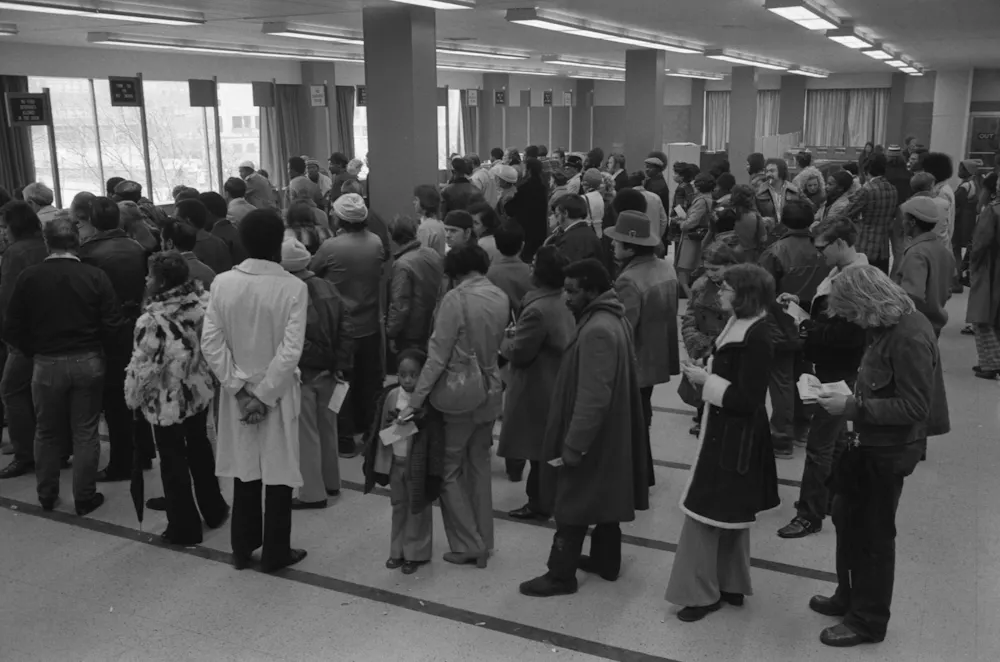
A large crowd of people wait on lines in a black and white photo from the 1970s.
People line up at the Baltimore City Welfare Office in 1975, years before concerns about social spending led to big cuts to safety net programs. O’Halloran/Library of Congress via Getty Images

By the mid-1990s, opposition to welfare programs had become increasingly bipartisan. Politicians in both parties often used tales of Medicaid fraud on the part of providers and recipients to justify tighter eligibility rules and spending cuts.

Federal oversight expanded further with the Deficit Reduction Act of 2005, which created the Medicaid Integrity Program and strengthened federal oversight of state programs. The Affordable Care Act, the landmark healthcare legislation Congress passed in 2010, added new measures to screen providers and verify billing.

Concerns about Medicaid’s “integrity” became highly politicized in the debates surrounding the ACA. Critics of Medicaid expansion argued that increasing the number of people who could get health insurance through the program would increase fraud and improper enrollment. Supporters of expanding Medicaid to help more Americans gain health insurance maintained that anti-fraud rhetoric often disguised ideological opposition to the program’s expansion.

Blurring distinctions then and now

For the six decades that this program has helped millions of low-income Americans get healthcare, politicians have blurred the distinction between protecting Medicaid from abuse and using abuse to discredit Medicaid itself.

In my view, the Trump administration’s campaigns against California and Minnesota continue that pattern. It is using real weaknesses within Medicaid to advance much broader political arguments: that Democratic states cannot be trusted, that public benefits naturally invite abuse, and that withholding funds is itself a form of reform.

The result will no doubt be that fewer low-income Americans will be able to get the healthcare they need.

Ben Zdencanovic, Assistant Professor of U.S. History, University of Cambridge

This article is republished from The Conversation under a Creative Commons license. Read the original article.

💪 Your health journey starts here! Explore the latest health news, fitness tips, wellness trends, and healthy living advice. Share your thoughts in the comments and subscribe to the STM Daily News newsletter to stay informed and inspired every day.

Advertisement
Get More From A Face Cleanser And Spa-like Massage

Start Your Morning Informed

Get the STM Morning Brief delivered to your inbox every weekday with breaking news, transportation updates, technology, science, and trending stories.

STM News Brief Ad 2

We don’t spam! Read our privacy policy for more info.

Continue Reading

Lifestyle

P.F. Chang’s Partners With Starlight Children’s Foundation for New “Spirit of the Zodiac” Giving Campaign

P.F. Chang’s launches Spirit of the Zodiac, a giving campaign supporting Starlight Children’s Foundation with Bao plush purchases and in-restaurant donations.

Published

on

P.F. Chang’s Launches Spirit of the Zodiac Campaign to Support Starlight Children’s Foundation
P.F. Chang’s and Starlight Children’s Foundation

P.F. Chang’s Launches Spirit of the Zodiac Campaign to Support Starlight Children’s Foundation

P.F. Chang’s is launching a new annual charitable initiative designed to bring comfort to children during hospital stays. The Scottsdale-based restaurant brand announced Spirit of the Zodiac, a giving program inspired by the Chinese zodiac, with its inaugural campaign—Year of the Fire Horse: Spirit of Strength—benefiting Starlight Children’s Foundation.

What the campaign supports

Starlight Children’s Foundation serves more than 800 children’s hospitals nationwide, providing programs such as toy deliveries, hospital gowns, gaming stations, and other experiences intended to help kids feel more comfortable, connected, and supported during medical care.

How guests can participate (Sept. 2–Sept. 30)

From September 2 through September 30, 2026, guests can purchase Bao, a limited-edition horse plushie, for $10 through dine-in transactions at participating P.F. Chang’s restaurants (while supplies last). For each Bao purchased, P.F. Chang’s will donate an identical Bao plushie to Starlight for distribution through its hospital network—up to 20,000 donated plushies.

Guests can also support the campaign by rounding up their checks or making a direct donation in restaurant. The overall effort aims to raise $500,000 to support Starlight’s work with children and families.

Bonus offer for donors

P.F. Chang’s says guests who purchase Bao or make an in-restaurant donation of $10 or more to Starlight will receive an offer for a complimentary appetizer with the purchase of an entrée on a future dine-in visit, valid through October 31, 2026 (restrictions apply; participating locations only).

A story component for families

The campaign also includes a storytelling element: Bao’s journey will be featured in a digital story and an original children’s book by author Jenny Liao and illustrator Adriane Tsai, expected to publish later this month.

What to watch for

P.F. Chang’s and Starlight plan to continue the partnership beyond September, including in-hospital catering and plush deliveries in early October.

For more information, visit www.pfchangs.com/offers/spirit-of-the-zodiac. To learn more about the partnership, visit starlight.org/pfchangs.

💪 Your health journey starts here! Explore the latest health news, fitness tips, wellness trends, and healthy living advice. Share your thoughts in the comments and subscribe to the STM Daily News newsletter to stay informed and inspired every day.

Continue Reading

Local Business

Roscoe’s Chicken and Waffles: An L.A. Institution Confronts a Complicated Legacy

Roscoe’s Chicken and Waffles grew from a Harlem-inspired restaurant into a symbol of Black Los Angeles. Fifty years later, lawsuits, bankruptcy, closures and questions about its leadership have complicated the celebrated chain’s legacy.

Published

on

Last Updated on September 1, 2026 by Daily News Staff

For generations of Southern Californians, Roscoe’s was more than a famous combination of fried chicken and waffles. After 50 years, the restaurant’s cultural importance remains—but lawsuits, bankruptcy, closures and questions about its leadership have complicated the story.

Editorial image representing the history and complicated legacy of Roscoe’s Chicken and Waffles in Los Angeles.
Founded by Herb Hudson in 1975, Roscoe’s became one of Southern California’s most recognizable soul-food institutions.

What Happened to Roscoe’s Chicken and Waffles?

For many visitors to Los Angeles, Roscoe’s House of Chicken and Waffles is a destination—one of those famous places they have seen in movies, heard about in songs or watched celebrities visit.

For many of us who grew up in Los Angeles County, however, Roscoe’s occupies a different place in our memories. It was not necessarily our introduction to soul food, nor was chicken and waffles an exotic discovery. Roscoe’s was one among many soul-food restaurants where families ate in South Los Angeles, Inglewood, Compton, Watts and Long Beach.

I ate food from the South L.A. and Inglewood restaurants when I was young, although I was too young to compare the locations. When I returned to Roscoe’s as an adult and ate at the Long Beach location in 2021, I thought the food was good. That experience connected a familiar name from my Southern California childhood with the restaurant Roscoe’s had become decades later.

But the Roscoe’s story today is no longer only about food and nostalgia. It is also about how a Black cultural institution manages its legacy after lawsuits, bankruptcy proceedings, restaurant closures and a public controversy that caused some longtime customers to question who now controls the business—and whether its leadership still understands the community that helped make Roscoe’s famous.

From Harlem inspiration to a West Coast phenomenon

Herbert “Herb” Hudson, a Harlem native and former General Motors foreman, founded Roscoe’s in 1975. Accounts differ on whether the first restaurant was in Hollywood or Long Beach: Roscoe’s official history identifies the company as Hollywood-based, while culinary historian Adrian Miller and several contemporary reports place Hudson’s first location in Long Beach. What is undisputed is that Hudson brought a Harlem-influenced restaurant concept to Southern California and turned it into something distinctly Angeleno.

Hudson drew inspiration from the chicken-and-waffle restaurants and late-night music culture associated with Harlem, particularly Wells Supper Club. Chicken and waffles existed long before either Wells or Roscoe’s, with roots stretching through Pennsylvania Dutch cooking, Southern foodways and the work of Black cooks. Roscoe’s achievement was not inventing the pairing. It was making fried chicken and waffles a recognizable part of Los Angeles dining and eventually a national phenomenon.

In a 1978 advertisement in the Los Angeles Sentinel, Roscoe’s described the dish as “an East Coast specialty with a West Coast atmosphere.” It was an effective summary of Hudson’s idea.

His entertainment connections helped carry the restaurant beyond its neighborhood base. Stevie Wonder, Natalie Cole and comedian Redd Foxx were associated with its early rise, while athletes, actors, musicians and political figures followed. Roscoe’s became a place where local customers, tourists and celebrities could occupy the same dining room.

The restaurant also offered far more than its headline combination. Grits, eggs, greens, macaroni and cheese, red beans and rice, hot-water cornbread and chicken livers helped place Roscoe’s within the larger soul-food tradition. James Beard Award-winning author Adrian Miller’s history of Roscoe’s describes how Hudson used Black media, music connections and neighborhood locations to build the company.

Advertisement
Get More From A Face Cleanser And Spa-like Massage

Becoming part of Black Los Angeles

Roscoe’s did not become an institution merely because famous people ate there. Black Los Angeles made it an institution.

Families celebrated there. Musicians stopped in after performances. Local residents brought visiting relatives. Young people grew up knowing the name before national food television began treating chicken and waffles as a culinary discovery.

Roscoe’s also entered popular culture. It was referenced in movies including Jackie BrownRush Hour and Soul Plane, appeared in television productions and was mentioned in music. Its yellow-and-red signs became visual shorthand for a particular side of Los Angeles—one connected to Black culture, nightlife and neighborhood life rather than beaches and Hollywood premieres.

President Barack Obama’s 2011 visit to the Pico Boulevard restaurant represented a high point in that cultural journey. Obama ordered three wings and a waffle, and the meal became known as the “Obama’s Special.” A restaurant created by a Black entrepreneur and sustained heavily by Black customers had served the nation’s first Black president.

Roscoe’s fame, however, could sometimes obscure the larger community around it. Los Angeles has long supported many soul-food kitchens, family restaurants and neighborhood establishments. Roscoe’s became the name outsiders recognized, but it was never the whole story of soul food in Southern California.

The discrimination case and bankruptcy

The most consequential legal chapter began with former employee Daniel Beasley, a Black man who sued East Coast Foods, the company managing several Roscoe’s restaurants.

Beasley alleged that Latino managers gave Latino employees preferential schedules and working conditions while treating Black workers unfairly. He also alleged that he was terminated after complaining about discrimination. A jury found in his favor, and the resulting judgment was ultimately reported at approximately $3.2 million.

This was a particularly damaging case for Roscoe’s reputation. The allegations did not come from an outside critic attacking a Black-owned institution. They came from a Black employee accusing the company behind that institution of failing Black workers.

East Coast Foods filed for Chapter 11 bankruptcy protection in 2016. The discrimination judgment was a major factor, but it was not the company’s only financial obligation. Court proceedings described millions of dollars in additional debt.

The restructuring grew complicated. An examiner concluded that East Coast Foods could not meet its fiduciary responsibilities, and a court-appointed trustee effectively led the company for two years. A bankruptcy judge also ordered Hudson to reverse a transfer of the Roscoe’s name and trademark to an affiliated company he controlled, finding the transfer improper under bankruptcy law.

Advertisement
Get More From A Face Cleanser And Spa-like Massage

A restructuring plan took effect in September 2018. It promised creditors full payment with interest, secured by company assets and as much as $10 million from Hudson. The restaurants remained open. The U.S. Court of Appeals for the Ninth Circuit later summarized the proceedings and Hudson’s guarantee.

The bankruptcy is important when discussing claims that Roscoe’s “changed hands.” Court supervision, the temporary appointment of a trustee and the emergence of new executives clearly changed how parts of the company were controlled. However, available reporting does not establish a straightforward sale of the entire chain to a new owner.

That distinction matters. Social-media posts frequently describe Roscoe’s as no longer Black-owned, but the company has not publicly provided a clear, current breakdown of its ownership. The most accurate conclusion is that Roscoe’s corporate structure and leadership became more complicated and less transparent—not that a complete sale has been conclusively documented.

A second employee lawsuit

Roscoe’s faced another labor case in January 2024 when former employee Jaime Alejandro Carbajal-Torres filed a proposed class-action lawsuit in Los Angeles Superior Court.

Carbajal-Torres, who said he worked for the company for more than 20 years, alleged unpaid overtime, interrupted or missed meal and rest periods, unpaid vacation wages and unreimbursed work expenses. The complaint sought class-action status, unspecified damages and an injunction against further violations of California labor law.

These are allegations in a civil complaint, not proven findings, and Roscoe’s did not immediately respond to the original request for comment, according to L.A. Taco’s report.

Nevertheless, the filing revived uncomfortable questions about the treatment of the people whose labor sustains a celebrated restaurant brand. For a company whose identity is tied so strongly to community, repeated employee complaints cannot simply be dismissed as a public-relations inconvenience.

Closures, tragedy and public controversy

The last several years have brought additional challenges.

Roscoe’s closed its celebrated Pico Boulevard restaurant in January 2023 after approximately 32 years. The company directed customers to its newer La Brea flagship, which opened in 2021. In June 2024, the Pasadena restaurant closed after 30 years, although the company said it hoped to find an upgraded location in the city. The Los Angeles Times reported that some customers had begun questioning whether rising prices still matched the food’s quality.

The chain was also touched by tragedy in September 2022 when rapper PnB Rock was shot and killed during a robbery at the Manchester Avenue restaurant. That killing was not a business controversy created by Roscoe’s, but it attached another painful chapter to the restaurant’s recent history.

Advertisement
Get More From A Face Cleanser And Spa-like Massage

Then, in November 2024, a large inflatable figure of Donald Trump appeared near the Long Beach restaurant. Images spread online, leading some customers to believe Roscoe’s was endorsing Trump and prompting calls for a boycott.

Roscoe’s COO and creative director Diane Vara said the inflatable was connected to a political watch party at an adjacent jazz lounge, not the restaurant itself. According to Eater Los Angeles, the event was hosted by the Los Angeles County Republican Party and URBT News at the neighboring venue.

That explanation did not fully settle the controversy. Vara, who described herself publicly as a partner in Roscoe’s, had also exchanged contentious social-media comments with a food creator who criticized the restaurant and shared a homemade chicken-and-waffle recipe. The tone of the response intensified existing doubts about the company’s ownership, values and relationship with its traditional customers.

For many longtime patrons, the reaction was about more than partisan politics. Roscoe’s had spent decades benefiting from its status as a symbol of Black Los Angeles. Customers therefore expected its leadership to recognize how its actions—or events appearing to be associated with its property—would be understood by that community.

The state of Roscoe’s today

Roscoe’s reached its 50th anniversary in 2025. Its official website currently lists Hollywood, South L.A., Long Beach, Inglewood-LAX, Anaheim, La Brea and Pasadena, although the old Pasadena restaurant closed in 2024 and the company has discussed seeking a replacement site.

There are also signs of continued ambition. Roscoe’s has signed a lease for a space of more than 3,000 square feet at Los Angeles Union Station, according to 2026 reporting, though no firm public opening date had been announced. A Union Station restaurant would place Roscoe’s inside one of Southern California’s most important transportation landmarks as Los Angeles prepares for the 2028 Olympic and Paralympic Games.

This means Roscoe’s is not simply disappearing. It is contracting in some places, repositioning itself in others and attempting to carry a famous name into a new era.

But survival is not the same as renewal.

Roscoe’s still possesses something most restaurants could never purchase: a half-century of cultural memory. It helped popularize chicken and waffles across the country. It provided a gathering place for generations of Angelenos. It became one of the most recognizable Black-founded restaurant brands in America.

That history deserves recognition—but it should not shield the company from scrutiny.

Advertisement
Get More From A Face Cleanser And Spa-like Massage

To retain the loyalty of the community that built it, Roscoe’s needs greater clarity about its ownership and leadership, fair treatment of its workers, consistent food and service, and a more thoughtful relationship with longtime customers. Nostalgia can bring people back once. Trust is what keeps them returning.

Roscoe’s remains an L.A. institution. The question now is whether the company managing that institution understands the responsibility that comes with the name.


Editor’s note: This article distinguishes court findings from allegations. Claims in the 2024 labor complaint remain allegations unless proven in court or resolved through an acknowledged settlement. Publicly available reporting does not conclusively establish that the entire Roscoe’s chain was sold or ceased to be Black-owned.

Sources and related reading


See What’s Happening Now!

Continue Reading

Trending