Connect with us

STM Blog

TikTok sale puts app’s algorithm in the spotlight – a social media expert explains how the For You Page works and what changes are in store

Published

on

TikTok
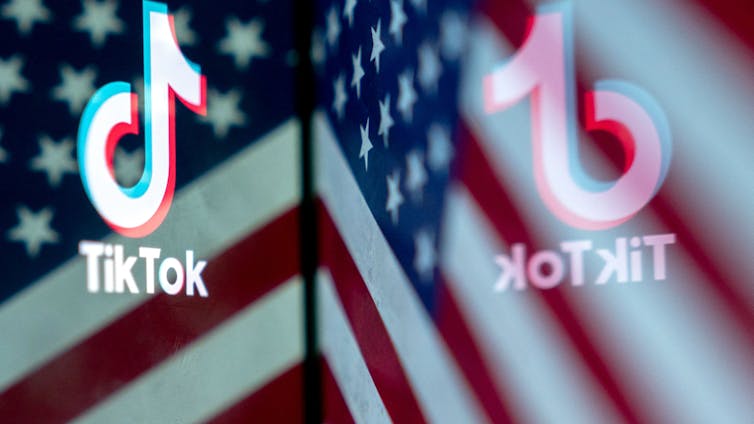
TikTok appears to be changing hands, but what that means for users is up in the air. Stefani Reynolds/AFP via Getty Images

Kelley Cotter, Penn State

President Donald Trump announced on Sept. 19, 2025, a preliminary agreement for the sale of a majority stake in TikTok from Chinese tech giant ByteDance to a group of U.S. investors following Trump’s negotiation with Chinese leader Xi Jinping.

The deal would create a new U.S.-only version of the app, bringing it into compliance with a law signed by former President Joe Biden on April 23, 2024, and upheld by the Supreme Court on Jan. 17, 2025. Specifics of the deal remain to be hammered out, but some details are emerging. These include what will happen to the video-sharing app’s core algorithm – and what that means for TikTok’s millions of U.S. users.

The Chinese government has indicated it will not permit ByteDance to sell the algorithm, because it is classified as a controlled technology export, per Chinese law. Meanwhile, U.S. tech industry executives and some lawmakers say compliance with the law requires the algorithm to be under American control. The deal as proposed includes licensing the algorithm so that it remains Chinese intellectual property while the U.S. version of the app continues to use the technology.

TikTok’s For You Page algorithm is widely considered the most important part of the app. As one analyst put it: “Buying TikTok without the algorithm would be like buying a Ferrari without the engine.”

The algorithm’s value lies in its uncanny capacity to anticipate users’ content preferences. Many users claim it knows them better than they know themselves — a sentiment that has evolved into a curious mix of spiritual belief and conspiracy theorizing, as my colleagues and I have documented. Other scholars have similarly noted that users feel more intimately seen and known by TikTok’s algorithm than those powering other popular platforms.

I have studied social media algorithms for nearly a decade, exploring how our relationships with them have evolved as they become increasingly entwined with daily life. As both a social media scholar and TikTok devotee, I want to shed some light on how the algorithm works and how the app is likely to change in the wake of its sale.

How the TikTok algorithm works

In some ways, the TikTok algorithm does not differ significantly from other social media algorithms. At their core, algorithms are merely a series of steps used to accomplish a specific goal. They perform mathematical computations to optimize output in service of that goal.

There are two layers to the TikTok algorithm. First, there is the abstract layer that defines the outcome developers wish to accomplish. An internal document shared with The New York Times specified that TikTok’s algorithm optimizes for four goals: “user value,” “long-term user value,” “creator value” and “platform value.”

But how do you turn these goals into math? What does an abstract concept like “user value” even mean? It’s not practical to ask users whether they value their experience every time they visit the site. Instead, TikTok relies on proxy signals that translate abstract outcomes into quantifiable measures — specifically, likes, comments, shares, follows, time spent on a given video and other user-behavior data. These signals then become part of an equation to predict two key concrete outcomes: “retention,” or the likelihood that a user will return to the site, and “time spent” on the app.

The TikTok For You Page algorithm relies on machine learning for predicting retention and time spent. Machine learning is a computational process in which an algorithm learns patterns in a dataset, with little or no human guidance, to produce the best equation to predict an outcome. Through learning patterns, the algorithm determines how much individual data signals matter for coming up with a precise prediction.

Advertisement
Get More From A Face Cleanser And Spa-like Massage

A Wall Street Journal investigation found that the amount of time users spend watching each video plays a large role in how the algorithm chooses videos it suggests to users. Using the equation it has generated to predict retention and time spent, the algorithm assigns a score to each video and ranks possible videos that could be shown to the user by this score. The higher the score for an individual user, the more likely the video will appear in their feed.

Of course, content characteristics and other users additionally inform recommendations, and there are other subprocesses folded into the equation. This step is where algorithmic moderation usually comes in. If a video looks like engagement bait or has excessive gore, for example, the content’s score will be penalized.

Here are the basics of how TikTok’s algorithm works.

What’s likely to change for US users

The sale has not been finalized, but the algorithm’s fate is coming into focus. According to reports, the United States-only version of the algorithm will be retrained on only U.S. users’ data. Users won’t need to download a new version of the app for the changed algorithm to work.

Even though the algorithm itself is the same as before, it’s fairly certain that TikTok will change. I see two key reasons for change.

First, the proposed app’s U.S.-only user population will alter the makeup of the underlying dataset informing algorithmic recommendations on an ongoing basis. As the kinds of content come to reflect American cultural preferences, values and behaviors, the algorithm may be slightly different as it “learns” new patterns.

Though users are more likely to stick with the app because they don’t need to download a new version, not all users will choose to, especially if it is seen as under the control of Trump’s allies. **Under the current deal, Oracle Corp. and the U.S. government would oversee the algorithm’s retraining. This arrangement suggests that the U.S. government may have significant influence over how the app works.

The deal would give an 80% share to U.S. investors, including 50% to new investors Oracle, Silver Lake and Andreessen Horowitz. These investors have connections to Trump, and an apparent provision of the deal allows the U.S. government to select one board member.

These influences raise the possibility of a boycott from left-leaning users and creators similar to earlier boycotts of Target for rolling back DEI measures and Disney after the since-reversed suspension of Jimmy Kimmel. This may result in a user population – and data – reflective of a narrower realm of interests and ideologies.

Second, it’s possible that the majority shareowners of the new app will decide to adjust the algorithm, particularly when it comes to content moderation. The new owners may wish to modify TikTok’s Community Guidelines according to their view of acceptable and unacceptable speech.

For example, TikTok’s current Community Guidelines prohibit misinformation and work with independent fact-checkers to assess the accuracy of content. While Meta used to follow a similar approach for Instagram and Facebook, in January 2025 Meta announced that it would end its relationships with independent fact-checkers and loosen content restrictions. YouTube has similarly relaxed its content moderation this year.

Advertisement
Get More From A Face Cleanser And Spa-like Massage

With reports that the U.S. government would oversee retraining the algorithm, there’s a possibility that not only the new investors but also the government itself could influence how content is prioritized and moderated.

The bottom line is algorithms are highly sensitive to context. They reflect the interests, values and worldviews of the people who build them, the preferences and behaviors of people whose data informs their models and the legal and economic contexts they operate within.

This means that while it’s difficult to predict exactly what a U.S.-only TikTok will be like, it’s safe to assume it will not be a perfect mirror image of the current app.

This story was updated on Sept. 23, 2025, to include new details about TikTok’s sale.

Kelley Cotter, Assistant Professor of Information Sciences and Technology, Penn State

This article is republished from The Conversation under a Creative Commons license. Read the original article.

STM Daily News is a vibrant news blog dedicated to sharing the brighter side of human experiences. Emphasizing positive, uplifting stories, the site focuses on delivering inspiring, informative, and well-researched content. With a commitment to accurate, fair, and responsible journalism, STM Daily News aims to foster a community of readers passionate about positive change and engaged in meaningful conversations. Join the movement and explore stories that celebrate the positive impacts shaping our world.

https://stmdailynews.com/

Advertisement
Get More From A Face Cleanser And Spa-like Massage
Continue Reading
Advertisement SodaStream USA, inc

aerospace

Boom Supersonic Update 2026: Overture Progress, XB-1 Milestones, and What’s Next

Boom Supersonic’s 2026 update: XB-1 test success, Overture production timeline, funding progress, and the challenges facing the return of commercial supersonic travel.

Published

on

By STM Daily News Staff

The race to bring back commercial supersonic travel is accelerating once again, led by Boom Supersonic, a Colorado-based aerospace company aiming to succeed where Concorde left off. As of 2026, the company has achieved meaningful technical milestones—but still faces significant financial, regulatory, and industrial hurdles.

Here’s a comprehensive look at where Boom stands today, and what it means for the future of high-speed air travel.

Boom Supersonic’s 2026 update: XB-1 test success, Overture production timeline, funding progress, and the challenges facing the return of commercial supersonic travel.
Image Credit: Boom Supersonic

XB-1 Demonstrator Completes Historic Test Program

Boom’s experimental aircraft, the XB-1, has successfully completed its flight test campaign, marking a critical step toward validating the company’s supersonic technology.

  • Achieved multiple supersonic flights in 2025
  • Demonstrated aerodynamic stability and performance
  • Tested “boomless cruise” capabilities to reduce sonic disturbances

The XB-1 program served as a scaled demonstrator for the company’s flagship commercial jet, proving that modern materials, software, and engine integration can support efficient supersonic flight.

With testing complete, the aircraft is expected to be preserved as a prototype, representing a turning point in private-sector aerospace innovation.


Overture: Boom’s Commercial Supersonic Jet

The centerpiece of Boom’s vision is the Overture, a next-generation supersonic passenger aircraft designed to carry between 60 and 80 passengers at speeds approaching Mach 1.7.

Current projected timeline:

  • Prototype rollout: Targeted for 2026
  • First flight: Expected around 2027
  • Commercial service entry: Late 2020s (estimated 2029–2030)

Unlike Concorde, which catered primarily to elite travelers, Boom aims to position Overture with business-class pricing, potentially expanding access to faster global travel.

The aircraft is also being designed with sustainability in mind, including compatibility with sustainable aviation fuel (SAF).


Funding and Financial Momentum

In recent developments, Boom Supersonic secured an additional $100 million in funding, reinforcing investor confidence in the company’s long-term vision.

However, building a supersonic passenger aircraft remains one of the most capital-intensive challenges in aviation. Continued fundraising and strategic partnerships will be essential as the company moves from prototype to production.


Boomless Cruise: A Potential Game-Changer

One of Boom’s most significant innovations is its focus on “boomless cruise,” a method of flying supersonically without producing an audible sonic boom on the ground.

Advertisement
Get More From A Face Cleanser And Spa-like Massage

If proven viable at scale, this technology could influence regulatory changes—particularly in the United States, where overland supersonic flight is currently restricted.

The ability to fly faster-than-sound over land would unlock major domestic routes, dramatically reducing travel times between cities like New York and Los Angeles.


Manufacturing Challenges and Delays

Despite technical progress, Boom’s manufacturing ambitions face uncertainty. A planned production facility in North Carolina has experienced delays, raising questions about when large-scale assembly will begin.

Scaling production from prototype to commercial aircraft remains one of the most difficult phases of any aerospace program, requiring supply chain coordination, workforce development, and regulatory alignment.


Industry Skepticism Remains

While Boom has secured interest from major airlines, skepticism persists within the aviation industry.

Key concerns include:

  • Certification complexity and regulatory approval timelines
  • Operational costs versus ticket pricing
  • Long-term demand for supersonic travel

Even airline executives have expressed cautious optimism, with some suggesting the project’s success remains uncertain.


The Bigger Picture: A Defining Decade for Supersonic Travel

Boom Supersonic has moved beyond concept and into real-world testing, demonstrating that modern supersonic flight is technically achievable.

However, the next phase—bringing Overture to market—will determine whether supersonic passenger travel becomes a viable industry once again or remains an ambitious experiment.

If successful, Boom could redefine global travel times. If not, it will join a long list of bold aerospace ventures that struggled to overcome economic reality.


Sources and External Links

Dive into “The Knowledge,” where curiosity meets clarity. This playlist, in collaboration with STMDailyNews.com, is designed for viewers who value historical accuracy and insightful learning. Our short videos, ranging from 30 seconds to a minute and a half, make complex subjects easy to grasp in no time. Covering everything from historical events to contemporary processes and entertainment, “The Knowledge” bridges the past with the present. In a world where information is abundant yet often misused, our series aims to guide you through the noise, preserving vital knowledge and truths that shape our lives today. Perfect for curious minds eager to discover the ‘why’ and ‘how’ of everything around us. Subscribe and join in as we explore the facts that matter.  https://stmdailynews.com/the-knowledge/

Advertisement
Get More From A Face Cleanser And Spa-like Massage
Continue Reading

The Knowledge

Metrolink Offers Fare-Free Rides for Earth Day 2026 Across Southern California

Metrolink offers fare-free rides for Earth Day 2026 across Southern California, encouraging sustainable travel and reduced emissions.

Published

on

Last Updated on April 21, 2026 by Daily News Staff

Metrolink Offers Fare-Free Rides for Earth Day 2026
Image Credit: Metrolink

Metrolink Offers Fare-Free Rides for Earth Day 2026

LOS ANGELES — April 22, 2026 — In a continued push toward sustainable transportation, Metrolink will once again offer systemwide free rides on Earth Day, inviting commuters and travelers to leave their cars behind and explore a cleaner way to move across the region.

A One-Day Opportunity to Ride Free

On Wednesday, April 22, passengers can board any Metrolink train — including the Arrow service — without purchasing a ticket. The initiative is part of the broader celebration of Earth Day, encouraging environmentally conscious travel choices.

The fare-free program is designed to appeal to both regular riders and first-time users, particularly those navigating Southern California’s persistent traffic congestion and rising fuel costs.

ml earth emailheader eng.jpg
Image Credit: Metrolink

Encouraging Sustainable Travel Habits

“Earth Day is a reminder that small changes, like choosing public transit over driving one day a week, can have a meaningful impact on our environment,” said Doug Chaffee, chair of the Metrolink Board.

With gas prices continuing to strain household budgets, the agency hopes the initiative will inspire more residents to consider rail as part of their regular commute.

Regional Connections Expand Access

Metrolink’s Earth Day promotion aligns with similar efforts by other Southern California transit providers. Riders can seamlessly connect to services operated by: LA Metro and the Orange County Transportation AuthorityRiverside County Transportation CommissionSan Bernardino County Transportation Authority and Ventura County Transportation Commission.

These partnerships extend the reach of fare-free travel across a six-county region, making it easier for riders to explore destinations without relying on personal vehicles.

Service Adjustments and Rider Tips

Passengers should note that trains will operate on a reduced weekday schedule, implemented earlier this spring. Despite the adjustment, all Metrolink lines and station cities remain in service.

For those planning a trip:

  • No ticket is required — simply board the train
  • Bikes are welcome, with capacity ranging from three bikes per standard car to nine in designated bike cars
  • A curated destination guide highlights attractions within walking or biking distance of stations

Environmental and Economic Impact

Metrolink is also promoting its Personal Impact Calculator, a digital tool that allows riders to estimate how switching from driving to rail can reduce greenhouse gas emissions and lower fuel expenses.

A Broader Trend in Public Transit

Fare-free transit days have gained traction nationwide as agencies look to boost ridership and promote sustainability. Southern California’s expansive commuter rail network makes it particularly well-suited for such initiatives, offering a viable alternative to one of the country’s most car-dependent regions.


Bottom Line

Metrolink’s Earth Day promotion is more than a one-day free ride — it’s a strategic effort to shift commuter behavior, reduce environmental impact, and showcase the convenience of regional rail. For Southern Californians, April 22 presents a low-risk opportunity to rethink how they travel.

Advertisement
Get More From A Face Cleanser And Spa-like Massage

Source: Metrolink

https://metrolinktrains.com/news/metrolink-goes-fare-free-for-earth-day-on-april-22

Dive into “The Knowledge,” where curiosity meets clarity. This playlist, in collaboration with STMDailyNews.com, is designed for viewers who value historical accuracy and insightful learning. Our short videos, ranging from 30 seconds to a minute and a half, make complex subjects easy to grasp in no time. Covering everything from historical events to contemporary processes and entertainment, “The Knowledge” bridges the past with the present. In a world where information is abundant yet often misused, our series aims to guide you through the noise, preserving vital knowledge and truths that shape our lives today. Perfect for curious minds eager to discover the ‘why’ and ‘how’ of everything around us. Subscribe and join in as we explore the facts that matter.  https://stmdailynews.com/the-knowledge/

Continue Reading

Science

New Glenn’s Third Mission Set for April 19 as Blue Origin Advances Commercial Space Capabilities

Published

on

CAPE CANAVERAL, Fla. — Blue Origin has confirmed the launch window for the third mission of its heavy-lift New Glenn rocket, marking another step forward in the company’s expanding role in commercial spaceflight.

New Glenn’s Third Mission
Image Credit: Blue Origin

New Glenn’s Third Mission

Launch Details and Timeline

The mission is scheduled to lift off no earlier than Sunday, April 19, 2026, from Launch Complex 36 at Cape Canaveral Space Force Station. The two-hour launch window opens at 6:45 a.m. EDT (10:45 UTC) and closes at 8:45 a.m. EDT (12:45 UTC).

Viewers can follow the mission through a live webcast hosted by Blue Origin, beginning approximately 30 minutes before liftoff.

Mission Payload: Expanding Space-Based Connectivity

At the heart of the mission is the deployment of the BlueBird 7 satellite, developed by AST SpaceMobile. The satellite is designed to enhance a growing direct-to-smartphone broadband network, an emerging technology aimed at delivering connectivity to standard mobile devices without the need for ground-based towers.

BlueBird 7 will contribute to expanding network capacity and is expected to support initial service rollout plans targeted for 2026. The broader initiative reflects a significant shift in how satellite infrastructure could complement terrestrial telecom systems, particularly in underserved or remote regions.

Reusability Milestone: Booster Returns Again

A key feature of this mission is the planned reuse of New Glenn’s first-stage booster, “Never Tell Me The Odds.” The booster previously demonstrated a successful launch and landing during the rocket’s second mission in November, underscoring Blue Origin’s commitment to reusable rocket technology—a cornerstone of cost reduction and operational efficiency in modern spaceflight.

If successful, this mission will further validate the reliability of the New Glenn system and strengthen its competitiveness in a market increasingly shaped by reusable launch vehicles.

Industry Context: Competing in a Rapidly Evolving Market

The New Glenn program represents Blue Origin’s answer to heavy-lift launch demands, positioning the company alongside major players such as SpaceX. As satellite constellations grow in scale and ambition, reliable and cost-effective launch services have become a critical component of the global space economy.

The inclusion of commercial payloads like BlueBird 7 highlights the increasing collaboration between aerospace firms and telecommunications providers, signaling a future where space-based infrastructure plays a central role in everyday connectivity.

Looking Ahead

With its third mission, New Glenn continues to build momentum as a next-generation launch platform. The combination of reusable hardware, commercial partnerships, and advanced payload capabilities places this launch among the most closely watched developments in the 2026 spaceflight calendar.

For ongoing updates, mission tracking, and live coverage, audiences can follow Blue Origin across its digital platforms or visit its official website.

Advertisement
Get More From A Face Cleanser And Spa-like Massage

Source

Blue Origin Official Announcement – New Glenn Third Mission

Related External Links


Explore the latest in innovation, AI, gadgets, startups, and digital trends in STM Daily News’ Techsection.

Continue Reading

Trending

