

documentaries
Director Neil Myers to Debut heartwarming documentary, Climb
From director Neil Myers comes the heartwarming documentary, Climb.

Inspirational film about a triathlete’s journey back from near-death accident premieres December 15
SANTA BARBARA, Calif. /PRNewswire/ — From director Neil Myers comes the heartwarming documentary, Climb. The film recently completed a breakthrough film festival season, where it was an official selection at 40 film festivals globally and won 26 awards, including best documentary, best cinematography, best original score, and many other awards.
Experience the full interactive Multichannel News Release here: https://www.multivu.com/players/English/9118552-director-neil-myers-climb-documentary/
The film tells the story of a triathlete who was nearly killed during a training ride – colliding head-on with a truck, breaking 16 bones in 26 places, collapsing both lungs and suffering a brain bleed. After a month in the hospital and two months of rehab, the triathlete got back on his bike and began his journey back to competition.
Climb debuts on December 15 on Vimeo. The film debuted at the Santa Barbara International Film Festival, where director Roger Durling remarked, “Climb is an extremely well-made, inspirational film.” The Milano Film Festival says, “Climb heralds suspense and a climax worthy of the best fictional scripts.”
While the film builds to a dramatic, exciting finish at the Santa Barbara Triathlon one year after the accident, the story is more of a love story. A love of cycling, of the community which saved his life and helped him back to the starting line, and of his family who was with him every step of the way. It is both a heartwarming story for the holidays and an inspiration for anyone who is facing a challenge in their life.
A trailer and other supporting materials are available at the film’s website, ClimbDoc.org.
SOURCE Campfire Films
Author




Movies
A Palestinian-Israeli film just won an Oscar − so why is it so hard to see?
The Palestinian-Israeli film “No Other Land” won the 2025 Academy Award for best documentary but struggles to find a U.S. distributor due to its controversial subject matter around the Israeli-Palestinian conflict. Despite critical acclaim, it faces unique barriers compared to other independent films.

Last Updated on November 3, 2025 by Daily News Staff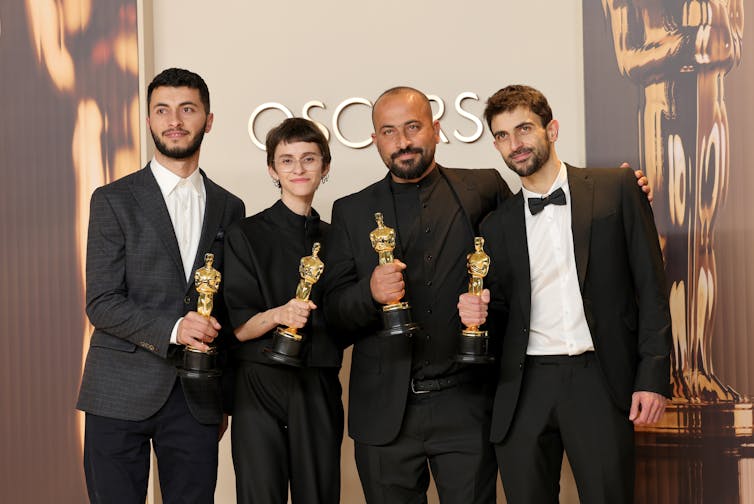
A Palestinian-Israeli film just won an Oscar
Drew Paul, University of Tennessee
For many low-budget, independent films, an Oscar win is a golden ticket.
The publicity can translate into theatrical releases or rereleases, along with more on-demand rentals and sales.
However, for “No Other Land,” a Palestinian-Israeli film that just won best documentary feature at the 2025 Academy Awards, this exposure may not translate into commercial success in the U.S. That’s because the film has been unable to find a company to distribute it in America.
“No Other Land” chronicles the efforts of Palestinian townspeople to combat an Israeli plan to demolish their villages in the West Bank and use the area as a military training ground. It was directed by four Palestinian and Israeli activists and journalists: Basel Adra, who is a resident of the area facing demolition, Yuval Abraham, Hamdan Ballal and Rachel Szor. While the filmmakers have organized screenings in a number of U.S. cities, the lack of a national distributor makes a broader release unlikely.
Film distributors are a crucial but often unseen link in the chain that allows a film to reach cinemas and people’s living rooms. In recent years it has become more common for controversial award-winning films to run into issues finding a distributor. Palestinian films have encountered additional barriers.
As a scholar of Arabic who has written about Palestinian cinema, I’m disheartened by the difficulties “No Other Land” has faced. But I’m not surprised.
The role of film distributors
Distributors are often invisible to moviegoers. But without one, it can be difficult for a film to find an audience.
Distributors typically acquire rights to a film for a specific country or set of countries. They then market films to movie theaters, cinema chains and streaming platforms. As compensation, distributors receive a percentage of the revenue generated by theatrical and home releases.
The film “Soundtrack to a Coup D’Etat,” another finalist for best documentary, shows how this process typically works. It premiered at the Sundance Film Festival in January 2024 and was acquired for distribution just a few months later by Kino Lorber, a major U.S.-based distributor of independent films.
The inability to find a distributor is not itself noteworthy. No film is entitled to distribution, and most films by newer or unknown directors face long odds.
However, it is unusual for a film like “No Other Land,” which has garnered critical acclaim and has been recognized at various film festivals and award shows. Some have pegged it as a favorite to win best documentary at the Academy Awards. And “No Other Land” has been able to find distributors in Europe, where it’s easily accessible on multiple streaming platforms.
So why can’t “No Other Land” find a distributor in the U.S.?
There are a couple of factors at play.
Shying away from controversy
In recent years, film critics have noticed a trend: Documentaries on controversial topics have faced distribution difficulties. These include a film about a campaign by Amazon workers to unionize and a documentary about Adam Kinzinger, one of the few Republican congresspeople to vote to impeach Donald Trump in 2021.
The Israeli-Palestinian conflict, of course, has long stirred controversy. But the release of “No Other Land” comes at a time when the issue is particularly salient. The Hamas attacks of Oct. 7, 2023, and the ensuing Israeli bombardment and invasion of the Gaza Strip have become a polarizing issue in U.S. domestic politics, reflected in the campus protests and crackdowns in 2024. The filmmakers’ critical comments about the Israeli occupation of Palestine have also garnered backlash in Germany.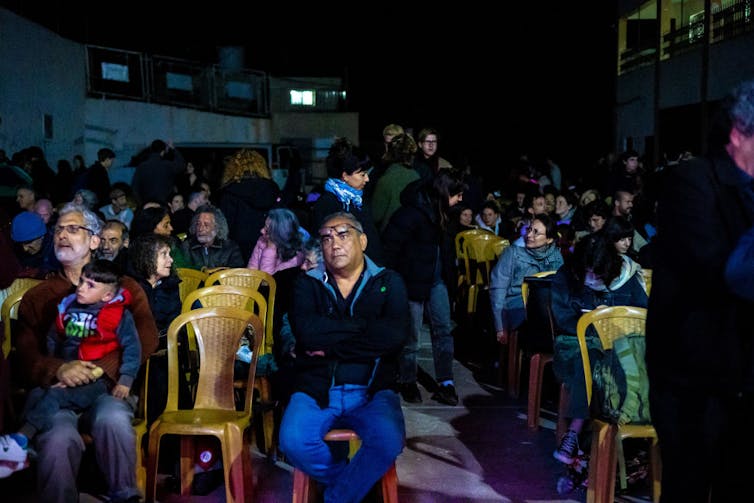
Yet the fact that this conflict has been in the news since October 2023 should also heighten audience interest in a film such as “No Other Land” – and, therefore, lead to increased sales, the metric that distributors care about the most.
Indeed, an earlier film that also documents Palestinian protests against Israeli land expropriation, “5 Broken Cameras,” was a finalist for best documentary at the 2013 Academy Awards. It was able to find a U.S. distributor. However, it had the support of a major European Union documentary development program called Greenhouse. The support of an organization like Greenhouse, which had ties to numerous production and distribution companies in Europe and the U.S., can facilitate the process of finding a distributor.
By contrast, “No Other Land,” although it has a Norwegian co-producer and received some funding from organizations in Europe and the U.S., was made primarily by a grassroots filmmaking collective.
Stages for protest
While distribution challenges may be recent, controversies surrounding Palestinian films are nothing new.
Many of them stem from the fact that the system of film festivals, awards and distribution is primarily based on a movie’s nation of origin. Since there is no sovereign Palestinian state – and many countries and organizations have not recognized the state of Palestine – the question of how to categorize Palestinian films has been hard to resolve.
In 2002, The Academy of Motion Picture Arts and Sciences rejected the first ever Palestinian film submitted to the best foreign language film category – Elia Suleiman’s “Divine Intervention” – because Palestine was not recognized as a country by the United Nations. The rules were changed for the following year’s awards ceremony.
In 2021, the cast of the film “Let It Be Morning,” which had an Israeli director but primarily Palestinian actors, boycotted the Cannes Film Festival in protest of the film’s categorization as an Israeli film rather than a Palestinian one.
Film festivals and other cultural venues have also become places to make statements about the Israeli-Palestinian conflict and engage in protest. For example, at the Cannes Film Festival in 2017, the right-wing Israeli culture minister wore a controversial – and meme-worthy – dress that featured the Jerusalem skyline in support of Israeli claims of sovereignty over the holy city, despite the unresolved status of Jerusalem under international law.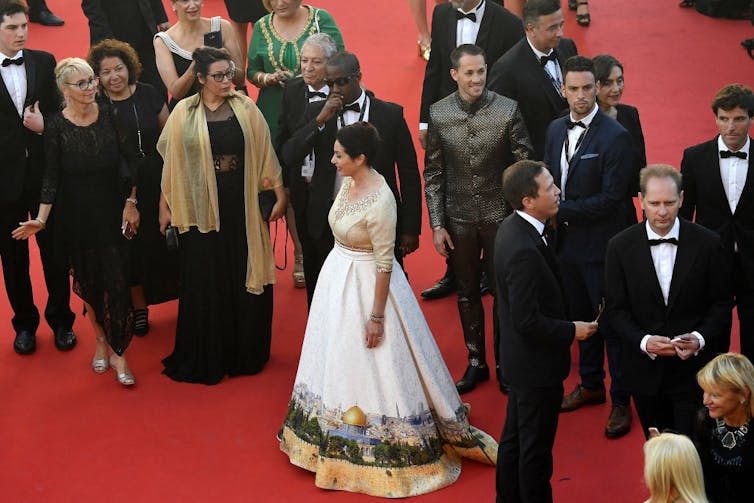
At the 2024 Academy Awards, a number of attendees, including Billie Eilish, Mark Ruffalo and Mahershala Ali, wore red pins in support of a ceasefire in Gaza, and pro-Palestine protesters delayed the start of the ceremonies.
As he accepted his award, “No Other Land” director Yuval Abraham called out “the foreign policy” of the U.S. for “helping to block” a path to peace.
Even though a film like “No Other Land” addresses a topic of clear interest to many Americans, I wonder if the quest to find a U.S. distributor just got even harder.
This article has been updated to clarify that the film was a collaborative effort between Palestinian and Israeli filmmakers. It has also been updated to reflect the film’s win at the 2025 Academy Awards.
Drew Paul, Associate Professor of Arabic, University of Tennessee
This article is republished from The Conversation under a Creative Commons license. Read the original article.
documentaries
“1001 Crowns for My Head”: A Powerful Celebration of Afro Hair, Identity, and Pride
Habibata Ouarme’s documentary “1001 Crowns for My Head” debuts October 27 on TFO.org, celebrating the cultural pride and heritage of Afro-descendant women through the art and history of hair.

Last Updated on October 26, 2025 by Daily News Staff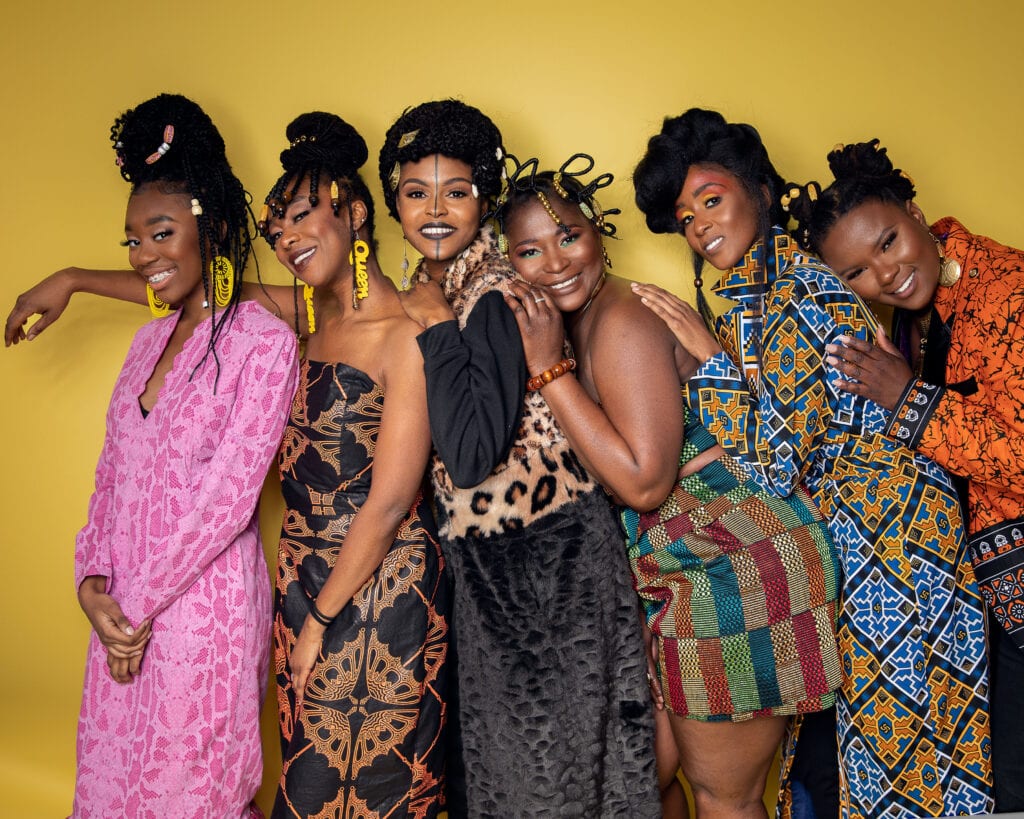
Airing October 27, 2025, on TFO.org
(Montreal, QC) — October 13, 2025) — Hair is more than just style—it’s a story, a legacy, and a declaration of self. The new documentary 1001 Crowns for My Head by acclaimed filmmaker Habibata Ouarme (of KOROMOUSSO: Big Sister fame) brings that truth to life in a dazzling, heartfelt tribute to the beauty, resilience, and hair heritage of women of African descent.
Premiering October 27, 2025, at 9:00 PM on TFO, and streaming online the same day at TFO.org, 1001 Crowns for My Head explores the deep cultural roots of African and Afro-descendant hairstyles—from ancient civilizations to the modern diaspora. Each braid, curl, and twist tells a story of survival, self-expression, and shared memory.
🎥 Watch the trailer: https://vimeo.com/1091820352/e4cd2a903a
A Crown of History and Identity
Through vibrant visuals and deeply personal storytelling, 1001 Crowns for My Head examines how hair has served as both an act of self-affirmation and a symbol of identity. The documentary brings together an impressive lineup of Afro-descendant women—leaders, artists, scholars, and activists—each sharing their unique relationship with their hair and culture.
Among the featured voices are:
- Dr. Afua Cooper, Canadian scholar, author, and artist
- Juliette Sméralda, sociologist and writer
- Martine Musau Muele, lawyer, actress, and President of the Montreal City Council
- Isabelle Massé, director at La Presse, author, and columnist
- Keithy Antoine, artist and entrepreneur
Together, these women bridge generations, challenging stereotypes and reclaiming narratives that have long been shaped by colonial and cultural pressures. Their testimonies, filled with courage and creativity, redefine beauty on their own terms—through authenticity and pride.
The Filmmaker’s Vision
For Habibata Ouarme, a socially engaged filmmaker from the Ivory Coast now based in Canada, 1001 Crowns for My Head is both personal and political.
“What drives me as a documentary filmmaker is giving a voice to the voiceless and highlighting diverse communities,” Ouarme explains. “1001 Crowns was born from my own relationship with my natural hair and my desire to understand the history and meaning of this cultural heritage.”
Through her lens, Ouarme transforms everyday hair rituals into symbols of resistance and empowerment. The film reminds audiences that the beauty of Black hair is not merely aesthetic—it is a living, breathing connection to ancestry, community, and strength.
Beyond the cultural narrative, Ouarme’s message extends to unity and empathy.
“I hope this film inspires audiences to better understand the journey and identity of Afro-descendant women. The world needs listening, connection, and sharing to build bridges between communities,” she says.

Behind the Scenes
1001 Crowns for My Head was written, directed, and produced by Habibata Ouarme through her company KOROMOUSSO Media Inc. Executive producers include Alexandrine Torres de Figueiredo and Byron A. Martin, with cinematography by Ricardo Diaz, André Dufour, Jim Donovan, and Juozas Cernius.
The film’s editing is handled by Boban Chaldovich, and the original score—composed by Benoît Groulx and Chihiro Nagamatsu—provides an evocative backdrop that enhances the film’s emotional depth.
Supported by Telefilm Canada (Talent to Watch), the Canada Media Fund, the Canada Council for the Arts, and TFO, the documentary stands as a shining example of the growing recognition and support for diverse stories in Canadian cinema.
A Journey Through Time and Texture
From intricate braids that once signified tribal belonging to natural hairstyles that now symbolize freedom and self-acceptance, 1001 Crowns for My Head paints an exquisite picture of cultural evolution. The film doesn’t just document hairstyles—it celebrates the spiritual and emotional power woven into each strand.
As the documentary unfolds, viewers are invited to reflect on how beauty standards have evolved and how Afro-descendant women continue to redefine them on their own terms. The result is a vibrant cinematic experience filled with humanity, hope, and heritage.
About the Director
Habibata Ouarme is an award-winning filmmaker and activist whose work focuses on human rights, cultural identity, and women’s empowerment. Her first documentary, KOROMOUSSO (Big Sister)—co-directed and produced by the National Film Board of Canada—examined female genital mutilation through a courageous, empathetic lens.
With 1001 Crowns for My Head, Ouarme continues her mission of storytelling as activism. She is also developing her first fiction feature, Tonton Patrick, and remains actively involved in community-based projects promoting women’s health and cultural awareness.
How to Watch & Connect
📺 Premiere Date: Monday, October 27, 2025, at 9:00 PM
🌐 Where to Watch: TFO.org
🎬 Official Website: www.1001CrownsFilm.com
Follow Habibata Ouarme:
- Instagram: @habibata_o
- Facebook: @Lankoande.Habibata
Follow the Film:
- Facebook: @1001-Couronnes-Pour-Ma-Tête
Final Thoughts
1001 Crowns for My Head is more than a documentary—it’s a love letter to Afro hair, a tribute to identity, and a call to embrace heritage without apology. In a world still learning to celebrate difference, Ouarme’s film stands as a radiant reminder: every crown tells a story worth hearing.
Looking for an entertainment experience that transcends the ordinary? Look no further than STM Daily News Blog’s vibrant Entertainment section. Immerse yourself in the captivating world of indie films, streaming and podcasts, movie reviews, music, expos, venues, and theme and amusement parks. Discover hidden cinematic gems, binge-worthy series and addictive podcasts, gain insights into the latest releases with our movie reviews, explore the latest trends in music, dive into the vibrant atmosphere of expos, and embark on thrilling adventures in breathtaking venues and theme parks. Join us at STM Entertainment and let your entertainment journey begin! https://stmdailynews.com/category/entertainment/
and let your entertainment journey begin!
Author

documentaries
Dreambreaker: A Pickleball Story — A Closer Look at the Documentary and Its Uncredited Voice
Discover the story behind Dreambreaker: A Pickleball Story, the documentary on pickleball’s explosive rise. Learn how Michael J. Sliwa, aka Sleeves, served as the uncredited narrator, bringing authenticity to the film.
Last Updated on September 14, 2025 by Daily News Staff
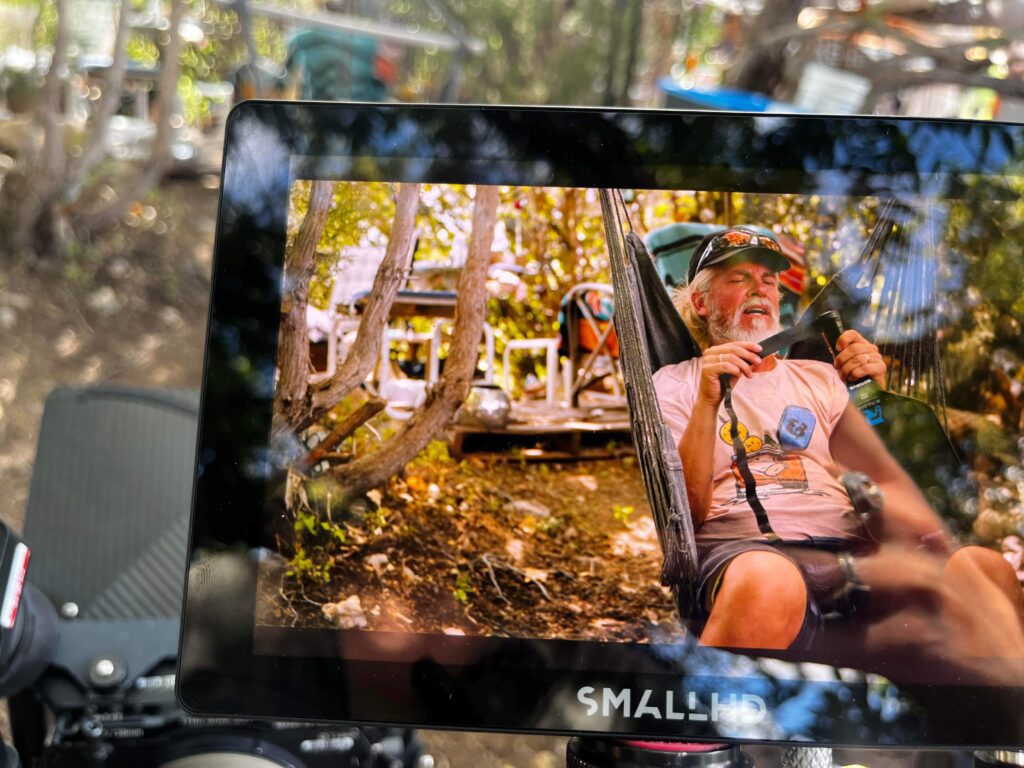
Dreambreaker: A Pickleball Story explores the rise of pickleball from a backyard pastime to a professional sport. While the film showcases celebrities and investors, its guiding voice comes from an unexpected source — Michael J. Sliwa, known as Sleeves — who serves as the uncredited narrator.
Pickleball has gone from backyard pastime to one of the fastest-growing sports in the United States, drawing athletes, celebrities, and investors into its orbit. The documentary Dreambreaker: A Pickleball Story captures this meteoric rise, exploring not just the sport’s grassroots appeal but also the high-stakes business world surrounding professional pickleball.
The film premiered at the San Francisco Documentary Festival in May 2024 before reaching a wider audience through truTV and Max in April 2025. Today, fans can stream the film for free with ads on The Roku Channel in the U.S., giving pickleball enthusiasts everywhere a front-row seat to the story of how this unlikely sport captured global attention.
Inside the Documentary
Directed by Ashley Underwood with contributions from Seth Porges and Mary Pilon, Dreambreaker dives deep into the tension between pickleball’s humble beginnings and its explosive commercialization. It features candid interviews with John McEnroe, Billy Bush, and appearances by household names like LeBron James and Tom Brady, who have invested in professional pickleball leagues.
Dreambreaker: A Pickleball Story is NOW on MAX and truTV
The narrative highlights the competing visions of the sport’s future: will pickleball remain a community-driven game of accessibility, or will it evolve into a big-money enterprise dominated by corporate interests and celebrity influence?
The Uncredited Voice Behind the Story
While the film showcases many familiar faces on screen, there’s one voice guiding the audience throughout the journey: Michael J. Sliwa, known to many as “Sleeves.”
Sliwa, a longtime storyteller and passionate communicator, served as the narrator for the documentary. Interestingly, his contribution is not formally credited in the film, yet his voice plays a central role in tying together the history, drama, and cultural significance of pickleball’s rapid rise.
For those who know Sleeves, his trademark delivery brings both authenticity and character to the documentary, grounding the story in a way that reflects pickleball’s true spirit—equal parts grit, playfulness, and community.
Where to Watch
If you haven’t seen Dreambreaker: A Pickleball Story yet, here’s where you can catch it:
The Roku Channel (now streaming free with ads in the U.S.)
As pickleball continues its climb as both a sport and a cultural movement, Dreambreaker stands as an important time capsule of this pivotal moment. And thanks to the uncredited narration of Michael J. “Sleeves” Sliwa, the story is told with a voice that resonates beyond the screen.
Get the latest updates and information on the rapidly growing sport of pickleball, specifically designed for the senior community aged 50+. Check out Sleeve’s Senior Pickleball Report on YouTube to stay informed and up-to-date with the ever-changing world of pickleball. Join the community and stay ahead of the game.
Looking for an entertainment experience that transcends the ordinary? Look no further than STM Daily News Blog’s vibrant Entertainment section. Immerse yourself in the captivating world of indie films, streaming and podcasts, movie reviews, music, expos, venues, and theme and amusement parks. Discover hidden cinematic gems, binge-worthy series and addictive podcasts, gain insights into the latest releases with our movie reviews, explore the latest trends in music, dive into the vibrant atmosphere of expos, and embark on thrilling adventures in breathtaking venues and theme parks. Join us at STM Entertainment and let your entertainment journey begin! https://stmdailynews.com/category/entertainment/
and let your entertainment journey begin!





