

News
A national, nonpartisan study of the Los Angeles fires could improve planning for future disasters
The article discusses the catastrophic Los Angeles wildfires, emphasizing the need for an independent, comprehensive investigation into their causes, focusing on human factors and systemic issues affecting disaster response and planning.

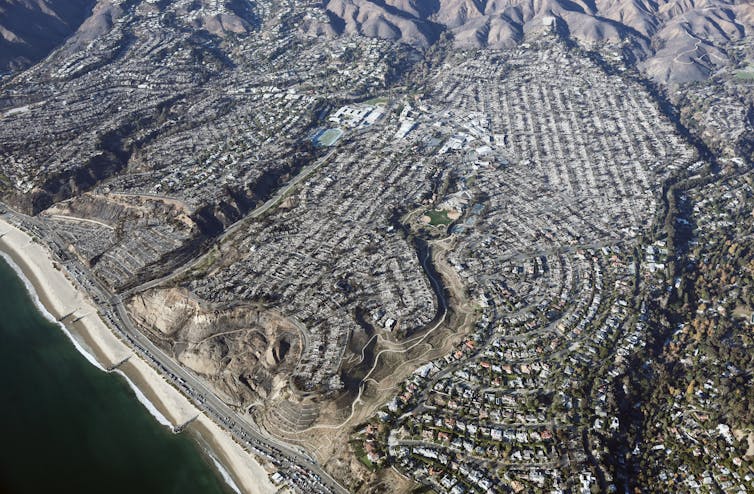
Najmedin Meshkati, University of Southern California
The Los Angeles fires are a national disaster of epic proportions. City officials, California Gov. Gavin Newsom and President-elect Donald Trump have traded accusations about what caused this crisis. But as an engineering professor who lives in Los Angeles and has studied extreme events and natural and human-caused disasters for over 40 years, I believe an event with so many lives lost and damages estimated at hundreds of billions of dollars demands a more substantive response.
Many problems have been cited as alleged root causes of this massive wildfire outbreak. They include mismanaged water resources, misallocation of firefighting resources, fire department funding cuts, poor risk management, reignition of past fires, and climate-driven dry conditions. Rumors and conspiracy theories have also abounded. https://www.youtube.com/embed/E2_KvbLgHlY?wmode=transparent&start=0 Damage from the Los Angeles wildfires, estimates at $135 billion or more as of mid-January, could affect homeowners insurance rates across the U.S.
I have served as a member or adviser to national- and state-level investigations of events including gas leaks, oil spills, nuclear reactor accidents, refinery explosions and, most recently, aviation mishaps.
In my view, the Los Angeles fires call for a similar investigation that is technically sound, multidisciplinary, unbiased, apolitical and independent. U.S. Sen. Adam Schiff of California has called for convening such a review.
To quote a saying often attributed to Albert Einstein: “Condemnation without investigation is the height of ignorance.”
Natural events + human responses
Natural disasters such as wildfires, earthquakes and tsunamis often serve as triggers. Devastating on their own, these events can have far more catastrophic aftermaths that are shaped by human choices. Nature delivers the initial blow, but a complex interplay of human, organizational and technological factors can either mitigate or worsen the consequences.
I believe human operators and first responders constitute society’s first and the very last layer of defense against death and destruction in the crucial moments following natural disasters and technological systems failures – serving as our immediate shield, intermediate mitigator and ultimate savior.
I saw this when I served on a National Academy of Sciences committee that studied the 2011 Fukushima nuclear accident in Japan. The explosions and radioactive releases at the Fukushima Daiichi plant were triggered by an earthquake and tsunami, but a Japanese high-level review concluded that this event was a “manmade disaster” – one born of human and organizational failure at the utility and governmental levels.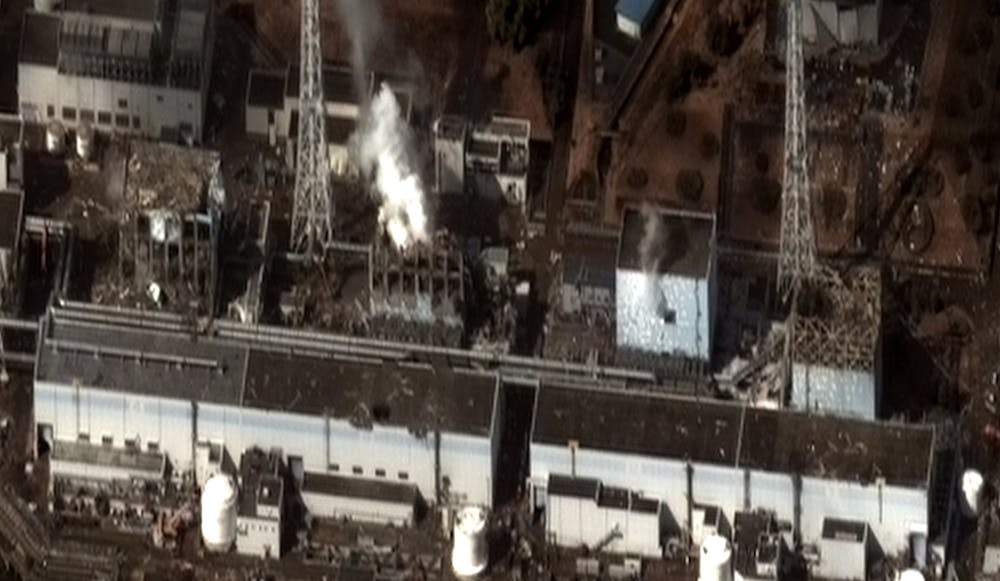
The fate of the Onagawa Nuclear Power Station, just 39 miles from Fukushima, was also notable. Although Onagawa was closer to the earthquake’s epicenter and faced an even more powerful tsunami, the reactors there – which were identical in type and age to Fukushima’s and subject to the same regulations – emerged almost unscathed. This stark difference demolished any argument that Fukushima’s failure was inevitable, an act of God or purely nature’s fault.
High-level commissions have reviewed similar disasters in the United States. For example:
– The President’s Commission on the Three Mile Island nuclear accident in 1979 produced the landmark Kemeny Report, which concluded that the accident was primarily caused by human factors, including inadequate operator training and confusing procedures, rather than equipment failures alone. The report strongly criticized the Nuclear Regulatory Commission, which regulates the nuclear power industry, and recommended a complete restructuring of the agency. It also called for better safety measures, operator training and emergency preparedness in the nuclear industry.
– Independent commissions investigated the explosions of the Challenger space shuttle in 1986 and the Columbia space shuttle in 2003. They identified similar systemic issues behind these incidents, even though they occurred 17 years apart, and provided overlapping recommendations to improve NASA’s safety culture and decision-making processes.
– Two national reviews – one by a blue-ribbon commission and the other by the National Academy of Engineering and National Research Council – investigated the 2010 BP Deepwater Horizon explosion and oil spill. This disaster killed 11 workers, seriously injured 16 others and released an estimated 134 million barrels of oil into the Gulf of Mexico.
Both reports concluded that BP’s poor safety culture and practices, along with technical failures, lax regulation and inadequate inspections, had contributed to the well blowout. Both commissions made recommendations for improving the safety of offshore drilling. https://www.youtube.com/embed/I9aSUQmwUgA?wmode=transparent&start=0 President Barack Obama announces the formation of an expert commission to analyze causes and lessons from the BP Deepwater Horizon oil spill, May 21, 2011.
Analyzing the Los Angeles fires
Based on my research and experience, I believe only a high-level independent investigative commission can fully unravel this disaster’s interconnected causes. Government agencies, regulatory bodies and legislative committees inevitably fall short in such investigations. They are constrained by jurisdictional boundaries and bureaucratic interests. Their efforts remain too narrow and inward-focused. And, crucially, they lack true independence.
Gov. Newsom has directed the Los Angeles water and public works departments to review why hydrants ran dry, which hampered firefighting efforts. But this inquiry focuses narrowly on water supply issues in the Pacific Palisades neighborhood. It does not address other blazes like the Eaton fire near Pasadena, which has caused even more damage.
The most straightforward way to set up a high-level review of the Los Angeles wildfires would be for the Trump administration and Congress to direct the National Academies of Sciences, Engineering, and Medicine and the National Research Council to establish an independent commission. The National Academies are private, nonprofit organizations created by President Abraham Lincoln in 1863 to provide the nation with independent, objective advice on complex problems. The National Research Council is the National Academies’ operating arm.
Typically, such studies are led by a prominent person of national distinction or a renowned scholar, and are carried out by a panel of national experts from academia, business, the public sector and nongovernmental organizations.
The National Academies have a reputation for producing independent, rigorous and nonpartisan studies. They screen members thoroughly for technical expertise and conflicts of interest. All of their studies go through formal peer review, which helps ensure that they are scientifically accurate and credible.
When the federal government requests a study from the academies, Congress provides funding through a relevant federal agency. For the Los Angeles fires, the federal sponsor might be the U.S. Department of Housing and Urban Development or the Federal Emergency Management Agency.
Could a study proposed and sponsored by Congress and the Trump administration be balanced and nonpartisan? In my view, if the National Academies produced it, the answer is yes. The academies have a strong track record of reviewing complex issues, including disaster planning, response and recovery, risk assessment and wildfires. And their recommendations have improved public policy. https://www.youtube.com/embed/raMmRKGkGD4?wmode=transparent&start=0 In a televised 1986 hearing, physicist Richard Feynman, a member of a presidential commission that investigated the explosion of the space shuttle Challenger, demonstrates the commission’s finding that critical seals on the shuttle became brittle at low temperatures. The report showed that NASA and its key contractor knew this flaw existed and could cause a catastrophic failure, but still approved the launch. The explosion killed all seven crew members.
Lessons for future disasters
I see the Los Angeles fires as a stark warning to communities nationwide. There is a widening gap between intensifying climate-induced extreme events that are becoming Earth’s new normal, and municipal planning, preparedness and response capabilities.
Meeting these unprecedented challenges requires a paradigm shift in public policy. To protect public safety, officials and planners will have to proactively confront scenarios that may recently have seemed unthinkable.
For example, while Southern Californians are accustomed to wildfires, Los Angeles County agencies were unprepared to fight several major fires simultaneously. Flooding in North Carolina from Hurricane Helene in September 2024 is another example. Rainfall totals across the southern Appalachians reached levels that would only be expected once in 1,000 years based on past records.
To be prepared for such events, government agencies at all levels will need to reimagine their approaches to hazard assessment, risk management and emergency response. I believe a balanced and thorough investigation of the Los Angeles fires could help communities across the U.S. reframe their thinking about planning for emergencies.
Najmedin Meshkati, Professor of Engineering and International Relations, University of Southern California
This article is republished from The Conversation under a Creative Commons license. Read the original article.


Daily News
Major Construction Begins on Metro’s East San Fernando Valley Light Rail Line
LA Metro has moved the East San Fernando Valley Light Rail Transit Project into major construction. The 6.7-mile Van Nuys Boulevard line will add 11 stations, connect with the G Line and regional rail services, and is now targeted for completion in early 2032.

After years of utility relocation and planning, LA Metro is moving into major construction on a new rail line along Van Nuys Boulevard. The milestone also comes with a revised early-2032 completion target.
LA Metro has officially marked the beginning of major construction on the East San Fernando Valley Light Rail Transit Project, moving one of the region’s most important rail projects from preparatory work into full-scale construction.
Metro held a groundbreaking ceremony on October 19, 2026, for the 6.7-mile line, which will run along Van Nuys Boulevard from the G Line busway north to San Fernando Road in Pacoima. The project will add 11 light-rail stations serving Van Nuys, Panorama City, Arleta and Pacoima.
This was not the project’s first groundbreaking. Metro held an earlier ceremony in December 2022 when crews began relocating utility infrastructure. The new milestone is more consequential for riders: the major-construction phase covers the guideway, stations, traction-power substations, rail systems and a maintenance and storage facility.
From utility work to a new rail corridor
The project has spent several years in utility relocation, property acquisition, design and other early work. Metro’s current construction timeline shows major work continuing from 2026 through 2032, with phased traffic changes and K-rail installations expected along Van Nuys Boulevard.
When completed, trains are expected to operate every seven to 10 minutes during peak periods. The line will connect directly with the G Line and provide access to the Van Nuys Metrolink and Amtrak station. It is also expected to become an important transfer point for the future Sepulveda Transit Corridor and a planned Metrolink station in Pacoima.
The corridor already has a substantial transit market. Metro reported that bus Lines 233 and 761, which serve Van Nuys Boulevard, recorded nearly 20,000 boardings in September 2026. The agency also says approximately 19 percent of households in the project area lack access to a car, compared with about 8 percent countywide.
Those figures help explain why this project matters beyond its construction footprint. It is intended to give residents in some of the Valley’s most transit-dependent communities more reliable access to jobs, schools, healthcare and the wider regional transit network.
The opening target has moved to 2032
Metro’s current project page lists an estimated completion date of early 2032. That is later than the 2031 opening forecast the agency publicized when it celebrated an $893-million federal grant in September 2024. Earlier plans were more optimistic still: when utility work began in 2022, Metro said the first segment could open between 2028 and 2030.
The project’s financial scale has also grown clearer. In May 2026, the Metro Board established a life-of-project budget of approximately $3.999 billion and authorized the next phase of its progressive design-build contract with San Fernando Transit Constructors, a joint venture of Skanska and Stacy and Witbeck.
That authorization increased the construction contract’s value to roughly $2.431 billion. Funding for the larger project combines federal, state and local sources, including revenue from Los Angeles County’s Measure M transportation sales tax.
Rail returns to Van Nuys Boulevard
The East San Fernando Valley line will restore passenger rail to Van Nuys Boulevard for the first time since Pacific Electric ended streetcar service there in 1952. It will also become the first major new Metro rail project in the San Fernando Valley since the subway reached North Hollywood in 2000.
The historical parallel is significant. Van Nuys Boulevard once developed around electric railway service before the region shifted heavily toward automobiles and buses. Metro is now rebuilding rail in the same broad corridor, but as part of a modern network designed to connect local riders with bus rapid transit, regional rail and future high-capacity projects.
The current project ends in Pacoima. Metro continues to study a separate 2.5-mile northern extension that would reach the Sylmar/San Fernando Metrolink station. That extension is not included in the segment now entering major construction.
For riders, the October groundbreaking does not mean trains are imminent. Several years of disruptive and technically complex work remain, and the schedule has already moved beyond earlier forecasts. Still, it represents a tangible transition: the East San Fernando Valley line is no longer primarily a planning exercise or utility-relocation program. Metro has begun building the infrastructure that will carry trains.
That makes this a major step in Los Angeles County’s long effort to restore frequent rail transit to communities that lost it generations ago—and another chapter in The Long Track Back.
Primary sources
- LA Metro: Major construction will soon be underway
- LA Metro project page: East San Fernando Valley Light Rail Transit
- LA Metro Board meeting, May 28, 2026 — project budget and contract authorization
- LA Metro: $893 million federal grant announcement, September 6, 2024
- LA Metro: Advanced utility-work groundbreaking, December 2, 2022
This article is part of The Long Track Back, STM Daily News’ continuing coverage of how Los Angeles is rebuilding and expanding a passenger-rail network after decades of automobile-centered grow


For generations, the Santa Monica Pier sign has marked the start of a day at the beach. Now, the familiar blue neon landmark is preparing for a journey of its own.
Santa Monica scheduled removal of the 1941 sign for October 20–22, with shipment to Las Vegas anticipated October 26. The timetable is subject to change, according to the city’s October 19 announcement.
The temporary removal accompanies replacement of the aging bridge connecting Ocean Avenue to the pier. It also creates an opportunity to preserve the historic sign.
YESCO will restore it at its Las Vegas facility. The company’s experience includes work on the “Welcome to Fabulous Las Vegas” sign.
Crews will repair neon tubing, treat rust, repaint components and address structural needs while retaining historic features. The sign will remain in secure storage during bridge construction.
Once the project is finished, it will return above the new bridge at a slightly greater height for visibility and vehicle clearance. The city’s latest announcement targets project completion by 2028, ahead of the Los Angeles Olympics and Paralympics.
Meanwhile, visitors can photograph a lighted, half-scale replica near Pier Burger.
For anyone who associates that glowing arch with Southern California memories, its absence will be noticeable. The restoration is intended to ensure future generations can make memories beneath it, too.
Source: City of Santa Monica — October 19, 2026 announcement
Related Links
- City of Santa Monica: Official sign restoration announcement — October 19, 2026. Primary source for removal dates, shipment to Las Vegas, YESCO’s restoration work and the sign’s planned return.
- Santa Monica Daily Press: Sign restoration during bridge rebuild — October 20, 2026. Additional local reporting on the project and visitor access.
- LAist: Sign removal and how to watch — Reporting on the removal schedule and public viewing opportunities.
Follow more Southern California stories at STM Daily News.
Automotive
Slate Truck Gets Real: First Experience Center Opens Ahead of Planned Deliveries
Slate Auto’s first permanent Experience Center gives consumers an up-close look at its customizable electric truck ahead of planned customer deliveries.
Slate Auto’s new Chicago location gives prospective buyers a permanent place to see the minimalist electric pickup, explore customization options and learn about demo opportunities—but it is not yet proof that customer deliveries have begun.
CHICAGO — October 20, 2026 — The Slate Truck is moving out of computer renderings and temporary roadshow stops and into a permanent retail setting. Slate Auto opened its first Experience Center on October 15 at 1053 W. Grand Avenue in Chicago, giving consumers a year-round location to get an up-close look at the company’s highly anticipated electric pickup.
The Near West Side facility occupies a former Tesla location and includes showroom, retail and garage space, along with electric-vehicle charging infrastructure. For Slate, the opening represents an important step in turning strong online interest into a more tangible buying experience as the startup works toward launching its first vehicle.
Visitors can examine the truck’s compact dimensions, deliberately simple cabin and accessory-driven design in person. The center also showcases Slate’s personalization strategy, including exterior wraps, add-on accessories and digital design tools intended to let owners configure the truck around their needs.
Slate has also promoted demonstration opportunities connected with the location, although availability may be limited or appointment-based as the company continues to prepare its fleet. Early media access included passenger rides rather than unrestricted customer test drives, so prospective visitors should confirm current availability before making a special trip.
Why the Chicago opening matters
Until now, most consumers have encountered the Slate Truck through online reservations, media coverage or temporary appearances. A permanent showroom gives buyers a chance to judge details that are difficult to evaluate on a screen, including seating position, bed access, cabin materials and the overall size of the vehicle.
That is especially important for a product built around an unconventional value proposition. Slate is promoting a basic two-seat, two-door electric truck with manual crank windows and no factory-installed infotainment screen or stereo. The company’s strategy is to keep the starting price low and let buyers add features later through accessories and conversion kits.
The physical location also gives Slate a place to explain that approach directly. Rather than presenting the truck as an unfinished vehicle, the company can demonstrate how its modular accessories, wraps and planned SUV-style conversion components are meant to expand the vehicle’s usefulness over time.
Chicago is a logical first market for that effort. The city offers access to a large Midwestern customer base and is within the broader region of Slate’s planned manufacturing operation in Warsaw, Indiana. Reusing a former Tesla store also gives the startup a space already suited to displaying and servicing electric vehicles.
The roadshow continues beyond Chicago
The Experience Center is opening as Slate expands its public demonstration schedule. The company’s events calendar lists a Boston-area demo ride event from October 21 through October 25 at The Shops at Chestnut Hill, followed by an appearance at RADwood in Alameda, California, on October 24 and a New Jersey demo ride event in Freehold from October 28 through October 31.
Slate also lists future stops in Washington, D.C., Raleigh, Atlanta, Miami and Orlando. Together, the permanent Chicago center and the traveling events suggest the company is moving into a broader customer-education phase ahead of planned deliveries.
What has—and has not—changed
The showroom opening does not change Slate’s headline pricing or range claims. The truck is still advertised with a base price of $24,950 before taxes, registration and destination charges. With the currently listed $1,450 destination fee, the entry price would be approximately $26,400 before other costs or optional equipment.
Slate also continues to advertise an estimated range of up to 205 miles. That figure remains an estimate rather than a final EPA-certified rating.
Most importantly, Slate has not publicly confirmed that regular customer production has started or that the first retail deliveries have occurred. Limited deliveries have been reported as possible before the end of December 2026, while many reservation holders may receive later delivery windows in 2027. The Chicago opening is therefore a commercialization milestone, not a manufacturing milestone.
For customers and industry observers, the next major signals will be the start of production at the Warsaw factory, final specifications and EPA range ratings, and confirmed handoffs to paying buyers.
The bottom line
Slate Auto now has a permanent place where consumers can see and evaluate its unusually simple electric truck. That makes the product feel more real and gives the company a platform to explain a customization-heavy business model that may be unfamiliar to traditional truck buyers.
Still, the biggest questions remain unanswered. Opening a showroom demonstrates progress in marketing and customer engagement; producing vehicles at scale, holding the promised price and delivering a 205-mile truck to reservation holders will determine whether Slate can convert enthusiasm into a viable automotive business.
Sources and more information
- Slate Auto events and demo schedule
- Electrek: Slate opens its first Experience Center in Chicago
- Autoblog: Slate opens its first U.S. showroom
- Slate Auto
Category: Consumer Corner / Automotive




