Connect with us

Sports

NCAA will pay its current and former athletes in an agreement that will transform college sports

Published

on

NCAA
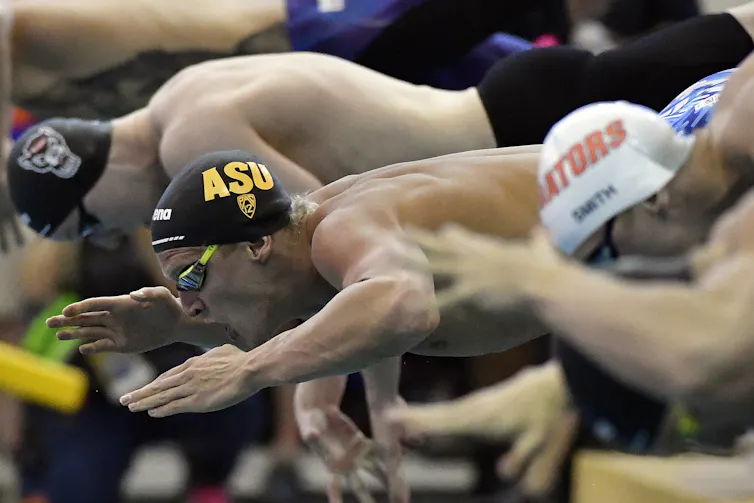
Former Arizona State University swimmer Grant House is one of the plaintiffs in the class action lawsuit filed against the NCAA.
Mike Comer/NCAA Photos via Getty Images

NCAA will pay its current and former athletes in an agreement that will transform college sports

Joshua Lens, University of Iowa

The business of college sports was upended after a federal judge approved a settlement between the NCAA and former college athletes on June 6, 2025.

After a lengthy litigation process, the NCAA has agreed to provide US$2.8 billion in back pay to former and current college athletes, while allowing schools to directly pay athletes for the first time.

Joshua Lens, whose scholarship centers on the intersection of sports, business and the law, tells the story of this settlement and explains its significance within the rapidly changing world of college sports.

What will change for players and schools with this settlement?

The terms of the settlement included the following changes:

  • The NCAA and conferences will distribute approximately $2.8 billion in media rights revenue back pay to thousands of athletes who competed since 2016.
  • Universities will have the ability to enter name, image and likeness, or NIL, agreements with student-athletes. So schools can now, for example, pay them to appear in ads for the school or for public appearances.
  • Each university that opts in to the settlement can disburse up to $20.5 million to student-athletes in the 2025-26 academic year, a number that will likely rise in future academic years.
  • Athletes’ NIL agreements with certain individuals and entities will be subject to an evaluation that will determine whether the NIL compensation exceeds an acceptable range based on a perceived fair market value, which could result in the athlete having to restructure or forego the deal.
  • The NCAA’s maximum sport program scholarship limits will be replaced with maximum team roster size limits for universities that choose to be part of the settlement.

Why did the NCAA agree to settle with, rather than fight, the plaintiffs?

In 2020, roughly 14,000 current and former college athletes filed a class action lawsuit, House v. NCAA, seeking damages for past restrictions on their ability to earn money.

For decades, college athletics’ primary governing body, the NCAA, permitted universities whose athletics programs compete in Division I to provide their athletes with scholarships that would help cover their educational expenses, such as tuition, room and board, fees and books. By focusing only on educational expenses, the NCAA was able to reinforce the notion that collegiate athletes are amateurs who may not receive pay for participating in athletics, despite making money for their schools.

A year later, in 2021, the U.S. Supreme Court unanimously ruled in a separate case, Alston v. NCAA, that the NCAA violated antitrust laws by limiting the amount of education-related benefits, such as laptops, books and musical instruments, that universities could provide to their athletes. The ruling challenged the NCAA’s amateurism model while opening the door for future lawsuits tied to athlete compensation.

It also burnished the plaintiffs’ case in House v. NCAA, compelling college athletics’ governing body to take part in settlement talks.

What were some of the key changes that took place in college sports after the Supreme Court’s decision in Alston v. NCAA?

Advertisement
Get More From A Face Cleanser And Spa-like Massage

Following Alston, the NCAA permitted universities to dole out several thousand dollars in what’s called “education benefits pay” to student-athletes. This could include cash bonuses for maintaining a certain GPA or simply satisfying NCAA academic eligibility requirements.

But contrary to popular belief, the Supreme Court’s Alston decision didn’t let college athletes be paid via NIL deals. The NCAA continued to maintain that this would violate its principles of amateurism.

However, many states, beginning with California, introduced or passed laws that required universities within their borders to allow their athletes to accept NIL compensation.

With over a dozen states looking to pass similar laws, the NCAA folded on June 30, 2021, changing its policy so athletes could accept NIL compensation for the first time.

Will colleges and universities be able to weather all of these financial commitments?

The settlement will result in a windfall for certain current and former collegiate athletes, with some expected to receive several hundred thousands of dollars.

Universities and their athletics departments, on the other hand, will have to reallocate resources or cut spending. Some will cut back on travel expenses for some sports, others have paused facility renovations, while other athletic departments may resort to cutting sports whose revenue does not exceed their expenses.

As Texas A&M University athletic director Trev Alberts has explained, however, that college sports does not have a revenue problem – it has a spending problem. Even in the well-resourced Southeastern Conference, for example, many universities’ athletics expenses exceed its revenue.

Do you see any future conflicts on the horizon?

Many observers hope the settlement brings stability to the industry. But there’s always a chance that the settlement will be appealed.

Advertisement
Get More From A Face Cleanser And Spa-like Massage

More potential challenges could involve Title IX, the federal gender equity statute that prohibits discrimination based on sex in schools.

What if, for example, a university subject to the statute distributes the vast majority of revenue to male athletes? Such a scenario could violate Title IX.
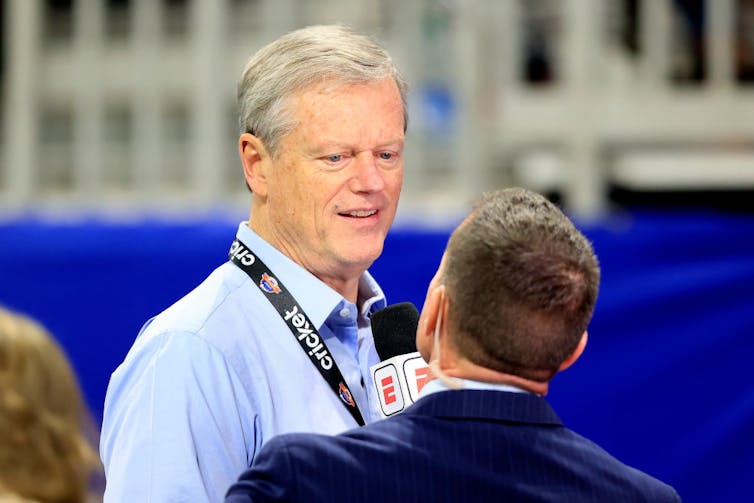
Middle-aged man wearing lanyard being interviewed.
NCAA President Charlie Baker, who has served in his role since 2023, has overseen major changes in conference governance and athlete compensation.
David J. Griffin/Icon Sportswire via Getty Images

On the other hand, a university that more equitably distributes revenue among male and female athletes could face legal backlash from football athletes who argue that they should be entitled to more revenue, since their games earn the big bucks.

And as I pointed out in a recent law review article, an athlete or university may challenge
the new enforcement process that will attempt to limit athletes’ NIL compensation within an acceptable range that is based on a fair market valuation.

The NCAA and the conferences named in the lawsuit have hired the accountancy firm Deloitte to determine whether athletes’ compensation from NIL deals fall within an acceptable range based on a fair market valuation, looking to other collegiate and professional athletes to set a benchmark range. If athletes and universities have struck deals that are too generous, both could be penalized, according to the terms of the settlement.

Finally, the settlement does not address – let alone solve – issues facing international student-athletes who want to earn money via NIL. Most international student-athletes’ visas, and the laws regulating them, heavily limit their ability to accept compensation for work, including NIL pay. Some lawmakers have tried to address this issue in the past, but it hasn’t been a priority for the NCAA, as it has lobbied Congress for a federal NIL law.

Joshua Lens, Associate Professor of Instruction of Sport & Recreation Management, University of Iowa

This article is republished from The Conversation under a Creative Commons license. Read the original article.

The Sports section of STM Daily News is your ultimate destination for all things sports, catering to everyday fans and dedicated enthusiasts alike. We cover a wide range of topics, from the thrill of amateur competitions to the excitement of semi-professional and professional leagues. Our content delves into physical and mental fitness, providing insights and tips that help individuals elevate their performance, whether on the field or in their personal wellness journeys. Stay informed and inspired as we explore the dynamic world of sports, celebrating both the passion of the players and the joy of the fans.

https://stmdailynews.com/sports/

Advertisement
Get More From A Face Cleanser And Spa-like Massage

Senior Pickleball Report

Pickleball Kingdom’s California Expansion Starts in Roseville; Sleeves SPR Has Full Details

West Coast pickleball players could see more indoor options soon as Pickleball Kingdom’s California Expansion becomes statewide. The first club opens in Roseville with 11 indoor courts.

Published

on

SACRAMENTO, Calif. — Pickleball Kingdom, which calls itself the world’s largest indoor pickleball entity, announced a landmark agreement to develop locations across California, with multi-unit franchisees Parminder and Komal Saini leading the statewide expansion.

Pickleball Kingdom’s California Expansion Begins With 11-Court Roseville Facility
Interior view of a Pickleball Kingdom club, featuring multiple professional-grade indoor courts.

Pickleball Kingdom’s California Expansion

The company said demand is rising across the Bay Area, Sacramento, Los Angeles, Orange County, San Diego County, and the Inland Empire, and that future clubs are expected to include professional-grade indoor courts, coaching and clinics for all skill levels, youth development programs, leagues and tournaments, a pro shop, and social areas.

The first California location is set to open in Roseville with grand opening activities the weekend of March 28. The club will feature 11 professional-grade indoor courts across approximately 32,900 square feet at 10251 Fairway Drive, Roseville, CA 95678.

For more context on the announcement and what the rollout could mean for California players, Sleeves Senior Pickleball Report published a full write-up here: https://sleeves-spr.com/pickleball-kingdom-announces-major-california-expansion-first-club-opens-in-roseville/Pickleball Kingdom also said it is seeking additional franchise partners in California. More information is available at https://pickleballkingdom.com/franchise/

Get the latest updates and information on the rapidly growing sport of pickleball, specifically designed for the senior community aged 50+. Check out Sleeve’s Senior Pickleball Report on YouTube to stay informed and up-to-date with the ever-changing world of pickleball. Join the community and stay ahead of the game. https://stmdailynews.com/sleeves-senior-pickleball-report/

Continue Reading

Sports

Sports Facilities Companies Acquires RCI Sports Management

The Sports Facilities Companies has acquired RCI Sports Management, enhancing its national presence and services in sports tourism and venue operations. This acquisition adds properties in Texas and Kansas, focusing on improving facility performance and revenue generation through integrated marketing and standardized systems, reflecting a trend in consolidating sports facility services.

Published

on

The Sports Facilities Companies has acquired Texas-based RCI Sports Management, a move that expands its national footprint while strengthening its position in sports tourism, venue operations, and economic impact services for municipalities and private owners.

The Sports Facilities Companies has acquired RCI Sports Management, adding venues in Texas and Kansas and expanding its sports tourism, facility operations, and economic impact platform.
The Sports Facilities Companies Acquires RCI Sports Management, Expanding National Footprint and Strengthening Municipal & Private Facility Services

The deal adds RCI-managed properties in Texas and Kansas to the SF Network, including The Refinery Fieldhouse in Garden City, Amarillo Netplex in Amarillo, and Travis Fields at Midtown Park in Bryan. Together, the facilities broaden SFC’s reach in mid-market communities where youth sports, tournaments, and event programming are increasingly tied to hotel stays, visitor spending, and local business activity.

Sports Research

SFC said the acquisition will help accelerate facility performance through integrated marketing, sponsorship sales, standardized operating systems, and expanded event and tourism pipelines. That makes this more than a management deal — it reflects the continued consolidation of sports facility services as operators look to scale revenue generation, improve efficiency, and deliver stronger returns for public and private partners.

Related Links

Source

Source: The Sports Facilities Companies via PR Newswire

The Sports section of STM Daily News is your ultimate destination for all things sports, catering to everyday fans and dedicated enthusiasts alike. We cover a wide range of topics, from the thrill of amateur competitions to the excitement of semi-professional and professional leagues. Our content delves into physical and mental fitness, providing insights and tips that help individuals elevate their performance, whether on the field or in their personal wellness journeys. Stay informed and inspired as we explore the dynamic world of sports, celebrating both the passion of the players and the joy of the fans.

https://stmdailynews.com/sports

Continue Reading

Sports

The U.S. Army Names Soldier-Athletes Headed to the 2026 Winter Games in Italy

The U.S. Army says nine WCAP Soldier-athletes and coaches will compete at the 2026 Winter Games in Italy in bobsled, biathlon, Nordic combined and figure skating—showcasing elite fitness, discipline and performance.

Published

on

The U.S. Army is sending a new group of Soldier-athletes to one of the biggest stages in international sports.

The U.S. Army says nine WCAP Soldier-athletes and coaches will compete at the 2026 Winter Games in Italy in bobsled, biathlon, Nordic combined and figure skating—showcasing elite fitness, discipline and performance.

In a Jan. 29, 2026 announcement, the Army said nine Soldier-athletes and coaches will represent the United States at the 2026 Winter Games in Italy, with two additional Soldiers traveling as alternates. The group will compete across bobsled, biathlon, Nordic combined, and pairs figure skating—sports that demand equal parts endurance, precision, and mental toughness.

Who’s representing the Army at the 2026 Winter Games

According to the release, the Army’s lineup of Soldier-athletes and coaches includes:

Competing and coaching in Italy

  • Lt. Col. Chris Fogt (Bobsled Head Coach) 
  • Lt. Col. Garrett Hines (Bobsled Coach) 
  • Sgt. 1st Class Shauna Rohbock (Bobsled Coach) 
  • Sgt. Frank Del Duca (Bobsled) 
  • Spc. Azaria Hill (Bobsled) 
  • Staff Sgt. Deedra Irwin (Biathlon) 
  • Spc. Sean Doherty (Biathlon) 
  • Sgt. Ben Loomis (Nordic Combined) 
  • Pvt. Spencer Howe (Pairs Figure Skating)

Alternates

  • Cpl. Hakeem Abdul-Saboor (Bobsled Alternate) 
  • Spc. Dana Kellogg (Luge Doubles Alternate)

Soldier first, athlete always

The Army emphasized that WCAP athletes remain full-time Soldiers while training and competing at the elite level. Brig. Gen. Matthew Braman, the Army’s Chief Marketing Officer, said the same traits built through military service—discipline, mental agility, teamwork, and readiness—translate directly into high-level athletic performance.

“Even when competing at the highest level, these athletes are U.S. Army Soldiers first,” Braman said in the release, adding that they’re trained to be “tactically and technically proficient” and prepared to perform in any environment.

What is the World Class Athlete Program (WCAP)?

The Soldier-athletes train and serve through the U.S. Army World Class Athlete Program (WCAP), which supports top-ranked Soldiers competing at the international level. WCAP provides coaching, facilities, and training resources while ensuring Soldiers maintain their readiness and complete mandatory Army requirements.

While WCAP was officially established in 1997, the Army says it has been training Soldier-athletes for more than 75 years. Over that span, the Army has sent more than 600 Soldier-athletes to compete on the world stage, earning more than 120 medals across summer and winter sports.

Italy adds a layer of Army history

This year’s Winter Games location also carries historical meaning for the Army. The release points to World War II, when the 10th Mountain Division—an elite unit trained for mountain warfare—climbed Riva Ridge in northern Italy in a mission that helped shift momentum in the war.

After returning home, many Soldiers from the 10th Mountain Division helped build the foundation of the American ski industry by establishing ski resorts and ski schools across the U.S.—a legacy that still shows up in winter sports culture today.

Braman called the upcoming Games “a unique moment” to honor both the Army’s history in alpine terrain and its long-standing presence in elite athletics.

Advertisement
Get More From A Face Cleanser And Spa-like Massage

What to Watch For

  • Biathlon conditioning: How Soldier-athletes balance endurance output with shooting precision under fatigue.
  • Bobsled power and speed: Starts win races—watch for explosive sprint mechanics and teamwork on push phases.
  • Nordic combined workload: One of the toughest mixes in sport; look for training insights on strength-to-weight and aerobic capacity.
  • Recovery and readiness: How WCAP athletes manage sleep, mobility, and injury prevention while staying Soldier-ready.
  • Italy’s alpine backdrop: The region’s mountain history adds context—and pressure—for performance in cold, high-demand environments.

Learn more

For more information about the U.S. Army and opportunities like WCAP, the release directs readers to GoArmy.com, including GoArmy.com/world-class-athlete-program.

Source: U.S. Army (PRNewswire), Jan. 29, 2026

Related External Links

Stay Updated with STM Daily News Sports

Want more sports and fitness coverage that’s worth your time—athlete training, performance trends, major events, and the stories behind the grind? Keep up with our latest at STM Daily News – Sports .

Author

Continue Reading

Trending

