Connect with us

News

Controlled burns reduce wildfire risk, but they require trained staff and funding − this could be a rough year

Published

on

file 20250422 56 h7olq0.jpg?ixlib=rb 4.1
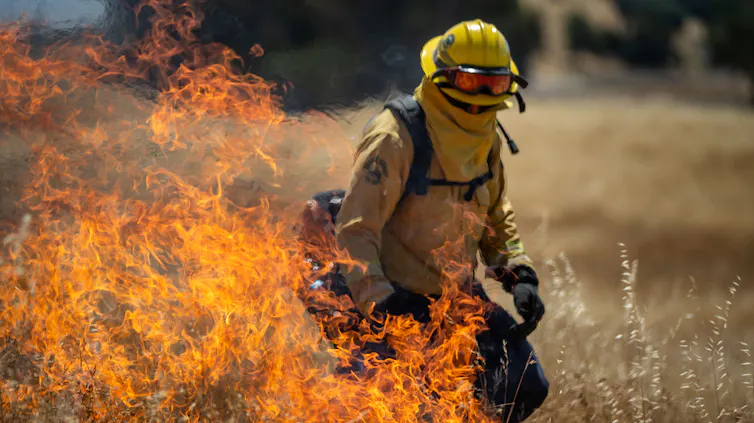
Prescribed burns like this one are intentional, controlled fires used to clear out dry grass and underbrush that could fuel more destructive wildfires.
Ethan Swope/Getty Images

Laura Dee, University of Colorado Boulder

Controlled burns

Red skies in August, longer fire seasons and checking air quality before taking my toddler to the park. This has become the new norm in the western United States as wildfires become more frequent, larger and more catastrophic.

As an ecologist at the University of Colorado Boulder, I know that fires are part of the natural processes that forests need to stay healthy. But the combined effects of a warmer and drier climate, more people living in fire-prone areas and vegetation and debris built up over years of fire suppression are leading to more severe fires that spread faster. And that’s putting humans, ecosystems and economies at risk.

To help prevent catastrophic fires, the U.S. Forest Service issued a 10-year strategy in 2022 that includes scaling up the use of controlled burns and other techniques to remove excess plant growth and dry, dead materials that fuel wildfires.

However, the Forest Service’s wildfire management activities have been thrown into turmoil in 2025 with funding cuts and disruptions and uncertainty from the federal government.

The planet just saw its hottest year on record. If spring and summer 2025 are also dry and hot, conditions could be prime for severe fires again.

More severe fires harm forest recovery and people

Today’s severe wildfires have been pushing societies, emergency response systems and forests beyond what they have evolved to handle.

Extreme fires have burned into cities, including destroying thousands of homes in the Los Angeles area in 2025 and near Boulder, Colorado, in 2021. They threaten downstream public drinking water by increasing sediments and contaminants in water supplies, as well as infrastructure, air quality and rural economies. They also increase the risk of flooding and mudslides from soil erosion. And they undermine efforts to mitigate climate change by releasing carbon stored in these ecosystems.

In some cases, fires burned so hot and deep into the soil that the forests are not growing back.

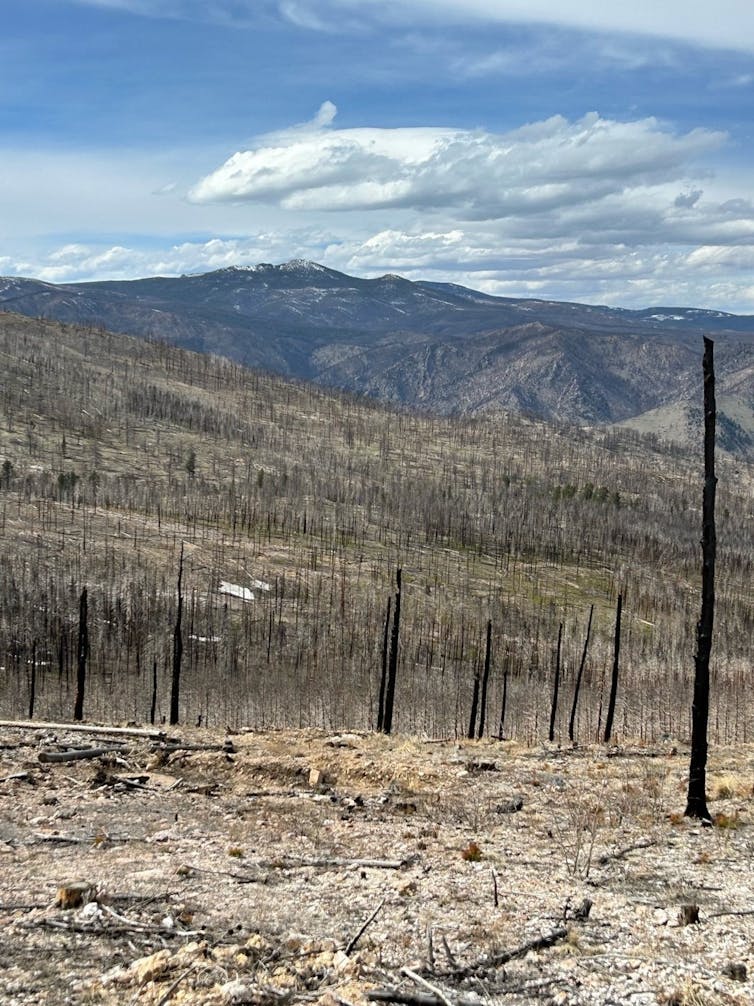
While many species are adapted to survive low-level fires, severe blazes can damage the seeds and cones needed for forests to regrow. My team has seen this trend outside of Fort Collins, Colorado, where four years after the Cameron Peak fire, forests have still not come back the way ecologists would expect them to under past, less severe fires. Returning to a strategy of fire suppression − or trying to “go toe-to-toe with every fire” − will make these cases more common.
Advertisement
Get More From A Face Cleanser And Spa-like Massage
A burned landscape with black tree trunks, no canopy and little to no new growth on the ground.
Parts of Cameron Peak, burned in a severe fire in 2020, still showed little evidence of recovery in 2024. Efforts have been underway to try to replant parts of the burned areas by hand.
Bella Oleksy/University of Colorado

Proactive wildfire management can help reduce the risk to forests and property.

Measures such as prescribed burns have proven to be effective for maintaining healthy forests and reducing the severity of subsequent wildfires. A recent review found that selective thinning followed by prescribed fire reduced subsequent fire severity by 72% on average, and prescribed fire on its own reduced severity by 62%.
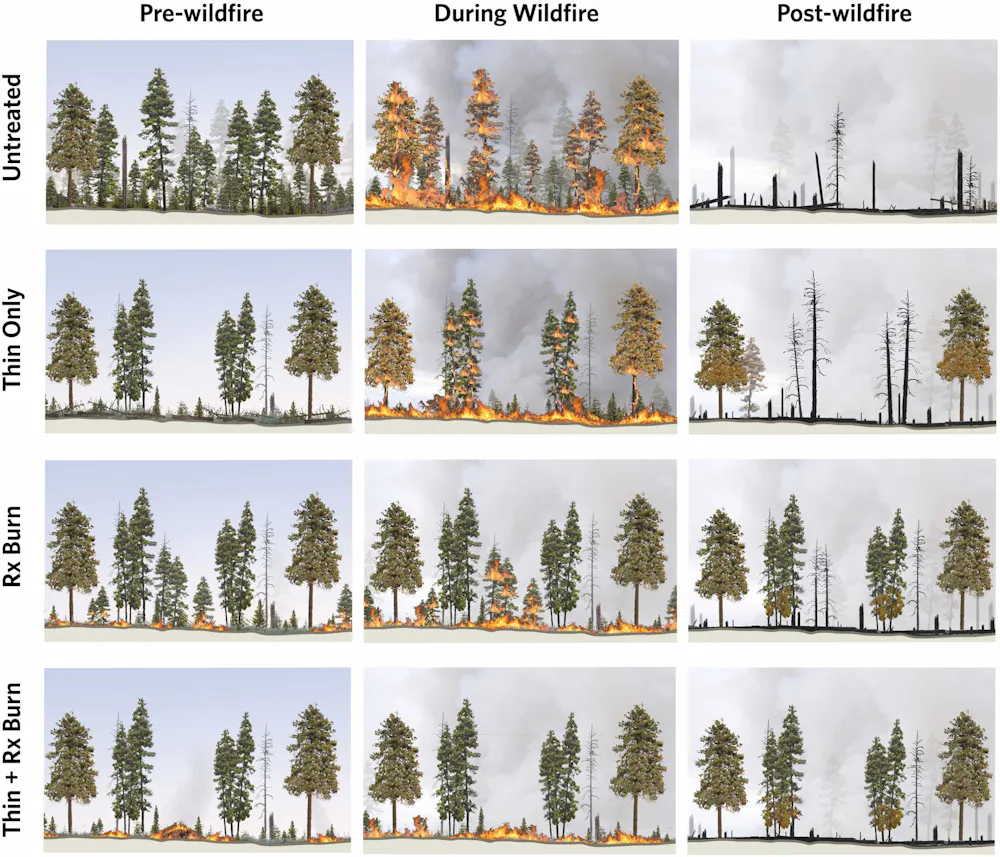
Four sets of illustrations. The most severe fires happened with no treatment. Thinning helps some. Prescribed burning keeps fires burning lower at the forest floor.
Prescribed burns and forest thinning tend to reduce the risk of extremely destructive wildfires.
Kimberley T. Davis, et al., Forest Ecology and Management, 2024, CC BY

But managing forests well requires knowing how forests are changing, where trees are dying and where undergrowth has built up and increased fire hazards. And, for federal lands, these are some of the jobs that are being targeted by the Trump administration.

Some of the Forest Service staff who were fired or put in limbo by the Trump administration are those who do research or collect and communicate critical data about forests and fire risk. Other fired staff provided support so crews could clear flammable debris and carry out fuel treatments such as prescribed burns, thinning forests and building fire breaks.

Losing people in these roles is like firing all primary care doctors and leaving only EMTs. Both are clearly needed. As many people know from emergency room bills, preventing emergencies is less costly than dealing with the damage later.

Logging is not a long-term fire solution

The Trump administration cited “wildfire risk reduction” when it issued an emergency order to increase logging in national forests by 25%.

But private − unregulated − forest management looks a lot different than managing forests to prevent destructive fires.

Logging, depending on the practice, can involve clear-cutting trees and other techniques that compromise soils. Exposing a forest’s soils and dead vegetation to more sunlight also dries them out, which can increase fire risk in the near term.
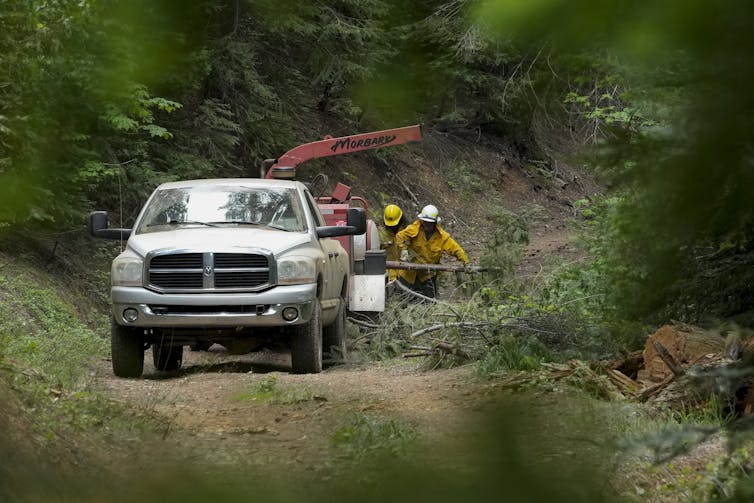
Forest Service crew members put tree branches into a wood chipper as they prepare the area for a prescribed burn in the Tahoe National Forest, June 6, 2023.
Forest-thinning operations involve carefully removing young trees and brush that could easily burn, with a goal of creating conditions less likely to send fire into the crowns of trees.
AP Photo/Godofredo A. Vásquez

In general, logging that focuses on extracting the highest-value trees leaves thinner trees that are more vulnerable to fires. A study in the Pacific Northwest found that replanting logged land with the same age and size of trees can lead to more severe fires in the future.

Research and data are essential

For many people in the western U.S., these risks hit close to home.

I’ve seen neighborhoods burn and friends and family displaced, and I have contended with regular air quality warnings and red flag days signaling a high fire risk. I’ve also seen beloved landscapes, such as those on Cameron Peak, transform when conifers that once made up the forest have not regrown.

Burned trees and weeds in the ground below.
Recovery has been slow on Cameron Peak after a severe fire in 2020. This photo was taken in 2024.
Bella Oleksy/University of Colorado

My scientific research group and collaborations with other scientists have been helping to identify cost-effective solutions. That includes which fuel-treatment methods are most effective, which types of forests and conditions they work best in and how often they are needed. We’re also planning research projects to better understand which forests are at greatest risk of not recovering after fires.

This sort of research is what robust, cost-effective land management is based on.

When careful, evidence-based forest management is replaced with a heavy emphasis on suppressing every fire or clear-cutting forests, I worry that human lives, property and economies, as well as the natural legacy of public lands left to every American, are at risk.The Conversation

Laura Dee, Associate Professor of Ecology, University of Colorado Boulder

Advertisement
Get More From A Face Cleanser And Spa-like Massage

This article is republished from The Conversation under a Creative Commons license. Read the original article.

Continue Reading
Advertisement SodaStream USA, inc

The Knowledge

Metrolink Offers Fare-Free Rides for Earth Day 2026 Across Southern California

Metrolink offers fare-free rides for Earth Day 2026 across Southern California, encouraging sustainable travel and reduced emissions.

Published

on

Last Updated on April 21, 2026 by Daily News Staff

Metrolink Offers Fare-Free Rides for Earth Day 2026
Image Credit: Metrolink

Metrolink Offers Fare-Free Rides for Earth Day 2026

LOS ANGELES — April 22, 2026 — In a continued push toward sustainable transportation, Metrolink will once again offer systemwide free rides on Earth Day, inviting commuters and travelers to leave their cars behind and explore a cleaner way to move across the region.

A One-Day Opportunity to Ride Free

On Wednesday, April 22, passengers can board any Metrolink train — including the Arrow service — without purchasing a ticket. The initiative is part of the broader celebration of Earth Day, encouraging environmentally conscious travel choices.

The fare-free program is designed to appeal to both regular riders and first-time users, particularly those navigating Southern California’s persistent traffic congestion and rising fuel costs.

ml earth emailheader eng.jpg
Image Credit: Metrolink

Encouraging Sustainable Travel Habits

“Earth Day is a reminder that small changes, like choosing public transit over driving one day a week, can have a meaningful impact on our environment,” said Doug Chaffee, chair of the Metrolink Board.

With gas prices continuing to strain household budgets, the agency hopes the initiative will inspire more residents to consider rail as part of their regular commute.

Regional Connections Expand Access

Metrolink’s Earth Day promotion aligns with similar efforts by other Southern California transit providers. Riders can seamlessly connect to services operated by: LA Metro and the Orange County Transportation AuthorityRiverside County Transportation CommissionSan Bernardino County Transportation Authority and Ventura County Transportation Commission.

These partnerships extend the reach of fare-free travel across a six-county region, making it easier for riders to explore destinations without relying on personal vehicles.

Service Adjustments and Rider Tips

Passengers should note that trains will operate on a reduced weekday schedule, implemented earlier this spring. Despite the adjustment, all Metrolink lines and station cities remain in service.

For those planning a trip:

  • No ticket is required — simply board the train
  • Bikes are welcome, with capacity ranging from three bikes per standard car to nine in designated bike cars
  • A curated destination guide highlights attractions within walking or biking distance of stations

Environmental and Economic Impact

Metrolink is also promoting its Personal Impact Calculator, a digital tool that allows riders to estimate how switching from driving to rail can reduce greenhouse gas emissions and lower fuel expenses.

A Broader Trend in Public Transit

Fare-free transit days have gained traction nationwide as agencies look to boost ridership and promote sustainability. Southern California’s expansive commuter rail network makes it particularly well-suited for such initiatives, offering a viable alternative to one of the country’s most car-dependent regions.


Bottom Line

Metrolink’s Earth Day promotion is more than a one-day free ride — it’s a strategic effort to shift commuter behavior, reduce environmental impact, and showcase the convenience of regional rail. For Southern Californians, April 22 presents a low-risk opportunity to rethink how they travel.

Advertisement
Get More From A Face Cleanser And Spa-like Massage

Source: Metrolink

https://metrolinktrains.com/news/metrolink-goes-fare-free-for-earth-day-on-april-22

Dive into “The Knowledge,” where curiosity meets clarity. This playlist, in collaboration with STMDailyNews.com, is designed for viewers who value historical accuracy and insightful learning. Our short videos, ranging from 30 seconds to a minute and a half, make complex subjects easy to grasp in no time. Covering everything from historical events to contemporary processes and entertainment, “The Knowledge” bridges the past with the present. In a world where information is abundant yet often misused, our series aims to guide you through the noise, preserving vital knowledge and truths that shape our lives today. Perfect for curious minds eager to discover the ‘why’ and ‘how’ of everything around us. Subscribe and join in as we explore the facts that matter.  https://stmdailynews.com/the-knowledge/

Continue Reading

News

Money Management: The Importance of Financial Literacy

You may have mastered the core subjects like math and grammar in school, but financial literacy – or understanding the basics of money management in order to help you make better financial decisions – often goes overlooked before adulthood. It’s not so much a course of study as it is a plan of action. When you understand how to earn, save, spend and invest wisely, you aren’t just building a stable future for yourself, but your family and community as well.

Published

on

You may have mastered the core subjects like math and grammar in school, but financial literacy – or understanding the basics of money management in order to help you make better financial decisions – often goes overlooked before adulthood. It’s not so much a course of study as it is a plan of action. When you understand how to earn, save, spend and invest wisely, you aren’t just building a stable future for yourself, but your family and community as well.

(Feature Impact) You may have mastered the core subjects like math and grammar in school, but financial literacy – or understanding the basics of money management in order to help you make better financial decisions – often goes overlooked before adulthood. It’s not so much a course of study as it is a plan of action.

Financial literacy in the United States has remained stagnant at generally low levels for several years, according to research from TIAA Institute and the Global Financial Literacy Excellence Center, with even lower levels among Gen Z. Yet greater financial literacy – including key aspects such as goal-setting, budgeting, saving, credit management and investing – is strongly linked to better financial outcomes, including lower rates of debt constraint and financial fragility.

While emboldening yourself to understand financial terms can be a little overwhelming at first, once you have a grasp of basic concepts you can begin to get a handle on your money and make better financial decisions. Simply put: When you understand how to earn, save, spend and invest wisely, you aren’t just building a stable future for yourself, but your family and community as well.

From nonprofit partnerships to volunteer-led programs and fee online resources, Schwab and its employees help millions of people every year build the knowledge and confidence to take charge of their financial futures by serving as board members, mentors, role models and educators.

Because financial health is a lifelong journey, the earlier people learn vital money skills, the better. That’s why the financial advisory services provider develops education programs geared toward kids that continue into adulthood, helping people no matter where they are on their journeys.

Talk Money

It’s never too early to start a conversation about financial literacy. Having teens identify goals that are important to them – such as concert tickets or a first car – can kickstart coversations about money. Working with your child (and a financial advisor, if necessary) on a plan for saving to realize those goals can serve as a jumping off point. After achieving some success, their enthusiasm may grow, which is a powerful motivator to keep saving.

Support School Initiatives and Programs

Outreach programs that empower young people to make smart financial decisions is key to a bright future. Programs like Money Matters – Schwab’s flagship financial education program utilized by the Boys & Girls Clubs of America – gives young people hands-on experience with all aspects of money and investing.

This example, and others, don’t just include program funding – they build partnerships that create impact and opportunity with national collaborations that reach more than 17 million youth annually, empowering young people with the tools and confidence to make smart financial decisions for life.

Spread the Financial Love

Championing financial literacy empowers everyone – individuals, families and communities. By serving as a board member, mentor, role model or educator to help bring financial literacy to others in your community, you can supply the tools and knowledge to lead programs that focus on giving back, empowering future generations in countless ways.

To learn more about financial literacy and find resources to empower your local community, visit SchwabMoneywise.com.

Photo courtesy of Shutterstock

Advertisement
Get More From A Face Cleanser And Spa-like Massage
    collect?v=1&tid=UA 482330 7&cid=1955551e 1975 5e52 0cdb 8516071094cd&sc=start&t=pageview&dl=http%3A%2F%2Ftrack.familyfeatures
track

SOURCE:

Charles Schwab

Our Lifestyle section on STM Daily News is a hub of inspiration and practical information, offering a range of articles that touch on various aspects of daily life. From tips on family finances to guides for maintaining health and wellness, we strive to empower our readers with knowledge and resources to enhance their lifestyles. Whether you’re seeking outdoor activity ideas, fashion trends, or travel recommendations, our lifestyle section has got you covered. Visit us today at https://stmdailynews.com/category/lifestyle/ and embark on a journey of discovery and self-improvement.

Continue Reading

Automotive

SUVs and EVs Take Center Stage at the 2026 New York International Auto Show

Published

on

Kia. 2026 New York International Auto Show

SUVs and EVs Take Center Stage at the 2026 New York International Auto Show

(Feature Impact) The 2026 New York International Auto Show is shining a spotlight on the latest in automotive innovation, from advanced technology to the growing shift toward electric vehicles. One automaker, Kia, is using the show to highlight two versatile SUVs designed to offer more space, capability and flexibility for modern drivers.

Watch this video to learn more

The all-new 2027 Kia Seltos has grown in size, offering a roomier interior with additional legroom, headroom and cargo space. It also adds a hybrid powertrain, making it the only vehicle in its class with three powertrain options. The SUV comes packed with advanced safety features, a more capable all-wheel-drive system and premium interior touches, including dual 12.3-inch display screens and an available panoramic sunroof.

The automaker is also showcasing the all-electric EV3, a compact SUV designed to make electric vehicle ownership more practical. With an estimated range of up to 320 miles, fast-charging capability and optional all-wheel drive, it balances performance, technology and everyday usability. Its intuitive features and flexible design make transitioning to electric simpler for a wider range of drivers.

Both models represent Kia’s commitment to providing options that blend capability, innovation and style. To learn more, visit Kia.com.

   collect?v=1&tid=UA 482330 7&cid=1955551e 1975 5e52 0cdb 8516071094cd&sc=start&t=pageview&dl=http%3A%2F%2Ftrack.familyfeatures
track

SOURCE:

Kia Motors America

Welcome to the Consumer Corner section of STM Daily News, your ultimate destination for savvy shopping and informed decision-making! Dive into a treasure trove of insights and reviews covering everything from the hottest toys that spark joy in your little ones to the latest electronic gadgets that simplify your life. Explore our comprehensive guides on stylish home furnishings, discover smart tips for buying a home or enhancing your living space with creative improvement ideas, and get the lowdown on the best cars through our detailed auto reviews. Whether you’re making a major purchase or simply seeking inspiration, the Consumer Corner is here to empower you every step of the way—unlock the keys to becoming a smarter consumer today!

https://stmdailynews.com/category/consumer-corner

Continue Reading

Trending