Connect with us

astronomy

‘Extraordinary claims require extraordinary evidence’ − an astronomer explains how much evidence scientists need to claim discoveries like extraterrestrial life

Published

on

extraterrestrial life
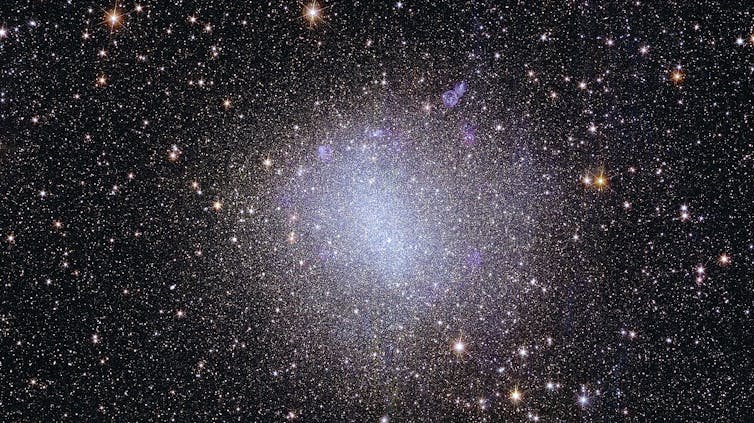
The universe is filled with countless galaxies, stars and planets. Astronomers may find life one day, but they will need extraordinary proof. ESA/Euclid/Euclid Consortium/NASA, image processing by J.-C. Cuillandre (CEA Paris-Saclay), G. Anselmi
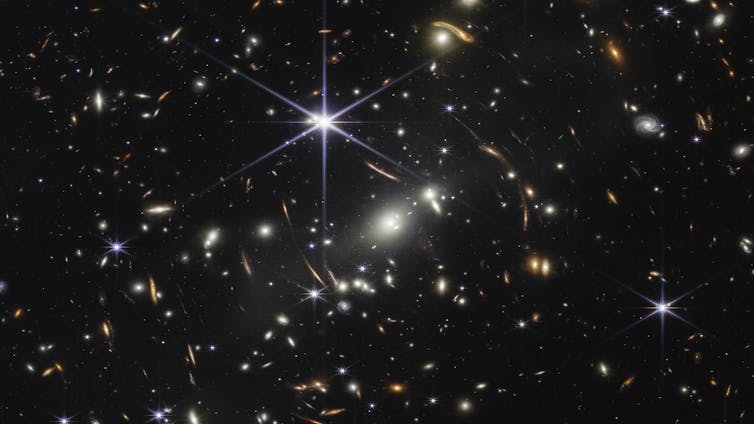
Chris Impey, University of Arizona The detection of life beyond Earth would be one of the most profound discoveries in the history of science. The Milky Way galaxy alone hosts hundreds of millions of potentially habitable planets. Astronomers are using powerful space telescopes to look for molecular indicators of biology in the atmospheres of the most Earth-like of these planets. But so far, no solid evidence of life has ever been found beyond the Earth. A paper published in April 2025 claimed to detect a signature of life in the atmosphere of the planet K2-18b. And while this discovery is intriguing, most astronomers – including the paper’s authors – aren’t ready to claim that it means extraterrestrial life exists. A detection of life would be a remarkable development. The astronomer Carl Sagan used the phrase, “Extraordinary claims require extraordinary evidence,” in regard to searching for alien life. It conveys the idea that there should be a high bar for evidence to support a remarkable claim. I’m an astronomer who has written a book about astrobiology. Over my career, I’ve seen some compelling scientific discoveries. But to reach this threshold of finding life beyond Earth, a result needs to fit several important criteria.

When is a result important and reliable?

There are three criteria for a scientific result to represent a true discovery and not be subject to uncertainty and doubt. How does the claim of life on K2-18b measure up? First, the experiment needs to measure a meaningful and important quantity. Researchers observed K2-18b’s atmosphere with the James Webb Space Telescope and saw a spectral feature that they identified as dimethyl sulfide. On Earth, dimethyl sulfide is associated with biology, in particular bacteria and plankton in the oceans. However, it can also arise by other means, so this single molecule is not conclusive proof of life. Second, the detection needs to be strong. Every detector has some noise from the random motion of electrons. The signal should be strong enough to have a low probability of arising by chance from this noise. The K2-18b detection has a significance of 3-sigma, which means it has a 0.3% probability of arising by chance. That sounds low, but most scientists would consider that a weak detection. There are many molecules that could create a feature in the same spectral range. The “gold standard” for scientific detection is 5-sigma, which means the probability of the finding happening by chance is less than 0.00006%. For example, physicists at CERN gathered data patiently for two years until they had a 5-sigma detection of the Higgs boson particle, leading to a Nobel Prize one year later in 2013.
The announcement of the discovery of the Higgs boson took decades from the time Peter Higgs first predicted the existence of the particle. Scientists, such as Joe Incandela shown here, waited until they’d reached that 5-sigma level to say, ‘I think we have it.’
Third, a result needs to be repeatable. Results are considered reliable when they’ve been repeated – ideally corroborated by other investigators or confirmed using a different instrument. For K2-18b, this might mean detecting other molecules that indicate biology, such as oxygen in the planet’s atmosphere. Without more and better data, most researchers are viewing the claim of life on K2-18b with skepticism.

Claims of life on Mars

In the past, some scientists have claimed to have found life much closer to home, on the planet Mars. Over a century ago, retired Boston merchant turned astronomer Percival Lowell claimed that linear features he saw on the surface of Mars were canals, constructed by a dying civilization to transport water from the poles to the equator. Artificial waterways on Mars would certainly have been a major discovery, but this example failed the other two criteria: strong evidence and repeatability. Lowell was misled by his visual observations, and he was engaging in wishful thinking. No other astronomers could confirm his findings.
An image of Mars in space
Mars, as taken by the OSIRIS instrument on the ESA Rosetta spacecraft during its February 2007 flyby of the planet and adjusted to show color. ESA & MPS for OSIRIS Team MPS/UPD/LAM/IAA/RSSD/INTA/UPM/DASP/IDA, CC BY-SA
In 1996, NASA held a press conference where a team of scientists presented evidence for biology in the Martian meteorite ALH 84001. Their evidence included an evocative image that seemed to show microfossils in the meteorite. However, scientists have come up with explanations for the meteorite’s unusual features that do not involve biology. That extraordinary claim has dissipated. More recently, astronomers detected low levels of methane in the atmosphere of Mars. Like dimethyl sulfide and oxygen, methane on Earth is made primarily – but not exclusively – by life. Different spacecraft and rovers on the Martian surface have returned conflicting results, where a detection with one spacecraft was not confirmed by another. The low level and variability of methane on Mars is still a mystery. And in the absence of definitive evidence that this very low level of methane has a biological origin, nobody is claiming definitive evidence of life on Mars.

Claims of advanced civilizations

Detecting microbial life on Mars or an exoplanet would be dramatic, but the discovery of extraterrestrial civilizations would be truly spectacular. The search for extraterrestrial intelligence, or SETI, has been underway for 75 years. No messages have ever been received, but in 1977 a radio telescope in Ohio detected a strong signal that lasted only for a minute. This signal was so unusual that an astronomer working at the telescope wrote “Wow!” on the printout, giving the signal its name. Unfortunately, nothing like it has since been detected from that region of the sky, so the Wow! Signal fails the test of repeatability.
An illustration of a long, thin rock flying through space.
‘Oumuamua is the first object passing through the solar system that astronomers have identified as having interstellar origins. European Southern Observatory/M. Kornmesser
In 2017, a rocky, cigar-shaped object called ‘Oumuamua was the first known interstellar object to visit the solar system. ‘Oumuamua’s strange shape and trajectory led Harvard astronomer Avi Loeb to argue that it was an alien artifact. However, the object has already left the solar system, so there’s no chance for astronomers to observe it again. And some researchers have gathered evidence suggesting that it’s just a comet. While many scientists think we aren’t alone, given the enormous amount of habitable real estate beyond Earth, no detection has cleared the threshold enunciated by Carl Sagan.

Claims about the universe

These same criteria apply to research about the entire universe. One particular concern in cosmology is the fact that, unlike the case of planets, there is only one universe to study. A cautionary tale comes from attempts to show that the universe went through a period of extremely rapid expansion a fraction of a second after the Big Bang. Cosmologists call this event inflation, and it is invoked to explain why the universe is now smooth and flat. In 2014, astronomers claimed to have found evidence for inflation in a subtle signal from microwaves left over after the Big Bang. Within a year, however, the team retracted the result because the signal had a mundane explanation: They had confused dust in our galaxy with a signature of inflation. On the other hand, the discovery of the universe’s acceleration shows the success of the scientific method. In 1929, astronomer Edwin Hubble found that the universe was expanding. Then, in 1998, evidence emerged that this cosmic expansion is accelerating. Physicists were startled by this result. Two research groups used supernovae to separately trace the expansion. In a friendly rivalry, they used different sets of supernovae but got the same result. Independent corroboration increased their confidence that the universe was accelerating. They called the force behind this accelerating expansion dark energy and received a Nobel Prize in 2011 for its discovery. On scales large and small, astronomers try to set a high bar of evidence before claiming a discovery.The Conversation Chris Impey, University Distinguished Professor of Astronomy, University of Arizona This article is republished from The Conversation under a Creative Commons license. Read the original article.

Discover more from Daily News

Subscribe to get the latest posts sent to your email.

astronomy

Habitable Zone Planets: How Scientists Search for Liquid Water Beyond Earth

Habitable zone planets: Scientists use the habitable zone to find planets that could host liquid water and life. Learn how planetary atmospheres and geology determine true habitability beyond Earth.

Published

on

 Habitable Zone Planets: How Scientists Search for Liquid Water Beyond Earth
Some exoplanets, like the one shown in this illustration, may have atmospheres that could make them potentially suitable for life. NASA/JPL-Caltech via AP

Habitable Zone Planets: How Scientists Search for Liquid Water Beyond Earth

Morgan Underwood, Rice University When astronomers search for planets that could host liquid water on their surface, they start by looking at a star’s habitable zone. Water is a key ingredient for life, and on a planet too close to its star, water on its surface may “boil”; too far, and it could freeze. This zone marks the region in between. But being in this sweet spot doesn’t automatically mean a planet is hospitable to life. Other factors, like whether a planet is geologically active or has processes that regulate gases in its atmosphere, play a role. The habitable zone provides a useful guide to search for signs of life on exoplanets – planets outside our solar system orbiting other stars. But what’s in these planets’ atmospheres holds the next clue about whether liquid water — and possibly life — exists beyond Earth. On Earth, the greenhouse effect, caused by gases like carbon dioxide and water vapor, keeps the planet warm enough for liquid water and life as we know it. Without an atmosphere, Earth’s surface temperature would average around zero degrees Fahrenheit (minus 18 degrees Celsius), far below the freezing point of water. The boundaries of the habitable zone are defined by how much of a “greenhouse effect” is necessary to maintain the surface temperatures that allow for liquid water to persist. It’s a balance between sunlight and atmospheric warming. Many planetary scientists, including me, are seeking to understand if the processes responsible for regulating Earth’s climate are operating on other habitable zone worlds. We use what we know about Earth’s geology and climate to predict how these processes might appear elsewhere, which is where my geoscience expertise comes in.
A diagram showing three planets orbiting a star: The one closes to the star is labeled 'too hot,' the next is labeled 'just right,' and the farthest is labeled 'too cold.'
Picturing the habitable zone of a solar system analog, with Venus- and Mars-like planets outside of the ‘just right’ temperature zone. NASA

Why the habitable zone?

The habitable zone is a simple and powerful idea, and for good reason. It provides a starting point, directing astronomers to where they might expect to find planets with liquid water, without needing to know every detail about the planet’s atmosphere or history. Its definition is partially informed by what scientists know about Earth’s rocky neighbors. Mars, which lies just outside the outer edge of the habitable zone, shows clear evidence of ancient rivers and lakes where liquid water once flowed. Similarly, Venus is currently too close to the Sun to be within the habitable zone. Yet, some geochemical evidence and modeling studies suggest Venus may have had water in its past, though how much and for how long remains uncertain. These examples show that while the habitable zone is not a perfect predictor of habitability, it provides a useful starting point.

Planetary processes can inform habitability

What the habitable zone doesn’t do is determine whether a planet can sustain habitable conditions over long periods of time. On Earth, a stable climate allowed life to emerge and persist. Liquid water could remain on the surface, giving slow chemical reactions enough time to build the molecules of life and let early ecosystems develop resilience to change, which reinforced habitability. Life emerged on Earth, but continued to reshape the environments it evolved in, making them more conducive to life. This stability likely unfolded over hundreds of millions of years, as the planet’s surface, oceans and atmosphere worked together as part of a slow but powerful system to regulate Earth’s temperature. A key part of this system is how Earth recycles inorganic carbon between the atmosphere, surface and oceans over the course of millions of years. Inorganic carbon refers to carbon bound in atmospheric gases, dissolved in seawater or locked in minerals, rather than biological material. This part of the carbon cycle acts like a natural thermostat. When volcanoes release carbon dioxide into the atmosphere, the carbon dioxide molecules trap heat and warm the planet. As temperatures rise, rain and weathering draw carbon out of the air and store it in rocks and oceans. If the planet cools, this process slows down, allowing carbon dioxide, a warming greenhouse gas, to build up in the atmosphere again. This part of the carbon cycle has helped Earth recover from past ice ages and avoid runaway warming. Even as the Sun has gradually brightened, this cycle has contributed to keeping temperatures on Earth within a range where liquid water and life can persist for long spans of time. Now, scientists are asking whether similar geological processes might operate on other planets, and if so, how they might detect them. For example, if researchers could observe enough rocky planets in their stars’ habitable zones, they could look for a pattern connecting the amount of sunlight a planet receives and how much carbon dioxide is in its atmosphere. Finding such a pattern may hint that the same kind of carbon-cycling process could be operating elsewhere. The mix of gases in a planet’s atmosphere is shaped by what’s happening on or below its surface. One study shows that measuring atmospheric carbon dioxide in a number of rocky planets could reveal whether their surfaces are broken into a number of moving plates, like Earth’s, or if their crusts are more rigid. On Earth, these shifting plates drive volcanism and rock weathering, which are key to carbon cycling.
A diagram showing a few small planets orbiting a star.
Simulation of what space telescopes, like the Habitable Worlds Observatory, will capture when looking at distant solar systems. STScI, NASA GSFC

Keeping an eye on distant atmospheres

The next step will be toward gaining a population-level perspective of planets in their stars’ habitable zones. By analyzing atmospheric data from many rocky planets, researchers can look for trends that reveal the influence of underlying planetary processes, such as the carbon cycle. Scientists could then compare these patterns with a planet’s position in the habitable zone. Doing so would allow them to test whether the zone accurately predicts where habitable conditions are possible, or whether some planets maintain conditions suitable for liquid water beyond the zone’s edges. This kind of approach is especially important given the diversity of exoplanets. Many exoplanets fall into categories that don’t exist in our solar system — such as super Earths and mini Neptunes. Others orbit stars smaller and cooler than the Sun. The datasets needed to explore and understand this diversity are just on the horizon. NASA’s upcoming Habitable Worlds Observatory will be the first space telescope designed specifically to search for signs of habitability and life on planets orbiting other stars. It will directly image Earth-sized planets around Sun-like stars to study their atmospheres in detail.
NASA’s planned Habitable Worlds Observatory will look for exoplanets that could potentially host life.
Instruments on the observatory will analyze starlight passing through these atmospheres to detect gases like carbon dioxide, methane, water vapor and oxygen. As starlight filters through a planet’s atmosphere, different molecules absorb specific wavelengths of light, leaving behind a chemical fingerprint that reveals which gases are present. These compounds offer insight into the processes shaping these worlds. The Habitable Worlds Observatory is under active scientific and engineering development, with a potential launch targeted for the 2040s. Combined with today’s telescopes, which are increasingly capable of observing atmospheres of Earth-sized worlds, scientists may soon be able to determine whether the same planetary processes that regulate Earth’s climate are common throughout the galaxy, or uniquely our own. Morgan Underwood, Ph.D. Candidate in Earth, Environmental and Planetary Sciences, Rice University This article is republished from The Conversation under a Creative Commons license. Read the original article.

Dive into “The Knowledge,” where curiosity meets clarity. This playlist, in collaboration with STMDailyNews.com, is designed for viewers who value historical accuracy and insightful learning. Our short videos, ranging from 30 seconds to a minute and a half, make complex subjects easy to grasp in no time. Covering everything from historical events to contemporary processes and entertainment, “The Knowledge” bridges the past with the present. In a world where information is abundant yet often misused, our series aims to guide you through the noise, preserving vital knowledge and truths that shape our lives today. Perfect for curious minds eager to discover the ‘why’ and ‘how’ of everything around us. Subscribe and join in as we explore the facts that matter.  https://stmdailynews.com/the-knowledge/

Author


Discover more from Daily News

Subscribe to get the latest posts sent to your email.

Continue Reading

astronomy

Beyond the habitable zone: Exoplanet atmospheres are the next clue to finding life on planets orbiting distant stars

The habitable zone is just the start. Scientists now focus on exoplanet atmospheres to find signs of life beyond Earth. Discover how carbon cycling, greenhouse gases, and NASA’s upcoming Habitable Worlds Observatory could reveal habitable worlds orbiting distant stars.

Published

on

Beyond the habitable zone: Exoplanet atmospheres are the next clue to finding life on planets orbiting distant stars
Some exoplanets, like the one shown in this illustration, may have atmospheres that could make them potentially suitable for life. NASA/JPL-Caltech via AP

Beyond the habitable zone: Exoplanet atmospheres are the next clue to finding life on planets orbiting distant stars

Morgan Underwood, Rice University When astronomers search for planets that could host liquid water on their surface, they start by looking at a star’s habitable zone. Water is a key ingredient for life, and on a planet too close to its star, water on its surface may “boil”; too far, and it could freeze. This zone marks the region in between. But being in this sweet spot doesn’t automatically mean a planet is hospitable to life. Other factors, like whether a planet is geologically active or has processes that regulate gases in its atmosphere, play a role. The habitable zone provides a useful guide to search for signs of life on exoplanets – planets outside our solar system orbiting other stars. But what’s in these planets’ atmospheres holds the next clue about whether liquid water — and possibly life — exists beyond Earth. On Earth, the greenhouse effect, caused by gases like carbon dioxide and water vapor, keeps the planet warm enough for liquid water and life as we know it. Without an atmosphere, Earth’s surface temperature would average around zero degrees Fahrenheit (minus 18 degrees Celsius), far below the freezing point of water. The boundaries of the habitable zone are defined by how much of a “greenhouse effect” is necessary to maintain the surface temperatures that allow for liquid water to persist. It’s a balance between sunlight and atmospheric warming. Many planetary scientists, including me, are seeking to understand if the processes responsible for regulating Earth’s climate are operating on other habitable zone worlds. We use what we know about Earth’s geology and climate to predict how these processes might appear elsewhere, which is where my geoscience expertise comes in.
A diagram showing three planets orbiting a star: The one closes to the star is labeled 'too hot,' the next is labeled 'just right,' and the farthest is labeled 'too cold.'
Picturing the habitable zone of a solar system analog, with Venus- and Mars-like planets outside of the ‘just right’ temperature zone. NASA

Why the habitable zone?

The habitable zone is a simple and powerful idea, and for good reason. It provides a starting point, directing astronomers to where they might expect to find planets with liquid water, without needing to know every detail about the planet’s atmosphere or history. Its definition is partially informed by what scientists know about Earth’s rocky neighbors. Mars, which lies just outside the outer edge of the habitable zone, shows clear evidence of ancient rivers and lakes where liquid water once flowed. Similarly, Venus is currently too close to the Sun to be within the habitable zone. Yet, some geochemical evidence and modeling studies suggest Venus may have had water in its past, though how much and for how long remains uncertain. These examples show that while the habitable zone is not a perfect predictor of habitability, it provides a useful starting point.

Planetary processes can inform habitability

What the habitable zone doesn’t do is determine whether a planet can sustain habitable conditions over long periods of time. On Earth, a stable climate allowed life to emerge and persist. Liquid water could remain on the surface, giving slow chemical reactions enough time to build the molecules of life and let early ecosystems develop resilience to change, which reinforced habitability. Life emerged on Earth, but continued to reshape the environments it evolved in, making them more conducive to life. This stability likely unfolded over hundreds of millions of years, as the planet’s surface, oceans and atmosphere worked together as part of a slow but powerful system to regulate Earth’s temperature. A key part of this system is how Earth recycles inorganic carbon between the atmosphere, surface and oceans over the course of millions of years. Inorganic carbon refers to carbon bound in atmospheric gases, dissolved in seawater or locked in minerals, rather than biological material. This part of the carbon cycle acts like a natural thermostat. When volcanoes release carbon dioxide into the atmosphere, the carbon dioxide molecules trap heat and warm the planet. As temperatures rise, rain and weathering draw carbon out of the air and store it in rocks and oceans. If the planet cools, this process slows down, allowing carbon dioxide, a warming greenhouse gas, to build up in the atmosphere again. This part of the carbon cycle has helped Earth recover from past ice ages and avoid runaway warming. Even as the Sun has gradually brightened, this cycle has contributed to keeping temperatures on Earth within a range where liquid water and life can persist for long spans of time. Now, scientists are asking whether similar geological processes might operate on other planets, and if so, how they might detect them. For example, if researchers could observe enough rocky planets in their stars’ habitable zones, they could look for a pattern connecting the amount of sunlight a planet receives and how much carbon dioxide is in its atmosphere. Finding such a pattern may hint that the same kind of carbon-cycling process could be operating elsewhere. The mix of gases in a planet’s atmosphere is shaped by what’s happening on or below its surface. One study shows that measuring atmospheric carbon dioxide in a number of rocky planets could reveal whether their surfaces are broken into a number of moving plates, like Earth’s, or if their crusts are more rigid. On Earth, these shifting plates drive volcanism and rock weathering, which are key to carbon cycling.
A diagram showing a few small planets orbiting a star.
Simulation of what space telescopes, like the Habitable Worlds Observatory, will capture when looking at distant solar systems. STScI, NASA GSFC

Keeping an eye on distant atmospheres

The next step will be toward gaining a population-level perspective of planets in their stars’ habitable zones. By analyzing atmospheric data from many rocky planets, researchers can look for trends that reveal the influence of underlying planetary processes, such as the carbon cycle. Scientists could then compare these patterns with a planet’s position in the habitable zone. Doing so would allow them to test whether the zone accurately predicts where habitable conditions are possible, or whether some planets maintain conditions suitable for liquid water beyond the zone’s edges. This kind of approach is especially important given the diversity of exoplanets. Many exoplanets fall into categories that don’t exist in our solar system — such as super Earths and mini Neptunes. Others orbit stars smaller and cooler than the Sun. The datasets needed to explore and understand this diversity are just on the horizon. NASA’s upcoming Habitable Worlds Observatory will be the first space telescope designed specifically to search for signs of habitability and life on planets orbiting other stars. It will directly image Earth-sized planets around Sun-like stars to study their atmospheres in detail.
NASA’s planned Habitable Worlds Observatory will look for exoplanets that could potentially host life.
Instruments on the observatory will analyze starlight passing through these atmospheres to detect gases like carbon dioxide, methane, water vapor and oxygen. As starlight filters through a planet’s atmosphere, different molecules absorb specific wavelengths of light, leaving behind a chemical fingerprint that reveals which gases are present. These compounds offer insight into the processes shaping these worlds. The Habitable Worlds Observatory is under active scientific and engineering development, with a potential launch targeted for the 2040s. Combined with today’s telescopes, which are increasingly capable of observing atmospheres of Earth-sized worlds, scientists may soon be able to determine whether the same planetary processes that regulate Earth’s climate are common throughout the galaxy, or uniquely our own. Morgan Underwood, Ph.D. Candidate in Earth, Environmental and Planetary Sciences, Rice University This article is republished from The Conversation under a Creative Commons license. Read the original article.

The science section of our news blog STM Daily News provides readers with captivating and up-to-date information on the latest scientific discoveries, breakthroughs, and innovations across various fields. We offer engaging and accessible content, ensuring that readers with different levels of scientific knowledge can stay informed. Whether it’s exploring advancements in medicine, astronomy, technology, or environmental sciences, our science section strives to shed light on the intriguing world of scientific exploration and its profound impact on our daily lives. From thought-provoking articles to informative interviews with experts in the field, STM Daily News Science offers a harmonious blend of factual reporting, analysis, and exploration, making it a go-to source for science enthusiasts and curious minds alike. https://stmdailynews.com/category/science/

View recent photos

Unlock fun facts & lost history—get The Knowledge in your inbox!

We don’t spam! Read our privacy policy for more info.


Discover more from Daily News

Subscribe to get the latest posts sent to your email.

Continue Reading

astronomy

Interstellar Comet 3I/ATLAS Surprises Astronomers with Unusual Green Glow and Solar-Pointing Jets

Astronomers are studying interstellar comet 3I/ATLAS, a rare green-glowing visitor with solar-pointing jets and a high carbon dioxide ratio, offering new insights into how comets form beyond our Solar System.

Published

on

🚀 Avi Loeb on 3I/ATLAS: Is This Mysterious Interstellar Comet Something More? 🌌

A blazing interstellar object streaks across the night sky as a telescope looks on, highlighting the growing mystery surrounding 3I/ATLAS.

Astronomers are keeping a close eye on 3I/ATLAS, the third known interstellar comet to pass through our Solar System — and it’s turning out to be one of the most intriguing cosmic visitors yet. New observations reveal that the comet glows a faint green hue and displays several active jets, including one that oddly points toward the Sun, forming a rare “anti-tail” structure.

According to data from NASA’s James Webb Space Telescope, 3I/ATLAS contains an unusually high ratio of carbon dioxide to water vapor, indicating it may have formed in a much colder and more distant environment than our Solar System. Currently drifting through the constellation Virgo, the comet continues to brighten rapidly as it nears its closest approach to Earth in December 2025, though it will remain safely millions of miles away. Scientists say studying 3I/ATLAS could offer valuable clues about how comets form around other stars — and what materials might exist beyond our solar neighborhood.

(Sources: Live Science, Orbital Today, NASA Science)

Sinking Cities: Why Parts of Phoenix—and Much of Urban America—Are Slowly Dropping

Sinking Cities: Why Parts of Phoenix—and Much of Urban America—Are Slowly Dropping

https://stmdailynews.com/science/

Author


Discover more from Daily News

Subscribe to get the latest posts sent to your email.

Continue Reading

Trending