Connect with us

STM Blog

‘I were but little happy, if I could say how much’: Shakespeare’s insights on happiness have held up for more than 400 years

The World Happiness Report indicates the U.S. ranks 24th in global happiness, emphasizing that joy arises from societal relationships and care. Shakespeare’s works explore happiness’ duality—both fortune and contentment—highlighting cultural influences that affect individuals’ experiences. Understanding happiness requires recognizing social inequalities, community support, and shared cultural beliefs.

Published

on

Last Updated on May 31, 2025 by Daily News Staff

Shakespeare
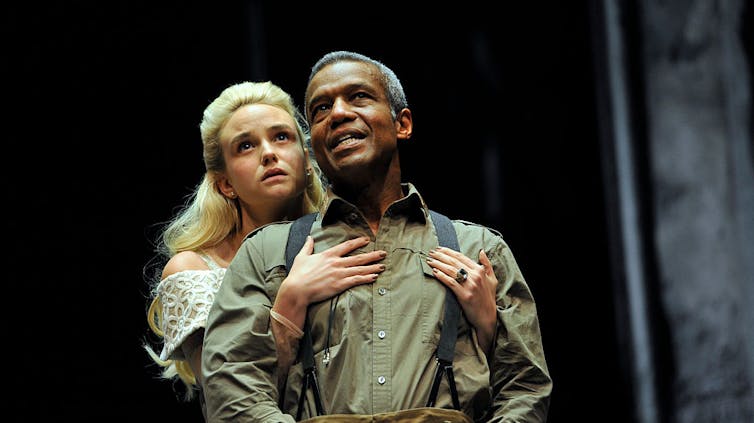
Joanna Vanderham as Desdemona and Hugh Quarshie as the title character in a Royal Shakespeare Company production of ‘Othello.’
Robbie Jack/Corbis via Getty Images

Cora Fox, Arizona State University

What is “happiness” – and who gets to be happy?

Since 2012, the World Happiness Report has measured and compared data from 167 countries. The United States currently ranks 24th, between the U.K. and Belize – its lowest position since the report was first issued. But the 2025 edition – released on March 20, the United Nations’ annual “International Day of Happiness” – starts off not with numbers, but with Shakespeare.

“In this year’s issue, we focus on the impact of caring and sharing on people’s happiness,” the authors explain. “Like ‘mercy’ in Shakespeare’s ‘Merchant of Venice,’ caring is ‘twice-blessed’ – it blesses those who give and those who receive.”

Shakespeare’s plays offer many reflections on happiness itself. They are a record of how people in early modern England experienced and thought about joy and satisfaction, and they offer a complex look at just how happiness, like mercy, lives in relationships and the caring exchanges between people.

Contrary to how we might think about happiness in our everyday lives, it is more than the surge of positive feelings after a great meal, or a workout, or even a great date. The experience of emotions is grounded in both the body and the mind, influenced by human physiology and culture in ways that change depending on time and place. What makes a person happy, therefore, depends on who that person is, as well as where and when they belong – or don’t belong.

Happiness has a history. I study emotions and early modern literature, so I spend a lot of my time thinking about what Shakespeare has to say about what makes people happy, in his own time and in our own. And also, of course, what makes people unhappy.

From fortune to joy

A timber home with lush gardens.
Shakespeare’s birthplace in Stratford-upon-Avon, England.
Tony Hisgett/Flickr via Wikimedia Commons, CC BY-SA

“Happiness” derives from the Old Norse word “hap,” which meant “fortune” or “luck,” as historians Phil Withington and Darrin McMahon explain. This earlier sense is found throughout Shakespeare’s works. Today, it survives in the modern word “happenstance” and the expression that something is a “happy accident.”

But in modern English usage, “happy” as “fortunate” has been almost entirely replaced by a notion of happiness as “joy,” or the more long-term sense of life satisfaction called “well-being.” The term “well-being,” in fact, was introduced into English from the Italian “benessere” around the time of Shakespeare’s birth.

The word and the concept of happiness were transforming during Shakespeare’s lifetime, and his use of the word in his plays mingles both senses: “fortunate” and “joyful.” That transitional ambiguity emphasizes happiness’ origins in ideas about luck and fate, and it reminds readers and playgoers that happiness is a contingent, fragile thing – something not just individuals, but societies need to carefully cultivate and support.

For instance, early in “Othello,” the Venetian senator Brabantio describes his daughter Desdemona as “tender, fair, and happy / So opposite to marriage that she shunned / The wealthy, curled darlings of our nation.” Before she elopes with Othello she is “happy” in the sense of “fortunate,” due to her privileged position on the marriage market.

Advertisement
Get More From A Face Cleanser And Spa-like Massage

Later in the same play, though, Othello reunites with his new wife in Cyprus and describes his feelings of joy using this same term:

…If it were now to die,
‘Twere now to be most happy, for I fear
My soul hath her content so absolute
That not another comfort like to this
Succeeds in unknown fate.

Desdemona responds,

The heavens forbid
But that our loves and comforts should increase
Even as our days do grow!

They both understand “happy” to mean not just lucky, but “content” and “comfortable,” a more modern understanding. But they also recognize that their comforts depend on “the heavens,” and that happiness is enabled by being fortunate.

“Othello” is a tragedy, so in the end, the couple will not prove “happy” in either sense. The foreign general is tricked into believing his young wife has been unfaithful. He murders her, then takes his own life.

The seeds of jealousy are planted and expertly exploited by Othello’s subordinate, Iago, who catalyzes the racial prejudice and misogyny underlying Venetian values to enact his sinister and cruel revenge.

A man and woman hold hands, looking upset, as they sit on a cushion on stage.
James Earl Jones playing the title role and Jill Clayburgh as Desdemona in a 1971 production of ‘Othello.’
Kathleen Ballard/Los Angeles Times/UCLA Library via Wikimedia Commons, CC BY-SA

Happy insiders and outsiders

“Othello” sheds light on happiness’s history – but also on its politics.

While happiness is often upheld as a common good, it is also dependent on cultural forces that make it harder for some individuals to experience. Shared cultural fantasies about happiness tend to create what theorist Sara Ahmed calls “affect aliens”: individuals who, by nature of who they are and how they are treated, experience a disconnect between what their culture conditions them to think should make them happy and their disappointment or exclusion from those positive feelings. Othello, for example, rightly worries that he is somehow foreign to the domestic happiness Desdemona describes, excluded from the joy of Venetian marriage. It turns out he is right.

Because Othello is foreign and Black and Desdemona is Venetian and white, their marriage does not conform to their society’s expectations for happiness, and that makes them vulnerable to Iago’s deceit.

Similarly, “The Merchant of Venice” examines the potential for happiness to include or exclude, to build or break communities. Take the quote about mercy that opens the World Happiness Report.

The phrase appears in a famous courtroom scene, as Portia attempts to persuade a Jewish lender, Shylock, to take pity on Antonio, a Christian man who cannot pay his debts. In their contract, Shylock has stipulated that if Antonio defaults on the loan, the fee will be a “pound of flesh.”

“The quality of mercy is not strained,” Portia lectures him; it is “twice-blessed,” benefiting both giver and receiver.

Advertisement
Get More From A Face Cleanser And Spa-like Massage

It’s a powerful attempt to save Antonio’s life. But it is also hypocritical: Those cultural norms of caring and mercy seem to apply only to other Christians in the play, and not the Jewish people living alongside them in Venice. In that same scene, Shylock reminds his audience that Antonio and the other Venetians in the room have spit on him and called him a dog. He famously asks why Jewish Venetians are not treated as equal human beings: “If you prick us, do we not bleed?”

A sepia-toned photograph of a man with a beard, curly hair and cap staring intently at the camera.
Actor Henry Irving as Shylock in a late 19th-century performance of ‘The Merchant of Venice.’
Lock & Whitfield/Folger Shakespeare Library via Wikimedia Commons, CC BY-SA

Shakespeare’s plays repeatedly make the point that the unjust distribution of rights and care among various social groups – Christians and Jews, men and women, citizens and foreigners – challenges the happy effects of benevolence.

Those social factors are sometimes overlooked in cultures like the U.S., where contemporary notions of happiness are marketed by wellness gurus, influencers and cosmetic companies. Shakespeare’s plays reveal both how happiness is built through communities of care and how it can be weaponized to destroy individuals and the fabric of the community.

There are obvious victims of prejudice and abuse in Shakespeare’s plays, but he does not just emphasize their individual tragedies. Instead, the plays record how certain values that promote inequality poison relationships that could otherwise support happy networks of family and friends.

Systems of support

Pretty much all objective research points to the fact that long-term happiness depends on community, connections and social support: having systems in place to weather what life throws at us.

And according to both the World Happiness Report and Shakespeare, contentment isn’t just about the actual support you receive but your expectations about people’s willingness to help you. Societies with high levels of trust, like Finland and the Netherlands, tend to be happier – and to have more evenly distributed levels of happiness in their populations.

Shakespeare’s plays offer blueprints for trust in happy communities. They also offer warnings about the costs of cultural fantasies about happiness that make it more possible for some, but not for all.The Conversation

Cora Fox, Associate Professor of English and Health Humanities, Arizona State University

This article is republished from The Conversation under a Creative Commons license. Read the original article.

The Bridge is a section of the STM Daily News Blog meant for diversity, offering real news stories about bona fide community efforts to perpetuate a greater good. The purpose of The Bridge is to connect the divides that separate us, fostering understanding and empathy among different groups. By highlighting positive initiatives and inspirational actions, The Bridge aims to create a sense of unity and shared purpose. This section brings to light stories of individuals and organizations working tirelessly to promote inclusivity, equality, and mutual respect. Through these narratives, readers are encouraged to appreciate the richness of diverse perspectives and to participate actively in building stronger, more cohesive communities.

https://stmdailynews.com/the-bridge

Advertisement
Get More From A Face Cleanser And Spa-like Massage

Author

Want more stories 👋
“Your morning jolt of Inspiring & Interesting Stories!”

Sign up to receive awesome articles directly to your inbox.

STM Coffee Newsletter 1

We don’t spam! Read our privacy policy for more info.


Discover more from Daily News

Subscribe to get the latest posts sent to your email.

Continue Reading
Advertisement Tool Tickets

STM Blog

Why people trust influencers more than brands – and what that means for the future of marketing

Why people trust influencers? Discover why people trust influencers over traditional brands and what it means for marketing’s future. Learn about parasocial relationships, the 5 types of value influencers provide, and why microinfluencers often outperform mega-creators.

Published

on

Last Updated on December 16, 2025 by Daily News Staff

Why people trust influencers more than brands – and what that means for the future of marketing

Why people trust influencers more than brands – and what that means for the future of marketing

Kelley Cours Anderson, College of Charleston Not long ago, the idea of getting paid to share your morning routine online would have sounded absurd. Yet today, influencers are big business: The global market is expected to surpass US$32 billion by the end of 2025. Rooted in celebrity culture but driven by digital platforms, the influencer economy represents a powerful force in both commerce and culture. I’m an expert on digital consumer research, and I see the rise of influencers as an important evolution in the relationship between companies, consumers and creators. Historically, brands leaned on traditional celebrities like musicians, athletes and actors to endorse their products. However, by the late 2000s, social media platforms opened the door for everyday people to build audiences. Initially, influencers were viewed as a low-cost marketing tactic. Soon, however, they became a central part of marketing strategies. In the 2010s, influencer marketing matured into a global industry. Agencies and digital marketplaces emerged to professionalize influencer-brand matchmaking, and regulators like the Federal Trade Commission started paying more attention to sponsored content. The rise of video and short-form content like TikTok and Reels in the mid-2010s and 2020s added authenticity and emotional immediacy. These dynamics deepened influencer-follower relations in ways that brands couldn’t easily replicate. Influencers are now recognized as not only content creators, but also as entrepreneurs and cultural producers.

Why people trust influencers

Social media influencers often foster what researchers call “parasocial relationships” – one-sided bonds where followers feel as if they personally know the influencer. While the concept has roots in traditional celebrity culture, influencers amplify it through consistent, seemingly authentic content. This perceived intimacy helps explain why consumers often trust influencers more than brands. Though the parasocial relationship isn’t mutual, it feels real. That emotional closeness cultivates trust, a scarce but powerful currency in today’s economy. The goal for many influencers may be financial independence, but the path begins with social and cultural capital, acquired through community connection, relatability and niche expertise. As an influencer’s following grows, so does their perceived legitimacy. Brands, in turn, recognize and tap into that legitimacy. Although risks exist, like algorithmic incentives and commercial partnerships that undercut authenticity, many influencers successfully navigate this tension to preserve their community’s trust.

The many ways creators add value

Like any economy, the influencer economy revolves around value exchange. Followers spend their valuable resources – time and attention – in return for something meaningful. Researchers have identified several forms of value that influencers’ content can take:
  • Connection, or what researchers call “social value”: Influencers often build tight-knit communities around shared interests. Through live chats, comments and relatable storytelling, they offer a sense of belonging.
  • Fun, or “hedonic value”: Many influencers provide enjoyment using entertainment, humor and a touch of allure in their content. Think cat videos, TikTok dances and random acts of kindness that deliver joy and distraction from the day-to-day.
  • Knowledge, or “epistemic value”: Creators offer informational or educational content to feed consumer curiosity. This can be through tutorials, product reviews or deep dives into niche topics.
  • Usefulness, or “utilitarian value”: From life hacks to product roundups, like “Amazon must-haves,” influencers provide utilitarian or practical value to help simplify consumer decisions and solve everyday problems.
  • Money, or “financial value”: People love finding a bargain. Discounts, affiliate links and deal alerts offer direct economic benefit to followers. Some influencers even launch their own products or digital courses, delivering long-term value through entrepreneurial spinoffs.
These forms of value often overlap, reinforcing trust, and can pay off financially for influencers. In fact, consumers are significantly more likely to trust user-generated content like influencer posts over brand-generated advertising.

Lessons for brands

First, there’s evidence that smaller is often stronger. Marketing researchers categorize influencers based on how many followers they have, and nano- and microinfluencers – defined as those with fewer than 10,000 and 100,000 followers, respectively – often generate stronger engagement than mega-influencers with more than 1 million. Influencers with smaller followings can interact with their communities more closely, making their endorsements feel more credible. This has driven brands to focus on mid-tier and microinfluencers, where return on investment is often stronger. As a result, influencer agencies, brokers, platforms and trade associations have sprung up to facilitate these partnerships. Second, brands should remember that influencers’ role in the market comes with new challenges. As the field continues to become more professionalized, it’s also become more complex. Like other entrepreneurs, influencers must keep up with shifting regulations – namely, FTC sponsorship guidelines – which can lead to hefty fines if violated. Many struggle to identify how to best file their taxes when they receive freebies they are expected to build content around. It can also be a challenge for influencers to keep up with continued algorithm tweaks from the multiple social media platforms where they publish. Influencers manage more than content creation. Their role includes quickly responding to followers’ comments and managing communities, as well as handling trolls, all of which is stressful. Personal brand management adds another layer of pressure. As influencers gain more brand partnerships, they run the risk of being seen as “selling out.” Because parasocial trust depends on being viewed as authentic, aligning with the wrong brand or being too promotional can damage the very connection that built an influencer’s following. A single misstep can trigger public backlash. While growing a following can bring brand recognition and financial independence, some influencers even fear that they will lose their own identity. Influencers can struggle with work-life balance, as this is not a nine-to-five job. It requires being “always on” and the constant blurred lines. Their lives become their livelihoods, with little separation between personal and professional identity. In short, when engaging with influencers, strategic brands will recognize that they operate within an intense, high-pressure environment. Organizations such as the American Influencer Council offer support and advocacy, but industry-wide protections are lacking. Influencers have earned a central place in consumer culture not just by selling products, but by offering emotional proximity, cultural relevance and value. They’re not just marketers – they’re creators, community leaders and entrepreneurs. As the creator economy continues to grow, trust will remain its cornerstone. However, the next chapter will require thoughtful navigation of issues like regulation, platform ethics and creator well-being. Understanding influencers means recognizing both their creative work and the evolving market that now depends on them. Kelley Cours Anderson, Assistant Professor of Marketing, College of Charleston This article is republished from The Conversation under a Creative Commons license. Read the original article.

Dive into “The Knowledge,” where curiosity meets clarity. This playlist, in collaboration with STMDailyNews.com, is designed for viewers who value historical accuracy and insightful learning. Our short videos, ranging from 30 seconds to a minute and a half, make complex subjects easy to grasp in no time. Covering everything from historical events to contemporary processes and entertainment, “The Knowledge” bridges the past with the present. In a world where information is abundant yet often misused, our series aims to guide you through the noise, preserving vital knowledge and truths that shape our lives today. Perfect for curious minds eager to discover the ‘why’ and ‘how’ of everything around us. Subscribe and join in as we explore the facts that matter.  https://stmdailynews.com/the-knowledge/


Discover more from Daily News

Subscribe to get the latest posts sent to your email.

Continue Reading

Entertainment

Hollywood vs. Reality: How LA’s Wilshire Subway Was Really Built

Wilshire Subway: Did LA blast subway tunnels under Wilshire Boulevard? Hollywood says yes — engineers say no. Here’s how Metro safely tunneled beneath Miracle Mile.

Published

on

envato labs image edit

When the 1997 disaster film Volcano depicted lava erupting along Wilshire Boulevard and referenced blasting during Red Line subway construction, it delivered gripping cinema — but not accurate engineering.

In reality, Los Angeles Metro did not rely on large-scale blasting to construct subway tunnels beneath Wilshire Boulevard and the Miracle Mile. Instead, engineers used tunnel boring machines (TBMs) specifically to avoid the very risks Hollywood dramatized.

Why Blasting Was Avoided

The Wilshire Corridor sits atop historic oil fields, making methane gas pockets a known and serious concern. A deadly methane explosion near Fairfax Avenue in 1985 led to heightened scrutiny of underground construction in the area. Blasting in such conditions could have caused unpredictable gas releases, ground instability, or damage to surface structures.

As a result, Metro engineers chose pressurized, closed-face tunnel boring machines, which allow for:

  • Controlled excavation in dense urban environments

  • Continuous ground support to prevent settlement

  • Integrated gas detection and ventilation systems

These machines grind slowly through soil and rock while installing precast concrete tunnel linings, creating a sealed, gas-resistant structure as they advance. envato labs image edit

The Real Engineering Feat

Although Volcano took creative liberties for dramatic effect, the true story of tunneling under Wilshire is no less impressive. Advances in TBM technology and methane mitigation ultimately allowed the Metro D Line (formerly the Red Line/Purple Line) to safely pass through one of Los Angeles’ most geologically complex corridors — without explosions, collapsing streets, or cinematic chaos.

Bottom Line

Volcano remains a memorable piece of 1990s disaster cinema, but its portrayal of subway construction is fiction. The real achievement lies in decades of careful planning, modern tunneling technology, and engineering solutions that quietly reshaped Los Angeles beneath its busiest boulevard.

Related Links:

Dreambreaker: A Pickleball Story — A Closer Look at the Documentary and Its Uncredited Voice
Link: https://stmdailynews.com/dreambreaker-a-pickleball-story-a-closer-look-at-the-documentary-and-its-uncredited-voice/

Discover more from Daily News

Subscribe to get the latest posts sent to your email.

Continue Reading

Blog

Glad and Oscar the Grouch Team Up for a Trashy, Toe-Tapping Campaign

Glad teams up with Oscar the Grouch for a playful revival of the “Don’t Get Mad. Get Glad.” campaign, featuring a musical number, limited-edition Oscar-inspired trash bags, and a fresh take on making trash day fun for all ages.

Published

on

Oscar the Grouch and Glad trash bags featured in a colorful musical campaign, celebrating their playful collaboration with limited-edition green Oscar-inspired totes.

Glad revives its most popular, decades-long, star-studded ad campaign, “Don’t Get Mad. Get Glad.”

What happens when the world’s most iconic grouch meets the nation’s go-to name in trash bags? You get a campaign that’s equal parts nostalgia, Broadway-style fun, and a reminder that even trash can bring a little joy to your day.

A Classic Campaign Gets a Grouchy Remix

Glad has officially revived its legendary “Don’t Get Mad. Get Glad.” campaign, but this time, they’re ditching the usual celebrity faces for a true original: Oscar the Grouch. For the first time, the campaign’s star is none other than Sesame Street’s resident trash enthusiast himself, and he’s bringing his signature tune “I Love Trash” back with a contemporary twist.
The musical number, directed by the award-winning duo Will Speck and Josh Gordon, opens with Oscar in his element—surrounded by trash and a little bit of grumpiness. But the real magic happens when Oscar imagines a world where everyone else shares his passion for trash. The result? A joyful, Broadway-inspired remix that transforms everyday frustration into a celebration of Glad’s dependable trash solutions.

Why Oscar? Why Now?

According to Glad’s Marketing Director, Kellie Li, the choice was simple: “No one feels more strongly about trash than Oscar the Grouch.” The campaign aims to flip the script on how we think about trash—turning a dreaded chore into something a little more lighthearted. With Glad’s reliable bags, there’s less to get mad about, and maybe, just maybe, a little more to sing about.

Nostalgia Meets New Audiences

If “Don’t Get Mad. Get Glad.” sounds familiar, you’re not imagining things. The campaign has been a staple since 1987, featuring everyone from TV stars to athletes. But this new chapter, featuring Oscar and a cast of trash-loving co-stars, is designed to connect with both longtime fans and a new generation discovering Sesame Street on Netflix and PBS KIDS.

Limited-Edition Oscar Goodies and Where to Find Them

To celebrate the campaign, Glad is releasing limited-edition Oscar-inspired trash bag totes—complete with green fur, of course. Fans can snag these playful bags through a social media giveaway this December (follow @gladproducts on Instagram and TikTok for details). And if you miss out, don’t worry: special Oscar-branded Glad ForceFlex with Gain bags will hit Walmart shelves this April, just in time for spring cleaning.

Where to Watch

The campaign is rolling out across the U.S. and Canada, with full-length videos, bite-sized social teasers, and everything in between. Look for it on TikTok, Instagram, Facebook, and Reddit (for our friends up north). Featured products include Glad ForceFlex with Gain and Glad Cherry Blossom.

Bringing the Campaign Home: Phoenix Community Clean-Up

Here in Phoenix, we know the value of coming together to keep our neighborhoods clean and vibrant. Glad’s collaboration with Oscar the Grouch isn’t just a fun national campaign—it’s a reminder that tackling trash can be a community effort, too.
With spring cleaning right around the corner and special Oscar-branded Glad bags hitting Walmart shelves this April, it’s the perfect time for local groups, schools, and neighbors to organize clean-up events across the Valley. Whether you’re sprucing up a park, refreshing a neighborhood, or just making your own block a little brighter, every bag makes a difference.
Ready to join the movement? Rally your friends, family, or local organization and plan a Phoenix clean-up day this spring. Snap a photo of your crew with your Glad or Oscar-inspired trash bags and share it on social media using #GladToCleanPHX and #OscarLovesTrash. Let’s show how Phoenix turns trash day into a reason to celebrate!
  • “Phoenix, let’s get grouchy about litter and Glad about clean streets! Join our community clean-up and share your photos with #GladToCleanPHX.”
  • “Spotted: Oscar the Grouch in Phoenix! Grab your Glad bags, clean up your neighborhood, and tag #OscarLovesTrash for a chance to be featured.”
  • “Spring cleaning in Phoenix just got a lot more fun—thanks to Glad and Oscar! Who’s joining our next clean-up day? #GladToCleanPHX”

About the Brands

Glad, a member of The Clorox Company, has long been a leader in household waste solutions, while Sesame Workshop continues to inspire and educate families worldwide. This collaboration is a perfect blend of dependable products and beloved characters—reminding us all that even the messiest moments can spark a little joy.
The collaboration between Glad and Sesame Workshop for the “Don’t Get Mad. Get Glad.” campaign marks a creative partnership that blends household dependability with beloved children’s entertainment. By bringing Oscar the Grouch into the spotlight, Glad not only revives a classic campaign but also highlights the importance of making everyday chores more enjoyable for families. This partnership leverages Glad’s reputation as the nation’s leading provider of kitchen and outdoor trash bags and food protection products—trusted solutions designed to handle life’s messes with ease (Glad.com). Sesame Workshop, the nonprofit behind Sesame Street, has spent over 50 years enriching families worldwide through educational media and community outreach, helping children grow smarter, stronger, and kinder (Sesame.org). Together, their collaboration aims to inspire a new generation to see the positive side of cleaning up, all while celebrating the joy of community and play.
Sources:
High Demand Marks “Veggies for Veterans” Event Amid SNAP Delays

Discover more from Daily News

Subscribe to get the latest posts sent to your email.

Continue Reading

Trending


