

Community
Larry Krasner, Kensington, the scrapped Sixers arena − and other key concerns that will shape Philly politics in 2025


Richardson Dilworth, Drexel University
Campus protests. Homeless encampment clearings. Significant decreases in shootings, homicides and overdose deaths. Protests to “Save Chinatown.” A mass shooting at a SEPTA bus stop. Illegal car meetups. City workers called back to the office. A SEPTA strike averted.
These were just some of the headlines that dominated Philadelphia politics in 2024.
So, what does 2025 hold for the city?
I’m a politics professor at Drexel University and in 2023 I published a short book, “Reforming Philadelphia, 1682-2022,” that traced the city’s political development with an eye toward the future of its policy and politics.
Here are six key storylines that will shape Philly’s political landscape in 2025.
1. Partisan shifts
Philadelphia enters 2025 notably more politically diverse than five years ago.
Partisanship in Philadelphia is not so much captured by a Democratic-Republican split as it is by what local journalist Larry Platt once called “reformer vs. progressive,” referring to the division between more conservative Democrats on the one hand and more liberal Democrats and progressive third parties on the other.
Progressive candidates have had minor surges in recent years. Seven of the 17 members of the Philadelphia City Council are elected at large, but no party is allowed to nominate more than five members to run for these seats in the general election. This has meant that, as long as anyone can remember, there have been five Democratic and two Republican at-large council members.
Then, in 2019, Working Families Party candidate Kendra Brooks won one of the two at-large seats previously held by Republicans. One year later, two Democratic Socialists who ran as Democrats, Nikil Saval and Rick Krajewski, were elected to the state Senate and state House, respectively. And in 2023 another Working Families Party member, Nicolas O’Rourke, won the second at-large City Council seat reserved for minor parties, thereby completely replacing Republicans in those positions.
At the same time, the mayor elected in 2023, Cherelle Parker, is a reasonably conservative Democrat – at least in the sense that her focus has not been on social justice issues but rather the classic municipal issues of cleanliness and public safety.
And the 2024 elections saw the GOP vote go up in Philadelphia, as it did almost everywhere in the country. Republicans captured a state Senate seat in the city for the first time in two decades.
The most recent surge favoring Republicans would ostensibly threaten the two at-large Working Families Party members of the City Council, who are most vulnerable to electoral challenges that would bring back at-large Republicans. However, they’re safe until 2027, by which time another Democratic surge in Philadelphia is likely, as many voters will have most likely soured on the Trump administration by that time.
2. Will Krasner stay or go?
In 2025, the most high-profile city election will be for district attorney, and that does seem potentially ripe for change.
The incumbent is Larry Krasner, first elected in 2017 as part of the post-Trump progressive wave. He won again decisively in 2021, against a challenger in the Democratic primary whose main support was from the Fraternal Order of Police.
Yet as Parker’s election as mayor – and Trump’s as president – suggests, Krasner may face an electorate ready for a more law-and-order message in May 2025. The DA’s office in Philadelphia has historically been a bastion for conservative Democrats and even Republicans. Krasner may face more significant challengers this time around, especially in the primary.
3. Kensington at a crossroads
Parker has benefited from the sharp decline in crime and violence after its pandemic-driven spike. But she has also increased the police budget to provide for hiring 400 new officers; hired a police commissioner from within, Kevin Bethel, who previously received praise for his work on diversion and juvenile justice; and focused on quality-of-life issues such as cracking down on ATV gangs.
Parker has also focused in particular on the Kensington neighborhood and its notorious open-air drug markets. This is important, not least because Kensington has been a large contributor to the city’s unfortunate status of being a leader in drug overdose deaths.
The drug trade was also holding down development and property values – and therefore property tax revenues – in a neighborhood on the path of gentrification. From my perspective, cleaning up Kensington promises to be some of the best return on investment in the city.
4. Parker vs. Trump administration
Of course, another new thing that the city will have to grapple with in 2025 is the incoming Trump administration.
The previous Trump administration got into a fight with then-Mayor Jim Kenney in 2016 over the city’s sanctuary policy with respect to federal immigration enforcement. Basically, the Kenney administration won and got back federal grant money that had been withheld.
Parker may be in a tough spot if she plans to maintain some sort of sanctuary status for the city. The Trump administration – no friend of Philadelphia under the best of circumstances – will likely face less resistance and some acquiescence, as we’re seeing in Chicago, where some aldermen have suggested getting rid of that city’s sanctuary status.
The incoming president has also signaled repeatedly his willingness to use the military for mass deportations, thereby sidestepping necessary cooperation from local law enforcement. This is a critical issue because immigration is a key economic asset for Philadelphia. As the Pew Charitable Trusts have found, immigrants in Philadelphia tend to be younger, more likely to participate in the workforce, and more likely to start a business than native Philadelphians.
5. Market East in limbo
And then there was the proposed downtown 76ers arena, approved by the City Council in a 12-5 vote in December 2024 and then entirely scrapped in early January 2025. Was this entire project simply some sort of bargaining chip used by Sixers owners and management to get a better deal in South Philadelphia from Comcast Spectacor, the owner of the teams’ current home at the Wells Fargo Center?
Whatever the case, the entire project no doubt leaves a bad taste in the mouths of the Chinatown businesses and other interest groups who opposed the new stadium and felt sold out by the mayor and City Council. But with the next City Council and mayoral elections not happening until 2027, it seems likely that the entire thing will be forgotten by the time any elected official might be punished at the polls.
The fall of the downtown stadium deal throws open the future of the Market Street East corridor. The proposed arena was part of a reimagining of the Fashion District, a redevelopment project by the Pennsylvania Real Estate Investment Trust that opened in 2019. The pandemic and higher interest rates led to store closures and financial problems, and PREIT has since filed twice for bankruptcy. Add to that the fact that Macy’s, an anchor tenant on the corridor, announced it is closing its store in the historic Wanamaker Building next to City Hall.
Market East – essentially the front door of the city – doesn’t look so good for the 2026 celebrations planned as part of the 250th anniversary of the founding of the country. Indeed, the Constitution was drafted at Independence Hall, which is part of the Market East corridor. The chances that things will look much better in 2025 seem pretty dim, although there are plans to convert the space to apartments and smaller stores.
Other major infrastructure projects will likely work in the mayor’s favor, most notably a new park covering part of I-95 that will reconnect the Delaware riverfront to the Society Hill and Old City neighborhoods. This is set to be completed during Parker’s first term.
6. Inflation and housing
And finally, one of the bigger issues in the last presidential election was the housing affordability crisis. This crisis is slightly muted in Philadelphia compared with some other major cities, but it is real nonetheless.
Yet the city has to a certain extent inadvertently lucked out. As 2021 was the last year that developers could take full advantage of the city’s 10-year tax abatement for new construction, a record number of building permits were granted that year.
In 2022, the number of building permits plummeted to 2013 levels. Nevertheless, the permits from 2021 have led to a building boom, especially in residential construction, which may be keeping housing prices lower than they would otherwise be. We can expect this trend to continue into 2025, even if the volume of new permits drops even more.
Richardson Dilworth, Professor of Politics, Drexel University
This article is republished from The Conversation under a Creative Commons license. Read the original article.
Discover more from Daily News
Subscribe to get the latest posts sent to your email.


The Bridge
Hard Rock International and Coca-Cola Launch ‘Women Empower’ Series for International Women’s Month

Last Updated on March 15, 2026 by Daily News Staff

Hard Rock International is teaming up with long-time partner Coca-Cola to spotlight women shaping the music business with a new content initiative and a month-long slate of events.
Announced Feb. 26, 2026, the collaboration introduces “Women Empower,” a micro-documentary series rolling out throughout March as part of Hard Rock’s annual International Women’s Month celebrations. Alongside the video series, Hard Rock says it’s aiming to host 1,000 live music and special events globally across its Cafes, Hotels, Casinos and Live venues.
A micro-documentary series focused on women across the industry
Rather than focusing only on performers, “Women Empower” highlights women working in a range of roles across music and media. Hard Rock notes that less than 5% of music and media creators are women, and the series is designed to put more faces—and job titles—into the public conversation.
The six featured women include:
- Janelle Abraham — Director/Film Producer
- Kat Luna — Singer/Songwriter
- Minami Minami — Composer/Dancer/Singer
- Claire Murphy — Guitar Tech
- Mayna Nevarez — CEO & Founder, Nevarez Communications
- Wendy Ong — Co-President/CMO, TaP Music
Elena Alvarez, Senior Vice President of Marketing and Brand Partnerships at Seminole Gaming and Hard Rock International, said the brand is using International Women’s Month to “lift the curtain” on the series while tying the celebration back to Hard Rock’s music-first identity and philanthropic work.
$100,000 donation to Women in Music
Hard Rock Heals Foundation®, Hard Rock’s charitable arm, is donating $100,000 to Women in Music, supporting the nonprofit’s education and empowerment efforts.
Nicole Barsalona, President of Women in Music, said the campaign highlights diversity on stage and “the wide range of roles across the music business—and the women behind the scenes whose work drives our industry forward.”
Limited-time Coca-Cola menu items at participating Hard Rock Cafes
Throughout March, participating Hard Rock Cafes will offer a limited-time Coca-Cola-inspired menu tied to the regions represented in the series.
Specialty drinks include:
- Passionfruit Splash — passionfruit beverage with Minute Maid Lemonade, Sprite and cranberry juice
- Mango Guava Chiller — mango and guava-flavored drink with Sprite, pineapple and lime juice
- Spiced Yuzu Soda — spiced brown sugar, yuzu and Coca-Cola blend
Food items include:
- Fattoush Chicken Caesar Salad — romaine with grilled chicken, mint, vegetables, fried naan and red wine Caesar dressing
- Mahi Sandwich — mahi filet with remoulade, lettuce, tomato and shoestring onions, served with seasoned fries
- Dulce de Leche Brownie — brownie with chocolate sauce, vanilla ice cream, dulce de leche and whipped cream
Hard Rock Hotels: curated listening experiences honoring female artists
Hard Rock Hotels will also highlight women in music through live performances, curated playlists and themed listening experiences using the brand’s Sound of Your Stay® program. Hard Rock says guests can expect music-themed amenities such as limited-edition vinyl, memorabilia highlights and playlists centered on female artists—both iconic names and emerging talent.
Events worldwide + Rock Shop merch
Hard Rock says it will host women-led performances, networking events, brunches and other community-driven experiences across its global footprint throughout March.
Hard Rock’s official International Women’s Month T-shirts are available at Rock Shop® retail locations and online.
For the full list of International Women’s Month activations, visit https://www.hardrock.com/women.
The Bridge is a section of the STM Daily News Blog meant for diversity, offering real news stories about bona fide community efforts to perpetuate a greater good. The purpose of The Bridge is to connect the divides that separate us, fostering understanding and empathy among different groups. By highlighting positive initiatives and inspirational actions, The Bridge aims to create a sense of unity and shared purpose. This section brings to light stories of individuals and organizations working tirelessly to promote inclusivity, equality, and mutual respect. Through these narratives, readers are encouraged to appreciate the richness of diverse perspectives and to participate actively in building stronger, more cohesive communities.
https://stmdailynews.com/the-bridge
Authors


Discover more from Daily News
Subscribe to get the latest posts sent to your email.
Community
Arizona Scholarships 2026: $1,500 Awards + Free ACF Virtual Workshops
Arizona scholarships 2026: Arizona scholarships are open through ACF: one application for 160+ awards, plus ARAC’s $1,500 Ashby-Herring scholarships due April 6, 2026.

Last Updated on March 11, 2026 by Daily News Staff
Arizona Scholarships 2026: $1,500 Awards + Free ACF Virtual Workshops
Scholarship season moves fast, and for a lot of Arizona families, the hardest part isn’t writing the essay or gathering transcripts—it’s simply finding the right opportunities in time.
The Archer Ragsdale Arizona Chapter (ARAC), Tuskegee Airmen, Inc. is encouraging students and the community to take advantage of scholarship resources through the Arizona Community Foundation (ACF), including an easy online application that can match applicants with 160+ scholarships—plus virtual workshops where students can get help directly from ACF’s scholarship team.
Whether you’re a high school senior, a current college student, or an adult re-entry student, ACF’s scholarship portal is designed to meet people where they are.
The Big Picture: One Application, 160+ Scholarships
According to the flyer, ACF awarded $6.3 million in scholarships last year, with over 160 scholarships available through a single, easy application.
- Application opens: January 1
- Most deadlines: March and April
- Where to start: https://azfoundation.org/scholarships
- ACF scholarship email: scholarship@azfoundation.org
What to watch for: Even if a student is only targeting one scholarship, completing the ACF application can surface additional matches they didn’t know existed.
ARAC Tuskegee Airmen Scholarship: Ashby-Herring Scholarships ($1,500) — Deadline April 6, 2026
ARAC (Tuskegee Airmen, Inc.) awards two or more scholarships to deserving Arizona students who are college-bound. The flyer highlights the Ashby-Herring scholarships, named in honor of late founding ARAC members who were original Tuskegee Airmen.
Award: Two Ashby-Herring scholarships (each $1,500)
Deadline:April 6, 2026
Apply here:https://www.azfoundation.org/archer-ragsdale
Eligibility:
- Graduating high school senior from Arizona
- Attending a 2-year or 4-year college/university
- African-American
- 3.0 GPA or higher
- Demonstrated financial need
Free Virtual Workshops (Zoom): Get Help With Your Application
If you’ve ever watched a student stall out halfway through an application, these workshops are a smart fix: they’re designed so applicants can work on their scholarship application with support from ACF’s scholarship team.
Workshop dates (Zoom):
- February 12, 2026 — 4:00 to 5:00 p.m.
- March 5, 2026 — 4:00 to 5:00 p.m.
- March 26 — 4:00 to 5:00 p.m. (date listed on flyer; confirm year when registering)
Register here:https://acf.cventevents.com/acfscholarships2026
View the flyer here: https://stmdailynews.com/wp-content/uploads/2026/03/Deadline-updated-12.29.2025-Archer-Ragsdale-Flyer-FINAL.pdf
Download Flyer (PDF)
What to watch for: Register for the dates you can attend and come prepared with what you already have (basic info, activities list, questions). One hour of guided progress can save days of procrastination.
Why This Matters (and Why Sharing Helps)
The Tuskegee Airmen legacy is rooted in excellence, discipline, and breaking barriers—and scholarships tied to that legacy are meant to elevate futures for the next generation.
If you’re a parent, teacher, coach, mentor, or neighbor, consider this your nudge: forward the link, post it in a group chat, or share it with a student who might qualify. Deadlines hit quickly, and the easiest scholarship to win is often the one you actually apply for.
View the press release: https://stmdailynews.com/wp-content/uploads/2026/03/FOR-IMMEDIATE-RELEASE.pdf
Related Links:
- https://azfoundation.org/scholarships
- https://acf.cventevents.com/acfscholarships2026
- https://www.azfoundation.org/archer-ragsdale
College Life
College isn’t just classes and credits — it’s learning how to manage your time, money, health, and relationships while you build a future that actually fits. In our College Life coverage, STM Daily News shares practical, real-world guides for students and families: campus living tips, study and productivity habits, career prep, budgeting basics, mental wellness check-ins, and smart ways to make the most of college in Arizona and beyond.
Expect quick reads, useful takeaways, and “what to do next” advice — whether you’re a first-year student, a transfer, or heading back to school.
Discover more from Daily News
Subscribe to get the latest posts sent to your email.
The Bridge
Scrappy, campy and unabashedly queer, public access TV series of the 1980s and 1990s offered a rare glimpse into LGBTQ+ life
Last Updated on March 10, 2026 by Daily News Staff
“Hello to all you lovely lesbians out there! My name is Debbie, and I’m here to show you a few things about taking care of your vaginal health.”
So opens the first “Lesbian Health” segment on “Dyke TV,” a lesbian feminist television series that aired on New York’s public access stations from 1993 to 2006.
The half-hour program focused on lesbian activism, community issues, art and film, news, health, sports and culture. Created by three artist-activists – Cuban playwright Ana Simo, theater director and producer Linda Chapman and independent filmmaker Mary Patierno – “Dyke TV” was one of the first TV shows made by and for LGBTQ women.
While many people might think LGBTQ+ representation on TV began in the 1990s on shows like “Ellen” and “Will & Grace,” LGBTQ+ people had already been producing their own television programming on local stations in the U.S. and Canada for decades.
In fact my research has identified hundreds of LGBTQ+ public access series produced across the country.
In a media environment historically hostile to LGBTQ+ people and issues, LGBTQ+ people created their own local programming to shine a spotlight on their lives, communities and concerns.
Experimentation and advocacy
On this particular health segment on “Dyke TV,” a woman proceeds to give herself a cervical exam in front of the camera using a mirror, a flashlight and a speculum.
Close-up shots of this woman’s genitalia show her vulva, vagina and cervix as she narrates the exam in a matter-of-fact tone, explaining how viewers can use these tools on their own to check for vaginal abnormalities. Recalling the ethos of the women’s health movement of the 1970s, “Dyke TV” instructs audiences to empower themselves in a world where women’s health care is marginalized.
Because public access TV in New York was relatively unregulated, the show’s hosts could openly discuss sexual health and air segments that would otherwise be censored on broadcast networks.
Like today’s LGBTQ content creators, many of the producers of LGBTQ+ public access series experimented with genre, form and content in entertaining and imaginative ways.
LGBTQ+ actors, entertainers, activists and artists – who often experienced discrimination and tokenism on mainstream media – appeared on these series to publicize and discuss their work. Iconic drag queen RuPaul got his start performing on public access in Atlanta, where “The American Music Show” gave him a platform to promote his burgeoning drag persona in the mid-1980s. https://www.youtube.com/embed/hab5HrnfEZk?wmode=transparent&start=0 RuPaul appears on a 1985 episode of ‘The American Music Show.’
The producers often saw their series as a blend of entertainment, art and media activism.
Shows like “The Gay Dating Game” and “Be My Guest” were tongue-in-cheek satires of 1950s game shows. News programs such as “Gay USA,” which broadcast its first episode in 1985, reported on local and national LGBTQ news and health issues.
Variety shows like “The Emerald City” in the 1970s, “Gay Morning America” in the 1980s, and “Candied Camera” in the 1990s combined interviews, musical performances, comedy skits and news programming. Scripted soap operas, like “Secret Passions,” starred amateur gay actors. And on-the-street interview programs like “The Glennda and Brenda Show” used drag and street theater to spark discussions about LGBTQ issues.
Other programs featured racier content.
In the 1980s and ‘90s, “Men & Films,” “The Closet Case Show” and “Robin Byrd’s Men for Men” incorporated interviews with porn stars, clips from porn videos and footage of sex at nightclubs and parties.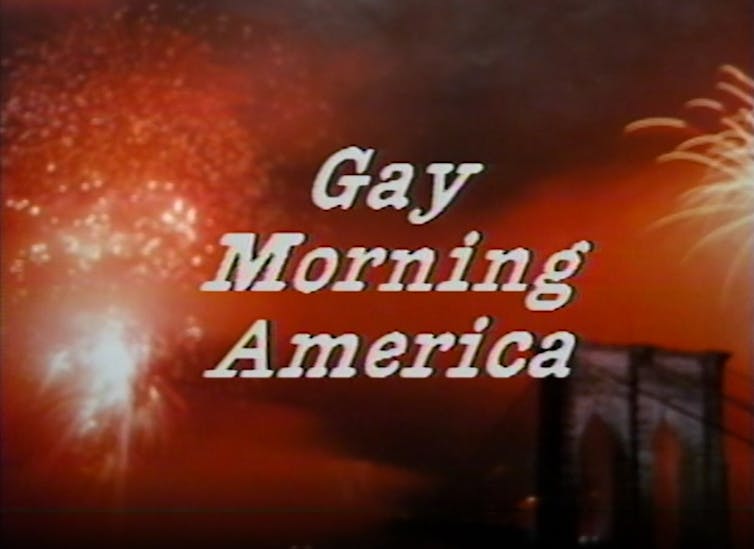
Skirting the censors
The regulation of sex on cable television has long been a political and cultural flashpoint.
But regulatory loopholes inadvertently allowed sexual content on public access. This allowed hosts and guests to talk openly about gay sex and safer sex practices on these shows – and even demonstrate them on camera.
The impetus for public access television was similar to the ethos of public broadcasting, which sought to create noncommercial and educational television programming in the service of the public interest.
In 1972, the Federal Communications Commission issued an order requiring cable television systems in the country’s top 100 markets to offer access channels for public use. The FCC mandated that cable companies make airtime, equipment and studio space to individuals and community groups to use for their own programming on a first-come, first-serve basis.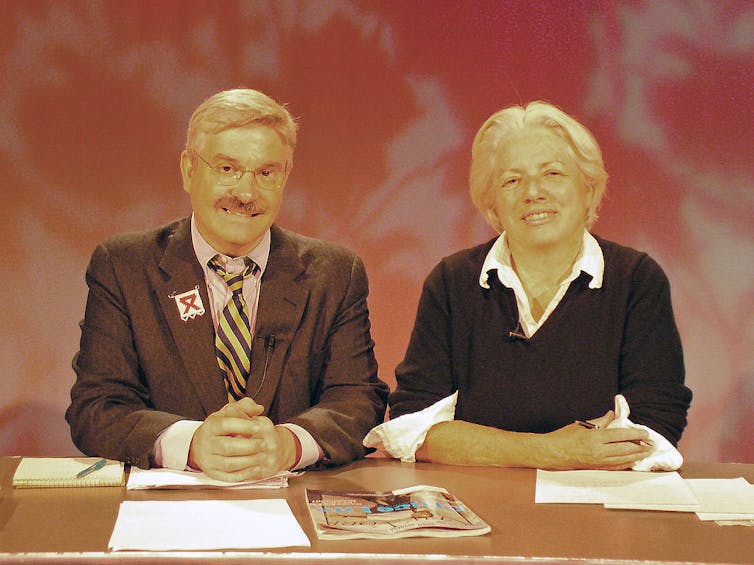
The FCC’s regulatory authority does not extend to editorial control over public access content. For this reason, repeated attempts to block, regulate and censor programming throughout the 1970s, 1980s and 1990s were challenged by cable access producers and civil liberties organizations.
The Supreme Court has continually struck down laws that attempt to censor cable access programming on First Amendment grounds. A cable operator can refuse to air a program that contains “obscenity,” but what counts as obscenity is up for interpretation.
Over the years, producers of LGBTQ-themed shows have fiercely defended their programming from calls for censorship, and the law has consistently been on their side.
Airing the AIDS crisis
As the AIDS crisis began to devastate LGBTQ+ communities in the 1980s, public access television grew increasingly important.
Many of the aforementioned series devoted multiple segments and episodes to discussing the devastating impact of HIV/AIDS on their personal lives, relationships and communities. Series like “Living with AIDS”, “HoMoVISIONES” and “ACT UP Live!” were specifically designed to educate and galvanize viewers around HIV/AIDS activism. With HIV/AIDS receiving minimal coverage on mainstream media outlets – and a lack of political action by local, state and national officials – these programs were some of the few places where LGBTQ+ people could learn the latest information about the epidemic and efforts to combat it.
The long-running program “Gay USA” is one of the few remaining LGBTQ+ public access series; new episodes air locally in New York and nationally via Free Speech TV each week. While public access stations still exist in most cities around the country, production has waned since the advent of cheaper digital media technologies and streaming video services in the mid-2000s.
And yet during this media era – let’s call it “peak public access TV” – these scrappy, experimental, sexual, campy and powerful series offered remarkable glimpses into LGBTQ+ culture, history and activism.
Lauren Herold, Visiting Assistant Professor of Gender & Sexuality Studies, Kenyon College
This article is republished from The Conversation under a Creative Commons license. Read the original article.
The Bridge is a section of the STM Daily News Blog meant for diversity, offering real news stories about bona fide community efforts to perpetuate a greater good. The purpose of The Bridge is to connect the divides that separate us, fostering understanding and empathy among different groups. By highlighting positive initiatives and inspirational actions, The Bridge aims to create a sense of unity and shared purpose. This section brings to light stories of individuals and organizations working tirelessly to promote inclusivity, equality, and mutual respect. Through these narratives, readers are encouraged to appreciate the richness of diverse perspectives and to participate actively in building stronger, more cohesive communities.
https://stmdailynews.com/category/the-bridge
Author

Discover more from Daily News
Subscribe to get the latest posts sent to your email.





