
Connect with us

Books and Novels

OBAMANOMICS AND FRANCISCONOMICS: Morgan State University’s Philosopher ‘Outsources’ His Economic Philosophy to Rome’s World Congress of Philosophy

Published

on

ROME /PRNewswire/ — Two years after the publication of OBAMANOMICS AND FRANCISCONOMICS (2022), Dr. Zekeh Gbotokuma was boosted by three international accolades that his book has received. Everything began with the book launch at the Assisi 2022 Global Event with Pope Francis on September 22-24. The three accolades that followed the book launch were the Second Place win at Milano International Literary Awards 2022; the Special Critics Prize at Cattolica International Literary Awards 2023 a.k.a. “The Oscar of Italian Literature” (https://ereleases.com/y/lkxa); and Literary Global Book Awards 2023 in the Category of Social Change (2023 Literary Global Book Awards Winners and Finalists). These accolades have incentivized the author to spread the word about his book from Johns Hopkins University’s Humanities in the Village program to Paris’ Université Sorbonne and Rome’s La Sapienza University, the venue of the XXVth World Congress of Philosophy (XXVWCP), 1-8 August, 2024. Dr. Gbotokuma’s paper title is, “OBAMANOMICS AND FRANCISCONOMICS: Reflections on President Obama’s and Pope Francis’s S.O.S. Call for Poverty Alleviation and Green Economy.”


ABSTRACT
President Obama and Pope Francis are two global leaders, whose elections have symbolized hope and change in a spider’s web-like world. Their synergy was useful in a concerted effort to wage the war on poverty and climate change in accordance with the UN’s Global Goals and the Paris Accord of 2015.

Obamanomics and Francisconomics is a critical economics theory. It questions existing capitalist system. Its commitment to economic and ecological justice leads the two leaders to suggest ways to improve life in our unequal world. Obama and Francis believe that poverty and climate change are phenomena that humans can control via the green revolution. They decry greed as a contributing factor to inequalities. Francis proposes a new approach to property based on the early Christian thought. Obama stresses equal opportunity and a fair share and fair shot middle-class economics.

WCP is the biggest philosophical gathering organized by the Fédération Internationale des Sociétés Philosophiques (FISP). For Gbotokuma, XXVWCP is also like a homecoming since he is an alumnus of Rome’s Gregorian University.

Dr. Gbotokuma is a Philosophy Professor at Morgan State University in Baltimore, Maryland, USA. He is the author of numerous publications and one of “the Key Figures in the African Intellectual Revolution” (QUORA).

SOURCE Dr. Zekeh S. Gbotokuma

The Bridge is a section of the STM Daily News Blog meant for diversity, offering real news stories about bona fide community efforts to perpetuate a greater good. The purpose of The Bridge is to connect the divides that separate us, fostering understanding and empathy among different groups. By highlighting positive initiatives and inspirational actions, The Bridge aims to create a sense of unity and shared purpose. This section brings to light stories of individuals and organizations working tirelessly to promote inclusivity, equality, and mutual respect. Through these narratives, readers are encouraged to appreciate the richness of diverse perspectives and to participate actively in building stronger, more cohesive communities.

https://stmdailynews.com/category/the-bridge

Author


Discover more from Daily News

Subscribe to get the latest posts sent to your email.

Continue Reading
Advertisement Simply Wholesale

Entertainment

The woman who revolutionized the fantasy genre is finally getting her due

Published

on

Last Updated on March 9, 2026 by Daily News Staff

fantasy
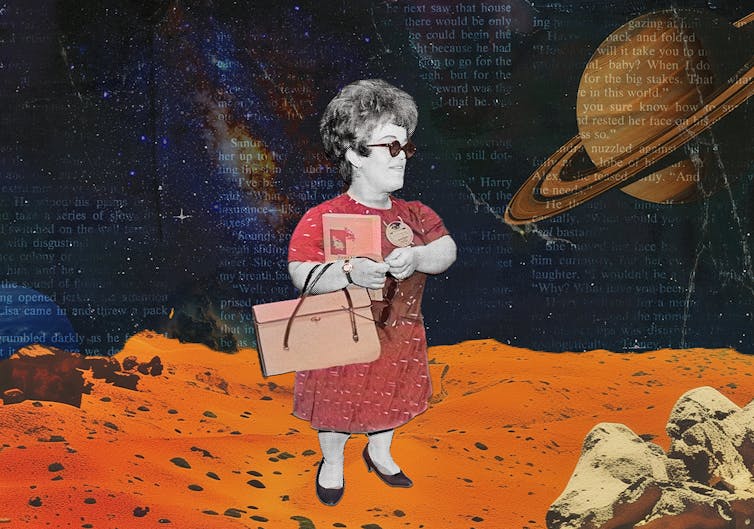
Hugo Award-winner Arthur C. Clarke called Judy-Lynn del Rey the ‘most brilliant editor I ever encountered.’ Artwork by Adriano Botega. Courtesy of Inspiration Films, LLC.

Dennis Wilson Wise, University of Arizona

Think of your favorite fantasy or science fiction novel. You’ll know the author and title, of course. But can you think of its editor or publisher?

In publishing, the people who work behind the scenes rarely get their due. But on Oct. 1, 2024, at least, one industry pioneer got the limelight. On that day, PBS aired “Judy-Lynn del Rey: The Galaxy Gal,” the first episode of its new documentary series “Renegades,” which highlights little-known historical figures with disabilities.

A woman with dwarfism, Judy-Lynn del Rey was best known for founding Del Rey Books, a science fiction and fantasy imprint that turned fantasy in particular into a major publishing category.

As a scholar of fantasy literature, I had the good fortune to serve as research consultant for the PBS project. Due to time constraints, however, the episode could tell only half of del Rey’s story, passing over how she affected science fiction and fantasy themselves.

Judy-Lynn del Rey, you see, had very clear notions on what kind of stories people wanted to buy. For some critics, she also committed the unforgivable sin of being right.

The Mama of ‘Star Wars’

Over the course of her career, del Rey earned a reputation as a superstar editor among her authors. Arthur C. Clarke, who co-wrote the screenplay for “2001: A Space Odyssey,” called her the “most brilliant editor I ever encountered,” and Philip K. Dick said she was the “greatest editor since Maxwell Perkins,” the legendary editor of Ernest Hemingway and F. Scott Fitzgerald.

She got her start, though, working as an editorial assistant – in truth, a “gofer” – for the most lauded science fiction magazine of the 1960s, Galaxy. There she learned the basics of publishing and rose rapidly through the editorial ranks until Ballantine Books lured her away in 1973.

Soon thereafter, Ballantine was acquired by publishing giant Random House, which then named del Rey senior editor. Yet her first big move was a risky one – cutting ties with Ballantine author John Norman, whose highly popular “Gor” novels were widely panned for their misogyny.

Book cover featuring man wearing black mask and black helmet.
Del Rey’s acquisition of the rights to ‘Star Wars’ was a boon for Ballantine. The Internet Speculative Fiction Database

Nonetheless, del Rey’s mission was to develop a strong backlist of science fiction novels that could hook new generations of younger readers, not to mention adults. One early success was her “Star Trek Log” series, a sequence of 10 novels based on episodes of “Star Trek: The Animated Series.”

But del Rey landed an even bigger success by snagging the novelization rights to a science fiction film that, at the time, few Hollywood executives believed would do well: “Star Wars.”

Advertisement
Reveal Your Skin's Youthful Radiance with FOREO's LUNA 2 Facial Massager. Shop Now For $199

This savvy gamble led to years of lucrative tie-in products for Ballantine such as calendars, art books, sketchbooks, the Star Wars Intergalactic Passport and, of course, more novels set in the Star Wars universe – so many different tie-ins, in fact, that del Rey dubbed herself the “Mama of Star Wars.”

Afterward, she became someone who, as reporter Jennifer Crighton put it, radiated “with the shameless glee of one of the Rebel forces, an upstart who won.”

A big player in big fiction

Del Rey’s tendencies as an editor were sometimes criticized – often by competitors who could not match her line’s success – for focusing too much on Ballantine’s bottom line. But she also chose to work within the publishing landscape as it actually existed in the 1970s, rather than the one she only wished existed.

In his book “Big Fiction,” publishing industry scholar Dan Sinykin calls this period the “Conglomerate Era,” a time when publishing houses – usually small and family run – were being consolidated into larger corporations.

One benefit of this shift, however, was greater corporate investment in the industry, which boosted print runs, marketing budgets, author advances and salaries for personnel.

Ballantine’s parent company, Random House, was also known as an industry leader in free speech, thanks to the efforts of legendary CEOs Bennett Cerf and Robert L. Bernstein.

Accordingly, Random House gave their publishing divisions, including Ballantine, immense creative autonomy.

And when del Rey was finally given her own imprint in 1977, she took her biggest risk of all: fantasy.

The Del Rey era

In prior decades, fantasy had a reputation for being unsellable – unless, of course, your name was J.R.R. Tolkien, or you wrote Conan-style barbarian fiction. Whereas the top science fiction magazines often had distinguished runs, fantasy magazines often folded due to lack of sales.

Book cover featuring a young woman riding a horse.
The popular film version of ‘The Princess Bride’ was aided by del Rey’s earlier advocacy for reissuing the novel. The Internet Speculative Fiction Database

In 1975, though, del Rey hired her husband, Lester del Rey, to develop a fantasy line, and when Del Rey Books launched two years later, it landed major successes with bestsellers such as Terry Brooks’ “The Sword of Shannara” and Stephen R. Donaldson’s “The Chronicles of Thomas Covenant the Unbeliever.” Yet even though Lester edited the fantasy authors, Judy-Lynn oversaw the imprint and the marketing.

One lesser-known example of her prowess is “The Princess Bride.”

Advertisement
Reveal Your Skin's Youthful Radiance with FOREO's LUNA 2 Facial Massager. Shop Now For $199

Today, most people know the 1987 film, but the movie originated as a much earlier novel by William Goldman. The original 1973 edition, however, sold poorly. It might have faded into obscurity had del Rey not been determined to revive Ballantine’s backlist.

She reissued “The Princess Bride” in 1977 with a dazzling, gate-folded die-cut cover and a new promotional campaign, without which the novel – and the film – might never have found its later success.

Accolades accumulate

Thanks to these efforts, Del Rey Books dominated genre publishing, producing more bestselling titles through 1990 than every other science fiction and fantasy publisher combined. Yet despite complaints that the imprint prioritized commercial success over literary merit, Del Rey authors earned their fair share of literary accolades.

The prestigious Locus Poll Award for best science fiction novel went to Del Rey authors Julian May and Isaac Asimov in 1982 and 1983. Other Locus awardees include Patricia A. McKillip, Robert A. Heinlein, Larry Niven, Marion Zimmer Bradley and Barbara Hambly.

Barry Hughart’s “Bridge of Birds” was one of two winners for the World Fantasy Award in 1985 and won the Mythopoeic Society Award in 1986. Even more impressively, Del Rey ran away with the Science Fiction Book Club Award during that prize’s first nine years of existence, winning seven of them. The imprint’s titles also won three consecutive August Derleth Fantasy Awards – now called the British Fantasy Award – from 1977 through 1979.

Yet despite these accolades, Del Rey’s reputation continued to suffer from its own commercial success. Notably, Judy-Lynn del Rey was never nominated for a Hugo Award for best professional editor while she was alive. When she died in 1986, del Rey was belatedly voted for a posthumous award, but her husband, Lester, refused to accept it, saying that it came too late.

Although the current narrative continues to be that Del Rey Books published mainly formulaic mass-market fiction in its science fiction and fantasy lines, the time may be ripe to celebrate the foresight and iconoclasm of a publisher who expanded speculative fiction beyond the borders of a small genre fandom.

Dennis Wilson Wise, Professor of Practice in English Literature, University of Arizona

This article is republished from The Conversation under a Creative Commons license. Read the original article.

Advertisement
Reveal Your Skin's Youthful Radiance with FOREO's LUNA 2 Facial Massager. Shop Now For $199

Looking for an entertainment experience that transcends the ordinary? Look no further than STM Daily News Blog’s vibrant Entertainment section. Immerse yourself in the captivating world of indie films, streaming and podcasts, movie reviews, music, expos, venues, and theme and amusement parks. Discover hidden cinematic gems, binge-worthy series and addictive podcasts, gain insights into the latest releases with our movie reviews, explore the latest trends in music, dive into the vibrant atmosphere of expos, and embark on thrilling adventures in breathtaking venues and theme parks. Join us at STM Entertainment and let your entertainment journey begin! https://stmdailynews.com/category/entertainment/

and let your entertainment journey begin!

Want more stories 👋
“Your morning jolt of Inspiring & Interesting Stories!”

Sign up to receive awesome articles directly to your inbox.

STM Coffee Newsletter 1

We don’t spam! Read our privacy policy for more info.


Discover more from Daily News

Subscribe to get the latest posts sent to your email.

Continue Reading

Entertainment

TIME100 Next 2025: Celebrating the Emerging Leaders Redefining Tomorrow

TIME Magazine’s TIME100 Next 2025 list highlights 100 rising stars reshaping leadership across various fields. With covers featuring Tate McRae, Jonathan Bailey, and April Koh, the list showcases diverse talents driving significant global change, underscoring a new era of influence.

Published

on

Last Updated on October 15, 2025 by Daily News Staff

TIME Magazine has unveiled its highly anticipated 2025 TIME100 Next list, spotlighting 100 rising stars who are reshaping industries, challenging conventions, and defining what leadership looks like for the next generation. From groundbreaking entertainers to innovative tech pioneers, this year’s honorees represent a diverse tapestry of talent and vision that’s driving meaningful change across the globe.

Three Faces of the Future

The 2025 TIME100 Next issue features three striking worldwide covers, each showcasing a different dimension of emerging leadership. Singer-songwriter Tate McRae, actor Jonathan Bailey, and Spring Health co-founder and CEO April Koh each represent the breadth of influence this year’s list encompasses—spanning entertainment, business innovation, and mental health advocacy.

TIME100 Next 2025
The 2025 TIME100 Next covers featuring Tate McRae, Jonathan Bailey, and April Koh.

TIME100 Next 2025: Celebrating the Emerging Leaders Redefining Tomorrow

“The TIME100 Next spotlights changemakers from around the globe who are shaping the next generation of leadership and redefining what progress, influence, and impact mean in today’s world,” said TIME Chief Executive Officer Jessica Sibley.

A New Generation of Influence

TIME Editor-in-Chief Sam Jacobs emphasized that influence doesn’t wait for seniority. “While we’ve made it our mission to cover people who have reached the pinnacle of their fields, the TIME100 Next is an opportunity to recognize those still on the rise,” Jacobs writes. “We’ve known that true influence knows no age and that it can arrive early in a career.”

This philosophy shines through in the list’s youngest honoree, 16-year-old Elliston Berry, proving that transformative leadership can emerge at any age.

Women Leading the Charge

Over 50 women grace this year’s list, including basketball phenom Paige Bueckers, advocate Sara Ziff, and community organizer Amanda Jones. Their presence underscores a powerful shift toward gender parity in leadership across every sector—from sports and science to activism and the arts.

Star-Studded Tributes

Advertisement
Reveal Your Skin's Youthful Radiance with FOREO's LUNA 2 Facial Massager. Shop Now For $199

The list features heartfelt tributes from established icons celebrating the next wave of talent. Ariana Grande writes about Jonathan Bailey, Selena Gomez honors Becky G, and Dakota Johnson celebrates Tate McRae. Other contributors include Pedro Pascal, Michael Keaton, Cate Blanchett, Miranda Lambert, and Diana Taurasi—each recognizing the unique spark in their respective honorees.

Entertainment’s Rising Stars

The entertainment category reads like a who’s who of tomorrow’s A-list: Jonathan Bailey, Tate McRae, Gracie Abrams, Damson Idris, GloRilla, Kaitlyn Dever, Lainey Wilson, and David Corenswet are just a handful of the performers redefining music, film, and television for a new era.

Beyond the Spotlight

The list extends far beyond entertainment, recognizing:

  • Athletes like soccer sensation Lamine Yamal and tennis player Taylor Fritz
  • Political leaders including Karoline Leavitt and Iceland’s Kristrun Frostadottir
  • Tech innovators such as Cristóbal Valenzuela and Phoebe Gates
  • Health and science pioneers like April Koh and Dr. David Fajgenbaum
  • Justice advocates including Emi Mahmoud and Efrén Olivares
  • Sustainability champions like Bob Mumgaard and Charles Hua

An Evening to Remember

On October 30th, TIME will host its fifth annual TIME100 Next event in New York City, bringing together this extraordinary group of changemakers. The evening will feature a special performance by Tate McRae, remarks from Jonathan Bailey and Nomzamo Mbatha, and the presentation of the TIME Earth Award to Ayana Elizabeth Johnson.

The event is presented by Rolex and premier partner Toyota, with support from General Catalyst, Project Management Institute, Meta, and The SPARK Collective.

The Future Is Now

What makes the TIME100 Next list so compelling isn’t just the individual achievements of its honorees—it’s the collective vision they represent. These are leaders who refuse to wait their turn, who see problems as opportunities, and who understand that the future doesn’t belong to those who simply inherit it, but to those bold enough to build it.

From Tate McRae’s chart-topping anthems to April Koh’s mental health revolution, from Jonathan Bailey’s captivating performances to the countless innovators working behind the scenes, the 2025 TIME100 Next class reminds us that tomorrow’s leaders are already here—and they’re just getting started.

Advertisement
Reveal Your Skin's Youthful Radiance with FOREO's LUNA 2 Facial Massager. Shop Now For $199

To explore the full 2025 TIME100 Next list, tributes, videos, and photos, visit TIME’s website.


What emerging leader on this year’s list inspires you most? Share your thoughts in the comments below.

Related Links:

TIME100 Next 2025: Full List and Tributes

View All Three TIME100 Next 2025 Covers

Tate McRae: Rising Pop Star’s Journey to TIME100 Next

Jonathan Bailey: From Bridgerton to Global Stardom

April Koh: Revolutionizing Mental Health with Spring Health

Editor’s Letter: Sam Jacobs on the 2025 TIME100 Next Class

Paige Bueckers: Basketball’s Next Superstar

Advertisement
Reveal Your Skin's Youthful Radiance with FOREO's LUNA 2 Facial Massager. Shop Now For $199

TIME100 Next Event: October 30, 2025 in NYC

Previous TIME100 Next Lists and Honorees

TIME Earth Award: Recognizing Climate Leadership

Looking for an entertainment experience that transcends the ordinary? Look no further than STM Daily News Blog’s vibrant Entertainment section. Immerse yourself in the captivating world of indie films, streaming and podcasts, movie reviews, music, expos, venues, and theme and amusement parks. Discover hidden cinematic gems, binge-worthy series and addictive podcasts, gain insights into the latest releases with our movie reviews, explore the latest trends in music, dive into the vibrant atmosphere of expos, and embark on thrilling adventures in breathtaking venues and theme parks. Join us at STM Entertainment and let your entertainment journey begin! https://stmdailynews.com/category/entertainment/

and let your entertainment journey begin!


Discover more from Daily News

Subscribe to get the latest posts sent to your email.

Continue Reading

Entertainment

Some ‘Star Wars’ stories have already become reality

Published

on

Star Wars Stories
Tatooine’s moisture farming equipment stands in the desert of Tunisia, where parts of the ‘Star Wars’ movie series were filmed. Véronique Debord-Lazaro via Flickr, CC BY-SA
Daniel B. Oerther, Missouri University of Science and Technology and William Schonberg, Missouri University of Science and Technology Just 48 short years ago, movie director George Lucas used the phrase “A long time ago in a galaxy far, far away” as the opening to the first “Star Wars” movie, later labeled “Episode IV: A New Hope.” But at least four important aspects of the “Star Wars” saga are much closer – both in time and space – than Lucas was letting on. One, the ability to add blue food coloring to milk, was possible even at the time the first film came out. But in 2024, “Star Wars”-themed blue milk became periodically available in grocery stores. And we, an environmental health engineer and a civil engineer, know there are at least three more elements of these ancient, distant Lucas stories that might seem like science fiction but are, in fact, science reality.

Moisture farming

In that first movie, “Episode IV,” Luke Skywalker’s Uncle Owen was a farmer on the planet of Tatooine. He farmed water from air in the middle of a desert. It might sound impossible, but it’s exactly what experts discussed at the second International Atmospheric Water Harvesting Summit hosted by Arizona State University in March 2025. Each day, a human needs to consume about the equivalent of 0.8 gallons of water (3 liters). With more than 8 billion people living on the planet, that means engineers need to produce nearly 2.6 trillion gallons (10 trillion liters) of clean drinking water every year. Taken globally, rainfall would be enough, but it’s distributed very unevenly – including landing in the oceans, where it immediately becomes too salty to drink safely. Deserts, which cover about one-fifth of the Earth’s land area, are home to about 1 billion people. Researchers at places such as Berkeley have developed solar-powered systems that can produce clean drinking water from thin air. In general, they use a material that traps water molecules from the air within its structure and then use sunlight to condense that water out of the material and into drinkable liquid. But there is still a ways to go before they are ready for commercial distribution and available to help large numbers of people.
Researchers can harvest water from air in the desert, in a process powered only by the Sun.

Space debris

When the second Death Star was destroyed in “Return of the Jedi,” it made a huge mess, as you would expect when blowing to smithereens an object at least 87 miles across (140 kilometers). But the movie’s mythology helpfully explains a hyperspace wormhole briefly opened, scattering much of the falling debris across the galaxy. As best as anyone can tell, a hyperspace wormhole has never appeared near Earth. And even if such a thing existed or happened, humans might not have the technology to chuck all our trash in there anyway. So we’re left with a whole lot of stuff all around us, including in space. According to the website Orbiting Now, in late April 2025 there were just over 12,000 active satellites orbiting the planet. All in all, the United States and other space-faring nations are trying to keep track of nearly 50,000 objects orbiting Earth. And there are millions of fragments of space debris too small to be observed or tracked. Just as on Earth’s roads, space vehicles crash into each other if traffic gets too congested. But unlike the debris that falls to the road after an Earth crash, all the bits and pieces that break off in a space crash fly away at speeds of several thousand miles per hour (10,000 to 30,000 kph) and can then hit other satellites or spacecraft that cross their paths. This accumulation of space debris is creating an increasing problem. With more satellites and spacecraft heading to orbit, and more stuff up there moving around that might hit them, space travel is becoming more like flying the Millennium Falcon through an asteroid field every day. Engineers at NASA, the European Space Agency and other space programs are exploring a variety of technologies – including a net, a harpoon and a laser – to remove the more dangerous pieces of space junk and clean up the space environment.
Dodging obstacles in space is no picnic.

The Force itself

To most Earth audiences, the Force was a mysterious energy field created by life that binds the galaxy together. That is until 1999, when “Episode I: The Phantom Menace” revealed that the Force came from midi-chlorians, a microscopic, sentient life form that lives within every living cell. To biologists, midi-chlorians sound suspiciously similar to mitochondria, the powerhouse of our cells. The current working hypothesis is that mitochondria emerged from bacteria that lived within cells of other living things. And mitochondria can communicate with other life forms, including bacteria. There are many different kinds of mitochondria, and medical professionals are learning how to transplant mitochondria from one cell to another just like they transplant organs from one person’s body to another. Maybe one day a transplant procedure could help people find the light side of the Force and turn away from the dark side. May the Fourth – and the Force – be with you.The Conversation Daniel B. Oerther, Professor of Environmental Health Engineering, Missouri University of Science and Technology and William Schonberg, Professor of Civil Engineering, Missouri University of Science and Technology This article is republished from The Conversation under a Creative Commons license. Read the original article.

Discover more from Daily News

Subscribe to get the latest posts sent to your email.

Continue Reading

Trending

