

Sports
3 Ways to Include Your Pup in Game Day

Last Updated on September 29, 2025 by Daily News Staff
3 Ways to Include Your Pup in Game Day
(Family Features) Game days are all about bonding with friends over football and food, alongside your furry best friend. Pet parents aren’t the only ones excited for game days. Dogs can get in on the action, too.
Bringing pups into the game day experience can foster more joy of togetherness for pets and pet parents alike – whether that’s a game of catch in the yard, piling up side-by-side on the couch to root for your team or snacking on your favorite football foods while your pup enjoys his or her own special dog-friendly game day meal.
This football season, CESAR® Canine Cuisine invites you to celebrate every touchdown with your top dog, from your living room to your kitchen and backyard, using these tips.
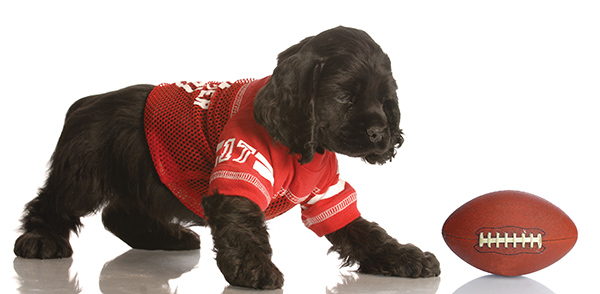
Photo courtesy of Adobe Stock
Tail-Wagging Team Spirit
On game day, you wear your favorite team’s colors. As loyal fans root on their teams, let your dog show his or her squad spirit, too. Bring out your team pride with matching jerseys or bandanas, or a special football-themed toy for your pup to sport during the game.

Photo courtesy of Fadwa Ward of RP Studios
Practice Plays with Your Pup
Stay active during your at-home watch party by running around with your pup during commercial breaks or at halftime. Play fetch in the yard, calling out plays like a quarterback, and have your top furry wide receiver catch his or her favorite toy for the touchdown. A break for fresh air can help keep your dog entertained and make sure he or she can get energy out throughout the game.
Football Feasting
The game day spread is not complete until your dog has something to dine on, too. To help pet parents and their dogs enjoy the most delicious part of game day together, CESAR Canine Cuisine created a “Match Up” Menu of dog-friendly “recipes,” inspired by fan-favorite foods, using its wide range of bold flavors in a variety of textures. Visit CESAR.com for the full menu, which features the first-of-its-kind CESAR 7-Layer and more unique wet and dry dog food combos for your pup to enjoy while you watch your favorite team play together.*
*From the CESAR brand: This is our fun way to get our furry friends involved in game day. The CESAR® brand believes the best life is shared between pets and their pet parents, but we don’t recommend sharing human food with pets. While we’re excited to share these pup-friendly game day recipes with our furry fans, we remind all pet owners to follow appropriate feeding guidelines. Please be conscious of serving sizes on the packaging when making the CESAR 7-Layer or “Match Up” recipes. Do not over feed your dog and consult with your veterinary provider to discuss your pet’s dietary needs.
SOURCE:
Cesar
https://stmdailynews.com/category/lifestyle/pets
Author





Sports
Sports Facilities Companies Acquires RCI Sports Management
The Sports Facilities Companies has acquired RCI Sports Management, enhancing its national presence and services in sports tourism and venue operations. This acquisition adds properties in Texas and Kansas, focusing on improving facility performance and revenue generation through integrated marketing and standardized systems, reflecting a trend in consolidating sports facility services.

The Sports Facilities Companies has acquired Texas-based RCI Sports Management, a move that expands its national footprint while strengthening its position in sports tourism, venue operations, and economic impact services for municipalities and private owners.

The deal adds RCI-managed properties in Texas and Kansas to the SF Network, including The Refinery Fieldhouse in Garden City, Amarillo Netplex in Amarillo, and Travis Fields at Midtown Park in Bryan. Together, the facilities broaden SFC’s reach in mid-market communities where youth sports, tournaments, and event programming are increasingly tied to hotel stays, visitor spending, and local business activity.
SFC said the acquisition will help accelerate facility performance through integrated marketing, sponsorship sales, standardized operating systems, and expanded event and tourism pipelines. That makes this more than a management deal — it reflects the continued consolidation of sports facility services as operators look to scale revenue generation, improve efficiency, and deliver stronger returns for public and private partners.
Related Links
Source
Source: The Sports Facilities Companies via PR Newswire
The Sports section of STM Daily News is your ultimate destination for all things sports, catering to everyday fans and dedicated enthusiasts alike. We cover a wide range of topics, from the thrill of amateur competitions to the excitement of semi-professional and professional leagues. Our content delves into physical and mental fitness, providing insights and tips that help individuals elevate their performance, whether on the field or in their personal wellness journeys. Stay informed and inspired as we explore the dynamic world of sports, celebrating both the passion of the players and the joy of the fans.
Sports
The U.S. Army Names Soldier-Athletes Headed to the 2026 Winter Games in Italy
The U.S. Army says nine WCAP Soldier-athletes and coaches will compete at the 2026 Winter Games in Italy in bobsled, biathlon, Nordic combined and figure skating—showcasing elite fitness, discipline and performance.
The U.S. Army is sending a new group of Soldier-athletes to one of the biggest stages in international sports.
In a Jan. 29, 2026 announcement, the Army said nine Soldier-athletes and coaches will represent the United States at the 2026 Winter Games in Italy, with two additional Soldiers traveling as alternates. The group will compete across bobsled, biathlon, Nordic combined, and pairs figure skating—sports that demand equal parts endurance, precision, and mental toughness.
Who’s representing the Army at the 2026 Winter Games
According to the release, the Army’s lineup of Soldier-athletes and coaches includes:
Competing and coaching in Italy
- Lt. Col. Chris Fogt (Bobsled Head Coach)
- Lt. Col. Garrett Hines (Bobsled Coach)
- Sgt. 1st Class Shauna Rohbock (Bobsled Coach)
- Sgt. Frank Del Duca (Bobsled)
- Spc. Azaria Hill (Bobsled)
- Staff Sgt. Deedra Irwin (Biathlon)
- Spc. Sean Doherty (Biathlon)
- Sgt. Ben Loomis (Nordic Combined)
- Pvt. Spencer Howe (Pairs Figure Skating)
Alternates
- Cpl. Hakeem Abdul-Saboor (Bobsled Alternate)
- Spc. Dana Kellogg (Luge Doubles Alternate)
Soldier first, athlete always
The Army emphasized that WCAP athletes remain full-time Soldiers while training and competing at the elite level. Brig. Gen. Matthew Braman, the Army’s Chief Marketing Officer, said the same traits built through military service—discipline, mental agility, teamwork, and readiness—translate directly into high-level athletic performance.
“Even when competing at the highest level, these athletes are U.S. Army Soldiers first,” Braman said in the release, adding that they’re trained to be “tactically and technically proficient” and prepared to perform in any environment.
What is the World Class Athlete Program (WCAP)?
The Soldier-athletes train and serve through the U.S. Army World Class Athlete Program (WCAP), which supports top-ranked Soldiers competing at the international level. WCAP provides coaching, facilities, and training resources while ensuring Soldiers maintain their readiness and complete mandatory Army requirements.
While WCAP was officially established in 1997, the Army says it has been training Soldier-athletes for more than 75 years. Over that span, the Army has sent more than 600 Soldier-athletes to compete on the world stage, earning more than 120 medals across summer and winter sports.
Italy adds a layer of Army history
This year’s Winter Games location also carries historical meaning for the Army. The release points to World War II, when the 10th Mountain Division—an elite unit trained for mountain warfare—climbed Riva Ridge in northern Italy in a mission that helped shift momentum in the war.
After returning home, many Soldiers from the 10th Mountain Division helped build the foundation of the American ski industry by establishing ski resorts and ski schools across the U.S.—a legacy that still shows up in winter sports culture today.
Braman called the upcoming Games “a unique moment” to honor both the Army’s history in alpine terrain and its long-standing presence in elite athletics.
What to Watch For
- Biathlon conditioning: How Soldier-athletes balance endurance output with shooting precision under fatigue.
- Bobsled power and speed: Starts win races—watch for explosive sprint mechanics and teamwork on push phases.
- Nordic combined workload: One of the toughest mixes in sport; look for training insights on strength-to-weight and aerobic capacity.
- Recovery and readiness: How WCAP athletes manage sleep, mobility, and injury prevention while staying Soldier-ready.
- Italy’s alpine backdrop: The region’s mountain history adds context—and pressure—for performance in cold, high-demand environments.
Learn more
For more information about the U.S. Army and opportunities like WCAP, the release directs readers to GoArmy.com, including GoArmy.com/world-class-athlete-program.
Source: U.S. Army (PRNewswire), Jan. 29, 2026
Related External Links
- U.S. Army World Class Athlete Program (WCAP) – Overview of how Soldier-athletes train and compete at the elite level.
- GoArmy.com – Learn more about U.S. Army opportunities and careers.
- Team USA – Athlete news, sport profiles, and updates across Olympic and Paralympic disciplines.
- Olympics.com – Official Winter Games coverage, schedules, and sport explainers.
- International Ski and Snowboard Federation (FIS) – Rules, rankings, and event info for Nordic disciplines, including Nordic combined.
- International Bobsleigh & Skeleton Federation (IBSF) – Bobsled and skeleton sport info, events, and athlete resources.
- International Biathlon Union (IBU) – Biathlon news, event calendars, and performance insights.
Stay Updated with STM Daily News Sports
Want more sports and fitness coverage that’s worth your time—athlete training, performance trends, major events, and the stories behind the grind? Keep up with our latest at STM Daily News – Sports .
Author
Sports
CourtsApp Launches as “The Healthiest App in the World,” Turning Screen Time Into Play Time
CourtsApp, branded as “the healthiest app in the world,” aims to reduce screen time by encouraging users to engage in racquet sports like tennis and pickleball. The platform facilitates easy court bookings without membership fees, promoting movement and social interaction. Expansion plans cover various U.S. regions, maximizing accessibility for players.

If your New Year’s reset includes less scrolling and more moving, CourtsApp is trying to make that switch ridiculously easy.
CourtsApp has officially launched with a bold claim—calling itself “the healthiest app in the world”—and the positioning is clear: it’s not another wellness app asking for more screen time. It’s a tool designed to get you off your phone and onto a court.
What CourtsApp is (and why it’s different)
CourtsApp is an AI-powered marketing and booking platform that helps players instantly find and book open courts for tennis, pickleball, padel, and other racquet sports—often at discounted prices. The key point: no membership fees are required.
That matters because “friction” is one of the biggest reasons people don’t play as often as they want to. If booking a court means juggling memberships, phone calls, limited availability, or confusing club policies, most people default to the easier option: staying home.
CourtsApp’s pitch is simple: open the app, find a court, book it, and go play.
Turning screen time into play time
Most apps compete for attention. CourtsApp is leaning into the opposite idea—convert screen time into movement.
The average adult now spends more than seven hours a day looking at screens, a trend that’s often linked with rising rates of obesity, heart disease, anxiety, and social isolation. CourtsApp is positioning itself as a healthier relationship with your phone: use it briefly, then put it away and get outside.
Instead of tracking steps or pushing workouts through a screen, the app is built around real-world activity—full-body movement, outdoor play, and social connection.
Why racquet sports are having a moment
CourtsApp’s launch also taps into a bigger trend: racquet sports are booming, and not just because they’re fun.
Founder and CEO Daren Hornig argues that sports like tennis and pickleball can be a stronger path to fitness and longevity than the typical “10,000 steps” mindset.
“CourtsApp turns your phone into a gateway to real-world health,” Hornig said. “For years, we’ve been told that you can stay fit and lose weight by walking 10,000 steps a day, taking a Peloton class online or going to a gym. However, sports like tennis and pickleball give you a greater chance to achieve your health and fitness goals and live a longer and healthier life. And there’s no better time to start than the New Year.”
The company also points to research published in the British Journal of Sports Medicine, citing long-term data following more than 80,000 adults over nearly a decade. According to the release, participants in racquet sports saw a 47% lower risk of death from any cause and up to a 56% lower risk of cardiovascular-related death compared to non-participants.
Where CourtsApp is live now—and what’s next
CourtsApp is currently live for players across:
- New York
- New Jersey
- Connecticut
The platform already lists more than 1,500 courts across 150+ facilities in those markets.
Next up: expansion from Maine to Florida by Q1 2026, followed by market-by-market growth as club density increases. The release also calls out additional play-in markets including:
- Southern California
- Texas
- Pacific Northwest
Flexible pricing, more access, fewer barriers
One of the most practical angles here is affordability and access.
CourtsApp highlights discounted pricing during quieter hours—helping players turn a random free afternoon into court time without committing to a membership or paying peak-hour rates.
For clubs, the platform doubles as a marketing and booking engine. For players, it’s a shortcut to the thing they actually want: a court that’s open right now.
The bigger takeaway
CourtsApp is betting on a simple truth: people don’t need more motivation apps—they need fewer obstacles.
If the app delivers on its promise (fast booking, real inventory, and meaningful discounts), it could become a go-to tool for anyone trying to make movement a habit—especially in sports like pickleball and tennis where access and scheduling can make or break consistency.
Players and clubs can learn more or join the platform at CourtsApp.com.
Here’s a clean Related Links block you can paste into WordPress (HTML view). Swap in your actual URLs/titles where needed:
Related Links
- CourtsApp (Official Site)
- More Sports + Wellness Coverage on STM Daily News
- Pickleball News & Updates
- Tennis News & Court Culture
“`
Get the latest updates and information on the rapidly growing sport of pickleball, specifically designed for the senior community aged 50+. Check out Sleeve’s Senior Pickleball Report on YouTube to stay informed and up-to-date with the ever-changing world of pickleball. Join the community and stay ahead of the game. https://stmdailynews.com/sleeves-senior-pickleball-report/







